• Link to X
  • Link to Facebook
  • Link to Instagram
  • Link to TikTok
  • Link to Youtube
  • About
    • About Us
      • President
      • Board of Directors
      • Board of Advisors
      • Financials
      • Our Methodology
      • Success Tracker
      • Contact
  • Act Now
    • 30 Ways to Help
      • Email Congress
      • Call Congress
      • Volunteer
      • Courses & Certificates
      • Be a Donor
    • Internships
      • In-Office Internships
      • Remote Internships
    • Legislation
      • Politics 101
  • The Blog
  • The Podcast
  • Magazine
  • Donate
  • Click to open the search input field Click to open the search input field Search
  • Menu Menu

Archive for category: Politics

Aid, Global Poverty, Politics

Humanitarian Assistance in Venezuela: Efforts of US Leaders


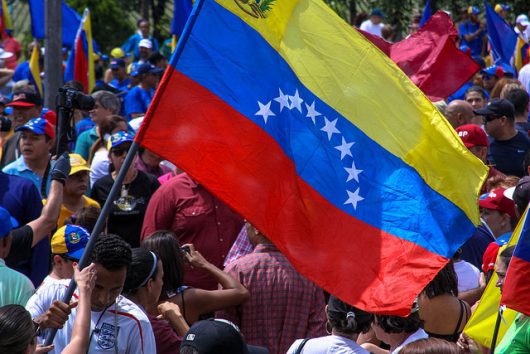
Over the past few years, Venezuelan citizens have suffered at the hands of oppressive government leaders, leading to an overall failing economy. Necessities such as food and medicine have become hard to obtain for lower and middle-class citizens. As a result, there has been a growing need for humanitarian assistance in Venezuela.

According to findings by the International Monetary Fund, Venezuela’s inflation rate reached an alarming 720 percent in 2016. This substantial rise in inflation subsequently led to an even higher rate of poverty among citizens, and an even greater need for humanitarian assistance in Venezuela.

Recent statistics from the National Survey of Living Conditions showed that the average number of Venezuelans who reported eating two or fewer meals per day increased from 11.3 percent in 2015 to 32.5 percent in 2016. Likewise, the average population reported an average increase in weight loss by more than 15 pounds due to the inability to afford adequate meals each day.

In response to this prevalent issue, U.S. Senator Ben Cardin (D-MD) and Senator Marco Rubio (R-FL) recently initiated a bill known as the “Venezuelan Humanitarian Assistance and Defense of Governance Act of 2017.” As its title suggests, one of the main goals of this bill is to provide humanitarian assistance in Venezuela. Within the bill, U.S. leaders cited that Venezuelan president Nicolas Maduro “rejected repeated requests from the Venezuelan National Assembly and civil society organizations to bring humanitarian aid into the country.” The bill also aims to protect the citizens’ human rights and the concept of democracy.

A total of $10 million has been set aside for the U.S. Committee on Appropriations to effectively carry out measures proposed in the humanitarian assistance bill. Some of these measures include providing a way to ensure that food, medicine and nutritional supplements are transported and distributed to citizens in need. Funds will further be used to improve “transparency and accountability” within Venezuelan government institutions.

– Lael Pierce

Photo: Flickr

May 21, 2017
https://borgenproject.org/wp-content/uploads/borgen-project-logo.svg 0 0 Borgen Project https://borgenproject.org/wp-content/uploads/borgen-project-logo.svg Borgen Project2017-05-21 01:30:162020-05-03 14:11:06Humanitarian Assistance in Venezuela: Efforts of US Leaders
Global Poverty, Politics, Women, Women and Female Empowerment

Women’s Political Participation in Lebanon


Lebanon is known around the Middle East and the region of North Africa (MENA) as one of the leaders in progressive values. The country has prided itself on ensuring equal rights for women and men in its national constitution. Despite many accomplishments, women’s political participation in Lebanon remains one of the lowest percentages in the MENA region. What is happening in Lebanon that is keeping women out of politics?

Traditional Lack of Female Participation in Politics

In 1953, women in Lebanon were granted the right to vote and participate in politics. Since then, only 17 women have held positions in politics. As of December 2016, less than three percent of government seats have been held by women.

In 2005, women’s participation in politics reached its peak. Of the 128 seats in parliament, six women held parliamentary positions. This was the highest amount of women holding seats in parliament at the same time in the nation’s history. Today, only one woman holds a parliamentary position.

Changing Laws, Unchanging Culture

Under Article 7 of the Lebanese constitution, gender equality is guaranteed, but personal status laws are not. Instead, personal status laws are in the hands of religious, who are not under the jurisdiction of the government, and therefore, gender equality laws do not apply to them. This type of inequality flows into households, where under family codes and citizen laws, women are still owned by their husband and fathers. This type of second-class citizen culture affects women’s political participation in Lebanon. Many women are unable to take action due to their financial and marital status.

Women in Lebanon who vote do so for their families and not for their preferred candidates. Some women are not allowed to vote for candidates outside of their kinship. Still, women’s political participation in Lebanon is important. Women have the ability to sway votes in their constituencies, but often do not use the full extent of their power. The average amount of women who actually wield their vote is about 16 percent. Out of the 18 constituencies, only five of them see participation from women, between 16 to 50 percent.

Reform on the Horizon

The women’s quota within the Lebanese government has become key for women’s political participation in Lebanon. According to hivos.com, the women’s quota can be used, “either in the form of reserved seats in parliament, or (preferably) obliging party or electoral lists to contain a certain percentage of women candidates.”

Although this mandate was enforced, women still rely on NGOs to voice their political stances within the government. In Lebanon, there are 18 political parties, but seven dominate. Practically all of these groups are led by males, and most parties led by females have turned into NGOs, which have a network of women working together in order to affect change.

Until women’s voices are allowed to be amplified and actually heard, women will continue fighting.

– Maria Rodriguez

Photo: Flickr

May 10, 2017
https://borgenproject.org/wp-content/uploads/borgen-project-logo.svg 0 0 Borgen Project https://borgenproject.org/wp-content/uploads/borgen-project-logo.svg Borgen Project2017-05-10 01:30:322024-12-13 17:57:56Women’s Political Participation in Lebanon
Global Poverty, Politics

Poverty in Somalia

Poverty in Somalia
Twenty years of conflict have led to conditions of abject poverty in Somalia, with the destruction of infrastructure, economy and institutions.

In 1991, the government collapsed, leaving the country fragmented. Even with the establishment of a new government, conflict continues in Southern Somalia, leaving the country in the midst of poverty, famine and recurring violence.

Due to independent governing bodies, two areas, Somaliland and Puntland, experience more stability with regard to socioeconomic conditions.

Somalia is one of the poorest countries in the world, with the 2012 Human Development Index putting it among the five least-developed of 170 countries. The poverty rate is currently 73 percent. Seventy percent of the population in Somalia is under the age of 30 and the life expectancy is as low as 55 percent. Unemployment among youth is widespread, as 67 percent of youth are unemployed.

Development is low due to the challenges posed by Somalia’s humanitarian situation and the high level of insecurity, which is another factor contributing to poverty in Somalia. The region is home to more than one million refugees, many of whom are living in conditions of abject poverty. Food prices went up by 300 percent, making it hard for most of the population to buy food. Food insecurity has affected more than two million people. One in eight children under the age of five suffers from malnutrition. Only 42 percent of children go to school. Livestock management is the main source of livelihood.

Poverty in Somalia and Child Mortality

In Somalia, 857,000 people require assistance. In 2014, Somalia was at the bottom of global health rankings in terms of maternal health, child mortality, education and women’s income and political status.

Poverty in Somalia is rooted in civil conflict and limited resources, natural disasters and lack of an active central government. The conflict has emerged between clans for the two basic resources: food and water. The situation has come to political power; whoever is able to claim leadership of a clan can have a share of the limited resources and political power.

Poverty in Somalia has intensified and there exists no easy answer to ending the spiral of conflict and insecurity, which are the roots of the poverty.

– Aishwarya Bansal

Photo: Flickr

May 5, 2017
https://borgenproject.org/wp-content/uploads/borgen-project-logo.svg 0 0 Borgen Project https://borgenproject.org/wp-content/uploads/borgen-project-logo.svg Borgen Project2017-05-05 01:30:212024-06-05 04:37:53Poverty in Somalia
Politics, Refugees and Displaced Persons

What Does the US Refugee Vetting Process Look Like?


The U.S. refugee vetting process is long and challenging. The vetting process refers to the steps a refugee follows after fleeing from his or her home country and resettling in the United States.

The process begins when a refugee flees his or her home country. Refugees flee their country of origin for various reasons.

After fleeing, a refugee usually registers with the United Nations High Commissioner for Refugees (UNHCR). The UNHCR verifies that under international law, this particular person qualifies for refugee status.

Next, the UNHCR refers the individual to a U.S. Embassy with a Refugee Processing Post. The Department of State then steps in. Many different security checks take place through different federal security agencies. A refugee undergoes more screening than any other type of traveler coming into the country.

The Department of State also has a Bureau of Population, Refugees and Migration that partners with different agencies. One of the agencies that the bureau partners with will create a document called an Overseas Processing Entity. This document is given to an officer within the United States Citizenship and Immigration Services of the United States Department of Homeland Security. The officer then interviews the refugee to determine whether or not the person legally qualifies as a refugee and can be admitted for resettlement within the U.S.

Once it is determined whether or not the individual qualifies as a refugee under U.S. law, the case returns to the Department of State’s Bureau of Population, Refugees and Migration for the final stage of approval. The refugee’s information is then forwarded to the Refugee Processing Center.

The Refugee Processing Center requests “sponsorship assurance” from one of the many refugee resettlement agencies across the country. While these last steps of the U.S. refugee vetting process take place, the refugee will be given a medical exam. He or she also receives a cultural orientation to life in the United States. Upon medical clearance,the International Organization for Migration will book a flight for the refugee.

The refugee will be met at the airport upon arrival in the United States. Now, everything becomes the responsibility of refugee resettlement agencies. A resettlement agency will have already arranged accommodation for the refugee. A staff member of a local resettlement agency will meet the refugee at the airport and take them to the accommodations. Once in the United States, refugees can take classes to learn English and find work.

The U.S. refugee vetting process is slow. Depending on the situation, the process can take anywhere between a year and a half to two years. In 2016, however, 84,995 refugees were resettled in the United States. The vetting process may be long and complicated, but the ability to resettle in the United States has changed the lives of thousands.

– Shannon Elder

Photo: Flickr

May 3, 2017
https://borgenproject.org/wp-content/uploads/borgen-project-logo.svg 0 0 Borgen Project https://borgenproject.org/wp-content/uploads/borgen-project-logo.svg Borgen Project2017-05-03 01:30:052024-12-13 17:56:45What Does the US Refugee Vetting Process Look Like?
Charity, Global Poverty, Politics

10 Ways to Reduce Poverty in the World

10 Ways to Reduce Poverty in the World
The Millennium Development Goal to cut the poverty rate in half by 2015 was met in 2010 – five years ahead of schedule. While progress has been made, global growth estimates show more work is needed to reach the target of ending global poverty by 2030. Discussed below are the top 10 ways to reduce poverty in the world.

Effective 10 Ways to Reduce Poverty in the World

  1. Develop and implement rapid and sustained economic growth policies and programs, in areas such as health, education, nutrition and sanitation, allowing the poor to participate and contribute to the growth. Studies show that a 10 percent increase in a country’s average income reduces poverty by as much as 20-30 percent.
  2. Improve management of water and other natural resources. Most of the rural poor depend on agriculture or other natural resources for their livelihood. Consequently, it is necessary that they have more equitable access to those resources so they are better able to manage their resources.
  3. Invest in and implement agricultural programs. China has helped 800 million people out of poverty since 1978. As a part of its strategy to eradicate poverty by 2020, the Agricultural Bank of China will lend more than $400 billion to help develop rural areas, fund education, infrastructure, and crop production.
  4. Encourage countries to engage in trade as a path out of poverty. Trade is the key to growth and prosperity. Some of the world’s poorest countries including Indonesia, Botswana and Brazil have traded their way out of poverty.
  5. Create and improve access to jobs and income and develop entrepreneurial talent.
  6. Providing all people with access to basic social services including education, health care, adequate food, sanitation, shelter and clean water.
  7. Progressively developing social protection systems to support those who cannot support themselves.
  8. Empower people living in poverty by involving them in the development and implementation of plans and programs to reduce and eradicate poverty. Their involvement ensures that programs reflect those things that are important to them.
  9. Remove barriers to equal access to resources and services.
  10. Provide access to technology and innovation including internet access and affordable energy. In Bangladesh, only 40 percent of the rural poor have access to grid electricity. Those that do have access endure frequent power outages. The Second Rural Electrification and Renewable Energy Development Project plans to increase access to electricity in rural areas via renewable energy sources.

This list highlights only 10 ways to reduce poverty in the world. It is imperative that people and governments work together to implement these ideas and others so that it is possible to end poverty by 2030.

– Mary Barringer

Photo: Flickr

April 29, 2017
https://borgenproject.org/wp-content/uploads/borgen-project-logo.svg 0 0 Borgen Project https://borgenproject.org/wp-content/uploads/borgen-project-logo.svg Borgen Project2017-04-29 01:30:322024-12-13 17:57:4310 Ways to Reduce Poverty in the World
Aid, Global Poverty, Politics

Crowdpac’s Fundraising Mission: Bring Politics Back to the People


With growing anticipation for the 2018 political midterms, Crowdpac is on a mission to bring politics back to individuals and to assist with their fundraising campaigns.

Crowdpac provides direct access to politician information, simplifying the campaign process for newcomers and connecting people to candidates who are representing their political standpoints. The CEO, Steve Hilton, believes that money supports a majority of the current issues within politics. Large cash donations continually prove to be a vital component in winning an election. “You’ve got to raise money to do your campaign,” Hilton states. “And typically, that forces you to do things and say things and take positions that are not actually what you believe.”

During the 2016 Presidential campaign, 99.31 percent of the source funds for Bernie Sanders’ campaign (229 million dollars) were funded by individual contributions. In comparison, President Trump raised 132.2 million dollars from individual contributions.

Fundraising proves to be effective and critical to the success of a campaign, even in “small amounts at the state level.” A Utah resident, Dr. Kathryn Allen, has gained over half a million dollars for the Utah 2018 primaries. Through Crowdpac, people can find easily access her fundraising profile and can endorse her campaign.

Governor Arnold Schwarzenegger created a fundraising profile titled, “This is our chance to make gerrymandering unconstitutional” on the organization’s website. The former California Governor has partnered with Common Cause, a nonprofit organization working to create an “accountable government that serves the public interest”.

The fundraising profile includes Schwarzenegger’s reason behind his endeavor; the Wisconsin Republican Party plans to appeal a federal order, redrawing the state’s legislative districts. In November, a federal court ruled that Wisconsin’s districts give Republicans a continual advantage in state elections and must be redrawn.

“They’ve appealed the ruling to the Supreme court,” Schwarzenegger states, “and you can bet they’ll be well financed.”

The bipartisan, fundraising goal is to make gerrymandering unconstitutional and to bring politics back to people who want legitimate candidates representing their political standpoints. The campaign has already received 902 endorsements, 584 donations, and has raised 23,194 dollars. Shwarzenegger has also pledged to match all donations.

Crowdfunding platforms such as GoFundMe and Crowdpac allow people to raise money for the campaigns, representatives and political beliefs they support. America’s political system is founded on the principles of a representative democracy. Legitimate representatives are vital to providing accurate opinions of voting citizens.

– Madison O’Connell

Photo: Flickr

April 28, 2017
https://borgenproject.org/wp-content/uploads/borgen-project-logo.svg 0 0 Borgen Project https://borgenproject.org/wp-content/uploads/borgen-project-logo.svg Borgen Project2017-04-28 01:30:092024-05-28 00:00:12Crowdpac’s Fundraising Mission: Bring Politics Back to the People
Global Poverty, Politics

Land Grabs in South America Fuel Violence

 South America
As land grabs fuel violence in South America, the international community’s decision to treat this process as a crime against humanity is a significant step.

Land grabbing, the process of evicting people from their land in order to seize resources, is prevalent in many parts of South America. According to The Guardian, in the past 10 years, tens of millions of hectares of land were seized by various governments.

Land grabs are problematic for a number of reasons. For one, countries may jeopardize their national sovereignty by selling or leasing land to foreign governments or corporations. Most importantly, however, the process of land grabbing fuels violence and poverty in South American cities. When families are forced off of their land, they often move to cities where employment opportunities are scarce. This leads these families to poverty and increases the likelihood that their children will join gangs or engage in illegal activities in order to survive.

Land grabs also contribute to illegal immigration. Many undocumented families are forced off their land in land grabs and are fleeing from violence in urban areas. Between October and July 2014, 63,000 unaccompanied minors crossed the border into the United States. Many of these children cited violence in cities as their reason for leaving. Many of their parents were either dead or in prison.

For those who protest land grabbing, the consequences can be deadly. According to Global Witness, three people were murdered every week while defending their land in 2015. Activist Berta Cáceres was murdered after protesting the building of a large dam in Honduras.

In September 2016, the International Criminal Court responded to the violence of land grabs by making the process a crime against humanity. Activists believe that this could have a significant impact on the future of land grabs.

– Eva Kennedy

Photo: Flickr

April 23, 2017
https://borgenproject.org/wp-content/uploads/borgen-project-logo.svg 0 0 Borgen Project https://borgenproject.org/wp-content/uploads/borgen-project-logo.svg Borgen Project2017-04-23 20:13:492020-05-07 17:19:38Land Grabs in South America Fuel Violence
Global Poverty, Politics

Bangladeshi PM Sheikh Hasina: Fighting Global Poverty


During the 136th Assembly of the Inter-Parliamentary Union in Bangladesh, Prime Minister Sheikh Hasina pressed world leaders to unite against global poverty and terrorism in order to progress mankind toward a peaceful and unified world.

The IPU Assembly includes 1,400 delegates from 120 countries, whose efforts focus on the pursuit of global resolutions of peace, development and cooperation among peoples, which is necessary for the protection of representative democracy across the globe.

During Hasina’s address, she stated that nearly 800 million people are still threatened by poverty and malnutrition in developing countries. Though progress has been made in allocating peace and granting opportunities to these struggling families, she advises global leaders to continue the fight in combatting the threatening and aggressive forces of global poverty and terrorism.

With a population exceeding 156 million, at least 45 million people in Bangladesh live below the poverty line, including extreme poverty conditions. A major cause of rural poverty has been the excessive population growth throughout the country. By placing enormous amounts of pressure on the country’s natural resources, population growth has produced detrimental consequences, resulting in a low-income country with substantial poverty and inequality.

Hasina spoke highly of the progress Bangladesh has made in fighting rural poverty. She stated that poverty has declined from 31.5 percent in 2010 to 22.4 percent in 2016, leading to an increase in per capita income to $1,466 and life expectancy to 71 years. These increases are in response to the high expectations and goals Hasina has placed on Bangladesh, aiming to make her country a middle-income country by 2021 and a developed and prosperous nation by 2041.

Along with these long-term goals and expectations, Hasina has urged the global community to stand up against terrorism and militancy, as it is threatening many developing countries from achieving prosperity. Hasina claims that she has had to escape numerous attempts on her own life, proving the constant difficulties in her fight of reaching democracy and fulfilling her dangerous agenda of eradicating terrorism throughout these developing countries.

With firm ambitions for her country, Hasina has fought for her country to attain prosperity, primarily by combating the threats of global poverty and terrorism. Through her persuasive dialogue and determination for success, she seeks for other global leaders to join the fight in alleviating the hardships felt around the world.

– Brandon Johnson

Photo: Flickr

April 18, 2017
https://borgenproject.org/wp-content/uploads/borgen-project-logo.svg 0 0 Borgen Project https://borgenproject.org/wp-content/uploads/borgen-project-logo.svg Borgen Project2017-04-18 01:30:322020-05-07 14:09:12Bangladeshi PM Sheikh Hasina: Fighting Global Poverty
Global Poverty, Politics

How To Attend Town Hall Meetings


Although each shift in U.S. Presidential administrations inspires increases in civic participation by citizens, President Trump’s election in 2016 may prove to be one of the most inspirational of all. For the average citizen with no history of political advocacy, determining how and where to start can feel overwhelming, but knowing how to attend town hall meetings is as easy as following this step-by-step guide.

  1. Identify your political representatives. Your Congressional representatives comprise two Senators and one Representative. To find them, visit https://borgenproject.org/call-congress/ and plug your zip code into the box under step one to go straight to the Congressional directory.
  2. Find the next town hall meeting near you. From the directory, you can visit each Congressperson’s official website. Once there, look for a link labeled “Events,” “Meet your representative” or something similar. If you cannot find anything specific, scan the page for a “Contact Us” link and call or email the Congressperson’s staff for information on the next town hall meeting happening near you. Other third-party organizations such as Town Hall Project have streamlined many of these steps to make it even easier to determine how to attend town hall meetings.
  3. Prepare for the meeting. This step is vital to getting your point across and being taken seriously. Research your topic as well as your Congressperson, and be prepared to make an “elevator pitch” about your feelings on the issue. Your opinion is important, but to your Congressional representatives, your well-informed opinion that takes their position into account is unforgettable.
  4. Tell your personal story. Town hall meetings offer the chance to connect with your Congressperson in a human, immediate way. Explaining why you feel passionate about an issue because of its direct effects on you, your friends, or your family is a surefire way to make an impact.
  5. Be polite. There is a fine line between an impassioned plea and a Twitter-worthy rant. Rudeness, insults, or reminding your Congressperson that your tax dollars pay their salary will only damage your credibility and sever the lines of communication.
  6. Talk to the staffers. Staffers will always accompany members of Congress in meetings as part of their administrative duties. Take the time to seek them out. Introduce yourself by asking for their business card and explaining briefly why you chose to attend. Even if you do not get an opportunity to speak directly with your representative because of time constraints or a large volume of participants, talking to the staff can get your voice heard by your representative.
  7. Bring your friends. There is strength in numbers. Bringing a group of friends to the meeting will not only ease any anxiety you may feel, it will provide a visual demonstration to your representatives of how many other voters support your stance on an issue.
  8. Follow up afterward. Send additional emails and make follow-up phone calls to your Congressional representatives’ offices and state that you were in attendance at the recent town hall meeting. Better yet, put the next meeting on your calendar and repeat the whole process. This lets your Congressperson know you mean business, and you will continue to show up until your issue is resolved in a mutually satisfactory manner.

Using this guide to know how to attend town hall meetings will put you in a centuries-long tradition of civic involvement.

– Dan Krajewski

Photo: Flickr

April 4, 2017
https://borgenproject.org/wp-content/uploads/borgen-project-logo.svg 0 0 Borgen Project https://borgenproject.org/wp-content/uploads/borgen-project-logo.svg Borgen Project2017-04-04 01:30:042024-12-13 17:57:42How To Attend Town Hall Meetings
Politics, Women and Female Empowerment

Political Life for Women in Morocco

Political life for women in Morocco has long been suppressed because of law and a very conservative culture. Recently, aspects of the nation have changed for the better. After King Mohammed VI’s revisions in the Moroccan Family Code, women were allotted a larger voice.

In 2011, the Moroccan Arab Spring focused on women’s rights and issues. This movement promoted a new voice for women in Morocco.

The percentage of women holding parliamentary seats was only 1 percent in 2001, but since then, the progression of a quota for women’s parliamentary seats was first changed to a minimum of 12 percent in 2007 to 27 percent in 2010. Currently, 30 percent of women in Morocco are holding parliamentary seats.

In 2012, Nabila Mounib became the first woman ever to be elected to a major political party. She led the United Socialist Party, which is a secular and socialist party.

Mounib is also a professor at the University of Hassan II, in Casablanca. In an interview with Al Jazeera, Mounib talked about the future of her party, “Our focus will be to push for a system where people’s rights are respected. We are also pushing for the release of political prisoners and for gender equality.”

NGO’s have heavily impacted political life for women in Morocco over the past ten years. Groups like Mouvement pour la Democratie Paritaire, which is partnered with the British Government, uses the British Arab partnership fund to advocate for women’s representation within government. The group meets with parliamentary groups within the Moroccan government.

Other groups, such as the International Republican Institution, help to give a voice to groups of women in Morocco who are often overlooked. The group sets up workshops for women candidates in rural areas.

Rural areas in Morocco are known for having low rates of unemployment, education, and literacy for women. The International Republican Institution aids political life for women in Morocco by providing women with the knowledge they need to become active in government. When they learn how to campaign, women are able to mobilize what they have learned and can teach other women, creating a bigger voice for themselves.

– Maria Rodriguez

Photo: Flickr

March 22, 2017
https://borgenproject.org/wp-content/uploads/borgen-project-logo.svg 0 0 Borgen Project https://borgenproject.org/wp-content/uploads/borgen-project-logo.svg Borgen Project2017-03-22 01:30:332024-12-13 17:57:35Political Life for Women in Morocco
Page 15 of 17«‹1314151617›»

Get Smarter

  • Global Poverty 101
  • Global Poverty… The Good News
  • Global Poverty & U.S. Jobs
  • Global Poverty and National Security
  • Innovative Solutions to Poverty
  • Global Poverty & Aid FAQ’s
Search Search

Take Action

  • Call Congress
  • Email Congress
  • Donate
  • 30 Ways to Help
  • Volunteer Ops
  • Internships
  • Courses & Certificates
  • The Podcast
Borgen Project

“The Borgen Project is an incredible nonprofit organization that is addressing poverty and hunger and working towards ending them.”

-The Huffington Post

Inside The Borgen Project

  • Contact
  • About
  • Financials
  • President
  • Board of Directors
  • Board of Advisors

International Links

  • UK Email Parliament
  • UK Donate
  • Canada Email Parliament

Get Smarter

  • Global Poverty 101
  • Global Poverty… The Good News
  • Global Poverty & U.S. Jobs
  • Global Poverty and National Security
  • Innovative Solutions to Poverty
  • Global Poverty & Aid FAQ’s

Ways to Help

  • Call Congress
  • Email Congress
  • Donate
  • 30 Ways to Help
  • Volunteer Ops
  • Internships
  • Courses & Certificates
  • The Podcast
Scroll to top Scroll to top Scroll to top