• Link to X
  • Link to Facebook
  • Link to Instagram
  • Link to TikTok
  • Link to Youtube
  • About
    • About Us
      • President
      • Board of Directors
      • Board of Advisors
      • Financials
      • Our Methodology
      • Success Tracker
      • Contact
  • Act Now
    • 30 Ways to Help
      • Email Congress
      • Call Congress
      • Volunteer
      • Courses & Certificates
      • Be a Donor
    • Internships
      • In-Office Internships
      • Remote Internships
    • Legislation
      • Politics 101
  • The Blog
  • The Podcast
  • Magazine
  • Donate
  • Click to open the search input field Click to open the search input field Search
  • Menu Menu

Archive for category: Politics

Global Poverty, Politics

How Many Senators Are There?

How Many Senators Are There
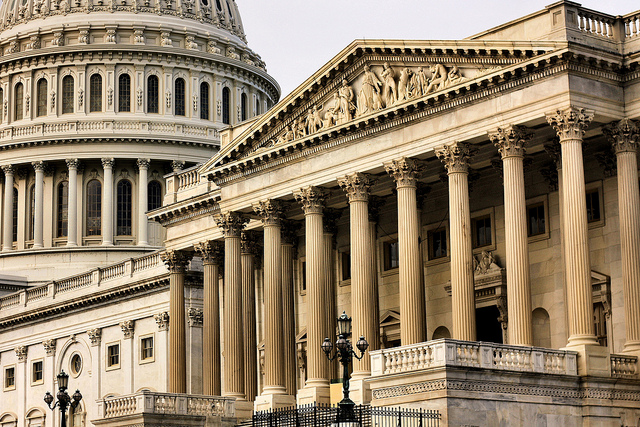
How many senators are there? The United States Senate is comprised of 100 Senators, two from each state.

While it may sound simple, developing this representative structure caused a lot of debate at the Constitutional Convention where the U.S. Constitution was drafted. Though only thirteen states existed at this point in 1787, the delegates from these thirteen would form the federal government whose authority would eventually span across fifty states.

These statesmen concluded that a body of elected representatives would be the best way to form laws for a country that was broken up into smaller entities. Delegates from larger states created dissension by arguing for representation based on population. The delegates from smaller states felt cheated and refused to agree to this proposed structure, known as the Virginia Plan.

A delegate from New Jersey, a small state, responded by introducing a plan that proposed equal representation for each state. This suggestion was called the New Jersey Plan and mirrored the structure outlined in the Articles of Confederation, the document acting as a sort of temporary constitution at that time. Both sides of the debate threatened to leave the convention if their plan wasn’t used, and the situation looked grim.

It was Roger Sherman, a delegate from Connecticut, who offered the Great Compromise as a solution. His bicameral (two-bodied) system would satisfy both large and small states: he proposed a House of Representatives that would represent states proportionally by population and a Senate that would represent all states equally. Thus began the representative system seen in the U.S. today.

As each new state was added to the union over time, two more senators were added to the Senate. In 1959, the present body of 100 senators was complete, with two senators representing each of the 50 states.

Each senator serves a six-year term with the chance of reelection at the end of this period. In order to be elected as a senator, an individual must be at least 30 years old and have been a U.S. citizen for nine years. Leading this body is the Vice President, who is elected alongside the President every four years.

Senators also belong to smaller bodies within the Senate called “committees” that handle specific tasks. These committees are usually composed of 7 to 15 members, each of whom has extensive power.

– Jacob Hess

Sources: FAIR.org, Senate.gov
Photo: Flickr

April 8, 2016
https://borgenproject.org/wp-content/uploads/borgen-project-logo.svg 0 0 Borgen Project https://borgenproject.org/wp-content/uploads/borgen-project-logo.svg Borgen Project2016-04-08 01:30:242024-12-13 17:54:14How Many Senators Are There?
Foreign Aid, Foreign Policy, Global Poverty, Politics

Where Donald Trump Stands on Global Poverty

Donald Trump PovertyDonald Trump surprised America when he announced his candidacy in June 2015. Trump has been garnering public attention despite not having any “elective, appointive, or military public experience,” according to the Atlantic. The publication also states that every prior president has had experience in one or more of these areas.
In this presidential race, Trump has been focused on illegal immigration in the U.S., particularly Mexican and Muslim immigration. He continuously affirms his belief that illegal immigrants are a national security concern. He also continues to voice his disapproval of immigrants from Syria migrating to the U.S.

Other hallmarks of his candidacy have been his unapologetic rhetoric. Trump’s controversial appeals have become his greatest asset in acquiring votes. In addition to immigration, he has been particularly vocal about the Islamic State group and the threat he believes the terrorist organization poses.

In contrast to fellow presidential candidate Bernie Sanders’ humble beginnings and opposition to wealth inequality, Forbes identified Trump as one of the richest American billionaires. So given his wealth and his stance on immigration, where does Donald Trump stand when it comes to foreign aid?

“It is necessary that we invest in our infrastructure, stop sending foreign aid to countries that hate us and use that money to rebuild our tunnels, roads, bridges and schools—and nobody can do that better than me.”

– Donald Trump’s Presidential Announcement 2016

“Pakistan’s a real problem because they have nuclear weapons… I would say we don’t give them any money unless they get rid of their nuclear weapons.”

– Donald Trump speaking on Fox News, May 9, 2011

“Money should be spent in our country. We should rebuild our country and also by the way reduce our $16 trillion in debt.”

– Donald Trump speaking about Afghanistan, March 13, 2012

In addition to his opinions on foreign aid, Trump’s discourse on decreasing the poverty rate in the U.S., which currently stands at approximately 14 percent of the population, consists of diminishing public assistance and handing responsibility for the poor over to volunteer organizations.

The results of this presidential election will reveal whether Americans prefer a leader with proven experience or charismatic promises. Foreign aid plays an essential role in the lives of millions around the globe. The continued provision of this foreign aid from the U.S. depends on which leader Americans choose to elect.

– Mayra Vega

Sources: India Times, Talk Poverty, NPR, The Atlantic
Photo: NY Daily News

March 19, 2016
https://borgenproject.org/wp-content/uploads/borgen-project-logo.svg 0 0 Borgen Project https://borgenproject.org/wp-content/uploads/borgen-project-logo.svg Borgen Project2016-03-19 01:30:542024-06-04 04:33:54Where Donald Trump Stands on Global Poverty
Global Poverty, Inequality, Politics, Poverty Reduction

Bernie Sanders Praises Pope Francis on Poverty Reduction

poverty_reductionSanders praised the pope’s remarks on ending poverty and economic inequality long before the pope arrived in the U.S. this September. Prior to the pope’s congressional address, Sanders celebrated the possibility of the pope addressing Congress.
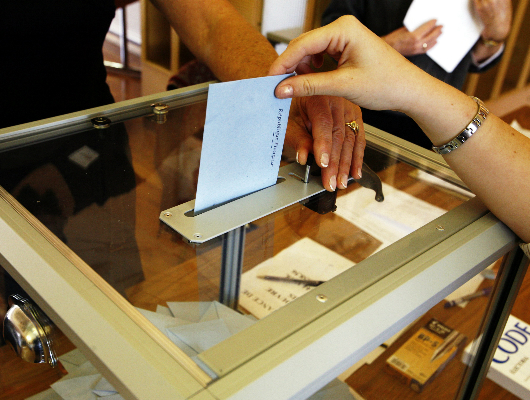
In February this year, Sanders addressed the Senate, stating that the pope “shows great courage in bringing up issues that we rarely hear discussed here in the Congress.”

In the address, Sanders praises Pope Francis on his leadership. On multiple occasions, he read quotes from the pope to the Senate, publicly acknowledging his admiration for the religious leader.

“Pope Francis is clearly one of the important religious and moral leaders not only in the world today but in modern history,” he said. “He forces us to address some of the major issues facing humanity: war, income and wealth inequality, poverty, unemployment, greed, the death penalty and other issues that too many prefer to ignore.”

Sanders read a quote from the pope: “‘Today everything comes under the laws of competition and the survival of the fittest, where the powerful feed upon the powerless. As a consequence masses of people find themselves excluded and marginalized without work, without possibilities, without any means of escape.'”

Sanders continued by commenting on the quote: “My interpretation of what he is saying is that money cannot be an end in itself. The function of an economic system is not just to let the marketplace reign, and end up in a situation where a small number of people have incredible wealth, while so many people have virtually nothing.”

Sanders especially notes the pope’s comments about exclusion and marginalization when it comes to government austerity. He strongly disagrees with right-wing Republicans on the federal budget committee about their continuous cuts on public benefits like Medicare and Social Security.

He says that right-wing Republican austerity measures are “the Robin Hood principle in reverse. This is taking from the poor and working people, and giving it to the millionaires and billionaires.” Sanders instead argues for tax hikes on the wealthiest Americans.

Sanders welcomed the pope when he arrived, calling him “a brilliant man.” He voiced optimism at the thought of members of Congress taking to heart the pope’s remarks about inequality and poverty reduction.

Sanders has noted that income inequality has reached a point where the wealthiest in America are becoming richer while the impoverished are becoming poorer. He insists that “the pope is right in saying all of us must address the grotesque income and wealth inequality we are seeing throughout the world.”

Sanders urged lawmakers to think about the pope’s speech when discussing balancing the 2016 federal budget. “Give us a budget which works for the most vulnerable people in this country, which works for tens of millions of working families, and does not simply work for large campaign donors.”

Senator Sanders is currently in the running for the Democratic Party presidential nomination.

“I know that people think that Bernie Sanders is a radical… read what the pope is writing about because he is not only talking about poverty,” Sanders said, “he is getting to the heart of hyper capitalism, and he is saying, ‘Why as a society are we worshiping money?'”

– Michael Hopek

Sources: Senate, C-SPAN, MSNBC
Photo: Flickr

November 3, 2015
https://borgenproject.org/wp-content/uploads/borgen-project-logo.svg 0 0 Borgen Project https://borgenproject.org/wp-content/uploads/borgen-project-logo.svg Borgen Project2015-11-03 11:30:132024-05-27 09:28:14Bernie Sanders Praises Pope Francis on Poverty Reduction
Global Poverty, Politics, Politics and Political Attention

Giant Leap Towards An African Democratic Transition

African democratic transition
In 1991, political scientist Samuel Huntington hypothesized three historical waves of democratization across Europe and the Americas. Now, it is the African continent’s turn to create a fourth wave of democratic elections.

It started on Dec. 17, 2010, when Mohammed Bouazizi, a Tunisian produce seller, set himself on fire in front of a municipal building.

Bouazizi’s act ignited protests against the oppressive authoritarian regime all over Tunisia. In 2011, the dictator, Zine El Abidine Ben Ali, stepped down from power and fled the country.

In the following three years, Tunisia held its first democratic elections, rewrote its Constitution and saw peaceful transitions of power.

In 2011, similar transitions occurred in the North African countries of Egypt, Libya and Morocco. Along with uprisings in the Middle East, this movement is collectively called the Arab Spring.

The changes in government in these countries have yet to resemble the democracies in North America and Western Europe. But while transitioning from long-standing authoritarian rule to full-fledged democracy does not happen overnight, the Arab Spring undoubtedly sent a message rippling all over the African continent.

The message? The voices of the impoverished and oppressed can be heard.

Last May, U.S. Secretary of State John Kerry visited Nigeria and witnessed an incredible hand-off of power after President Goodluck Jonathan lost the general election.

Surprising critics who believed that Jonathan would not resign, Jonathan willfully stepped down and even congratulated his successor. This marked the first peaceful transition of power in Nigeria’s history.

This year, Kerry traveled back to Nigeria to emphasize Nigeria’s increasingly important position to help with security and development in Africa. He also reminded the new government of the precedent and example they set, as this year is becoming a crucial year for democracy in Africa.

Burkina Faso, Burundi, Chad, Egypt, Ethiopia, Guinea, Cote d’Ivoire, Central African Republic, Libya, Mauritius, Niger, South Sudan, Sudan, Tanzania, Togo and Zambia are all set to have elections this year.

These elections could turn out to be a critical turning point for countries like Chad, where the same leader has been in power for 24 years.

Some staples of democratic transition include a move to transparent elections, term limits, freedom to publicly support any candidate and voter enfranchisement.

Transparency and term limits are important in the election process because, without both, an authoritarian regime can stay in power for decades. Fraudulent elections are often the main reason why people refrain from voting in the first place.

When authoritarian regimes remain in power for decades, repeated policy mistakes stifle the economic development and empowerment of a country. Change can only come when those in power are committed to the needs of their constituencies.

Freedom to publicly support any candidate and voter enfranchisement are also very important steps for an African democratic transition.

When media is censored or run by the government, speaking out against the incumbent is often illegal and can even lead to dangerous consequences.
This is also a problem because, in many African countries, less than half of eligible voters are registered to vote, and many minority groups do not have the right to vote at all.

When it comes to poverty, these four aspects of democracy are key. When marginalized groups take part in policy-shaping, a country can grow together and mitigate inequality. Furthermore, when every voice is involved in decision making there is less chance for discontentment and violent revolt.

As Kerry points out, “A free, fair and peaceful presidential election does not guarantee a successful democracy, but it is one of the most important measuring sticks for progress in any developing nation.” The coming months’ elections will be a giant leap toward democracy and development in Africa.

– Celestina Radogno

Sources: Al Jazeera, BBC, The Brookings Institute, The Guardian, U.S. Department of State
Photo: Wikimedia

October 15, 2015
https://borgenproject.org/wp-content/uploads/borgen-project-logo.svg 0 0 Borgen Project https://borgenproject.org/wp-content/uploads/borgen-project-logo.svg Borgen Project2015-10-15 13:52:382024-05-26 23:03:12Giant Leap Towards An African Democratic Transition
Page 18 of 18«‹161718

Get Smarter

  • Global Poverty 101
  • Global Poverty… The Good News
  • Global Poverty & U.S. Jobs
  • Global Poverty and National Security
  • Innovative Solutions to Poverty
  • Global Poverty & Aid FAQ’s
Search Search

Take Action

  • Call Congress
  • Email Congress
  • Donate
  • 30 Ways to Help
  • Volunteer Ops
  • Internships
  • Courses & Certificates
  • The Podcast
Borgen Project

“The Borgen Project is an incredible nonprofit organization that is addressing poverty and hunger and working towards ending them.”

-The Huffington Post

Inside The Borgen Project

  • Contact
  • About
  • Financials
  • President
  • Board of Directors
  • Board of Advisors

International Links

  • UK Email Parliament
  • UK Donate
  • Canada Email Parliament

Get Smarter

  • Global Poverty 101
  • Global Poverty… The Good News
  • Global Poverty & U.S. Jobs
  • Global Poverty and National Security
  • Innovative Solutions to Poverty
  • Global Poverty & Aid FAQ’s

Ways to Help

  • Call Congress
  • Email Congress
  • Donate
  • 30 Ways to Help
  • Volunteer Ops
  • Internships
  • Courses & Certificates
  • The Podcast
Scroll to top Scroll to top Scroll to top