• Link to X
  • Link to Facebook
  • Link to Instagram
  • Link to TikTok
  • Link to Youtube
  • About
    • About Us
      • President
      • Board of Directors
      • Board of Advisors
      • Financials
      • Our Methodology
      • Success Tracker
      • Contact
  • Act Now
    • 30 Ways to Help
      • Email Congress
      • Call Congress
      • Volunteer
      • Courses & Certificates
      • Be a Donor
    • Internships
      • In-Office Internships
      • Remote Internships
    • Legislation
      • Politics 101
  • The Blog
  • The Podcast
  • Magazine
  • Donate
  • Click to open the search input field Click to open the search input field Search
  • Menu Menu

Archive for category: Politics

Global Poverty, Politics

President Trump’s Buy American Laws

Buy American LawsThe Trump administration is dusting off Depression-era laws to advance its “America First” agenda. The aptly-named “Buy American” laws require firms to buy U.S. materials when manufacturing military equipment.
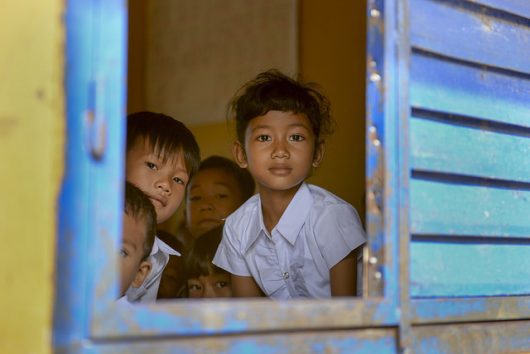

In 2013, $20 billion went to foreign entities, roughly 6.4 percent of military spending. That money is spent largely on raw materials like lumber, fuel and construction materials from Canada and other allies. The enforcement of these 80-year-old laws would force the government to spend that money within the states.

While 6.4 percent isn’t a large chunk of total expenditures, the concern is the message it could send to U.S. allies when they are cut out. Bill Greenwalt, a former Defense Department procurement secretary believes that by cutting out allies, the U.S. will spark retaliation legislation. Many nations depend on the U.S. for military goods. Buy American laws could kick off many global domestic purchasing regimes and ultimately hurt U.S. sales abroad.

Furthermore, those regimes could end up not being specifically military equipment. An domestic purchasing agenda could instigate allies and developing markets to look inward or to each other for goods and put up trading barriers to the U.S. such as quotas and tariffs.

If the U.S. positioned itself to try its hand at grand-scale manufacturing and set up the tariffs favorable to domestic manufacturers, U.S. consumers and developing nations could suffer. For the U.S. consumer, prices of normally imported goods such as clothing, pharmaceuticals and cell phones could increase. Many middle and lower class citizens would feel the strain of these price increases and the overall standard of living would see a decline.

Developing nations could suffer as manufacturing and exporting goods to developed neighbors are one of the biggest staples of economic activity. Favoring domestic production to the purchase of fair trade goods from these nations could stunt their economies and put their citizens at higher risk of falling into poverty.

For both the U.S. and our trading partners, Buy American laws could be a game of mutually assured economic stagnation. Manufacturers and consumers everywhere could feel the burden.

– Thomas Anania

Photo: Google

August 12, 2017
https://borgenproject.org/wp-content/uploads/borgen-project-logo.svg 0 0 Borgen Project https://borgenproject.org/wp-content/uploads/borgen-project-logo.svg Borgen Project2017-08-12 01:30:532020-07-17 15:08:12President Trump’s Buy American Laws
Global Poverty, Politics

The Stateless People in Brunei

Stateless People of Brunei
Brunei Darussalam or Adobe of Peace is a state on the northeastern coast of the island of Borneo. Since the discovery of vast oil fields in the 1920s, the state is among the wealthiest in the Asian Pacific region with a high standard of living among those living there.

The population of Brunei totals around 330,000, consisting of only 16% indigenous peoples. Roughly 64% are Malaysian and 20% Chinese. The government of Brunei has not reported that anyone in the state is seeking asylum. However, many stateless people are residing without citizenship. Here are seven facts about the stateless people of Brunei.

  1. Brunei has cooperated with the Office of the United Nations High Commissioner for Refugees (UNHCR) by agreeing to share statistics of the number of stateless people of Brunei, and the number of those who have been granted citizenship.
  2. As of 2016, there were 20,524 stateless people living in Brunei. This is about 6.2% of the population living without citizenship.
  3. Obtaining citizenship in Brunei is difficult and can only be done after passing rigorous testing. Between 2009 and 2012, 2,420 stateless people were granted citizenship.
  4. Brunei law prohibits non-Bruneians, including stateless permanent residents, from owning property.
  5. Although somewhat hesitant to grant citizenship to stateless people of Brunei, each stateless person is given an International Certificate of Identity that enables them to travel overseas and do anything that you need identification for.
  6. Minors can be registered as nationals as long as the Sultan sees fit. And foreign women who are married to a national man can obtain citizenship by registering themselves as married to a citizen.
  7. Furthering the recognition of stateless people, the Brunei government has instituted a birth registration program for stateless children. The program establishes a record of where a child was born and who his parents are to prevent children from slipping through the cracks of the legal system. This information will help children to get education, healthcare and employment when they are adults.

Despite the fact that Brunei does not have asylum-seekers, it is moving forward in setting standards for its non-national residents.

– Madeline Boeding

Photo: Flickr

August 8, 2017
https://borgenproject.org/wp-content/uploads/borgen-project-logo.svg 0 0 Borgen Project https://borgenproject.org/wp-content/uploads/borgen-project-logo.svg Borgen Project2017-08-08 07:30:142024-05-28 00:15:13The Stateless People in Brunei
Global Poverty, Politics

To End Poverty, Countries Must Prioritize SDGs and Cooperation

SDGs and Cooperation
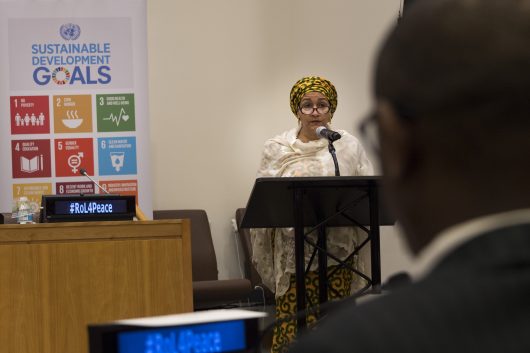
This Monday, the U.N. Secretary-General Antonio Guterres called for the international community to step up efforts to meet the U.N.’s Sustainable Development Goals (SDGs). The Secretary-General stressed that many regions worldwide are lagging behind with their sustainable development efforts. Guterres warned that without a stronger commitment to the SDGs and cooperation, the world will not meet the 2030 SDG deadline.

What are the SDGs?

The U.N.’s Sustainable Development Goals are a set of 17 ambitious goals that, among other things, aim to end global poverty and encourage development in struggling regions. These goals were agreed upon in 2015 and implemented the following year, and are meant to be fulfilled by 2030.

Despite the admirable intent of the SDGs, they suffer from the same critical issue that stymies other U.N. projects: they lack enforcement. Because the national governments of each member state are responsible for the organization and implementation of programs, they can easily ignore their commitment to the goals. Even worse, the SDGs are not legally binding and therefore countries around the world have little to no reason to ensure their realization.

The SDGs have only been in action for a little over a year, yet Guterres’ call to action indicates that the relatively new program is already struggling. As of now, the SDGs are well-intentioned but inconsequential.

Perhaps countries around the world hesitate to contribute because they believe the SDGs are too ambitious and ask too much, too soon. However, their hesitation is not justified.

At the very least, ending global poverty (the first goal out of the 17) is indeed possible. Since 1990, the number of people living off of the equivalent of $1.25 a day has been reduced by more than half. While 836 million people still live below the poverty line, it is not at all impossible to end poverty once and for all in the next few decades. Even if it is difficult to determine whether or not this goal can be achieved by 2030, this should not discourage countries around the world from refusing to try.

The Necessity of Commitment

In order for the world to end global poverty and encourage universal development by or around 2030, the international community needs to prioritize SDGs and cooperation. They cannot write off the SDGs as another romantic notion proposed by the idealistic U.N.; instead, they should seriously think about the benefits they can reap from a better world in 2030. That better world can be theirs, but they need to work for it first. The SDGs provide the guidance to get there.

Also, the international community needs to facilitate cooperation in order to more effectively tackle global poverty and inequality. As Peter Thompson, President of the U.N. General Assembly expressed, there must be “effective collaboration and partnerships between governments, private sector, civil society, local authorities, schools, universities and our communities.”

Streamlining cooperation between the public and private sectors is particularly important for the development and execution of on the ground development solutions. In the US, the proposed Economic Growth and Development Act (HR 2747) hopes to allow more opportunities for the private sector to contribute to foreign assistance programs. If the bill receives enough support to become a law, it could bolster U.S. efforts in the fight against global poverty.

Hopefully, the Economic Growth and Development Act will become a part of the U.S.’s toolkit in ending global poverty. Other countries around the world should encourage similar legislation so that the international community can further promote the importance of SDGs and cooperation in creating a better world.

– Isidro Rafael Santa Maria
Photo: Flickr

July 30, 2017
https://borgenproject.org/wp-content/uploads/borgen-project-logo.svg 0 0 Borgen Project https://borgenproject.org/wp-content/uploads/borgen-project-logo.svg Borgen Project2017-07-30 01:30:462024-06-11 02:48:30To End Poverty, Countries Must Prioritize SDGs and Cooperation
Global Poverty, Politics, Sustainable Development Goals

Progress Thus Far on the Sustainable Development Goals of 2030

Sustainable Development Goals of 2030
When it comes to reaching the Sustainable Development Goals of 2030 that would eradicate extreme global poverty, rich countries are lagging behind.

Scandinavian countries are leading the way among 157 nations ranked by the Sustainable Development Solutions Network (SDSN). The United States is ranked 42 in the list while Russia was ranked 62 and China 71. The Bertelsmann Foundation, which looks at global challenges to recommend solutions for pressing political, economic and social issues, says that the most developed countries need to speed up to complete their end on the Sustainable Development Goals of 2030.

“A rising ‘my country first’ approach by many heads of government threatens the realization of the SDGs,” according to the SDSN. As reported by Reuters, the countries that are most on track with meeting the Sustainable Development Goals of 2030 are Sweden, Denmark, Finland and Norway.

“Leaders at the G20 summit in Hamburg must strengthen the commitment towards these historic global goals,” reads the headline posted by the Bertelsmann Foundation. It released a story on countries not in line with meeting their Sustainable Development Goals right before the G20 Summit in Germany. The foundation’s goal is to have this dilemma addressed by the major world leaders at the G20 Summit.

The problem is that the Sustainable Development Goals of 2030 are just goals that aren’t mandatory. Therefore, countries may not have this as a priority, or might not even plan on fulfilling them at all. This is why it is so important to lobby policymakers and contact representatives to let them know where about important issues such as these.

– Vicente Vera

Photo: Flickr

July 24, 2017
https://borgenproject.org/wp-content/uploads/borgen-project-logo.svg 0 0 Borgen Project https://borgenproject.org/wp-content/uploads/borgen-project-logo.svg Borgen Project2017-07-24 01:30:212024-05-28 00:03:09Progress Thus Far on the Sustainable Development Goals of 2030
Aid, Global Poverty, Politics

Relations Between the Philippines and the EU

Philippines and the EUAs of May 2017, the Philippines decided to end development assistance from the European Union. The Philippines is willing to reject €250 million worth of aid to prevent the EU from interfering in its internal affairs.

Relations between the Philippines and the EU have soured in the past year. In 2016, EU member countries called for strict monitoring of human rights abuses committed under President Rodrigo Duterte’s ‘war on drugs’ policy. Almost 9,000 people were killed in the Philippines since Duterte took office on June 30. Many were small-time users and dealers who police say were sho tin self-defense by officers during legitimate operations.

Presidential spokesman Ernesto Abella said that Duterte approved a recommendation from the finance ministry “not to accept grants that may allow interfering with internal policies.”

EU official Gunnar Wiegand defended the EU’s practice of setting conditions in exchange for aid. “You know why? Because it’s the money of our taxpayers. They want to know where their money goes,” Wiegand said.

The longstanding relationship between the Philippines and the EU became formal in 1980 in the European Cooperation Agreement with the Association of Southeast Asian Nations (ASEAN). In July 2012, the EU-Philippines Partnership Cooperation Agreement provided a legal framework for further cooperation in a range of areas. These included political dialogue, trade, energy, transport, human rights, education, science, technology, justice, asylum and immigration.

This agreement also doubled the planned grant assistance to the Philippines for the period of 2014 to 2020. Funds increased to €325 million, up from €130 million in the period from 2007 to 2013. The Delegation of the European Union to the Philippines states that this seven-year support strategy focuses on “the rule of law” (improved governance and increased cooperation in the justice sector) and “inclusive growth” through sustainable energy and job creation.

The EU also provided aid to Manila’s efforts to end the insurgency in Mindanao, a 50-year conflict that killed more than 120,000 people, displaced one million and prevented economic growth in the region.

The EU is also one of the most important providers of aid to the Philippines in the case of natural disasters. One example of such was after Super Typhoon Haiyan in 2013. The EU provided €180 million in humanitarian assistance and early recovery interventions to help those affected by Haiyan.

Wiegand stated that the EU will not “beg” the Philippines to accept its aid and that there are “no lack of other countries” for the EU to fund if the Philippines rejects its offer.

Some officials contend that this is only a temporary setback for relations between the Philippines and the EU. Economic Planning Minister Ernesto Pernia is skeptical of Manila’s decision. “I will not take that as policy. It is more of a reaction to criticism. I don’t think it’s going to remain as such,” Pernia said.

– Hannah Seitz

Photo: UN Multimedia

July 20, 2017
https://borgenproject.org/wp-content/uploads/borgen-project-logo.svg 0 0 Borgen Project https://borgenproject.org/wp-content/uploads/borgen-project-logo.svg Borgen Project2017-07-20 01:30:152024-05-28 00:03:08Relations Between the Philippines and the EU
Foreign Aid, Global Poverty, Politics, War and Violence

Assad Diverts Foreign Aid from Those in Need

The U.S has spent a total of $6 billion in Syria as of 2016. The need for this assistance is extensive. USAID estimated that there are 13.5 million people in need of humanitarian assistance in Syria. However, President Bashar al-Assad of Syria diverts foreign aid from those who need it. He uses it for political goals.

Every day, Russian aircraft drop tons of food in the government-controlled neighborhood of Deir Ezzor. This has saved the lives of countless Syrians in the city. However, in towns controlled by the opposition, countless Syrians starve. Through the use of systematic regulations, President Assad diverts foreign aid from those in need. He then uses foreign aid as a political tool to increase his authority. Syrian expert Joshua Landis said that the Syrian government needs to manipulate foreign aid because “food is loyalty.”

The U.N. admits that it can only work with a small number of partners approved by Assad. Assad’s wife and close friend run two of these partnerships. Other humanitarian relief contracts are awarded to individuals under sanction and members of the Syrian regime known for their brutality and oppression. This is because the Syrian relief effort is the most challenging and complex operation the U.N. has ever seen. This gives Assad more bargaining power. He diverts foreign aid only to areas he controls. He only allows the U.N. into the country without interference if they play by his rules.

Moreover, a Russian airliner company, Abakan Air, carries out the aid transportation. Two Russian nationals, Nikolai Ustimenko and his son Patel, own the company. Both have previously been barred from doing business with the U.N. on account of bribery. It is unclear to what extent they play in Assad’s distribution of foreign aid.

It wasn’t always this way. Initially, the U.N. and Syrian Red Cross delivered aid impartially to the Syrian people. However, as the world turned its attention elsewhere, the Syrian government began blocking aid deliveries to rebel-controlled towns.

Advocates of the foreign aid program point to the amount of good aid have done in the region. Even through the aid only affects certain areas, civilians in need are still being fed. They say it would be unfair to punish those civilians in desperate need by withdrawing aid.

The USAID and UNICEF have done well to give aid. However, it is not good enough. The fact that Assad diverts foreign aid must be addressed. People are starving in Syria and aid needs to be distributed equally.

– Bruce Truax

Photo: Google

July 15, 2017
https://borgenproject.org/wp-content/uploads/borgen-project-logo.svg 0 0 Borgen Project https://borgenproject.org/wp-content/uploads/borgen-project-logo.svg Borgen Project2017-07-15 01:30:572020-05-29 08:07:28Assad Diverts Foreign Aid from Those in Need
Global Poverty, Politics

What Trump’s New Cuba Policy Means for Cubans

What Trump’s New Cuba Policy Means for Cubans
On June 17, President Donald Trump announced that he is “canceling the last administration’s completely one-sided deal with Cuba.” After only two years of normalized relations, President Trump unveiled a return to the restrictions on travel and trade between the United States and Cuba. While many news outlets have covered the impact this change will have for American travelers, what Trump’s new Cuba policy means for Cubans is far worse.

Cuba is a small country with a very weak economy. While Cubans benefit from social services such as free health care and education, a crumbling infrastructure and the inaccessibility of basic goods create tremendous hardships. As a result of these challenges and a longtime dependence on the sugar industry, Cuba is in desperate need of foreign investment.

In the two years since restrictions relaxed, U.S. travel and trade helped mitigate the effects of these challenges. In 2016, 614,433 U.S. visitors traveled to Cuba, a 34 percent increase in U.S. travelers to the country’s hugely important tourism industry. The hassle and expense of the new travel restrictions are designed to stem this influx of visitors from Cuba’s richest neighbor. What the president’s new Cuba policy means for Cubans is less money circulating in the economy and fewer customers for the small business workers who depend heavily on tourism.

Similarly, the new trade regulations, which restrict trade with businesses owned by the Cuban military, are likely to end almost all trade between the two countries. Since Cuba’s is a state-run economy, it will be almost impossible for businesses to create deals that do not indirectly feed into the military. Cuba will be forced to pay high prices to import goods such as rice from China instead of dealing with nearby rice farmers in Louisiana. Again, this move reduces the amount of money in the Cuban economy and exacerbates the inaccessibility of much-needed goods.

What the president’s new Cuba policy also means is a decrease in private workers’ incomes and an increase in the inaccessibility of daily items. The good news is that none of these restrictions will take place immediately. The White House will most likely roll out regulatory amendments in the next few months. Further good news is that Cuba is a low-priority policy for most Americans, so even a small amount of outreach can have a big impact in amending the proposed changes. To truly help the people President Trump calls “voiceless,” American citizens should raise their voices to their representatives about the damage this new policy could cause to the Cuban people.

– Bret Serbin

Photo: Flickr

July 9, 2017
https://borgenproject.org/wp-content/uploads/borgen-project-logo.svg 0 0 Borgen Project https://borgenproject.org/wp-content/uploads/borgen-project-logo.svg Borgen Project2017-07-09 07:30:462024-05-28 00:02:43What Trump’s New Cuba Policy Means for Cubans
Global Poverty, Politics

What is a Multilateral Agreement?

Multilateral AgreementThe United States is currently engaged in a multilateral agreement—one of the largest in the world—with Canada and Mexico. The North American Free Trade Agreement (NAFTA) has increased trade by 300 percent between its beginning in 1994 to 2009. There are many advantages to multilateral agreements, including tariff reduction and making it easier for businesses to import and export goods.

A multilateral agreement is a commerce treaty between three or more nations. It allows for all of the countries that sign, called signatories, to be on an equal playing field. This agreement means that no signatories can give better or worse trade deals to one country than it does another.

A multilateral agreement increases trade for all the countries involved. Their companies enjoy low tariffs that make exports cheaper. Multilateral agreements also standardize commerce regulations between all businesses in all countries, so that corporations can save legal costs since they all follow the same rules in each country.

These agreements are especially beneficial to the United States, as it already has low trade barriers when it comes to importing goods from other nations. In fact, the U.S. Department of Commerce reported that “U.S. goods exports to current free trade agreement partners supported more than 3 million jobs in 2015, an increase of more than 22 percent since 2009.”

However, the other countries the U.S. usually makes multilateral agreements with are countries with high trade regulations. The U.S. has a difficult time facilitating the importation and exportation of goods without multilateral agreements.

These multilateral agreements are not simple, as they have details that can sometimes take years to negotiate. The particulars of each multilateral agreement is specific to the trade and business practices of each country involved.

There is consequently a great deal of debate on the benefits and detriments of the multilateral agreement. The public often misunderstands these agreements because of this detail. As a result, each deal receives a high amount of press, controversy and protesting. Small business cannot compete with the giant multinational corporations that benefit from trade borders disappearing.

With the North American Free Trade Agreement especially, there is a 300 percent increase in a trade up to 2009.  It is clear that it is worth debating the rules and regulations to ensure these agreements continue.

– Rilee Pickle

Photo: Flickr

July 5, 2017
https://borgenproject.org/wp-content/uploads/borgen-project-logo.svg 0 0 Borgen Project https://borgenproject.org/wp-content/uploads/borgen-project-logo.svg Borgen Project2017-07-05 07:30:102024-05-28 00:02:34What is a Multilateral Agreement?
Developing Countries, Global Poverty, Politics

Facts and Figures About Cuba

Facts and Figures About Cuba
A Caribbean island with Spanish as its official language, Cuba is a nation rich in tradition and culture. The United States has had a strained relationship with the country since the travel ban of 1962. However, learning about Cuba continues to provide incredible insight about how to strengthen diplomatic ties between the two countries. Here are 10 facts and figures about Cuba.

  1. Only 6.3 percent of the population lived below the poverty line in 1984, which is impressive for a nation with such limited resources.
  2. In 1986, nearly all school-aged children had enrolled in some form of schooling. By 1990, the country reached a 98 percent literacy rate.
  3. Fewer than five percent of Cubans can access the Internet. However, companies like Netflix and Google have made plans to incorporate their systems into the Cuban economy. Netflix made its services available to islanders in February of 2015.
  4. Although the official religion of Cuba is Roman-Catholicism, with 60 to 70 percent of individuals identifying as Roman Catholic, the island is home to great religious diversity. Approximately 5 percent of the population is Protestant, with most identifying as Baptists and Pentecostals. There are also 94,000 Jehovah’s Witnesses, 30,000 Seventh-Day Adventists and Methodists, 22,000 Anglicans, 15,000 Presbyterians, 300 Quakers, 50 Mormons and 1,500 Jews.
  5. The current population is around 11.2 million, making Cuba 107th on the list of global population density.
  6. Since 2011, 93.8 percent of Cubans have had access to improved drinking water sources, and 92.1 percent have had access to improved sanitation facilities. People living in urban areas largely have better resources than those in rural areas.
  7. Between 1990 and 2012, the under-5 mortality rate in Cuba decreased significantly. This rate was 13 percent in 1990 and is now about six percent.
  8. Cuba’s constitution lists healthcare as a fundamental human right. As a result, the government has implemented things like its vaccination program. The vaccination program began in 1962, and the nation maintains some of the lowest global rates of vaccine-preventable infectious disease.
  9. Cuba emphasizes women’s rights. It is ranked fourth in the world in terms of women in politics and approximately 43 percent of their parliament members identify as female. Women receive 18 weeks of maternity leave with full pay. They also have additional leave, with 60 percent pay for the first year of their children’s lives.
  10. Cuban cities are dedicated to sustainability efforts. As of 2010, for example, organic urban farms provided 100 percent of produce in Havana.


While these facts and figures about Cuba cannot fully encapsulate the country, they certainly paint a vivid picture of the exceptional nation that Cuba continues to be. A hub of diversity and human rights, Cuba’s recent successes support the claim that these things will continue improving in the future.

– Emily Chazen

Photo: Flickr

July 4, 2017
https://borgenproject.org/wp-content/uploads/borgen-project-logo.svg 0 0 Borgen Project https://borgenproject.org/wp-content/uploads/borgen-project-logo.svg Borgen Project2017-07-04 07:30:312024-12-13 17:54:16Facts and Figures About Cuba
Global Poverty, Politics, Politics and Political Attention

The Top 10 Political Podcasts and Why You Should Give Them a Listen


Everyone gets his or her news somewhere, but some sources are more reputable than others. Currently, six corporations control 90 percent of the media. On some of these stations, such as CNN or Fox News, owned by Time Warner and NewsCorp, respectively, there is little to no variety in the political ideologies promoted. However, political podcasts are usually smaller entities that aim to stay independent and provide multiple perspectives. I am an avid listener of several political podcasts and  use them for my news. Here are my top 10 political podcasts.

  1. My History Can Beat Up Your Politics with Bruce Carlson
    Coming in at the top of the list is Carlson’s interesting take on cable news’ relentless portrayal of all news as “BREAKING NEWS.” With terrorist attacks, issues of race, war and more, My History Can Beat Up Your Politics shows that most, if not all, issues are rooted in history. The podcast claims the makers “smash and bash the politics of today with a healthy dose of history.”
  2. The United States of Anxiety
    The presidential election of 2016 was so polarizing, so different and so unprecedented that many podcasts were dedicated to it entirely, and this is one of them. The United States of Anxiety makes it its duty to provide perspective in a time full of shouting, negativity and closed minds. The podcast brought voices from all sides of every debate, from politicians to people on the streets. While the podcast ended with the close of the presidential election, listening to it now provides a retrospective look into the election to figure out what happened and why.
  3. Politico’s Nerdcast
    This is simple, soft and relatively unbiased podcast on the current goings-on in politics by one of the most well-respected publications there is. Politico’s Nerdcast is hosted by individuals who would sit up on a Friday night and dissect political polls. They are heavily invested in politics and geek out about it just for you.
  4. Crooked Media’s Pod Save The World
    American foreign policy is important to The Borgen Project. We need to know all about it, we need to follow it and we fight for the improvement of it. For those who want to follow something that focuses entirely on foreign policy, Crooked Media’s Pod Save The World is just for you. It’s an honest and brash commentary on and analysis of everything foreign policy.
  5. Common Sense with Dan Carlin
    A frustrated, critical, cynical, sharp man is Dan Carlin, and his podcast follows suit. If you find yourself annoyed by the mass media relays, Carlin’s Common Sense may be an oddly pleasant choice for you. A self-anointed “Martian” to politics, Carlin’s independent viewpoint is never lacking. He is unabashedly honest.
  6. Slate’s Political Gabfest
    If you want professionals who have been living politics their whole life to tell you what is going on, Slate’s Political Gabfest is where you need to look. With legendary names like David Plotz, Emily Bazelon and John Dickerson, the podcast has its resumé ready to go.
  7. KCRW’s Left, Right, and Center
    At fourth on my top 10 political podcasts list, KCRW’s Left, Right, and Center is what I always look for: biased but fair commentary and analysis. As the podcast name suggests, it has three hosts, all self-proclaimed to be in one area of the political spectrum, and they tackle the week’s events. It’s arguably one of the best podcasts to listen to if you want reasonable perspectives from any side.
  8. NPR Political
    While I’m all for perspectives, sometimes I need simple, unbiased reporting. NPR Political is just that. The shows can even be around 10 minutes of just reports from the week. If you’re stuck in traffic and need a quick update, this show is for you.
  9. Crooked Media’s Pod Save America
    At second on my top 10 political podcasts and started by four people who have more than enough experience in the White House, Crooked Media’s Pod Save America is all for biased opinions. It feels like a real conversation you would be having with your own friends, except these people are more knowledgeable. Pod Save America promises “a no-bullshit conversation about politics.”
  10. Democracy Now!
    Democracy Now! is number 1 on my top 10 political podcasts for the sheer reason that it is what I believe corporate mass media should be. Democracy Now! is an unbiased news show that is quick, reports the news of the day, brings pundits who provide their own commentary or debate against other pundits and brings focus to grassroots organizations. From focusing on the Occupy movement to covering events overseas, Democracy Now! never misses a beat. However, the most incredible thing about the podcast is that it is run entirely on viewer donations. It owes no allegiance to any corporation or ideology. The makers are completely unsullied by money, so they can report the truth and only the truth.

– James Hardison

Photo: Flickr

July 3, 2017
https://borgenproject.org/wp-content/uploads/borgen-project-logo.svg 0 0 Borgen Project https://borgenproject.org/wp-content/uploads/borgen-project-logo.svg Borgen Project2017-07-03 01:30:042024-12-13 17:58:14The Top 10 Political Podcasts and Why You Should Give Them a Listen
Page 13 of 17«‹1112131415›»

Get Smarter

  • Global Poverty 101
  • Global Poverty… The Good News
  • Global Poverty & U.S. Jobs
  • Global Poverty and National Security
  • Innovative Solutions to Poverty
  • Global Poverty & Aid FAQ’s
Search Search

Take Action

  • Call Congress
  • Email Congress
  • Donate
  • 30 Ways to Help
  • Volunteer Ops
  • Internships
  • Courses & Certificates
  • The Podcast
Borgen Project

“The Borgen Project is an incredible nonprofit organization that is addressing poverty and hunger and working towards ending them.”

-The Huffington Post

Inside The Borgen Project

  • Contact
  • About
  • Financials
  • President
  • Board of Directors
  • Board of Advisors

International Links

  • UK Email Parliament
  • UK Donate
  • Canada Email Parliament

Get Smarter

  • Global Poverty 101
  • Global Poverty… The Good News
  • Global Poverty & U.S. Jobs
  • Global Poverty and National Security
  • Innovative Solutions to Poverty
  • Global Poverty & Aid FAQ’s

Ways to Help

  • Call Congress
  • Email Congress
  • Donate
  • 30 Ways to Help
  • Volunteer Ops
  • Internships
  • Courses & Certificates
  • The Podcast
Scroll to top Scroll to top Scroll to top