• Link to X
  • Link to Facebook
  • Link to Instagram
  • Link to TikTok
  • Link to Youtube
  • About
    • About Us
      • President
      • Board of Directors
      • Board of Advisors
      • Financials
      • Our Methodology
      • Success Tracker
      • Contact
  • Act Now
    • 30 Ways to Help
      • Email Congress
      • Call Congress
      • Volunteer
      • Courses & Certificates
      • Be a Donor
    • Internships
      • In-Office Internships
      • Remote Internships
    • Legislation
      • Politics 101
  • The Blog
  • The Podcast
  • Magazine
  • Donate
  • Click to open the search input field Click to open the search input field Search
  • Menu Menu

Archive for category: Politics

Development, Global Poverty, Politics

How to Lobby for a Cause


Lobbying for a cause is an important part of the political process and a key way all citizens can impact government decisions. There are many ways to advocate for a cause. Here are seven important points to consider when regarding how to lobby for a cause important to you.

7 Ways to Lobby for a Cause

  1. Know background information. Having a holistic picture of an issue and understanding all sides will allow you to have more effective and productive conversations.
  2. Have a clear objective. No matter how broad your cause may be, have specific points to address and keep the focus on a clear goal, such as signing a bill. Refer to bills and pieces of legislation by their specific name and number, and remain up to date on events that could affect your objectives.
  3. Be persistent and personal. A crucial part of lobbying for a cause is building a relationship with members of Congress and their staff. Introduce yourself and tell a story that explains your personal connection to a cause. Bring photos or documents relevant to your story if you have them. These personal touches can make an issue significant for a politician. Similarly, persistence reiterates the importance you place on a cause and is vital for building relationships with your representatives.
  4. Listen. Try and have a conversation with others about your cause rather than doing all of the talking yourself. Pay attention to what questions are asked regarding the cause and your objectives as well as common themes in differing viewpoints. Listening will allow you to better formulate your argument in a way that addresses concerns and dispels misconceptions.
  5. Find allies. Being part of a group not only provides a strong support network that will help you learn how to effectively lobby for a cause, but also shows a Congress member the cause is important and personal to many constituents. Spreading awareness and advocating for a cause is more effective in a group. Beyond other supporters of a cause, also remember the important role staffers play in pushing a cause through. Do not underestimate the importance of your relationships with staffers, and know that they can advocate for you and your cause as well.
  6. Remember the power of positive reinforcement. Do not forget to say thank you and acknowledge tiny positive actions. Whether it is for signing a piece of legislation related to your cause or just taking the time to meet with you, using positive reinforcement in your interactions paves the way for building strong relationships. Collect business cards and contact information from staffers and be sure to follow-up interactions with thank you messages.
  7. Don’t get discouraged. Even if your Congressional offices do not support your cause, remain polite and persistent. There are a myriad of factors influencing political decisions, so do not be discouraged if your objective is not supported immediately or even after years of work. There is no recipe for how to lobby for a cause with 100 percent success. It is important to remain focused on the personal connection you have with this cause and continue to build relationships and find allies to support your work.

Learning how to lobby for a cause takes time and often requires one to re-evaluate their strategies in order to convey their message most effectively. Remaining persistent and listening to all sides of an issue are crucial aspects of lobbying for a cause, and over time can lead to successful results.

– Nicole Toomey

Photo: Flickr

June 29, 2017
https://borgenproject.org/wp-content/uploads/borgen-project-logo.svg 0 0 Borgen Project https://borgenproject.org/wp-content/uploads/borgen-project-logo.svg Borgen Project2017-06-29 07:30:262024-12-13 17:58:04How to Lobby for a Cause
Global Poverty, Politics

How to Run for Congress

How to Run for Congress
The United States Congress is the singular place where all laws and regulations start, and where constituents have their concerns recognized and addressed. Running for Congress may be many American citizens’ next move in pursuing their political activism and career in leadership.

There is a lot to know about considering a step up into congressional office. Depending on the state a person resides in, as well as whether one is running for the House of Representatives or Senate, the specifics vary. So, how does one run for Congress?


How to Run for Congress Tips


  1. Meet the Qualifications:
    The U.S. Constitution requires anyone running for the House of Representatives to be 25 years of age, a citizen of the U.S. for at least seven years, and a resident of the district they’re campaigning in. For the Senate, the candidate must be 30 years of age, a U.S. citizen for nine years, and a resident of the state they wish to represent.
  2. File the Paperwork:
    Once the candidate reaches $5,000 in campaign contributions, within 15 days they must file a statement with the Federal Election Commission announcing they are running for candidacy. The campaign committee must also submit a Statement of Organization.
  3. Be Known in the Community:
    A highly recommended aspect is being involved with the local office before deciding to take it to the next level, positions such as city commissioner, mayor, or governor. This gives the person an opportunity to be more well known with supporters and a better chance of being elected when running for Congress.
  4. Be Educated:
    Even though candidates are not required to have a degree in political science or law, someone running for Congress should understand how it works, have a grasp of the Constitution, the process of lawmaking, and all that goes into being an elected representative.
  5. Campaign, Campaign, Campaign:
    After passing the objective requirements, one must campaign, and appeal to voters in order to win that seat in office. This involves raising enough money in donations and contributions, as well as having a campaign staff that helps spread the message. The candidate must be able to go out and talk to people in that area in order to be knowledgeable on the issues they’re concerned about.

Just being able to resonate with local people and the things they care about is so important, the candidate should make it known that they will vote in the voice of the people if elected. This is how to run for Congress.

– Emma Dale

Photo: Flickr

June 25, 2017
https://borgenproject.org/wp-content/uploads/borgen-project-logo.svg 0 0 Borgen Project https://borgenproject.org/wp-content/uploads/borgen-project-logo.svg Borgen Project2017-06-25 01:30:352020-02-12 19:55:23How to Run for Congress
Global Poverty, Politics

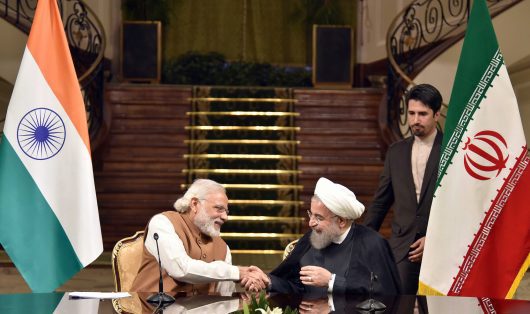
Can Re-Elected President Hassan Rouhani Help Fix the Poverty in Iran?

Can Re-Elected President Hassan Rouhani Help Fix the Poverty in Iran?
During Iran’s recent presidential election, one issue was on the minds of most citizens: how is the new president going to end poverty in Iran?

In 2016, Iran’s unemployment rates reached 70 percent in at least 1,200 towns. Fifteen million Iranians are deprived of even the most basic social services. Much of this unemployment and consequent poverty suggests that the assets gained from the suspension of economic sanctions from the 2015 nuclear deal did not reach the population. The new president has the power to dictate whether Iran becomes a bigger part of the global economy. This led to the deal which passed, rather than pursuing the traditional economic isolation that the country previously had.

With all this going on in Iran, poverty was on the minds of many during this election. Candidates Mostafa Aqa-Mirsalim and Mohammad Baqer Qalibaf both pledged to tackle corruption and poverty in Iran should they be elected. Qalibaf criticized the former Iranian president, Hassan Rouhani, on his economic performances. “There are many poor people with low incomes in a country rich in both natural and human resources,” Qalibaf said in an interview with PressTV. “We have made plans to salvage the economy by the agency of the very people. The country has the capacity, but this cannot come about through traditional, conservative and rent-seeking-based management styles.”

In the elections, held on May 19, Hassan Rouhani won re-election by a landslide with 57 percent of the vote. Despite poor economic conditions, the people of Iran have decided to give Rouhani a second chance to deliver on his promises of alleviating poverty and reforming the government. Iran’s current government is run by a religious leader, with the president playing a big role in foreign affairs and other political decisions.

However, many Iranians want a government that supports more human rights and social freedoms. While Iran now has more access to social media and the internet, activists and journalists are still being jailed for speaking out against the government.

With Rouhani in office, the people of Iran hope that he will take the uphill climb to help Iran’s economy and social situations.

– Kelsey Jackson

Photo: Flickr

June 23, 2017
https://borgenproject.org/wp-content/uploads/borgen-project-logo.svg 0 0 Borgen Project https://borgenproject.org/wp-content/uploads/borgen-project-logo.svg Borgen Project2017-06-23 01:30:272024-12-13 17:58:08Can Re-Elected President Hassan Rouhani Help Fix the Poverty in Iran?
Global Poverty, Politics

A Beginner’s 10-Step Guide to Lobby Politicians


A crucial part of the political process is to engage in dialogue with one’s representatives at the local, state and federal level–this is what it means to lobby politicians. State definitions of the terms “lobbying” and “lobbyist” vary, but the common perception of lobbying is influencing government action through written or verbal communication. As such, compensation does not define the lobbying process. However, it is a necessary component of being a professional lobbyist.

Some state regulations place thresholds on the amount of money and time required to categorize lobbyists properly. Others use reimbursement of any form to classify the activity under statutory laws. Types of compensation may include food, entertainment and other recreational activities furnished to legislators. There are exceptions to lobbying activities in many states such as journalism, written correspondence and testifying.

Often, the term lobbyist carries a negative connotation: big money, special interests and a rigged system. The term may be used to describe those who are employed professionally: corporate advocates who fight for favorable policies. The term is also used to described citizens engaged in the prodding of politicians to improve representation. This article discusses the latter.

So, how does one lobby politicians? Here are 10 tips to effectively lobby for a cause, bill or issue you are passionate about.

  1. Download mobile apps, such as TrackBill or Countable, to monitor the progress of legislation through Congress. Find bills to support or reject and request your representatives to co-sponsor them or vote accordingly.
  2. Write letters to your senators and representatives or email them through The Borgen Project. Another quick and effective tool is to lobby politicians through social media platforms, such as Twitter or Facebook.
  3. Email the White House to inform the president of your views on various regulations, policies and tax issues.
  4. Attend an on-site or virtual town hall event in your congressional district.
  5. Schedule an appointment to meet with a congressional staffer or your representative face-to-face in one of their multiple district offices. These meet-and-greet opportunities may sway a vote on the floor of the house or senate; never underestimate the power of a 30-minute meeting. Prepare beforehand – research the politician, their views, prior votes and legislative positions. Be knowledgeable about counter-arguments to your position and use data whenever possible.
  6. Call your congressional representatives frequently and add their numbers to your phone. At the very least, leave short and concise messages. Staffers compile a weekly legislative report on the number of calls, letters and emails on issues or bills received from engaged citizens. These reports are used by politicians to enhance or redirect their legislative agenda.
  7. Join and donate to nongovernmental organizations, such as The Borgen Project, to support their mission and charitable work. Lobbying efforts on an organizational level carry financial strength, unbridled energy, citizen mobilization, clear legislative agendas and media outreach.
  8. Do not complain about a piece of legislation: offer an amendment to grant exemptions. Take time to develop a viable solution and present it to your leader.
  9. Craft letters to the editor based on interactions with legislative staff and congressional representatives. Such correspondence enriches political discourse and may inspire readers to take action.
  10. Mobilize others to become involved in politics. Call leaders, write articles, organize events and march for a cause. Meet with politicians to bring awareness to issues which matter most to your family, friends, organization or community. Perhaps you are an expert in a particular subject which your representatives are not; lend them your recommendations. If you have an idea for improving policy, make it known.

Citizen advocacy, or personal lobbying, is a vital element of participatory democracies. Individuals who are unaffiliated with a political party, nongovernmental organization or special interest groups may participate in the political process through email, letters, phone calls and congressional meetings on matters of interest. Download legislative apps, track legislation, contact your leaders, mobilize your friends and family, post on social media, utilize personal connections and take action!

– JG Federman

Photo: Flickr

June 22, 2017
https://borgenproject.org/wp-content/uploads/borgen-project-logo.svg 0 0 Borgen Project https://borgenproject.org/wp-content/uploads/borgen-project-logo.svg Borgen Project2017-06-22 07:30:582024-12-13 17:58:06A Beginner’s 10-Step Guide to Lobby Politicians
Global Poverty, Politics

How to Be a Citizen Lobbyist: Three Simple Steps to Get Started


To most, the word “lobbyist” usually inspires images of big corporations influencing politicians. However, this image is not entirely accurate. Lobbying is actually a useful tool that average people can and should use. It is a form of advocacy that focuses on educating or influencing representatives in our government. You do not need money or power to lobby.  You need only a voice, and by following these three steps, you can learn how to be a citizen lobbyist.

Step 1: Know who you are and the power you have.
American citizens ages 18 and older have the power to vote and are essential pieces of the country’s democratic system. However, few know that they are also constituents. Essentially, a constituent is a member of a community or a part of a whole.

Every citizen is a constituent to three individuals in Congress, and it’s paramount to know whose constituent you are. These three individuals are the two senators representing your state and the congressman or congresswoman representing your district. These representatives represent you and your interests in the legislation they vote for, and it’s important to know you have the power to influence their vote.

Members of Congress will listen to their constituents over other citizens because those are the people they are elected by and represent. For example, senators are not too interested in listening to citizens of another state. They would rather like to know what their constituents are thinking and worrying about. You can find out who your three representatives in Congress are on the Borgen Project’s Who Are My Leaders? page.

Step 2: Know what you can do as a constituent.
Members of Congress are voted in by their constituents, and it would be foolish of them not to listen to their constituents. Now that you know you have this power over them, it is helpful to know how to use it. Using this power is easy.

Simply put, it’s all about getting your word out. Representatives are not mind-readers; they are politicians. The best way to get politicians to vote on something you may be passionate about is to talk to them about it. You don’t have to walk into their office and proclaim your dream of a poverty-free world. An email, call or written letter all get the job done, and you can always do all three. You can even write a letter to the editor of your local newspaper discussing a certain bill or use social media to contact your representatives.

If you are the outgoing, adventurous type, try attending events where your representatives will be speaking or schedule a meeting with them. The more you meet with your representatives or attend their town hall meetings, the more they and their staff will get to know you and your cause.

Step 3: Practice.
Now that you know how to be a citizen lobbyist, it is your job to practice being an active citizen.

If you are shy, start out with phone calls or emails. They can be as simple as mentioning you are a constituent, your name and the bill you would like them to support. For the more outgoing, show up at the next town hall meeting.

Once you get a representative to support a piece of legislation, ask them to co-sponsor it as well. Co-sponsoring is like getting your representative to represent the issue to other members of Congress and asking them to support the bill as well.

By following these three easy steps, you too can learn how to be a citizen lobbyist.

– James Hardison

Photo: Flickr

June 17, 2017
https://borgenproject.org/wp-content/uploads/borgen-project-logo.svg 0 0 Borgen Project https://borgenproject.org/wp-content/uploads/borgen-project-logo.svg Borgen Project2017-06-17 01:30:212024-05-28 00:02:09How to Be a Citizen Lobbyist: Three Simple Steps to Get Started
Global Poverty, Politics

How Presidents are Impeached in the United States

How Presidents are ImpeachedThe U.S. Constitution created the standard of impeachment to ensure that an official of the judicial or executive branch may be removed from office if they meet the grounds of treason, bribery or other high crimes and misdemeanors. How presidents are impeached is an extensive process.

It begins in the House of Representatives, which reserves the sole power of impeachment. This means that for an impeachment trial to begin, it must be initiated in a declaration by a member of the House. In promoting such a declaration, though, the process can be encouraged by the judicial conference of the U.S., an independent counsel, the president, a state or territorial legislature, a grand jury or a petition.

The House examines all charges of impeachment before putting it to vote, usually by the House Committee on the Judiciary. That committee then needs a majority vote confirming allegations of treason, bribery, or other high crimes and misdemeanors for the impeachment to be proposed to the full House.

If it is brought to the full House, the committee presents all specific allegations to be voted on. The House can vote on each article of misdemeanor separately, or the overall accusation, and if the majority votes for impeachment then managers are selected to bring the case to Senate.

There is no set definition for what these allegations should include, which can make it difficult to determine how presidents are impeached, but it is widely accepted that impeachment should only be considered in cases of a clear disregard for duty, whether criminal or otherwise.

Any formal accusation, by majority vote, is considered impeachment. This often-overlooked definition means that in the notable case of Bill Clinton, for instance, he never was convicted but he was impeached in 1998 when the Republican-controlled House voted to bring the allegations against him to the Senate.

By contrast, Richard Nixon resigned in 1974 before he could be impeached by the House, let alone convicted by the Senate.

The sole power to try all impeachments is held by the U.S. Senate, and the proceedings are similar to a case held in court. The managers are chosen by the House present evidence to either the full Senate or a chosen subcommittee on a set trial date, providing witnesses and opening and closing arguments.

Each article of impeachment is voted on separately by the Senate as a whole, and one or more must obtain a two-thirds vote for conviction. Any convicted officer will be removed from office, but the Senate can vote on whether they are barred from holding any other office of public trust under the United States (in which case they only require a majority vote).

This is how presidents are impeached, and if it is a different official being removed from office, the president does not have the ability to pardon them.

– Brooke Clayton

Photo: Flickr

June 8, 2017
https://borgenproject.org/wp-content/uploads/borgen-project-logo.svg 0 0 Borgen Project https://borgenproject.org/wp-content/uploads/borgen-project-logo.svg Borgen Project2017-06-08 07:30:402020-04-19 16:43:43How Presidents are Impeached in the United States
Global Poverty, Politics, United Nations

UN: Nationalist Politics A “Wall” to Progress


Since 1990, the number of people living in extreme poverty has decreased by one billion, and the under-five death rate has been cut in half. Despite these great strides toward ending global poverty, a recent U.N. report by Selim Jahan cites current politics and rising nationalism as “antithetical to human development.”

Exclusion, isolation and intolerance are extremely dangerous globally and domestically. In the United States, citizens have had a small taste of this nationalism, with the proposed refugee ban, the proposed cut of 28.7% to USAID and the literal wall proposed on the border between the U.S. and Mexico.

U.S. Representative and Republican chairman of the House of Representatives Foreign Affairs committee Ed Royce said in response to the proposed foreign aid cuts: “I am very concerned by reports of deep cuts that could damage efforts to combat terrorism, save lives and create opportunities for American workers.”.

The Annual Human Development index report by the United Nations Development Program (UNDP) credits the successes in decreasing poverty worldwide to “global actions” and “collaboration.”

Foreign aid should not be a partisan issue nor a byproduct of intolerant politics and nationalism, as has been the unfortunate case in recent years. President Ronald Reagan was a powerful advocate for foreign assistance programs and is quoted as saying that, “Our national interests are inextricably tied to the security and development of our friends and allies.”

If prosperous nations lose sight of the goal, they could leave millions of people behind worldwide and the results from the last 20 years of humanitarian work could be lost. There remain 800 million people in the world living on less than $1.25 per day. Helping these people will require continued dedication.

– Dustin Jayroe

Photo: Flickr

June 3, 2017
https://borgenproject.org/wp-content/uploads/borgen-project-logo.svg 0 0 Borgen Project https://borgenproject.org/wp-content/uploads/borgen-project-logo.svg Borgen Project2017-06-03 07:30:192020-08-21 05:45:17UN: Nationalist Politics A “Wall” to Progress
Global Poverty, Politics

President Emmanuel Macron Vows to Help Poor


On May 7, Emmanuel Macron, a former investment banker and political newcomer, became president of France. The French election was divisive, but among the strongest supporters of President Macron’s centrist policies were those living in poverty across the globe and those hoping to help them.

Macron has vowed to increase France’s foreign aid budget to 0.7 percent of the country’s GDP. Three years ago that budget was 0.36 percent, which translated to $10 billion. With the budget doubled, many impoverished people can expect to see increased aid from France.

In his own words, Macron envisions a newly open relationship with Africa, “without any false post-colonial coyness.” The history of French intervention in Africa will not be brushed under the rug with his administration, rather it will be rectified by investing in the developing continent.

As a former investment banker, Macron sees how investing in Africa’s development now will help his country in the long run. Of World Finance’s five fastest growing economies in 2017, three are African countries: Ethiopia, Ghana and Cote D’Ivoire. Further, Macron will hold France to the economic partnership made between the EU and the Southern Africa Development Community last year.

Macron has also committed to the U.N.’s 2030 Agenda for Sustainable Development, which states one of its direct goals is “to end poverty and hunger.” In June, he’s agreed to lobby the G20 Summit to invest in Africa’s economic development as well.

Amid threats of terrorism and corruption in many African countries, President Emmanuel Macron emphasizes solidifying safety and autonomy abroad more than anything else. Dictatorships threatening democracy were supposedly strengthened by French leaders for years, serving their own interests in place of the African people. This system, referred to as the “francafrique,” is one of the imperial remnants that Macron intends to completely do away with as he builds a fresh relationship with Africa.

In an election dominated by domestic affairs, President Emmanuel Macron dedicated himself to being an ally to the world’s poor. Time will tell the benefits that his election brings.

– Brooke Clayton

Photo: Flickr

June 2, 2017
https://borgenproject.org/wp-content/uploads/borgen-project-logo.svg 0 0 Borgen Project https://borgenproject.org/wp-content/uploads/borgen-project-logo.svg Borgen Project2017-06-02 01:30:222020-03-15 21:02:46President Emmanuel Macron Vows to Help Poor
Global Poverty, Politics

Has Norfolk Island’s Loss of Independence Solved Its Poverty?

Norfolk island
Two years ago, Norfolk Island lost its independence after 68 years to become an official territory of Australia.

The new reforms, due to Norfolk Island’s severe economic downturn and high poverty rates, took effect on July 1, 2015. Half the population is at or below the poverty line.

The remote island between Australia and New Zealand relies on tourism for its main industry, but when its tourism rates heavily declined, the island began going to Australia for economic help.

The mainland decided to make Norfolk an official territory in which the 1,800 residents would have to pay personal and business income taxes to Australia. In return, Norfolk is provided with healthcare and social security benefits which they had previously been denied.

Many Norfolk Islanders resented this change due to the island’s deep roots of nationalism. The island was established in 1856 when 194 Pitcairn Islanders and their Tahitian companies settled there. Around 38 percent of the islanders are descendants of the original settlers.

“History is being rewritten around us about who we are and who we were. Our political heritage has been completely erased,” said Andre Nobbs, a former prime minister and descendant of a Pitcairn family. “You imagine all of those things happening to you as a people or a nation.”

So many Norfolk Islander’s feel that this change is a violation of the island’s rich political heritage and present the new mainland rule. To this day, they refer to themselves as Norfolk Islanders, and that the word ‘Australian’ on their passports is merely a technicality. With so much disapproval, it’s a wonder why the shift in power should even have happened.

The answer is because it works. Today, the island’s economy is taking off. The real estate industry has done more business in the last nine months than it has in the past seven years, more tourists are coming and new medical facilities and better schools have come about from this shift in power. Nonstop flights to and from Auckland have returned as of April this year. Many visitors to Norfolk Island have decided to move there permanently after a holiday there.

While the people of Norfolk will refer to themselves as Norfolk Islanders before they admit any connection to Australia, becoming a territory of Australia has greatly improved the economic state of the island.

– Kelsey Jackson

Photo: Flickr

May 26, 2017
https://borgenproject.org/wp-content/uploads/borgen-project-logo.svg 0 0 Borgen Project https://borgenproject.org/wp-content/uploads/borgen-project-logo.svg Borgen Project2017-05-26 01:30:072024-12-13 17:58:02Has Norfolk Island’s Loss of Independence Solved Its Poverty?
Foreign Aid, Global Poverty, Politics

5 Quotes From Former Presidents on Foreign Aid

Foreign Aid Quotes
The Trump administration’s proposed cuts to the International Affairs Budget would slash U.S. foreign aid to levels not seen since the ’70s and ’90s. Foreshadowing these proposed cuts, President Trump remarked during his campaign that America should “stop sending foreign aid to countries that hate us.”

In a March 2016 interview, Trump also commented on the purported futility of foreign aid as he spoke about building schools in Iraq: “I watched as we built schools in Iraq, and they’d be blown up. And we’d build another one, and it would get blown up… And yet we can’t build a school in Brooklyn… at what point do you say, hey, we have to take care of ourselves.”

How does President Trump’s position on overseas assistance compare with other U.S. presidents? Here are five quotes from former presidents on foreign aid:

  1. George W. Bush, NPR interview, April 2017 — “When you have an entire generation of people being wiped out, and the free world turns its back, it provides a convenient opportunity for people to spread extremism.”
  2. Barack Obama, Vox interview, Feb. 2015 — “If you look at our foreign assistance as a tool in our national security portfolio as opposed to charity, and you combined our defense budget overall with our diplomatic budget and our foreign assistance budget, then in that mix, there is a lot more we should be doing.”
  3. Ronald Reagan, White House remarks, Oct. 1987 –“You know the excuses: We can’t afford foreign aid anymore, or we’re wasting money pouring it into these poor countries, or we can’t buy friends—other countries just take the money and dislike us for giving it. Well, all these excuses are just that, excuses—and they’re dead wrong.”
  4. John F. Kennedy, Remarks upon signing the Foreign Assistance Act of 1962, Aug. 1962 –“The amount of money that is involved in the nonmilitary areas are a fraction of what we spend on our national defense every year, and yet this is very much related to our national security and is as important dollar for dollar as any expenditure for national defense itself.”
  5. Harry S. Truman, Statement upon signing the Foreign Assistance Act of 1948, Apr. 1948 — “Our program of foreign aid is perhaps the greatest venture in constructive statesmanship that any nation has undertaken. It is an outstanding example of cooperative endeavor for the common good.”

These quotes from former presidents on foreign aid highlight the longstanding history of American engagement overseas. Here are two examples of these sentiments in action: firstly, the Foreign Assistance Act of 1948, otherwise known as the Marshall Plan, played a vital role in helping to rebuild Europe after WWII. Consequently, the European Union is now the largest trading partner of the U.S. Secondly, George W. Bush’s investment in the PEPFAR initiative continues to save countless lives from the scourge of HIV/AIDS in sub-Saharan Africa and is widely acknowledged as a remarkable success.

Foreign aid serves many purposes: ensuring national security, promoting humanitarian values and advancing U.S. economic interests overseas. Disengaging and ceding our leadership in this regard is not in our nation’s best interest. The above quotes from former presidents on foreign aid present a different vision for U.S. leadership overseas than from the isolationist approach outlined by President Trump.

Thankfully, with Trump’s proposal “dead on arrival,” it appears many members of Congress concur with these former presidents on the value of foreign aid and the vital role it plays in pursuit of the national interest.

– Michael Farquharson

Photo: Flickr

May 26, 2017
https://borgenproject.org/wp-content/uploads/borgen-project-logo.svg 0 0 Borgen Project https://borgenproject.org/wp-content/uploads/borgen-project-logo.svg Borgen Project2017-05-26 01:30:012024-12-13 17:58:015 Quotes From Former Presidents on Foreign Aid
Page 14 of 17«‹1213141516›»

Get Smarter

  • Global Poverty 101
  • Global Poverty… The Good News
  • Global Poverty & U.S. Jobs
  • Global Poverty and National Security
  • Innovative Solutions to Poverty
  • Global Poverty & Aid FAQ’s
Search Search

Take Action

  • Call Congress
  • Email Congress
  • Donate
  • 30 Ways to Help
  • Volunteer Ops
  • Internships
  • Courses & Certificates
  • The Podcast
Borgen Project

“The Borgen Project is an incredible nonprofit organization that is addressing poverty and hunger and working towards ending them.”

-The Huffington Post

Inside The Borgen Project

  • Contact
  • About
  • Financials
  • President
  • Board of Directors
  • Board of Advisors

International Links

  • UK Email Parliament
  • UK Donate
  • Canada Email Parliament

Get Smarter

  • Global Poverty 101
  • Global Poverty… The Good News
  • Global Poverty & U.S. Jobs
  • Global Poverty and National Security
  • Innovative Solutions to Poverty
  • Global Poverty & Aid FAQ’s

Ways to Help

  • Call Congress
  • Email Congress
  • Donate
  • 30 Ways to Help
  • Volunteer Ops
  • Internships
  • Courses & Certificates
  • The Podcast
Scroll to top Scroll to top Scroll to top