• Link to X
  • Link to Facebook
  • Link to Instagram
  • Link to TikTok
  • Link to Youtube
  • About
    • About Us
      • President
      • Board of Directors
      • Board of Advisors
      • Financials
      • Our Methodology
      • Success Tracker
      • Contact
  • Act Now
    • 30 Ways to Help
      • Email Congress
      • Call Congress
      • Volunteer
      • Courses & Certificates
      • Be a Donor
    • Internships
      • In-Office Internships
      • Remote Internships
    • Legislation
      • Politics 101
  • The Blog
  • The Podcast
  • Magazine
  • Donate
  • Click to open the search input field Click to open the search input field Search
  • Menu Menu

Archive for category: Human Rights

Information and stories about human rights.

Global Poverty, Human Rights, Human Trafficking

Top 10 Facts About Human Rights in Venezuela

Top 10 Facts About Human Rights in Venezuela
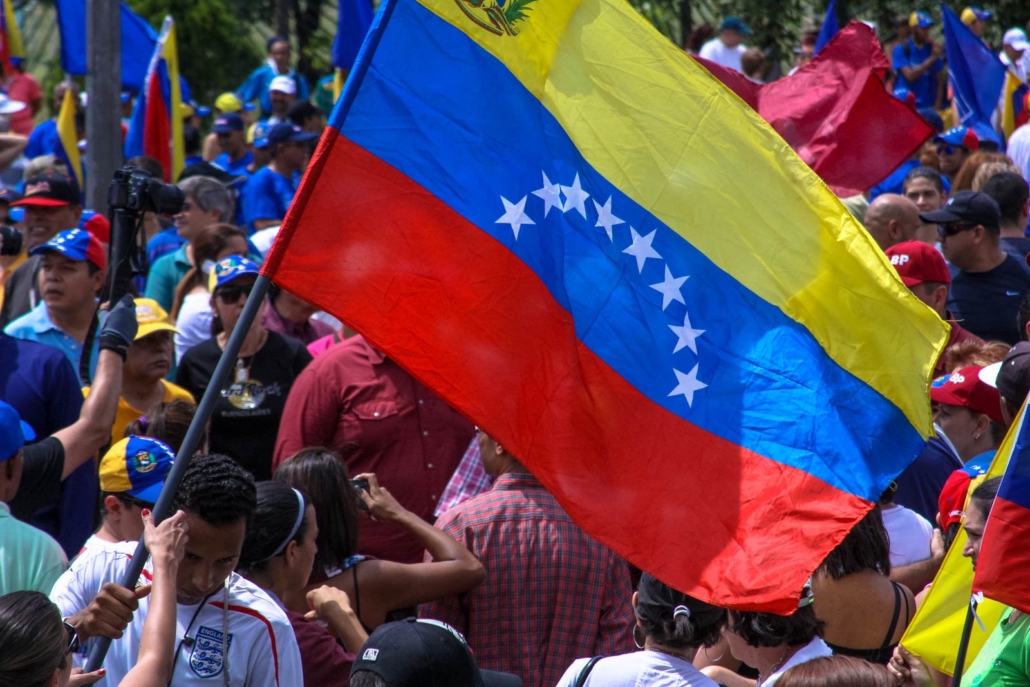
People have long associated the current humanitarian crisis in Venezuela with the autocratic governance of late President Nicolás Maduro and decades of socioeconomic downfall. Gross political corruption persists in Venezuela that constitutional violations show. These began in 2017 and have barred acting president Juan Guaidó from assuming the duties of his office. In September 2019, The UN Human Rights Council dispatched a team to the country to investigate alleged human rights abuses, including state-sanctioned killings, forced disappearances and torture. With this information in mind, here are the top 10 facts about human rights in Venezuela.

Top 10 Facts About Human Rights in Venezuela

  1. The Situation: Deteriorating social and economic conditions in Venezuela have incited a refugee crisis in the country. Since 2014, more than four million Venezuelans have fled (a figure which excludes unregistered migrants). Displaced by violence and corruption, Venezuelan migrants struggle to obtain legal residence, food security, education and health care resources in the nations they flee to. These bureaucratic hurdles and unstable living situations force many to return home.
  2. Maduro and Corruption: The dismantling of Venezuela’s National Assembly in March 2017 was the Maduro Administration’s first attempt of many to silence political opposition. The move stripped the opposition-led parliament of its legislating powers and immunity—important checks against potential exploits by the executive branch. Research from Amnesty International confirms that Maduro’s government used torture, unhinged homicides and extrajudicial executions to maintain support in the years following this constitutional scandal.
  3. Protests and Arrests: Nationwide protests and demonstrations began in 2014 in response to human rights violations and a buckling economy. According to the Penal Forum, authorities have arrested more than 12,500 people between the years 2014 and 2018 in connection with protests. Security personnel and government-backed militias often use excessive force—tear gas, firearms, asphyxiation, severe beatings and electroshock, etc.—against protesters and detainees in order to quell resistance efforts.
  4. Censorship: Maduro’s regime has used censorship of mainstream media to control Venezuelan civilians and eliminate its critics. A pervasive fear of reprisal effectively denies Venezuelans their freedom of expression and speech.  During times of global scrutiny, the government has blocked online news broadcasts, VPN access and streaming services to curb bad press and anti-government organizing. The government staged an information blackout in February 2019 in response to a clash between the military and aid convoys at the Colombian border.
  5. Political Bribery: The Venezuelan government has used political bribery to keep Venezuelans compliant. The government has used its monopoly on resources to withhold food and other basic goods from dissenters and reward supporters with the same incentives. In 2016, Maduro launched the government-subsidized food program, Local Food Production and Provision Committees (CLAPS). Through this insidious program, Venezuelans received monthly (oftentimes late or empty) food shares in exchange for having their voting activity tracked.
  6. Human Rights Crisis Denial: In February 2019 Maduro denied claims to the BBC that the country was undergoing a human rights crisis. He has repeatedly used the same rhetoric to reject foreign aid and unassailable evidence of health and welfare shortages in the country, by equating the acceptance of aid with the fall of his regime. That same month, there were disputes over $20 million in U.S. and European aid shipments at the Colombia-Venezuela border.
  7. Venezuela’s Inflation Rate: The International Monetary Fund forecasts Venezuela’s inflation rate will reach 10 million percent in 2019. Food scarcity and hyperinflation have led to millions of cases of malnutrition and premature death, especially amongst children.
  8. Doctors and Hospitals: Twenty thousand registered doctors have left Venezuela between 2012 and 2017 due to poor working conditions and growing infant mortality rates. Hospitals are unhygienic and understaffed, lacking the medicine and medical equipment to accommodate the excess number of patients. Tentative water sources and power outages make most cases inoperable, presenting a liability to doctors and causing untreated patients to become violent.
  9. Death Squads: In June 2019, the UN reported that government-backed death squads killed nearly 7,000 people from 2018 to May 2019. Maduro attempted to legitimize the killings by using the Venezuelan Special Police Force (FAES) to conduct the raids, which he staged through family separation techniques and the illegal planting of contraband and narcotics. Again, Maduro devised this strategy to threaten political opponents and people critical of the Maduro government.
  10. Human Trafficking: A 2016 report conducted by the U.S. Department of State condemned Venezuela’s handling of human trafficking in the country, in both regards to sex trafficking and internal forced labor. Venezuela lacks the infrastructure to properly identify and assist trafficking victims due to governmental corruption and rampant gain violence which facilitates human trafficking and forgoes accountability. Traffickers often trick or coerce Venezuelan migrants into the sex trade. In fact, 10 percent of 1,700 recorded trafficking victims in Peru between 2017 and 2018 were Venezuelan.

The top 10 facts about human rights in Venezuela should read as a call to action. Global aid agencies and national governments are currently working to bring humanitarian aid to Venezuelans and the growing Venezuelan migrant community. While the current political climate complicates internal relief efforts, spreading awareness about the state of human rights in Venezuela is the first step in addressing the crisis.

Cuarto Por Venezuela Foundation is a nonprofit organization conceived in 2016 by four Venezuelan women living in the United States eager to alleviate the situation at home. The Foundation works to create programs and partnerships to deliver comprehensive aid to Venezuelans in need. In 2018, the organization shipped over 63,000 lbs. of medicine, food and school supplies to Venezuela (four times the number of supplies shipped the previous year). Additionally, its health program has served nearly 40,000 patients to date through vaccination and disease prevention services.

– Elena Robidoux
Photo: Flickr

October 24, 2019
https://borgenproject.org/wp-content/uploads/borgen-project-logo.svg 0 0 Jennifer Philipp https://borgenproject.org/wp-content/uploads/borgen-project-logo.svg Jennifer Philipp2019-10-24 08:44:372020-01-18 15:01:28Top 10 Facts About Human Rights in Venezuela
Activism, Developing Countries, Development, Global Poverty, Human Rights

Consequences of Violence in Nicaragua

Consequences of Violence in Nicaragua
Since April 2018, the citizens of Nicaragua have been protesting against its government. What started originally as a movement against changes to the social security program quickly turned into an opposition movement demanding President Daniel Ortega and his wife’s resignations. The protests turned violent when anti-government protesters clashed with pro-government protesters and police. As a result, these protests resulted in the killings of more than 300 people and about 2,000 people becoming injured. Here are the major consequences of violence in Nicaragua.

Human Rights Concerns

One of the consequences of violence in Nicaragua has been the concerns surrounding human rights abuses by the government. According to Human Rights Watch, the Ortega administration has violated Nicaraguan citizens’ human rights by “[banning] public demonstrations by any group critical of the government, (…) [stripping] nine non-governmental organizations of their legal registration, [shutting] down media outlets, [prosecuting] journalists under the anti-terrorism law, and [expelling] international monitors from the country. The Ortega government has harassed and threatened the media, human rights defenders and other members of civil society.”

Additionally, it appears that the Nicaraguan government is not only denying its people the freedoms they are entitled to, but it is also retaliating against the reports the UN High Commissioner for Refugees (UNHCR) published. This becomes especially apparent by the government’s reactions to the release of these reports: “Following the high commissioner’s first report, the Ortega administration failed to hold perpetrators accountable for abuses and instead promoted senior officials who bear responsibility for killings and torture of demonstrators. In response to the high commissioner’s second report, the government has even defended the armed pro-government thugs that participated in repressing protests.”

Forced Migration

Additional consequences of the violence in Nicaragua is the forced displacement of 80,000 Nicaraguan citizens who are no longer able to live in their home country. Many are seeking asylum and refuge in neighboring countries like Costa Rica, Panama, Mexico and the United States. Of the 33,000 asylum requests that Costa Rica received in this past year, the country has only processed about 4,900 leaving more than 28,000 people to seek refuge elsewhere. Due to the mass displacement of these Nicaraguan citizens, many must survive on temporary employment or none at all, leaving them to suffer as a result.

Limited Access to Resources

One of the major consequences of violence in Nicaragua is the limited access to necessary resources such as food and health care as a result of the unexpected roadblocks that continually appear throughout the country and the capital, Managua. It is rather unclear whether these roadblocks are government-sponsored or a result of government opposition leaders, however, these often lead to detours and inconveniences when Nicaraguans are attempting to access grocery stores and gas stations. Additionally, government hospitals across the country have begun denying treatment to those who they suspect of being a part of the anti-government movement, which has led to people being unable to receive any kind of treatment for their injuries.

Economic Growth Concerns

In the past, Nicaragua has maintained a steady economic growth rate. In 2017, the growth rate was 4.5 percent. However, in the last year, since the outbreak of violence and political unrest, the economy has contracted about 3.8 percent and the World Bank suspects that this contraction will grow up to 5 percent in 2019. These violent protests have caused many to lose their jobs, while also causing a decrease in consumer and business confidence. As a result, some fear that the violence in Nicaragua will cost recent progress the country has made in poverty reduction efforts.

During the years of 2014 and 2016, poverty rates in Nicaragua had fallen from 29.6 percent to 24.9 percent due to the support of international organizations such as the World Bank’s International Development Association (IDA). Additionally, the extreme poverty rate also dropped from 8.3 percent to 6.9 percent in the same timeframe. It is too early to predict what the poverty rates will be for Nicaragua in 2019, but there is speculation that poverty rates will rise again.

Efforts by International Organizations

After six weeks of protests, U.N. Secretary-General Antonio Guterres addressed the situation in Nicaragua by asking the government to consider allowing the Office of the U.N. High Commissioner for Human Rights (OHCHR) to visit the country. On many occasions, the U.N. has established its willingness to resolve the situation by acting as a mediator in “national dialogue efforts to strengthen the rule of law, respect for human rights and the peaceful resolution of differences.” Additionally, there have been requests for the government to investigate allegations of human rights violations in order to hold perpetrators accountable and to bring much-needed justice and peace of mind for victims’ relatives.

Furthermore, representatives for Amnesty International have spoken out condemning the Nicaraguan governments’ repression of its people. They also suggested the creation of a committee in order to prosecute those guilty of serious human rights violations and crimes. In a report released by Amnesty International titled “Shoot to kill: Nicaragua’s strategy to suppress protest,” there appears to be evidence of Nicaraguan paramilitary forces using lethal weapons against protesters, of which many were students. This report sheds light on the situation in Nicaragua and hopes to bring international awareness in order for others to take action against the repressive forces of the Nicaraguan government.

The consequences of violence in Nicaragua range from human rights concerns to limited access to health care and even issues regarding Nicaragua’s economic growth rate. Though there appears to be no end in sight, there is hope for Nicaragua’s citizens as international organizations attempt to raise awareness and investigate the ongoing crimes committed against the Nicaraguan people. The situation is far from resolution but as it gains more international interest, there is hope that efforts will not be in vain and that the country can find a peaceful resolution.

– Laura Rogers
Photo: Flickr

October 20, 2019
https://borgenproject.org/wp-content/uploads/borgen-project-logo.svg 0 0 Jennifer Philipp https://borgenproject.org/wp-content/uploads/borgen-project-logo.svg Jennifer Philipp2019-10-20 14:00:442019-12-18 11:13:14Consequences of Violence in Nicaragua
Global Poverty, Human Rights

Human Rights in the Dominican Republic

Human Rights in the Dominican Republic

The Dominican Republic is best known globally as a tropical getaway with Americans making up the majority of the tourism income. Travel and tourism alone made up 17.2 percent GDP and 16.0 percent of employment last year in the Dominican Republic. Despite its beauty, human rights in the Dominican Republic do not match the freedoms that Americans are accustomed to back in their homeland. Here are the top 10 facts about human rights in the Dominican Republic.

Top 10 Facts About Human Rights in the Dominican Republic

  1. Police Brutality: The National Human Rights Commission (NHRC) reported more than 180 extrajudicial killings by police forces through 2017. Reports from a top-level prosecutor and the National Commission for Human Rights implicate large amounts of corruption in the police force as a cause for the wrongful murders, nearly 15 percent of all homicides committed are done by the police.
  2. Incarceration: Corruption of the police force has contributed to the eroded human rights in the Dominican Republic.  The United States Bureau of Democracy, Human Rights and Labor reported that there were credible allegations that prisoners paid bribes to obtain early release on parole in 2017. In the same report, prisons were said to range from acceptable conditions to awful conditions, with poor sanitation, and poor access to health-care services in severely overcrowded prisons.
  3. Freedom of Speech: While citizens are allowed to criticize the government of the Dominican Republic freely, there have been reports of journalists being intimidated by the government. Journalists are threatened when investigating organized crime or corruption within the government and when researching in more remote or rural locations.
  4. Privacy: Article 44 of the constitution of the Dominican Republic grants “the right to privacy and personal honor.” No one may enter the homes of citizens unless the police are in pursuit of a criminal blatantly committing a crime. Article 44 also grants the right to private correspondence. However, there have been reports of homes being wrongfully raided by police in impoverished areas.
  5. Child Labour: According to the U.S. Department of Labor Bureau of International Affairs, 28 percent of children in the Dominican Republic had to work in the agricultural sector in 2017. The government is making reforms to end the severe abusive child labor such as over-working and sex-trafficking. The government increased the Labor Inspectorate’s budget from $3.3 million to $4.8 million in 2018 and approved the National Action Plan against Human Trafficking and Illicit Smuggling of Migrants and put forth funding for more after-school programs.
  6. Right to Protest: Citizens of the Dominican Republic have a right to assembly, without prior permission, in lawful protest. Successful protests have occurred, such as the protest against extending the presidential term limit in order to keep President Danilo Medina from running for a third term. There was also a protest called Con Mis Hijos Te Metas (Don’t Mess With Our Children) against the Dominican’s Republic Department of Education on teaching school children about gender ideology, the proper roles for men and women in society.
  7. Education: The World Bank has officially approved funding of up to $100 million USD to help implement education reforms. Their main goal is to improve student learning outcomes. When the last Assessment was done 27 percent of third-grade students had reached acceptable levels in math. Through multiple new programs, the students will soon be able to compete internationally and further invest, as education is an important human right in the Dominican Republic.
  8. Public Healthcare: A universal healthcare system is considered among human rights in the Dominican Republic. Services provided by the public hospitals are free, but medications are not. Health insurance is taken by many of the hospitals and the Pan American Health Organization reports that in 2015, 65 percent of the population was enrolled in the Family Health Insurance system. State financing of the Family Health Insurance system aims to achieve universal coverage. 20 years since the launch of the idea of universal has been slow-going.
  9. Clean Water: The World Bank reports that 74 percent of inhabitants of the Dominican Republic have access to clean water. Those living in rural areas suffer without clean water, resulting in horrible illness, for example, diarrhea is causing half the deaths of children under the age of one.
  10. Foreign Aid: The United States has an important relationship with the Dominican Republic, especially in trade and democracy. While there is a declining poverty rate, inequalities among citizens is high. There is not enough room for growth, the U.S. continues to help address the human rights issues in the Dominican Republic.

–  Nicholas Pirhalla

Photo: Pixabay

October 6, 2019
https://borgenproject.org/wp-content/uploads/borgen-project-logo.svg 0 0 Lynsey Alexander https://borgenproject.org/wp-content/uploads/borgen-project-logo.svg Lynsey Alexander2019-10-06 23:06:002024-06-06 00:32:48Human Rights in the Dominican Republic
Global Poverty, Health, Human Rights, Human Trafficking

10 Facts About Human Trafficking in China

Human Trafficking
Human trafficking is any forced exploitation or trade of human beings against their will. Though it primarily manifests itself in the forms of forced labor and modern slavery, human trafficking can also apply to other issues such as sex trafficking, forced criminality and forced organ removal. China has fallen victim to these increased rates of human trafficking, and the issue will continue to prevail until more people become aware of the horrible atrocities that are occurring throughout the East Asian nation.

10 Facts About Human Trafficking in China

  1. Prevalence of Human Trafficking: Human trafficking significantly impacts China’s migrant population of approximately 180 million people. Many of them work as forced laborers producing bricks, working in factories or mining for coal.
  2. Trafficking in China: Though credible data is not always available or attainable, many sources estimate that a majority of human trafficking in China takes place internally. In other words, most of China’s human trafficking involves its own citizens. These Chinese citizens are subject to traffickers moving or exploiting them throughout the country’s expansive geographical area.
  3. Foreign Women: Due to the Chinese government’s birth control policy, as well as a historic preference for male children, China has an unbalanced gender ratio distribution of 118 males to 100 females. According to researchers, this disparity is contributing to the human trafficking problem in China. Specifically, foreign women often become forced brides for men in China, as well as being forced into prostitution.
  4. Foreign Brides from Myanmar: As previously mentioned, millions of women become foreign brides who fall victim to human trafficking in China. Many of these women come from the nation’s southern neighboring country of Myanmar. According to anecdotal evidence from some women, they were typically sold within a range of approximately $3,000 and $13,000.
  5. Disabled People: In China, many of the targets for human trafficking are disabled people. In fact, in a 2016 report from the China Ministry of Public Security, one of the investigations resulted in the Chinese government’s arrest of 464 suspects. These people were all involved in labor trafficking of disabled Chinese citizens in some capacity.
  6. Organ Trafficking: Organ trafficking is a very obscure yet problematic manifestation of human trafficking in China. Though the Chinese government publicly announced that it would only accept organs for transplants from citizens that have donated voluntarily, many experts still speculate that secretive organ harvesting and trafficking occurs. Reports indicate that, even though the Chinese government claims that roughly 10,000 organ transplants occur each year, the real numbers could be closer to 80,000 per year.
  7. Tier 3 Country: The Trafficking in Persons Report, an annual report that the U.S. State Department issues, listed China as a Tier 3 country. Essentially, Tier 3 countries are nations whose governments do not sufficiently comply with the minimum anti-trafficking standards and are not making any significant efforts to do so. China’s government is not doing all that it can to combat this pervasive issue.
  8. Organizations to End Human Trafficking: Though many of these figures are startling and disheartening, many organizations around the world are currently working towards the eventual eradication of human trafficking in China and around the world. The United Nations Action for Cooperation Against Trafficking in Persons (UN-ACT), for example, is a division of the United Nations that is currently working to improve the human trafficking situation in China. With the implementation of its National Plan of Action II, which is to conclude in 2020, UN-ACT has participated in a number of anti-trafficking actions and initiatives, such as hotspot policing borders and other high-traffic areas for potential victims of human trafficking.
  9. Women’s Roles in Eradicating Human Trafficking: Women organize many of these anti-human trafficking organizations. For example, the All-China Women’s Federation (ACWF) is a group that tackles many human and civil rights abuses throughout China. On July 3, 2019, ACWF conducted training in Central China’s Hunan Province to teach more Chinese women to spot and prevent trafficking and abductions.
  10. Equality Now: Another group called Equality Now has been working to eradicate human trafficking in China and around the world. Equality Now is an organization that works closely with Asian women, as well as other non-governmental organizations, to spread awareness and knowledge about trafficking and how to combat it. In March 2019, Equality Now participated in a conference with over 230 attendees to share ideas, anecdotes and methods to successfully spot and combat human trafficking, as well as provide critical support for victims and survivors.

Evidently, China has a continuously growing issue of human trafficking. Both Chinese citizens and foreigners can suffer exploitation in forced labor, among other things. Because of China’s vast geographic reach, combatting this issue is more difficult. That said, government initiatives, as well as anti-trafficking non-governmental organizations and local groups, are all contributing to decreasing human trafficking throughout China. The problem may seem insurmountable now, but as long as people continue to learn and spread awareness about trafficking in China, solutions will become more clear.

– Ethan Marchetti
Photo: Flickr

September 21, 2019
https://borgenproject.org/wp-content/uploads/borgen-project-logo.svg 0 0 Jennifer Philipp https://borgenproject.org/wp-content/uploads/borgen-project-logo.svg Jennifer Philipp2019-09-21 10:30:192022-07-13 07:53:2210 Facts About Human Trafficking in China
Global Poverty, Human Rights

Abuse of Guest Workers in Saudi Arabia

Guest workers
The exploitation of guest workers in Saudi Arabia has been a common occurrence for many years. Eleven million guest workers have come to the Middle Eastern nation in order to find an opportunity to support their families back home. What some meet with is abuse and hardship from their employers for a variety of reasons. These workers are not citizens and they have a limited number of rights to protect them.

Discovery of Oil and the Demand for Workers

When people discovered oil in Saudi Arabia in the 1930s, it was still a very young country having only established in 1932. The country was one of the most underdeveloped and poorest in the world and did not have the means to extract this oil.

To profit from its discovery, the Saudi government brought in guest workers from the West after World War II and they were mostly professionals in the oil industry. After its success,  it eventually required workers from neighboring Middle Eastern countries such as Egypt, Yemen and Palestine as well, especially as the gas crisis in 1973 raised the demand for oil.

As the economy of Saudi Arabia grew, there came a need for more workers in other industries of the country besides oil. As a result, guest workers from other Asian nations such as Pakistan, India, the Philippines, Bangladesh, Indonesia and Sri Lanka went to Saudi Arabia for work.

Guest Worker Abuses

Human Rights Watch, an international organization, describes the conditions of the guest workers in Saudi Arabia as being similar to slavery. These workers are beaten, exploited, overworked, underpaid and sometimes not even paid at all. The abuse of these workers is deep-seated in race, gender and religious discriminations.

Over 900,000 Filipinos are working in Saudi Arabia and many of them work in the service industries including hotels. There was an instance where 15 Filipino hotel guest workers had to work more than their scheduled 40 hours a week. When they did not receive overtime pay their employers owed them, they complained to the hotel manager who told them to be quiet or they would have them deported.

Guest workers do not have the convenience of collective bargains or unions to protect them from this type of abuse. Saudi employers can dismiss their guest workers at any time regardless of what employment contracts. An employer dismissed a 26-year-old Bangladesh guest worker named Bachu after only seven months because they did not need him anymore. The unexpected termination forced the now jobless worker to attempt to obtain a job illegally, which resulted in his arrest and deportation back to Bangladesh.

There are very few laws that protect guest workers from abuses in regard to the law. There are instances of workers receiving false accusations of crimes, harsh penalties, unfair trials and random arrests. One such incident occurred in 2005 with the arrest and execution of a Sri Lankan maid named Rizana Nafeek. The 24-year-old housemaid suffered the accusation of murdering the baby that she was in charge of taking care of, but she claimed it died from choking. She did not have a translator during her interrogation and the authorities beat her into signing a confession. She was only one of the 100,000 Sri Lankan maids that are guest workers in Saudi Arabia. Over 100 guest workers are sitting on death row in the country.

Changes for the Workers

Recently, the Saudi Arabian government has taken steps towards protecting its guest workers through a series of legislations. In 2015, the government voted on these laws and will impose hefty fines on businesses that it finds guilty of abuses such as not paying employees on time, violating health and safety and employing children under 15.

The U.N. has adopted resolutions that would protect guest workers in not only Saudi Arabia but around the world. The International Convention on the Protection of the Rights of All Migrant Workers and Members of their Families emerged to protect the human rights of the 164 million guest workers throughout the world.

Saudi Arabia is a young and growing nation. The use of guest workers has helped its economy expand and thrive as a nation. The treatment of these workers has brought much negative attention to the country, though. It is taking steps, however, to ensure that the abuse and exploitation of these workers come to an end.

– Sam Bostwick
Photo: Wikipedia Commons

September 3, 2019
https://borgenproject.org/wp-content/uploads/borgen-project-logo.svg 0 0 Kim Thelwell https://borgenproject.org/wp-content/uploads/borgen-project-logo.svg Kim Thelwell2019-09-03 15:14:432024-12-13 18:01:53Abuse of Guest Workers in Saudi Arabia
Food & Hunger, Gender Equality, Global Poverty, Human Rights

10 International Issues to Watch

10 International Issues to WatchWith the world always changing, there are some issues that remain constant. Some of these issues are directly related to poverty while other events increase the likelihood of creating impoverished communities. Here are 10 international issues to watch in relation to world poverty.

10 International Issues to Watch

  1. Poverty in sub-Saharan Africa
    The good news is that global poverty rates have been dropping since the turn of the century. Nevertheless, there is still work that needs to be done. Approximately 10 percent of people in developing areas live on less than $2 per day. Poverty rates have declined in Eastern and Southeastern Asia, but more than 40 percent of residents of sub-Saharan Africa still live below the poverty line.
  2. Lack of Access to Clean Water
    There are more than 2 billion people in the world who cannot access clean water in their own homes. Lack of access to clean water increases the likelihood of contracting illnesses. When people get sick, they have to spend money on medicine, which can cause families to fall into extreme poverty. In other cases, people have to travel extremely far to collect clean water. Altogether, women and girls spend approximately 200 million hours walking to get water daily. Access to clean water is one of the 10 international issues to watch in relation to world poverty.
  3. Food Security
    By 2050, the world will need to feed 9 billion people, but there will be a 60 percent greater food demand than there is today. Thus, the United Nations is taking steps to address the problem. The U.N. has set improving food security, improving sustainable agriculture and ending hunger as some of their primary focuses by the year 2030. The U.N. must address a wide range of issues to combat these problems. These issues include gender parity, global warming and aging populations.
  4. Improving Education
    Most impoverished communities around the world lack a solid education system. Some common barriers include families being unable to afford school, children having to work to support their family and the undervaluing of girls’ education. UNESCO estimates more than 170 million people could be lifted out of poverty if they had basic reading skills.
  5. Limited Access to Jobs
    In rural and developing communities around the world, there is often limited access to job opportunities. There is a multitude of factors that can lead to a lack of adequate work or even no opportunities at all. Two common roadblocks are a lack of access to land and a limit of resources due to overexploitation. It is obvious that no available means to make money ensures that a family cannot survive without outside help.
  6. Limiting Global Conflict
    When conflict occurs, it impacts the poor the hardest. Social welfare type programs are drained, rural infrastructure may be destroyed in conflict zones and security personnel moves into urban areas, leaving smaller communities behind. At the state level, impoverished communities have lower resilience to conflict because they may not have strong government institutions. Poverty and conflict correlate strongly with one another.
  7. Gender Equality
    From a financial standpoint, gender equality is vital to improving the world economy. The World Economic Forum states that it would take another 118 years to achieve a gender-neutral economy. In 2015, the average male made $10 thousand more a year than their female counterparts. However, there has been an increased amount of awareness on the issue that may lead to an improved economy for all.
  8. Defending Human Rights
    In 2018, the world saw a decline in global freedom. However, over the last 12 consecutive years, global freedom rights have decreased. More than 70 countries have experienced a decline in political and civil liberties. However, in 2019, steps are being taken to limit this problem. At the International Conference on Population and Development, there will be a focus on human rights. France will also align its G-7 efforts at limiting a variety of inequalities.
  9. Responding to Humanitarian Crises
    The 2019 Global Humanitarian Overview shows a large number of humanitarian crises around the world. Between Syria, Colombia and the Democratic Republic of the Congo, there are more than 19 million internally displaced people. In 2019, approximately 132 million people have needed humanitarian help, costing the world economy almost $22 billion.
  10. Climate Change
    From a scientific standpoint, the land temperature has increased by 1 degree C. in the last half decade, and greenhouse gas emissions have risen to their highest levels in more than 800,000 years. This has led to increased storms and droughts throughout the world. In the last 39 years, weather-related economic loss events have tripled.

Even though the world still has many issues to address, progress is being made in a variety of areas that may help limit global poverty. These are but 10 international issues to watch in relation to global poverty. The global awareness of poverty-related issues is something that continues to be extremely important for the advancement of our world.

– Nicholas Bartlett
Photo: Google Images

August 13, 2019
https://borgenproject.org/wp-content/uploads/borgen-project-logo.svg 0 0 Kim Thelwell https://borgenproject.org/wp-content/uploads/borgen-project-logo.svg Kim Thelwell2019-08-13 01:30:172024-06-06 00:15:3410 International Issues to Watch
Global Poverty, Human Rights, Women's Rights

10 Things to Know about Living Conditions in Qatar

living conditions in Qatar

Qatar is a small nation bordered predominantly by Saudi Arabia. The nation has the highest GDP production in the Arab speaking world. Because of this, living standards are higher than many other Middle Eastern nations. Yet, Qatar is not without its issues surrounding living conditions despite its perceived excessive wealth.

10 Things to Know About Living Conditions in Qatar

  1. Qatar has a forced labor problem. Migrant workers make up 90 percent of Qatar’s population. Under a 2009 sponsorship law, workers have to hand over their passports to their employers. Workers often hesitate to complain or report abuses because this makes them vulnerable to the whims of their employers. Workers pay thousands to recruiters and often arrive to find that they are being paid less than promised, but they can’t leave because they are under contract and their employers have their passports.
  2. Qatar has a unique single-payer public health care system and a new national health strategy that seeks to improve outcomes for those living in Qatar. Qatar has one of the most effective healthcare systems in the Middle East. It ranks 13 in the world’s best healthcare systems and is number one in the Middle East.
  3. Men outnumber women four to one. There are only 700,000 women in Qatar, a country of 2.5 million people. This is due to the massive influx of migrant workers in the country, which are mostly men trying to provide for their families.
  4. Women in Qatar are twice as likely to pursue higher education than men. Men often decide to go straight into work after high school. Although women graduate at twice the rate of men, they only occupy 31 percent of the workforce.
  5. Women’s rights are limited in Qatar. The nation is a religious and conservative Muslim country, subscribing to Sharia law. It is still a taboo for women to fraternize with men. Women in Qatar cannot marry without the consent of a male family member. While men have uninhibited access to divorce, a woman can only divorce a man on narrow grounds. A woman cannot divorce her husband in Qatar if she is beaten or raped by her husband because domestic abuse and marital rape are not illegal under Qatari law.
  6. Qatar has the first Refugee Asylum Law in the Gulf. Qatar recently passed a law allowing refugees to seek asylum in the country. In an attempt to improve its public image for the upcoming world cup, Qatar has abolished exit visas for migrant workers. This may be a good first step in resolving the countries problem with forced labor. The law offers freedom of religion and freedom of movement for refugees as well as giving them access to an education while in Qatar.
  7. It is believed that upwards of at least 12,000 workers have died in the construction of World Cup stadium. This is due to workers being forced to build outside during summer in a country where temperatures usually can reach up to 50C (122F) degrees. There is a law banning work outside from June to August from 11:30- 3:00, but this has done little to decrease the work-related deaths. The most support for workers has come not from the Qatari Government, but from the Human Rights Watch, which has been trying to get the country to provide better conditions for workers.
  8. Pregnancy can be a crime. Sex outside of wedlock is illegal in Qatar, and extramarital affairs are punishable by stoning to death. Doctors are even required by law to refer to any pregnant women who cannot prove they are married to the authorities.
  9. Half of Qatar’s fresh water comes from a desalination process, and chemicals are added to the water to keep it from corroding the pipes. Unfortunately, the water often lacks basic minerals and contains harmful bacteria and is often not potable. This water is mostly good for use in agriculture. Qatar has the highest domestic water consumption in the world. The average household in Qatar uses 430 liters of water a day. Crops are watered with water from aquifers, which are being used up faster than they can be replenished.
  10. Qatar has a significant expat population. People from many different nationalities flock to Qatar for a number of reasons, including job opportunities and fewer tax restrictions. Those arriving from nearby nations experience less of a culture shock than those arriving from Western Europe although English is still the second highest spoken language in the region. Qatar is actively promoting the influx of expats through reduced visa restrictions.

Life in Qatar is vastly different and often times more difficult than that of the Western World. Human rights abuses still occur every day. Women, by international standards, are struggling to find a prominent socio-economic role. Even still, Qatar has a few unique features, including its single-payer healthcare system, that separate it positively from other nations. There is clearly more work to be done in regards to living conditions in Qatar.

– Sarah Bradley
Photo: Flickr

August 10, 2019
https://borgenproject.org/wp-content/uploads/borgen-project-logo.svg 0 0 Kim Thelwell https://borgenproject.org/wp-content/uploads/borgen-project-logo.svg Kim Thelwell2019-08-10 07:30:552024-06-11 23:16:2310 Things to Know about Living Conditions in Qatar
Global Poverty, Human Rights

3 Organizations Fighting Global Illiteracy

Global Illiteracy
The ability to read and write is one of the few skills with the power to completely change a person’s life. Literacy is vital to education and employment, as well as being incredibly beneficial in everyday life. Global illiteracy is extensive. As of 2018, 750 million people were illiterate, two-thirds of whom were women. 

In 2015, the United Nations set 17 goals for sustainable development, one of which included the aim to “ensure that all youth and a substantial proportion of adults, both men and women, achieve literacy and numeracy” by 2030. Though this is an admirable goal, current progress suggests that global illiteracy will remain a substantial problem in 2030 and beyond, due to challenges such as poverty and a lack of trained teachers in some areas. While eliminating global illiteracy by the 2030 deadline seems out of reach, companies and organizations around the world are taking steps toward improving literacy rates, often with the help of technological innovations.

  3 Organizations Fighting Global Illiteracy

  1. The Partnership-Afghanistan and Canada (PAC), World Vision and the University of British Columbia have collaborated to create a phone-based program aimed at improving literacy rates among rural women in Afghanistan. Women in remote areas who lack local educational resources learn from daily pre-recorded cell phone calls, which teach them how to read and write in Dari, a Persian dialect widely spoken in Afghanistan.  The lessons require only paper, a writing utensil and cell phone service, which are widely available throughout the country.

  2. The World Literacy Foundation operates many literacy-boosting programs, one of which is its SunBooks project. The project provides solar-powered devices through which students can access digital content and e-books while offline. The SunBooks initiative, intended to boost literacy rates in sub-Saharan Africa, helps young people overcome barriers to literacy such as limited access to books, a lack of electricity and limited internet access. Only 35 percent of schools in sub-Saharan Africa have access to electricity, so traditional e-books are not a viable solution to a lack of books. SunBooks’ content is available in local languages and in English.

  3. A collaboration between Pearson Education’s Project Literacy Campaign, the World Bank and All Children Reading: A Grand Challenge for Development has resulted in a project called EVOKE: Leaders for Literacy. EVOKE is a series of lessons on problem-solving, leadership and the importance of literacy, styled as a video game in which the student plays a superhero. EVOKE aims to empower young people to be literacy advocates in their own communities, and more than 100,000 people have participated in the program.  The project has shown promise in getting young people excited about reading and writing.

People generally understand literacy as a necessary part of education and the Universal Declaration of Human Rights established it a human right in 1948. Yet still, hundreds of thousands of people cannot read or write. Literacy rates are improving, but not quickly enough to meet U.N. targets. These organizations are making valuable contributions toward fighting global illiteracy so that every person can be empowered.

– Meredith Charney
Photo: Pixabay

August 3, 2019
https://borgenproject.org/wp-content/uploads/borgen-project-logo.svg 0 0 Jennifer Philipp https://borgenproject.org/wp-content/uploads/borgen-project-logo.svg Jennifer Philipp2019-08-03 09:47:452024-06-06 00:26:213 Organizations Fighting Global Illiteracy
Global Poverty, Human Rights

Midterm Election in the Philippines Helps Duterte

midterm elections in the Philippines
Millions of voters marched to the polls on May 13, 2019, for the 2019 midterm election in the Philippines. More than 18,000 government positions were up for election, but all eyes were on the Senate race due to its influence on President Rodrigo Duterte’s authoritarian agenda.

All 12 Duterte-backed Senate candidates won by a landslide, demonstrating the popularity of President Duterte’s policies. Three candidates in the spotlight were former special assistant to President Bong Go, former police chief and the architect of Duterte’s drug war, Ronald “Bato” dela Rosa, and Imee Marcos, the daughter of the former dictator, Ferdinand Marcos.

The Consolidation of Power

The results indicate that the destructive drug war plaguing the Philippines is far from over. So far, the conflict has resulted in a total of 22,983 deaths since Duterte took office in 2016, according to the Philippine National Police. This statistic includes suspected drug users, drug pushers and civilians living in impoverished communities, all of whom the President and his police force see as collateral damage.

During Duterte’s war on drugs, not a single drug lord received apprehension. Further, the drug war has not effectively reduced drug use or decelerated the drug trade in the Philippines. On the contrary, the drug war has caused the prices of methamphetamines, or shabu, to lower by a third of the original price, increasing the accessibility and prevalence of the drug.

Additionally, Duterte’s policies include reinstating the death penalty and lowering the age of criminal liability from 15 to 9 years old. Before the midterm elections, a portion of the Senate did not approve of Duterte’s policies, resulting in political gridlock. Now, Duterte’s newly-consolidated legislative power gives him the upper hand in following through with these policies.

Duterte’s High Approval Rating

Despite Duterte’s undemocratic tactics, his approval rating remains high at 81 percent. Duterte has garnered support for his strongman leadership and his promises to keep the streets safe. His popularity reveals the nation’s fragility and puts into question the stability of the Philippines’ political structures.

The Opposition

The opposition still holds a stake in the political landscape despite the lack of congressional representation after the midterm election in the Philippines.

The opposition includes key figures such as former Senator Leila de Lima and Rappler journalist, Maria Ressa. Duterte has imprisoned both Lima and Ressa in order to silence their critiques against his administration, but human rights groups are dedicated to releasing them from prison, claiming that they received conviction without a fair trial. These human rights groups include the Human Rights Watch, Amnesty International and FORUM-ASIA, and they are determined to hold the Filipino government accountable for all human rights violations.

Efforts abroad are also looking to combat the Duterte administration, such as the Malaya Movement. The Malaya Movement is a U.S.-based organization that organizes events such as rallies and summits and mobilizes individuals to petition against the drug war and government corruption in the Philippines. Its mission is to broaden the opposition against Duterte’s policies and endorse freedom and democracy in the Philippines.

– Louise Macaraniag
Photo: Wikimedia Commons

August 2, 2019
https://borgenproject.org/wp-content/uploads/borgen-project-logo.svg 0 0 Kim Thelwell https://borgenproject.org/wp-content/uploads/borgen-project-logo.svg Kim Thelwell2019-08-02 06:16:552024-05-29 23:11:04Midterm Election in the Philippines Helps Duterte
Global Poverty, Government, Human Rights

Top Nine Facts About Human Rights in Cuba

Top Ten Facts About Human Rights in Cuba

Cuba’s complicated political history has contributed to the government’s crackdown on free speech and public criticism of the nation. However, protecting political regimes is no excuse for oppression or violent action in any country or political system. Observing and acknowledging the status of human rights in Cuba is essential to improving the living conditions of those who live there. Here are the top nine facts about human rights in Cuba.

Top Nine Facts About Human Rights in Cuba

  1. Political Protest – The first of the top nine facts about human rights in Cuba pertains to Cuba’s political integrity. The Human Rights Watch reported that the Cuban government uses tactics, such as arbitrary detentions, to intimidate critics. These tactics are also intended to prevent political protest and dissent. In fact, the number of arbitrary detentions rose from a monthly average of 172 to 825 between 2010 and 2016. These unreasonable detentions are meant to discourage Cuban citizens from criticizing the government. Additionally, they result in a serious freedom of speech crisis for the Cuban people.
  2. Political Participation – Although dissent against the government is punished harshly, more Cubans are willing to express discontent with their votes now than in previous years. For example, during a constitutional vote in 1976, only 8 percent of the population voted that they were unhappy with their current constitution. However, in the most recent constitutional vote, 14 percent of the population voted they were unhappy. Although this is still a small percentage of the country willing to express discontent, it signifies substantial improvement from previous years.
  3. Freedom House Rating – In 2018, the Freedom House gave Cuba a “not free” rating. This is due to the Cuban government’s use of detentions to restrict political protest and restrain freedom of the press. However, there have been several notable improvements including the reforms “that permit some self-employment.” These economic reforms give Cubans more control over their personal financial growth.
  4. Right to Travel – There have been improvements in Cubans’ overall right to travel throughout their country and beyond. Since 2003, when travel rights were reformed, many who had previously been denied permission to travel have been able to do so. However, the government still restricts the travel rights of Cubans who criticize the government.
  5. Freedom of Religion – The U.S. State Department reported that although the Cuban Constitution allows for freedom of religion, there have been several significant restrictions on freedom of religion in Cuba. Accordingly, the government has used “threats, travel restrictions, detentions and violence against some religious leaders and their followers.” In addition, the Christian Solidarity Worldwide (CSW), considered an illegal organization by the Cuban government, reported 325 violations of freedom of religion in 2017.
  6. Freedom of Media – The internet is limited and expensive in Cuba. Moreover, the Cuban government censors anything made available to the Cuban people. The Human Rights Watch reported that “the government controls virtually all media outlets in Cuba and restricts access to outside information.” While there are a few independent journalists who publish their work online, the Cuban government regularly takes these sites down so they cannot be accessed by the Cuban people.
  7. Access to Healthcare – Access to healthcare remains strong in Cuba. Despite its economic status, the country has a life expectancy of 77 years.  The World Health Organization even reported a drop in child mortality, reporting only seven deaths for every 1,000 children. This is a substantial improvement compared to 40 years ago when there were 46 deaths per 1,000 children. This strong healthcare system is a great success for the country and brings a higher quality of life to its citizens.
  8. Labor Rights – Cuba possesses a corrupt labor climate. As the largest employer in the country, the government has immense control over labor and the economy. Consequently, workers’ ability to organize is very limited. The state is able to dismiss employees at will. This lack of stability and the constant threat to citizens’ jobs enables the state control that restricts citizens’ rights to free speech.
  9. Political Prisoners – The Cuban government has wrongfully imprisoned several political dissidents. For instance, Dr. Eduardo Cardet Concepción was sentenced to three years in prison for criticizing Fidel Castro. In addition, a family was sentenced to prison for leaving their home during the state-mandated mourning period for Fidel Castro. However, the children of the family were released from prison after a prolonged hunger strike.

Although the Cuban government has been very successful at providing its citizens with a high quality of health care and is providing more economic freedoms, there are still huge restrictions on speech and media in the country. The government can threaten dissenters with unemployment, restrict their right to travel and arrest them on false claims. These restrictions are a serious human rights violation. In order to help provide the Cuban people with the opportunity to fully have a say in their government, it is important for those outside of Cuba to advocate and raise awareness for the plight of the Cuban people.

– Alina Patrick
Photo: Flickr

July 19, 2019
https://borgenproject.org/wp-content/uploads/borgen-project-logo.svg 0 0 Kim Thelwell https://borgenproject.org/wp-content/uploads/borgen-project-logo.svg Kim Thelwell2019-07-19 19:18:492024-05-29 23:00:18Top Nine Facts About Human Rights in Cuba
Page 9 of 45«‹7891011›»

Get Smarter

  • Global Poverty 101
  • Global Poverty… The Good News
  • Global Poverty & U.S. Jobs
  • Global Poverty and National Security
  • Innovative Solutions to Poverty
  • Global Poverty & Aid FAQ’s
Search Search

Take Action

  • Call Congress
  • Email Congress
  • Donate
  • 30 Ways to Help
  • Volunteer Ops
  • Internships
  • Courses & Certificates
  • The Podcast
Borgen Project

“The Borgen Project is an incredible nonprofit organization that is addressing poverty and hunger and working towards ending them.”

-The Huffington Post

Inside The Borgen Project

  • Contact
  • About
  • Financials
  • President
  • Board of Directors
  • Board of Advisors

International Links

  • UK Email Parliament
  • UK Donate
  • Canada Email Parliament

Get Smarter

  • Global Poverty 101
  • Global Poverty… The Good News
  • Global Poverty & U.S. Jobs
  • Global Poverty and National Security
  • Innovative Solutions to Poverty
  • Global Poverty & Aid FAQ’s

Ways to Help

  • Call Congress
  • Email Congress
  • Donate
  • 30 Ways to Help
  • Volunteer Ops
  • Internships
  • Courses & Certificates
  • The Podcast
Scroll to top Scroll to top Scroll to top