• Link to X
  • Link to Facebook
  • Link to Instagram
  • Link to TikTok
  • Link to Youtube
  • About
    • About Us
      • President
      • Board of Directors
      • Board of Advisors
      • Financials
      • Our Methodology
      • Success Tracker
      • Contact
  • Act Now
    • 30 Ways to Help
      • Email Congress
      • Call Congress
      • Volunteer
      • Courses & Certificates
      • Be a Donor
    • Internships
      • In-Office Internships
      • Remote Internships
    • Legislation
      • Politics 101
  • The Blog
  • The Podcast
  • Magazine
  • Donate
  • Click to open the search input field Click to open the search input field Search
  • Menu Menu

Archive for category: Human Rights

Information and stories about human rights.

Global Poverty, Human Rights, Refugees, Violence Against Women

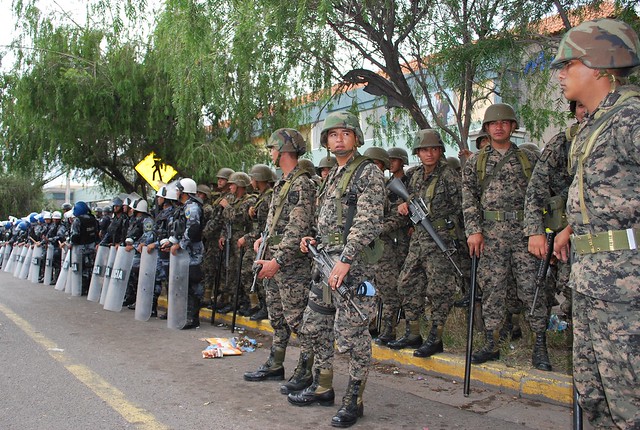
10 Facts About Violence in Honduras

10 facts about violence in honduras
In Honduras, the homicide rate is currently 43.6 per 100,000, meaning for every 100,000 of Honduras’ inhabitants, about 44 people will be murdered every year. With this statistic alone, it is easy to see Honduras has one of the highest homicide rates in the world. However, by evaluating the implemented solutions working to combat violence, homicides in Honduras appear to be dropping; raising the possibility of losing its position as the murder capital of the world. Here are 10 facts about violence in Honduras.

10 Facts About Violence in Honduras

  1. Murder – In 2011 Honduras experienced a peak in murder rates making Honduras the holder of the highest homicide rate in the world. Between 2011 and 2015, the murder rate in Honduras decreased by 30 percent. Homicides went down from 88.5 per 100,000 residents to 60.0 per 100,000 and have remained constant or decreased slowly depending on the year. However, in Honduras, only 4 percent of reported homicide cases result in arrest showing there is still lots of room for improvement.
  2. Lack of Trust – Police and judicial systems in Honduras suffer from corruption, lack of training and a list of cases so long that even honest, well-equipped officials struggle to keep up. As a result, members of the most vulnerable Honduran communities often do not trust the police, public prosecutors or judges to do their jobs. Fearing retaliation from violent perpetrators, they often refuse to provide witness testimony necessary to bring about a conviction. This causes Honduran judicial officials to lose trust in victims. This lack of trust and support fuels a vicious cycle of violence and impunity that has contributed to Honduras’ status as one of the most violent countries in the world. The Special Commission to Purge and Reform the Honduran Police is working to rid the force of corrupt leaders, strengthen public and police relations and reorganize their internal and external goals. Today, the Special Commission to Purge and Reform the Honduran Police has put in nearly 15 months of work and suspended or removed 5,000 police from the force.
  3. Poverty – Poverty and violence are directly related, and they work together to generate difficult living conditions in Honduras. As of 2017, 64 percent of Honduras’ population lives in poverty. Further, Honduras has the second smallest middle class in Latin America, at only 10.9 percent of the population. A larger middle class would result in stronger public institutions, stronger economic growth and greater societal stability. Therefore, Honduras would see lower levels of violence because of stronger societal relations. Working to stem both violence and increase economic opportunities is the key to sustainable development.
  4. Illegal Drug Trade – Central America serves as a transit point for at least 80 percent of all cocaine shipments between the Andean region and North America. Criminal groups in Honduras are very aware of this and profit primarily from drug trade and extortion as well as kidnapping for ransom and human trafficking. In February 2019, authorities in Honduras arrested four Colombian citizens caught in an attempt to smuggle over 100 kilograms of cocaine into the United States through a remote region of the country’s eastern coast. This is one example of thousands.
  5. Gangs – Gang presence in Honduras is common in poor urban areas and where territory is controlled by members of rival gangs, the most powerful being the Mara Salvatrucha and the Barrio 18. The most common age for Honduran gang members is between 12 and 30. Gangs constitute a real but often misunderstood feature of these 10 facts about violence in Honduras. While there is little doubt that they are involved in significant levels of violence, gangs are highly diverse and linked more to localized insecurity rather than the transnational danger ascribed to them by the media and certain policymakers. It is understood that 40 percent of gang members claim to be involved in gangs to ‘hang out,’ 21 percent because they had gang member friends and 21 percent to evade family problems. There is also a correlation between youth unemployment and gang membership: only 17 percent of gang members were employed and 66 percent actively characterized themselves as unemployed.
  6. Domestic Violence – One woman is murdered every 16 hours in Honduras, and the country has the highest femicide rate in the world. Shocking numbers of rape, assault and domestic violence cases are reported. However, 95 percent of cases of sexual violence and femicide in Honduras were never investigated in the year 2014. As mentioned above, widespread underreporting is likely to be linked to the lack of trust in governmental figures such as police and judicial systems. Rape is widespread and is employed to discipline girls, women and their family members for failure to comply with demands. In Honduras, there is a 95 percent impunity rate for sexual violence and femicide crimes and the lack of accountability for violations of human rights of women is the norm rather than the exception.
  7. Honduras Youth – The expansion of gangs and the increase in violence is linked to the lack of opportunities for the youth of the country. Many young Hondurans turn to gangs for their welfare protection and identity construction because they see no other way. Gangs emerge in this context as an option that is often desired for the marginal youth as it provides a form of transition from adolescence to adulthood. About 2 percent of females go completely uneducated, compared to 3 percent of males. Likewise, secondary school lasts between two to three years between the ages of 13 and 16, and 38 percent of females drop out compared to 33 percent of males.
  8. The Public and Prevention – In areas with low levels of violence, residents have taken incidents of crime and made an effort to minimize conditions that might allow violence to thrive. Kindernotheilfe has partnered with the community-formed group Sociedad más Justa (ASJ). They are dedicated to improving the living conditions of children and young people in Tegucigalpa and protecting them from violent abuse. Since 2004, parents, children, young people, teachers, churches, justice officials, city administrations and other NGOs have gotten involved. Some of their help include psychological and legal counseling, neighborhood patrolling and organized children’s clubs and activities.
  9. USAID and Honduras Citizen Security – On Sept. 30, 2016, the U.S. Agency for International Development programs for Honduras invested in a $34.17 million project lasting until Feb. 13, 2021. They are working to support the Government of Honduras’ efforts to improve the service delivery of justice institutions; increase the capacity of police to work with targeted communities; and incorporate respect for human rights to help reduce violence, decrease impunity and implement human rights standards within government institutions. During the third quarter of year one, they achieved key targets, including launching five city events, holding an international conference, instituting a Supreme Court Innovation Committee, connecting with the LGBTQI committee and collaborating with other donor programs.
  10. The Peace and Justice Project – The Peace and Justice Project provides investigative, legal and psychological support for people with few resources who have been victims of violent crimes and push for structural change in Honduras’ security and justice systems. The project has a 95 percent conviction rate, almost 24 times the national average. This has reduced the impunity rate in key communities from 4 percent convictions to 60 percent convictions for violent crimes, while also reducing the overall homicide rate drastically. Over the last 10 years, 600 lives have been saved through interventions in these violent communities.

These 10 facts about violence in Honduras prove that while strides have been made, violence in Honduras is still a major global concern. Communities and citizens of Honduras should continue to make a difference by demanding higher standards and continuing prevention actions. Furthermore, other nations should continue to support by becoming involved in helping strengthen institutional, governmental and police and judicial systems to see long term change.

– Grace Arnold
Photo: Flickr

July 8, 2019
https://borgenproject.org/wp-content/uploads/borgen-project-logo.svg 0 0 Kim Thelwell https://borgenproject.org/wp-content/uploads/borgen-project-logo.svg Kim Thelwell2019-07-08 18:55:542024-05-29 23:00:5710 Facts About Violence in Honduras
Global Poverty, Human Rights, Refugees and Displaced Persons, Slavery

Stopping the Slave Trade in Libya

stopping the slave trade in Libya

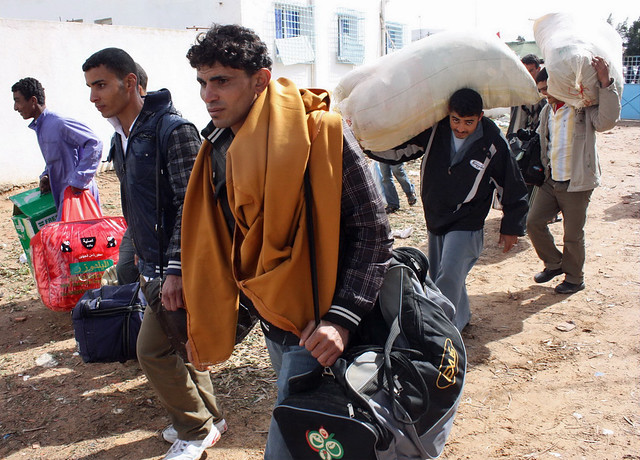
The rise in immigration and an increase in criminal activity are going hand in hand in Libya. Since immigrants are an especially vulnerable population with so many seeking asylum or other needs, criminals are more likely to target them. CNN released a report on the slave trade that is still occurring in Libya today. This report showed many people what is happening. With the influx of immigrants, it is important to see what efforts are being made in stopping the slave trade in Libya.

Libya has officially become a lawless state. The government has little to no control over what goes on, and criminals are taking advantage of this. Due to the large influx of vulnerable immigrants, the slave trade has now risen to an all-time high. Slavery has been outlawed in other countries; however, criminals don’t follow the rules. Dozen of people are still being auctioned off, some only being sold for $400. Immigrants often live in poverty and don’t what to do improve their conditions. Slave traders pick up on this vulnerability and use it to their advantage. Libya is the main transit point for immigrants that are trying to make it to Europe.

Stopping the Slave Trade in Libya

While looking at Libya and the events that are occurring there, a question arises: What efforts are being made in stopping the slave trade in Libya? The U.N. and the U.S. have been putting pressure on the government to investigate more into the crimes being committed. They urged Libya to take urgent action in these matters and to make it come to an end. So far, Libya went from not having the resources or support to track down these traffickers, to accusing and sanctioning six men. Since 150,000 immigrants cross into Libya each year, the U.N. involvement has been a huge milestone for Libya and those being sold into slavery.

Additionally, a new transit system has been put in place to make sure that immigrants are able to travel more safely. The more immigrants are provided safer ways to travel, the lesser the likelihood of being sold into slavery. At this new transit facility, run by the UNHCR, immigrants are not only being provided with safe shelter but also food, medical care and psychosocial support. UNHCR is bringing new hope for immigrants that are looking for a better life. It is a necessary facility that will bring international protection to those that are most vulnerable.

Many news outlets and people from different communities are now raising awareness on this topic. The more people to find out about what is being done in Libya, the more solutions can be found up and more actions can be taken. CNN is the original news outlet to exposed the slave trade that is happening in Libya. Afterward, more people started to take action and contribute to the conversation. By someone speaking out, it causes a ripple effect for organizations to come together and make a plan to help those being sold.

Canada is Providing a Refuge

Canada has taken action in making sure that those who were once former slaves are able to rebuild their lives. Providing the necessary housing and support can help those that fell victim to slavery to regain their life. More than 150 people who had immigrated to Canada were victims of the slavery that occurred in Libya. Canada will also be resettling another 600 people that are at risk of being sold into slavery. With the number continuously rising, Canada is doing it’s best to keep up with those that are seeking asylum and providing options for settlement.

Although the fight for stopping the slave trade in Libya is still raging on, new support systems are being brought in and making it so immigrants can feel safe. Governments, like in Canada, are now taking action, as well as organizations uniting together. The slave trade in Libya is still continuing today, but the situation in improving. By raising awareness about important topics such as this, it can act as a catalyst for other people to step in as well.

Hopefully, the immigrants and other vulnerable populations that are currently living through this tragedy can find some consolation in the fact that the world finally sees what is happening. The United Nations, the Libyan government and other organizations have dedicated their time to working towards one goal: stopping the slave trade in Libya. The measures that have been put forth thus far have already helped many people, and the next step in this journey is making sure that the rest people and immigrants of Libya are safe from slavery.

– Emme Chadwick
Photo: Flickr

June 22, 2019
https://borgenproject.org/wp-content/uploads/borgen-project-logo.svg 0 0 Kim Thelwell https://borgenproject.org/wp-content/uploads/borgen-project-logo.svg Kim Thelwell2019-06-22 01:30:032019-12-16 11:43:34Stopping the Slave Trade in Libya
Advocacy, Global Poverty, Human Rights

The Time 100 List: Global Poverty Advocate Edition

global poverty advocatesThe Time 100 is published in April every year, presented as a list of 100 of the most influential people from all over the globe. The list is highly anticipated, selected by the editors of Time Magazine, and centers a range of change-makers separated into five categories: pioneers, artists, leaders, icons and titans.
All are trailblazers of change in their own right, but several important mentions include the global poverty advocates. These figures drew attention to issues surrounding global poverty and human rights abuses around the world. They are inspirations for the many activists who hope to follow their blueprint of innovative change.

Fred Swaniker

Fred Swaniker is a Ghanaian entrepreneur and a pioneer, especially for the African Youth. He realized that Africa’s greatest asset is also its biggest challenge, the youth.

This led to the birth of the African Leadership University. Founded in 2013, ALU is opening campuses around Africa and aims to train 3 million entrepreneurial, ethical leaders for Africa and the world by 2035. Africa faces some of the highest global rates of extreme poverty, largely due to histories of corruption and exploitation. This history resulted in low incidences of democracy and economic opportunities. Swaniker is one of the most innovative figures equipping a future generation to manage and tackle these grave issues, and a true ally for the global poor.

Yalitza Aparicio

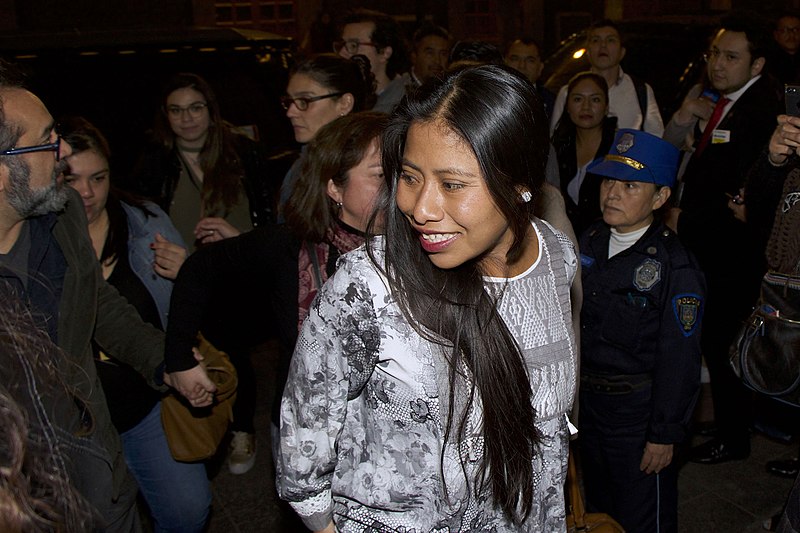
Yalitza Aparicio is a Mexican actress and ‘artist,’ best known for her academy award nominated performance in the 2018 hit film “Roma”. But, her story is particularly important due to her heritage as an indigenous Oaxacan woman, who before her acting success, was a preschool teacher in rural Mexico. Having an advocate for this population is particularly important since Mexico’s indigenous people are far poorer than its non-indigenous people. About three-quarters of indigenous peoples in Mexico are poor, while only half of the non-indigenous people live below the official poverty line. Her inspirational story sheds light on the cause of the long disenfranchised group including the everyday racism that they face. It positions her as a role model for many generations behind her.

Abiy Ahmed

Because of ‘leader’ Abiy Ahmed, Ethiopia is cautiously learning to embrace a new system of democracy and human rights, a rare occurrence in the country’s fractured political history. Since his ascension to power in 2018, Ahmed embraced notions of transparency and gender equality as part of his political platform. He released all journalists incarcerated under the previous regime. Ahmed also made half of his cabinet female and appointed the first female head of the supreme court. He negotiated a new peace treaty with Eritrea, effectively ending a 20-year civil war. In 2020, the country will have its first free elections in 15 years.

Although this is a test of the current turbulent political climate punctuated by extremist dialogue, it does give the country new hope for democracy and prosperity in the future that seemed impossible before his ascension to power.

Radhya Almutawakel

Radhya Almutawakel is a Yemeni human rights defender and ‘icon,’ most commonly known for her work documenting human rights abuses by all parties. Since the start of the conflict in Yemen in 2014, nearly 7,000 civilians were killed and 14 million remain at risk of starvation.

Almutawakel traveled around Europe and advocated on behalf of the people, encouraging leaders to take steps to end violence. She also founded the nonprofit Mwatana for Human Rights, designed to “advocate for human rights through the verification and documentation of violations, provision of legal support to victims, lobbying, as well as awareness raising and capacity building.” These actions help increase the visibility of the conflict and the consistent suffering of the people. This itself is a big step forward in the road to peace.

LeBron James

LeBron James is undoubtedly a ‘titan.’ Most commonly known as one of the most successful basketball players in history, he is also a passionate philanthropist. Born in Akron, Ohio, to a teenage mother, he is described as being “sharp minded” and “grounded,” overcoming many challenges to become as successful as he is. His most famous initiative is the “I Promise School” for disadvantaged kids. Opening in his hometown in 2018, it secured educational opportunities for at-risk youth he personally never had access to. His foundation consistently donates to a wide range of charities with similar ideals. One of them is ONEXONE, a global children’s charity that runs programs based on five fundamental pillars: water, health, education, play and nutrition.

At only 34 years old, his work as a global poverty advocate is just beginning.

This list is a selection of just five global poverty advocates from the Time 100, all of whom are noteworthy advocates for a variety of ideals in their individual and often original ways. Many more global poverty advocates exist around the world, all fighting to generate change for the global poor.

– Holly Barsham
Photo: Wikimedia Commons

June 21, 2019
https://borgenproject.org/wp-content/uploads/borgen-project-logo.svg 0 0 Kim Thelwell https://borgenproject.org/wp-content/uploads/borgen-project-logo.svg Kim Thelwell2019-06-21 06:40:172024-05-29 23:00:13The Time 100 List: Global Poverty Advocate Edition
Child Soldiers, Human Rights, Human Trafficking

10 Countries That Use Child Soldiers

2018’s Worst Countries for Child Soldiers
Every year, the U.S. Department of State issues its Trafficking in Persons Report. This report gives an overview of each country’s progress against trafficking and what the United States is doing to eliminate human trafficking across the globe. One form of human trafficking is the use of child soldiers. Child soldiers are individuals under the age of 18 used for any military purpose, whether that be for acts of violence and killing, or even as cooks, messengers, spies or porters. Since 2016, over 18 different military conflicts around the world involved child soldiers.

The 2018 Trafficking in Persons Report includes a list of governments implicit in the use of child soldiers, and under the Child Soldiers Prevention Act of 2008 (CSPA), the United States restricts military support for countries listed. This article will provide an overview of child recruitment and use in each country on the Child Soldiers Prevention Act List.

10 Countries That Use Child Soldiers

  1. Myanmar – Myanmar’s military, the Tatmadaw, has a long history of using child soldiers in warfare. The highest rate of child recruitment took place from 1990 to 2005. However, in 2012, the country signed an Action Plan with the U.N. to end the use of child soldiers. Since then, 849 children and young adults have been released. Though Myanmar has a long way to go to completely eradicate child soldiers in the country, the government is working to align tribal groups and the Tatmadaw with the U.N.’s Action Plan.

  2. The Democratic Republic of the Congo – The Democratic Republic of the Congo (DRC) also signed an Action Plan with the U.N. in 2012 and the government has since stopped recruiting child soldiers into its military. Before 2012, children ages 8 to 16-years-old made up about 60 percent of the military. Now, the main problem with child recruitment in the DRC is girls who are used as “wives” and “escorts” for the soldiers. At least one-third of all child soldiers in the DRC are girls, though only 7 percent have been released since the signing of the Action Plan. In 2019, Child Soldiers International helped 245 of these girls go back to school, including Neema, who said, “if we could go to school, the community would be nicer to us, we would get some consideration, that would help a lot.” Organizations, such as the National Action Group, conduct outreach work to help child soldiers in the DRC appropriate back into their communities. With their support, child soldiers and military “wives” can avoid the stigmatization and persecution that comes with being a child soldier.

  3. Iran – Former U.S. Ambassador to the U.N., Nikki Haley, spoke out against the use of child soldiers in Iran, saying, “The use of child soldiers is a moral outrage that every civilized nation rejects while Iran celebrates it. Iran’s economy is increasingly devoted to funding Iranian repression at home and aggression abroad. Iranian big business and finance are funding the war crime of using child soldiers.” Her comments came in the midst of the United States’ political maneuvering against Iran’s use of child soldiers. The Iranian military, especially the Basij Resistance Force, has had a long history of using child soldiers. During the Iran-Iraq War in the 1980s, the Basij used child soldiers to clear minefields ahead of the military. With the U.S. hard on their heels, Iranian rights activists hope that this will be a wake-up call and end the use of child soldiers in Iran.

  4. Iraq – In 2017, there were 109 confirmed cases of child soldier recruitment in Iraq, 59 of which were attributed to ISIL or ISIS. Children were used as suicide bombers, combatants, bomb manufactures and “wives” for soldiers. Many different military organizations in Iraq use “volunteer” child soldiers, but under international law, non-state armed groups cannot recruit children under 18 under any circumstances. Children’s Rights Director at Human Rights Watch, Zama Coursen-Neff, said, “The PKK [the Kurdistan Workers’ Party] should categorically denounce the recruitment and use of child soldiers, and commanders in affiliated armed groups should know that the recruitment and use of children under age 15 constitute war crimes. Boys and girls should be with their families and going to school, not used as means to military ends.” The U.N. is ready to provide support to the Iraqi government as they develop and implement reintegration services for children formally used as child soldiers.

  5. Mali – Stephane Dujarric, a U.N. spokesperson, proclaimed good news for a few child soldiers in Mali, saying, “Nine child combatants were handed over to the U.N. mission in Kidal this morning. The mission is… making arrangements for their care by child protection officials pending reunification with their family.” There were 159 documented cases of child soldier recruitment in 2017, but Mali is taking steps in the right direction. After signing an Action Plan with the U.N. in March of 2017, the military began screening their troops to identify children. However, the country failed to implement other aspects of the Action Plan. On Feb 1, 2018, Mali’s government endorsed the Safe Schools Declaration, which protects the use of educational facilities in military training or conflict.

  6. Nigeria – Boko Haram is also a problem for child soldiers in Nigeria, accounting for 1,092 cases of child recruitment. However, this number has decreased by almost 50 percent in the past two years, due to the loss of territory by Boko Haram. In 2018, more than 900 children were freed from Boko Haram, some as young as 7-years-old. UNICEF spokesman, Christophe Boulierac, said, “This is a significant milestone in ending the recruitment and use of children, but many more children remain in the ranks of other armed groups in either combat or support roles. We call on all parties to stop recruiting children and let children be children.” Nigeria signed an Action Plan with the U.N. in September of 2017, and since then, more than 8,700 children have been rehabilitated back into their communities.

  7. Somalia – Warlord Al Shabaab is the biggest threat to child soldiers in Somalia, enlisting 70 percent of the 2,217 children recruited throughout the country. More than 50 percent of Al Shabaab’s army are children under the age of 18. Col. Bonny Bamwiseki, commander of Battle Group XXII of the Uganda contingent of the African Union Mission in Somalia, explained another problem of child soldiers: “Some of these boys are children of this struggle and so they become part of it.” With clan warfare and the threat of Al Shabaab all around them, many children “volunteer” to protect their families and their homes.

  8. South Sudan – South Sudan became the 168th country to sign a U.N. treaty to end the use of child soldiers.  On Sept 27, 2018, ambassadors from South Sudan met with U.N. officials to sign the Optional Protocol to the Convention on the Rights of the Child on the involvement of children in armed conflict (OPAC). In the past five years, more than 19,000 children have been recruited by armed groups in South Sudan, but now the government is working to demobilize all child soldiers throughout the country and offer support for their recovery. Progress will be slow and difficult, but the U.N. Special Representative of the Secretary-General for Children and Armed Conflict, Virginia Gamba noted, “Today, the Government of South Sudan is making an important promise to its children that they will take all possible measures to protect them from recruitment and use by both its armed forces and armed groups active in the country.”

  9. Syria – The number of child soldiers has been increasing yearly in Syria, now reaching 851 verified cases of recruitment and use of children in the military. While Syria has not worked with the U.N. to implement an Action Plan or OPAC, the Syrian Democratic Forces (SDF) in northeast Syria, issued a military order banning the recruitment of children under 18. This military order requires SDF officers to transfer children to educational facilities, end salary payments to children, hear and receive complaints of child recruitment, and take measures against soldiers who fail to obey these orders. Though the number of cases of child soldiers in Syria has increased, these measures will help prevent fight the use of child soldiers in 2019.

  10. Yemen – According to the U.N., the Yemen civil war is one of the worst humanitarian crisis, killing more than 85,000 children. The war left families destitute, and many send their children off to fight in exchange for money. Children make up between 20 and 40 percent of Yemen military units, and since 2015, there have been 2,369 verified cases of child recruitment. There are currently more than 6,000 suspected child soldiers across the country, and more than 20,000 children who are in need of rehabilitation after the war. While many Yemeni officials deny the use of child soldiers or call the reports “exaggerated,” the U.N. is working to give people knowledge of this “child’s war” and reduce the number of child soldiers in Yemen.

The 2018 Trafficking in Persons Report hopes to raise awareness of the use of child soldiers around the world, and encourage people to respond and make a change. The information is overwhelmingly negative, but there have been many positives since 2017. For example is that Sudan has been removed from the Child Soldiers Prevention Act List, as the U.S. Department of State believes that they have improved in regulating the use of child soldiers.

– Natalie Dell
Photo: Flickr

April 26, 2019
https://borgenproject.org/wp-content/uploads/borgen-project-logo.svg 0 0 Kim Thelwell https://borgenproject.org/wp-content/uploads/borgen-project-logo.svg Kim Thelwell2019-04-26 06:18:192024-05-29 22:59:5010 Countries That Use Child Soldiers
Global Poverty, Human Rights

A Website Combats Human Rights Violations

Human rights violations
Across the globe, human rights violations are committed by official law enforcement personnel far too often. In Africa and other parts of the developing world, such violations often occur in the context of extreme poverty. Although there has been some progress in protecting human rights, there is still much work to be done. A recently created website, WhoWasInCommand.com, seeks to help victims locate their perpetrators in order to bring about justice.

Restricting the Freedom of Peaceful Assembly

Amnesty International reports that in Africa in 2017 and 2018, “intolerance of peaceful dissent and an entrenched disregard for the right to freedom of peaceful assembly” had become all too commonplace. This includes arresting as well as beating and sometimes even killing, peaceful protestors. They also note that “these trends occurred within a context of slow and intermittent success in reducing poverty.”

Within the past two years, Angola, Chad, the Democratic Republic of the Congo (DRC), Ethiopia, Sudan and Togo all undertook measures that restricted or banned peaceful protests. All of these countries have poverty rates more than 30 percent, with the Democratic Republic of the Congo having the highest rate at 63 percent.

The restriction of peaceful protests does not always violate human rights, but law enforcement personnel sometimes resort to extreme measures to crack down on protesters. In Togo, a crackdown by security forces, which involved beatings and the firing of tear gas and ammunition at protestors, resulted in the deaths of 10 individuals, including three children.

Identifying the Perpetrator

Of course, protestors are not the only individuals suffering from human rights violations committed by law enforcement. Such violations can occur while an individual is being detained in jail, in their home or on the street. One of the largest barriers of bringing perpetrators to justice, however, is the inability to identify them. In fact, many victims of human rights abuses do not know the names of those who violated their rights, making it nearly impossible to develop a legal case. Even when perpetrators are identified, sometimes they are moved around to prevent prosecution.

In 2016, a 12-year-old was detained, tortured and left almost paralyzed by security force officers in Nigeria. His lawyer, Chino Edmund Obiagwu, who is also the director of the Legal Defense and Assistance Project in Nigeria, would have been unable to cite the officers because he could not have access information on their names if it had not been for the work of provided by the WhoWasInCommand.

Holding Officials Accountable for Their Actions

In response to difficulties in identifying law enforcement personnel who violate human rights, Tony Wilson, the director of Security Force Monitor, a project of Columbia Law School’s Human Rights Institute, started the website WhoWasInCommand in June 2017. The site publishes data on law enforcement, including names, ranks, commanders, location, history of service and previous allegations held against them.

Security Force Monitor was created to support researchers, investigative journalists and litigators that work specifically on human rights violations. Those behind the project believe that it is important to hold security force officials accountable for their actions, but also recognize that, as data on these groups is generally decentralized, difficult to locate and sometimes costly, individual lawyers or victims often do not have the resources to access it. The Security Force Monitor team analyzes thousands of public records to provide relevant information on WhoWasInCommand about law enforcement officials.

The Increasing Popularity of the Website

Initially, WhoWasInCommand only included research on Mexico, Nigeria and Egypt, but as of October 2018, six new countries have been added, including Bangladesh, Myanmar, Philippines, Rwanda, Saudi Arabia and Uganda, making the site the largest public database on security forces in the world. Countries are chosen based on the existence of longstanding concerns about human rights abuses by law enforcement as well as the consistent inability of lawyers and journalists to identify perpetrators in those areas.

In addition to the assistance the Security Force Monitor is providing, there have been some successes in cracking down on human rights violations through legislation. Nigeria passed an Anti-Torture Bill in December 2017, Burkina Faso’s has committed to increasing human rights protections in their draft Constitution, the Gambia pledged to abolish the death penalty and Kenya decided not to close a refugee camp that houses over a quarter of a million Somali refugees who could not return home without the risk of violence and abuse. While progress is slow, small victories such as these are not inconsequential, but are, in fact, an essential step in ensuring human rights across the globe.

As WhoWasInCommand continues to grow, hopefully, there will be a notable increase in successful prosecutions of law enforcement personnel who commit human rights violations. A researcher at Amnesty International, Aster van Kregten, expressed hope that nations may eventually begin freely contributing information about security forces, making a site like WhoWasInCommand unnecessary. Governments also need to continue to pass laws that ensure the protection of human rights for all individuals.

– Sara Olk
Photo: Flickr
February 22, 2019
https://borgenproject.org/wp-content/uploads/borgen-project-logo.svg 0 0 Kim Thelwell https://borgenproject.org/wp-content/uploads/borgen-project-logo.svg Kim Thelwell2019-02-22 01:30:092019-10-30 10:02:57A Website Combats Human Rights Violations
Human Rights

Top 10 Civil Rights Songs

Civil Rights Songs
Music has an undeniable connection to civil rights movements. As Gregory Harper, a former museum director and archaeologist turned musician says, music has often been used in the service of civil rights and political awareness. Songs were chosen based on the influence in specific civil rights movements, as well as their popularity and legacies. In the text below, the top 10 civil rights songs are presented, but due to their importance and quality, they can be deemed as the top 10 of the best songs ever recorded. They are listed in alphabetical order and there is no importance in their specific ranking.

Top 10 Civil Rights Songs

  1. “Glad to Be Gay”- Tom Robinson Band. Written for a London gay pride parade, “Glad to Be Gay” was banned by the BBC upon its release. It became an anthem for the LGBTQ community in London. Tom Robinson has said that “Glad to Be Gay” was about the non-conforming, from lesbians to transgenders. With this proud song, Tom Robinson gave a voice to the people that might have never had a voice before.
  2. “Free Nelson Mandela”- The Specials. “Free Nelson Mandela” was a Top 10 hit in the United Kingdom in 1984. The song became an anthem for the anti-apartheid movement for people outside of South Africa and forced the privileged, white populations of the West to become aware of the issues in South Africa. Undoubtedly, this song influenced the citizens of powerful nations to beg their leaders to aid the fight against apartheid in South Africa.
  3. “From Little Things, Big Things Grow”- Paul Kelly and Kev Carmody. Written by two Australian artists in the early 1990s, this song tells of the inspiring story of the Gurindji people and their struggle for land rights. The lyrics tell of the 1966 Wave Hill walk-off that was originally focused on poor working conditions and low wages. The walk-off turned into much more since eight years later, Australian Prime Minister Gough Whitlam gave these people their land back, igniting the Aboriginal land rights movement. Today, this song continues to symbolize the struggle for recognition of natives all over the world.
  4. “Mannenberg”- Abdullah Ibrahim. Released in 1974, “Mannenberg” combined South African-jazz with African-American jazz-rock fusion. The outcome was a song that South African blacks clung to as their own. The influence of this song in South Africa’s fight against apartheid, along with its mixture of cultures, solidifies it as one of the best civil rights songs.
  5. “People Get Ready”- Curtis Mayfield and The Impressions. Released in 1965 during the American Civil Rights Movement after Curtis Mayfield watched the March on Washington, this gospel song turned mainstream hit has been covered countless times by many artists.
  6. “Redemption Song”- Bob Marley. To pick Marley’s best civil rights song is difficult, but “Redemption Song”, that was released on Marley’s last studio album appropriately named “Uprising”, seems fitting. Using words from a 1937 speech of Marcus Garvey’s, Marley tells of physical and mental freedom, the hallmarks of all civil rights movements.
  7. “Strange Fruit”- Billie Holiday. The most popular version of the song is Billie Holiday’s version, a symbolic mosaic of the pain that black people have endured in the United States, selling one million copies in its first year. Originally written by Abel Meeropol in reaction to the infamous photograph of the lynching of Thomas Shipp and Abram Smith, 1999 Time Magazine named “Strange Fruit” the best song of the century.
  8. “Sunday Bloody Sunday”- U2. As Irish rock band U2 was gaining momentum, soon to become the biggest rock bands of their time, they used their platform to share a perspective on the Bloody Sunday massacre, incident that occured in 1972 in the area of Derry, Northern Ireland. In 2010, United Kingdom Prime Minister David Cameron apologized on behalf of his country for the incident. The progress that was made by the Northern Irish in order to receive such an apology could not have been done without U2’s true-life tale that told those all over the world about the violence that was done to the people of Northern Ireland.
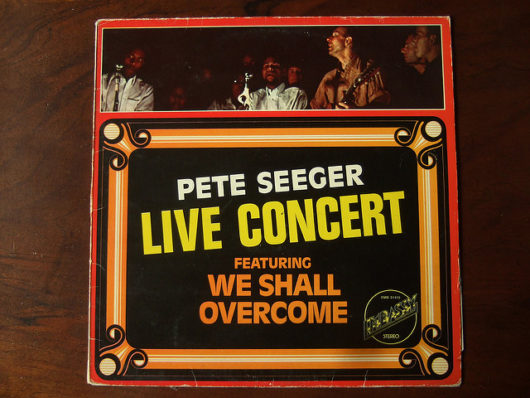
  9. “We Shall Overcome”- Pete Seeger. In 2018, the song’s lyrics became part of the public domain which is appropriate as the lyrics have traced back to the 18th century as slaves would sing similar verses while working. Pete Seeger brought it to mainstream consciousness, after hearing a group of mostly black tobacco workers sing the song during a strike. Joan Baez sang the song during the March on Washington. President Johnson uttered the words “we shall overcome” in his defense of the Voting Rights Act. The song continues to be sung at countless global, civil rights protests.
  10. “Zombie”- Fela Kuti. In a rebuke of the Nigerian military’s violent tactics, Kuti wrote “Zombie”. The Nigerian army acted swiftly, noting the song’s message as well as Kuti’s influence on the poorer populations of Africa. They pillaged Kuti’s commune and threw his elderly mother out of a window, resulting in her death. Kuti did not stop making music, symbolizing the resilience of those he gave a voice to. The legacy of “Zombie”, as well as the direct influence Kuti had in promoting civil rights, make this one of the best civil rights songs.

These songs listed above are masterpieces, but it is the people’s emotional connection to them what makes them even more valuable. They are directly connected to fight for human rights and will be surely used in the future as well.

– Kurt Thiele

Photo: Flickr

February 11, 2019
https://borgenproject.org/wp-content/uploads/borgen-project-logo.svg 0 0 Kim Thelwell https://borgenproject.org/wp-content/uploads/borgen-project-logo.svg Kim Thelwell2019-02-11 19:30:462024-05-29 22:58:11Top 10 Civil Rights Songs
Human Rights

Red Notice Abuse

Red Notice
Interpol was founded as a means to coordinate law enforcement agencies, allowing for the international pursuit of criminals, thwarting the wild-west cliché of outlaws crossing the border and escaping justice. The notice system is the primary tool of that coordination. While each category of notice has its own color code and significance, Red Notices are by far the most famous. Akin to an old-school wanted posters, Red Notices serve as a request from one member country to another asking for the location, arrest and, ultimately, extradition of a wanted individual.

Bill Browder Case

This system provides a valuable service to the whole world. However, it has come under the criticism for the way in which repressive governments have been able to use it to target political refugees. Labeling peaceful protestors, journalists and dissidents as criminals and tricking law enforcement into extraditing them to suffer sham trials and grim fates. Nations like Russia, Turkey and China have been able to do this virtually free of consequence.

The name Bill Browder has become synonymous with Red Notice abuse. Mr. Browder is a prominent critic of Russia, having been instrumental in the creation of the global Magnitsky Act, named after Browder’s lawyer who was murdered after exposing corruption in the Russian government. As recently as May 2018, while giving a talk in Madrid, Browder was arrested by Spanish authorities. Two hours later, after the intervention of Interpol’s General Secretary, Browder was a free man. By his count, “this is the 6th time that Russia has abused Interpol in his case.”

Other Specific Red Notice Cases

While Mr. Browder’s case has received international attention, many others never caught public attention. Baran Kimyongür, a Turkish activist, interrupted an exchange between the European Parliament’s foreign affairs committee and the Turkish foreign minister in 2000. Later, the Turkish government gave a Red Notice for him, holding this act as proof of his connection to a terrorist organization. Kimyongür has been arrested three times by the authorities in Netherlands, Spain and Italy. Each government refused to extradite him due to the lack of any proof as well as the human right to self-expression.

Another hidden tragedy is that of Dolkun Isa, a renowned activist and member of the World Uyghur Congress. After fleeing China, now living as a German citizen, Mr. Isa has been subject to a Chinese Red Notice abuse since 2003. The resulting travel restrictions have hobbled his advocacy work to promote Uyghur self-determination. This and many other cases have been collected in a report published by the Council of Europe, an official U.N. observer.

Massive Increase in Red Notices

Each Notice is supposed to be reviewed before publication. Yet, stories like these illustrate the shortcomings of that process. The number of Notices has almost tripled over the past decade, growing from 5,020 to 13,048 by the time of the 2017 Annual report. With such a dramatic shift in volume, the potential for missteps and need for reform come into greater focus.

Each Interpol officer serves as a representative of his home government. Now, after the surprise resignation of Meng Hongwei, the recent election of Kim Jong Yang gives this organization a sorely needed opportunity to improve on the reforms made in 2016 and the organizations’ desire to create safer and more transparent processes.

– John Glade

Photo: Flickr

February 4, 2019
https://borgenproject.org/wp-content/uploads/borgen-project-logo.svg 0 0 Kim Thelwell https://borgenproject.org/wp-content/uploads/borgen-project-logo.svg Kim Thelwell2019-02-04 19:30:012024-06-08 04:10:45Red Notice Abuse
Global Poverty, Human Rights

10 Facts About Failed States

Failed statesA country is considered a ‘failed state’ when it cannot control its territory and population as well as when fails to secure its borders. A failed state has barely functioning executive, legislative and judicial institutions, which in turn, breeds corruption since the honest economic activity is not rewarded by the state. Here are 10 facts about failed states.

10 Facts About Failed States

  1. Throughout history, civil wars, ethnic cleansing and human rights violations have led to states losing the capacity to regulate and control themselves. When a state loses the capacity to implement policies throughout the country, when it cannot establish public order and equity, and when the government cannot assure the independence of institutions, instability and insecurity reign.

  2. North Korea is often called the ‘hermit kingdom’ due to its isolated nature. The country frequently receives low scores on its legitimacy of state. Aid organizations estimate that around 2 million people have died from food shortages since the mid-1990s. Part of this can be traced back to the economic institutions that prohibit people from owning property as the state collectively owns most land and capital.

  3. Another sign of a faile state is forced labor. In Uzbekistan, students are forced to pick cotton, one of Uzbekistan’s biggest exports. In September, while teachers are relegated to the role of labor recruiters. The children are given quotas of between 20 and 60 kilograms, which varies according to their age. Thus, the children are unable to break out of the cycle of poverty due to their lack of learning.

  4. Syria can be considered a failed state as it is experiencing a civil war that has claimed 100,000 lives and has no end in sight. The country receives an extremely low score for security apparatus, according to Foreign Policy magazine’s annual metric data.

  5. Egypt’s elite is monopolizing the economy to block the entry of new competitors. Under Hosni Mubarak, the military and government own large portions of the economy. According to some estimates, they collectively own up to 40 percent. Even after liberalization, the economy was privatized into the hands of Mubarak’s friends and sons’ companies. Big businesses put a stranglehold on the economy while Mubarak’s family accumulated an estimated $70 billion fortune.

  6. In most failed states, it is typical for the regime and its leaders to prey on its constituents. The regime tends to be motivated by ethnic or intercommunal hostility or even the insecurities of the elite, which lead to the victimization of their citizens or a subset demographic which is deemed ‘hostile.’ This is the case in Mobutu Seke Soso’s Zaire, where the ruling elite oppress and extort the majority of citizens while expressing preferential treatment for a specific sect or clan.

  7. Failed states can often be identified by weak infrastructure. As the rulers or ruling class becomes more and more corrupt, there are often fewer capital resources available for road crews, equipment and raw materials. For example, in the Democratic Republic of Congo, refurbishing navigational aids along aerial waterways was not prioritized.

  8. In order to have a successful economy, a country must have a strong, centralized nation-state. Without this, it becomes exceedingly difficult to provide law and order as mechanisms to solve disputes and provide basic public goods. Somalia exemplifies this failure to exercise control over territories beyond its capital. This can be attributed to the traditional social structure in Somalia where clans made decisions according to the adult males as opposed to adhering to a central authority figure. This persisted in the colonial era and into the modern day with Mohammed Siad Barre’s dictatorship failing to change it.

  9. An economy based on extreme extraction breeds political instability as it incentivizes the non-elites to depose the ruling class and take over. In Sierra Leone, Siaka Stevens and his All People’s Congress (APC) party ran the country from 1967 to 1985 as a dictatorship until he handed control to his protege Joseph Momoh. This invited would-be strongmen such as Foday Sankoh to plunge the country into a vicious civil war in 1991. He was only interested in power in order to steal diamonds. The government revenue went from 15 percent of national income to essentially zero in 1991.

  10. Corruption flourishes on a governmental, nationwide level. Examples include benefitting from anything that can be put to fake tender (medical supplies, bridges, roads, textbooks), wasteful construction projects and licenses for non-existent activities. The corrupt ruling elites mostly invest their ill-gotten money overseas, which worsens the economic situation domestically. Military officers too are guilty of profiting off these corrupt regimes.

In an earlier era where the world was less connected and globalized, it might have been possible to isolate the effects of a failed state from the others. However, in the connected state of today’s global economy and political system, the failures of one state poses grave threats to the security of others. These 10 facts about failed states shed a little more light on sign to look out for when identifying states that have failed or are going in that direction.

– Maneesha Khalae

Photo: Flickr

January 16, 2019
https://borgenproject.org/wp-content/uploads/borgen-project-logo.svg 0 0 Kim Thelwell https://borgenproject.org/wp-content/uploads/borgen-project-logo.svg Kim Thelwell2019-01-16 01:30:092024-05-29 23:00:1510 Facts About Failed States
Global Poverty, Human Rights

Human Rights in Vietnam

Human Rights in Vietnam
The state of human rights in Vietnam is dire and has hit an all-time low level in 2017. Activism, religious diversity, political variance and even integrity within the judicial and police systems are almost non-existent. Vietnam has seen backlash for its controversial and rigid ways from the U.S. and other Western countries, but the country continues to ignore it and even fights opposition to their government in favor of preserving the authority of the ruling Vietnamese Communist Party.

Vietnamese Political Situation

The Vietnamese Communist Party is the sole state of leadership in Vietnam and has been in this position since 1980. The 1992 constitution, however, delegated more authority to the president and to the cabinet. The party, nevertheless, maintained responsibility for overall policy decisions. Challenges to the Vietnamese Communist Party are not tolerated, and often end in incarceration.

In fact, Vietnam actually prohibits the establishment or operation of independent political parties, labor unions and human rights organizations. Approval from Vietnamese authorities is needed for public gatherings. These authorities can refuse permission for meetings, marches, or public assemblies they believe to be politically unacceptable.

In 2011, the U.S. Department of State did a report on human rights in Vietnam and deemed the country to be “neither free nor fair” and claimed a large contributing factor for this state was the corruption of the judicial and police systems. The report stated that the Vietnamese judicial system was inefficient and experienced political influence and endemic corruption. Moreover, there were multiple cases of police brutality in both arrests and later detention, denial to a fair trial, ambiguity in arrests, and inhumane prison conditions. A government official from Vietnam fired back at the report stating that Vietnam supports human rights but opposes initiatives by outside nations interfering in internal affairs.

Reports on the Current Situation

The Vietnamese government has proven to be untrustworthy in their claims about human rights in Vietnam as well. The Vietnamese government has continuously claimed, since 2010, that there are no political prisoners in Vietnam. Yet as of April 2018, there have already been approximately 97 prisoners of conscience in the country.

In 2012, the U.N. ran their own human rights report on Vietnam and the results were increasingly positive, relative to the U.S. report in 2010. Though, the report still urged the government to implement major human rights treaties, like the Convention against Torture and Other Cruel, Inhuman or Degrading Treatment which is an international human rights treaty meant to prevent all acts of cruel and inhuman treatment across the world.

Yet, despite this relatively positive report, human rights in Vietnam took a decline in 2017. The Human Rights Watch reported at least 36 cases of violence against activist from January to April 2017. Moreover, the Human Rights Watch found that the judicial system was still very much under the control of the government and that it has failed to meet international standards.

In Vietnam, people who suffer from a drug dependency, including children, are sent to governmental detention centers where they are forced to do menial work or “labor therapy.” It was reported by state media that during the first six months of 2017, about 3,168 people were sent to centers in Ho Chi Minh City. It was also found that those that are most at risk of violent treatment in these centers are children, women and ethnic minorities which goes directly against the Convention against torture and other cruel, inhuman or degrading treatment treaty the U.N. urged Vietnam to implement back in 2012.

There are organizations who are actively attempting to intervene in the high number of arrests being made by law officials of The Vietnamese Communist Party, and who are also fighting for the improvement of Human Rights conditions in Vietnam.

Organizations Involved in improving Human Rights in Vietnam

Organizations like the Human Rights Watch and the International Federation For Human Rights (FIDH) have urgently been asking for donations and letters to intercede the Human Rights violations being made in Vietnam. Moreover, there has been an increase in the number of activists for Human Rights, within Vietnam, in the last decade.

However, Vietnamese activists have to remain relatively quiet in their effort to bring these violations to the attention of the rest of the world due to the high probability of being arrested. Since 2014, there have been a little over 160 human rights activists that have been jailed in Vietnam, and this number continues to rise.

Thus, it remains to be seen if the conditions of Human Rights in Vietnam will improve in the coming years, but with the high number of arrests already in 2018, the outlook does not look so bad. The government has to change it’s attitude towards this issue if the country plans to grow in this aspect.

– Isabella Agostini
Photo: Flickr


November 17, 2018
https://borgenproject.org/wp-content/uploads/borgen-project-logo.svg 0 0 Borgen Project https://borgenproject.org/wp-content/uploads/borgen-project-logo.svg Borgen Project2018-11-17 01:30:562024-05-29 22:53:42Human Rights in Vietnam
Human Rights, Human Trafficking

5 Facts About the Global Alliance Against Traffic in Women

Global Alliance Against Traffic in Women
People often think of slavery as a thing of the past. They think of cotton plantations and the transatlantic slave trade, the Abolitionist movement and the Civil War. Yet, slavery remains present all over the world today in the form of human trafficking. In 2016, more than 40 million people were victims of human trafficking. Of this number, 25 percent were children and 75 percent were women or girls. These people are subjected to inhumane conditions, forced labor and sexual exploitation. Many organizations and movements are fighting to end this modern slavery. The Global Alliance Against Traffic in Women (GAATW) is one of those organizations.

5 Things to Know about the Global Alliance Against Traffic in Women

  1. The Global Alliance Against Traffic in Women is a group of more than 100 non-governmental organizations from countries all over the world that promotes human rights and fights human trafficking, specifically trafficking of women and girls, as they account for a great majority of human trafficking victims.
  2. The network was founded in 1994 at an international conference in Chiang Mai, Thailand, by a group of women mainly from the Global South, many of whom had personally experienced migration, displacement and/or trafficking. The alliance, now based in Bangkok, revolutionized the way human trafficking is perceived as it was one of the first entities to apply a human-rights approach to the issue. This involves recognizing that human trafficking is both a “consequence and cause of human rights violations” and emphasizing the need to protect victims’ rights.
  3. Member organizations include anti-trafficking groups as well as human rights, women’s rights and migrants’ rights organizations from Asia, Africa, Europe and the Americas. Though member organizations work independently, they must adhere to the GAATW’s basic principles and abide the certain conditions. Collaboration among members is crucial to the network’s success and is coordinated by the International Secretariat.
  4. Every three years the GAATW’s member organizations and other relevant actors meet at an International Members Congress and Conference, where the network’s strategy to fight the trafficking is refined and updated. The alliance’s strategy has three central themes: increasing accountability of different actors to implement anti-trafficking plans, access to justice and the protection of victims’ human rights and power in migration and work, which involves analyzing how labor and migration policies affect women and empowering women in these areas.
  5. Raising awareness of human trafficking, conducting research and advocating for victims’ rights are a central part of GAATW’s operations. In 2012, the GAATW began publishing the Anti-Trafficking Review, the first peer-reviewed open-access journal centered on human trafficking. Through these processes, the Global Alliance in Traffic Against Women has made remarkable progress. The GAATW helped establish an internationally recognized definition of trafficking. It also created the Human Rights Standard for the Treatment of Trafficked Persons, a system of standards that are used around the world to protect the rights of those who have been trafficked.

Human trafficking is modern slavery and represents a severe violation of people’s rights. The Global Alliance Against Traffic in Women is an incredible network that is raising awareness of this problem and pushing governments and other parties to do more to end it. As history has taught us, eliminating any form of slavery is a long and difficult process, but with the GAATW and many other important organizations working tirelessly, ending human trafficking is achievable.

– Laura Turner
Photo: Flickr

October 2, 2018
https://borgenproject.org/wp-content/uploads/borgen-project-logo.svg 0 0 Borgen Project https://borgenproject.org/wp-content/uploads/borgen-project-logo.svg Borgen Project2018-10-02 06:22:512024-12-13 17:51:085 Facts About the Global Alliance Against Traffic in Women
Page 10 of 45«‹89101112›»

Get Smarter

  • Global Poverty 101
  • Global Poverty… The Good News
  • Global Poverty & U.S. Jobs
  • Global Poverty and National Security
  • Innovative Solutions to Poverty
  • Global Poverty & Aid FAQ’s
Search Search

Take Action

  • Call Congress
  • Email Congress
  • Donate
  • 30 Ways to Help
  • Volunteer Ops
  • Internships
  • Courses & Certificates
  • The Podcast
Borgen Project

“The Borgen Project is an incredible nonprofit organization that is addressing poverty and hunger and working towards ending them.”

-The Huffington Post

Inside The Borgen Project

  • Contact
  • About
  • Financials
  • President
  • Board of Directors
  • Board of Advisors

International Links

  • UK Email Parliament
  • UK Donate
  • Canada Email Parliament

Get Smarter

  • Global Poverty 101
  • Global Poverty… The Good News
  • Global Poverty & U.S. Jobs
  • Global Poverty and National Security
  • Innovative Solutions to Poverty
  • Global Poverty & Aid FAQ’s

Ways to Help

  • Call Congress
  • Email Congress
  • Donate
  • 30 Ways to Help
  • Volunteer Ops
  • Internships
  • Courses & Certificates
  • The Podcast
Scroll to top Scroll to top Scroll to top