• Link to X
  • Link to Facebook
  • Link to Instagram
  • Link to TikTok
  • Link to Youtube
  • About
    • About Us
      • President
      • Board of Directors
      • Board of Advisors
      • Financials
      • Our Methodology
      • Success Tracker
      • Contact
  • Act Now
    • 30 Ways to Help
      • Email Congress
      • Call Congress
      • Volunteer
      • Courses & Certificates
      • Be a Donor
    • Internships
      • In-Office Internships
      • Remote Internships
    • Legislation
      • Politics 101
  • The Blog
  • The Podcast
  • Magazine
  • Donate
  • Click to open the search input field Click to open the search input field Search
  • Menu Menu

Archive for category: Human Rights

Information and stories about human rights.

Gender Equality, Global Poverty, Human Rights

Four Reasons Gender Equality Benefits Everyone

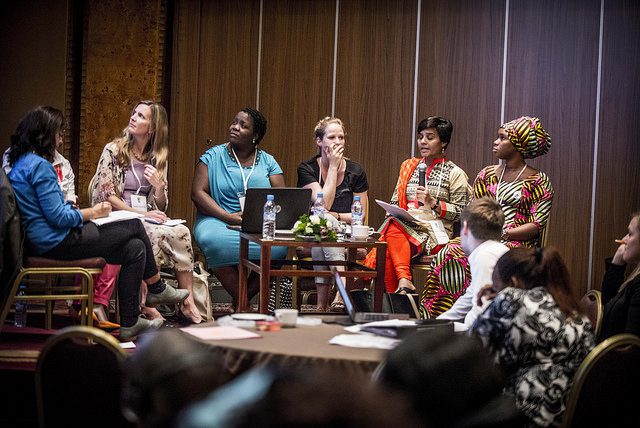
4 Reasons Gender Equality Benefits EveryoneIn 2006, the Economist proclaimed that women are “the world’s most underutilized resource.” While gender equality mainly entails giving women rights and opportunities that are equal to those which men have, achieving this equality will provide benefits to all. Here are four benefits of gender equality:

  1. Increased human resources spur economic growth
    Raising female employment to be equal to male employment levels could increase GDP by 34 percent in Egypt, by 12 percent in the United Arab Emirates, by 10 percent in South Africa and by nine percent in Japan. Empowering women to become active in their economy boosts productivity, a benefit that could help the poorest countries rise out of poverty. Based on these findings, many international companies have created programs to empower women economically and improve the productivity of their business.
  2. More resources reach children
    When women have more control over family resources, spending patterns tend to benefit children. Gains in women’s education and health have also been shown to result in better outcomes for children. Improving the lives of young people enhances the growth prospects of their countries.
  3. Decision-making is more reflective of collective interests
    Empowering women politically and economically so that they have a voice in the decision-making process of their community makes community policies more reflective of all members’ interests. In India, increased political participation by women has lead to more funding being allocated towards public goods, such as water and sanitation initiatives.
  4. Family planning improves quality of life
    When women are empowered to make decisions about when to have a child, the quality of their children’s life improves. Children born less than two years apart are twice as likely to die in the first year of life as children born further apart. Being unable to spread out pregnancies also interferes with breastfeeding, which has a crucial role in child nutrition.

Nestlé has decided to promote gender equality as a means of improving their business. The company partnered with COPAZ in 2010, a female cocoa cooperative in the Ivory Coast that has about 600 members.In 2014, Nestlé expanded its efforts to empower women by establishing local women’s associations, listing the wives of male cocoa farmers as members of cocoa cooperatives and helping women to increase their crop yield.

Several other companies, including Coca-Cola, Kate Spade & Company, Avon Products and Abbott Laboratories have realized that promoting gender equality is both a morally and economically sound investment. Unlocking women’s potential will improve life for both genders.

– Kristen Nixon

Photo: Flickr

November 9, 2017
https://borgenproject.org/wp-content/uploads/borgen-project-logo.svg 0 0 Borgen Project https://borgenproject.org/wp-content/uploads/borgen-project-logo.svg Borgen Project2017-11-09 01:30:102024-05-27 09:28:28Four Reasons Gender Equality Benefits Everyone
Global Poverty, Human Rights

10 Facts About the Polish Genocide

10 Facts About the Polish GenocideGenocide brings to mind horrific images of concentration camps and apartheid rule, however, few picture the planned extermination of Poles in Volhynia by Ukrainian Nationalists in the 1940’s. Despite its impact on Polish history, it is still largely unknown. In hopes of spreading awareness, here are 10 facts about the Polish genocide:

  1. Genocide is defined as an act “committed with intent to destroy, in whole or in part, a national, ethnical, racial or religious group, as such,” by the 1948 UN Convention on the Prevention and Punishment of the Crime of Genocide.
  2. Prior to the outbreak of WWII, Volhynia had been divided between Russia and Poland. As nationalism crept through Germany and other parts of Europe, Volhynia became a coveted voivodeship (governorship) causing tensions between the Ukrainian population and the Poles (at the time Ukraine was part of a changing political landscape).
  3. Volhynia was an agricultural region in the northeast of pre-war Poland and was referred to in Polish mythology as the Kresy (Borderlands).
  4. The interwar Polish political climate was full of discriminatory practices that gave rise to a drastic anti-Polish sentiment among many Ukrainians. For instance, Ukrainians were barred from government jobs, protests were suppressed and Orthodox churches were destroyed with people forced to convert to Catholicism.
  5. Between 1942 and 1945 the Bandera faction of the Organization of Ukrainian Nationalists (OUN-B) and its military counterpart the Ukrainian Insurgent Army (UPA) carried out an ethnic cleansing of Polish Volhynians as a means of ensuring that Volhynia would not remain under Polish control.
  6. The massacre was staged to look like an unplanned peasant riot as part of an “anti-polish operation.” UPA documents recorded the planned extermination of the Polish population and recounted that “the resistance of the Polish self-defense diminished to an extent that the Ukrainian operations recall German actions against the Jews.”
  7. The UPA units that carried out the massacres used axes instead of firearms and recruited Ukrainian peasants to reinforce the façade of a spontaneous uprising. A survivor recalls the brutality, describing the slaughter of a church mass with body parts strewn around and having to see a young man she lived with dragged behind a carriage and then thrown at the house. Historians estimate 60,000 Polish civilians were killed.
  8. The aggression between Ukrainians and Poles was not limited to the region of Volhynia, it was also present in other parts of the region with mixed populations like Lvov, Tarnopol, Stanisławów and other voivodeships bordering Volhynia.
  9. Poles killed during the Polish-Ukrainian clashes in the city of Lvov were commemorated by the Eaglet Cemetery (Cmentarz Orlat), which was destroyed under Soviet rule.In 2005 the Eaglet cemetery reopened with the attendance of both Polish and Ukrainian presidents, a major moment in Polish-Ukrainian history.
  10. The massacre of Polish citizens in Volhynia was not originally classified as a genocide. In 2013 Polish Parliament voted to refer to the events as an ethnic cleansing with signs of genocide in an effort to improve Polish-Ukrainian relations. In 2016 a resolution adopted by 432 lawmakers of the 460-seat parliament stated, “The victims of the crime committed in the 1940’s by Ukrainian nationalists were not duly commemorated, and the mass murder was not defined as genocide in accordance with the historical truth.”

Even after its classification as genocide, the Volhynian massacres remain unknown to many Ukrainians. Awareness is spreading as Polish leadership seeks to edify the public about this historic tragedy. As politics change and new global leadership arises there is hope that this remembrance of history will encourage a more peaceful future.

– Rebekah Korn

Photo: Flickr

November 8, 2017
https://borgenproject.org/wp-content/uploads/borgen-project-logo.svg 0 0 Kim Thelwell https://borgenproject.org/wp-content/uploads/borgen-project-logo.svg Kim Thelwell2017-11-08 01:30:212019-12-27 15:05:1410 Facts About the Polish Genocide
Global Poverty, Human Rights

Human Rights Issues in the Marshall Islands

Human Rights Issues in the Marshall Islands
The Marshall Islands, like every country, has human rights issues that plague the nation. According to a 2015 Human Rights Report, the country’s human rights issues include the conditions of its prisons, domestic violence and corruption within the government. Along with these, the Marshall Islands struggles with the protection of worker’s rights, child abuse and trafficking.

The conditions in the Marshall Islands prison facility in Majuro were not up to code in 2015. In the older wing of the prison, the area was much darker and cleanliness was low compared to the newer wing. There were no fights or deaths, however, and no inmates complained of mistreatment.

The Marshall Islands government has yet to find a way to deal with the effects of 67 nuclear weapons tests that were conducted by the United States from 1947 to 1958. 14,000 Marshallese had to relocate and have struggled to keep their health in check long-term because of this. The survivors of this testing have since spoken up and the Nuclear Claims Tribunal awarded them $2 billion. This amount was not paid out in full, however, due to lack of funds.

In 2012, the U.N. discovered that more than 60 years later, a long-term solution has yet to be found for the people displaced by the testing. Calin Geogescu, a United Nations Special Reporter, believes that solutions need to be specific to the needs of each individual atoll affected.

Refugee status is still not accessible for the Marshallese. As the effects of climate change cause sea levels to rise higher each year, there is a good chance that their homeland will be gone soon. The Marshall Islands’ laws do not have a system in place to protect its citizens who seek asylum or refugee status. If the islands and atolls fall completely victim to climate change, the Marshallese will have nowhere else to go because their refugee status does not exist.

Sex trafficking and domestic violence are also major issues in the Marshall Islands. The U.N. Population Fund study found that “seven out of 10 women have experienced physical or sexual violence in their lifetime.” The victims of domestic violence are often discouraged from seeking justice because of cultural restraints. “91 percent of women who experienced domestic violence at the hands of their partner or spouse did not report it due to fear of repercussion or belief that the abuse was justified.”

The NGO Women United Together in the Marshall Islands and a 2011 Domestic Violence Protection and Prevention Act are both attempts at preventing this injustice. The Convention on the Rights of the Child has been focused on keeping the children of the Marshall Islands away from violence and trafficking as well. They primarily give their attention to “the right of children to survival; to develop to their fullest potential; to protection from abuse, neglect and exploitation; and to participate in family, cultural and social life.”

These are just a few of the many human rights issues in the Marshall Islands. Improvements are sporadically occurring, but consistency is where these solutions are lacking. A continued focus on what the Marshall Islands has already implemented will help resolve these human rights issues.

– Mackenzie Fielder

Photo: Flickr

November 6, 2017
https://borgenproject.org/wp-content/uploads/borgen-project-logo.svg 0 0 Kim Thelwell https://borgenproject.org/wp-content/uploads/borgen-project-logo.svg Kim Thelwell2017-11-06 01:30:472024-06-11 02:48:34Human Rights Issues in the Marshall Islands
Global Poverty, Human Rights

John McCain Against Ethnic Cleansing in Burma

Senator John McCain Takes a Stand Against Ethnic Cleansing in BurmaOn September 12, 2017, Arizona Senator John McCain spoke out against the treatment of the Rohingya population of the Rakhine State of Burma, also known as Myanmar. The Rohingya people are mostly Muslim-practicing individuals, and according to the United Nations, they are under attack. Specifically, the U.N. stated that the situation, which is characterized by a series of “cruel military operations,” is a “textbook example of ethnic cleansing.”
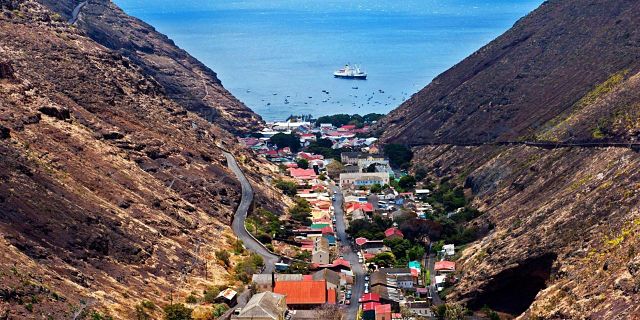
In his address, Senator McCain withdrew his support of the National Defense Authorization Act for Fiscal Year 2018 (NDAA), which sought to expand a military relationship between the United States and Burma. Specifically, Senator McCain criticized Burmese leader Aung San Suu Kyi and her lack of interference with the ethnic cleansing in Burma, stating, “I can no longer support expanding military-to-military cooperation given the worsening humanitarian crisis […] against the Rohingya people.”

According to Council on Foreign Relations Senior Fellow for Southeast Asia Joshua Kurlantzick, Suu Kyi, who is a Nobel Peace Prize recipient for her work with democracy and human rights, “has never demonstrated much sympathy” to the Rohingya people. Suu Kyi has remained mostly silent throughout the humanitarian crisis; however, she has claimed that the ethnic cleansing in Burma was burdened by an “iceberg of misinformation,” which has further enabled the country’s continuous Buddhist nationalist movement.

The Rohingya people, a minority group within Burma‘s largely Buddhist population, are not recognized as an official ethnic group by the country’s government. The attacks against the Rohingya people escalated on August 25, 2017, when the Arakan Rohingya Salvation Army (ARSA) targeted multiple Burmese police and military officials.

Approximately 270,000 Rohingya people have fled Burma in order to find safety and solace in Bangladesh. Additionally, tens of thousands of Rohingya people remain displaced throughout Burma. However, the Burmese government has suspended all foreign aid to the Rakhine State, which has left all of the Rohingya people without necessities like food or health services.

Human Rights Watch has called upon the United Nations, the Association of Southeast Asian Nations and the Organization of Islamic Cooperation to place pressure on the Burmese government in order to allow access to foreign aid for the Rohingya people. Suu Kyi’s silence has had a significantly negative impact on the attacks against the Rohingya people, but she can help stabilize the situation by allowing foreign aid to reach the misplaced Rohingya people.

The World Food Programme (WFP) is an organization that has provided approximately 580,000 Rohingya refugees in Bangladesh with food, which is particularly important for pregnant women and young children. Also, the WFP’s nutritious food has slightly lessened the risk for disease outbreaks among the Rohingya refugees, as nutritious foods help to strengthen the immune system.

The Rohingya people still remain displaced throughout Bangladesh with no shelter; however, the WFP’s food delivery to the Rohingya people, and Senator McCain’s address, are important beginning steps to helping the refugees obtain better lives.

– Emily Santora

Photo: Flickr

November 3, 2017
https://borgenproject.org/wp-content/uploads/borgen-project-logo.svg 0 0 Kim Thelwell https://borgenproject.org/wp-content/uploads/borgen-project-logo.svg Kim Thelwell2017-11-03 07:30:582024-06-05 23:47:15John McCain Against Ethnic Cleansing in Burma
Children, Global Poverty, Human Rights

Children’s Human Rights in Saint Helena

Human Rights in Saint HelenaSaint Helena is a tiny tropical island in the South Atlantic Ocean and remains one of the few countries part of the British Overseas Territory. Besides being well-known as Napoleon Bonaparte’s home in his last years, the island is generally not in the news. Still, different stories detailing possible child abuse yield concerns about the status of human rights in Saint Helena.
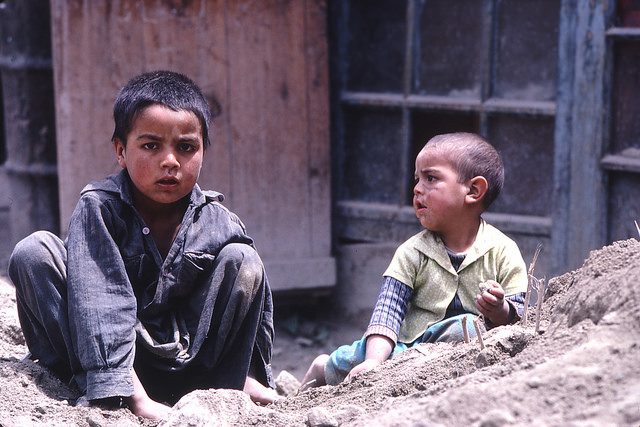
Recently, Saint Helena has been under scrutiny for possible child abuse on its shores. In 2014, the Daily Mail published a series of three articles about the “culture of sexual abuse of children” in Saint Helena. Needless to say, these articles shocked the public. The articles detailed the brutality of the abuses. More importantly, the articles suggested that authorities needed to review the policing on the island.

The articles criticized the authorities in great detail, particularly the Foreign Commonwealth Office, the local government of Saint Helena and the Department for International Development. Other occurrences suggest that child abuse is ongoing on the island, creating a grave concern for human rights in Saint Helena.

Claire Gannon and Martin Warsama, social workers from Britain, were working with island residents. Gannon and Warsama reported the abuse; later, both alleged they were threatened and forced to leave the island in retaliation for reporting such abuse.

Later, the FCO withdrew its initial report in front of the United Nations. The FCO apologized for its “erroneous report” that denied the allegations of child abuse. Gannon and Warsama were furious. In return, the social workers sued the FCO and the United Kingdom Department for International Development.

The FCO was faced with a public outcry. As result, it commissioned a report by a children’s charity, the Lucy Faithfull Foundation. The foundation kept its report confidential. However, the contents were leaked to a website the social workers had created to help drum up support for their lawsuit. The report noted that there was a culture on the island of abusing teenage girls through “violent and brutal attacks.”

The reports generated by the FCO indicate that there is, at a minimum, some ongoing child abuse on the island. One of the reasons such abuse could potentially take place is because of the small population: there are just over 4,000 permanent residents of the island. It is well-established that abusers often become close to their victims.

The government of Saint Helena has begun taking an active interest in the welfare of children as a whole. In 2010, the Welfare of Children Regulations formed the Safeguarding Children’s and Young People’s Board. To avoid undue political influence as much as possible, the board is chaired independently, though it does report to the governor of Saint Helena. Other members of the board include those who work with children regularly: representatives from the different sectors of health, social services, education and nongovernmental organizations.

The board is a sincere effort from the government to protect children’s interests; it meets every six weeks and when there is an urgent matter. The board also strives to harmonize different elements of the government, so that various agencies can work for the betterment of children’s interests.

– Smriti Krishnan

Photo: Google

October 31, 2017
https://borgenproject.org/wp-content/uploads/borgen-project-logo.svg 0 0 Borgen Project https://borgenproject.org/wp-content/uploads/borgen-project-logo.svg Borgen Project2017-10-31 07:30:142024-05-29 22:27:15Children’s Human Rights in Saint Helena
Global Poverty, Human Rights

10 Facts About the Kashmir Conflict

The Kashmir Conflict“If there is a paradise on earth, it is this, it is this, it is this,” wrote Amir Khusrau, a popular Sufi poet, supposedly describing Kashmir. Today the region is known as a serious bone of contention between India and Pakistan. Here are 10 facts about the Kashmir conflict.

Beginnings
India and Pakistan gained their independence in 1947 and all the princely states had to choose between the two countries. Hari Singh, the Maharaja of Kashmir, did not want to decide on either. He signed an interim agreement with Pakistan to continue transport services. However, afraid of losing his power in wake of an invasion by tribesmen from Pakistan, he signed the Instrument of Accession to India in October 1947.

Line of Control
This led to more unrest and the United Nations had to intervene to negotiate a cease-fire. All troops were withdrawn and a line of control was mutually agreed upon between India and Pakistan in January 1949.

The India-Pakistan War
The Kashmir conflict resumed in the India-Pakistan War of 1965. The Pakistani army tried to take Kashmir by force but failed. The Security Council passed a resolution to put an end to the fighting and ban arms supplies to both parties.

The Shimla Agreement
The Shimla Agreement was signed between India and Pakistan in 1972 to bring peace between the two countries after the Bangladesh Independence War. Another line of control was established between Indian-controlled Kashmir and Pakistan-controlled Kashmir.

China’s Claim
A very interesting point among the 10 facts about the Kashmir conflict is that China also claims control over 20 percent of Kashmir, namely the northeastern part of the region called the Aksai Chin.

Exodus of Kashmiri Hindus
Tens of thousands have been killed by Islamic militants in Indian-controlled Kashmir since 1989, said to be a result of parliamentary elections held by the Indian government. In response, India imposed direct rule in 1990, which worsened the situation, resulting in violent attacks on Hindu residents. 100,000 Kashmiri Hindus (Pandits) fled the valley, fearing for their lives.

Kargil
The Kargil conflict of 1999 erupted when India launched air strikes against Pakistan-backed troops that had infiltrated Indian-controlled Kashmir. Pakistan refused to claim responsibility for the infiltration, but was forced to call back its troops under pressure from the United States. Pakistan was also suspended from the Commonwealth.

The Uri Attack
After years of relative peace, tensions were reignited when armed militants attacked the Indian army base in Uri, killing 18 soldiers. India responded by blaming Pakistan, while Pakistan blamed India for the unrest in the region.

Human Rights Violation
The Indian army killed Burhan Wani, a 21-year-old commander of the separatist group Hizbul Mujaheedin. This led to massive protests that resulted in curfews and lockdowns in large parts of the region. The Indian army used pellet guns to disperse the angry crowd, blinding hundreds. The New York Times called it an epidemic of “dead eyes”.

Possible Solutions
As Kashmir remains a flashpoint between India and Pakistan, several solutions to the Kashmir conflict have been discussed by political experts. India and Pakistan both favor a resolution where Kashmir joins their nation. However, the inhabitants of the Kashmir valley support the declaration of an independent Kashmir or Kashmir Valley. The problem is that the region would not be economically viable, as its revenue is heavily based on tourism. Another solution that Pakistan favors is the Chenab formula, where the entire Kashmir valley with its majority Muslim population would become part of Pakistan. This is hardly plausible, as India would be required to voluntarily give up a major portion of its claim.

According to U.N. Secretary-General Antonio Guterres, engagement and dialogue are fundamental to finding a peaceful solution to the 69-year-old Kashmir conflict.

– Tripti Sinha

Photo: Flickr

October 27, 2017
https://borgenproject.org/wp-content/uploads/borgen-project-logo.svg 0 0 Kim Thelwell https://borgenproject.org/wp-content/uploads/borgen-project-logo.svg Kim Thelwell2017-10-27 01:30:452020-01-10 12:32:4310 Facts About the Kashmir Conflict
Global Poverty, Human Rights

Girls Not Brides: Ending Child Marriage in Afghanistan

Child Marriages in AfghanistanAfghanistan is often ranked as the world’s most dangerous country for women. Young girls are so often robbed of their childhoods by means of widespread violations of their human rights. Poverty, limited access to education and healthcare, little if any support for victims of domestic violence, high birth rates and draconian traditions regarding the role of women leave girls highly vulnerable to abuse.

Though the legal age of marriage is 16 years for women and 18 years for men, as outlined by the Afghan Civil Code, 33 percent of girls are married by the age of 18, the internationally recommended standard legal age for marriage. These marriages essentially treat girls as property in order to strengthen ties between rival families and tribes or to settle debts and disputes. Poor families often sell their daughters for large sums of money to wealthy families and much older men.

Girls who marry in childhood have little power in their household, a greater likelihood of dropping out of school and being illiterate, lower labor force participation and earnings and less control over household assets. Thus, girls’ potential for societal contribution in Afghanistan is immediately stunted by being forced into child marriage.

Child brides, as well as their children, will likely experience a lower standard of health. Adolescent mothers also have a significantly higher risk of maternal mortality and morbidity than women just a few years older than them. These deficits, which affect not only the individuals involved in child marriages in Afghanistan but also the entire country, have not gone unnoticed.

Girls Not Brides is a global partnership committed to helping girls fulfill their potentials by putting an end to child marriage. By emphasizing accountability on behalf of governments and other participants to uphold, respect and protect the rights of girls, the organization pressures countries like Afghanistan to address the issue of child marriage.

In April 2017, the Afghan government showed its support for ending child marriage in Afghanistan by launching a National Action Plan to Eliminate Early and Child Marriage. The Ministry of Women’s Affairs and the Ministry of Information and Culture, with support from UNFPA Afghanistan, the Canadian government and a range of other activists, worked together to develop the declaration. This plan highlights two techniques: initiatives designed to prevent early and childhood marriages and improving laws and services in support of people at risk of early and child marriage.

However, orchestrating a National Action Plan is just the beginning; the plan must be implemented in order to make a difference. Organizations such as Girls Not Brides pledge to ensure that governments take action to protect their girls from underage and unlawful marriage. Initiatives with the goal of putting an end to child marriage in Afghanistan will only succeed with the support of such associations.

– Richa Bijlani

Photo: Flickr

October 26, 2017
https://borgenproject.org/wp-content/uploads/borgen-project-logo.svg 0 0 Borgen Project https://borgenproject.org/wp-content/uploads/borgen-project-logo.svg Borgen Project2017-10-26 01:30:472024-06-08 03:56:11Girls Not Brides: Ending Child Marriage in Afghanistan
Government, Human Rights

Accountability for Human Rights Violations

How US Sanctions Can Effect Accountability for Human Rights Violations Abroad
Sergei Magnitsky was a Russian lawyer who was imprisoned in Moscow. He was convicted of aiding tax evasion in 2008 and died in custody in 2009. Surprisingly, though, his legal troubles did not end there. In a trial in 2013, a Russian court further convicted Magnitsky of tax fraud–four years after his death.

Magnitsky’s death was more than just an untimely demise of a 39-year-old lawyer. While he is said to have died of acute heart failure and toxic shock caused by untreated pancreatitis, Magnitsky had been severely beaten while imprisoned. In fact, his colleagues even insisted that the convictions against him were falsified in order to obstruct Magnitsky’s own accusations of massive tax fraud by Russian officials.

An investigation into the lawyer’s death was opened in November 2009, only to be dropped in March 2013 with the conclusion that Magnitsky had been legally arrested and detained, as well as denying claims that he had been tortured and had been denied access to medical attention.

The United States passed a law in 2012 in Magnitsky’s name that imposed sanctions against Russian officials who were thought to be responsible for serious human rights violations. The law froze any U.S. assets held by these officials and went so far as to ban them from entering the United States.

In 2016, Congress took an important step in addressing global accountability for human rights violations by expanding the earlier Magnitsky law to the Global Magnitsky Act. The new act allows the executive branch of the United States government to impose visa bans and targeted sanctions on individuals responsible for human rights violations or corruption, as well as those officials who abetted or were complacent with such violations.

The Global Magnitsky Act acts as a deterrent, warning foreign officials that unlawful violence could result in serious repercussions from the United States government. Additionally, the act offers incentives to foreign governments for improving mechanisms to increase accountability for human rights violations. By working with the U.S. on human rights violations and corruption investigations, leaders from other countries can voice their contempt for human rights abuses in their own countries.

The effectiveness of these sanctions can be seen in Russia’s response to their imposition. As a result of the global embarrassment inflicted on the country following the enactment of the law, the act has become a fixation for Russian President Vladimir Putin.

The act continues to endorse accountability for human rights violations in various cases around the world on the recommendations of senators as well as a group of human rights organizations, including Human Rights Watch.

– Richa Biplane

Photo: Flickr

October 20, 2017
https://borgenproject.org/wp-content/uploads/borgen-project-logo.svg 0 0 Borgen Project https://borgenproject.org/wp-content/uploads/borgen-project-logo.svg Borgen Project2017-10-20 07:30:302020-04-04 08:41:23Accountability for Human Rights Violations
Global Poverty, Human Rights

House Bill to Combat Human Rights Abuses in North Korea

Human Rights Abuses in North Korea
The Kim regime has continued to inflict disturbing human rights abuses in North Korea on its people. As a result, to help keep America as well as innocent citizens of North Korea safe, the House has voted unanimously on a critical and bipartisan North Korea human rights bill.

According to Newsweek, North Korea’s authoritarian regime has “snatched” teenagers out of their schools to be Kim Jong-un’s apparent sex slaves, forces members of the country’s upper class to watch executions and its leaders are perfectly content to eat expensive foods while the rest of his people subsist on grass.

Reuters recently reported that executions are often carried out in prison camps to instill fear and intimation among prison inmates that are contemplating an escape attempt. Public executions are carried out for minor crimes and distribution of South Korean media can also lead to execution.

According to NK Daily, a person in North Korea can be sentenced to death for communicating with the outside world, and a minimum of ten years of reeducation is the punishment for listening to South Korean media or another foreign radio.

The bill to combat human rights abuses in North Korea is a reauthorization of a 2004 North Korea human rights law that will add to the measure of new provisions aimed at spreading uncensored information throughout the country to inform the citizens of North Korea what is happening in the outside world. It will enact important snippets of updates that have to do with freedom and technological advances that are beyond radio broadcasting.

Chairman Ed Royce and Majority Leader Kevin McCarthy recently stated that “the truth is Kim Jong-un’s greatest enemy. So as we step up sanctions to cut off the cash that funds Kim’s nuclear program, we must also break down barriers to truth in North Korea. This bill will update critical efforts to get real, accurate information into the hands of North Koreans through radio broadcasts, USB drives, mobile devices, and more. When Kim Jong-un has to answer to the North Korean people, he will pose far less danger to us.”

– Sara Venusti

Photo: Flickr

October 20, 2017
https://borgenproject.org/wp-content/uploads/borgen-project-logo.svg 0 0 Kim Thelwell https://borgenproject.org/wp-content/uploads/borgen-project-logo.svg Kim Thelwell2017-10-20 07:30:222018-03-12 13:36:17House Bill to Combat Human Rights Abuses in North Korea
Economy, Global Poverty, Human Rights

How to Help People in Brunei

How to Help People in Brunei Darussalam

Brunei is a small nation located in the northern coastal area of the island of Borneo, which also encompasses parts of Malaysia and Indonesia. Brunei‘s territory extends itself through an area of 5,765 kilometers of land, where about 423,000 citizens live.

How to help people in Brunei is not an easy question to answer at first glance. The fact is that despite its size, Brunei’s economy is considered to be one of the best performing in the world.

The country mainly exports liquefied gas and crude oil across the globe; natural gas and petroleum represent 60% of the country’s economy. Brunei’s extended forest territory allows it to produce abundant amounts of non-renewable resources and energy.

In spite of Brunei’s level of productivity, the issue of how to help people in Brunei remains because, despite the country’s great wealth, the social and political system causes difficulty for Brunei’s citizens.

As an absolute monarchy led by Sultan Hassanal Bolkiah, freedom of speech has been limited within the media, including radio, television, and print, as well as for citizens.

In 2014, Brunei adopted sharia law, a list of laws based on the religion of Islam. Consisting of three phases, two of which have to be yet implemented, sharia law is currently enforced among Brunei’s citizens.

The only approved phase for the moment includes prison sentences for what most developed first world countries would consider minor. Pregnancy outside marriage, failing to attend Friday prayers, propagating religion other than Islam, among other offenses, are severely punished with prison sentences or fines.

Organizations such as the United Nations have spoken out regarding Bolkiah’s intentions, but despite commenting on the sultan’s ideas for the future of Brunei, the country remains part of the United Nations due to providing free medical care, education and more to its citizens.

Boycotts of the Beverly Hills Hotel and other properties that Bolkiah owns have been enacted by numerous international companies to put pressure on the sultan to repeal sharia law. Celebrities such as Ellen DeGeneres and Elton John have taken up the issue to bring awareness to the inequality and discrimination that is currently taking place in Brunei.

How to help people in Brunei is a social issue rather than an economic one. Brunei is a country that violates human rights every day and no organizations are actively fighting against it. The imposition of sharia law in Brunei is continuous and awareness is key in order to eradicate such human rights violations.

– Paula Gibson

Photo: Flickr

October 20, 2017
https://borgenproject.org/wp-content/uploads/borgen-project-logo.svg 0 0 Kim Thelwell https://borgenproject.org/wp-content/uploads/borgen-project-logo.svg Kim Thelwell2017-10-20 07:30:092020-06-22 14:45:19How to Help People in Brunei
Page 16 of 45«‹1415161718›»

Get Smarter

  • Global Poverty 101
  • Global Poverty… The Good News
  • Global Poverty & U.S. Jobs
  • Global Poverty and National Security
  • Innovative Solutions to Poverty
  • Global Poverty & Aid FAQ’s
Search Search

Take Action

  • Call Congress
  • Email Congress
  • Donate
  • 30 Ways to Help
  • Volunteer Ops
  • Internships
  • Courses & Certificates
  • The Podcast
Borgen Project

“The Borgen Project is an incredible nonprofit organization that is addressing poverty and hunger and working towards ending them.”

-The Huffington Post

Inside The Borgen Project

  • Contact
  • About
  • Financials
  • President
  • Board of Directors
  • Board of Advisors

International Links

  • UK Email Parliament
  • UK Donate
  • Canada Email Parliament

Get Smarter

  • Global Poverty 101
  • Global Poverty… The Good News
  • Global Poverty & U.S. Jobs
  • Global Poverty and National Security
  • Innovative Solutions to Poverty
  • Global Poverty & Aid FAQ’s

Ways to Help

  • Call Congress
  • Email Congress
  • Donate
  • 30 Ways to Help
  • Volunteer Ops
  • Internships
  • Courses & Certificates
  • The Podcast
Scroll to top Scroll to top Scroll to top