• Link to X
  • Link to Facebook
  • Link to Instagram
  • Link to TikTok
  • Link to Youtube
  • About
    • About Us
      • President
      • Board of Directors
      • Board of Advisors
      • Financials
      • Our Methodology
      • Success Tracker
      • Contact
  • Act Now
    • 30 Ways to Help
      • Email Congress
      • Call Congress
      • Volunteer
      • Courses & Certificates
      • Be a Donor
    • Internships
      • In-Office Internships
      • Remote Internships
    • Legislation
      • Politics 101
  • The Blog
  • The Podcast
  • Magazine
  • Donate
  • Click to open the search input field Click to open the search input field Search
  • Menu Menu

Archive for category: Global Poverty

Key articles and information on global poverty.

Global Poverty, Government

10 Interesting Facts about Social Networking

kicking
With the advancement of technology, the Internet has become vastly popular for the masses. The Internet brings along a phenomenon, social networking. Networking has never been easier since applications are developed to foster this phenomenon, and people can access the social media through many channels: computer, laptops, even on their smart phones. Below are 10 interesting facts about social media.

  • 56 percent of Americans have a social networking site.
  • 91 percent of mobile access is used for social networking.
  • More than 4.2 billion people use their mobile phones to accesses social networking site.
  • 230,060 years is the total amount of time the United States spend on social media.
  • 6.9 hours is the amount of time an average American spends on his/her social networking site in a month.
  • 22 percent of online time is accounted by social networking.
  • 40 percent of people socialize through networking sites over face to face communication.
  • 23 percent of Facebook users check on their account at least five times a day.
  • 20 minutes per day is how much time people spend on Whisper application for smartphone devices.
  • 400 million tweets is the average number of tweet being sent every day.

All the numbers are saying that social networking is becoming popular in the modern day and social networking is the most profitable way to reach wider range of audience with a limited budget. In other words, one might say that social media is the most effect marketing strategy. However, people tend to forget a more important matter, global poverty. To make a difference, a person only needs to make a 30 second phone call to his/her local senator or representative in the area, and it only take less than two minutes to post a link and express concern about international affair issues. Only one of us might not be able to make a difference, but with the combined force of society on social media, global poverty can gain a tremendous amount of attention not only domestically but globally.

– Phong Pham

Sources: t2Social, Media Bistro, Mashable, Telegraph, Slate, CNBC
Hongkiat

January 4, 2014
https://borgenproject.org/wp-content/uploads/borgen-project-logo.svg 0 0 Borgen Project https://borgenproject.org/wp-content/uploads/borgen-project-logo.svg Borgen Project2014-01-04 12:41:062024-12-13 17:49:5210 Interesting Facts about Social Networking
Activism, Advocacy, Global Poverty, Health, Inequality, War and Violence

Ethnic Tension Within Inner Mongolia

mongolia
It is no secret that the concerns and rights of ethnic minorities in China fall to the wayside in favor of the Han, the ethnicity with the majority in the country. Inner Mongolia serves as an example of the cultural and economic strife caused by marginalizing one group over another. The result is what the Mongol minority believes is outright economic exclusion and the watering down of their culture.

One of the key issues within the region is the migration of the indigenous nomads from their native grasslands to the cities. The Chinese government waves off the migration as a move into modernity for the nomads. A removal from what Chinese authorities refer to as a “backward” culture, but as Nick Holdstock of the U.K. Independent points out, the natives have no say whatsoever when it comes to moving to the cities. This outflow of ethnic Mongolians to urban centers has raised fears among Mongolians that their culture, language and lifestyle are being threatened.

Another point of tension lies in the regional mining of rare-earth metals. Various mining companies have entered the region to take advantage of the lucrative prospects, especially since the value of these metals is demonstrated in their ubiquity among high-tech electronics. However, the mining has been accompanied by a degradation of the surrounding environment as well as the health of the nomads.

For example, the town of Baotou, a major mining hub, has seen its groundwater polluted to toxic levels, their crops ruined and much of their livestock destroyed. Moreover, the use of underground water sources, essential to the removal of impurities from the coal, has lessened the water available to crops and livestock. Many farmers, unable to deal with destruction of their livelihood, have moved away. The Guardian points out that the population within the surrounding villages of the Baotou plants has decreased dramatically. Those that have remained in the area are plagued by severe illness.

All of these factors have coalesced, creating serious economic problems for the ethnic minority. Environmental devastation of their grasslands has degraded some of the main forms of their economic livelihood; the mining industry in the region tends to hire workers from other provinces, excluding the nomads from many of the economic benefits the industry might bring.  Furthermore, those who have migrated to urban areas have discovered cultural barriers to finding gainful employment, namely an inability to speak passable Mandarin.

Tensions have, moreover, reached the point of violence in some instances. In 2011, a herder was killed by a passing coal truck when he attempted to prevent coal trucks from crossing into his land during his protest against the mining industry. Several days later another protester was killed by a forklift driver. Tensions finally boiled over and several thousand Mongolians went out to voice their opposition toward the mining activities.

Unfortunately, the case of Inner Mongolia is a harsh reminder among ethnic minorities in China of their second-class citizen status. Perhaps in time, the Chinese government will listen to the voices of protest among the disenfranchised minority groups that populate many rural areas throughout China. Until then, Mongolians and other ethnicities face major economic and cultural challenges.

– Zack Lindberg

Sources: The Independent, The Guardian
Fabio Ghioni

January 4, 2014
https://borgenproject.org/wp-content/uploads/borgen-project-logo.svg 0 0 Borgen Project https://borgenproject.org/wp-content/uploads/borgen-project-logo.svg Borgen Project2014-01-04 12:23:512016-02-06 08:44:53Ethnic Tension Within Inner Mongolia
Foreign Aid, Global Poverty

Mozambique & Foreign Aid

This past week, the United States Millennium Challenge Corporation (MCC) has refused to grant a second aid package to the government of Mozambique. These aid packages, also known as compacts, are given in the hope that the funds will allow the countries to build more infrastructure and combat national issues. The first compact of $506.9 million previously given to Mozambique was directed toward water supply, sanitation, road and agricultural improvements; however, many of these projects were delayed.

Because the conditions for a second aid package required that all projects funded by the first compact be completed, Mozambique was not eligible for more aid. The U.S. MCC did, however, contribute more funding to the current projects in Mozambique.

The first compact has supported Mozambique’s Farmer Income Support Project, Land Tenure Services Project, Rehabilitation of Roads Project, and Water and Sanitation project. The Farmer Income Support project aims to remove trees, provide support to increase crop yields and help farmers develop alternative sources of income. The Land Tenure project will address issues with land distribution laws and provide land-related services. The Rehabilitation of Roads project will attempt to improve markets by rehabilitating parts of the National Route 1, and the Water and Sanitation project will improve access to clean water supplies, especially in rural areas.

The government of Mozambique was taken aback by the rejection from the MCC; however, the country is also becoming less dependent upon foreign aid. In the past, foreign aid has been the center of the budget of the nation but in the future, Mozambique expects domestic resources to pay for 66.5 percent of the budget.

This increase in budget will allow an increase in education, health care, agriculture and rural development, the judicial system, security and more. The increase will also create new jobs, which will create a cycle of economic improvement.

– Lienna Feleke-Eshete

Sources: All Africa, All Africa
Photo: The OGM

January 2, 2014
https://borgenproject.org/wp-content/uploads/borgen-project-logo.svg 0 0 Borgen Project https://borgenproject.org/wp-content/uploads/borgen-project-logo.svg Borgen Project2014-01-02 04:00:422024-05-26 23:01:17Mozambique & Foreign Aid
Global Poverty

JFK Quotes

JFK Quotes
Being one of the most influential, charismatic, memorable American presidents of all time, John F. Kennedy didn’t get to serve even one full term in office before his tragic demise. He did, however, manage to leave quite the legacy behind: his philanthropic efforts, chiefly focused on prioritizing the revolution of human rights, first sparked the initiation of the Peace Corps. “Jack” had a lot to say about the subject; following are the most prominent, inspirational and thought-provoking of JFK’s quotes relating to poverty:

1. “The world is very different now. For man holds in his mortal hands the power to abolish all forms of human poverty, and all forms of human life.”

2. “If a free society cannot help the many who are poor, it cannot save the few who are rich.”

3. “To our sister republics south of our border, we offer a special pledge—to convert our good words into good deeds—in a new alliance for progress—to assist free men and free governments in casting off the chains of poverty.”

4. “Now the trumpet summons us again—not as a call to bear arms, though arms we need—not as a call to battle, though embattled we are—but a call to bear the burden of a long twilight struggle, year in and year out, ‘rejoicing in hope, patient in tribulation’—a struggle against the common enemies of man: tyranny, poverty, disease and war itself.”

5. “We can help make the world safe for diversity. For, in the final analysis, our most basic common link is that we all inhabit this small planet. We all breathe the same air. We all cherish our children’s future. And we are all mortal.”

JFK’s quotes, the man’s impact on the world before his disastrous death, and the very philosophy carefully hidden behind each word in his writing should not go unnoticed: although his physical body long gone, his good will and kind heart live on eternally through our memories and actions. Let yourself be inspired by JFK’s words to build a better tomorrow for all.

– Natalia Isaeva

Sources: The White House, The Quotations Page, JFK Experience

January 1, 2014
https://borgenproject.org/wp-content/uploads/borgen-project-logo.svg 0 0 Borgen Project https://borgenproject.org/wp-content/uploads/borgen-project-logo.svg Borgen Project2014-01-01 17:41:392018-01-30 13:14:09JFK Quotes
Global Poverty

Yesterday in Yemen

yemen_malnutrition
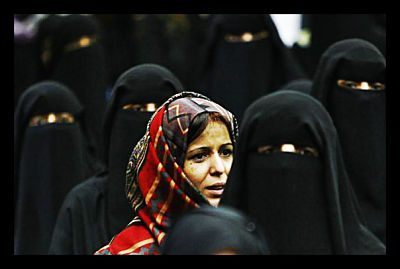
“We are hungry and we need jobs,” says a Yemenis woman, who faces a recording camera while standing on the side of a dirt road. Her clothes are stained by sand and her eyes are bloodshot, but she responds with firm assurance to questions in a recent YouTube video composed by activists from Support Yemen, who aimed at facilitating dialogue in the capital city of Sana. Topics ranged from the ongoing political instabilities that the region faces to other matters, such as closing the gap between civilians, military, and tribal forces. These are not the only factors hindering Yemen’s economic and social progression, as high food prices, endemic poverty, diminishing resources and influxes of refugees and migrants are also damaging the region from within.

In hopes of relieving some of the hunger the Yemenis people are facing, much needed food support will be streamlined into the region thanks to recent contributions by the Government of India and the World Food Programme (WFP.) After a Comprehensive Food Security Survey was conducted in Yemen last year, WFP found 22 percent of the population was living under severely insecure food standards. This has led the WFP to set a new goal at providing five million people in 16 governorates with food assistance and programs to strengthen their community’s resilience.

It has also been announced that the WFP will be appropriating a budget of $495 million for programs and activities in Yemen, starting in 2014 and ending in 2016. WFP’s continued effort in Yemen has already provided assistance to 5 million children, pregnant women, and internally displaced persons (IDPs.) In a place where nearly half of children younger than five years old are malnourished and stunted, there is still much more that can be done.

Doing their part in combating hunger in the area is the Government of India, who recently contributed $1.8 million in an effort that will aid almost 121,300 people most in need of assistance over the next six months. Those funds were used to purchase approximately 2,600 metric tons of wheat, which will provide emergency food assistance for 3.5 million people, 600,000 IDPs, and other nutritional support for 405,000 children under the age of five. Mohammed Saeed Al-Sa’adi, a representative for the Government of Yemen, had this to say about the donation: “We are grateful to the government and people of India for providing this timely donation and we highly appreciate the cooperation between WFP and India in delivering assistance to those in need.”

Appropriated funds going towards Yemen will provide relief over the next few years, but it will only prove temporary if sustainability and community resilience aren’t increased in the area. With a growing deficit of $3.2 billion and poverty rates on the rise since 2011, it is important to realize the consequences which many men, women, and children will face after they have taken a toll. As donations come into the area from across the globe and programs are constantly being implemented into Yemen communities, it is hopefully a fruitful sign of things to come.

– Jeffrey Scott Haley
Feature Writer

Sources: WFP, WFP (2), Saba News, Yemen Times, Albawaba

January 1, 2014
https://borgenproject.org/wp-content/uploads/borgen-project-logo.svg 0 0 Borgen Project https://borgenproject.org/wp-content/uploads/borgen-project-logo.svg Borgen Project2014-01-01 17:23:472024-05-25 00:35:57Yesterday in Yemen
Activism, Aid Effectiveness & Reform, Charity, Food & Hunger, Food Aid, Food Security, Global Poverty, Health

Food Aid in Puntland, Somalia

puntland_cyclone
On November 10, a deadly cyclone raged through the region of Puntland, located in Somalia’s northeastern coast. Though the cyclone has reportedly killed up to 300 people, the death toll has not yet been verified. Many of these victims were children and elderly, both of which are more vulnerable to hypothermia and exposure. Moreover, the United Nations says as many as 30,000 people are in need of food aid.

Whole villages have been washed away by the storm, thus forcing local aid workers to struggle to reach the stranded victims due to the damaged infrastructure. Furthermore, large portions of roads have been damaged, driving aid workers to deliver food aid on foot. Many people are also missing, especially in coastal towns where fisherman and their boats have been lost at sea.

Pastoralists have been hit the hardest since their livestock and poorly built homes and barns have been washed away. The region does not normally experience rain so the area’s infrastructure has not been built to withstand this sort of storm. In fact, some of the worst hit villages have lost 90 percent of their livestock to icy rain and flooding.

Moreover, areas infamous for pirates such as the port of Ely are some of the worst affected. This is worrisome as the 2004 Tsunami was considered one of the major triggers of the pirate attacks off the coast of Somalia where 736 people and 32 ships were held hostage.

The World Food Programme (WFP) recently arrived in Puntland and transported 340 metric tons of food including cereal and vegetable seeds to the worst affected areas of Bossaso, Banderbayla, Dongoroyo and Eyl. In total 27, 000 people have been given a month’s worth of food rations. In addition Puntland’s government sent 32 trucks of emergency supplies throughout the needed areas.

Once emergency aid has been distributed and the region is no longer in a state of disaster the WFP will begin recovery work to rebuild the infrastructure of the area. The Food-for-Assets initiative is a recovery program run by the WFP that assists communities in rebuilding their infrastructure in a way that would better withstand a future natural disaster. Moreover, community workers are paid in food rations for assisting with the development.

Further south in Middle Shabelle, flooding has devastated the town of Jowhar and surrounding areas, pushing over 10,000 people to flee their homes. Their water supplies have, furthermore, been contaminated increasing the risk of waterborne diseases, while all standing crops and livestock in the area have been destroyed or lost. The International Committee of the Red Cross has provided 25,800 people with emergency essentials such as kitchen sets, clothes and sleeping mats.  They have also been able to stop flooding and repair riverbanks in five locations and distributed emergency food aid and water.

– Lisa Toole

Sources: AllAfrica: Food Aid, AllAfrica: Twin Natural Disasters, Yahoo, World Food Programme, Aljazeera

January 1, 2014
https://borgenproject.org/wp-content/uploads/borgen-project-logo.svg 0 0 Borgen Project https://borgenproject.org/wp-content/uploads/borgen-project-logo.svg Borgen Project2014-01-01 17:22:102024-05-25 00:37:18Food Aid in Puntland, Somalia
Global Poverty

Mining in Zambia and Canada

There are many aspects of sustainable development methods that are required to evaluate. In the developing world such as Zambia, few regard the issue of the environment seriously. On average, lead concentrations in children are five to 10 times the permissible United States Environmental Protection Agency levels, and can even be high enough to kill.

It has over the years left huge effects that can now be felt for many years to come. One of the most prominent environmental issues was the discovery of high levels of lead in the town of Kabwe. The Canadian oil sands provide another example of the need to make sure development is anchored by principles that are sustainable. Politicians mostly see votes and with little focus on effects of unregulated massive development such as pollution in the rivers as the case in Alberta, Canada. According to investment for this region of Canada oil companies will spend nearly $200 billion over the next decades.

In this regard it is important to know what is required to balance needs and realities of the effects on the activities of development. Sustainable development methods are plans that meet the needs of current generations without compromising the ability of future generations to meet their needs. It contains within it two key concepts: the concept of needs, in particular the essential needs of the world’s poor to which overriding priority should be given; and the idea of limitations imposed by the state of technology and social organization on the environment’s ability to meet present and future needs (WCED, 1987:43.)

This way small economic focus approach has several unwanted side effects. For example, the solution to one problem may make another problem worse. Moreover it tends to focus on short-term benefits without monitoring long-term effects. GDP only reflects the amount of economic activity and can rise when the overall community health is being impaired.

The Alberta Oil Sands is the largest energy project on the planet, lying beneath 140,200 square kilometers of northern Alberta forest, an area almost as large as the state of Florida. With estimated $20 billion revenue coming to Canada each year from this project in Alberta, sustainable development with a broad focus is not a huge priority. Even the currently developed portion of the Oil Sands region is already experiencing severe fragmentation effects on the ecology of the boreal forest.

Remarkably one respected scientist from Canada did a report about this dilemma instead the government went on the defensive despite obvious problems in many areas. These include pollution in the Athabasca River affecting aquatic, plant, human and wildlife. This study was conducted by Dr. David Schindler a renowned academician with impressive pedigree such as the acid rain discovery. According to his report, white fish was caught in Lake Athabasca, near Fort Chipewyan, higher cancers than usual (including rare forms of cancer) in adjacent populations to the project.

It now well known that there many methods to sustain development. These are designed to measure and communicate progress towards of human endeavours across the world.

— Alan Chanda

Sources: Time 1, 2, CBC, Green Party of Canada
Photo: Wikimedia

January 1, 2014
https://borgenproject.org/wp-content/uploads/borgen-project-logo.svg 0 0 Borgen Project https://borgenproject.org/wp-content/uploads/borgen-project-logo.svg Borgen Project2014-01-01 04:00:352024-05-26 23:01:13Mining in Zambia and Canada
Global Poverty

Ethiopia’s War Against its LGBTQ Citizens

“Africa will become a graveyard for homosexuality!”

This is the rallying cry of Seyoum Antonius, president of United for Life, an NGO self-described as Christian, pro-life and backing the sanctity of marriage. He was the organizer of a national conference titled “Homosexuality and its associated social disastrous consequences” held in Ethiopia’s capital Addis Ababa in June.

At the conference, Antonius presented his findings from a “study” that “proved” homosexuality leads to STDs, HIV and “severe psychological disorders.” His “findings” were received among wide condemnation of homosexuality from Ethiopian officials, religious leaders and civil representatives as a “western epidemic.”

Seyoum Antonius is only one of a number of reasons that Newsweek, in its recent investigative report, asserts that where life is getting better for many countries’ LGBTQ communities, “in Ethiopia, it’s getting worse.”

Prior to Antonius’s horrifying and detrimental conference, life was already bleak for Ethiopia’s LGBTQ community. Homosexuality is illegal in Ethiopia. Sentences for “homosexual activity” range on average from ten days to three years but can be as high as ten years in prison under certain circumstances.

Ethiopian daily newspaper Yenga had described homosexuality as a “rapidly growing ‘infestation’” whose “carriers” were “estimated to have reached 16,000.” Yenga also asserted that gays have an average of 75 partners a year and that their inherent promiscuity drives them to have between “seven and nine partners a day.”

Further, a 2007 Pew Global Attitudes Project reveals that 97% of Ethiopians believe that homosexuality should be outlawed.

But this isn’t enough for Antonius. A representative from the Ethiopian Inter-Religious Council Against Homosexuality claimed that the council was making “promising” progress in its efforts to sway the government toward implementing the death penalty for “homosexual acts.” Antonius has been clear that he won’t give up his efforts until this happens, hence his chilling rallying cry.

Two laws in Ethiopia in essence completely bar any health centers, charities, or publications in service of Ethiopia’s LGBTQ community. One, Ethiopia’s strict anti-terrorism law, allows the government to prosecute any person who “writes, edits, prints, publishes, publicizes, [or] disseminates” statements the government considers terrorism. This translates to the police being able to search and arrest anyone they want — without a warrant.

Another pivotal law is the one that bars all charities and NGOs that receive more than 10% of their funding from abroad from engaging in activities that further human rights or promote equality.

The result of these laws, both adopted in 2009, is that the few reputable organizations doing work on human rights within Ethiopia have been either closed or coerced to wipe any mention of human rights from their mission statements.

Leslie Lefkow, Human Rights Watch’s deputy editor for the Africa division describes Ethiopia’s restrictive approach as a “two-pronged strategy that results in a climate of fear and self-censorship. The government has effectively closed off the country in terms of independent investigation. They’ve eviscerated the civil society.”

That strategy is so effective that not even major international organizations like the Global Fund to Fight Aids, Tuberculosis and Malaria have had any success funding programs that educate men who have sex with men about HIV prevention or treat those that are inflicted with the disease.

Further, according to Amnesty International’s Claire Beston: “The U.S., U.K. and other governments give huge amounts of aid to Ethiopia while remaining tight-lipped about the extensive violations of human rights happening throughout the country.” Human Rights Watch, which used to research LGBTQ issues in Ethiopia, has found it “increasingly challenging” to do that work, given that it calls for undercover work.

Life is getting worse for the LGBTQ community, indeed.

– Kelley Calkins

Sources: Newsweek, Pink News, UNHCR, Pew Global
Photo: Rainbow Ethiopia

January 1, 2014
https://borgenproject.org/wp-content/uploads/borgen-project-logo.svg 0 0 Borgen Project https://borgenproject.org/wp-content/uploads/borgen-project-logo.svg Borgen Project2014-01-01 04:00:102024-06-05 03:00:35Ethiopia’s War Against its LGBTQ Citizens
Global Poverty, Health

Social Determinants of Health

Medical Tourism
When most people think about the health of individuals, communities, and populations they think of access to healthcare. People in developing countries have a definite lack of access to doctors, nurses, drugs, and the latest medical technologies.  It is important to remember that the conditions people are born into also have a significant and lasting affect on their health. These circumstances are shaped by the distribution of power and resources both globally and locally. These factors are known as the “Social Determinants of Health”

The social determinants of health are the social, economic, and political factors that shape the health of individuals, communities, and nations. Social determinants of health include both environmental resources such as housing, income and income distribution, unemployment, early life, education, and food insecurity.  They also include gender, ethnicity, class, and race.

The social determinants of health are responsible for health inequities. Health inequities are the large discrepancies in health status seen between countries and within countries. Wealthier countries in the developed world have much lower rates of infant mortality. The infant mortality rate is the number of infants who die before they reach age one, per 1000 births in any year.

The World Bank reports that Sweden, Norway, and Japan have an infant mortality rate of only two in 2012. The US is three times higher at six deaths per 1000 live births. Unfortunately, in many countries in sub Saharan Africa approximately 10% of children die before their first birthday. The infant mortality rate in Sierra Leone was 117 in 2012.

Another factor used to measure the health of nations that is largely impacted by the social determinants of health is life expectancy at birth. Countries in sub Saharan Africa fare the worst; Sierra Leone has a life expectancy of 45 years and Mozambique has a life expectancy of 49 years. High-income countries fare much better; Japan and Switzerland have average life expectancies of 83. The United States has an average life expectancy of 79 years.  Inequality within a country also has a large impact on the overall health of a nation. The U.S. has one of the highest rates of inequality in the world. This is why the US does not fare as well as other developed countries in infant mortality rates and life expectancy.

Health inequities are considered to be unfair and avoidable. It is widely considered that health inequities could be abolished with improved social policies and programs and great income iquality. At the World Conference on the Social Determinants of Health in 2011 the WHO developed five action areas for improving health equity:

1.    Adopt improved governance for health and development

2.    Promote participation in policy making and implantation

3.   Further reorient the health sector towards promoting health and reducing health inequities

4.   Strengthen global governance and collaboration

5.   Monitor progress and increase accountability

– Lisa Toole 

Sources: The World Bank, WHO, CDC, NCBI

December 31, 2013
https://borgenproject.org/wp-content/uploads/borgen-project-logo.svg 0 0 Borgen Project https://borgenproject.org/wp-content/uploads/borgen-project-logo.svg Borgen Project2013-12-31 09:06:052014-07-29 16:52:06Social Determinants of Health
Global Poverty, Health, War and Violence

Drones Impact on Mental Health in Pakistan

The United States has waged a drone campaign in Pakistan since the early 2000’s. The Waziristan region in northern Pakistan has been a specific target due to the major presence of the Taliban in the area. The Bureau of Investigative Journalism in London released a report indicating that drone strikes carried out by the U.S. have killed 3,581 people since 2004. That number includes 884 civilians and 197 children. Unsurprisingly, this has led to a rise in mental health issues.

The Huffington Post reported a story of a man who lost nine friends and relatives in one attack in 2009. While Mohammed Fahim was in another room, a drone hit his house, killing everyone else instantly. Fahim insists that his family had no ties to Islamist militancy, but instead that this was an attack that went astray.

Residents in Waziristan complain of living in a constant fear of drones, specifically citing the buzzing sound they emit when they fly overhead. This fear is leading to a rise in depression, anxiety, and in some cases psychotic episodes. Doctor Muktar ul-Haq is the head of psychiatry at a government hospital in the city of Peshawar. He told a story of a man who had a full blown psychotic episode after he found a SIM card outside of his house. A common rumor in Pakistan is that SIM cards emit signals to drones, guiding their attack. Haq said when the man was admitted he was “aggressive and paranoid.”

The social problems that plague Pakistan, such as poverty, Taliban violence, and unemployment, contribute to the rise in depression and anxiety. With all of these other problems, mental health falls to the bottom of the list. There are no official statistics about the rise in mental health issues, but some psychiatrists treating people in the region estimate that rates psychological illnesses have risen three fold.

– Colleen Eckvahl

Sources: Huffington Post, The Atlantic
Photo: CS Monitor

December 31, 2013
https://borgenproject.org/wp-content/uploads/borgen-project-logo.svg 0 0 Borgen Project https://borgenproject.org/wp-content/uploads/borgen-project-logo.svg Borgen Project2013-12-31 04:00:532024-05-26 23:00:46Drones Impact on Mental Health in Pakistan
Page 2076 of 2162«‹20742075207620772078›»

Get Smarter

  • Global Poverty 101
  • Global Poverty… The Good News
  • Global Poverty & U.S. Jobs
  • Global Poverty and National Security
  • Innovative Solutions to Poverty
  • Global Poverty & Aid FAQ’s
Search Search

Take Action

  • Call Congress
  • Email Congress
  • Donate
  • 30 Ways to Help
  • Volunteer Ops
  • Internships
  • Courses & Certificates
  • The Podcast
Borgen Project

“The Borgen Project is an incredible nonprofit organization that is addressing poverty and hunger and working towards ending them.”

-The Huffington Post

Inside The Borgen Project

  • Contact
  • About
  • Financials
  • President
  • Board of Directors
  • Board of Advisors

International Links

  • UK Email Parliament
  • UK Donate
  • Canada Email Parliament

Get Smarter

  • Global Poverty 101
  • Global Poverty… The Good News
  • Global Poverty & U.S. Jobs
  • Global Poverty and National Security
  • Innovative Solutions to Poverty
  • Global Poverty & Aid FAQ’s

Ways to Help

  • Call Congress
  • Email Congress
  • Donate
  • 30 Ways to Help
  • Volunteer Ops
  • Internships
  • Courses & Certificates
  • The Podcast
Scroll to top Scroll to top Scroll to top