• Link to X
  • Link to Facebook
  • Link to Instagram
  • Link to TikTok
  • Link to Youtube
  • About
    • About Us
      • President
      • Board of Directors
      • Board of Advisors
      • Financials
      • Our Methodology
      • Success Tracker
      • Contact
  • Act Now
    • 30 Ways to Help
      • Email Congress
      • Call Congress
      • Volunteer
      • Courses & Certificates
      • Be a Donor
    • Internships
      • In-Office Internships
      • Remote Internships
    • Legislation
      • Politics 101
  • The Blog
  • The Podcast
  • Magazine
  • Donate
  • Click to open the search input field Click to open the search input field Search
  • Menu Menu

Archive for category: Global Poverty

Key articles and information on global poverty.

Gender Equality, Global Poverty, Women and Female Empowerment

Political Participation And Women’s Empowerment in Argentina

Women’s Empowerment in ArgentinaWhile many challenges around the world exist concerning enhancing women’s empowerment and forging a path toward equality, the Argentinian government has been a proactive example. In 1991, Argentina became a pioneer country for women’s political participation. The country established a quota to ensure that 30 percent of all candidates standing for elections are women. Those who fought for the law initially commended the quantitative leap and hoped that it would promote qualitative changes in the future.

Across national and local governments, women face several obstacles to participating in political life. However, women’s leadership in government has been shown to benefit society at large.

The Organization for Economic Cooperation and Development has noted that supporting the participation of women in politics is essential for advancing issues of importance to women on national agendas, which in turn benefits both women and men. Ensuring that financial assets are in the hands of women not only promotes women’s economic participation, but also speeds up development, helps overcome poverty, reduces inequalities and improves children’s health and nutrition as well as school attendance. Additionally, keeping girls in school further empowers women’s status in society and politics. Properly addressing these issues has the potential to provide tangible benefits for everyone. With women participating in politics, these topics receive much-needed attention.

The United Nations recognized that quotas, such as the one in place in Argentina, could be a fast track to enhancing women’s representation. These legal quotas are binding for all political parties, and legal sanctions or penalties for non-compliance can be enforced. Unlike voluntary party quotas, sanctions upheld by the law are the most effective to reject political party lists that do not comply with the quota regulations. However, it is important to note that quotas come with limitations. The regulations must work with the already in place electoral system, or they will have little or no effect. Furthermore, these systems only provide women with a chance to stand for election, as they do not guarantee the election of women candidates.

While as of 2016, women held 35.8 percent of the elected seats in the national Lower House, Argentina ranked in sixth place among Latin American nations in terms of female participation in politics and 28th in the world. However, this ranking far surpasses the United Kingdom and the United States, ranked at 48th and 97th respectively.

Though female representation in the Argentinian government complies with the 1991 quota law meant to increase women’s empowerment in Argentina, many feel that the country has not made enough progress. A movement launched in part by Amnesty International Argentina, #MujeresALaPolítica (Women to Politics), has been pushing for a law to be approved by National Congress which would dictate that any ballot list for elected office must contain equal percentages of male and female candidates.

Using parity as a tool to ensure the fulfillment of women’s political rights enforces equality, autonomy and collaboration in decision-making processes. Increasing the number of women participating in politics can not only help further the women’s empowerment in Argentina, but it can send a powerful message to the rest of the world.

– Richa Bijlani

Photo: Flickr

November 18, 2017
https://borgenproject.org/wp-content/uploads/borgen-project-logo.svg 0 0 Borgen Project https://borgenproject.org/wp-content/uploads/borgen-project-logo.svg Borgen Project2017-11-18 01:30:042024-05-29 22:29:21Political Participation And Women’s Empowerment in Argentina
Global Poverty, Humanitarian Aid

The Success of Humanitarian Aid to Panama

Humanitarian aid to PanamaThe U.S. began providing aid to Panama in 1961. In its early stages, the main purpose of humanitarian aid to Panama was to eradicate poverty in the country’s rural communities. Between the mid-1960s and the early 1980s, the focus shifted to improving Panama’s infrastructure and public facilities. In the 1990s, USAID was used to help jumpstart Panama’s economy following a political transition.

The Success Stories

In 2012, the USAID mission in Panama was officially closed. This means that after 51 years of providing humanitarian aid to Panama, the country had reached a point where it could deal with its own developmental and economic challenges.

At the time the mission was closed, the poverty rate had fallen from a high of 23 percent to seven percent, and the official unemployment rate was just 4.3 percent.

The health of Panama’s citizens also improved greatly during the period in which USAID was active in Panama. The life expectancy went up to 76 years and the fertility rate went down to 2.4 children per woman.

Access to education is now nearly universal in Panama. The country’s education system includes 11 years of free and compulsory education provided by the government. The curriculum includes science, math, language, social studies and other subjects needed to train a thriving workforce.

Humanitarian aid to Panama also helped the country during its transition back to democracy in 1990. The aid was used to bolster an economic recovery after a 20-year military dictatorship. It also helped stabilize Panama’s new democratic government.

From Aid Recipient to Aid Provider

When Puerto Rico was devastated by Hurricanes Irma and Maria in September and early October 2017, Panama was quick to ship aid in the form of milk, oil and rice to the island.

Panama had been receiving U.S. foreign assistance for over 50 years and they have seen tremendous benefits from USAID. But the biggest success story of all is that Panama has become a country that is now able to provide aid to other countries in times of crisis.

When former aid recipients are able to give back to American citizens in their time of need, it is a reminder that foreign assistance is not a handout, but an investment in the future. USAID in Panama assisted Panama in their economic, political and humanitarian development. It also helped create a powerful ally for the U.S.

– Aaron Childree

Photo: Flickr

November 18, 2017
https://borgenproject.org/wp-content/uploads/borgen-project-logo.svg 0 0 Borgen Project https://borgenproject.org/wp-content/uploads/borgen-project-logo.svg Borgen Project2017-11-18 01:30:002024-05-29 22:29:20The Success of Humanitarian Aid to Panama
Global Poverty

Factors Contributing to Poverty in Australia

Poverty in AustraliaMore than 730,000 children live in poverty in Australia. Thirteen percent of Australians, three million people, fall below the line. What is causing this high prevalence of poverty?

Despite multiple decades of economic growth, the poverty rate has not wavered. There are 320,000 public housing dwellings in the country, and 150,000 applicants are still waiting on listings. Very few people get access to the minuscule supply of social housing in Australia. In fact, social housing accounts for less than five percent of the entire housing sector. As a result, many people living in poverty are excluded from affordable housing and the unaffordability of housing in the market directly contributes to their poverty.

A spike in single parentage contributes to poverty in Australia. According to a report by The Guardian, a rise in poverty was recorded for children in one-parent families from 2012 to 2014. That’s four percent in two years.

There is also a historic relation of inequality and poverty in Australia, with Aboriginal populations being much more likely to suffer from poverty. Aboriginal people are still rebounding from an era of discrimination and oppression.

Furthermore, many residents in Australia are feeling the negative effects of the reduction of social welfare payments such as Newstart, the parenting payment, and the Disability Support Pension. The majority of people below the poverty line rely on social security as their main source of income, although around a third subsist on actual wages.

Recent reports by charity Foodbank SA indicate more than 102,000 South Australians needed help to get food in the past year, compared to 85,000 in 2016. Foodbank SA chief executive officer Greg Pattinson says this growth is the worst the organization has seen and is largely attributed to rising electricity prices. The Australian Competition and Consumer Commission (ACCC) today released a report that found the average power bill for South Australian households had increased by 48 percent from 2007 to 2008. ACCC chairman Rod Sims says these increased prices are due to a clean energy target. Sims said the ACCC’s report showed the gold-plating of Australia’s power grid as the biggest factor behind the power price increases.

It is evident that the prevalence of poverty in Australia is caused by a multiplicity of factors and solutions will need to take into account this complexity.

– Sam Bramlett

Photo: Flickr

November 17, 2017
https://borgenproject.org/wp-content/uploads/borgen-project-logo.svg 0 0 Borgen Project https://borgenproject.org/wp-content/uploads/borgen-project-logo.svg Borgen Project2017-11-17 01:30:592019-11-21 01:14:06Factors Contributing to Poverty in Australia
Food & Hunger, Global Poverty, Health

Lucky Iron Fish: Tackling Malnutrition in Impoverished Countries

Malnutrition in Impoverished CountriesAnemia is the most common nutritional problem in the world. There are over two billion people that are anemic. Tackling malnutrition in impoverished countries can be difficult, but the creators of the Lucky Iron Fish hope to alleviate a worldwide issue.

When the creator of the Lucky Iron Fish, Christopher Charles went to Cambodia, he found that there were many people suffering from iron deficiency and anemia. About half of the women and children in the entire country was not getting the proper amount of iron in their diets. That caused many people to be tired, suffer constant headaches, and even made them unable to work at times.

When Dr. Charles visited, there were no real solutions to this problem. Iron supplements were not widely available and even if people could get their hands on them, the iron supplements were too expensive. Cambodians also did not want to take the supplements due to various side effects.

Dr. Charles wanted to come up with a solution to all of these problems. The Lucky Iron Fish is the solution Cambodians were looking for.

The Lucky Iron Fish is a small iron fish that can be used to infuse foods with a healthy amount of iron. Iron supplements tend to have too much iron in them which can be detrimental to your health. The Lucky Iron Fish infuses meals with about 75 percent of the daily recommended iron so people are not getting too much iron in their meals, so there are no ill side effects.

Another problem with iron supplements is that people usually just do not like taking them. The Lucky Iron Fish is made to be cooked in food that people were going to eat anyways. When using the fish, they just need to boil it for 10 minutes along with their food and the meal is now iron-rich. Not only that, but the iron is tasteless so it does not affect the meals.

Cost is a major factor when dealing with malnutrition in impoverished countries. High cost can end up making the product unavailable to those who need it most.

The Lucky Iron Fish costs about 30 USD. So it is not too expensive so it can be bought by many people. Not only that, but the creators of the Iron Fish have a buy a fish give a fish program. Anyone who buys a fish will also end up giving a fish to a family who needs it.

30 USD can end up looking expensive for some because people think they have to replace it every couple of months. A single Lucky Iron Fish can end up being used for five years before needing replacing.

Tackling malnutrition in impoverished countries can be a challenge. The cost and effectiveness of a product can really reduce resources for impoverished countries to use. The Lucky Iron Fish tackles all of these issues to make sure people are getting the best product to tackle anemia and iron deficiency.

The original target for the Lucky Iron Fish was for Cambodians. Now anyone can buy them and the creators are hoping to send one million fishes worldwide by 2020.

– Daniel Borjas

Photo: Google

November 17, 2017
https://borgenproject.org/wp-content/uploads/borgen-project-logo.svg 0 0 Borgen Project https://borgenproject.org/wp-content/uploads/borgen-project-logo.svg Borgen Project2017-11-17 01:30:522019-11-21 01:14:45Lucky Iron Fish: Tackling Malnutrition in Impoverished Countries
Global Poverty

Addressing Areas of Discrimination in Zambia

Discrimination in ZambiaDiscrimination in Zambia of any group causes economic inequalities, barriers to education, and a disadvantaged access to water and sanitation. These few barriers are regular battles for women and those living in rural areas of Zambia.

Distribution of Wealth

As of 2011, 74.5 percent of Zambians lived below the poverty line, which means they lived off of $1.25 a day. Luckily, Zambia’s labor minister, Fackson Shamenda, instilled a minimum monthly wage in 2012 for all of Zambia’s domestic workers. For the average domestic worker, this increased their pay from $30 a month to $105. The increase also targeted workers such as shop assistants, farmworkers, sweepers and construction workers, who were typically being paid $50 a month. Now, these workers receive a monthly payment of $220.

A young woman named Mwemba spoke on the topic, stating that she was forced into domestic work simply because she was obligated to quit school at age 13. She states that her mother could not afford the school fees. Too often, girls are required to follow in their mothers’ footsteps, continuing a trend of poor, uneducated domestic workers unable to do any other job. Except now Mwemba has the opportunity to break this trend and provide education to her children in hopes that her girls will earn higher-paying jobs outside of domestic work.

The idea is for this to occur on a large scale, seeing how there are around 50,000 domestic workers in the city of Lusaka alone. In only three years, the implementation of a minimum wage has witnessed a decrease in poverty rate to 54.4 percent. Ideally, this rate will continue to fall and alleviate discrimination in Zambia.

Disparities by Residency

The good news is that the overall enrollment rate in basic education is favorable and even equal between genders. However, there is a separation between the rural and the urban areas within Zambia.
According to data from 2012, the urban primary schools’ net attendance rate lands at a positive 91 percent, while the rural schools’ attendance was only 76.8 percent of children.

Similar to Mwemba’s situation, many families in rural areas simply cannot afford to send their children to school and would rather have them working and aid the family financially. A large number of women and lowly workers reside in the rural areas of Zambia. There remains a parallel between the data for school attendance by residency and the school attendance by household wealth. Out of the poorest 20 percent of Zambians, only 72 percent attend primary school, and out of the richest 20 percent, 95.6 percent attend school.

It’s not a coincidence that the poor and rural percentages are near equivalency, while the data from the rich and urban are also similar. Aside from education, there is also a disparity in residency through sanitation facilities. In 2010, there was an improvement in Zambia’s water and sanitation. However, 55.8 percent of the development occurred in the urban sectors, while 33.2 percent took place in rural areas.

While the country witnesses improvement in the overall educational attendance and the betterment of sanitation facilities, the discrimination in Zambia is what hinders its people from prospering.

– Brianna White

Photo: Flickr

November 17, 2017
https://borgenproject.org/wp-content/uploads/borgen-project-logo.svg 0 0 Borgen Project https://borgenproject.org/wp-content/uploads/borgen-project-logo.svg Borgen Project2017-11-17 01:30:502024-05-29 22:29:20Addressing Areas of Discrimination in Zambia
Global Poverty, Sanitation

Hospital Infrastructure in Venezuela

Hospital Infrastructure in VenezuelaVenezuela— Since their declaration of an economic crisis, hospital infrastructure in Venezuela has been depleting. In the midst of the economic chaos, hospitals are being flooded with patients who are exposed to its decaying environment.

During a walk-through of Jose Manuel de Los Rios children’s hospital in Venezuela’s capital city Caracas, BBC spoke to Dr. Urbina-Medina in regards to the quality of the hospital. Medina compared the hospital to a building site, saying that it was not how a hospital should be.

Many hospitals in Venezuela have peeling walls with exposed pipes and electricity cables. Patient rooms are often full of trash and dirt. Electricity is faulty, leaving several lights not working. There are not enough operating rooms for surgeries. There is also a major problem with sanitation. Venezuela has little to no money to repair their decomposing hospitals. There is little access to clean water, which has caused several patients with kidney failure who attended Jose Manuel de Los Rios to contract an infection. After further inspection of the water tanks in the hospital’s basement, garbage, shoes and a dead cat were found inside.

In instances of electricity blackouts that shut down machines used for live-saving procedures, doctors have resulted in manually pumping oxygen into premature babies’ bodies. Since there are not enough operating rooms in good shape, patients stay on waitlists longer than expected. The new way of operating is improvising. Since there is little access to proper supplies and the hospital environments are in disrepair, doctors have to find any way to provide the help their patients need.

The failing economy has not only caused problematic hospital infrastructure in Venezuela, but medicine shortages have increased mortality rates. In 2016, 11,500 infants died and 756 women died during or after childbirth. Many people need more than one type of medicine to assist them. Unfortunately, it can be difficult to find just one of the list of medicines needed. If the medication is found, often the price is too steep to purchase. For instance, a patient who needed an antibiotic that cost 40,000 bolivars, or 56 U.S. dollars, per packet of six could not afford the quantity needed, which was 224 blisters total. The amount of bolivars needed to buy just one packet is equal to the monthly wage for many. Jose Manuel de Los Rios Hospital has run out of antibiotics and medical supplies such as inhalers, bandages and syringes. Their lack of machines, especially x-ray machines, has delayed the diagnoses of possible brain-related issues in patients. The lack of antibiotics specifically has caused many to lose limbs because of severe infections.

Foreign Minister Delcy Rodriguez has been working with United Nations organizations such as the Pan-American Health Organization in order to assist in the shortage of medications. Their assistance has helped them to negotiate with suppliers to provide more affordable medicine to countries like Venezuela. With assistance from various organizations, improving hospital infrastructure in Venezuela is a possibility and it needs to be seriously prioritized.

– Brianna Summ

Photo: Flickr


November 17, 2017
https://borgenproject.org/wp-content/uploads/borgen-project-logo.svg 0 0 Borgen Project https://borgenproject.org/wp-content/uploads/borgen-project-logo.svg Borgen Project2017-11-17 01:30:492024-12-13 17:58:31Hospital Infrastructure in Venezuela
Education, Global Poverty

UNICEF Focuses on Girls’ Access to Education in Bhutan

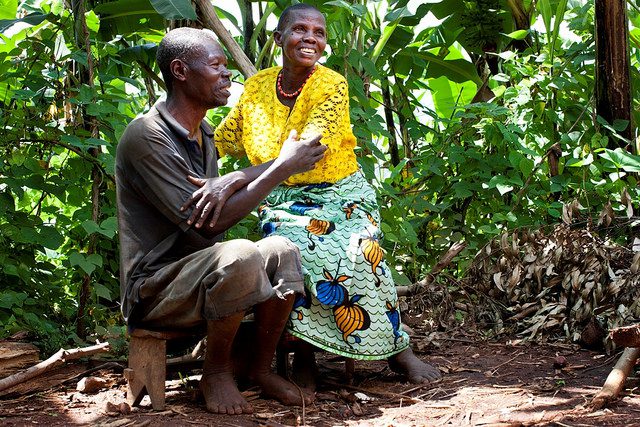
Education in BhutanThe encouraging transition towards gender equality within education in Bhutan has participated in the drastic decrease in their poverty rate from 23 percent in 2007 to 12 percent in 2012. An entire 11 percent has risen above the poverty line, in part because of girls’ greater access to education.
Comparing Genders

Traditionally, it was much more prevalent for Bhutanese girls to participate in domestic labor, such as babysitting and cleaning, while boys attended school. However, from 1992 to 2012 the enrollment rate has more than doubled from 50 percent to 110 percent because of the increase in female attendance. To compare data from 2012, 110 percent of males were enrolled in primary school, while 112 percent of females were enrolled. Not only has education in Bhutan bridged the gender gap, but there’s now a dominance of girls in school. It is important to acknowledge that the percentage rests over 100 percent because of a lack of children completing primary school when they are expected to, creating an overabundance of students.

The 2012 results for secondary school, in regards to gender, are similar to that of primary school, with 50 percent males and 57 percent females enrolled. In this regard, the issue no longer lies between gender differences, but rather with a lack of all children attending secondary schooling, which is defined as grades 7 to 12.

Labor

Child labor exists as one of the main deterrents to girls’ education in Bhutan. Although the country declared the legal working age as 18-years-old and provides free primary education, one out of five children are required to work to aid their families. Furthermore, 2012’s child labor rates were higher from females than for males, with 3.1 percent of girls and 2.6 percent of boys participating in any form of labor.

Perhaps the overall low enrollment for secondary school is due to the need for children to work and aid their families, paired with additional school fees and the cost of uniforms and materials. It is also not mandatory for Bhutanese children to attend schooling, allowing families to deny their children the experience if they are needed elsewhere.

UNICEF and UNGEI

A UNICEF representative spoke with a Bhutanese girl named Tsherin, who shared her dream to become a civil engineer and build homes. She tells of her excitement to get to attend school and she plans to advocate schooling to her own children someday. Tsherin has UNICEF to thank for this opportunity because of their successful efforts in closing this gendered gap.

UNICEF advocated ending the discrimination and gendered stereotypes, while also aiding those who could not afford additional school fees. They also addressed the lack of schools in rural areas, which hinders student’s access because of distance, by implementing new schools into these remote areas. Additionally, UNICEF was not alone in this fight. UNGEI (United Nations Girls’ Education Initiative) also sought the construction of new primary schools to meet the higher demand of students. But UNGEI also concerned themselves with advancing the training in which the teachers received, improving the student’s overall education.

With the help of these two organizations, education in Bhutan has undergone a tremendous feat by bridging the gendered gap and allowing all children an equal chance at becoming educated.

– Brianna White

Photo: Flickr

November 17, 2017
https://borgenproject.org/wp-content/uploads/borgen-project-logo.svg 0 0 Borgen Project https://borgenproject.org/wp-content/uploads/borgen-project-logo.svg Borgen Project2017-11-17 01:30:492024-05-29 22:29:19UNICEF Focuses on Girls’ Access to Education in Bhutan
Aid, Global Poverty, Hunger

Humanitarian Aid to Rwanda

Humanitarian Aid to Rwanda

We often hear stories about humanitarian aid that highlight waste, corruption and inefficiency. An example is in the wake of the horrific genocide in Rwanda in 1994 when the international community was too slow to react. There are important lessons to be learned from this failure and how to prevent similar atrocities in the future of delivering humanitarian aid to Rwanda.

However, there are also many success stories of aid being delivered effectively, saving lives and changing communities for the better. Despite the tragedy, there have been many positive steps taken to improve humanitarian aid delivery.


Humanitarian Aid to Rwanda Success Stories:

  1. The Clinton Foundation has been giving aid to farmers in Rwanda through the Clinton Development Initiative. During the 2016-2017 season, the foundation worked with over 35,000 farmers. The initiative focuses on increasing crop yields and income for farmers by providing them with the knowledge they need to meet their agricultural goals.
  2. The collaboration between the government and NGOs in Rwanda played a large part in Rwanda’s success in working towards the U.N. Millennium Development Goals (MDGs). Rwanda was one of the few countries to lead in the achievement of the MDGs. Progress was made to close the economic gender gap and free education was extended from 9 years to 12 years. Between 2000 and 2015, the infant mortality rate was cut in half and so was the number of people suffering from hunger.
  3. The USAID Mission in Rwanda began distributing humanitarian aid to Rwanda in 1964. Since that time the U.S. has given aid in many different areas including health, rural development, education and economic development. These funds have also helped develop democracy in Rwanda. The mission had to be halted in 1994 at the beginning of the genocide but was reopened several months later to provide emergency humanitarian aid. The transitional assistance in the wake of the conflict focused on food security as well as HIV/AIDS treatment and prevention. A fully-functioning mission was then reopened in 1998 with a focus on post-conflict reconstruction.

Tackling problems like poverty, hunger and conflict is an enormous undertaking. These issues require complex solutions and coordinated global effects. The size and scope of these efforts can often lead to tragic inefficiencies and lost lives, as was the case with the humanitarian response to the 1994 genocide in Rwanda.

There are also many stories in which humanitarian aid has helped save and improve lives. It is of paramount importance that we learn from the successes and failures of our efforts. The humanitarian aid to Rwanda is an example of both sides of this issue.

– Aaron Childree

Photo: Flickr

November 17, 2017
https://borgenproject.org/wp-content/uploads/borgen-project-logo.svg 0 0 Borgen Project https://borgenproject.org/wp-content/uploads/borgen-project-logo.svg Borgen Project2017-11-17 01:30:352019-12-23 08:04:53Humanitarian Aid to Rwanda
Gender Equality, Global Poverty, Women and Female Empowerment

Raising Awareness: Women’s Empowerment in South Sudan

Women’s Empowerment in South SudanOver the past several decades, South Sudan has experienced severe political division, violence and unbearable poverty. Millions of people have been forced to flee their homes to neighboring countries for asylum. The violence has been targeted at men, women, children, the disabled and the elderly. However, women and young girls are considered a particularly vulnerable population for violence, specifically physical and sexual violence. This sometimes includes forced marriages. In spite of the vulnerability and risk, women’s empowerment in South Sudan is growing. Here are some things to know about the empowerment of women in South Sudan.

Current Situation

According to the United Nations Development Programme (UNDP), approximately 475,000 women and girls are at risk for physical and sexual violence. Most recent estimates indicate that more than half of young women between the ages of 15-24 have experienced some form of gender-based violence. The violence women are experiencing in South Sudan is of serious concern and importance because it deeply impacts women’s physical, mental, sexual and reproductive health, and may also place them at an increased risk for contracting diseases, such as the incurable HIV.

Forced marriages are a frequent practice in South Sudan. Almost 50 percent of South Sudanese girls between the ages of 15 and 19 are married, and some are as young as 12. Forced marriages have severe psychological implications for girls and women, but experts also argue that it contributes to the high levels of poverty, gender gaps in education and the country having one of the highest maternal mortality rates in the world.

The perpetual gender-based violence and forced marriage create serious physical and mental health concerns, limits their potential for progress and improvement and strips them of their basic human rights.

What is being done?

The United Nations Development Programme currently works to empower women in South Sudan through education and awareness. Awareness is one of the fundamental aspects of their work in South Sudan, as fear and stigma frequently prevent women from seeking the help they need. The program also provides additional support to women who have already experienced severe violence through counseling services and medical assistance.

The UNDP is also working with the government to encourage women’s empowerment in South Sudan. The government is working to address gender-based violence through mental health support programs and through national planning. South Sudan is in the process of developing a new permanent constitution and building new institutions that reflect the country’s movement towards gender equality and the empowerment of women.

What can be done?

Currently, South Sudan lacks severe governmental infrastructure, and overall the country has some of the worst human development indicators across the globe.  Many programs related to women’s empowerment in South Sudan are underfunded as gender-based violence is not considered to be a priority for government spending, due to the country’s high rate of poverty.

However, poverty and gender-based violence go hand-in-hand. If fewer women are subjected to violence and forced marriages, more women would then have the ability to work and find jobs; in turn, lifting individuals, and possibly families, out of poverty. Women’s empowerment in South Sudan needs additional awareness, coupled with increased funding in order to provide women with the best future possible.

– Sarah Jane Fraser

Photo: Flickr

November 16, 2017
https://borgenproject.org/wp-content/uploads/borgen-project-logo.svg 0 0 Borgen Project https://borgenproject.org/wp-content/uploads/borgen-project-logo.svg Borgen Project2017-11-16 01:30:412024-05-28 00:03:32Raising Awareness: Women’s Empowerment in South Sudan
Disease, Global Poverty

Common Diseases in Portugal

Common Diseases in Portugal

Portugal has a population of 10.5 million as of 2016, and a mortality rate of 548.6 deaths per 100,000 people. The top ten most common diseases in Portugal in 2016 were ischemic heart disease, cerebrovascular disease, Alzheimer’s disease, lower respiratory infections, COPD, colorectal cancer, lung cancer, diabetes, chronic kidney disease and stomach cancer.

The rates of ischemic heart disease, cerebrovascular disease, diabetes and stomach cancer have all gone down in recent years, though they still rank in the top ten. The top ten causes of disability in 2016 were low back and neck pain, sense organ diseases, depressive disorders, migraines, skin diseases, anxiety disorders, oral disorders, diabetes, falls and other musculoskeletal issues.

Broadly speaking, the deadliest diseases are cardiovascular diseases, cancer and neurological disorders.

Addiction: A Major Success Story

While Portugal has made strides in reducing the rates of the diseases described above, its biggest success has been in tackling addiction, particularly to heroin.

In the 1980s and 1990s, a major opioid epidemic made addiction one of the most common diseases in Portugal. By the mid-1990s, over one percent of Portugal’s population was addicted to heroin, and cocaine use was also prevalent.

To address this epidemic, Portugal took the opposite approach to other countries struggling with a similar epidemic, such as the United States. Whereas the U.S. cracked down on drug use and initiated a war on drugs, Portugal completely decriminalized all drugs, including heroin, in 2001. Dealing drugs was still illegal and punishable with jail time, but users caught with less than a 10-day supply of any drug were sent to mandatory medical treatment.

This system completely bypassed the legal system, treating addiction as a health issue instead of a crime. This approach led to a 75 percent reduction in drug cases and a 95 percent reduction in drug-related HIV infections. Deaths due to overdoses or drug-related infections in Portugal are currently five times lower than the average across the European Union.

A model for change?

While any radical change in policy must be considered in the context of each country’s current legal system and culture, aspects of Portugal’s approach to addiction constitute a model that could be successfully implemented across the world.

The basis of this model are outreach programs whose employees keep track of local drug users and encourage them to quit. If they accept, they provide them with free counseling and treatment and daily methadone to wean them off the opioids. If they refuse to quit at that time, then outreach workers hand out clean needles and condoms to reduce the spread of HIV/AIDS.

This model is also economically efficient. The U.S. currently spends approximately $10,000 per household to uphold its current drug policy, while Portugal currently spends $10 per citizen.

The most common diseases in Portugal are similar to those across the European Union. What makes Portugal stand out is its reaction to one particular disease: addiction. If Portugal brings this innovation to other realms of disease prevention, it could be poised to drastically lower its disease burden in the coming decades.

– Olivia Bradley

Photo: Flickr


November 16, 2017
https://borgenproject.org/wp-content/uploads/borgen-project-logo.svg 0 0 Borgen Project https://borgenproject.org/wp-content/uploads/borgen-project-logo.svg Borgen Project2017-11-16 01:30:362024-06-05 23:55:33Common Diseases in Portugal
Page 1518 of 2181«‹15161517151815191520›»

Get Smarter

  • Global Poverty 101
  • Global Poverty… The Good News
  • Global Poverty & U.S. Jobs
  • Global Poverty and National Security
  • Innovative Solutions to Poverty
  • Global Poverty & Aid FAQ’s
Search Search

Take Action

  • Call Congress
  • Email Congress
  • Donate
  • 30 Ways to Help
  • Volunteer Ops
  • Internships
  • Courses & Certificates
  • The Podcast
Borgen Project

“The Borgen Project is an incredible nonprofit organization that is addressing poverty and hunger and working towards ending them.”

-The Huffington Post

Inside The Borgen Project

  • Contact
  • About
  • Financials
  • President
  • Board of Directors
  • Board of Advisors

International Links

  • UK Email Parliament
  • UK Donate
  • Canada Email Parliament

Get Smarter

  • Global Poverty 101
  • Global Poverty… The Good News
  • Global Poverty & U.S. Jobs
  • Global Poverty and National Security
  • Innovative Solutions to Poverty
  • Global Poverty & Aid FAQ’s

Ways to Help

  • Call Congress
  • Email Congress
  • Donate
  • 30 Ways to Help
  • Volunteer Ops
  • Internships
  • Courses & Certificates
  • The Podcast
Scroll to top Scroll to top Scroll to top