• Link to X
  • Link to Facebook
  • Link to Instagram
  • Link to TikTok
  • Link to Youtube
  • About
    • About Us
      • President
      • Board of Directors
      • Board of Advisors
      • Financials
      • Our Methodology
      • Success Tracker
      • Contact
  • Act Now
    • 30 Ways to Help
      • Email Congress
      • Call Congress
      • Volunteer
      • Courses & Certificates
      • Be a Donor
    • Internships
      • In-Office Internships
      • Remote Internships
    • Legislation
      • Politics 101
  • The Blog
  • The Podcast
  • Magazine
  • Donate
  • Click to open the search input field Click to open the search input field Search
  • Menu Menu

Archive for category: Global Poverty

Key articles and information on global poverty.

Global Poverty

10 Important Facts About the Crisis of Poverty in Zimbabwe

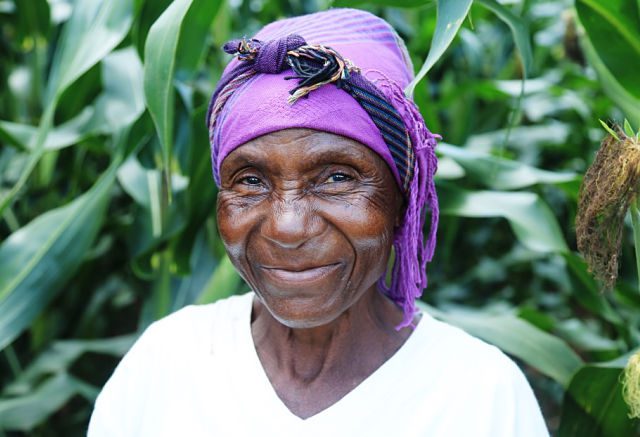
poverty in ZimbabweAfter 57 years of colonial rule, African guerilla forces wrested control of the territory that had been Southern Rhodesia since 1923. By 1980, Robert Mugabe was elected to the position of Prime Minister of Zimbabwe.

Following Zimbabwe’s independence, the economy, which was mainly supported by the agricultural industry, fell on tough times. In 2000, the government chose to instigate a policy of land redistribution from whites to native Africans. This reorganization placed the fate of the country’s economy in the hands of comparatively inexperienced farmers.

Cash crop production, once a huge contributor to the Gross Net Product, was nearly lost as a result of unyielding droughts. Additionally, those farmers who produced the dietary staple maize faced further difficulty in production, due to the government’s lack of support in areas such as water management.

To further demonstrate the severity of the country’s situation, look no further than the 72.3 percent of the population living in poverty in Zimbabwe.

10 facts to clarify the state of poverty in Zimbabwe

  1. Since the early 1990s, roughly 20 percent of Zimbabweans have emigrated in search of greater economic prosperity elsewhere. This has left a large gap in the nation’s workforce and knowledge base.
  2. With the majority of males moving from rural agricultural towns to the cities, women are increasingly becoming single heads of household.  
  3. Poverty in Zimbabwe is mainly concentrated in the northern province of Matabeleland, and in the southeastern regions of Manicaland and Masvingo, where water is extremely scarce.
  4. As of 2015, 16 percent of Zimbabweans were food insecure, meaning they were unable to obtain nutritious and plentiful food for their families.
  5. Just 7.6 percent of farmers in Zimbabwe practice conservation agriculture, a method of soil management that ensures nutritious soil and increases crop production.
  6. Zimbabwe suffered from 12 years of sanctions imposed by the U.N. in opposition to President Mugabe’s continued rule after the disputed election of 2002. In 2015, the U.N. lifted those sanctions and offered the government $273 million in aid, which was intended for collaborative development projects.
  7. About 28 percent of children in Zimbabwe are stunted by a lack of adequate nutrition in their diets.
  8. Zimbabwe’s Gross Domestic Product has been declining since the 2008 financial crisis. In the years immediately following the crisis, it fell by 17 percent.
  9. 86 percent of households in which the woman is widowed are impoverished.
  10. 57 percent of women living in rural areas use contraceptives. The maternal mortality rate is 960 out of 100,000 births, with a dramatic increase in rural areas.

The question now is whether or not Zimbabwe will be able to improve its situation in the coming years. Unfortunately, with the economic growth rate dropping to just 0.5 percent between 2015 and 2016, there may be a need for an increase in external development aid if there is any hope of reversing the effects of poverty in Zimbabwe.

-Katarina Schrag

Photo: Flickr
November 21, 2017
https://borgenproject.org/wp-content/uploads/borgen-project-logo.svg 0 0 Borgen Project https://borgenproject.org/wp-content/uploads/borgen-project-logo.svg Borgen Project2017-11-21 07:30:332024-05-27 23:53:1010 Important Facts About the Crisis of Poverty in Zimbabwe
Developing Countries, Development, Global Poverty

Five Major Development Projects Reshaping Colombia

Development Projects in ColombiaIn February 2017, President Manuel Santos and the Revolutionary Army Forces of Colombia (FARC-EP) successfully completed a definitive cease-fire agreement which ended violence in specific zones of the South American country. This event raised many Colombian citizen’s enthusiasm. But, not all problems in the nation have been solved, as Colombia’s economy depends on oil, exportation and tourism, which have been negatively affected in recent years.
However, the Colombian government and other investors are attempting to reverse this situation, developing new projects in order to help the country’s economy to grow. New highways, ports, as well as advanced infrastructure and stylish developments in several Colombian cities will attempt to improve economy over the next 10 years. Here are the five development projects in Colombia that are changing the nation’s face.

  1. Alfonso Bonilla and El Dorado airports
    The Colombian government has invested $230 million in modernization for the Alfonso Bonilla airport. The remodeled facility will have a new international terminal and six new boarding bridges. In addition, the old terminal was redesigned and new public spaces were added. In total, the airport located in Cali, one of the most important cities in Colombia, will be around 55,000 square meters. In Bogota, a $200 million investment has improved El Dorado airport’s landing zones and infrastructure. Now, it has better logistics that allows aircraft traffic to move faster.
  2. Cartagena port
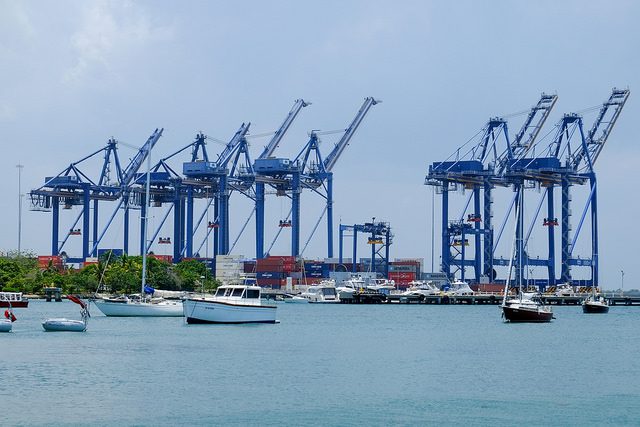
    In July 2017, the Colombian government approved an investment of $93 million for the Cartagena port. With this contribution, it is expected that the port will triple its cargo capacity thanks to the new infrastructure, better operation and giant cranes that can receive bigger vessels. President Santos defined the Cartagena port as the most important in the Colombian Caribbean, as in 2016, it moved around 201 million tons of cargo containers.
  3. Agora Convention Center
    The new convention center, located in the capital city of Bogota, is the third biggest center in South America in terms of capacity and the most modern on the continent. In October 2017, the building held its first massive meeting for the United Nations First Young World; this left an economic impact of 14 million pesos for Colombia. Conventions and meetings generate 27 percent of Colombian tourism economy. The Agora project cost 414 million pesos and created 15,000 jobs in its construction.
  4. Bogota’s Elevated Railway
    Among all transportation development projects in Colombia, this particular one is essential. The new elevated railway is a local public transportation project that has been in planning for almost 15 years in Bogota. The first construction attempt was in 2000, but multiple government branches failed to reach an agreement. However, this year, President Santos’ administration and Bogota’s authorities revealed the construction will begin in 2018 and that the trains will be electric. It is expected that 35,000 Colombians will use the railway every hour. Authorities commented that the elevated railway construction will finish in 2024 and will be the first development of this kind in the country’s capital.
  5. 4G Project
    The 4G project is the most ambitious road infrastructure project in Colombia. The four generation plan will connect the entire country, making mobility easier and faster for citizens. More than 7,000 kilometers of roadway will be constructed and rehabilitated over the next several years with an investment of $50 billion. In addition, this project will work on bridges and tunnels that link the cities and towns over the mountains of the country. Projects such as Conexion Pacifico 3 and Girardort-Honda-Puerto Salgas have already begun.

These development projects in Colombia will positively affect the country’s future, improving the lives of Colombians as well as the Colombian economy. Although some projects are still in development, within the next 10 years, the Colombia will certainly be one of the most developed nations in South America.

– Dario Ledesma

Photo: Flickr

November 21, 2017
https://borgenproject.org/wp-content/uploads/borgen-project-logo.svg 0 0 Borgen Project https://borgenproject.org/wp-content/uploads/borgen-project-logo.svg Borgen Project2017-11-21 01:30:472024-05-29 22:29:21Five Major Development Projects Reshaping Colombia
Global Poverty, Women and Female Empowerment, Women's Empowerment

Women’s Empowerment in Libya

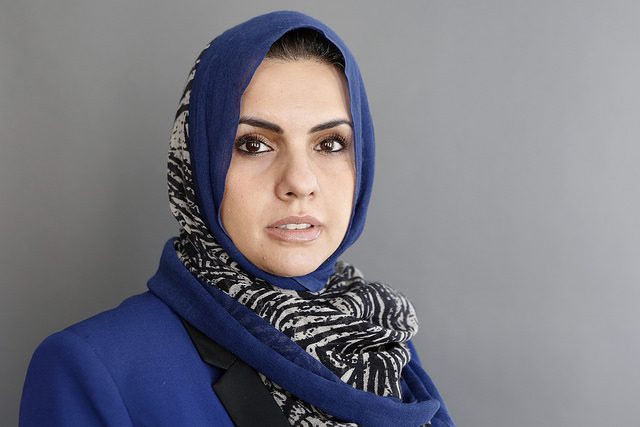
Women's empowerment in LibyaLibya, one of the largest countries in Africa, is located west of Egypt. Since 2014, Libya has been struggling with its second civil war which has affected the Libyan social structure. Though women have lost social status and power they once had, there are several organizations that are dedicated to restoring women’s empowerment in Libya through its political and economic social structures.

2011 was an inspiring time for Libyans. With the conclusion of Gaddafi’s rule, it was an opportune time to make changes to the political environment. The National Transitional Council, which was the first government authority after the Libyan Civil War, was comprised of 96 percent men and four percent women. There was also no representation of women in city councils at this time.

In 2014, the number of females elected to parliament was 16 percent, which it remains at to this day. Each city council was also mandated to elect at least one woman as one of their six members. However, the Zintan and Jadou councils have explicitly denied women representation.

The United Nations (U.N.) is taking action to increase women’s empowerment in Libya as well. The U.N. has made calls to force Libya to adopt a quota of 30 percent female representation within its current government, the Government of National Accord (GNA). As of March 2017, only six percent of the GNA were women. Hopefully, Libya will take these calls seriously and increase women’s representation in the government.

Along with increasing their political influence, Libyan women are focusing on becoming a more vocal force in the economic system of Libya. In October 2013, the Libya Women Economic Empowerment (LWEE) project was started to work towards providing women roles in the economy.  Over the past four years, 200 women attended business development training and 300 women entrepreneurs were given specific training on business skills.

Not only did they teach women how to start their business, but they held a competition among women entrepreneurs. The 20 winners received grants that enabled them to start a brand new business or to expand an existing business. The LWEE also held events where female business owners and managers were able to network with each other and establish connections that would lead to future business partnerships and support.

It has been difficult for women to make a name for themselves in the business world. Since the implementation of the LWEE project, women entrepreneurs have been able to take full credit for the work they have done. This is such an important step since, in many cultures and societies, men are given credit for the accomplishments that women make. Women’s empowerment in Libya is on the rise and it will continue to do so for the foreseeable future.

– Scott Kesselring

Photo: Flickr

November 21, 2017
https://borgenproject.org/wp-content/uploads/borgen-project-logo.svg 0 0 Borgen Project https://borgenproject.org/wp-content/uploads/borgen-project-logo.svg Borgen Project2017-11-21 01:30:212024-05-29 22:29:22Women’s Empowerment in Libya
Global Poverty

Refugees and Immigrants in Dayton, OH

Immigrants in DaytonYoussef Farhat spoke energetically about his life and the experiences of refugees and immigrants in Dayton, OH, in an impeccably organized office at the University of Dayton’s Human Rights Center. The charismatic 27-year-old graduate student from Lebanon is known around campus for his personable demeanor and palpable enthusiasm.
Farhat wants to immigrate to Dayton and hopes to use his talents to contribute to the U.S. Dayton certainly wants him; the Southwest Ohio city has implemented policies that encourage the population growth of refugees and immigrants.

However, President Donald Trump’s administration has implemented reforms that have affected many of these immigrant-friendly initiatives, making it more difficult for Dayton to attract an international population.

In 2011, the city established “Welcome Dayton,” a coordinated effort among the local government, nonprofits and the private sector to transform Dayton into a “Welcome City.” The community-based initiative has achieved great success. According to its website, naturalization among Dayton’s immigrant population increased by 41 percent between 2011 and 2013.

Refugees and immigrants in Dayton come from more than 100 countries, and the city received an “Outstanding Achievement” designation from the U.S. Conference of Mayors for “Welcome Dayton.”

While the native-born population of Dayton decreased by 15 percent from 2000 to 2010, the foreign-born population has more than doubled since the mid-2000s, helping to stem the population exodus.

Dayton is not a sanctuary city, but it has historically assisted with the relocation of refugees. The city hosts a community of 2,000-3,000 Ahiska Turks who fled persecution in their homeland. Dayton Mayor Nan Whaley also signaled the city’s intent to help in the relocation of Syrian refugees in September 2015.

Despite this, things are changing. Michael Murphy, the program director of refugee resettlement for Catholic Social Services (CSS) of the Miami Valley, said there has been a 15 percent decrease in refugees directly coming to Dayton, individuals referred to as initial arrivals. For fiscal year 2018, CSS is assisting 130 initial arrivals.

This local phenomenon reflects the Trump administration’s decision to allow only 45,000 refugees to resettle in the U.S., the lowest cap in decades.

Nevertheless, Murphy also reported a 20 to 30 percent increase in secondary migrants, refugees who initially resided elsewhere in the U.S., settling in Dayton. Murphy said this shows Dayton is achieving success in creating a diverse and welcoming community.

Farhat agrees Dayton is a welcoming city but also says social changes since the 2016 election are adversely affecting refugees and immigrants in Dayton.

“Not many employers are willing to invest in the talents of international students,” Farhat said. If he doesn’t find a job, his only option is to return to Lebanon. His student visa expires after he graduates.

Though federal reforms have affected refugees and immigrants in Dayton, community organizations remain committed to supporting the burgeoning international population of Dayton by assisting new arrivals and resettled individuals and families. Through their efforts, Dayton continues to be a “Welcome City,” regardless of the presidential administration.

– Sean Newhouse

Photo: Google

November 21, 2017
https://borgenproject.org/wp-content/uploads/borgen-project-logo.svg 0 0 Borgen Project https://borgenproject.org/wp-content/uploads/borgen-project-logo.svg Borgen Project2017-11-21 01:30:032024-05-29 22:29:24Refugees and Immigrants in Dayton, OH
Global Poverty

Sierra Irrigation Project for Peru: Good News for Farmers

Sierra Irrigation Project for Peru: Good News for FarmersPeru has been one of the fastest-growing economies over the last decade but poverty in the Peruvian Sierra remains high. Poverty rates are far above the national averages and especially peak in rural areas.

In 2010, the largest share of household income in the Sierra came from agriculture. There exists strong evidence that agriculture growth is more effective in reducing poverty than growth in other sectors. The Sierra Irrigation Project for Peru was implemented in order to bolster agricultural production and productivity in targeted areas of the Sierra with the ultimate goal of improving the financial capacity of impoverished farmers. The project is multifaceted, focusing on:

  • Modernization and rehabilitation of collective irrigation
  • Irrigation technology improvement
  • Capacity building and support to production and marketing
  • Formalization of water rights and the national water rights administrative registry
  • Project implementation support

Since being established in 2010, the Sierra Irrigation Project for Peru has made significant contributions to the growing agricultural sector. The project successfully increased irrigation water flow and frequency and irrigation efficiency. Irrigation efficiency in the Peruvian Sierra in 2010 averaged about 22 percent, however, by 2016 that number was increased to 72 percent thanks largely to the Sierra Irrigation Project for Peru.

Modernization and rehabilitation efforts for collective irrigation systems expanded the reach of 87 water user organizations that improved their irrigation service delivery to 18,758 farmers. Those 18,758 farmers then irrigated 14,770 hectares of land. These numbers turn into a significant increase in water tariffs collections, improving financial capacity in the Peruvian Sierra; 80 percent of farmers paid water tariffs in 2016, compared to just 50 percent in 2011. Improved irrigation also allows farmers to increase the value and quality of their productions. A significant number of farmers who increased their irrigation capacity also began to farm high-value crops.

The Sierra Irrigation Project for Peru was successful with each of its goals and targeted beneficiaries. The priority was to most significantly benefit farmers by improving their access to markets and their capacity to produce high-value crops. The project was also able to benefit water user organizations at regional and local levels. The Ministry of Agriculture and Irrigation intends to develop a follow-up operation to scale up the results of the Sierra Irrigation Project for Peru.

– Jamie Enright

Photo: Flickr

November 20, 2017
https://borgenproject.org/wp-content/uploads/borgen-project-logo.svg 0 0 Borgen Project https://borgenproject.org/wp-content/uploads/borgen-project-logo.svg Borgen Project2017-11-20 07:30:442019-11-20 07:29:49Sierra Irrigation Project for Peru: Good News for Farmers
Global Poverty

An Insider Look: Why is Bahrain Poor?


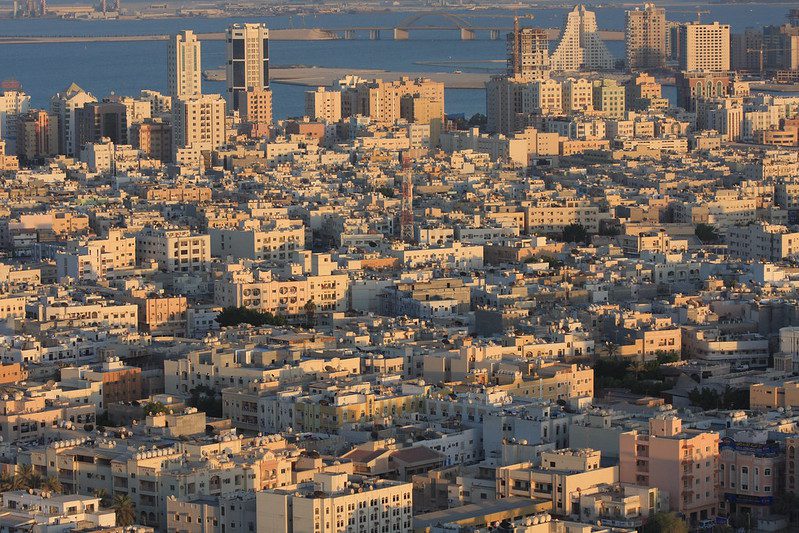
Why is Bahrain Poor

This is the World Bank view of poverty: “Poverty has many faces, changing from place to place and across time … poverty is a call to change the world so that many more may have enough to eat, adequate shelter, access to education and health, protection from violence and a voice in what happens in their communities.”

In short, it doesn’t matter how rich a country may be if there are people living on the streets begging for money or food in order to provide for their children. In severe cases, poverty may impact certain demographic groups more than others.

Bahrain, which is situated on the Persian Gulf, is a kingdom presenting such a case. There are two major denominations of Islam — the Sunni and the Shi’a — and there is often a sharp division between the two politically.

Both follow the Prophet Muhammad but according to distinct readings. However, the Shi’a are shunned because of their contradictory interpretation of Prophet Muhammed. They glorify his family and relay their creed on mystical stories instead of what has been written. This mysticism is called Sufism and it uses figurative poetic language to convey the soul’s experience of the divine. As this belief is more fantastical than literal, it goes against the beliefs of the royal family, which means that the Shi’a are treated as inferior and this treatment answers the question: Why is Bahrain poor?

It is clear that the majority of the population is represented by the Shi’a religious sector, but they are treated as inferior because they don’t follow the royal family’s religion. As such, they suffer from “deprivation in housing, income, access to the professions and above all employment” according to business consultant Seth Kaplan. The preferential treatment given to the Sunni is so apparent that one can’t help but notice the huge gap between both religious groups. Poverty exists predominantly for the Shi’a due to the lack of opportunities granted. Many citizens are unfortunately forced to adapt to a street beggar lifestyle in order to survive.

A grand solution to this would be to follow the words of Indian ambassador to Bahrain Alok Kumar Sinha: “These programmes are aimed at skill development and employment creation. This means eliminating poverty by investing in the poor, by turning them from job seekers into job-providers and bringing a qualitative difference in the lives of the poor.” Sinha spoke these words at a seminar titled “Antyodaya – Alleviation of Poverty through the Economics of Empowerment” which was held at the Indian Embassy in Bahrain.

His central argument was about the programs that were working in India towards empowerment of those in poverty. The focus is shifting to those that live below standard living. These people are now able to provide for their families with the new skill sets they have achieved from these programs and their well-being has changed dramatically as a result. In order for Bahrain to resolve its poverty issue, it should work to close the gap between the Sunni and Shi’ and between Bahrain and the Arab world instead of continuing to enlarge it. By doing that, they will be able to provide a much more united front and eradicate the extreme poverty that exists there.

– Nicole Suárez

Photo: Flickr

November 20, 2017
https://borgenproject.org/wp-content/uploads/borgen-project-logo.svg 0 0 Borgen Project https://borgenproject.org/wp-content/uploads/borgen-project-logo.svg Borgen Project2017-11-20 07:30:252024-06-05 01:57:30An Insider Look: Why is Bahrain Poor?
Aid, Development, Global Poverty

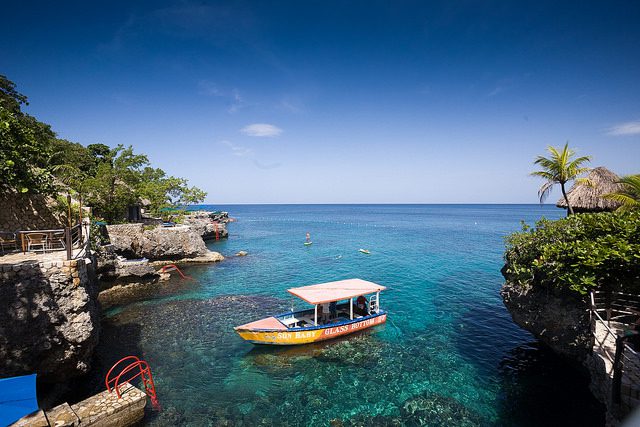
Five Active Development Projects Assisting Jamaica

Development ProjectsThe mission statement of the World Bank is to, “end extreme poverty and promote shared prosperity.” The World Bank has funded over 12,000 development projects across the globe since 1947, and in Jamaica, these projects have provided much-needed assistance to those who need it most. Here is a list of five development projects in progress in Jamaica that are aimed toward improving the lives of the impoverished.

  1. Jamaica Disaster Vulnerability Reduction Project
    Launched in 2016, this project aims to increase Jamaica’s ability to handle natural disasters or dramatic climate events via a four-part plan. The first step is to increase the island’s technological infrastructure to allow for better tracking and predicting of weather events. The next component of this project is the improvement of physical infrastructure on the island to better resist and withstand natural disasters. The third step is to improve emergency services, so that in the event of a disaster, people can more rapidly be assisted. The fourth and final component, which ties all of the parts of this project together, is administrative oversight by the World Bank to ensure accountability.  This project comes at an investment cost of $30 million from the World Bank, a worthy donation that will ensure Jamaica can withstand natural disasters to come.
  2. Early Child Development Project
    The Early Child Development Project (ECD) sets out a three-tier strategy to ensure a better future for at-risk youth. The first goal of this project is to increase the regularity of developmental monitoring, health risk screenings and emergency intervention procedures for children. The second goal is to improve early childhood education facilities through both physical renovation and program development. Lastly, the ECD aims to strengthen and improve training for early childhood education groups, i.e. the adults responsible for providing care for children.  The World Bank began this project in 2014, and has since pledged $14 million toward the cause.
  3. Second Competitiveness and Fiscal Management Program
    Commencing in June of 2017, this project is the World Bank’s most recent development project in Jamaica, with $70 million in funding. The goal is to strengthen Jamaica’s economy and financial sector through a two-part strategy. First, the World Bank aims to support legislative reforms which will enhance the development of the Jamaican economy. Secondly, this plan aims to increase the availability of fiscal management for both businesses and private citizens. If all goes to plan, this project will help Jamaica become a developed country by the year 2030.
  4. Youth Employment in Digital and Animation Industries
    This project began in 2014 with the help of a $20 million loan from the World Bank, and aims to increase employment opportunities for Jamaican youth, specifically in the rapidly expanding digital and animation industries. The World Bank’s plan for this project puts funding into each step along the journey to working in these fields, from early childhood skills training, to investing in the digital animation industries themselves to stimulate growth and job availability. This project also provides funding toward individuals carrying out research, development and innovation in these fields.
  5. Jamaica Integrated Community Development Project
    The World Bank has pledged to provide $42 million from 2014 to 2020 in an effort to improve safety and infrastructure in communities across Jamaica. This project aims to improve roads, drainage, electrical, sewage and water systems and community organizations.

With the assistance of the World Bank, these development projects will encourage Jamaica’s social and economic growth as a nation. With hope and continued aid, Jamaica may be pulled out of poverty and into a bright future.

– Tyler Troped
Photo: Flickr

November 20, 2017
https://borgenproject.org/wp-content/uploads/borgen-project-logo.svg 0 0 Borgen Project https://borgenproject.org/wp-content/uploads/borgen-project-logo.svg Borgen Project2017-11-20 07:30:202019-12-23 08:00:35Five Active Development Projects Assisting Jamaica
Advocacy, Global Poverty

Helping the Poor in Latin America

Helping the Poor in Latin America: Saving with Reliable MeasuresThe definition of poverty in Latin America has multiple standards. Twenty years ago, foreign academic fields and institutions considered those with an individual monthly income of less than 60 dollars as poor and less than 30 dollars as extremely poor. In addition, economic development in Latin American nations vary, while their different standards on salary, labor productivity, and purchasing power indicate varied distributions on social wealth. There is no doubt that helping the poor in Latin America urges global attention. The current population of poverty rates in Latin American countries are unevenly proportioned, as it is as high as 50 percent in the Honduras and Guatemala, and as low as 5 to 10 percent in Chile, Uruguay and Argentina.

Poverty in Latin America stands for complex, chronic, chaotic events with cumulated difficulties to handle. Considering a representative nation with a significantly reduced poverty rate such as Chile, the successful experience is at least owing to two points. For one thing, continuous economic growth brings about more opportunities for employment, providing a solid foundation for helping people to overcome poverty. For the other, the government pays relatively high concerns on poverty issues and carries out certain measures to solve concrete problems related to the poor. Organizations guided by political leaders and officers of each level are dedicated to eliminating poverty and the national annual budget used for social welfare, takes a large proportion of their total expenditure. Looking at Chile as an example, it seems to be that a combination of both economic and social progress is needed in order to help the poor.

What are some other effective ways of helping the poor in Latin America? Besides the mutual efforts of individuals and governments helping the poor, other factors such as natural disasters, political unrest, and financial crises could easily aggravate the alleviated poverty reduction. As voices of experience, Latin American countries should regulate and execute social policies to help the poor with orientations on their actual needs and viabilities. Those individuals who are categorized as extremely poor must be prioritized, and the existing mechanism of economy also needs to balance assisting the poor and preventing reoccurrences of unemployment or poverty. Providing freedom of necessity on immigration, insurance, trade, and shelters require common agreement.

Poverty comes hand in hand with discrimination and inequality towards women in Latin America. It is a topic related to poverty treatment that cannot be emphasized enough. Distribution of wealth between genders is also uneven. Hence, governments must consider increasing the hiring of female labors, as well as leverage better welfare to single mothers and any family with multiple kids.

In sum, quite a few national and regional programs on helping the poor in Latin America have released poverty issues at certain degrees, with the root of poverty being originated from some kind of unfair distribution. The unique solution towards poverty is by means of fair distribution on social wealth. While justice of distribution requires a long way to go for helping and saving the poor in Latin America, decreasing instances of poverty is not impossible, involving important aspects of both national and social systems.

– Xin Gao

Photo: Flickr

November 20, 2017
https://borgenproject.org/wp-content/uploads/borgen-project-logo.svg 0 0 Borgen Project https://borgenproject.org/wp-content/uploads/borgen-project-logo.svg Borgen Project2017-11-20 01:30:422024-05-29 22:29:22Helping the Poor in Latin America
Global Poverty

Poverty in Costa Rica

Poverty in Costa Rica

Poverty in Costa Rica remains an issue facing many people. The Republic of Costa Rica is a small country located between the Pacific Ocean and the Caribbean Sea. The country is greatly known for its tropical climate, which attracts millions of tourists every year. The sun, the sea and the nation’s wide variety of mountains and volcanoes have made the economy of Costa Rica mostly based on tourism.

Poverty in Costa Rica is not something that tourists often think about. Surrounded by the nation’s bountiful beauty, it is hard for many to believe that extreme poverty exists within what seems like paradise.

The unfortunate truth is that 1.1 million people currently live in poverty in Costa Rica. Most of the poor population in the country is situated within rural areas. The farther one goes from the metropolitan areas, the more poverty increases. Along with it, there is a lack of resources, fewer job opportunities and more.

The problem of poverty in such country does not end with the fact that over a million people suffer from it every day. The bigger concern is that such poverty has not been reduced for the past two decades.

In spite of this being the case, Costa Rica has the lowest poverty rate in Central America. Around 20 percent of the population live below the national poverty line of earning less than $155 per month. But, only two percent of the citizens in Costa Rica live below what is considered to be the international poverty line, living on less than one dollar per day.

Fortunately, initiatives have been taken in order to reduce poverty in Costa Rica. “Puente del Desarrollo,” or “Bridge of Development,” is a plan that took action throughout the years of 2015 and 2016, aiming to combine social programs into one bigger program. The program is still in action, and its goal is to help up to 54,600 families living below the Costa Rican poverty line by 2018.

– Paula Gibson

Photo: Flickr

November 19, 2017
https://borgenproject.org/wp-content/uploads/borgen-project-logo.svg 0 0 Borgen Project https://borgenproject.org/wp-content/uploads/borgen-project-logo.svg Borgen Project2017-11-19 07:30:002019-08-14 11:26:55Poverty in Costa Rica
Global Poverty, Women's Empowerment

Women’s Empowerment in Burundi Appears Optimistic

Women's Empowerment in BurundiBurundi is a small country in Africa with a population of over 10 million people. It is also one of the poorest countries on Earth. This African nation was involved in a 12-year civil war and is currently recovering from it.

Fortunately, its recovery from war has not led women’s empowerment in Burundi astray. In fact, Burundi has a quota for the number of women in government. While it is not quite even with men, the country requires at least 30 percent of federal government positions be filled by women. Women also account for more than half of the workforce in Burundi and play a large role in agriculture.

Despite these factors, women still face discrimination when running for office. The 30 percent quota is not mandated for local government, and many citizens want more women in local positions. Women make up only 17 percent of local governments, much less than at the national level. At the local level, one is able to make a more direct impact on one’s community, leading many women to run for leadership positions within their communities. This movement toward more female leaders is a positive step toward overcoming gender discrimination and stereotypes.

The organization Search for Common Ground and the Dutch government have come together to help encourage women’s empowerment in Burundi, assisting in strengthening women’s participation in all levels of government. The women that they support must overcome the “practical challenges [that] make it difficult to attain true equality with their male counterparts, including balancing the demands of their position with responsibilities at home, a lack of funds to run a campaign, and simply overcoming a lack of experience in government in order to gain greater legitimacy and step into decision-making roles.”

The U.N. has also been working on this issue and has created programs to train women in how to participate in public affairs. Some of the topics covered include lobbying and negotiating, both skills that women need to be successful and make an impact when they are not equally represented. The U.N. also aims to make gender issues and gender policy the center of local and national conversations. This will not only empower women, but also empower their communities.

Because women are working harder to gain political power and there is more discussion about gender, the issues surrounding how women are viewed in society and culture will begin to be questioned more. Hopefully, as a result, Burundi will be able to see that women are more than just supporters of their husbands and children; they are also supporters of their country. For now, women’s empowerment in Burundi is growing and will continue to thrive until women have the same rights and representation as men.

– Emilia Beuger

Photo: Flickr

November 19, 2017
https://borgenproject.org/wp-content/uploads/borgen-project-logo.svg 0 0 Borgen Project https://borgenproject.org/wp-content/uploads/borgen-project-logo.svg Borgen Project2017-11-19 01:30:462019-11-21 00:54:18Women’s Empowerment in Burundi Appears Optimistic
Page 1516 of 2181«‹15141515151615171518›»

Get Smarter

  • Global Poverty 101
  • Global Poverty… The Good News
  • Global Poverty & U.S. Jobs
  • Global Poverty and National Security
  • Innovative Solutions to Poverty
  • Global Poverty & Aid FAQ’s
Search Search

Take Action

  • Call Congress
  • Email Congress
  • Donate
  • 30 Ways to Help
  • Volunteer Ops
  • Internships
  • Courses & Certificates
  • The Podcast
Borgen Project

“The Borgen Project is an incredible nonprofit organization that is addressing poverty and hunger and working towards ending them.”

-The Huffington Post

Inside The Borgen Project

  • Contact
  • About
  • Financials
  • President
  • Board of Directors
  • Board of Advisors

International Links

  • UK Email Parliament
  • UK Donate
  • Canada Email Parliament

Get Smarter

  • Global Poverty 101
  • Global Poverty… The Good News
  • Global Poverty & U.S. Jobs
  • Global Poverty and National Security
  • Innovative Solutions to Poverty
  • Global Poverty & Aid FAQ’s

Ways to Help

  • Call Congress
  • Email Congress
  • Donate
  • 30 Ways to Help
  • Volunteer Ops
  • Internships
  • Courses & Certificates
  • The Podcast
Scroll to top Scroll to top Scroll to top