Information and stories on education.

After gaining independence in 1961, Tanzania’s government sought an advanced society for its population. The government’s attempt to grow a stable economy overlooked the estimated 85 percent illiteracy among its people. As a country with one of the largest young populations, these eight facts about education in Tanzania demonstrate how improvements to education have become a primary interest in public policy.
8 Facts About Education in Tanzania
- It is estimated that 5.1 million children between the ages of 7 and 17 are not in school. Primary school enrollment reached its peak of 86 percent in 2016, and in that same year, lower-secondary level school enrollment plummeted to a low of 33.4 percent. Many Tanzanian children do not experience a secondary education or vocational training. This leads to many children accepting jobs in hazardous conditions against the Tanzanian Law of the Child Act, which strictly defines and regulates prohibited tasks for children. Due to lack of enforcement of this act, 29.3 percent of children between the ages of five and 14 work in unsafe conditions in fields such as mining, quarrying and domestic work.
- The average yearly cost of an education in Tanzania totals 100,000 Tanzanian Shillings (TZS). This cost is equal to $50. However, with a national average salary of $22,662, many families cannot afford the fees that accompany their children’s education. These eight facts about education in Tanzania vividly depict poverty’s crucial role in receiving access to education. As of 2016, the poverty rate decreased to 26.8 percent, but an estimated 29 percent of students still live in households below the poverty line. In addition to school fees, parents must pay for uniforms, books and possibly transportation. Public secondary schools offer cheaper tuition as opposed to private schools, but additional schools fees can total up to $300 a year.
- Transportation to secondary school persists as an ongoing issue for millions of Tanzanian adolescents. Most of Tanzania’s population remains condensed in rural areas far away from secondary schools. Six people riding on one motorcycle to school lingers as a common image in some of these communities. Some students are able to receive housing at a boarding facility or private hostel by a school, while poorer families simply cannot make such sacrifice. This forces some students to walk or bicycle 20-25 kilometers, which usually takes more than an hour. Organizations such as The Tanzanian Education Fund (TEF), work with a board of organizational officers to manage the financial income for schools, review each school’s progress and fundraise for each school’s ongoing success. The TEF ensures that more than 465 students attending the Nianjema secondary schools in Bagamoyo, Tanzania have school buses through countless fundraising events.
- Adolescent girls in Tanzania are least likely to receive a secondary education. Research estimates that two out of every five girls in Tanzania marry before the age of 18. Within the population of married, secondary-school age girls, 97 percent are not in school due to marriage or pregnancy. Government policies also discriminate against pregnant and married girls by authorizing schools to expel them. Tanzania’s education regulations permit the expulsion of students when a student has committed what it considers an offense against morality. Many girls in Tanzania yearn to go back to school but encounter discriminating barriers like repeatedly contacting the school headmaster with no response. In addition, they must pay an $18-23 re-entry fee after pregnancy which ultimately deters them from returning.
- In 2010, Tanzania issued the Persons with Disabilities Act which guarantees the right to education and training services to children with disabilities. Today, disabled children still encounter barriers to attending primary school, and even fewer attend secondary school. Enrollment rates for disabled children dropped from 5,495 students to 5,328 students in 2013. Out of the 3,601 public secondary schools in Tanzania, only 75 schools accommodate children that require special needs education. Most of the students with disabilities do not have access to assistive devices like a wheelchair, cane or hearing aid. In other cases, few teachers receive training to teach children with learning disabilities. ADD International operates to fight global discrimination by influencing governments for change so every disabled person gets the best quality of life. Since partnering with Tanzanian activists in 2012, ADD International helped 1,404 children with disabilities enroll in primary school.
- The Primary School Learning Examination (PSLE) prevents 1.6 million students from entering secondary school each year. The average completion rate for primary students is 58.4 percent whereas fewer than 52 percent complete secondary school. Many of the schools in Tanzania do not prepare their students adequately for the national exam due to a lack of resources and poor student to teacher ratios. The average student to teacher ratio remains 59:1. Students in Tanzania receive only one opportunity to pass the exam as well.
- In 2015, the Tanzanian government eliminated the school fees required for all lower-secondary schools. The implementation of this practice emerged from Tanzania’s 2014 Education and Training policy which aims to improve the overall quality of education in Tanzania. As a result of the policy, secondary school enrollment in Tanzania has increased to 31.6 percent. The Tanzanian government’s goal to become a middle-income country by 2025 began with this significant change. The Tanzanian government made a commitment to provide free, compulsory basic education. This commitment coincided with a 12-year plan and a grant from The Global Partnership for Education (GPE)to strengthen its education system. By continuing to provide free education, skills in literacy and numeracy in Tanzania have improved exceptionally.
- By collaborating with the Tanzanian government, Project Concern International (PCI) makes strides in improving the infrastructure of countless schools in Tanzania. The organization, PCI, aids in lifting communities around the world out of poverty by enhancing health and ending world hunger. Studies show that only 62 percent of schools in Tanzania provide an improved water source. Eighty-four percent of the 2,697 primary schools in Tanzania goes without handwashing facilities. These conditions create an unsanitary environment for children and make them more susceptible to diseases like dysentery, diarrhea or an acute respiratory infection. Since 2011, PCI installed 191 water systems in primary schools, giving an estimated 103,456 students improved latrines.
In the end, these eight facts about education in Tanzania are improving with support from global organizations. Bringing attention to the government policies that restrict marginalized groups of students from receiving an education can commence change. Tanzania will experience sustained development as long as the government invests in its education system.
– Nia Coleman
Photo: Wikipedia Commons

Bahrain is an archipelago made up of 33 small islands located between Saudia Arabia and Qatar in the Persian Gulf. In 1971, Bahrain declared its independence from the United Kingdom and then in 2002, they established themselves as its own kingdom. Known for its petroleum exports, they were the first Arab country to discover it in 1932. These 10 facts show what living conditions are like in Bahrain.
Top 10 Facts About Living Conditions in Bahrain
- The International Labour Organisation states that Bahrain’s unemployment rate is at 7.5 percent based on its econometric models. The majority of its unemployment comes from both the female and male age group of 15-24 where it is 25.4 percent and 32.3 percent. The government has adopted policies such as the National Employment Scheme of 2006 focusing on broader labor reform by covering all workers to improve its living conditions in Bahrain.
- Shiites, a group of people in the Bahrain society who make up 75 percent of the Muslim population, claims that the government is discriminatory against them. They are apart of the poorest population of the Bahrain society. One of the reasons behind this group’s poverty was that when the oil boom occurred, the country employed these foreign Shiites because they were not formally educated and the ruling Sunni treats them with suspicion.
- The adult literacy rate has risen from 69.8 percent in 1981 to 95.7 percent in 2015, which shows an annual growth rate of 8.49 percent. This is a result of the government’s focus on education and growth in the economy during those years. The country has benefited from its education growth, as it has improved the living conditions in Bahrain.
- The oil and natural gas industries play a huge role in boosting the country’s economy and thus, the living conditions in Bahrain, as it is involved in 85 percent of its budget revenues. The country’s oil refinery was opened in 1935 and has a capacity of around 250,000 barrels a day.
- Although Bahrain does not experience extreme poverty, around 12.2 percent of its population lives on less than $5 per day. There is an income inequality where the wealthiest 20 percent own 41.6 percent of the population’s income. Bahrain’s policies that they have adopted were recognized by UNHABITAT, who saw its efforts in alleviating the poverty of the urban poor through legislation that creates jobs.
- Bahrain’s health insurance policies have resulted in universal health coverage for the whole country. In 2018, the government passed the Health Insurance Law (“The Law”) that provides both non-government and government coverage in hopes to create a more competitive economic place.
- Bahrain has a problem with childhood obesity, as 35.3 percent of children aged 5-19 are determined obese according to the Nutrition Landscape Information System’s 2015 report. This is alarming, considering that there a lot of negative health qualities associated with obesity such as high blood pressure and heart problems.
- It is reported that Bahrain will be facing a water crisis by 2040 because of the handling of its water sources. Between its shortage in freshwater resources and its wells drying up, in the near future, Bahrain might experience challenges in acquiring drinking water and sanitation.
- The education system in Bahrain is considered to be one of the highest levels in the Persian Gulf. Not only is education free for all children living in Bahrain, but the Ministry of Education also provides textbooks in each subject for every student enrolled in public schools at no cost. Public education is segregated in terms of gender, and boys and girls are taught by a staff of the same gender.
- Women face discrimination in the workforce as they only make up 33 percent of the private workforce in Bahrain. Even though the country has high graduation rates of 60 percent in 2013-2014, women also see discrimination in terms of its bonuses and pay compared to men in the same positions.
For Bahrain, its petroleum exports have benefited the economy as it results in 70 percent of the government’s revenues and 11 percent of its GDP. Along with its petroleum exports, they have heavily invested in tourism and financial sectors in its city in the past decades. Bahrain is a country that is on the up and coming, but it still needs to address water shortage in its future and discrimination toward women.
– Nicholas Ponzio
Photo: Flickr

In March 2018, Always — a major feminine hygiene product maker — launched a campaign aimed at ending period poverty. Since then, Always and The Red Box Project, a community-driven initiative that ensures girls can access sanitary products, have donated over 14 million sanitary pads to school girls in the U.K. This is not the first time Always has helped girls around the world. Always has partnered with over 60 organizations that help girls in need. Below are a few of the programs that Always helps girls with around the world.
How Always Focuses on Girls’ Education Around the World
- #EndPeriodPoverty
Always believes that every girl should be able to access sanitary hygiene products, and as of March of 2019, it has donated more than 15 million pads to school girls in the United Kingdom. By partnering with The Red Box Project, Always helps girls become empowered all across the United Kingdom. This initiative has also reached the United States. - In Kind Direct Partnership
Before launching #EndPeriodPoverty, Always worked with In Kind Direct, a nonprofit organization in the United Kingdom that “inspires product giving for social good and works to alleviate hygiene poverty.” This organization receives donated items from over 1,125 different companies, like Always, and distributes them to charities across the United Kingdom. For over 14 years, Always has partnered with In Kind Direct and donated over two million hygiene products to the more than 137,700 school girls in the United Kingdom that miss school due to period poverty. - UNESCO and Save the Children Partnership and the Syrian Refugee Crisis
The Syrian refugee crisis represents one of the worst humanitarian crises of this time. The majority of the more than 11 million Syrians that have fled their homes during the Syrian Civil War are girls and young women who are unable to attend school or find employment. The main reason for this is that these young girls face gender-based barriers. Always and P&G have partnered with UNESCO and Save the Children to implement an empowerment program that ensures that girls and young women living in Jordan have access to educational opportunities, learn life skills and have access to work readiness training. This program is an expansion of the Always and Save the Children partnership, which has concentrated on helping young girls in Mexico, Nepal, South Africa, Ethiopia, Nigeria and South Africa stay in school. It is also an extension of Always’ previous work with UNESCO, which gives girls in Senegal and Nigeria basic literacy and information technology education. By creating educational programs such as this, Always empowers girls to build confidence and strive to reach their fullest potential. - Always and UNESCO: Girl’s Literacy Programme
In 2011, Always and UNESCO partnered to give young African girls access to literacy education. According to Always, 497 million girls and young women are illiterate and in Senegal, more than four out of 10 girls have dropped out of school. With the Girls’ Literacy Program, 60,000 girls in Nigeria and Senegal have gained information and communication technologies which will help them achieve access to the education they need. Through the Revitalizing Adults and Youth Literacy program, also created by Always and UNESCO, young girls use e-Learning to learn how to read and write, gain basic numeracy and learn life and vocational skills as well. Always has committed to reaching 110,000 girls in Nigeria and Senegal before 2020. - Puberty, Health and Hygiene Education with Save the Children
According to UNICEF, one in 10 African school girls does not attend school during menstruation or drops out of school altogether because they lack sufficient sanitation facilities. Another reason that these young girls drop out of school is that their families and cultures do not have the correct facts about menstruation. In a video produced by Save the Children, one girl from Ethiopia said that her parents told her that a girl gets her period when she has sex outside of marriage. Save the Children and P&G, the producers of Always, have partnered to ensure that young girls gain the knowledge and confidence to stay in school. Together, Always and Save the Children have helped over 10,000 girls in Nepal, Ethiopia and Mexico escape embarrassment from menstruation and allow them to remain in school. By providing the tools to succeed, Always empowers girls to say in school. - Always’ Keeping Girls in School Programme
While many girls around the world miss school during menstruation, providing basic hygiene products as well as education about puberty and menstruation can help keep girls in school. By working with local governments and charities, Always helps girls stay in school by making sure they have clean and safe sanitary facilities and provide education about feminine hygiene and puberty. Always’ Keeping Girls in School programme has helped over 170,000 girls in addition to donating 11 million pads to schools.
Always helps girls and women all around the world and empowers them to live their lives without any barriers. Millions of girls worldwide miss school and drop out due to period poverty. Girls from Africa to the United States suffer this issue but Always is dedicated to empowering girls and young women by educating them about puberty and providing them with proper feminine hygiene products.
– Andrea Rodriguez
Photo: Flickr
 Honduras is located in the heart of Central America with coastlines running along both the Atlantic and Pacific. Honduras’ population is nearly 9,750,000 according to World Bank. However, the country has seen a significant dip in population in recent years due to increased gang violence. The country is also recovering from the Presidential election of 2017 in which voter fraud and voter misgivings paved the way for the reelection of Honduras’ unpopular President, Juan Orlando Hernandez. One U.N. report determined that the number of people fleeing Honduras, as well as other Central American Countries, has risen by nearly 60 percent as a result.
Children in Honduras and their struggling families are often overlooked as a demographic. Helping Honduras Kids (HHK) is dedicated “to improve the level of dignity, education, opportunity and health for orphaned, abandoned, abused, and/or neglected and special needs children, single mother and families on the North Coast of Honduras.” Their mission statement alone alludes to the significant impact HHK has on these children’s lives.
Programs to Empower Children
Based in the Honduran city of La Ceiba, HHK’s central focus is helping children grow and develop through encouragement, counseling and education. Several programs help, like the Hogar de Amor (Home of Love), which cares for more than 20 children at a time. Though the first Hogar de Amor opened its door in 2007, HHK moved to a new location in 2010 due to pressure from local gangs. Their new home has been going strong for more than six years.
Another key program is the Jungle School. Founded in 2007, the Jungle School is an eight-classroom facility whose 10 teachers instruct over 200 hundred students in grades K-8th. HHK provides uniforms, school supplies and books along with a meal five days a week. The school also staffs a volunteer nurse who provides the students with medical and dental checkups. The nurse provides regular checkups to single and pregnant mothers. HHK subsidizes a Stay in School Outreach program that encourages kids of all ages to remain in school. 62 percent of the poorest children in Honduras will drop out of school by age 16. Programs like the Jungle School offer children the possibility for a brighter future in Honduras.
Aid and Impact
In 2007, gangs drove residents of the Campesino village off their land. HHK, along with Amigos of Honduras, purchased land for the displaced villagers in response. In addition, HHK has donated fortified rice, soup and truckloads of ripe bananas to the village. They have also constructed a central building for the village with a concrete floor and roof which will be used for meals and care of the roughly 350 children living in the village.
In a country plagued by gangs, drug violence, and political corruption, HHK is making a real difference for children in Honduras. The Honduran government does not allow adoptions from private orphanages like HHK. This means that many of these children will have the opportunity to take what they’ve learned from HHK and build a better Honduras for tomorrow.
–Henry Burkert
Photo: Flickr

Sri Lanka has shocked the world with its success in its system of education. Within less than forty years of independence, the number of schools has increased by 50 percent. In fact, the number of students has increased by 300 percent. Such substantial growth is exemplified in the following eight facts about education in Sri Lanka.
- Education is a government priority – The government has invested 14.5 percent of all expenditures in education. Provincial councils oversee provincial schools throughout Sri Lanka. Each has their own Ministry of Education and a Minister to who regulates education policies in the province. For example, Minister Akila Viraj Kariyawasam recently released a statement about the standard of primary and secondary school education. He stated that it must be monitored by a committee to ensure the standards of education are being maintained. Additionally, he stressed monitoring the higher-level teaching of future teachers to ensure their caliber is of a high enough quality.
- It has a free education policy – This policy was ratified October 1, 1945, in Sri Lanka’s constitution. The policy states that every child from the age of five to sixteen has the right to free education. This has allowed Sri Lanka’s literacy rate has reached 92 percent. This policy’s success is further demonstrated in the enrollment rates for boys and girls, with 96 percent of girls and 97 percent of boys enrolled in primary school, 95 percent for both genders in secondary school.
- Child mortality is reduced – Education prioritization has resulted in the reduction of Sri Lanka’s child mortality rate. For instance, the country went from 74.3 deaths per 1000 live births in 1968 to 8.8 deaths per 1000 live births in 2017. This is the result of an increase in health interventions. Additionally, the prioritization of education has helped more students learn about health risks and the prevention of harmful diseases than before.
- Bilingual teaching – Another piece in the list of facts about education in Sri Lanka pertains to teaching. Many schools are introducing bilingual teaching strategies. These strategies have resulted in stronger educational performances. The official languages in Sri Lanka are Sinhala and Tamil. However, schools teach English as a language from grade three onward, to increase international opportunities for students after finishing their education. Furthermore, they can also retain their local cultural concepts and mother tongue. The Deputy Director of Education of the Bilingual Unit of the Ministry of Education, Priyatha Nanayakkara, even stated that the ultimate goal is to provide bilingual education to all students in Sri Lanka. This is to better equip them for the globalized world. Consequently, Ordinary Level (O/L) examination results have increased from a 50 percent pass rate to a 90 percent pass rate. Even more impactful has been the minimization of a social gap between those who are able to speak English and those who are not able.
- They are investing in the future – Since 2011, Sri Lanka has sought out overseas investors to be able to welcome more international students into its system of higher education. In 2017, Sri Lanka received a $100 million World Bank loan to expand their STEM enrollment and research opportunities in their higher education level, as well as improve the quality of related degree programs. The government’s goal is to open up its higher education system to international students by 2020.
- Reduction of gender disparities – The Free Education system has fostered the notion of equal opportunity. In fact, in higher levels of education, women are more likely to complete their education than men. For example, 60 percent of those enrolled in higher education were women in 2015. Of the graduating students, 68.5 percent were female. However, while the education system seems to be promoting gender equality, the political environment of Sri Lanka is still sparse in terms of women, a disparity when compared to their educational success that must be addressed to continue their progress.
- Parental concerns – Next in the list of facts about education in Sri Lanka is parental concerns. A poll between the Business Times and Colombo-based Research Consultancy Bureau recorded the responses of 800 people. The poll revealed the anxieties of students, parents and teachers surrounding the prioritized education system in Sri Lanka. When the respondents were asked if students were being given too much work leading up to examinations, about 70 percent responded yes. Parents argued that the high school system is especially flawed and are urging for a concrete educational plan for future students.
- Disparities Between Urban and Rural Schools – Many rural schools, such as the Sri Bodhi school, do not have access to the internet. This is a huge drawback in teaching methods when compared to urban schools. While education is required for all children to a certain age, attendance in rural classes is significantly less than that of urban school classrooms as well. Flora Thin, a University of St. Andrews student, traveled to Sri Lanka with the organization Plan My Gap Year and visited a school in Ambalangoda. Thin recounted the school she attended was a house with three classrooms with few resources. Yet, many considered it fortunate in comparison to surrounding institutions. This is due to the fact that the school received support from the Gap Year program, while others do not.
Progress in Education
These eight facts about education in Sri Lanka illustrate its tremendous progress since achieving independence. But, it is clear there is still much to do before Sri Lanka has ironed out their education strategy. However, these eight facts about education in Sri Lanka depict the substantial progress made in the past few years as proof that the country is on the path to providing its children with the education necessary to succeed in the world today.
– Adya Khosla
Photo: Flickr

Papua New Guinea (PNG) encompasses the eastern half of New Guinea and its offshore islands, sharing the globe’s second-largest island with Papua and West Papua. The country supports a diverse populace and variety of languages; 8.2 million Papua New Guineans speak 820 distinct languages, giving rise to various local communities and rich cultural histories. But PNG faces a number of challenges including stifling economic conditions and persisting gender inequalities. These two factors, along with others, contribute to low rates of girls’ education in Papua New Guinea.
The Gender Gap
Only 73 percent of primary school-aged and 30 percent of secondary-aged girls attend school in PNG. One can understand these strikingly low numbers in light of the country’s broader educational context; many schools lack quality equipment and while very few teachers receive adequate training, almost all manage overstuffed classrooms, according to Professor Ravinder Rena of the Papua New Guinea University of Technology. As a result, total net enrollment rates for primary and secondary school sit at 76 percent and 33 percent.
Still, Papua New Guinean boys are much more likely to enroll in school than their female counterparts. According to the U.N.’s Gender Parity Index, PNG’s most recent ratio of girls to boys in school was .91 for primary education and .76 for secondary education. This gender gap undermines Papua New Guinean girls’ access to crucial literacy, numeracy and social skills. In turn, the bulk of the country’s economic opportunities, especially in the formal sector, go to men.
Reasons for the Gap
For PNG women, economic disparities exacerbate other debilitating gender inequities. Tragically, a majority of PNG women fall victim to rape or sexual assault during their lifetime and the country’s police forces neglect most of their cases. Moreover, traditional, gender-based expectations often mean scant autonomy for females in PNG, where almost a quarter of all girls marry before the age of 18.
This subjugation of women directly relates to girls’ education in Papua New Guinea. As Carolyn Benson, Professor of International and Comparative Education at Columbia University, argues, “The need to move away from home to enroll in schools partially explains lagging rates of female enrollment, as many families fear their female children will become more vulnerable to sexual assault by moving away.”
The need to be at school, in the midst of potentially predatory teachers and male classmates, discourages families from allowing female children to pursue an education. Finally, norms encouraging and/or enforcing early marriage lead to the rigidification of traditional views that disvalue female education. Thus, girls’ education in Papua New Guinea is caught in a vicious cycle since the gap between female and male rates of enrollment contributes to the continuation of oppressive gender relations, which in turn makes the task of getting girls in school even more difficult.
The Solutions on the Table
Many are challenging this vicious cycle. Indeed, girls’ education in Papua New Guinea is a central focus in a number of recent policy initiatives.
One example is the PNG government’s decision to join the United Nations’ campaign to end violence in schools. In so doing, the PNG government will raise awareness around violence against its school attendees and encourage schools to take protective measures. If adequately resourced, these measures may make families feel better about sending their girls to school.
Another initiative is the PNG government’s comprehensive National Education Plan (NEP), which passed in 2015. The NEP has six major goals, including the improvement of teaching quality and the strengthening of local school systems. If the government reaches the former goal, it will probably experience an uptick in overall school enrollment. If it reaches the latter, female enrollment rates will likely receive a special boost, since local schools represent a safer choice for PNG families choosing where to send their daughters. The most exciting feature of the NEP is that gender equality is a cross-cutting theme throughout, meaning that the NEP will implement gender equality into each of its six goals.
Evidence suggests that rates of girls’ education in Papua New Guinea will continue to rise considering that the net rate of female primary enrollment rose six points from 2012 to 2016. If the government’s recent policies are successful and if international organizations continue to help along the way, those rising rates of enrollment will be met with better, safer schools. Thanks to the help of many, the path to gender equality in Papua New Guinea is finally coming into view and it starts with girls’ education.
– James Delegal
Photo: Flickr
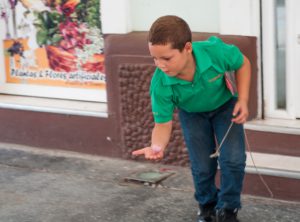
Since 2015, approximately 4 million people have fled Venezuela. For those who have not left the country, food, water and jobs are scarce in the wake of a collapsed economy and hyperinflation. Perhaps the most victimized of the population are children who are unable to find basic access to education in Venezuela.
Why Are Children Not Attending School?
As Venezuelans struggle to afford basic necessities for survival, many children in Venezuela have stopped attending school. For families facing severe hunger, the extra cost of school supplies and uniforms is a price they often cannot afford. Students are unable to perform at school without proper nutrition or clothing. Many parents decide that their children should stay home where they have a chance at a meal.
More than 3 million of the country’s 8 million students have dropped out of school. Some of these students have emigrated with their parents, while others have quit to work and adopt caretaker roles within the family. As Venezuelans face widespread malnutrition, the educational needs of the children in Venezuela remain secondary. It is estimated that 1.1 million children will remain in need of basic education in 2019.
Although education was a hallmark of President Maduro’s campaign, the government can no longer afford to supply schools with proper maintenance and lunches. Public education previously provided a food bonus with a healthy lunch for students. That food program no longer functions, and students cannot rely on meals. In addition, with prices doubling every other month, the transportation system has failed, and both schools and parents struggle to afford bus fares for students.
School Closures without Teachers
Because of low enrollment, hundreds of schools have closed, and thousands of teachers have left their jobs. According to the Venezuelan Teacher’s Association, 176,000 of the country’s 860,000 registered teachers have quit. With wages amounting to about $8 a month, instructors of both private and public schools can no longer afford to work.
Many struggling schools only operate three days a week. Additionally, students from various grade levels are often combined into one class. These schools are desperate to keep the children in Venezuela from dropping out and missing years of formative education under harsh circumstances. Due to the teacher shortage affecting Venezuelan schools, parents are taking on teaching roles, despite a lack of experience or education. Parents believe that any schooling is better than none. As Maria Carmona, a mother-turned-teacher says, “Our children must learn, so I became their teacher.”
Efforts to Help Children Receive An Education in Venezuela
Nonprofit organizations, such as Cuatro Por Venezuela Foundation and Pasión Petare, offer places of refuge and free meals for students. Cuatro Por Venezuela Foundation has provided school supplies for more than 350 families and sent 58,000 pounds of food. Pasión Petare uses soccer to motivate children to stay in school and provides a daily meal for 2,000 students.
Catholic relief organizations like Fe y Alegria and Caritas also raise money to provide food and school supplies. Fe y Alegria provides free education to 170 schools across the country and has implemented a food program for school children. The organization also began a campaign called “A Notebook for Fe Y Alegria,” which raises funds to provide school supplies that most families can no longer afford.
Because President Maduro recently conceded to requests for foreign aid, there are more opportunities for organizations such as the U.N. and Red Cross to offer assistance for Venezuelan schools. UNICEF has partnered with Fe y Alegria and reached more than 100,000 people through radio communication with information on how to help children continue their education. UNICEF and its partner organizations have also provided educational kits for 150,000 children and supply food and water for children in schools. This motivates children and parents to send their children to school.
The Venezuelan government continues to deny problems with their country’s education system. If not for the herculean efforts of international relief organizations, private charities and hands-on assistance from parents and local volunteers, hope would not remain for school children in Venezuela. Children face a bleak future and are vulnerable to exploitation without education. With less than 2 percent of all humanitarian aid allotted to education, it is vital to continue calling for assistance amid the rising crisis. As Susana Raffalli, an advisor to Caritas and renowned nutrition expert, says, “We need our children back in school, because that’s one of the few care and nutrition spaces left.”
– Christina Laucello
Photo: Flickr
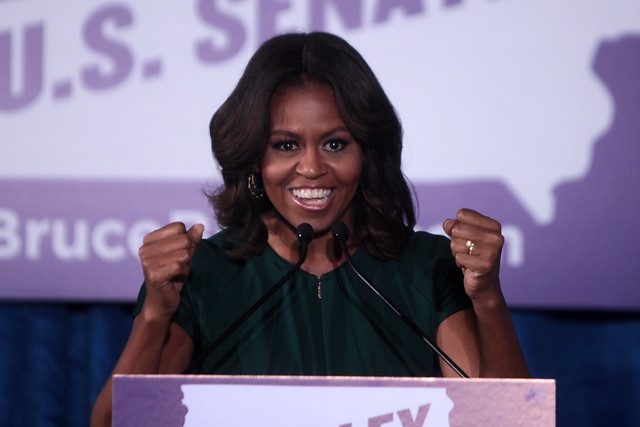
Former First Lady Michelle Obama has dedicated her life to her own education and the education of others. From growing up in the slums of Chicago, to going to Princeton University, Obama’s hardwork and determination is truly inspiring.
After her time at Princeton, Obama traveled back to Chicago to work with the mayor as an assistant. Then, in 1993, she became the exclusive director for the Chicago office of Public Allies, a non-profit organization that helps young people develop leadership skills. Her resume is extensive and includes many different titles, but Obama has kept one thing consistent: her desire to better the lives of children.
Whenever she is giving a speech, Obama makes a point to speak about education and giving back to the community. These Michelle Obama Quotes demonstrate her commitment to focusing attention on the issue of girls’ education around the world.
Michelle Obama Quotes Girls Education
- Obama’s initiative Global Girls Alliance, which helps women around the world receive an education, was inspired by a conference she attended in the U.K. in 2009 to speak to a group of schoolgirls about education. In the Penguin Talks U.K., an interview series with Penguin Publishings’ most influential authors, Obama answered questions about her life and her work in bettering girls’ education around the world.
“The visit (in 2009) set my course in one of my initiatives: to work on girls education,” Obama said. “It was after that visit that I went back and said ‘we have to find a way to have these conversations around the world’ because meeting with the girls here and the girls at Mulberry just reminded me of how much talent and how much courage and how much hope there is in our girls who are struggling to do everything right, when they have so much working against them.”
- In an interview with The Chicago Tribune, Obama was asked about the initiative she announced on the Today Show. The initiative is a clear indication of the type of platform the former First Lady wishes to take: girls’ education worldwide.
“We want to lift up the grassroots leaders in communities all over the world who are clearing away the hurdles that too many girls face,” Obama said. “Because the evidence is clear: educating girls isn’t just good for the girls, it’s good for all of us.”
- In 2014, Obama gave a speech at the Brookings Institution, an institution that has been helping girl around the world receive an education. Obama not only discusses the importance of girls’ education, but the external forces that prevent girls from participating in education.
“We really can’t take up the issue of girls education unless we are also willing to confront all of the complex issues that keep so many girls out-of-school. Issues like early and forced marriage, genital cutting,” Obama said.
- “A few years ago, when I had the honor of meeting Malala Yousafzai, who was shot in the head just for trying to go to school, this issue got really personal for me… That’s why I decided to work on global girls’ education as first lady: because right now, there are tens of millions of girls like Malala in every corner of the globe who are not in school- girls who are so bright, hardworking and hungry to learn. And that’s really the mission of the Let Girls Learn initiative.”
- At a conference held by Glamour entitled “The Power of Educated Girls” Obama, actress and activist Charlize Theron and Australian Prime Minister Julia Gillard discussed the importance of girls’ education globally.
“If we want to end poverty, educating girls is key to all of that. You were able to leave and shine and to learn and to teach,” Obama said.
- Michelle Obama delivered a powerful keynote speech at the Wise 2015 World’s Innovation Summit For Girls’ Education. In her speech, she discussed the importance of girls’ education and the importance of their protection. She explained that getting girls into school is a great stride, but it’s keeping girls in schools and supplying them with resources that poses a challenge.
“We cannot address our girls’ education crisis until we address the cultural norms and practices that devalue women’s intelligence, that silence their voices and limit their ambitions,” Obama said.
These Michelle Obama quotes encapsulate who she is, before and after being in the White House. Her work to better the education of girls all around the world is ambitious but doable. Obama gives everyone hope that making education available to girls everywhere is achievable. By using her platform and her personal story to promote girls education worldwide, Obama continues to uplift and drive girls and women all over the world.
– Andrew Valdovinos
Photo: Flickr
