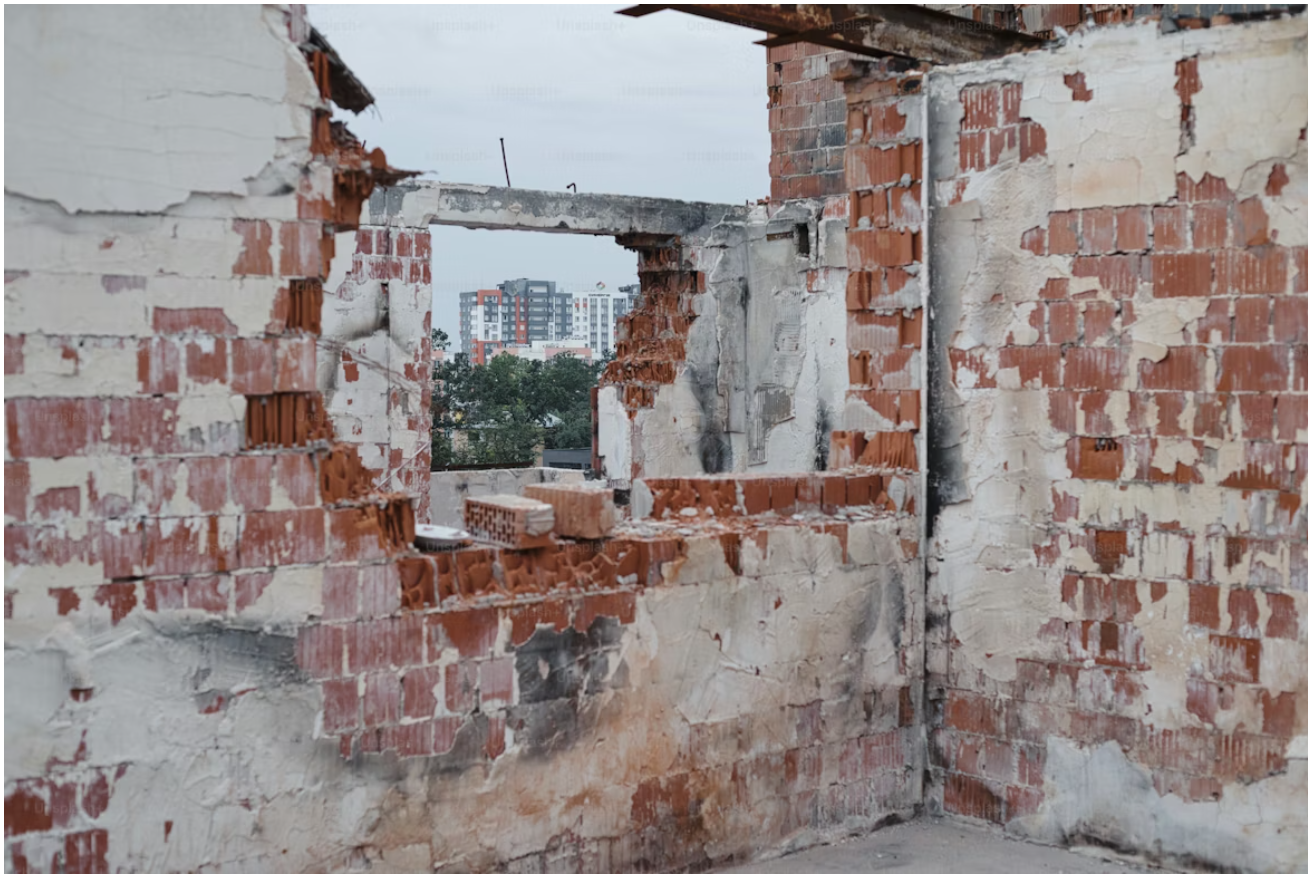
Russia’s aggression in Ukraine, which began in 2014, escalated into a full-scale invasion in 2022. In addition to the visible physical destruction, the prolonged conflict has produced far-reaching humanitarian and social consequences, including disruptions to education and their impact on children.
Impact of War on Ukrainian Schools, School Children and Teachers
By December 2022, over 2,800 Ukrainian educational institutions were damaged or destroyed by Russian strikes, affecting 5.7 million children. While some children were able to continue school in physical facilities, those children whose schools were destroyed or severely damaged did not always have access to remote education, as power and appropriate IT equipment were not always available.
That is the direct effect of war. But there are also indirect consequences. Invasion/conflict/war, or however it is described, creates an environment of violence that results in trauma and psychological stress. Ukrainian children may be displaced multiple times, separated from family, and constantly exposed to air raid sirens and shelling. Their teachers and caregivers note increasing anxiety, sleep disorders, difficulty concentrating and other behavioral changes. And these are not just short-term effects, leading to school dropout and negative coping mechanisms. They can also be developmental and long-term. Witness the drawings of 9-year-old Illia: a dark shape “swallowing” everything he loves. Or the words of 12-year-old Natalia: “My father is at the front. We suffer a lot . . . [when] I can talk to the psychologist . . . [it] gives me a lot of peace of mind.”
While schools and teachers often serve as first responders by providing psychological first aid and psychosocial support, they too may need similar support as well as equipment and materials, especially if distance learning is involved.
This is why MHPSS (mental health and psychosocial support) is often noted as a key element of emergency humanitarian assistance.
Help from the European Union
In December 2022, the European Commission provided the Government of Ukraine with €100 million of assistance, including €34 in humanitarian aid that would include rehabilitation and reconstruction of school facilities damaged by the Russian assault, as well as classroom equipment for learning spaces and bomb shelters.
In addition, approximately €14 million was allocated from a European Commission contract with the Polish Development Bank to acquire school buses to bring children to school safely, and the EU and member states donated several hundred school buses. Ukraine’s First Lady, Olena Zelenska, noted that more than two-thirds of Ukrainian children could not attend school regularly. EU President Ursula von der Leyen noted, “The future of Ukraine begins with its children back in schools.”
Global Education Cluster
The Global Education Cluster is an organization that works with countries “to meet the education needs of crisis-affected children and youth.” Humanitarian support and recovery are key to their work. The Ukraine Education Cluster operates under the GEC umbrella.
The Ukraine Education Cluster Strategy 2023-2025 was a response to the devastation of educational infrastructure resulting from Russia’s 2014 invasion of Ukraine and the full-scale invasion eight years later, in 2022. The cluster strategy involved Ukraine’s Ministry of Education and Science, the Education Cluster, nongovernmental organizations, donors and partners. In addition to attention to infrastructure, there was a focus on online learning resources and mental health support programs, all part of “humanitarian support and recovery.” Over one million (1.2 million) people in need were identified, with 0.9 million targeted, 15% of whom were disabled. Displaced, nondisplaced and returnee children were included.
The Ukraine Education Cluster Transition Plan 2025-2026 shifts the responsibility for education coordination from the Education Cluster and its humanitarian foci to Ukraine’s Ministry of Education and Science (MoES). The transition plan acknowledges continuing humanitarian education needs, with 1.6 million children and teachers still affected and needing support. But also acknowledged is the Humanitarian Reset of the U.N.’s Inter-Agency Standing Committee, and its goal to move from the humanitarian-focused cluster to country plans with national ownership and leadership. For Ukraine, this means integrating the coordination of the humanitarian work into the MoES systems, thus bridging the emergency response to long-term recovery.
The Children Strategic Advisory Group of Ukraine’s Education Cluster was established in 2025 as an actor in the decision-making process on “priority humanitarian response in the education sector.”
Prior to creating this group, however, the Ukraine Education Cluster held a two-day workshop in Lviv in July 2024 for 15 children aged 12-16 years old (and parents/caregivers). While the workshop provided no new information, it provided validation regarding educational needs and barriers that had been identified from other, adult, sources, but with different prioritization. While the MoES and partners focused on access to education, learning environment and outcomes, the workshop children focused on the learning process and experiences. The children wanted more “soft” skills, mental resilience/life skills and leisure activities. The 2024 workshop informed future decisions of the Education Cluster and led to the permanent advisory group, which met the following year.
Participants in the Children Strategic Advisory Group were boys and girls ages 14-18 from Ukrainian regions affected by the war. The children conducted needs assessments and analyzed the main educational policy initiatives of the MoES that formed the basis for their conclusions and recommendations. There were five key findings and recommendations:
- Psychological support is not a bonus. It is a basic need for education during the war.
- Shelter is not just a concrete structure; it is about the sense of trust.
- The National Multidisciplinary Test should not be a survival test, but an opportunity. (It needs to be fair. “If the child lives under shelling, give him a chance.”)
- A child’s voice is not background noise; it is guidance.
- Education during the war is not only about knowledge. It’s about dignity, security, and trust.
For each finding, the group’s report provided context, identified key problems, and made recommendations, i.e., “What children call for.”
A Process for the Future
Ukraine’s educational system is living a process of surviving, overcoming and moving on from the ravages of war. It thrives from the commitment of external support, internal hard work and active participation at all levels. Hearing and acting on the voice of the schoolchildren themselves is a unique way to assure future adults who care about the education of children.
– Gina Beviglia
Photo: Flickr
