• Link to X
  • Link to Facebook
  • Link to Instagram
  • Link to TikTok
  • Link to Youtube
  • About
    • About Us
      • President
      • Board of Directors
      • Board of Advisors
      • Financials
      • Our Methodology
      • Success Tracker
      • Contact
  • Act Now
    • 30 Ways to Help
      • Email Congress
      • Call Congress
      • Volunteer
      • Courses & Certificates
      • Be a Donor
    • Internships
      • In-Office Internships
      • Remote Internships
    • Legislation
      • Politics 101
  • The Blog
  • The Podcast
  • Magazine
  • Donate
  • Click to open the search input field Click to open the search input field Search
  • Menu Menu

Archive for category: Economy

Information and stories about economy.

Economy, Global Poverty

Is Kazakhstan Poor?

Why Is Kazakhstan Poor?Kazakhstan is a Eurasian country, bordering China and Russia, whose size is comparable to that of western Europe. Kazakhstan has a population of 16.4 million. According to the Asian Development Bank, only 2.7 percent of the population in Kazakhstan lives below the poverty line. Kazakhstan has the lowest percentage of people living below the national poverty line in central and west Asia. These statistics suggest that Kazakhstan is not a poor country at all, which raises the question, is Kazakhstan poor?

Historical Context
Kazakhstan declared independence from the Soviet Union in 1991 and became an upper-middle-income country in less than two decades. Kazakhstan’s GDP has risen dramatically since the country became independent. In 1990, the year before Kazakhstan declared independence from the Soviet Union, the GDP was $27 billion. By 2013, the GDP was $237 billion. In 2016, however, the GDP had decreased to $134 billion. The rapid economic growth can be attributed to large investments in the oil sector.

Economy
Kazakhstan’s economy has declined due to the decrease of global commodity prices and the economic downturn of Russia. Additionally, Kazakhstan’s exports to the Eurasian Economic Union (EAEU) countries decreased by 23.5 percent in 2016. Imports to Kazakhstan from EAEU countries declined by 13.7 percent.

The majority of Kazakhstan’s economy is based on industry and services. Agriculture in Kazakhstan accounts for less than 5 percent of the country’s GDP. Kazakhstan’s economy, however, is not at all diverse and is largely dependent on oil. This dependency foreshadows an even steeper economic decline, especially considering imminent environmental concerns.

Infrastructure
Kazakhstan also confronts poor transportation infrastructure, especially for a country whose volume of road and railroad shipping is particularly high. Two-thirds of the 23,000 kilometers of highway are in poor condition.
Kazakhstan’s telecommunication infrastructure is also very poor. Though Kazakhstan has the best telephone system in central Asia, it ranks low in terms of world standards. For example, in 2004, the Kazakhstan telephone system provided only 15 telephone lines per 100 inhabitants.

Poverty Disparity
Kazakhstan has made huge strides in reducing poverty. From 2000 to 2006, the poverty rate declined from 34.5 percent to 19 percent. Rural poverty, however, is still high. For example, from 2005 to 2010, poverty in urban areas declined from 13.6 percent to less than 4 percent, while poverty in rural areas declined from 24.4 percent to 10 percent.

Is Kazakhstan Poor?
In truth, Kazakhstan is not a traditionally “poor” country. In 2011, Kazakhstan was ranked as a high human development country in the Human Development Report. Additionally, Kazakhstan has already achieved many of its Millennium Development Goals.

Kazakhstan is, however, an example of a country that quickly lifted itself out of poverty and can quickly fall back into poverty. Kazakhstan is an anomaly among the former Soviet Union countries, as Kazakhstan’s GDP increased and its poverty rate decreased almost immediately after declaring independence. Kazakhstan has relied heavily on oil to improve its economy. Poverty is largely related to employment opportunities, which have been plentiful in the oil business. Considering environmental concerns regarding oil, it would be in Kazakhstan’s best interest to diversify its economy in order to continue improving the quality of life of its citizens.

– Christiana Lano
Photo: Flickr

October 6, 2017
https://borgenproject.org/wp-content/uploads/borgen-project-logo.svg 0 0 Borgen Project https://borgenproject.org/wp-content/uploads/borgen-project-logo.svg Borgen Project2017-10-06 01:30:332024-05-27 09:23:20Is Kazakhstan Poor?
Economy, Education, Global Poverty

Understanding the Reasons Why Tajikistan is Poor

Why Is Tajikistan PoorTajikistan has done an incredible job over the past 15 years of reducing poverty and strengthening its economy. However, the poverty rate still remains at 31 percent. Despite being in the top 10 percent of countries in terms of poverty reduction, the question of why Tajikistan is poor remains.
Poor soil and a lack of employment opportunities have driven more than one million Tajiks to work abroad, mostly in Russia, in order to support their families. Additionally, narcotics are a huge source of economic activity in Tajikistan, leading to hostile environments for students and driving away foreign investment.

Education in Tajikistan is often truncated. There is limited opportunity for secondary school, and higher education is an opportunity only the most privileged can afford. The levels of education across Tajikistan are lower for women, as 12 percent do not end up graduating the compulsory nine years of primary school.

Minimal infrastructure is another explanation as to why Tajikistan is poor. Though there is a fairly well developed system of roads, they are in need of repair and supplement. Access to the internet and clean water, not to mention basic health care, is also restricted, and the railway system is rudimentary and ineffective.

Besides a lack of education and overall infrastructure, the rule of law in Tajikistan is weak, likely due to a history of civil war and a former dependence on the Soviet Union. This makes foreign direct investment unlikely, leaving little chance for new businesses to grow and develop.

Much has been done in recent years to continue to strengthen the Tajikistan economy, yet the question of why Tajikistan is poor remains. The country must work even harder than in the past, increasing access to the internet and energy, developing the private sector more fully and making the country an attractive one for foreign direct investment if they wish to continue the impressive growth that has been the norm for fifteen years.

– Connor S. Keowen

Photo: Flickr

October 3, 2017
https://borgenproject.org/wp-content/uploads/borgen-project-logo.svg 0 0 Borgen Project https://borgenproject.org/wp-content/uploads/borgen-project-logo.svg Borgen Project2017-10-03 07:30:012024-05-29 22:27:03Understanding the Reasons Why Tajikistan is Poor
Economy, Global Poverty

The Poverty Rate in Tonga: A Nation in Need of Assistance

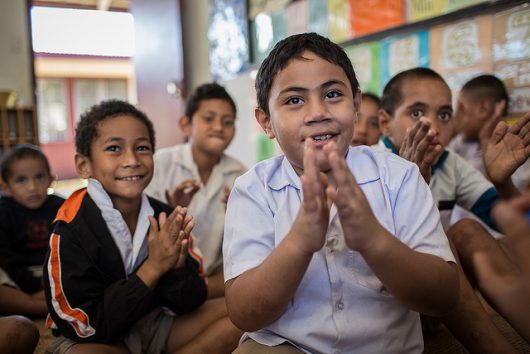
Tonga Poverty RateThe Polynesian Kingdom of Tonga is home to around 102,000 people. Tonga is an archipelago comprised of 171 islands, only 45 of which are inhabited. In 2005, the U.N. estimated 77 percent of the population lives in rural areas.

The poverty rate in Tonga is 22.1 percent; in other words, one out of every five Tongans lives below the poverty line. Among the eight nations in the Pacific region, Tonga has the third lowest poverty rate, proceeded by the Solomon Islands and Vanuatu.

Tonga’s impoverished communities are primarily in rural areas on the outer islands. The main island of Tongatapu has the highest GDP per capita, but the citizens of the farther islands of ‘Eau, Ha’apai, the Niuas and Vava’u struggle to find work. The higher poverty rates on these islands are due to a lack of access to goods, transportation and marketing opportunities.

The poverty rate in Tonga worsened after the 2008 global financial crisis. The cost of living skyrocketed due to increased prices of imported fuel and food. The crisis also caused Tongans overseas to lose their jobs in fields such as construction and landscaping, rendering them unable to send money back home. It is estimated that there are more Tongalese expatriates than current citizens, and many of them reside in the neighboring countries of Australia and New Zealand.

Tonga’s economy is primarily agricultural. Their main cash crops are squash, fish, copra and coconut products, vanilla bean extract and bananas. Tonga’s main mode of foreign exchange is through agricultural exports, tourism and remittances. The Tongalese economy also relies on foreign aid to offset its chronic trade deficit.

The biggest hope for improving the Tongan economy is tourism. Tonga hopes to increase high-value tourism among the outer islands, which have white sandy beaches and ideal sailing conditions. The Tongan tourism industry still has problems with remoteness, infrastructure and poor marketing. However, conditions are improving. In January 2011, tourist receipts totaled 60 million Tongan dollars, the highest point in the last decade.

Like many countries, Tonga is still in the process of rebuilding its economy after the 2008 financial shock. International cooperation will also be instrumental in doing so, as Tonga continues to rely on foreign aid for emergency assistance and filling the gaps in trade deficits. With further cooperation and the development of local markets, there is hope to lift many more Tongans out of poverty.

– Hannah Seitz

Photo: Flickr

October 3, 2017
https://borgenproject.org/wp-content/uploads/borgen-project-logo.svg 0 0 Kim Thelwell https://borgenproject.org/wp-content/uploads/borgen-project-logo.svg Kim Thelwell2017-10-03 01:30:402024-05-29 22:27:03The Poverty Rate in Tonga: A Nation in Need of Assistance
Economy, Global Poverty

Causes of Poverty in Croatia

Causes of Poverty in Croatia
Croatia, a beautiful country home to numerous tourist destinations, is quickly becoming the EU’s poorest and slowest growing nation. With 19.5 percent of the population below the poverty line and an unemployment rate of almost 12 percent, the situation is dire.

While these numbers may not seem especially concerning, they are deceiving, as significant income disparities exist in Croatia. The poor in Croatia experience greater income differences among themselves than most countries. Those living in small towns in the east and southeast regions and in rural areas are especially at risk.

These areas suffered the most from the Homeland Wars in the 1990s. The wars and the corrupt privatization of state-owned companies hurt Croatia’s industrial sector. Once an industrial powerhouse, Croatia now has turned to a less dependable and less lucrative service-based economy that relies on tourism for jobs and income.


Main Causes of Poverty in Croatia


  • Rising Foreign Debt: Croatia’s external gross debt has risen to €46.4 billion, which equals 108 percent of the annual GDP and is an all-time record. The debt is still trending upward and shows no sign of stopping. Consequently, Croatia’s credit rating continues to drop and the country cannot accumulate as much of the foreign aid it desperately needs.
  • A Six-Year-Long Recession: The Great Recession of 2008 severely impacted the Croatian economy for years. During this period, child poverty increased by more than 50 percent. The recession exacerbated issues already present in the Croatian economy and is a large reason why the country’s growth rate remains under 2 percent. Furthermore, the poor economic performance has contributed to a doubling of the public debt that has resulted in high taxes and fewer jobs.
  • High Unemployment: The last of the main causes of poverty in Croatia is high unemployment, especially among youths. Among those aged 15 to 24, Croatia has the third highest unemployment rate in the European Union. The youth unemployment rate reached an all-time high of 49.8 percent in 2013 and currently fluctuates around 30 percent.


However, Croatia is working to improve these conditions. For example, as a member of the European Union, it has committed itself to the Youth Guarantee Programme. Through this initiative, Croatia receives funding from the EU to build a support system for Croatian youths that would feature more opportunities for vocational education and apprenticeships in the public and private sectors. The goal of this program is to ensure that youth members receive a job offer within four months of registering as unemployed.

Croatia also is implementing the Strategy on Combating Poverty and Social Exclusion in Croatia (2014-2020), which aims to reduce poverty and social exclusion in Croatia through a regional approach. Through initiatives like these, the government hopes to address the causes of poverty in Croatia and lift itself into economic prosperity.

– Lauren McBride


October 1, 2017
https://borgenproject.org/wp-content/uploads/borgen-project-logo.svg 0 0 Kim Thelwell https://borgenproject.org/wp-content/uploads/borgen-project-logo.svg Kim Thelwell2017-10-01 07:30:362024-05-29 22:27:01Causes of Poverty in Croatia
Economy, Global Poverty

Addressing Four Main Causes of Poverty in Algeria

Causes of Poverty in AlgeriaWith a population of approximately 40 million, Algeria is geographically North Africa’s largest country. It is also the world’s fourth largest gas exporter and the tenth largest exporter of oil. Algeria is a rich nation and the third most important economy in the Middle East and North Africa, but its people are poor. Reports show that the national rate of poverty in Algeria is as high as 23 percent.

What are the causes of poverty in Algeria? Why are up to half of young men from a country tempted to flee to Europe as illegal immigrants to escape misery at home?

Poverty and Unemployment

A high rate of unemployment among youth is one the causes of poverty in Algeria. Although the official figure is 12.48 percent, in reality it is much greater than that. One report from 2008 shows that unemployment among people under 30 was 70 percent. Such high unemployment rates and difficult quality of life have forced the country’s youth to take on desperate measures, such as illegal immigration to find work in Europe.

Political Conflict

Many Algerians blame the unresponsive and ineffective political leadership for the fall of the country’s economic position. One analyst claims that the “doctrinaire socialism” of the National Liberation Front (FLN), a political party which led the struggle for independence against France, rendered the country bankrupt. The Algerian Civil War between the Algerian government and various Islamic rebel groups from 1991 to 2002 and post-war political tensions further weakened the country’s political and economic stability.

Lack of Democracy

Lack of democratic institutions is another cause of poverty in Algeria. The struggle for power between the progressive FLN and conservative Islamic Front prompted military intervention on a number of occasions. The country’s current 80-year old President Abdelaziz Bouteflika has been in office since 1999 by “winning” four successive elections. Although he is respected as an elderly statesman for taking the country out of the civil war and eliminating radical and militant jihadi groups, the government under his rule has grown increasingly intolerant of press and political opposition.

Cuts in Government Spending

Another cause of people’s discontent and poverty in Algeria is the recent decline in oil price. Because Algeria relies heavily on oil and hydrocarbons for a strong economy, the sharp decline in oil price has prompted the government to implement spending cuts and tax hikes. Such measures without “improved safety nets, a cash transfer system reaching the needy, a solid media campaign to ensure better public understanding during its implementation and a stronger statistical system that allows monitoring of households’ living conditions more frequently” will pose a risk for Algeria.

Nevertheless, the pleasant news is that poverty in Algeria has decreased by 20 percent in the past two decades. While this number is promising, it is still not enough development. There is a need for a shift toward a more diversified economy that will move the country to sustainable growth and more employment opportunities.

– Aslam Kakar

Photo: Flickr

October 1, 2017
https://borgenproject.org/wp-content/uploads/borgen-project-logo.svg 0 0 Kim Thelwell https://borgenproject.org/wp-content/uploads/borgen-project-logo.svg Kim Thelwell2017-10-01 01:30:402024-06-05 04:52:35Addressing Four Main Causes of Poverty in Algeria
Economy, Global Poverty

Causes of Poverty in Malta

Causes of Poverty in Malta

For the island nation of Malta, poverty is an issue that must be addressed, especially with recent data that suggests that not only is poverty a persistent issue within this country, but also an issue that is on the rise. The causes of poverty in Malta are important to understand in order to address this issue.

Malta is located in the Mediterranean Sea, just south of Italy, and is comprised of a population of over 400,000 people. Of the 400,000 people who live on this island, 16.3 percent live below the poverty line, according to a 2015 estimate. Furthermore, according to European Union (EU) statistics, Malta is one of 14 European countries that experienced an increase in poverty between 2008 and 2014. After Greece, Spain and Cyprus, Malta experienced the fourth greatest increase in poverty during this period.

One cause of poverty in Malta is unemployment; an estimated 4.8 percent of Maltese people are unemployed. Nevertheless, there are many positive signs which indicate positive growth for Malta’s economy that could alleviate unemployment for many. The Maltese economy is strongly dependent on foreign trade, manufacturing and tourism, which have contributed to an economy that has grown 4.5 percent per year – the largest growth of any European country between 2014 and 2016.

There are also certain groups of Maltese people who are more vulnerable to being affected by poverty. Those that have been victims of violence and neglect, the mentally ill, immigrants, the disabled and those from single-parent households are more likely to live in poverty and therefore rely on social services. In particular, poverty affects the elderly – those over 65 – on this island at a significantly higher rate – 22 percent – than other age groups in the population. Many of those who are particularly vulnerable to poverty have also been pushed in that direction by falling into a pattern of being heavily indebted.

Despite the recent trend toward poverty, Malta is largely heading in a positive direction. Economically, the country is thriving and this economic growth could increase the unemployment rate and be used to further guarantee social services that could alleviate poverty for at-risk groups of people. Nonetheless, there is still a lot of work to be done and the causes of poverty in Malta need to be addressed fully in order to see progress.

– Jennifer Faulkner

Photo: Flickr

September 29, 2017
https://borgenproject.org/wp-content/uploads/borgen-project-logo.svg 0 0 Borgen Project https://borgenproject.org/wp-content/uploads/borgen-project-logo.svg Borgen Project2017-09-29 01:30:252024-05-27 23:59:21Causes of Poverty in Malta
Economy, Global Poverty, Women & Children

Why Is Trinidad and Tobago Poor?

Why Is Trinidad and Tobago PoorThe island nation of Trinidad and Tobago lies in the Caribbean Ocean off the coast of Venezuela. Built primarily around the oil and gas industries, Trinidad and Tobago‘s economy is one of the strongest in the Caribbean. Despite this, several factors have led to economic stagnation as well as relatively prevalent poverty. So, why is Trinidad and Tobago poor?

A lack of economic diversification and overdependence on petroleum and natural gas are some of the most important factors holding back Trinidad and Tobago‘s economy. With oil and gas constituting 80 percent of exports and about 40 percent of the gross domestic product (GDP), the island nation has clearly devoted much of its economy to the sale and manufacturing of these natural resources. This leads to several problems.

Oil and gas prices have been in an overall decline over the past several years, so Trinidad and Tobago’s economy has suffered from job loss, reduced tax revenue and reduced development in human capital. These natural resources are also nonrenewable, meaning that they will eventually run out. Trinidad and Tobago’s government has done little to ensure that the country is ready to expand its economy beyond oil and gas once the underground reserves run dry. The overall lack of a business environment to stimulate entrepreneurs is one of the main answers to the question of why Trinidad and Tobago is poor.

Furthermore, the non-energy areas of the economy remain severely underdeveloped and continue to heavily depend on government subsidies. This lack of economic success in non-energy areas discourages potential foreign investors from investing in Trinidad and Tobago, despite the oil and gas sector’s success. Direct foreign investment is undeniably crucial for a country seeking economic diversification, as the inflow of money can help build a strong foundation for new sectors in the economy.

According to a review conducted by the Commonwealth Foundation, a nonpartisan think tank focused on public policy, over 20 percent of Trinidad and Tobago’s citizens currently live below the poverty line. The report also states that 11 percent of the population is undernourished. These unexpectedly high rates of poverty and malnutrition may be partly due to the considerable gender-wage gap present in Trinidad and Tobago.

A study conducted by the Central Bank of Trinidad and Tobago shows that women, on average, earn a staggering 35.3 percent less than men. While this may be partially due to a large portion of women taking low-income jobs, there is certainly a serious amount of gender-based discrimination in wages. It is easy to fall into complacency after the increase in the average woman’s wage – from $9,000 in 2012 to $12,000 in 2014. Despite this rise in pay, however, the wage gap has only been increasing. The average male wage was $18,000 in 2012, but has disproportionately increased to $30,000 in 2014.

Another issue presented by the gender-wage gap affects families with single parents. In Trinidad and Tobago, the children of single parents are six times more likely to live under the poverty line. With about 75 percent of single families headed by the mother, the issue of the gender-wage gap becomes truly alarming. It is illogical to expect single mothers to not only care for her children but also provide for them if she is working for significantly reduced wages and has no supplemental income.

This economic disparity between men and women has led to efforts in increasing the resources dedicated to educating and training women. With the number of women in the workforce steadily increasing over the past few years, women in Trinidad and Tobago have definitely seen improvements in their social and economic standing. Nevertheless, there is still much progress to be made. Passing legislation to eliminate the wage gap would be a substantial step toward promoting economic success in Trinidad and Tobago, in addition to the inherent benefits of working toward gender equality.

Answering the question “Why is Trinidad and Tobago poor?” requires a more convoluted response than expected. The nation of Trinidad and Tobago is undoubtedly one of the wealthiest countries in the Caribbean despite its deeply embedded economic flaws. While the country has made impressive progress by developing social programs to help the vulnerable, nurturing new businesses to encourage private sector growth and eradicating the gender-wage gap must be near the top of Trinidad and Tobago’s priorities for there to be long-term economic improvement.

– Akhil Reddy

Photo: Flickr

September 28, 2017
https://borgenproject.org/wp-content/uploads/borgen-project-logo.svg 0 0 Kim Thelwell https://borgenproject.org/wp-content/uploads/borgen-project-logo.svg Kim Thelwell2017-09-28 01:30:472020-07-16 21:30:42Why Is Trinidad and Tobago Poor?
Economy, Education, Global Poverty

Addressing the Curacao Poverty Rate

Curacao Poverty RateOn October 10, 2010, after centuries operating as a deep-water port for the Dutch, the small Caribbean island of Curacao gained autonomy as a state in the Kingdom of the Netherlands. 80 percent of the country’s debt was forgiven by the Dutch, and most government positions were undertaken by local citizens. For many who lived on the island, 10/10/10 marked the dawn of a new era of opportunity. “We were confident that we were going to have this perfect future,” said political analyst Michiel van der Veur.

Enthusiasm was short lived. Soon after gaining autonomy, the assassination of politician Helman Wiels plunged the island into turmoil. Between 2012 and 2013, Curacao had four prime ministers, greatly increasing the instability. As a country plagued with such unrest, it should be no wonder that the Curacao poverty rate is over 25 percent.

A small island country located in the Caribbean, much of the economy in Curacao is based around tourism and is thus highly sensitive to fluxes in the world market. Most of the country’s necessities are imported, leading to large trade deficits.

The Curacao poverty rate is likely increased by the country’s “brain drain” problem. Like many other developing island nations, citizens who are ambitious and educated often leave, moving to other countries with better opportunities for people with their skill sets.

However, Curacao has committed itself to addressing the country’s widespread poverty. With the support and assistance of the U.N. Development Program, Curacao has created a National Development Plan (NDP), which will focus on improving the economy through a series of steps from 2015 to 2030.

The NDP focuses on five themes to accomplish its goal: education, economy, sustainability, national identity and good governance. As diminishing the Curacao poverty rate is a priority, economy is one of the most important themes. In order to accomplish this, Curacao will focus on structural reform, government support, sectoral growth, supporting investments and broadening ownership of industry and land.

With the NDP, Curacao has taken a significant step towards strengthening the economy and the country as a whole. While there is much work to do, the country’s history as a long time trading center and large deep water port point to a high probability of success.

– Connor S. Keowen

Photo: Flickr

September 27, 2017
https://borgenproject.org/wp-content/uploads/borgen-project-logo.svg 0 0 Kim Thelwell https://borgenproject.org/wp-content/uploads/borgen-project-logo.svg Kim Thelwell2017-09-27 01:30:242024-05-29 22:26:53Addressing the Curacao Poverty Rate
Economy, Global Poverty

How to Help People in Kosovo

How to Help People in KosovoThe Republic of Kosovo is a disputed Southeastern European territory nestled in the Balkan Peninsula. Over the last two decades, the country has battled intense civil wars, horrific ethnic cleansings and a fight for freedom that finally culminated in its independence from Serbia (previously Yugoslavia) in 2008. In the early years of its autonomy, Kosovo’s poor economic conditions led the international community to brainstorm ways of how to help people in Kosovo.

As a result, Kosovo was under supervised independence by the International Steering Group until 2012. After 2012, the new country’s economy finally established some semblance of equilibrium. Kosovo held its own elections in 2013 and 2014 for the first time. Since then, their GDP has steadily been on the incline.

Although things are starting to look up for Kosovo, the country is still grappling to stabilize its workforce and job creation. In fact, 30 percent of the population still lives in poverty, 10 percent of which live off less than $1 per day. These discouraging numbers make sense considering the current growth model relies heavily on the remittance of citizens that fled during the war.

However, this strategy cannot be sustained over the long term, especially when the number of migrants leaving Kosovo for neighboring countries is still quite high. Thankfully, there are many charitable organizations and governmental efforts strategizing how to help people in Kosovo. Below are but a few that are doing spectacular things to bolster the Kosovo economy.

The Stabilization Association Agreement

The Stabilization Association Agreement (SAA) could perhaps be the single most influential document in Kosovo’s membership in the European Union. Negotiated in 2013 and 2014, the SAA was signed in 2015 and finally implemented the following year.

The agreement represents a new phase of Kosovo’s relationship with the E.U. and will pave the way for a more stable and prosperous Kosovo by implementing democratic principles and a variety of reforms set in accordance with E.U. standards. These restructurings will not only increase Kosovo’s wealth, but they will also bring the country closer to its goal of joining the European Union.

CARE International

Care International is a nonprofit organization that fights poverty around the world. They also have a specific focus on empowering women and girls. The organization has been working in the Balkans since 1993, providing humanitarian assistance during the worst of the conflict between the Serbs and Albanians. More recently, CARE has been initiating programs to build sustainable peace and development. These programs help to integrate minorities and youth into the job market, two of the largest unemployed groups in the county.

Anyone interested in learning how to help people in Kosovo through CARE need only visit their website, where the organization has a variety of strategies that the average person can act on today to join the fight against global poverty. These strategies include: signing petitions to help protect U.S. foreign aid; information on how to volunteer; and ways to raise money for the world’s most vulnerable populations.

Charles Stewart Mott Foundation

Established more than 90 years ago by businessman and philanthropist Charles Mott, the foundation’s original purpose was to address the growing economic problems facing Flint, Michigan. As the organization built traction, however, it expanded its efforts to include international initiatives, as well.

For the last several decades, the Charles Stewart Mott Foundation has been providing assistance to the western Balkans, including Kosovo, through its Civil Society program. In 2008, Mott provided Kosovo with a two-year $50,000 grant to the Kosovo Women’s Network in support of its efforts to ensure that women play an active role in Kosovo’s key political policies.

Although Kosovo is still struggling with high rates of unemployment and fluctuating markets, the nation has demonstrated economic expansion every year since establishing its statehood in 2008. It has been able to accomplish this in part through its constitutional rule of keeping public debt below unsustainable levels and maintaining competitively low corporate tax rates.

The admirable efforts of the governmental reforms and non-profit organizations listed above, and many others like them, also reveal powerful ways of how to help people in Kosovo. Hopefully in the coming years, the combination of these factors will thrust Kosovo into a time of much-deserved economic growth, leaving its painful recent history to fade.

– Micaela Fischer

Photo: Flickr

September 26, 2017
https://borgenproject.org/wp-content/uploads/borgen-project-logo.svg 0 0 Borgen Project https://borgenproject.org/wp-content/uploads/borgen-project-logo.svg Borgen Project2017-09-26 07:30:172024-06-05 04:52:35How to Help People in Kosovo
Economy, Global Poverty

On the Overseas Private Investment Corporation

Arguments for and Against the Overseas Private Investment CorporationSince the Trump administration has taken office, the International Affairs budget has come under attack. Among the many potential items to be cut, the Overseas Private Investment Corporation (OPIC) has been singled out by the administration as a particularly unnecessary agency.

As a result, a slew of arguments for and against the Overseas Private Investment Corporation have been published in recent months. This article is an attempt to provide clarity about the role of OPIC and suggest that its overall benefits outweigh its costs.

Established by President Nixon in 1971, OPIC provides loans and political risk insurance to private American companies seeking to invest in developing countries. Developmental financing was conceived as a complement to governmental aid insofar as it facilitated the transference of private capital to developing economies.

Critics of OPIC often argue that, as a public institution, the agency crowds out private banks that should, in theory, be more efficient financiers of international development.

The truth is that, although a robust private market for developmental finance exists, private capital oftentimes averts especially risky and poor countries due to the inevitably high premiums and interest rates.

OPIC, on the other hand, is in a unique position to support investments in these countries.

With the backing of the U.S. government, OPIC has been able to recover over 90 percent of its political risk claims. This fact has allowed the agency to offer affordable loans and political risk insurance in countries deemed too risky by private finance institutions.

Other critics of OPIC claim that it represents a form of “corporate welfare,” citing the fact that the agency gives loans to some of the largest U.S. firms, like J.P. Morgan, Citibank, and Wells Fargo.

Although all American firms are welcome to apply for financing, year after year, more than half of OPIC’s commitments go to small- and medium-sized businesses.

Even if one remains unconvinced about the benefits of OPIC, it is important to recognize that the agency imposes virtually no cost on the U.S. government. While OPIC does require federal backing to insure its $20 billion worth of outstanding loans, the agency has been self-sustaining for almost four decades. In fact, it has used its interest receipts to contribute nearly $4 billion to U.S. deficit reduction.

In the end, while there are many arguments for and against the Overseas Private Investment Corporation, the truth is that the agency has a net positive effect on American firms and developing economies alike.

– Nathaniel Sher

Photo: Flickr

September 26, 2017
https://borgenproject.org/wp-content/uploads/borgen-project-logo.svg 0 0 Kim Thelwell https://borgenproject.org/wp-content/uploads/borgen-project-logo.svg Kim Thelwell2017-09-26 01:30:382024-06-05 04:52:33On the Overseas Private Investment Corporation
Page 44 of 66«‹4243444546›»

Get Smarter

  • Global Poverty 101
  • Global Poverty… The Good News
  • Global Poverty & U.S. Jobs
  • Global Poverty and National Security
  • Innovative Solutions to Poverty
  • Global Poverty & Aid FAQ’s
Search Search

Take Action

  • Call Congress
  • Email Congress
  • Donate
  • 30 Ways to Help
  • Volunteer Ops
  • Internships
  • Courses & Certificates
  • The Podcast
Borgen Project

“The Borgen Project is an incredible nonprofit organization that is addressing poverty and hunger and working towards ending them.”

-The Huffington Post

Inside The Borgen Project

  • Contact
  • About
  • Financials
  • President
  • Board of Directors
  • Board of Advisors

International Links

  • UK Email Parliament
  • UK Donate
  • Canada Email Parliament

Get Smarter

  • Global Poverty 101
  • Global Poverty… The Good News
  • Global Poverty & U.S. Jobs
  • Global Poverty and National Security
  • Innovative Solutions to Poverty
  • Global Poverty & Aid FAQ’s

Ways to Help

  • Call Congress
  • Email Congress
  • Donate
  • 30 Ways to Help
  • Volunteer Ops
  • Internships
  • Courses & Certificates
  • The Podcast
Scroll to top Scroll to top Scroll to top