Information and stories on development news.


z1_world_globe_borgen_africa
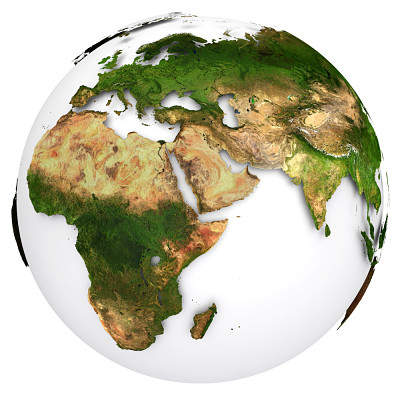
In the past decade, Ethiopia has opened its doors to foreign investment. Fashion retailer H&M and Walmart already have factories there, or plan to build them. There are also proposals to build the Grand Ethiopian Renaissance Dam, which will be a source of hydropower and accelerate agriculture development.

For Africa’s second most populous country, this will spur an economy that has traditionally been state-led and isolated.

These investments have already had positive impacts beyond their monetary value. Due to financial and economic stability, women are now having fewer children than before. Literacy rates are on the rise, and infant mortality rates have fallen by half.

Just over three years ago, the world’s population crossed the 7 billion mark. By 2100, the United Nations projects that the world population will be roughly 9.1 billion. With distress over resources and a changing climate, overpopulation is a growing concern among world leaders.

While the populations of Europe and North America are beginning to stabilize, Africa is still experiencing accelerated growth. The United Nations cites economic development and the education of woman as solutions to slowing fertility rates.

It has already worked in Ethiopia.

The average number of children women have has fallen from 6.5 to 4.8 in just a decade. In the capital, Addis Ababa, one of the most developed regions in the country, women are now having the replacement level number of children — two.

Although Ethiopia’s fertility rate ensures population growth for the foreseeable future, there remains some hope. Over 64% of Ethiopia’s population is 25-years-old or younger. As this demographic enters an economy catalyzed by foreign investment, continued development will lift many out of poverty, thus slowing the fertility rate even further.

With continued investment, the fertility rate could plummet to 2.5 by 2030.

Ethiopia’s population is well on its way to being sustainable by 2050. International investment works and it is essential if poverty-ridden regions want to experience the success Ethiopia is currently having.

– Kevin Meyers
Sources: CIA, CNBC Africa PRB UN
Photo: U of T Magazine
China's_War_On_Poverty
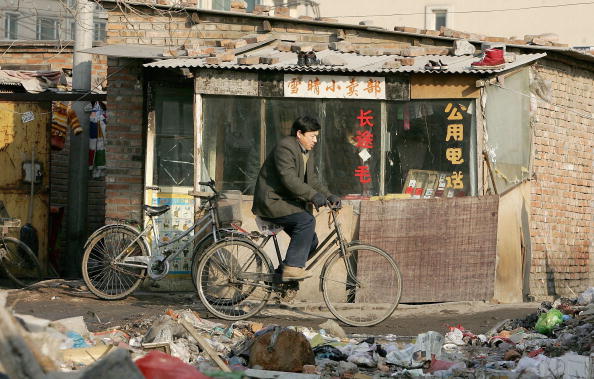
The rhetorical phrase “War on Poverty” is commonly used to describe programs and policies aimed at reducing or eliminating poverty. It has been used in the context of United States politics but is now also being applied by the media to Chinese efforts to reduce poverty, especially in rural areas. China has experienced a meteoric rise to economic prominence in a few decades, yet much of the country lies in the past, still experiencing economic hardship without the benefits of the recent successes. What is China doing to fight poverty?

Hundreds of millions of people have been salvaged from poverty since China’s rise to prominence, however, in 2012, China’s GDP per capita was less than other developing countries, including Iraq and Colombia. Part of this statistic lies with the fact that the Chinese economy has to sustain a huge number of people, but another reason for this surprising statistic is that economic growth in China has benefited some more than others. Specifically, those in urban areas have tended to gain more from recent economic advances than those in rural China.

In the past, the millions lifted out of poverty in China were a result in part of strong economic growth. Additionally, less people are working in agriculture and moving into other businesses and improving human capital systems. Anti-poverty actions by the government also played a role but perhaps have not been enough.

In the 1990s, China changed its definition of poverty to a level that was about two-thirds of the international standard, artificially lowering its poverty statistics. However, China has also thrown billions of dollars at the problem in the form of subsidized loans, grants and programs such as “Food For Work,” which aimed to stimulate the economic situation of the poor while at the same time improving infrastructure for water systems and roads.

Whether poverty reduction government programs like Food For Work were strong factors behind China’s first burst of poverty reduction between the 1970s and the late 1990s is hard to determine. Some believe that China’s staggering growth in those decades was the biggest driver for poverty reduction. If that is the case, then a slowdown in the Chinese economy (still at 7% growth approximately) could hurt the reduction in poverty unless new government programs can pick up the slack.

As previously mentioned, many of the poor in China have already benefited from economic growth, but many more are still impoverished. In the past month, President Xi Jinping reaffirmed the government’s responsibility to fight poverty in rural areas while at a conference about China’s 13th Five-Year Plan. A rash of suicides among children in a rural area of China and the death of five homeless children in 2012 (carbon monoxide poisoning from lighting a fire in a trash container where they were taking shelter) has caused hard questions to be asked and for government officials to talk about action. Recognition of the continuing problem by the Chinese government is a positive sign. The additional fact that the Chinese economy is becoming more dependent on a consumer class sheds light on the need for the Chinese economy to pull more out of poverty and into the consumption class. China’s war on poverty — the incentive to work towards ending poverty — is apparent, from both a public relations standpoint and an economic one.

– Martin Yim

Sources: Reuters, The Diplomat, Journal of Chinese Economic and Business Studies, IMF, Asia Society
Photo: Yibada

land_aquisition
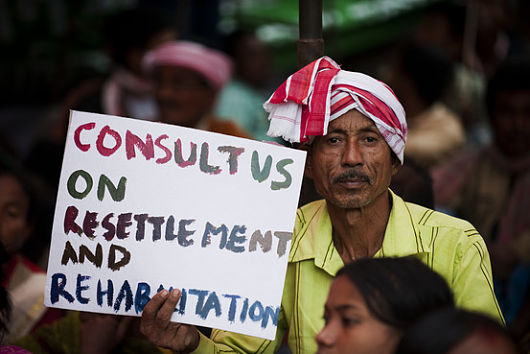
Last month, the President of India promulgated the controversial Right to Fair Compensation and Transparency in Land Acquisition, Rehabilitation and Resettlement (Amendment) Ordinance despite massive public opposition. This means that even though the bill outlining the amendments has not yet passed in India’s Upper House to legally become law, its content would still be enforced. Multiple farmer organizations have collectively filed a Public Interest Litigation (PIL) against the ordinance, labeling it as “unconstitutional” and an unchecked exercise of executive power.

The bill amends various aspects of the Right to Fair Compensation and Transparency in Land Acquisition, Rehabilitation and Resettlement Act of 2013, which replaced the colonial-era Land Acquisition Act of 1894. The aim of the amendments is to facilitate development projects with greater ease by expediting land acquisition.

But many argue that the amendments violate property rights of vulnerable communities and risk exacerbating economic and social woes. While the 2013 Act made the consent of at least 70-80% of landowners mandatory for a project to be carried out, the new amendments no longer require any level of consent for projects that are for national security and defense, rural infrastructure, social infrastructure, industrial corridors and housing for the poor.

The amendments also no longer mandate a Social Impact Assessment (SIA) to be carried out for these five types of projects or any Public-Private Partnership (PPP) project if the government owns the land. Opponents of the amendment fear that the categories exempt from the consent and SIA requirements are so broad that nearly all land development projects can be carried out without them.

The new amendments also weaken the previous Act’s provision that decreed land be returned to its original owners if it remained unused for more than five years after its purchase. As a report of the Comptroller and Auditor-General of India on Special Economic Zones found last November, land in India is often left undeveloped for long periods of time.

Opponents also criticize the amendments for increasing government officials’ immunity against prosecution. In the old Act, the head of the department that carried out the project would be responsible for any mismanagement or wrongdoing. Now, the head of the department and other civil servants are protected from prosecution until the government gives courts its permission to proceed.

The Modi government, which is behind the amendments, has defended them by asserting that they will attract foreign investors. Land acquisition laws for foreign companies have been riddled with red tape and slow bureaucracy. The World Bank rates India 142 out of 189 economies for ease of doing business. Many companies have dropped their investment plans after just a few years because of these impediments.

But lingering concerns remain about the government’s ability to carry out any provision of either the 2013 Act or its amendments. Indian bureaucracy is riddled with corruption, impunity and mismanagement. An estimated 75% of displaced people since 1951 are still awaiting rehabilitation. Many have not been given their due compensation.

– Radhika Singh

Sources: The New Indian Express, The World Bank, One Law Street, One Law Street (2), The Weekend Leader, The Hindu
Photo: The Wall Street Journal

BRIC_countries
Times are changing in the realm of foreign aid. Recent economic downturns have caused the aid levels of traditional donors like the US, Japan and the European Union to stagnate. However, another group of countries is rising to take their places. While in the past, these countries have received large amounts of foreign aid, they have rapidly evolved into some of the biggest benefactors. These burgeoning non-traditional donors are the BRIC countries.

Devised in 2001 by Jim O’Neil of Goldman Sachs, the acronym, BRIC, indicates Brazil, Russia, India and China. Within their borders, they contain 40% of the global population, encompassing a quarter of the world’s land and constitute another quarter of the global GDP. Those are some significant fractions.

Though already substantial, the BRIC countries stand to grow into the largest economies of the 21st century. According to predictions, China will have the largest GDP in the world by 2050, nearly twice that of the US. While China’s BRIC cohorts, India, Brazil and Russia are expected to stand at third, fifth and sixth places respectively.

In coincidence with their economic expansions, the BRIC countries have also stepped up their contributions to foreign aid. Estimates place China at the head of the pack with foreign aid spending in the broad range of $4 billion to $25 billion annually. According the Council on Foreign Relations, “This higher estimate would make China the second-largest provider of aid after the United States.” The rest of the BRICs trail behind. Estimates suggest India donates up from $680 million to $2.2billion annually, followed by Brazil with $400 million to $1.2 billion and finally, Russia with $500 million a year.

Excluding China however, these levels still hardly match traditional donors such as Norway, Sweden, Australia, Japan, the UK, France, Germany and Italy. Russia’s aid spending equals approximately that of Greece, while India’s spending compares to that of Portugal.

So then, what exactly makes the BRIC foreign aid spending significant?

Though the BRICs do not spend nearly as much as traditional donors, they spend in more incisive and focused manners. According to the GHSi, “international organizations have started looking to the BRICS as potential donors and health innovators in their own right . . . These countries represent a potentially transformative source of new resources and innovation for global health and development.”

India in particular has focused on global health initiatives that have labeled it “The Developing World’s Pharmacy”. As a major manufacturer of pharmaceuticals, India makes 60% to 80% of vaccines used by the UN and 80% of all donor-funded HIV treatments to developing nations.

Growth in spending, rather than the sheer magnitude of spending, also distinctively marks BRICs from more traditional donors. According to Reuters, all BRIC countries have heavily accelerated foreign aid spending in recent years. China has quadrupled its foreign aid spending between the years 2004 and 2011. According to their estimates, Brazil’s aid spending has had an annual increase of 20% a year between the years of 2005 and 2011. In 2010, Russia’s aid spending had quadrupled since 2006.

This growth also comes at a time when some traditional donors’ spending has become stagnant. While India’s foreign aid spending has, according to Reuters, “grown . . . at a rate 10 times that of the US,” Italian foreign aid has “fallen 10 percent in [the same] period.” In 2014, other traditional donors like Canada, France and Portugal all significantly decreased foreign aid spending.

For the rapidly expanding BRIC countries, foreign aid serves as a way to galvanize their position amongst the more traditional global powers. While they still cannot quite match their more developed counterparts, their increasing foreign aid spending reflects their predicted ascension into economic prosperity.

– Andrew Logan

Sources: Asia Pathways, CFR Global Sherpa 1, Global Sherpa 2 IPS News, NCBI Reuters, The Guardian 1 The Guardian 2
Photo: Flickr

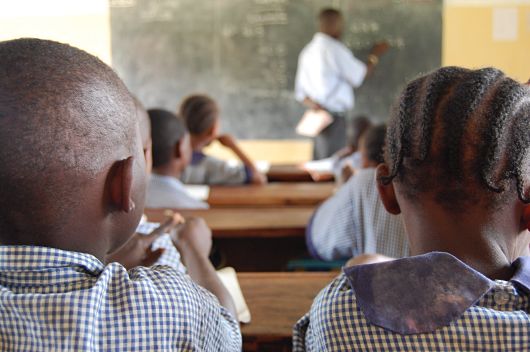
Education Numbers Surge, but Global Education Gaps RemainThe number of children across the globe attending primary school at the beginning of the 1800s: 2.3 million. This number has surged to 700 million today. But despite this gigantic increase, primary school children across the developing world still face one major problem: a global education gap between developed and developing countries.

A new Brookings Institution report details just what this problem is: a 100-year gap in the quality of education between developed and developing regions of the world. This means that the average level of education in many poor countries today is the same as the levels of education in places like Europe and North America were in 1900.

Not only is there a 100-year gap between global education in the developed world and the developing world, but the developing world also lags 85 years behind when it comes to educational attainment. It will take average-scoring students in the developing world six generations to catch up to the same scoring students in the developed world today.

Ninety percent of primary school-aged children are enrolled in school around the world – that success should not go unnoticed or without applause. At the end of World War II, only 1 million children attended primary school. In 65 years, this has increased to 7 million. This “going to scale” of education across the world is incredible. The next step, however, is catching the developing world up to the education levels the developed world enjoys today.

How did it get behind in the first place? The idea of mass schooling is available to all young people and not only those with the resources to access it became a mainstream idea in the middle of the 1800s in areas like North America and Europe. Only in 1948, almost 100 years later, with the Universal Declaration of Human Rights did this become a concept applied to children across the whole world.

Even with the large enrollment number victory, if the data is broken down in specific regions, the picture is not as pretty. In Sub-Saharan Africa, less than 80 percent of school-aged children attend school.

Another way to examine the gap is by looking at the average number of years of schooling adults have. In 1870, adults in the developed world completed an average of 2.8 years of schooling, while adults in the developing world completed under half that time – 0.5 years.

The average lagged behind, usually with adults in the developing world completing under half the years of education that their counterparts in the developing world did until 2010. For every 12 years that adults in the developed world completed on average, adults in the developing world complete an average of 6.5 years – just over half.

It is imperative that this gap is reduced and eventually banished for good. Besides the idea that morally all children deserve the opportunity to develop in order to thrive in the modern age, there are a couple of other reasons why action should be taken immediately. First, ending the 100-year gap holds the possibility for reform and improved global education. New ways of thinking about education in the developing world have the potential to be helpful to education systems in the developed world and benefit all young people.

Second, there is a skills deficit that has already started – between 2010 and 2030, 360 million people over the age of 55 will retire. At the same time, a 60 percent increase in the global labor force will come from places like Africa, India and other South Asian countries, all places in the developing world. These young people should not be affected by the global education gap, so they can seize their place in the world economy left by the well-educated retirees that came before them. If nothing is done, the 100-year gap will continue into eternity. Changes must be made to ensure this does not happen, for the sake of the world’s children and perhaps the world’s economy as well.

– Greg Baker

Sources: Brookings, BBC MG Africa
Photo: Africa Business Conference

A New Kind of Poverty due to UrbanizationUrbanization is creating a new face for poverty. People migrate to cities for the convenience of resources, proximity to jobs, and the chance to live amidst affluence. This migration, however, is not the case for those living in poverty that are pushed out of their lands in the countryside and made to urbanize. It could be for numerous reasons: a shift from agricultural to industrial sectors, a way to develop local economies by bringing more workforce into the cities or to occupy the rural lands in order to make space for more economic development.

While the goal of urbanization is to create prosperity, the opposite often occurs. Urban areas, compared to rural areas, are homes to extreme wealth disparities because the poor and wealthy are closer together. This closeness inevitably leads to severe discrimination that can influence social makeups, access to public services, or general treatment of separate economically, racially, or geographically different groups.

Urban conflict more so disrupts dense populations because it poses a greater public risk than previously in rural populations. Targeting populations based on geographical areas is also more difficult in cities where people are more mobile with their residency.

The urban poor experience a different set of challenges, mainly due to higher population densities and consequent unequal access to resources. According to The Guardian, urban hazards include low-quality infrastructure, higher risk of disease infestations, pollutants, toxicity, traffic-related injuries, diet-related illnesses due to street food and lower quality of selection, and sensitivity to poor levels in a poor economy. Hunger and malnutrition are more sensitive to economic well being and price fluctuations. The larger competition also negatively affects the share of people in poverty in urban areas versus in rural areas.

So far, 54 percent of the world lives in urban areas. This grew from a 30 percent rate in 1950. Urbanization is predicted to cause the population to rise to 66 percent in 2050. Asia and Africa will likely experience the sharpest rate increase, as their current populations are mostly rural. Today, the two countries’ urban populations are around 40 to 48 percent, but they may become 56 to 64 percent in 2050.

The global rural population is currently at three point four billion but is expected to decline to two point three billion by 2050. Largely in part of Africa and Asia’s transforming urban population in the years to come since now, they house nearly 90 percent of the world’s rural population.

– Lin Sabones

Sources: China.org.cn, The Guardian UN, UNDESA, UNFPA,
Photo: Flickr

morocco_fighting_poverty
On June 7, the UN’s Food and Agriculture Organization (FAO) held an official ceremony to recognize the successful efforts of fighting poverty in Morocco. Morocco received the FAO’s distinction for reaching the first Millennium Development Goal (MDG) of cutting extreme poverty and hunger two years ahead of schedule. 72 countries around the world have so far achieved the MDG target.

Many credit Morocco’s innovative agricultural and fishery programs with the successful poverty reductions. One program, the Green Morocco Plan, increased the country’s agricultural yield by training farmers in “direct seeding” technology. A Moroccan official explained, “These strategies have brought significant support to small farmers, forest operators and fishermen to improve their income and, consequently living standards and better manage their natural resources in a sustainable manner”

Morocco’s National Initiative of Human Development (INDH) has also contributed to the country’s declining poverty rate. Established in 2006 to help lift nearly 10 million Moroccans out of poverty, the program allocated $6 billion to anti-poverty projects. The INDH is widely regarded as a success. In 2010 UN Secretary-General Ban Ki-moon praised the program, saying that its “significant results” will benefit all Moroccan citizens, especially the poor.

The Kingdom of Morocco is not singularly focused on domestic poverty. In the 16 years since his enthronement, King Mohammed VI has shown a particular interest in sustainable development on the African continent. He has helped launch multiple joint development projects and has championed African causes at the United Nations.

The monarch’s latest trip to Africa took him to Gabon, Senegal, Guinea-Bissau and Ivory Coast, where he met with leaders and signed 35 different partnership agreements. These agreements focus on the improvement of the countries’ training, agriculture, water and energy sectors. They will help build roads, provide medicines and supply water and electricity to impoverished villages. Many hope that these measures will improve food security and encourage socioeconomic development in the countries while still respecting traditional African practices.

Some countries in the region have also expressed interest in following the lead of Morocco’s National Initiative of Human Development. Recently, Morocco partnered with Gabon to help guide the country’s new Gabonese Human Investment Strategy (SIHG).

Morocco’s support for African development programs has gained the country and its leaders widespread popularity in West and Central Africa. As shifting geopolitical and economic factors increasingly mark Africa as a major player on the world stage, Morocco’s influence in the region could force the United States and other global powers to recognize the importance of developmental assistance.

– Caitlin Harrison

Sources: North Africa Post, World Bank, Morocco World News, United Nations, Digital Journal
Photo: Green Prophet

Ghana

Once hailed as a rising star by the World Bank, Ghana has experienced significant macroeconomic challenges during the past five years that have severely undermined its social stability and resulted in fluctuating poverty levels. In 2022, the country’s inflation rate reached a record high of 54%, contributing to high public debt levels – nearly 90% of the GDP – and pushing millions into poverty. Although Ghana today has made strides in restoring stability and catalyzing growth, the pressure of high inflation has worsened poverty levels throughout the country, particularly in rural areas. State restructuring programs and humanitarian aid are both vital to providing poverty alleviation and ensuring a road of recovery for not only those suffering from poverty but for the country as a whole.   

Rural Poverty: Smallholder Farmers and Women

As of 2023, around 2.99 million Ghanaians were living in extreme poverty. Out of this number, an overwhelming 2.3 million were located in rural regions, constituting a majority of the multidimensionally poor. 

  1. Rural smallholder farmers, who produce 95% of the country’s crops, are among the poorest socioeconomic groups in Ghana. Most of these farmers reside in the northern region of Ghana and do not have access to the same infrastructure and services as urban southerners, despite being heavily dependent on agricultural yields for food security. A lack of land ownership rights also undermines the average farmer’s ability to invest in land improvements and farm expansion. Lastly, external factors such as climate change disrupt northern Ghana’s predominant practice of rain-fed agriculture, contributing to large post-harvest losses and limited food production.

Led by an unsustainable agricultural sector, northern Ghana is disparately faced with the proliferating burden of hunger and malnutrition. According to the World Food Programme, northern Ghana had the highest prevalence of food insecurity in 2020 in comparison to the other regions.  Today, chronic malnutrition and stunted growth among children under 5 affects approximately 33% to 40% of the North, despite the rest of the country reporting less than 20%. As high as 82% of North Ghanaian children are estimated to be anemic – despite the overall average being 60% across all of Ghana. 

  1. Women and girls in rural Ghana are more likely to suffer from poverty than their urban counterparts due to a lack of essential resources and opportunities. As a result of little to no formal sex education, 18% of girls in rural areas are teenage mothers as opposed to 11% in urban. Overall, girls in rural Ghana have less access to education due to social norms and traditions. Many do not complete primary or secondary education. 

Despite state efforts to strengthen women’s opportunities in the labor market, Ghanaian women still face disadvantages in comparison to men. According to the World Bank, 77% of women in 2022 were reported as occupying vulnerable jobs as opposed to 58% of men. Women are typically self-employed in the agricultural sector to maintain childcare and other domestic roles, resulting in low wages and financial exclusion.

Women and girls in rural Ghana are also subject to period poverty and lack access to affordable menstrual products. A recent increase in the state tax on feminine hygiene products has made them largely unavailable to women, especially those of lower income. In 2023, BBC reported that 13.2% of the Ghanaian minimum wage was necessary to purchase two packs of cheap sanitary pads. Per this report, Ghana has the most expensive feminine hygiene products relative to monthly income.   

Current Developments

Despite substantial economic shocks, Ghana is currently attempting to restabilize by implementing programs that target state restructuring and human development. As one of the largest gold producers in the world, Ghana has increased output from the Edikan, Chirano and Obuasi mines by an estimated 9.9% in 2023. Aiming to boost oil and gas production, the country has also sold more exploration rights to generate revenue to fund its energy transition and acquire valuable investors.  The challenge is to make sure that the wealth generated from these industries trickles down to every Ghanaian, especially to those in rural areas.

Another important method of eradicating poverty in Ghana is adopting a broad-based human development strategy to  keep Ghana on track for improving the quality and access of food across the country, for all age demographics. Organizations such as the World Food Programme (WFP) are currently working with the Ghanaian government to reduce malnutrition and improve existing food systems by adopting food and nutrition programs involving both public and private sectors. In 2023, a collaborative project between the WFP, the U.S. Agency for International Development (USAID) and the United Nations (UN) called the USAID Farmer Support Activity provided cash transfers and agricultural training valued at $7 million to 17,000 vulnerable smallholder farmers during the lean season in Ghana. In the Ashanti Region, the WFP provided 39 health workers and 44 School Health Education Programme (SHEP) teachers with basic training on malnutrition prevention, promoting balanced diets and increasing micronutrient access. Outside of organizations, state policies such as providing microcredits and financing to small businesses may serve to boost agricultural yields and improve food security for rural populations.

Looking Ahead

Over time, the development of the gold and oil industries should translate to better infrastructure and more jobs for the average Ghanaian, as well as those in rural areas. Furthermore, ongoing efforts to promote women’s empowerment and representation by groups such as UN Women Ghana should motivate more women to become leaders and entrepreneurs, championing female representation across the country. Despite these advancements, Ghana is in great need of addressing other motivators for poverty – including climate change, environmental protection, and sanitation management. Although many challenges may currently take precedence over human development, Ghana may only be able to resolve both external and internal disparities by tackling policies to eradicate extreme poverty in Ghana once and for all.

– Maria Caluag, Moon Jung Kim 

Photo: Flickr

extreme_poverty
The end to extreme poverty will not occur solely as a result of charities, businesses or governments. Defeating extreme poverty entails changing the rules, systems and structures that are designed to keep people poor. Change must occur through a country’s specific policies and practices that contribute to keeping people in extreme poverty.

Countries should ensure that governments, businesses and individuals act to establish alignment in the vested interests of the world’s poor. If executed progressively and strategically, such systems, structures, policies and processes can make a change. Five countries have made a boisterous and public commitment to ending poverty – Brazil, Colombia, Malawi, the United Kingdom and the United States.

Brazil – The Bolsa Familia Program

Efforts to end extreme poverty in Brazil originated from Bolsa Familia. The program directly transfers cash to pre-designated households deemed impoverished. The decisions about allocation are based on assessments of the depth of poverty rather than household composition. Over 45 million people are currently enrolled in the program. As a direct result of Bolsa Familia, the number of those living in extreme poverty in Brazil has dropped from 20.4 million to 11.9 million.

Colombia – Oxford Poverty and Human Development Initiative

In 2010, Colombia created a poverty reduction plan and multidimensional solution to address poverty. Their national development plan has three pillars: employment, poverty reduction and security. Due to a lack of successful poverty reduction results by the original program, adoption of a new poverty reduction strategy called the GOC occurred. According to the Oxford Poverty and Human Development Initiative, the strategy outlines the poverty index designed to monitor and measure different indicators of multidimensional poverty. This initiative will reflect the multiple deprivations that people suffer by identifying disparities across health, education and living standards. It will indicate the number of people who are poor on a multidimensional level and assist in allocating funds and determining efforts to eliminate extreme poverty.

Malawi – Malawi Growth and Development Strategy and the Farm Input Subsidy Programme

In 2002, the Malawian government launched the Malawi Poverty Reduction Strategy (MPRS), which had the express purpose of achieving “sustainable poverty reduction through empowerment of the poor.” In 2005, the MPRS was reorganized as the Malawi Growth and Development Strategy (MGDS). Currently, the MGDS comprises the overarching policy framework for social and economic development to reduce extreme poverty. In 2005, the Farm Input Subsidy Programme was introduced as a measure to increase agricultural production. In an effort to ensure food security, the government provides subsidized agricultural inputs to farmers with smaller land holdings. This has matured into agricultural policy. An estimated 50 percent of the Ministry of Agriculture’s budget is spent on methods to reduce expenditures of research and extension. The subsidy program is now a firmly established pillar of Malawian agricultural policy.

The United Kingdom – The Department for International Development

In the United Kingdom, The Department for International Development (DFID) leads national efforts to end extreme poverty. Their primary areas of focus are creating jobs, empowering girls and women and saving lives. The DFID honors the international commitments and purpose to achieve the United Nations Millennium Development Goals. Their objectives are achieved through the effective improvement of governmental transparency, openness and value of money and policy development on economic growth and wealth creation.

The United States – USAID

In the United States, the USAID is the leading agency that works to end extreme global poverty. Their philosophy suggests an interconnected world in which instability anywhere around the world can impact us domestically. Thus, the focus is on military collaboration in active conflicts, efforts to stabilize countries and the building of responsive local governance. Essentially, the main objective is to utilize the transition period between conflict and long-term development by investing in agriculture, health systems and democratic institutions.

In order to end global extreme poverty, we must invest in common solutions. If all countries make the pledge commitment to end 0.7 percent of poverty, we can end extreme poverty by 2030.

– Erika Wright

Sources: Global Citizen, Global Humanitarian Assistance, Global Poverty Project, UK GOV Rural Poverty Portal, World Bank USAID
Photo: The Atlantic

World Bank Funding
In an effort to improve conditions for the Lao governments’ maternal and health services, The World Bank Funding has gone to Lao People’s Democratic Republic’s (PDR) Health Governance and Nutrition Development Project on June 23. The International Development Association gave $26.4 million to Lao PDR with the approval of the World Bank’s Board of Executive Directors. The World Bank expects the fund to affect 1 million women and children in the next 5 years.

Free maternal health was initiated in Lao PDR to open financial gateways. Around 60% of women are not inclined to have more children. Now, with the project’s increase in funding, the number of women receiving family planning, care visits, and birth attendants is likely to increase.

Women need to be educated and consult healthcare workers in order to protect their bodies from disease and diminish the probability of birth mortality or miscarriages. With Lao PDR’s Health Governance and Nutrition Development Project funded by World Bank, health care services will be made more available and survival rates are expected to excel.

A report by Lancet Commission on Women and Health has tracked the consequences of women’s low socioeconomic status. With the input of social science professionals, program managers, policy innovators and advocates, connections between the role of women in systems, homes and communities have been founded to be most beneficial when they are given value and proper compensation. Women create sustainable nations when they are inclined to contribute to the well-being of all.

Additionally, the development of nutritional strategies is underway. Almost half of the children in the country, under the age of 5, are underweight. The Health Governance and Nutrition Development Project is determined to utilize its funding in services to children under the age of 14 by providing adequate nutrition and target infant feeding practices to improve behaviors in regards to nutritional intake.

The country’s economy has experienced vast progress thanks to foreign aid. In addition to $26.4 million, $11.6 million was also implemented into Lao PDR’s Poverty Reduction Fund (PRF) on June 23.

In financing PRF, a program started by Lao PDR in 2002, about 200 particular plans are in place to enhance education and health. The additional funding approved by The Word Bank helps prolong nutritional pilot projects and governmental sanitation programs.

PRF’s overall goal is to improve mobility and the use of public services among poverty-stricken populations in Lao PDR. The further development of roads and water resources is also a focus.

The poverty rates for Lao PDR fell from 46% in 1992 to 27.6% in 2008. This is a drastic feat towards satisfying the millennium goal of halving poverty by 2015. Life expectancy has also increased by 19 years. Since October 2011, PRF has improved conditions for 450 thousand Lao PDR residents. PRF has also improved the use of healthcare and safe water systems.

Following the millennium goals according to the 8th draft of the National Socio-Economic Development Plan (NSEDP) will hopefully result in the improvement of the country’s status by 2020.

– Katie Groe

Sources: World Bank 1, World Bank 2 WHO, UNDP Impatient Optimist
Photo: Swiss Cooperation