• Link to X
  • Link to Facebook
  • Link to Instagram
  • Link to TikTok
  • Link to Youtube
  • About
    • About Us
      • President
      • Board of Directors
      • Board of Advisors
      • Financials
      • Our Methodology
      • Success Tracker
      • Contact
  • Act Now
    • 30 Ways to Help
      • Email Congress
      • Call Congress
      • Volunteer
      • Courses & Certificates
      • Be a Donor
    • Internships
      • In-Office Internships
      • Remote Internships
    • Legislation
      • Politics 101
  • The Blog
  • The Podcast
  • Magazine
  • Donate
  • Click to open the search input field Click to open the search input field Search
  • Menu Menu

Archive for category: Development

Information and stories on development news.

Aid Effectiveness & Reform, Children, Development, Education, Global Health, Global Poverty, United Nations

What Have the Millennium Development Goals Achieved?

What Have the Millennium Development Goals Achieved?

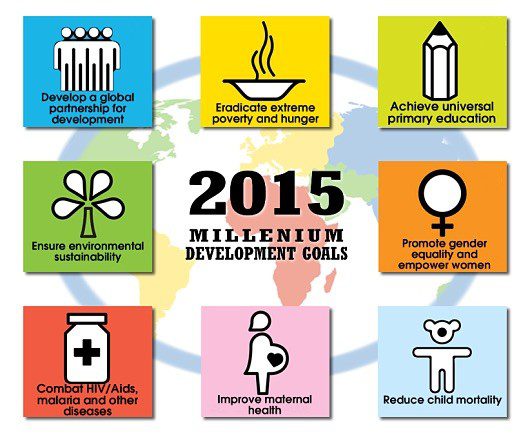
What Have the Millennium Development Goals Achieved? In 2000, the United Nations set out on a clearly defined mission to end global poverty by means of tackling eight core areas of need. Now we are looking back, 15 years later, and seeing how successful the UN was in meeting their goals-and where the new Sustainability Goals will need to take up the slack.

The Millennium Development Goals were designed as a framework for developing impoverished nations by addressing the most critical needs of the society, like reliable food sources, access to education, and adequate health care.
Each goal had specific targets which the United Nations hoped they would meet by 2015. Some goals had more success than others.

The UN’s goal of halving global poverty was met with resounding success, as the number of people living on less than one dollar and 25 cents a day dropped from one point nine billion in 1990, to 836 million in 2015. An estimated 14 percent of the global population are living in extreme poverty today, down from nearly half in 1990.

The reduction in the proportion of undernourished people globally narrowly missed its target, coming within two percent of the 50 percent reduction goal. Though narrowly missing their target, given the exponential human population growth over the last three two decades, it is still a considerable success.

The goals suffered two more near misses in their attempts to increase educational opportunities for all, including establishing gender equality in schools. An estimated 10 percent of children are not receiving any formal education, and only about two -thirds of developing countries have achieved gender equality in the classroom.

Goals four and five of the Millennium Goals, which addressed child and maternal mortality, respectively, both failed to meet their targets. While both the mortality rate of children under five and maternal deaths were reduced by over half, both failed to reach the two-thirds reduction target.

Goal six, stop and reverse the spread of HIV/AIDs, malaria, and other diseases was similarly not met in the given 15 year time frame. Although the rate of new HIV/AIDS infections has fallen by around 40 percent, an estimated two point one million people are still being infected annually. The fight against malaria and other diseases prevalent in developing areas has seen more success however, with an estimated six point two million malaria deaths averted between 2000 and 2015.

The final two goals of the 2000 Millennium Development Goals tackled strengthening infrastructure, sustainable development, and international partnership. While both goals are still on-going endeavors, over the last decade, two point six billion people have gained access to improved drinking water and official development assistance to developing nations has risen by nearly seven percent.

Overall, the United Nations has experienced great success in their struggle to address the needs of the poor around the world, but they are the first to admit that more work is needed. In the official Millennium Development Goals report, released earlier this month, Wu Hongbo Under-Secretary-General for Economic and Social Affairs admitted that success has been uneven across developing nations. “Millions of people are being left behind, especially the poorest and those disadvantaged because of their sex, age, disability, ethnicity or geographic location. Targeted efforts will be needed to reach the most vulnerable people,” said Hongbo.

The Quick and Dirty of Hits and Misses:
Goal #1: Target goal met and exceeded
Goal #2: Target goal nearly achieved
Goal #3: Not met
Goal #4: Not met
Goal #5: Not met
Goal #6: Not met
Goal #7: Target achieved ahead of schedule
Goal #8: No target specified, on-going action

The Sustainable Development Goals of 2015 will pick up where the Millennium Goals left off and continue to guide the United Nations as they work to eradicate global poverty.

– Gina Lehner

Sources: The Guardian, UN
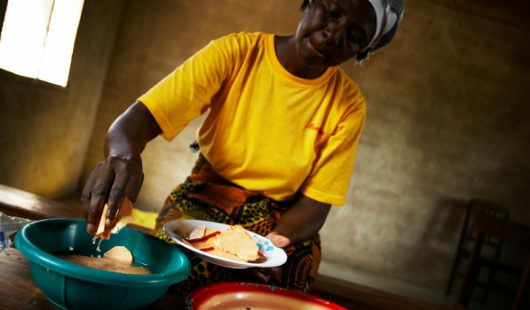
Photo: Global Classrooms

July 9, 2015
https://borgenproject.org/wp-content/uploads/borgen-project-logo.svg 0 0 Borgen Project https://borgenproject.org/wp-content/uploads/borgen-project-logo.svg Borgen Project2015-07-09 15:02:462020-07-10 12:53:34What Have the Millennium Development Goals Achieved?
Development, Global Poverty, Health, Hunger

Global Hunger Affects Fewer than 800 Million People

global_hunger

Currently, the number of people who face hunger is around 750 million people. The number of people living in hunger has been reduced by about 167 million people in the past 10 years. In the past year alone, the number of hungry people dropped by 10 million people.

This is incredible progress!

One of the main focuses of the Millennium Development Goals is to eradicate global hunger. Global hunger has dropped considerably, and this is a moment to recognize all that has been accomplished.

In South America, less than five percent of the population faces hunger. The number of hungry people has dropped by 50% in the past 25 years. Central and South East Asia, as well as Northern Africa, have seen a drop in the number of hungry individuals.

However, 44 percent of countries did not accomplish the Millennium Development Goal of reducing hunger by 50 percent in the last 15 years. South Asia still has 281 million people who suffer from hunger. In Sub-Saharan Africa, 23 percent of people do not get enough food.

Political instability in Sub-Saharan Africa may contribute to why hunger is still a problem. Twenty-four countries in Africa are currently experiencing food crises. This number is up from the 12 countries who were experiencing food crises in 1990.

Recently, bountiful food harvests and low oil prices have made the price of food drop considerably. These factors could have played a role in why hunger has been dropping.

Beyond economic growth, countries also have to focus on inclusive growth. For example, social investments, such as cash transfer programs, employment projects, food distribution schemes, healthcare and education could all reduce the number of hungry people.

Food is a basic necessity. It is extraordinary news that global hunger has dropped below 800 million. We need to continue to prioritize eradicating world hunger. If we continue progressing in this way, it is conceivable that world hunger could be eliminated.

– Ella Cady

Sources: Reuters, Deseret News,
Photo: Flickr

July 9, 2015
https://borgenproject.org/wp-content/uploads/borgen-project-logo.svg 0 0 Borgen Project https://borgenproject.org/wp-content/uploads/borgen-project-logo.svg Borgen Project2015-07-09 11:47:082020-07-10 12:54:55Global Hunger Affects Fewer than 800 Million People
Children, Development, Education, Global Poverty

The Youth of Yemen Promote Peace

The Youth of Yemen Promoting Peace

Yemen has been through a whole lot in the past few years. While political unrest has plagued the nation for years, in the recent months, the country has been dealing with ongoing airstrikes.

“Some days it’s calm, and some days it’s not. It’s so unpredictable. Right now, we’re on day four with no electricity. When it does come on, it will only be one for an hour,” Hana reports. At 26-year-old, Hana is a youth assistant project manager for the Foundation for Peace project.

The project was founded in 2012 by the Cooperative for Assistance and Relief Everywhere (CARE), with the goal of teaching members of the community to effectively prevent and resolve conflicts. They focus on women and youth that typically do not have the opportunity to be influential or participate in dialogue.

So far, 560 youth, women, and local community leaders have received training. In addition, CARE has provided 15 water tanks for poor neighborhoods.

Many people in the country do not have nearby access to water sources and have to walk for miles every day. The limited amount of water sometimes results in clashes within communities.

In the past, wealthy business owners and merchants have paid for trucks to bring water to the poor. However, the trucks wasted a lot of water since they did not offer an effective method of collection. To rectify this inefficiency, the water tanks that CARE installed are permanent. They allow for people to obtain water with ease and less conflict.

Airstrikes and a naval blockade, however, have been preventing essential supplies, such as fuel and food, from reaching Yemen. Because of the lack of fuel, prices have soared and the cost to ride the bus has doubled. Service has also become undependable and people have switched to riding bikes for transportation.

The closure of many Yemeni schools poses another issue. Yemen has a very large population of young people and the majority of them are unemployed and out of school. This leaves them susceptible to recruitment into dangerous militant groups.

Yet, Yemen’s youth are finding ways to stay out of trouble and bring about dramatic change. For example, they initiate groups that spread awareness about issues like women’s rights. Women are fighting for the right to ride bicycles, which is traditionally not allowed in Yemen.

They turn destroyed buildings and windows into art and paint messages of peace all over their cities. Young people are passionate about promoting peace and developing their nation.

The United Nations Development Program gives out a yearly National Award for the Best Innovative Small Business Plan to Yemeni youth. Young people are able to submit smart business ideas for a chance to make their ideas into an entrepreneurship opportunity.

The goal of the award is to kick start the motivation and genius of Yemen’s youth, as well as generate new opportunities for employment. With the award, young people start their own businesses to contribute to their community and the nation’s developing economy.

The youth’s ability to take their lives and future into their own hands also grants them a hearty amount of satisfaction and self-esteem. There are five winners chosen who each are given $20,000 and support from the UNDP while executing their idea.

At the moment, Yemen receives funding from organizations like CARE. But even without aid in the future, the youth hope to keep inspiring progress and peace.

– Lillian Sickler

Sources: CARE, Yemen Innovation And Creativity Award, The Globalist
Photo: Care

July 9, 2015
https://borgenproject.org/wp-content/uploads/borgen-project-logo.svg 0 0 Borgen Project https://borgenproject.org/wp-content/uploads/borgen-project-logo.svg Borgen Project2015-07-09 10:25:302024-05-24 23:48:54The Youth of Yemen Promote Peace
Aid, Development, Global Poverty

How Foreign Aid Wins Hearts, Reduces Extremism

foreign_aid

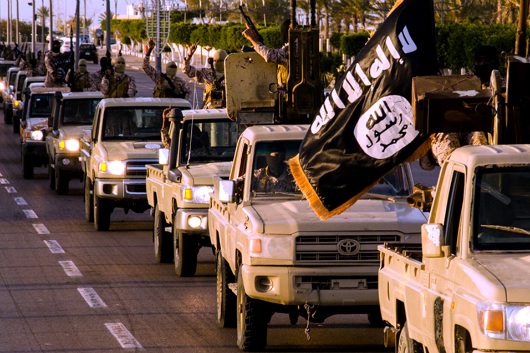
On June 2, 2015, Iraqi Prime Minister Heider Al-Abadi spoke to an international coalition of over 20 countries in Paris in a bid to refresh the coalition’s strategy on combating violent extremists such as the self-proclaimed Islamic State, or ISIS.

The Iraqi leader requested more foreign aid, specifically intelligence and weapons, and blamed Western nations for not doing enough to stop foreign fighters from joining ISIS.

The next day, at a United Nations forum discussing the role of the media in combating terrorism, U.N. Under-Secretary-General for Political Affairs, Jeffrey Feltman said, “Groups like ISIS succeed because they offer young people opportunities to engage with their peers and provide a space where they can bond over their grievances, hopes and deeply held desire for a world that is just and fair.”

The fighting that has raged throughout Iraq has left many families desolute and has taken a tremendous toll on children. According to the UNICEF, violations against children has increased by 75% over the last year. This includes abduction and the recruitment of child soldiers.

Missing amidst the talks of military and media foreign aid strategies to combat ISIS is the lack of humanitarian aid investments for displaced Iraqis. U.N. officials warn that millions of Iraqis caught between ISIS and the Iraqi Army could be without food or shelter over the next six months unless $497 million is raised in emergency funds.

As if the current demands are not hard-pressing, on June 23, the World Health Organization has asked for an additional $60 million to prevent 77 healthcare clinics from shutting down. The lack of water and soaring temperatures have led to a rise in dehydration among displaced Iraqis. With desperation mounting, Iraqis are looking for alternatives to extremist groups to find support. However, these alternatives often do not exist.

The National Bureau of Economic Research (NBER) has shown that when the Iraqi government provides service provisions across the socioeconomic spectrum, there is a reduction in violent insurgency. According to the NBER, a 10% increase in labor-related spending generated a 15% to 20% decline in labor-intensive violence in Iraq. As the violence decreases, social and economic stability ensues.

Unfortunately, according to the Organization for Economic Co-operation and Development, official development assistance to the poorest countries fell by 8% between 2013 and 2014, excluding debt relief nations where the figures are higher at 16%. Iraq oversaw a spike in violence over that same period of time.

Providing intelligence and weapons may help to slow down ISIS. However, continued foreign aid investments into social and economic programs in Iraq and Syria are needed to ultimately reduce global threats.

If the international community does not supply the necessary foreign aid to Iraq, if people are not fed and do not have their basic health needs met, they will have no choice but to turn to ISIS, a group ready to supply them with work and food. This outcome would be catastrophic for the Iraqi government as well as the United States and our allies.

– Adnan Khalid

Sources: National Bureau of Economic Research 1, National Bureau of Economic Research 2, The Guardian, The Organization for Economic Co-operation and Development, UN 1, UN 2, UNICEF, Wall Street Journal
Photo: NY Post

July 9, 2015
https://borgenproject.org/wp-content/uploads/borgen-project-logo.svg 0 0 Borgen Project https://borgenproject.org/wp-content/uploads/borgen-project-logo.svg Borgen Project2015-07-09 08:03:522024-12-13 17:51:44How Foreign Aid Wins Hearts, Reduces Extremism
Activism, Development, Global Poverty

The EU’s Commitment to Poverty Eradication

poverty_eradication
On June 3-4, 2015, the European Development Days forum took place in Brussels. The focus of this forum was global development and cooperation. Across the courtyard of the European Parliament, at the scene of the forum, was the European Year for Development slogan that read “Our world. Our dignity. Our future.”

During the opening address, President of Luxembourg Xavier Bettel encouraged political leaders and citizens alike to play their part in the development of nations. He made the astute observation that “development co-operation is not a luxury” and urged listeners to act fast.

Indeed, there is no time like the present. The European Commission’s President Jean-Claude Juncker said that the 2015 European Development Days were occurring at a critical time for the future of the world. He argued that for the international community, it is a “now or never” moment when action must be taken.

At the forum, over 500 speakers, experts, practitioners and activists debated over which areas of development deserve the most attention in the upcoming year. Participants from over 140 countries representing 1,200 organizations worked together to create unified goals in the global development arena.

International cooperation and collaboration is necessary now more than ever before. Looking ahead at the International Conference on Financing for Development in July, the U.N. conference on the Post-2015 Sustainable Development Goals in September and the Climate Change Conference in December, actors need to begin focusing on issue-alignment.

MEP Linda McAvan makes a crucial distinction. She reminds us all that development is more than just wealthy countries giving donations to those in need. We must achieve a worldwide commitment to collaboratively work to eradicate poverty, tackling the issue at its deepest roots.

As the world’s leading donor of development aid, the European Union (EU) must set the international standard. It is important to remember, however, that it is a two-way street. MEP Charles Goernes points out that developing nations must “take ownership” of their own development, with support from donor countries.

Goernes hopes that the chaos of the Mediterranean migrant crisis has created a sense of urgency for Europe to play a more active role in global development. The problem has become almost impossible to ignore. An ever-increasing number of lives have been lost because of international development disparity.

Goal 8 of the proposed Post-2015 Agenda accordingly targets the protection and safety of migrants. In order to best tackle the problem, the EU will need to closely examine the causes of the migrant crisis. At the core of this international crisis lies the overwhelming need for developmental aid in many non-European countries.

By more efficiently addressing the issue of developmental disparity across borders, the global fight against poverty will be greatly advanced. The year 2015 could very well be pivotal for global development and wealth disparity. Cooperation, focus and commitment from the world’s most capable could bring groundbreaking improvements for the world’s most deprived. For now, the beginnings of development in poorer nations signify a step in the right direction toward poverty eradication.

– Sarah Bernard

Sources: The Irish Times, The Jakarta Post
Photo: EUROPA

July 8, 2015
https://borgenproject.org/wp-content/uploads/borgen-project-logo.svg 0 0 Borgen Project https://borgenproject.org/wp-content/uploads/borgen-project-logo.svg Borgen Project2015-07-08 08:13:202020-07-10 20:05:03The EU’s Commitment to Poverty Eradication
Development, Water

Restoration of Ancient Canals Creates Hope for Lima’s Water Crisis

Lima's-Water-Crisis-Ancient-Canals
In an effort to alleviate its water problems, Peruvian hydrologists have been researching the most effective ways to provide Lima with a steady flow of water throughout the course of the year. However, it turns out that the most cost-effective solution is rooted in the past, not the future.

Researchers have found a solution to dealing with Lima’s water crisis in a network of ancient canals in the Andes mountains, dated as early as 500 AD to the pre-Inca era. The Peruvian capital is seeking to restore the stone canals, or amunas, as they are called locally, by regrouting them. Hydrologists have studied other methods for retaining the water supply during the dry season but found that this would be the cheapest option.

Rather than requiring new infrastructure, this project is cost-effective because it only requires improvements to the structures already in place. It is also beneficial that the project is non-disruptive to the environment.

According to a report in New Scientist, when used in the past the canals used to capture water from rivers in the Andes Mountains during the rainy season to slowly seep through rocks to flow into springs closer to the ground later in the year during the city’s dry season, which can last over half the year. The delay in water flow allows for gradual distribution of the water flow much later in the year.

However, the canals have not been maintained and generally just flow water directly downhill in a matter of hours. Hydrologists have noticed that regrouting the canals with cement would allow them to function as intended, potentially delaying water for weeks or months. This water flow, coming from over 3,500 meters above sea level, can provide the city with a more consistent water supply during its dry season.

Sedapal, the city’s water company, discovered that this project would be the most cost-effective way to provide a more steady water supply from the Lima population of almost 10 million people. In order to fund the $23 million project, the company plans to use one percent of its water charges for the next five years.

While Lima is struck with drought during its dry season, its wet season is often comprised of floods and landslips from the Chillón, Lurín and Rímac rivers. By holding back water through this system for the dry season, these problems can also be avoided.

While research is still being conducted, Bert De Bièvre of CONDESAN, a Lima-based nongovernmental organization that is spearheading the restoration, believes that 50 of the canals can be revived, mostly flowing from the Chillón River, according to the New Scientist report.

De Biévre’s work with American water specialists has indicated that this project has the potential to increase the water supply by 26 million cubic meters and decrease deficit during the dry season by 60%.

– Arin Kerstein

Sources: The Guardian, New Scientist
Photo: PRI

July 8, 2015
https://borgenproject.org/wp-content/uploads/borgen-project-logo.svg 0 0 Borgen Project https://borgenproject.org/wp-content/uploads/borgen-project-logo.svg Borgen Project2015-07-08 07:06:192020-07-11 06:24:51Restoration of Ancient Canals Creates Hope for Lima’s Water Crisis
Development, Water

Israel: The Developing World’s Water Technology Savior?

water_technology
Many say that the next major war will not be for territory but for water. The precious liquid is needed for humankind’s very existence, yet it is becoming scarcer and scarcer as the world’s population continues to grow.

A tiny, arid country surrounded by deserts has been fighting, literally at times, for water since its inception in 1948. Israel is one of the world’s leaders in water conservation technology, simply because it has to be in order to survive. It has only gotten harder recently, with prolonged droughts and increasing population adding to the problem.

As a result of the Israel‘s harsh climate, it has developed world-class water technology, and this fact has now been recognized by the World Bank. Because of Israel’s advanced knowledge of water technology, they are in a position to help other countries with their own water problems.

Israel’s Ministry of Economy has given $500,000 to the World Bank Group’s Water Global Practice. The money will be used to increase and enhance water knowledge in developing countries. The agreement also includes sharing ideas, best practices and water industry expertise with developing countries.

Also included in the agreement are study tours, that are “expected to be held in Israel in the next two years and will include officials from developing countries, as well as World Bank Group staff. In addition, the agreement will include an analytical profile study of Israel’s experience in managing water and transferring of global expertise on water security.”

So what exactly does Israel bring to the table when it comes to water technology, and how can it help the developing world? Their advanced drip irrigation systems, for one. The Israeli inventor Rafi Mehudar has been developing drip irrigation systems for 40 years. Netafim is the company he has been working with, and both are now big players in the water tech industry – their drips reduce water usage by 90%, raise crop productivity and are being used in India, Brazil, China and Africa.

The one issue that comes with a large corporation making technology like this is that Netafim cannot sell to a family or single farmer – it is just not feasible, with a drip irrigation system costing $500. This is almost half of the average income an Indian made in 2014 of $1,140. This is where NGOs as well as governments come into the picture. The government in India is paying for half of every drip irrigation system bought from either Netafim or one of the company’s competitors.

Netafim relies on NGOs to organize farmers in Africa into groups to help with the costs. Often single farmers only have plots large enough to feed their family, so selling to a single farmer will not work.

Because of this, Israel sits on a fence edge when it comes to helping the global poor. While they have made the contribution to the World Bank Group, their immensely useful water technology is still only a business, and they rely on others to make it affordable for the developing world. Time will tell whether their technology is a sustainable help for countries with water issues of their own.

– Greg Baker

Sources: The Atlantic, World Bank Washington Post, Times of Israel
Photo: greenprophet

July 7, 2015
https://borgenproject.org/wp-content/uploads/borgen-project-logo.svg 0 0 Borgen Project https://borgenproject.org/wp-content/uploads/borgen-project-logo.svg Borgen Project2015-07-07 06:57:072024-12-13 17:51:39Israel: The Developing World’s Water Technology Savior?
Children, Development, Global Poverty

New Formulation of HIV Treatment to Save More Children’s Lives

New Formulation of HIV Treatment Will Save More Children’s Lives-TBP

The United States Food and Drug Administration has granted approval for a new form of antiretroviral treatment for HIV that can be mixed into children’s food. This will make it easier for children living with HIV to receive life-saving medicine.

This new formulation of HIV treatment will replace unpleasant and bad-tasting medicines that were once the only treatments available. This breakthrough in medicine will make it easier for children living with HIV to not only consistently take the medicine, but to stay healthy.

According to the Executive Director of UNAIDS, Michel Sidibé, only 24% of children living with HIV have access to antiretroviral medicines.

CIPLA is an Indian generic medicines manufacturer that produces the new oral pellets. An attractive quality about these oral pellets is that they are heat-stable. This is necessary in countries where temperatures frequently fluctuate or remain consistently high.

In these oral pellets is an antiretroviral mixture of lopinavir and ritonavir, necessary prescription drugs when treating HIV in patients that are 3 years of age and younger.

This treatment is predicted to be successful with young children because the oral pellets can be mixed into their food. Many HIV treatments have an unpleasant taste, which deters children from consistently taking their medicine.

Craig McClure, UNICEF’s chief of HIV/AIDS section, says that “This new formulation is a step in the right direction towards saving more lives of children living with HIV. We expect it to greatly improve treatment access for many more children and support UNICEF’s equity-focused programming aimed at reaching the most disadvantaged children throughout the world.”

HIV infection progresses rapidly in children due to their weak immune systems. In highly impacted countries, HIV is a main contributor to child morbidity and mortality, as “Without treatment, one in three children who become infected with HIV will die before their first birthday. Half will die before their second birthday.”

The World Health Organization (WHO) recommends an early initiation of antiretroviral treatment in children infected with HIV to significantly reduce the risk of death.

However, many countries have not been able to implement the WHO’s recommendation because they do not have an appropriate, heat-stable pediatric treatment. “Despite global efforts to accelerate access to HIV pediatric care and treatment, fewer than 800,000 of the 3.2 million children living with HIV worldwide had access to antiretroviral medicines in 2013.”

This can all change with the introduction of these oral pellets.

– Kerri Szulak

Sources: Pulse, UNAIDS,
Photo: Caribbean News

July 6, 2015
https://borgenproject.org/wp-content/uploads/borgen-project-logo.svg 0 0 Borgen Project https://borgenproject.org/wp-content/uploads/borgen-project-logo.svg Borgen Project2015-07-06 10:35:062024-12-13 17:51:38New Formulation of HIV Treatment to Save More Children’s Lives
Children, Development, Global Poverty

Millions of Births Have Never Been Registered

unregistered_births_developing_countries
What if you did not have a birth certificate, driver’s license, passport or health insurance card? There is no way of proving who you are. This is the reality for some children in developing countries.

Millions of people, mostly in the developing world, were not officially registered when they were born. In wealthy countries like the U.S., almost every birth is registered upon arrival with a government agency and documented with a birth certificate.

But in much of Africa and Asia, documentation only happened for a fraction of newborns. And living as an undocumented person is a lifelong problem. You cannot obtain a driver’s license, passport or a health insurance card.

Kerry Neal, a child protection specialist with UNICEF, explains, “A birth certificate is the document from which all others spring. Without one, it can be hard to get into school, get exam certificates, get a passport or even a SIM card for your phone in some countries. You often need to show proof of identity and citizenship to get medical and social services.”

Without proper documentation, children cannot prove their age. This causes children more likely to be trafficked, conscripted or forced to work or marry while underage.

Births should also be registered because governments need to know how many people are being born where in order to plan for services such as schools, hospitals and roads. Birth registrations are the best way to track demographics.

This information piqued the interest of President Obama.

“Earlier in June, President Obama signed the Girls Count Act, which authorizes the Department of State and the U.S. Agency for International Development to promote birth registration systems around the world.”

The issue of birth registrations has also been getting increasing attention from UNICEF. In December 2013, UNICEF published groundbreaking reports.

The reports estimated that some 230 million children under the age of five, one out of three children worldwide, never had their birth registered.

The reasons for the million of births never registered are unknown. Some parents in the developing world may not have known about the process, found it too difficult, too expensive or a combination of all these reasons.

Often, registration offices are only found in cities. Many rural families cannot afford to take time off of work, and to spend the money required for the trip. Statistically, children in urban areas have higher registration rates than those living in rural areas.

Parents may also hold religious views that do not support government registration of children. In some areas of the developing world, there may not even be a government system available for registering the births.

For example, the UNICEF report found that in war ravaged Somalia and Liberia, fewer than five percent of births are registered.

Without proper documentation, some children do not exist. This leads to a life full of problems, including lack of schooling, underage trafficking and inability to apply for a job.

Lack of documentation is negatively affecting the developing world. With the help of the Girls Count Act, future generations of children hold a chance to be registered, and to live their life with proper documentation.

– Kerri Szulak

Sources: Take Part, UNICEF
Photo: Save the Children

July 6, 2015
https://borgenproject.org/wp-content/uploads/borgen-project-logo.svg 0 0 Borgen Project https://borgenproject.org/wp-content/uploads/borgen-project-logo.svg Borgen Project2015-07-06 08:58:572024-05-27 09:25:39Millions of Births Have Never Been Registered
Developing Countries, Development, Global Poverty

Tackling Energy Poverty in Rural Pakistan

energy_poverty
Each day, more of the world’s population gains access to electricity. Economic development, urbanization and aid programs have all helped increase global energy access. But 1.3 billion people still have no access to electricity, meaning that 18 percent of the world’s population is living in “energy poverty.” 97% of those living without electricity are located in either Sub-Saharan Africa or developing areas of Asia.

Electricity is vital for maintaining a clean water supply, sanitation systems and effective healthcare. It is also necessary for reliable lighting and heating, mechanical power, transportation and communication. It is crucial to a country’s economic development and its peoples’ well-being.

In Pakistan, only 67% of the population has access to electricity. In rural areas, this percentage dips even lower. However, the Sarhad Rural Support Programme (SRSP) is working to bring electricity to those living in rural Pakistan.

SRSP, a nonprofit founded in 1989, operates in the province of Khyber Pakhtunkhwa and the Federally Administered Tribal Areas, or FATA. The organization aims to empower communities, support economic and livelihood development, and provide humanitarian aid when necessary. Their overall goals are to reduce poverty levels and improve the quality of life in these regions. They have assisted in many areas, from providing relief after natural disasters to improving drinking water quality to building roads.

SRSP is making great strides in helping those in Khyber Pakhtunkhwa access electricity. They have been primarily working in the remote villages of the Hindu Kush mountains. Life in these villages is difficult — the area is prone to earthquakes and flooding and has been the site of many violent conflicts. However, the very mountains that isolate these villages have provided a source of energy for the people.

SRSP uses micro-hydro schemes powered by the glacier meltwater rivers that flow down the mountains to provide a sustainable source of energy. Micro-hydro schemes are able to provide electricity to whole communities while making very little impact on the environment. Since 2004, SRSP has built 189 micro-hydro schemes, bringing electricity to approximately 365,000 people. Over the next two years, the organization aims to reach 300,000 more people.

Having electricity has dramatically improved the quality of life for these villagers. Businesses can expand, communication is much easier, and students are able to study after dark and attain a better education. SRSP earned the 2015 Ashden International Award for Increasing Energy Access for their work in Khyber Pakhtunkhwa.

In today’s world, electricity is necessary for any nation to develop, and SRSP’s sustainable practices can help Pakistan to do so without harming the environment. Other regions in need of energy access, such as parts of Sub-Saharan Africa, could benefit from such systems. The model of using a region’s natural resources, from water to sunlight to wind, to provide power could work in other “energy poor” areas of the world. The methods used by SRSP prove that sustainable sources of energy can be hugely beneficial for expanding energy access while preserving a region’s natural ecosystems.

– Jane Harkness

Sources: Ashden, The Express Tribune, The Guardian, International Energy Agency, International Energy Agency 2, Sarhad Rural Support Programme, Sarhad Rural Support Programme 2
Photo: Sarhad Rural Support Programme

July 6, 2015
https://borgenproject.org/wp-content/uploads/borgen-project-logo.svg 0 0 Borgen Project https://borgenproject.org/wp-content/uploads/borgen-project-logo.svg Borgen Project2015-07-06 07:31:052024-06-11 02:52:15Tackling Energy Poverty in Rural Pakistan
Page 132 of 163«‹130131132133134›»

Get Smarter

  • Global Poverty 101
  • Global Poverty… The Good News
  • Global Poverty & U.S. Jobs
  • Global Poverty and National Security
  • Innovative Solutions to Poverty
  • Global Poverty & Aid FAQ’s
Search Search

Take Action

  • Call Congress
  • Email Congress
  • Donate
  • 30 Ways to Help
  • Volunteer Ops
  • Internships
  • Courses & Certificates
  • The Podcast
Borgen Project

“The Borgen Project is an incredible nonprofit organization that is addressing poverty and hunger and working towards ending them.”

-The Huffington Post

Inside The Borgen Project

  • Contact
  • About
  • Financials
  • President
  • Board of Directors
  • Board of Advisors

International Links

  • UK Email Parliament
  • UK Donate
  • Canada Email Parliament

Get Smarter

  • Global Poverty 101
  • Global Poverty… The Good News
  • Global Poverty & U.S. Jobs
  • Global Poverty and National Security
  • Innovative Solutions to Poverty
  • Global Poverty & Aid FAQ’s

Ways to Help

  • Call Congress
  • Email Congress
  • Donate
  • 30 Ways to Help
  • Volunteer Ops
  • Internships
  • Courses & Certificates
  • The Podcast
Scroll to top Scroll to top Scroll to top