• Link to X
  • Link to Facebook
  • Link to Instagram
  • Link to TikTok
  • Link to Youtube
  • About
    • About Us
      • President
      • Board of Directors
      • Board of Advisors
      • Financials
      • Our Methodology
      • Success Tracker
      • Contact
  • Act Now
    • 30 Ways to Help
      • Email Congress
      • Call Congress
      • Volunteer
      • Courses & Certificates
      • Be a Donor
    • Internships
      • In-Office Internships
      • Remote Internships
    • Legislation
      • Politics 101
  • The Blog
  • The Podcast
  • Magazine
  • Donate
  • Click to open the search input field Click to open the search input field Search
  • Menu Menu

Archive for category: Development

Information and stories on development news.

Development, Global Poverty

Facts About Poverty in Kenya

Poverty in Kenya

The stereotype remains that Africa as a whole is vastly impoverished and desolate. While certainly some pockets of the continent continue to suffer, poverty in Kenya is showing great improvement. Here are a few things to know about poverty in the East African country.

1. Kenya has one of the highest rates of population growth

Kenya’s population has nearly doubled in the last 25 years, from about 29.14 million in 1998 to 56.2 million in 2024 and the rapid population increase is set to continue. The United Nations (U.N.) has projected that Kenya’s population will grow by one million annually for the next 40 years, ultimately reaching 85 million by 2050. This will result in the rapid urbanization of Kenya’s rural areas. Furthermore, according to the World Bank, it will play an important role in “determining Kenya’s social stability.”

2. Children make up a large amount of the population

Of those living in Kenya, 38% (2022 estimate) are children aged less than 15. This has major implications for the country’s infrastructure and leaders realize it is past time to support these children.

3. Life expectancy is increasing

Life expectancy in Kenya has greatly increased over the years, from 53 years old in 2000 to more than 60 years in 2021. The majority of these improvements are from public health initiatives, particularly surrounding HIV/AIDS prevention after the disease was officially declared a natural disaster by the government in 2001.

4. There are not many physicians in Kenya

With a doctor-to-patient ratio of 1:17,000 and a nurse-to-patient ratio of 100:100,000, Kenya’s health care workforce density falls below the World Health Organization’s (WHO) recommended density of at least one doctor per 1000 patients and 365 nurses per 100,000 patients. This shortage of medical professionals has compromised quality health care delivery in Kenya. However, major public health interventions have helped to reduce the mortality rate, such as those taken with HIV/AIDS, as well as many waterborne illnesses.

5. The poorest inhabitants live in rural areas

With limited access to the few physicians and nurses who inhabit the country, rural areas suffer the greatest. Comprised mostly of farmers and other agricultural workers, those living in rural areas often go without health care, clean water, sanitation and many other social services, which are primarily located in the cities and business regions. Poverty in Kenya is a widespread problem but is concentrated in rural areas.

6. The nation is not economically diverse

The vast majority of all work lies in the agricultural sector,” which employs more than 40% of the total population and 70% of the rural population.” Thus, when droughts and other natural disasters occur, farmers are out of luck.

7. Kenya has one of the highest literacy rates in Sub-Saharan Africa

The youth literacy rate in Kenya is 89% percent as of 2022, which is greater than that of some of its neighboring nations. For example, the youth literacy rate is approximately 70.5% in Somalia.

8. There is hope

Kenya Aids NGOs Consortium (KANCO) is a leading nongovernmental organization in Kenya dedicated to combating HIV/AIDs, malaria and Tuberculosis and promoting public health. In 2022, the organization reached nearly 30,000 households through community health outreaches, supported 4,000 health workers and screened more than 40,000 people for Tuberculosis.

Through its comprehensive approach, KANCO continues to make significant contributions to the improvement of public health outcomes in Kenya.

– Liz Vestal

Photo: Flickr,
Updated: May 27, 2024

August 7, 2015
https://borgenproject.org/wp-content/uploads/borgen-project-logo.svg 0 0 Borgen Project https://borgenproject.org/wp-content/uploads/borgen-project-logo.svg Borgen Project2015-08-07 01:30:022024-05-27 13:49:02Facts About Poverty in Kenya
Activism, Development, Economy, Education, Global Poverty, Health

Rotary International Continues Fight Against Poverty

rotary_international
For the past 110 years, Rotary International has brought together business leaders, philanthropists and other individuals to promote interdisciplinary discussion to find solutions to the world’s biggest problems.

Started in the United States, the group now operates on a global scale. Through monetary donation or helping on the ground, Rotary’s 1.2 million members have positively impacted the world’s poor in a variety of ways.

Promoting Peace, Fighting Disease, Providing Clean Water, Saving Mothers and Children, Support Education and Growing Local Economies are Rotary’s biggest campaigns—made up of thousands of initiatives that work in different, but important, ways. Rotary International recognizes poverty is an intricate problem, and combatting it requires employing a litany of methods that enable individuals and countries alike to attain economic security.

Their greatest achievement is highlighted by the role they’ve played in the worldwide fight against polio. Launched in 1979, Rotary International has contributed $1.3 billion and countless volunteer hours to the campaign to eradicate polio. Since then, the number of polio-ridden countries has plummeted from 179 to three.

In January of this year, Rotary contributed an additional $35 million for immunization efforts that many believe will fully eliminate the disease.

Rotary can be just as effective on the ground. Their Clean Water campaign has provided millions with access to toilets, sanitation facilities and other water infrastructure.

Clean water also has many residual health and economic benefits. Healthy children mean less premature deaths, which stabilizes population growth. It also prevents the spread of infectious diseases, such as dysentery, diarrhea and ulcers. Access to local and clean water allows children to attend school instead of walking miles to retrieve it.

Since Rotary has expanded its Clean Water campaign in Ghana, the country has experienced a stark drop in waterborne diseases. Not surprisingly, 85 percent of Ghana’s citizens have access to a reliable water supply due to the newly drilled wells.

Rotary’s part in ending polio and bringing water security to Ghana are just the surface of what the group’s achievements. Its unique structure creates solutions at the local level, but change on a global scale. Going forward, they will have a substantial role in reducing and eventually eliminating global poverty.

Based on the past century, that role will be in safe hands.

Here is the link to Rotary’s website. Check it out to learn more about their mission and campaigns.

– Kevin Meyers

Sources: End Polio Now, Forbes, Rotary International 1, Rotary International 2, Rotary International 3

Photo: Rotary International

August 6, 2015
https://borgenproject.org/wp-content/uploads/borgen-project-logo.svg 0 0 Borgen Project https://borgenproject.org/wp-content/uploads/borgen-project-logo.svg Borgen Project2015-08-06 01:31:332024-12-13 18:04:41Rotary International Continues Fight Against Poverty
Children, Development, Education, Global Poverty

The School Fund Connects Investors with Students

the_school_fund
There are 63 million secondary school-aged children around the world who are unable to attend school. In West and Central Africa, this number amounts to 40 percent of their youth population. In India, 16 million children of lower and secondary school age do not receive an education. The School Fund works with investors to provide resources and funds to developing regions to help children in need.

On average, an individual’s wage increases 15 to 25 percent for each additional year of schooling he or she receives. Girls and young women who receive an education are far less likely to become a child bride and typically grow up to be healthier and more educated about sex. Women who receive an education are more prone to have healthier children and smaller families. Education can also help girls grow up to become leaders in their communities.

The School Fund operates its services by first helping investors find students to support. This process is determined by selecting a student based on their country, gender, academic interests or fundraising deadlines. The second step helps the investors decide how much to donate, and step three allows the donators to stay in touch with the students they have helped in order to see how they are contributing the funds to their education.

The School Fund has been able to provide scholarships to over 1,100 students in Africa, Asia and Latin America, totaling over US$400,000 in funds used for tuition, uniforms, materials, exam fees and food. Students have been funded by over 3,500 donors, representing more than 1,500 years of education.

The organization was founded by Matt Severson and Andrew Perrault in 2009. Having been friends for many years and sharing interests in both traveling and development, the pair traveled to Tanzania in 2007 while still in high school. While there, they were both touched by how friendly and thoughtful the residents were. Even though many of them lived in poverty, they were still willing to share with the two of them.

During his travels, Matt Severson met a young boy named John Medo. Medo came from a family of seven who lived on US$45 a month. John Medo was intelligent — he had aced all of the exams necessary for secondary school, but his family could not afford the US$150 fee for tuition. When Severson met Medo, he was working to become a farmer. Matt Severson was inspired by John Medo’s kindness and decided to provide funds for his schooling. This marked the beginning of The School Fund.

Over the next two summers, Severson and Perrault worked to expand and build The School Fund from the ground up. Now The School Fund supports students in Tanzania, Haiti, the Philippines and many other places in the world. As Matt Severson puts it, there are many other “John Medos” in the world who need support to attend school. The School Fund plans to continue to connect investors with students in need.

– Julia Hettiger

Sources: The School Fund 1, The School Fund 2, UNICEF
Photo: Ghana Culture Politics

August 6, 2015
https://borgenproject.org/wp-content/uploads/borgen-project-logo.svg 0 0 Borgen Project https://borgenproject.org/wp-content/uploads/borgen-project-logo.svg Borgen Project2015-08-06 01:30:282024-06-05 03:46:40The School Fund Connects Investors with Students
Development, Global Poverty, Women and Female Empowerment

Opening Opportunities for Mayan Girls

mayan_girls
The Population Council, along with partner organizations, created a program entitled Abriendo Oportunidades (Opening Opportunities) in order to support the development of young Mayan girls. To date, it has reached 8,000 young girls.

These young girls often live in more rural, isolated regions where access to school and health services is limited. This particular subset of the population in Guatemala tends to marry early without finishing their education.

Abriendo Oportunidades was designed to connect Mayan girls with mentors and provide them with leadership training and life skills. Locally trained professionals often facilitate the program in community girls’ clubs. Gender-based violence is also discussed in a safe setting to provide young girls with the knowledge and tools to stay safe.

An evaluation of the program in 2007 has demonstrated great success in opening opportunities for Mayan girls. All girls in the program have completed sixth grade, 97 percent of the girls did not become pregnant and 88 percent of the girls were able to open bank accounts. These achievements are important because these girls will have greater opportunities open to them in the future. For example, with financial security and education, they can better plan for the timing of children if they wish to have them later in life.

The program results also reveal a change in the attitudes of these young girls. Over half of the girls now wish to complete university and over 90 percent want to wait until later in life to have children. With greater confidence and leadership, these Mayan girls feel an increase in freedom and respect from their fellow community levels. The confidence these girls now have is one of the most important indicators of success. If young girls believe they can achieve education and important careers, they are more likely to be able to do so.

Abriendo Oportunidades has been adapted for communities in Costa Rica, El Salvador, Haiti, Honduras and Nicaragua. Researchers have also further developed the program to be used with adolescent boys who need to learn just as much about gender-based violence and female empowerment.

– Iliana Lang

Sources: The Population Council, CNN
Photo: The Population Council

August 6, 2015
https://borgenproject.org/wp-content/uploads/borgen-project-logo.svg 0 0 Borgen Project https://borgenproject.org/wp-content/uploads/borgen-project-logo.svg Borgen Project2015-08-06 01:29:042020-07-10 11:28:14Opening Opportunities for Mayan Girls
Advocacy, Development, Foreign Aid, Sustainable Development Goals

Global Financing Conference Looks to End Poverty

Global Financing Conference Looks to End Poverty - TBPOn July 15, leaders from all over the world will gather at a global financing conference in Addis Ababa, Ethiopia’s capital, to discuss major reforms and policies to make a legitimate dent in the issue of global poverty. This meeting marks the first of three summits in 2015 that aim to lock down funding for poverty programs worldwide. World Bank leader Jim Yong Kim summarized the magnitude of the summit by saying, “If we seize this moment we can accomplish the greatest achievement in human history.” The success of this and subsequent summits may finally put humanity on the correct path for eliminating poverty.

A topic of discussion at this summit will be on how to expand on the Millennium Development Goals, a set of eight target goals set in 2000 to combat poverty. These goals were set to expire after fifteen years, when a new summit would meet to establish new goals moving forward. The upcoming summit in Addis Ababa will spend time creating what will be known as the Sustainable Development Goals (SDGs).

The SDGs will be designed to reflect the changes in the global economy that have occurred since the initial MDGs were created. An excerpt from the World Bank’s website says, “The global development landscape has changed since the MDGs were adopted in 2000. Middle-income countries now account for a much larger share of global GDP. At the same time, inequality within many countries is on the rise and the gap between the rich and the poor is growing.” World leaders will assess a variety of new data to develop effective plans to reduce future poverty.

In order to make the eradication of poverty a reality, nations participating in this summit are preparing to raise the amount of money contributed to fighting poverty from billions to trillions of dollars. The funds necessary to achieving this goal will come “from private investment and domestic tax revenues. Foreign aid is already dwarfed by private financial flows, but it is still a precious resource, important because it reaches people and challenges that private finance alone cannot,” as reported by The Guardian.

This summit may be key in setting the stage for an entirely new era in our planet. The results of this summit and the ones that follow might be the pivotal step for stepping out of the overbearing shadow of poverty and into a bright future for generations to come.

– Diego Catala

Sources: The Guardian, World Bank
Photo: UN

August 5, 2015
https://borgenproject.org/wp-content/uploads/borgen-project-logo.svg 0 0 Borgen Project https://borgenproject.org/wp-content/uploads/borgen-project-logo.svg Borgen Project2015-08-05 07:29:552020-07-02 13:10:11Global Financing Conference Looks to End Poverty
Development, Global Poverty, Women & Children, Women and Female Empowerment

Vital Voices: Projecting the Voices of Notable Women

vital voices

Vital Voices aims to foster growth in the developing world. How? They partner with prominent women leaders in places such as Latin America, the Middle East and Africa. According to the organization, women leaders have helped and educated more than 500,000 other women and girls in their communities with the knowledge that they gained during their partnership.

A Unique Approach

Vital Voices invests in leaders. These women know what they need and what their communities need. The organization encourages their fellows to help their communities and other women leaders in their communities.

The organization focuses on three key aspects: human rights, economic development and political participation. Through these areas of focus, women can obtain fellowships, education and influence.

Human Rights

According to UNICEF, there were 3.7 million victims of human trafficking in Africa in 2014. Vital Voices wants to improve the justice system’s responses and victim protection responses. Partnering with legal and criminal justice experts in Cameroon and Uganda, the organization desires to combat this issue.

In Uganda, Voices partners with AEquitas and Law and Advocacy for Women in Uganda. In Cameroon, Vital Voices partners with AEquitas and Vital Voices network members.

Economic Development

Women business owners face disadvantages that male business owners do not. Voices provides fellowships in Latin America, the Middle East and Africa. Women can learn how to grow their businesses and help their communities.

The fellowships allow businesswomen to learn more about leadership, finances and networking. This not only helps the businesswoman, but it also helps foster economic growth in her community.

Political Participation

According to Vital Voices, women only hold 19% of government positions internationally.

The organization is trying to strengthen women’s representation in the Pacific Islands. Partnering with New Zealand Ministry of Foreign Affairs and Trade and AusAID PLP, Voices empowers women to influence policy change that would increase women’s presence in the workforce.

The Impact

According to U.N. Women, an increase in women in the labor force increases overall economic growth. Vital Voices wants to help women help themselves. In addition, the organization realizes that women have a great impact on the growth of developing countries. Women’s empowerment is now recognized as a way to decrease global poverty.

– Ella Cady

Sources: UNICEF, UN Women, Vital Voices
Photo: Pop Sugar

August 2, 2015
https://borgenproject.org/wp-content/uploads/borgen-project-logo.svg 0 0 Borgen Project https://borgenproject.org/wp-content/uploads/borgen-project-logo.svg Borgen Project2015-08-02 11:43:532024-06-04 01:17:41Vital Voices: Projecting the Voices of Notable Women
Development, Global Health, Global Poverty

US to Increase Funding for Global Health Security Agenda

global_health_security_agenda
The U.S. developed the Global Health Security Agenda to prevent, detect and respond to disease threats. The goal is to stop outbreaks from ever becoming epidemics. Today’s biological threats include the emergence of new microbes, spread through globalization, drug resistance diseases, accidental release and illicit usage of disease. The latest challenges with Ebola prompted the U.S. to increase funding and aid for the Global Health Security Agenda.

One billion dollars have been donated to expand resources to allow countries to deal with biological threats on their own. Investment is desperately needed in the areas of infrastructure, equipment and skilled personnel. The radar includes 17 countries, bringing the total amount of countries to receive aid to at least 60. Countries in Asia and the Middle East to receive the money include Bangladesh, India, Pakistan and Vietnam.

Africa will be the main source of attention, with about half of the money being invested there. The money will contribute to improving or creating systems that prevent and mitigate outbreaks–whether they be intentional or natural–that report outbreaks, and that can respond to outbreaks. To accomplish these goals, the U.S. works directly with partner countries’ governments to create a five year plan.

Another part of the Security Agenda is to build African Centers for Disease Control and Prevention. The African Union stands behind these projects to help promote disease science and research in Africa. There will also be country specific Public Health Initiatives to boost specific countries health agendas and departments.

The one billion dollar investment will aid reaching the health targets set by the World Health Organization and the UN. The Security Agenda works within the global health frameworks to ensure that there is understanding across sectors and countries.

– Katherine Hewitt

Sources: GlobalHealth.gov, The White House 1, The White House 2
Photo: GEN

August 1, 2015
https://borgenproject.org/wp-content/uploads/borgen-project-logo.svg 0 0 Borgen Project https://borgenproject.org/wp-content/uploads/borgen-project-logo.svg Borgen Project2015-08-01 01:30:512024-12-13 18:04:35US to Increase Funding for Global Health Security Agenda
Development, Global Poverty

DHL to Invest Millions in Sub-Saharan Africa

DHL To Invest Millions in Sub-Saharan Africa, Sets Example for Foreign Direct Investment
Logistics leader DHL has joined the ranks of companies taking advantage of Sub-Saharan Africa’s potential for economic growth, which experts anticipate will coincide with continued improvements in infrastructure.

While the number of foreign direct investments (FDI) has decreased in recent years, capital investment in Africa has largely increased. Today’s average investment is US$174.5 million per project, up from US$67.8 million in 2013.

“The perception of investing in Africa has traditionally been rather negative, coupled with the fear of the unknown,” said Managing Director of DHL’s Sub-Saharan Africa region, Charles Brewer. “However, in 2014, traditional investors refocused their attention on the continent, attracted by its strong macroeconomic growth and outlook, improving business environment, a rising consumer class, abundant natural resources and infrastructure development.”

Improvements in infrastructure can be extremely cost-effective in developing regions, where underdeveloped infrastructure tends to increase costs for people and companies like DHL. According to African Business Review, supply chain costs are up to nine times more expensive in Africa than other regions around the world. Investments in infrastructure projects help streamline the supply chain and thus create more favorable economic environments for foreign and domestic companies alike.

According to economist and director of the Earth Institute at Columbia University, Jeffrey Sachs, Africa will need to adopt an infrastructure-heavy plan to achieve double-digit economic growth in the coming years. According to him, that program ought to include large-scale investments in trans-national infrastructure projects in the way of power, roads, broadband and other basic infrastructural needs.

“There is no choice; Africa needs 10 percent per year of economic growth over the next 15 years,” Sachs said.

One institution working to increase investment in these infrastructure projects is the European Investment Bank (EIB), which plans to open offices in Cameroon, Ivory Coast, Zambia and Mozambique within the next year. Investments like the EIB’s US$43.8 million water and sanitation project in Ethiopia will help narrow what The World Bank estimates to be a US$93 million funding gap for African infrastructure development.

“Growth will remain strong in most low-income countries, owing to infrastructure investment and agriculture expansion,” wrote The World Bank in its outlook for Africa earlier this year. “However, extreme poverty remains high across the region. Foreign Direct Investments fell in 2014, reflecting slower growth in emerging markets and declining commodity prices. Several countries including Cote d’Ivoire, Kenya and Senegal, were able to tap international bond markets to finance infrastructure projects.”

As companies like DHL continue to invest in infrastructural improvements across the African continent, businesses will become better able to minimize the challenges resulting from a lack of reliable power and other supply-side obstacles. Streamlining the supply chain in developing countries can also save massive amounts of money for American companies hoping to tap into new and emerging markets. If such investment continues, Africa might well meet its goal of double-digit economic growth within the next 10 years, and regional markets could become the forces for poverty reduction that economists like Jeffrey Sachs believe they can be.

– Zach VeShancey

Sources: Daily Independent, African Business Review, MG Africa, The World Bank
Photo: AfricanBrains/span>

August 1, 2015
https://borgenproject.org/wp-content/uploads/borgen-project-logo.svg 0 0 Borgen Project https://borgenproject.org/wp-content/uploads/borgen-project-logo.svg Borgen Project2015-08-01 01:30:472024-05-24 23:42:32DHL to Invest Millions in Sub-Saharan Africa
Development, Education, Global Poverty

New Futures Organisation Addresses Poverty in Cambodia

New_Futures_Organisation
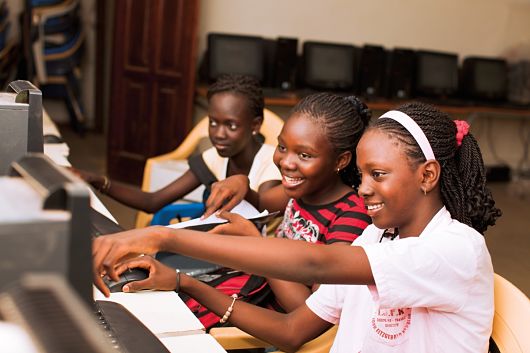
New Futures Organisation, a nonprofit established in 2007, dedicates its time to improving conditions in impoverished communities in Takeo, Cambodia by exposing youth residents to education, technology and empowerment. The members of New Futures Organisation establish village schools in communities that normally cannot afford the resources needed to provide children a proper education, as well as drop-in centers for at-risk students and orphans. As the children in the village schools grow up and transition into university, New Futures Organisation continues to help them find jobs and sponsorships they can use for university costs.

While school in Cambodia is free, many families living in rural farmlands lack the funds necessary to pay for uniforms and books. Cambodian schools in the region are typically located in the heart of Takeo, miles away from the villages. During rainy seasons, the dirt tracks taken by children commuting to school become inadequate for walking. Children are also required to help their families with farming duties. All of these factors make it difficult for many children to attend school full time.

There are currently seven village schools in Takeo that provide education to over 100 students. These schools are cost-free to families who live in rural regions, and are centrally located so children can access them even during rainy seasons. Classes are held to fit the schedule that comes with farm work.

New Futures Organisation originally started as an orphanage and drop-in center for at-risk youths. The drop-in center houses many orphaned children while helping them reconnect with extended family members, or find good homes when the first option is not available. The families that take in orphaned children are provided with care packages each month to make up for the additional money, food and toiletries needed to house these children. The drop-in center also remains open for them to work on homework, earn tuition and receive hot meals when their home life is not fit for such accommodations.

Many of the children living at the drop-in center and attending the village schools aspire to attend college. New Futures Organisation helps these students achieve their goals by providing and finding sponsorships from organizations and community members, giving them emotional support and helping them become empowered adults so they can lead in their communities.

Other projects sponsored by New Futures Organisation to alleviate poverty in Cambodia include teaching English classes to children and adults and hosting local blood drive banks at health centers in Takeo. They also help local police officers by teaching them English and helping them communicate effectively with tourists and westerners.

– Julia Hettiger

Sources: Matador Network, Idealist, New Future Organisation
Photo: My Travel Affairs

August 1, 2015
https://borgenproject.org/wp-content/uploads/borgen-project-logo.svg 0 0 Borgen Project https://borgenproject.org/wp-content/uploads/borgen-project-logo.svg Borgen Project2015-08-01 01:30:222020-07-06 12:06:04New Futures Organisation Addresses Poverty in Cambodia
Development, Global Poverty, Refugees and Displaced Persons, Technology

Wi-Fi ‘Saves’ Residents in Jordan Refugee Camp

Wifi in Zataari Refugee Camp, Jordan, Said to 'Save' ResidentsIn Zaatari, a refugee camp located in a desolate area of the northern Jordan desert, Syrian refugees live in a grid of makeshift tents very similar to the other nearly 1 million Syrians who have set up camp throughout Jordan in the past year.

In stark contrast to surrounding refugee camps in the Jordan Valley, such as the neighboring Azraq camp, however, there is one thing which has served to set Zaatari apart: the Internet.

Zaatari, which is home to 100,000 Syrians, started out as a temporary residence in which residents lived in deplorable conditions and frequently complained about the high rate of crime. In the past year, however, the camp has developed into Jordan’s fourth-largest ‘city,’ which boasts an enviable main street by refugee camp standards and is nicknamed the Champs Elysees. The Champs Elysees, which, unlike the rest of Zaatari, has paved roads and functioning street lamps, is also home to a growing number of bootleg charging stations, where customers can pay to refuel their computers and phones with electricity stolen from the camp’s grid. An increasing number of Zaatari residents have begun to tap into the camp’s Internet, using the Wi-Fi in order to stay in touch with family members spread throughout the region, tap into social media, keep up with world news and news about the countries they fled (via trustworthy sources such as the BBC World Service), and even learn English.

The recent influx of Internet users in Zaatari comes despite the fact that the Wi-Fi connection is incredibly clogged, thanks to the influx of thousands of refugees in recent months, which has put a strain on the region’s already slow electricity grid. Refugees hoping to use the Internet for a variety of purposes have to wait hours while a site buffers, even if they upload it in the middle of the night, according to Talash, one of the camp’s electronics vendors.

The success of the Internet and its ability to brighten the lives of Zaatari residents have inspired the United Nations and internet and communications technology (ICT) experts to explore the idea of making Wi-Fi free, and thus widely accessible, to refugees who have been displaced since the crisis in Syria began: a number which currently stands at 4 million.

According to the U.N., free Wi-Fi could bring educational, personal, and career benefits. Syrian refugees in Jordan, for example, who are prohibited from working by Jordanian law, can use the internet in order to tap into a ‘global marketplace.’ Young Syrian children who have suffered from a lack of educational opportunities in the refugee camps are also able to use the Internet to access free classes, thereby helping to circumvent the possibility that the recent crisis has created a Syrian ‘lost generation.’ Free Wi-Fi also offers the added benefit of enabling humanitarian organizations to communicate directly with residents and dispel rumors in the camp, such as the rumor which circulated last year that refugees were all going to be relocated to the less desirable and incredibly remote Azraq refugee camp.

U.N. and ICT officials have acknowledged that installing free Wi-Fi in Zaatari would be a difficult task, especially given the fact that refugee camps hosting Syrian refugees already bear the burden of frequent funding cuts. However, there is precedent for the use of free Wi-Fi accessible to refugees. The U.N. refugee agency’s (UNHCR) innovation team, for instance, recently released a mobile app for Syrian refugees living in Turkey, designed to explain refugees’ legal rights and point them to the nearest U.N. office. Recently, a highly successful app was also created by two Syrian refugees in Turkey for other refugees in the region. The app, which posts jobs that refugees are eligible for, gives them advice about landlords, explains mystifying rules about various camps and has already accrued 11,000 followers.

While U.N. officials consider the idea of installing free Wi-Fi, Zaatari residents have told reporters that they would be ecstatic if it were to come to fruition. Talash, the electronics vendor, told Al Jazeera, “life is comfortable enough here.” But with Internet access, Talash said his time at the camp would be much more tolerable.

“Ya rait [if only],” Talash said, “We’d be so happy.”

– Ana Powell

Sources: Al Jazeera, New York Times

Photo: AljeerzaE

August 1, 2015
https://borgenproject.org/wp-content/uploads/borgen-project-logo.svg 0 0 Borgen Project https://borgenproject.org/wp-content/uploads/borgen-project-logo.svg Borgen Project2015-08-01 01:17:192020-07-06 12:29:52Wi-Fi ‘Saves’ Residents in Jordan Refugee Camp
Page 128 of 163«‹126127128129130›»

Get Smarter

  • Global Poverty 101
  • Global Poverty… The Good News
  • Global Poverty & U.S. Jobs
  • Global Poverty and National Security
  • Innovative Solutions to Poverty
  • Global Poverty & Aid FAQ’s
Search Search

Take Action

  • Call Congress
  • Email Congress
  • Donate
  • 30 Ways to Help
  • Volunteer Ops
  • Internships
  • Courses & Certificates
  • The Podcast
Borgen Project

“The Borgen Project is an incredible nonprofit organization that is addressing poverty and hunger and working towards ending them.”

-The Huffington Post

Inside The Borgen Project

  • Contact
  • About
  • Financials
  • President
  • Board of Directors
  • Board of Advisors

International Links

  • UK Email Parliament
  • UK Donate
  • Canada Email Parliament

Get Smarter

  • Global Poverty 101
  • Global Poverty… The Good News
  • Global Poverty & U.S. Jobs
  • Global Poverty and National Security
  • Innovative Solutions to Poverty
  • Global Poverty & Aid FAQ’s

Ways to Help

  • Call Congress
  • Email Congress
  • Donate
  • 30 Ways to Help
  • Volunteer Ops
  • Internships
  • Courses & Certificates
  • The Podcast
Scroll to top Scroll to top Scroll to top