• Link to X
  • Link to Facebook
  • Link to Instagram
  • Link to TikTok
  • Link to Youtube
  • About
    • About Us
      • President
      • Board of Directors
      • Board of Advisors
      • Financials
      • Our Methodology
      • Success Tracker
      • Contact
  • Act Now
    • 30 Ways to Help
      • Email Congress
      • Call Congress
      • Volunteer
      • Courses & Certificates
      • Be a Donor
    • Internships
      • In-Office Internships
      • Remote Internships
    • Legislation
      • Politics 101
  • The Blog
  • The Podcast
  • Magazine
  • Donate
  • Click to open the search input field Click to open the search input field Search
  • Menu Menu

Archive for category: Development

Information and stories on development news.

Development, Health, Sanitation, Water

Urban Water and Sanitation Project to Benefit 590,000 in Dakar

Urban_Water
Only 62% of households in Senegal’s capital city have access to sanitation facilities. Considering that nearly half the Senegalese people live in urban areas, improving access to clean water and proper sanitation in these regions is imperative to the population’s health and the country’s development.

In an effort to help Senegal extend water and sanitation access throughout urban and peri-urban areas, the World Bank’s International Development Association has just approved $70 million in credit to fund an Urban Water and Sanitation Project, which is estimated to better the lives of 590,000 Senegalese people by 2030.

Senegal has made great strides in the past, achieving a 98% rate of urban access to safe water; however, population growth in the capital city, Dakar, and Petite Côte, a prominent tourist destination, has led to increased water shortages. The water deficits are set to worsen over the next five years, reaching 35,000 cubic meters and 60,000 cubic meters per day respectively in Petite Côte and Dakar by 2020.

Tackling these water deficits will be a major component of the Urban Water and Sanitation Project. One strategy proposed is the desalination of seawater as a supplement to groundwater and surface water resources.

Another area that the project will address is social sustainability, seeking to develop “pro-poor policies” that will improve access for impoverished Senegalese households. The program will target low-income areas in and around urban centers currently underserved by water and sanitation networks.

The project proposal promises that the newly developed water connections will be freely available to beneficiary households after “a small refundable deposit of $31, whereas the average price of a standard connection is $145. Similar rules will apply to social connections to sewers.”

In addition to supplying important access to sanitation services and safe water, the initiative hopes to promote gender equality. As is the case in many developing nations, Senegalese women and girls are largely responsible for the burden hauling water in areas without pipelines and distribution systems. The development of water and sanitation systems to impoverished areas will afford those women and girls more time for employment, education and other activities that promote social mobility.

The Urban Water and Sanitation Project also seeks to actively promote women’s interests, stating: “Attention will be given to promoting women’s entrepreneurship through the project as well as access to opportunities for training, business and leadership where feasible.”

Furthermore, women will take a central role in hygiene education and information programs associated with the Urban Water and Sanitation Project. The proposal also promises that women will also participate in selecting the locations of public sanitation facilities.

“By expanding access to clean water and sanitation, the project will help boost the health of Senegal’s urban population,” noted Matar Fall, World Bank Task Team Leader for the Urban Water and Sanitation Project. “Water access can also form the basis for many types of income-generating activities such as home-based manufacturing and services that can turn the poor into local entrepreneurs.”

The World Bank and Senegal are looking ahead to a future in which sanitation and water work to promote equality and opportunity, rather than functioning as a sign of poverty.

– Emma-Claire LaSaine

Sources: The World Bank, All Africa, USAID, WASH
Photo: Hampton Roads PDC

July 31, 2015
https://borgenproject.org/wp-content/uploads/borgen-project-logo.svg 0 0 Borgen Project https://borgenproject.org/wp-content/uploads/borgen-project-logo.svg Borgen Project2015-07-31 08:19:582024-05-27 09:26:12Urban Water and Sanitation Project to Benefit 590,000 in Dakar
Development, Global Poverty

6 Chocolate Brands Creating Social Change

chocolate_brands
Words like eco, organic, healthy, tasty, and sweet can be found in one single product: chocolate.

If the word “chocolate” is not sufficient enough, the other good part is that many of these organic chocolate products are also fair trade chocolate bars that are creating a social change and an environmental impact.

Besides being socially and environmentally good, there are some brands of chocolate who also donate to different humanitarian and environmental causes.

Here are six chocolate brands that are creating social change:

1. Madécasse

This is a social enterprise that makes chocolate products and vanilla in Madagascar. According to their website, Madécasse measures their success by the quality of the product and the social impact they make in Africa.

The enterprise started by empowering cocoa farmers in Madagascar, and by providing training and higher wages. The brand also creates an environmental impact by protecting around 70,000 cocoa trees, that are part of the habitat of over 65 species of flora and fauna, through cocoa farming.

Some of the chocolate bars that Madécasse sells are Salted Almond, Sea Salt & Nibs, Toasted Coconut, among others.

2. Alter Eco

According to the Alter Eco website, the brand is reliably delicious, socially fair, and environmentally responsible. They work directly with farmers that grow cacao, sugar, rice, and quinoa through fair trade and organic practices. Alter Eco assists these farmers by improving their food quality and their life quality.

Some of the areas that Alter Eco works on are fair trade relationships, development of programs, and the empowerment of women. The brand’s products have compostable packaging and are organically grown.

Despite of not being a brand that only sells cocoa products, Alter Eco counts with a variety of chocolates and truffles. Some of the chocolate bars and truffles available are Dark Brown Butter, Dark Quinoa, Dark Mint, Dark Velvet, Salted Caramel Truffles, Sea Salt Truffles, among others.

3. Divine Chocolate

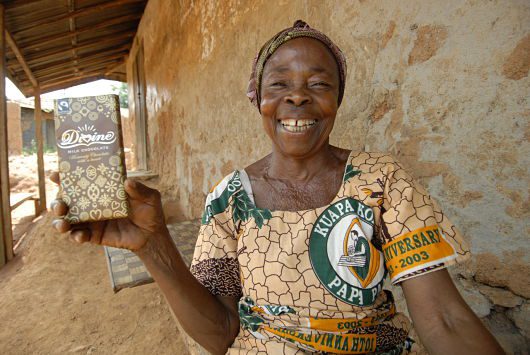
Divine Chocolate is an entity co-owned by 85,000 farmers in Ghana. From Kuapa Kokoo, these farmers produce fair trade chocolate through the premium quality cocoa that Kuapa’s has.

The brand also works for women’s empowerment by providing opportunities to women in cocoa farming. Furthermore, Divine Chocolate improves access to information for cocoa farmers through funds that support the Kuapa’s radio program.

Some of the chocolate products that Divine Chocolate offers are 38 percent Milk Chocolate with Toffee and Sea Salt, Dark Chocolate with Hazelnut Truffle, Dark Chocolate with Whole Almonds, and 70 percent Dark Chocolate with Mango & Coconut.

4. Equal Exchange

Through fair trade, Equal Exchange counts with different natural food products offered to consumers. They work with small-scale farmers and their co-ops from different countries around the world, such as India, Ecuador, Peru, El Salvador, Uganda, Chile, among others.

Some of the products that the brand offers are coffee, organic tea, organic bananas, fair foods, and chocolate & cocoa. The brand sells organic chocolate bars, chocolate mints, candy bars, cocoa, and chocolate chips.

Some of the chocolate options available for purchase are Organic Very Dark Chocolate, Organic Panama Extra Dark Chocolate, Organic Mint Chocolate with Delicate Crunch, Organic Baking Cocoa, Organic Spicy Hot Cocoa, Organic Semi-Sweet Chocolate Chips, among others.

5. SHAMAN Organic Chocolates

This brand of chocolate was created in order to support the Huichol Indian population from central Mexico. SHAMAN Organic Chocolates’ goal is to create good and ethical chocolate while they help this Indian population from Mexico.

The brand’s chocolate is a 100 percent organic, GMO free, it is fair trade chocolate, and 100 percent of the profits are donated to charity that supports three Huichol villages in Mexico.

6. Endangered Species Chocolate

Endangered Species Chocolate promotes global change by donating 10 percent of their profit to their partner organizations that support different humanitarian and environmental causes.

The causes that the brand’s partners support are the conservation of species, habitat conservation, and humanitarian efforts.

The brand pays for premium ingredients for their chocolate in order to make sure that cocoa farmers are being supported and helped, and species are being protected.

The products that Endangered Species Chocolate offers are Natural Cocoa Spread, Natural Hazelnut with Cocoa Spread, Natural Almond with Cocoa Spread, 60 percent Dark Chocolate with Lemon Poppy Seed, 60 percent Dark Chocolate with Blackberry Sage, 60 percent Dark Chocolate with Cinnamon, Cayenne & Cherries, Dark Chocolate with 88 percent Cocoa, and Dark Chocolate.

With many brands offering fair trade organic chocolate products, helping the environment, people and donating to charity can be a way to support many humanitarian and environmental causes, and contribute to the social change that these chocolate brands are creating.

– Diana Fernanda Leon

Sources: Madecasse 1, Madecasse 2, Madecasse 3, Alter Eco Foods 1, Alter Eco Foods 2, Alter Eco Foods 3, Alter Eco Foods 4, Alter Eco Foods 5, Divine Chocolate 1, Divine Chocolate 2, Endangered Species Chocolate, Shaman Organic Chocolates, Equal Exchange
Photo: Dubaruba

July 31, 2015
https://borgenproject.org/wp-content/uploads/borgen-project-logo.svg 0 0 Borgen Project https://borgenproject.org/wp-content/uploads/borgen-project-logo.svg Borgen Project2015-07-31 01:30:062024-12-13 17:52:176 Chocolate Brands Creating Social Change
Development

Unilever’s African Operations

z1 Borgen Project
In Africa, there are many foreign corporations investing in and fueling industry, many of which are part of extractive industries that may not be economically beneficial for the continent in the long run. A company that stands apart from this ilk is Unilever.

Unilever is a British-Dutch multinational consumer goods corporation whose products reach 2 billion consumers in over 190 countries, making it one of the world’s top 500 largest corporations. Unilever has been in Africa for over a century and produces annual sales there of more than $5 billion, employing 40,000 people on the continent in offices and building factories in 40 locations.

This megalithic corporation has built an impressive reputation for itself. FORTUNE Magazine consistently recognizes Unilever among the World’s Most Admired Consumer Food Product Companies and in 2013 recognized Unilever as a Top 50 World’s Most Admired Company. Much of this admiration stems from the numerous gender diversity and environmental sustainability awards Unilever has garnered over the years.

Despite these accolades, criticisms are aplenty and certain truths are unavoidable. For example, Unilever’s biggest purchases are palm oil, soya, paper and beef. These are commodities whose global trade is responsible for 50 percent of global tropical deforestation, admitted Gavin Nearth, senior vice president of sustainability at Unilever.

Significantly, these criticisms are not necessarily thrown in a dark corner at Unilever with the hope that they will wither and die. There is an acknowledgement that the vast corporation’s practices have enormous environmental and social impacts that have not been, and still are not in many instances, sustainable.

Yet things do seem to be changing. In 2009, Paul Polman, previously an executive at Nestle and before, Proctor & Gamble, became Chief Operating Officer of Unilever. Within a year he introduced the Unilever Sustainable Living Plan, a series of goals that aim to transform the company by doubling its size while increasing its positive social impact and reducing its environmental footprint by 50 percent. Despite the worry of many stockholders, according to Financial Times, Mr. Polman believes that these goals are necessary to maintain a “license to operate” in an age of public scrutiny.

Increasing social impact includes increasing workplace rights, ensuring that women get a fair deal and improving health and well-being for more than 1 billion people. Reduction of Unilever’s environmental footprint entails ensuring that their products and supply chain meet environmental requirements covering everything from forest protection to pest control. The impact of working toward these goals will manifest in Unilever’s sizable African operation.

Furthermore, Unilever’s business model in Africa impacts the African poor. According to Frank Braeken, Unilever Executive Vice President for Africa, “There is a growing realization that the future of Africa is based around a consumer rather than mining. This is a consumer that has been under-served and over-charged.” For Mr. Braekan, there are hundreds of millions of untouched consumers, most of whom are low-income, known as bottom of the pyramid (BOP), consumers.

A method through which Unilever reaches BOP consumers is low unit packs (LUPs). These are small consumer goods, worth as little as half a cent. Small shop owners buy goods from Unilever companies in large packs and resell them in smaller portions.

LUPs is just one method by which Unilever plans to meet Africa’s poor and their needs. In conjunction with its vast operations on the continent and increasingly sustainable business model, Unilever will be able to be quite the developing force in Africa.

– Connor Bohannan

Sources: BDlive, Financial Times, How We Made It in Africa, Telegraph, Unilever
Photo: Telegraph

July 31, 2015
https://borgenproject.org/wp-content/uploads/borgen-project-logo.svg 0 0 Borgen Project https://borgenproject.org/wp-content/uploads/borgen-project-logo.svg Borgen Project2015-07-31 01:23:382024-12-13 17:52:16Unilever’s African Operations
Development

Greenfield Microfinance Institutions in Sub-Saharan Africa

greenfield_microfinance
The attention of foreign entities intent on aiding the development of Sub-Saharan Africa (SSA) is often focused on providing basic services such as water, electricity and healthcare. And while rightly so, another crucial ingredient for development in Africa is finance. Access to capital for the average African would allow households and small businesses to leverage their savings and earnings to increase productivity, earn higher incomes, create jobs and ultimately, stimulate economic growth.

Unfortunately, SSA has the lowest level of access to finance than any other region in the world, with an average banked population of 24 percent. Microfinance institutions (MFIs), organizations that offer financial services to the poor, are a promising solution to this gross deficit.

Microfinance has played a large role in South Asia with a mixed record. Initially termed micro-credit, it was viewed as a panacea to world poverty when it began to rapidly grow 15 years ago. Since, people have realized that while such loans can empower women and help entrepreneurs, they are not a magic bullet against the characteristics of poverty such as a lack of healthcare, education, access to power, clean water and a reliable food source. In addition, over the last 15 years it has not been uncommon for lenders to charge usurious interest rates on these loans, creating vicious cycles of debt for borrowers.

As the perception of this financial instrument was tempered, no longer viewed as a ‘magic bullet’ to poverty, the term micro-credit became microfinance and the concept was relegated to the toolbox of poverty alleviation. To be clear, microfinance, if not abused by exorbitant interest rates, and if it works within a framework of poverty reduction, can dramatically help the poor by giving them access to financial services.

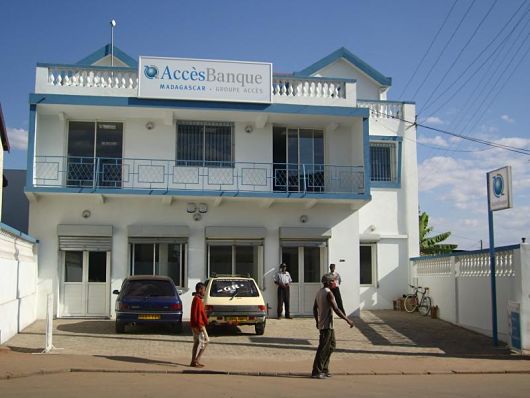
Access to financial services that are not traditionally available to the poorest segments of society is what microfinance is all about. And that fact is no different in SSA, where most MFIs are greenfields. Greenfield MFIs are local institutions formed by holding communities in communities without pre-existing financial infrastructure, staffs, clients or portfolios.

Microfinance made its debut in the region in 2000 when ProCredit Holding, a German banking group with 21 banks operating in developing and transitioning economies, opened a bank in Mozambique that offered microfinance services.

Since then, many companies have followed suit. In 2006 there were seven Greenfield MFIs in SSA, staffing 1,564 people, with 37 branches, and 220,337 deposit accounts. By 2012, there were 31 Greenfield MFIs in SSA, with 11,578 staff, 701 branches, and almost 2 million accounts. In that time the Gross Loan Portfolio increased from $57 million to $769 million.

To begin a Greenfield MFI in the region, $6-$8million is required over the first 3-4 years of operation. And only after months 42-48 do they emerge fully sustainable. While this investment may seem daunting, research shows that the average SSA Greenfield MFI has been able to sustain fairly rapid revenue growth. Over its first 60 months, it will increase its revenue by $500,000 every 6 months, reaching $5 million by its 5 year anniversary.

The growth of microfinance in SSA is undeniably impressive. The Greenfield MFI model has come a long way in a short time in Africa. And while in the grand scheme of a region containing around 1 billion people, these numbers seem meager, the financial performance of these Greenfield MFIs indicate a future in which Africans have much greater access to capital, and therefore a brighter future.

– Connor Bohannan

Sources: Business Insider, International Finance Corporation, Making Finance Work for Africa, The Consultative Group to Assist the Poor
Photo: European Commission

July 31, 2015
https://borgenproject.org/wp-content/uploads/borgen-project-logo.svg 0 0 Borgen Project https://borgenproject.org/wp-content/uploads/borgen-project-logo.svg Borgen Project2015-07-31 01:22:262024-05-27 09:26:30Greenfield Microfinance Institutions in Sub-Saharan Africa
Development, Global Poverty

National Solidarity Program Creates Infrastructure in Rural Afghanistan

National Solidarity Program: Infrastructure in Afghanistan
The first step to helping those in need is having a supportive government enforcing small-scale changes. The National Solidarity Program (NSP) located in Afghanistan is the rehabilitation and development program for rural parts of the nation. It has supported the rights and needs of 18 million people and has helped to construct infrastructure, meet basic community needs, administer democracy and save lives.

The NSP is a program working for the Government of the Islamic Republic of Afghanistan under the jurisdiction of the Ministry of Rural Rehabilitation and Development (MRRD). It has a set budget of $2.6 billion for the years between 2003 and 2016.

The Nangarhar Province has demonstrated resiliency thanks to NSP. Since NSP’s installation in 2003, it has crated 32,000 Community Development Councils (CDCs) within 36 districts of each province in Afghanistan. It has financed 65,000 projects.

In 2013, NSP was known as the largest development program in Afghanistan. Evaluations have proven that NSP advances access to education, basic utilities, health care and counseling, specifically for women. NSP has created a platform for governance, democratic processes and female participation in rural villages.

The program was based on the hopes that villages could improve themselves with two approaches. NSP aimed to create gender-balanced CDCs and to fund villages through family grants. These grants were meant to enhance village projects managed by CDCs along with public input.

More than 250,000 families were provided technical help thanks to 806 CDCs in just four provinces. Effort to improve development has affected 141,050 people.

Some projects underway in the Nangarhar Province include digging wells, creating sewing jobs for women, building sewer drains and constructing buildings for community meetings. One function of the CDC is to take village complaints and design resolutions. Since residents and neighbors to villages find it to be an effective and sustainable practice, they feel safe to make home in the more promising region.

In 2009, there were 275 families in Ghondi-e-Ahmadzai village. There are now 1,200 people living in the village.

The program has increased school attendance and the quality of education for girls. Health institutes have had a rise of child doctors, prenatal visits and curability of preventable disease with thanks to NSP. The program has also managed to increase access to clean water and sanitation.

Funding from World Bank, Afghanistan Reconstruction Trust Fund and Japan Social Development Fund are supporting the program. Haji Zumarai leads the CDC in Ghondi-e-Ahmadzai village. He’s very grateful for the $50,000 grant funding village development efforts since 2009.

Partners of NSP have helped to improve water and sanitation. NSP’s 31 facilitating partners work within CDCs to contrive 86 thousand small-scale reconstruction and development projects. In addition, they maintain rural roads, irrigation, energy supply, health facilities and education.

BRAC is one facilitation partner of MRRD that helps construct infrastructure outside NSP. It builds systems, latrines, irrigation canals, micro-hydroelectric planets, protection walls, roads, bridges and schools.

It’s partnership with NSP is creating a self-sustainable rural Afghanistan. BRAC encourages democracy by helping to supervise and facilitate CDCs in places like Ghondi-e-Ahmadzai. It prioritizes infrastructure capabilities, aids with project overhaul and oversees transparency efforts.

NSP has bettered small-scale efforts for many by focusing on critical and essential needs in rural villages. In Sayed Ahmad Ghazi Village of the Kabul Province, NSP constructed clinics that are saving lives. MRRD granted $50,000 in funding. Local villages helped by producing $14,000.

Under Dr. Mastorah Ahmadi, two women and one man help oversee 50 patients a day. This has benefited 1,400 families. Children are receiving vaccinations and the workers are quickly treating preventable diseases.

Communities continue to prosper with these programs that minimize the hazardous implications of living in rural Afghanistan. Soon rural living will safe and readily sustainable. The Ghondi-e-Ahmadzai village stands as an example of success when community-focused programs like NSP work intricately with members and leaders.

– Katie Groe

Sources: Bakhtar News, World Bank 1, Wadsam, World Bank 2, World Bank 3, BRAC
Photo: Worldbank

July 31, 2015
https://borgenproject.org/wp-content/uploads/borgen-project-logo.svg 0 0 Borgen Project https://borgenproject.org/wp-content/uploads/borgen-project-logo.svg Borgen Project2015-07-31 01:03:112024-06-05 02:12:09National Solidarity Program Creates Infrastructure in Rural Afghanistan
Development, Health

5 Possible Changes to Bring a New Era of Reproductive Health

reproductive_health

Only governments can ensure that Universal Health Coverage (UHC) is achieved within their nations. While it is widely regarded to be making strides with reproductive health services, it is important to take note of the following changes to ensure so that new era of services can emerge:

1. Domestic Financing
The Universal Health Coverage goal allows everyone access to health services regardless of financial hardship. Pursuing this goal often leads to dramatic health financing reforms, but the key is to give rise to national insurance initiatives that allow health budgets to be spent on strategic purchasing of health services, rather than on keeping the doors open at public facilities alone.

2. Cost-effective Service Package
Few services are as cost-effective for both health and economic development as contraception. Thus, contraception must be prioritized for universal access. It would be imperative to place importance on measurable health outcomes, or possibly the Sustainable Development Goals.

3. Making UHC Work in the Low-Level Private Sector
Lower-level private facilities, which are often a lifeline to communities, should not be forgotten in public financing reforms. This will prevent a wider spread of coverage to communities that need the types of services that accompany the lower-level private facilities.

4. Advocating Financing by Doing
In countries that have not taken strides with the UHC, organizations can still contribute to progress through proof-of-concept financial projects like large-scale voucher programs to remove financial barriers. All types of health providers (faith-based, for-profit or public) need to be quality-assured for the services they offer.

5. Disrupting the Status Quo
Youth, women, tech-savvy entrepreneurs, health workers, civil society and the private sector will all be the influencers to drive change within family panning over the next 15 years. It is important to welcome new voices to the debates and meetings of importance. Frankness will be key to change, by dropping euphemisms and vague terms there will less trickery and more discussion of the topics that need to be discussed. Even the term “family planning” was created to avoid the associated taboo of the world’s abortion and contraception.

Investment in the health, education and rights of young people, and the alignment of related policies, is critical as it enables productivity and economic growth and the better spread and knowledge of reproductive health services is key to that.

– Alysha Biemolt

Sources: AllAfrica, Impatient Optimists, World Bank
Photo: myScience.org

July 30, 2015
https://borgenproject.org/wp-content/uploads/borgen-project-logo.svg 0 0 Borgen Project https://borgenproject.org/wp-content/uploads/borgen-project-logo.svg Borgen Project2015-07-30 09:22:152020-07-06 14:23:335 Possible Changes to Bring a New Era of Reproductive Health
Development, Global Poverty, Health

Russian Healthcare Declines

In the winter of 2013-14, residents of Russia’s Pskov region were left waiting in the cold at their train stations due to alleged obstructions on the tracks. Oddly, neither snow nor ice had blocked paths of the trains; rather along the tracks lay the shivering bodies of numerous Russians in need of medical attention.

A lack of accessible health service or transportation options had compelled these ill residents to prostrate themselves on the cold steel in hopes of hitching a ride to metropolitan centers with hospitals.

Even in city centers like Moscow and St. Petersburg, the situation has become dire. Hunger strikes aimed at preventing the healthcare cuts have occurred in the past two years in both of these major metropolises.

Stories like these call attention to the increasingly desperate state of Russia’s healthcare system, which has experienced significant consolidation and downgrading. In response, many Russians, as these incidents indicate, are quite literally willing to die for better healthcare.

The fierce will for state-sponsored, universal healthcare coverage has persisted since the Soviet era, while the quality of Russian healthcare has not. According to The Moscow Times, “from 2005 to 2013 the number of health facilities in rural areas fell by 75 percent, from 8,249 to 2,085. That number includes a 95 percent drop in the number of district hospitals, from 2,631 to only 124, and a 65 percent decline in the number of local health clinics, from 7,404 to 2,561.” In March of 2015 leaked government reports claimed that over 10,000 medical professionals in the capital had been laid off after the closure of 28 clinics and hospitals. The reports outlined 14,000 further firings leading up to 2017.

Between the years of 2013-14, 90,000 medical workers lost their jobs despite reports of significant shortages of personnel across the country. That same year, The Audit Chamber, a government agency, had attributed the 3.7 percent spike in hospital deaths to spending cuts. In total, 18,000 Russians needlessly lost their lives.

This is all a part of the Russian Government’s recent ‘optimization’ which aims to eliminate inefficiency by consolidating healthcare resources in larger hospitals. Consequentially, it entails the closure of smaller more local treatment centers.

Putin and his administration are determined in their efforts. They seem to have ignored funding and personnel issues and have instead lauded the healthcare system during a meeting in April 2015. Contrary to their own government reports, they claimed an alleged increase in rural medical coverage and a $4 billion expansion of healthcare funding.

For the doctors that have survived ‘optimization’, life in the workplace has become chaotic. Bloomberg News reported on a female family doctor who had to increase her workday from eight hours to 12 hours. On top of this, she admitted to working three weekend shifts per month for the past year.

One clinic has restricted the average appointment time between the doctor and patient to a mere 12 minutes. This gives the doctor just enough time to fill out paperwork.

Those unwilling to compromise effective treatment will defy these strict time limits. This comes at a cost, however, as many doctors have been forced to regularly work overtime in order to provide adequate care.

For patients, this entails excessive waiting times for treatment. With so few staff, they can expect to wait hours just to meet with a specialist. Those in need of ultrasounds often get put on a six week waiting list. Last year one could expect an ultrasound in a matter of days.

Tired of waiting, many Russians have sought better medical care by taking to the streets in protest. Several demonstrations challenging recent healthcare developments took place in Moscow during the fall and winter of last year.

With approval ratings for the country’s healthcare system under 20 percent according to a recent poll, Putin has also displayed some hesitation. During a conference in the fall of last year, he admitted that his administration had not yet considered everything. If protests continue it is perhaps possible even the notoriously headstrong Putin will alter the course of Russia’s healthcare.

– Andrew Logan

Sources: Bloomberg, The Moscow Times, Radio Free Europe/ Radio Liberty, The Washington Post

Photo: Bloomberg Business

July 30, 2015
https://borgenproject.org/wp-content/uploads/borgen-project-logo.svg 0 0 Borgen Project https://borgenproject.org/wp-content/uploads/borgen-project-logo.svg Borgen Project2015-07-30 01:30:282024-12-13 17:52:09Russian Healthcare Declines
Development, Disease, Global Poverty, Health

Can the Infectious Disease Yaws Be Eradicated?

Can the Infectious Disease, Yaws, be Eradicated SoonYaws is a relatively unknown disease in the developed world, but in poor tropical areas of Africa, Asia, Latin America and the Western Pacific, it is common and can lead to disfigurement and disability.

Yaws is the most common endemic treponematoses, a group of bacterial infections that also includes nonvenereal syphilis and pinta. All of these infections are transmitted through non-sexual contact with an infected person. They can cause skin lesions, bone pain, bone lesions, nose deformities and the thickening or cracking of a person’s hands and soles of the feet. The World Health Organization (WHO) estimates that 75% of infected people are under 15 years of age, with most cases seen in children aged 6 to 10. Gender is not a determining factor of infection.

Yaws is spread through skin-to-skin contact, usually after a small injury occurs, something common when children play. Yet, WHO states that “overcrowding, poor hygiene and socioeconomic conditions facilitate the spread of the yaws.”

The disease is not life-threatening, which is likely why it became a neglected disease in the scope of global disease work. But if left untreated, a person can become permanently disfigured and disabled. Such a diagnosis is bad for anyone infected with the disease, but since mostly children suffer from yaws, it becomes a life-long issue if not resolved quickly. When a child contracts yaws, their ability to go to school is jeopardized. If left untreated, absenteeism rises among children and their future employment, especially feeding their families through farming, is impacted.

It has long since been thought that yaws could be a disease that can have complete eradication since humans are the only carriers of the disease. Previously, initiatives to eradicate yaws were undertaken with almost complete success. But the mass effort was prematurely lifted and the disease returned, though not quite on the same scale as before.

Recently, the idea of complete eradication has come back up. The two most effective antibiotics to treat yaws are azithromycin and benzathine penicillin, both of which can be given with relative ease. Even though no vaccine is available for yaws, if early diagnosis is achieved, treatment with the antibiotics can occur and sanitation can be improved to help stop the spread of the disease. With the steps, the end of yaws is in sight.

There have already been cases of previously endemic countries achieving complete eradication, including India. The Yaws Eradication Programme (YEP) was launched in India in 1996 with the goal to have complete eradication in the country. In 1997, 735 cases of yaws were reported; in 2004, the country was considered to have achieved “Zero Case.” Because not all cases of yaws are reported, only time will tell if complete eradication can be sustained, but right now all signs are pointing to success.

With great things already happening in India and a plan in place to achieve more success globally, yaws should be eradicated from remaining endemic countries by 2020.

– Megan Ivy

Sources: PubMed.gov, WHO 1, WHO 2
Photo: Chacha

July 29, 2015
https://borgenproject.org/wp-content/uploads/borgen-project-logo.svg 0 0 Borgen Project https://borgenproject.org/wp-content/uploads/borgen-project-logo.svg Borgen Project2015-07-29 18:59:492020-07-07 12:36:21Can the Infectious Disease Yaws Be Eradicated?
Development

Malala Fund Aims to Secure Free Education for Children

Malala_FundActivist and Nobel Peace Prize laureate Malala Yousafzai is pressuring world leaders to annually invest $39 billion more to ensure primary and secondary education is a right for all children. This is part of the upcoming U.N. Sustainable Development Goals meeting in September in New York.

Goal 4 of the proposed SDGs is to “ensure inclusive and equitable quality education and promote life-long learning opportunities for all.” By 2030, the U.N. hopes to ensure that primary and secondary education is free and easily accessible, as well as more equal for boys and girls.

Malala spoke at the Oslo education summit in July, urging leaders to invest in SDG 4 in order to reduce gender disparities and the negative outcomes of non-enrolled children. If the world can meet the goal by 2030, and every girl attends primary and secondary education, child marriage rates would decrease 64 percent and under 5-year-old child deaths would decrease 49 percent.

“In fact, and unfortunately, $39 billion is spent on [the] military in only eight days,” she said.

There are many challenges to providing universally free primary and secondary education, even if the $39 billion annual investment goal is reached. Many families send their children to the labor force because they live in extreme poverty, conflict plagues the ability to send children to school, and other countries lack infrastructure and resources to provide effective education.

Currently, the cost of 12 years of free education is $340 billion per year, which means lower-income countries need to invest 20 percent of their budget to education. Right now, the average budget spent on education is 15 percent.

In May 2015, more than 100 countries promised to provide free education to their children by signing the Incheon Declaration in Korea. The agreement will coincide with the SDGs to reach this goal by 2030.

Enrollment in primary education reached 90 percent by 2010, an increase from 82 percent in 1999, but 61 million children remained unenrolled in school. 31 million primary-aged school children dropped out worldwide and 32 million more repeated a grade. The Millennium Development Goals and the World Food Program provided support for the increase but more educational investments are needed to make a significant impact.

The Malala Fund pushes for the empowerment of education for girls. About two-thirds of the women in the world are illiterate. Also, education helps reduce population growth. For example, educated women in Mali have three children on average compared to the average of seven for uneducated women.

Despite the progress made through the MDGs, there are significant gaps between countries and regions.

“Conflicts remain the biggest threat to human development, with fragile and conflict-affected countries typically experiencing the highest poverty rates,” the U.N. said in a statement.

– Donald Gering

Sources: Do Something, Huffington Post, IB Times, Malala Fund, UN 1, UN 2, Yahoo News
Photo: Flickr

July 28, 2015
https://borgenproject.org/wp-content/uploads/borgen-project-logo.svg 0 0 Borgen Project https://borgenproject.org/wp-content/uploads/borgen-project-logo.svg Borgen Project2015-07-28 15:46:172024-05-27 09:26:18Malala Fund Aims to Secure Free Education for Children
Development, Education, Global Poverty, Women and Female Empowerment

Mobile Schools in Kenya Help Girls Get an Education

Mobile_Schools
Although Kenya’s education system has improved over the past decade, many students are still left behind. One million Kenyan children are currently out of school, and while that number has steadily decreased in recent years, it still places Kenya at ninth in the world for out of school children. Even if a child does complete primary school, the quality of education is often insufficient for retaining necessary skills, a glaring flaw best illustrated with the statistics surrounding illiteracy in Kenya. Among men ages 15 to 29 who have completed six years of primary school, 6 percent are illiterate and another 26 percent are only semi-literate. For women of the same age group with the same level of education, the problem is even worse: 9 percent are illiterate, and 30 percent are semi-literate.

Marginalized children, particularly poor girls from rural areas, have still not benefited from improvements in Kenya’s school system. For example, almost all children from wealthy families in the capital, Nairobi, attend school, but in the North East region, only 55 percent of poor girls and 43 percent of poor boys attend school. This is partly due to the fact that the indirect cost of secondary education typically exceeds the monthly income of many families in rural areas.

Adeso, a Nairobi based development charity, is currently working to bring education to those who may have never had the chance to set foot in a classroom. The organization focuses on the idea that in order to improve the quality of life across Africa, development must come primarily from within Africa. Adeso works on development in four main areas. They aim to educate young people and equip them with necessary life skills, provide humanitarian aid where people lack food security, water, and sanitation, strengthen local economies, and influence local and international government policies.

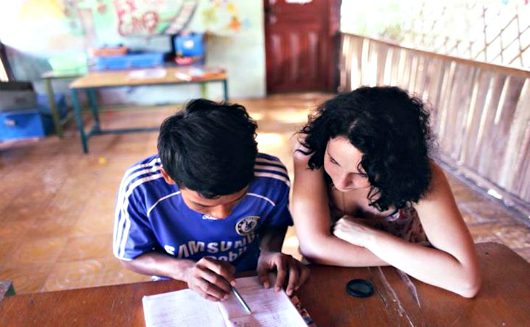
Adeso runs a mobile school program in rural areas of Kenya that brings learning to nomadic students, usually girls, whose families have to relocate frequently in order to survive. They plan the school calendar around the weather patterns. Most formal learning is scheduled for rainy seasons when children do not have to balance labor demands and are more likely to stay in one place. The schools will travel with students as far as possible to allow them to continue their education.

The mobile school program was launched in February 2014, but funds are expected to run out by 2016. Adeso hopes to continue the program, but faces many obstacles, from political insecurity to poor infrastructure, to a pervasive belief in many areas that girls should not be educated. Adeso is still working towards securing more funding in order to extend the program. However, should the mobile schools close, the organization hopes that students have benefited from further education and can pass on what they have learned to their communities.

– Jane Harkness

Sources: Adeso 1, Adeso 2, Adeso 3, Huffington Post, UNESCO
Photo: Miss Tourism Kenya

July 27, 2015
https://borgenproject.org/wp-content/uploads/borgen-project-logo.svg 0 0 Borgen Project https://borgenproject.org/wp-content/uploads/borgen-project-logo.svg Borgen Project2015-07-27 14:32:172024-06-04 03:53:08Mobile Schools in Kenya Help Girls Get an Education
Page 129 of 163«‹127128129130131›»

Get Smarter

  • Global Poverty 101
  • Global Poverty… The Good News
  • Global Poverty & U.S. Jobs
  • Global Poverty and National Security
  • Innovative Solutions to Poverty
  • Global Poverty & Aid FAQ’s
Search Search

Take Action

  • Call Congress
  • Email Congress
  • Donate
  • 30 Ways to Help
  • Volunteer Ops
  • Internships
  • Courses & Certificates
  • The Podcast
Borgen Project

“The Borgen Project is an incredible nonprofit organization that is addressing poverty and hunger and working towards ending them.”

-The Huffington Post

Inside The Borgen Project

  • Contact
  • About
  • Financials
  • President
  • Board of Directors
  • Board of Advisors

International Links

  • UK Email Parliament
  • UK Donate
  • Canada Email Parliament

Get Smarter

  • Global Poverty 101
  • Global Poverty… The Good News
  • Global Poverty & U.S. Jobs
  • Global Poverty and National Security
  • Innovative Solutions to Poverty
  • Global Poverty & Aid FAQ’s

Ways to Help

  • Call Congress
  • Email Congress
  • Donate
  • 30 Ways to Help
  • Volunteer Ops
  • Internships
  • Courses & Certificates
  • The Podcast
Scroll to top Scroll to top Scroll to top