• Link to X
  • Link to Facebook
  • Link to Instagram
  • Link to TikTok
  • Link to Youtube
  • About
    • About Us
      • President
      • Board of Directors
      • Board of Advisors
      • Financials
      • Our Methodology
      • Success Tracker
      • Contact
  • Act Now
    • 30 Ways to Help
      • Email Congress
      • Call Congress
      • Volunteer
      • Courses & Certificates
      • Be a Donor
    • Internships
      • In-Office Internships
      • Remote Internships
    • Legislation
      • Politics 101
  • The Blog
  • The Podcast
  • Magazine
  • Donate
  • Click to open the search input field Click to open the search input field Search
  • Menu Menu

Archive for category: Development

Information and stories on development news.

Development

Who Is Mercy Corps?

Who Is Mercy Corps?
Mercy Corps is a non-profit organization that was started in 1979 and based in Portland, Oregon. Their mission is to alleviate suffering, poverty, and oppression by helping people build secure, productive, and just communities. They aim to help people grappling with hardships survive by turning crisis into opportunity.

Mercy Corps is structured on a set of core values, which include belief in the intrinsic value and dignity of human life, and the belief of all people to thrive. Additionally, they believe that all people have the right to live in peaceful communities and participate in decisions that affect their lives. Mercy Corps members strive to be stewards of the Earth’s health, as well as stewards of the financial resources entrusted to them. Mercy Corps strives to use its resources to achieve peaceful change.

Mercy Corps is staffed by individuals who speak the local languages, know the culture, and understand the challenges of each community. Most of the time, their representatives are from the countries where they work. This enhances the sense of community and allows community members to help lift their neighbors from poverty.

The type of work Mercy Corps is involved in focuses on places in transition where conflict, disaster, political upheaval and economic collapse are present. The organization strives to provide emergency relief and to move quickly to help communities recover and build resilience to future shocks. They work to support community-based initiatives that are community-led and market-driven. And finally, Mercy Corps seeks to use innovation to fight against poverty in the places they work.

Mercy Corps has established programs in forty-six countries. Their programs have many different themes including agriculture and food, children and youth, conflict and governance, disaster preparedness, economic opportunity, education, emergency response, environment, health, innovations, water, and women and gender.

An example of an agriculture and food initiative Mercy Corps works with is in Timor Leste, one of the newest, poorest, and most poverty-stricken countries in the world. Mercy Corps is working with 4,500 subsistence farmers to improve their crop production, increase their income and diversify their diets. The goal of this project is to create a solid foundation for sustainable development in the country.

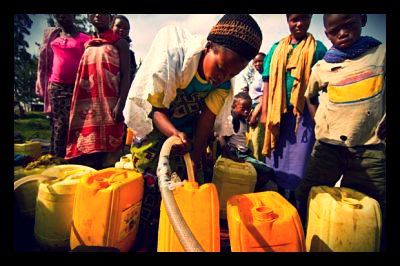
Access to freshwater is a serious problem for many communities in the developing world. In Yemen, Mercy Corps is working with local water vendors to accept vouchers to provide families with 20 liters of drinking water a day. Additionally, they have trained community members on the importance of hygiene practices such as hand washing, and they have installed a 5,000-liter plastic tank to store washing and general use water closer to people’s homes. This initiative has given over 1,000 people better access to water, greatly improving health in the communities.

Mercy Corps relies on donations and fundraising to sustain its programs. They encourage people to attend their events, donate, and volunteer with their organization. For more information, visit their website here.

– Caitlin Zusy
Source: Mercy Corps

May 20, 2013
https://borgenproject.org/wp-content/uploads/borgen-project-logo.svg 0 0 Borgen Project https://borgenproject.org/wp-content/uploads/borgen-project-logo.svg Borgen Project2013-05-20 05:17:422020-06-21 22:30:45Who Is Mercy Corps?
Development, Global Poverty

How Long Will It Take to Lift One Billion People Out of Poverty?

india_poverty_child_rural_global_initiative_world_bank_g8_UN
In a 2013 paper published in the World Bank Research Observer, Martin Ravallion hypothesizes two possibilities in answer to the question, “How Long Will It Take to Lift One Billion People Out of Poverty?” In a pessimistic scenario, only factoring the developing world outside of China, he estimates that it would take 50 more years to achieve the task of lifting a billion relying on less than $1.25 per day. In a more optimistic scenario, he estimates that poverty reduction for a billion people could be achieved by 2025-30. At present, there are about 1.2 billion people globally subsisting on $1.25 per day.

Ravallion reasons that the optimistic scenario is possible if we continue with “staying-on-the-path” as seen in the 20 years between 1990 and 2010 in which the developing world halved its poverty rate. At this pace, it could be halved again in ten more years. This is not only because of China and India’s growth. Since 2000, gross domestic product (GDP) in the developing world has grown by 6% a year. The highest rates of GDP growth over the past decade have been in East Asia (8%), South Asia (7%), and Sub-Saharan Africa (5%) — “the three regions which account for the bulk of absolute poverty” globally. Ravallion’s findings defy the theory that developing countries are stuck in a poverty trap.

Ravallion points out that there are multiple solutions for lifting a billion people out of poverty such as fostering rapid economic growth, avoiding major financial and agro-climatic crises, and assuring that poor people are able to participate fully in that growth through access to schooling, health care, employment, and financial resources. The most sustainable solution for poverty reduction will vary from country to country and hence strategies to combat poverty should be derived at the country level.

But of course, why wait until 2025? If each country were given a boost in resources from foreign aid, each could expedite their poverty reduction efforts. Currently, the U.S. only contributes less than one percent of its federal budget to foreign aid.

– Maria Caluag

Source: World Bank
Photo:Tumblr

May 16, 2013
https://borgenproject.org/wp-content/uploads/borgen-project-logo.svg 0 0 Borgen Project https://borgenproject.org/wp-content/uploads/borgen-project-logo.svg Borgen Project2013-05-16 06:00:362020-05-29 21:48:43How Long Will It Take to Lift One Billion People Out of Poverty?
Development, Global Poverty

10 Things You Need to Know About Poverty

India_children_global_poverty_world_hunger_food_aid_international_affairs_department_of_state_foreign_economy_opt

Habitat for Humanity publishes a list of 25 things everyone should know about poverty in America and around the world. Below are 10 items from their list.

1. There are different definitions of poverty.
To define poverty, it is necessary to define what constitutes basic needs. Basic needs may be defined as narrowly as those things necessary for survival, or as broadly as the prevailing standard of living in the community. Thus, poverty in one area or part of the world may have quite a different meaning than in another area or part of the world. In the United States, poverty thresholds are determined by taking the cost of a minimum adequate diet for families of different sizes and multiplying that cost by three to allow for other expenses.

2. There is more to being poor than not having money.
“Poverty is not just about money: lack of access to essential resources goes beyond financial hardship to affect people’s health, education, security and opportunities for political participation. …While economic growth is essential to lifting people out of poverty, this alone is not enough.”—United Nations Development Programme Annual Report 2008

3. People still die from being poor.
More than 26,000 children under age 5 die each day, mostly from preventable causes. More than one-third of all child deaths occur within the first 28 days of life.—UNICEF, “State of the World’s Children,” 2008

4. Poverty directly affects many, many people every single day.
Some 1.2 billion people around the world live on less than a dollar a day, while almost 850 million people—almost three times the entire population of the United States—go hungry every night.—United Nations Development Programme Annual Report 2008

5. Women often face more challenges than men in overcoming poverty.
Women who become single heads of households, particularly in Africa, are significantly more vulnerable,because in many countries in the region they can access land only through husbands or fathers. Where women’s land ownership is relationship-based, they risk losing access to land after widowhood, divorce, desertion or male migration, which can lead to destitution.—United Nations’ Centre for Human Settlements, “State of the World’s Cities 2008/2009”

6. Yet women are an important part of the solution.
“Women have proven to be the best poverty fighters. Experience and studies have shown that they use the profits from their businesses to send their children to school, improve their families’ living conditions and nutrition, and expand their businesses.”—The Grameen Foundation

7. Poor people pay back loans.
The repayment rate for microfinance loans, a development strategy in which very poor people are loaned small amounts of money to incrementally improve their lives, is between 95 and 98 percent. In fact, it is higher than the repayment rate of student loans and credit card debts in the United States.—The Grameen Foundation

8. Defeating poverty creates dignity.
Marrie Gessesse, a mother of eight in the Amhara region of Ethiopia, used microfinance loans to buy goats and cultivate fruits and vegetables for income. Eventually, she was able to send her children to school. “No one used to consider me before,” she says. “When they saw that I was becoming autonomous, people started to respect me. Now they have elected me member of the administrative council and the women’s association.”—International Fund for Agricultural Development

9. Poverty is a moral issue.
Almost 9 million children are internally displaced because of armed conflict. Roughly 1.8 million children are trapped in the commercial sex trade, and the annual revenue generated from human trafficking is $9.5 billion.—UNICEF, 2007

10. Poverty is not inevitable.
In 1960, roughly 20 million newborns did not live to see their fifth birthday; by 2006, the most recent year for which firm estimates are available, the annual number of child deaths globally fell below 10 million, to 9.7 million, for the first time since records began.—UNICEF, “State of the World’s Children,” 2008.

– Délice Williams

Source: Habitat
Photo: Bargate

May 16, 2013
https://borgenproject.org/wp-content/uploads/borgen-project-logo.svg 0 0 Borgen Project https://borgenproject.org/wp-content/uploads/borgen-project-logo.svg Borgen Project2013-05-16 04:00:502020-05-29 21:48:0110 Things You Need to Know About Poverty
Aid Effectiveness & Reform, Development

UK Cuts Aid to South Africa

u.k. south africa foreign aid end development
The U.K. International Development Secretary, Justine Greening, announced the U.K. will stop giving direct aid to South Africa in 2015. Currently, the U.K. gives South Africa £19 million or $29.5 million or 250,000 Rands a year. Greening commented on South Africa’s momentous progress that has been made over the past twenty years, emphasizing that it is the economic powerhouse of its continent and serves as the area’s biggest trading partner to Britain, adding that, “I have agreed with my South African counterparts that South Africa is now in a position to fund its own development.”

However, the South Africa African Department of International Relations and Co-operation described the decision as being made “unilaterally” and stated that the aid was “tantamount to redefining our relationship.” The Department further criticized the decision because it was not made through the proper diplomatic channels.

Finance Minister Pravin Gordhan said of Greening’s statement that he does not condone Britain’s decision to reduce aid, as was claimed by Secretary Greening. He also stated that statements and facts surrounding the decision were “deliberately distorted.”

– Essee Oruma

Sources: allAfrica
Photo: The Guardian

May 12, 2013
https://borgenproject.org/wp-content/uploads/borgen-project-logo.svg 0 0 Borgen Project https://borgenproject.org/wp-content/uploads/borgen-project-logo.svg Borgen Project2013-05-12 04:22:352020-05-26 09:04:08UK Cuts Aid to South Africa
Development

Development in Africa According to the UN

africa economic development commodity industrialization un
A new report from the United Nations Economic Commission for Africa (ECA) and the African Union says the key to long-term development in Africa is commodity-based industrialization. The study collected data mostly from nine African countries and the continent’s five sub-regions. Those countries are Algeria, Cameroon, Egypt, Ethiopia, Ghana, Kenya, Nigeria, South Africa and Zambia.

The report urges African nations to take advantage of their abundance of natural resources by using a commodity-based industrialization strategy. Each nation should frame its own specific policy for commodity-based industrialization so that it can direct its own development.  This is necessary to address poverty and gender disparities, youth unemployment, and other challenges African nations faces. The report states that “massive industrialization based on commodities in Africa is imperative, possible, and beneficial.”

Instead of African nations shipping raw materials to foreign nations to make commodities which are of higher value, the report recommends adding value to raw materials locally. Not only does this increase the profit to African nations but also fosters diversification of technological capabilities, an expansion of an advantageous skills base, and deepened industrial infrastructures in individual countries.

Case studies were prepared for Algeria, Cameroon, Egypt, Ethiopia, Ghana, Kenya, Nigeria, South Africa and Zambia.

– Essee Oruma

Source: UN News Centre

May 9, 2013
https://borgenproject.org/wp-content/uploads/borgen-project-logo.svg 0 0 Borgen Project https://borgenproject.org/wp-content/uploads/borgen-project-logo.svg Borgen Project2013-05-09 07:00:592024-05-24 23:42:25Development in Africa According to the UN
Development

Ethical Fashion

“The fashion industry in the past several years has redefined how to market, how to brand, how to raise awareness, and how to inspire others,” said Ray Chambers, with United Nations special envoy for malaria. “I think the fashion industry will lead the emergence of so many of the developing economies.”

There are consistently more and more global campaigns supporting social and economic growth, assisting in development and lifting people out of poverty through ethical fashion. Even the United Nations has two initiatives specifically focused on employment through apparel production and trade. One is Fashion 4 Development  (F4D),  supported by the UN Educational, Scientific and Cultural Organization  (UNESCO), providing economic opportunities for women and men around the world to help lift them out of poverty.

F4D partners with organizations such as Advanced Development of Africa, Fashion Designers Without Borders, Womensphere, and with first ladies around the world to raise awareness and money to build more sustainable futures—the core principles of F4D. First founded in 1996, and then later re-launched in 2011 by former supermodel Bibi Russell, who works “to preserve the heritage of my country, foster creativity, provide employment, empower women, and contribute towards the eradication of poverty.” F4D has helped more than 100,000 people in Russell’s home country of Bangladesh through a local textile business, and has ongoing initiatives in Ghana, Nigeria and Botswana with a specific focus on promoting African designers and producers in the global market.

Another UN project, jointly run with the World Trade Organization (WTO) through the International Trade Center (ITC), is the Ethical Fashion Initiative.  First conceived of by an Italian shoemaker, Simone Cipriani, who saw no reason why Italy’s model of fashion production could not be recreated in Kenya.

Mr Cipriani sought out unemployed and underemployed women with experience in basic beadwork and tailoring, and with training he has turned his small idea into a profitable company. Ethical Fashion had sales of $900,000 in 2012, and employs 1,200 women full time. Their wages have gone from about $2 a day to nearly $8 and this income then circulates back into the community and further expands economic growth. Many other fashion houses have since started projects with the Ethical Fashion Initiative as well.

Regionally, many designers have started programs in the same vain. Tete (Maria Teresa) Leal, an Ashoka Fellow, started her mission in the ’80s to help women use high fashion to tackle poverty in Rio de Janeiro, Brazil. Her cooperative, COOPA-ROCA, was started in Rio’s most populated slum, first training women in manufacturing and business skills. She then started receiving high-quality fabric donations and was then able to create a full collection, eventually selling it all over the world. In America designer Tory Burch, the second youngest self-made, female billionaire, has started a program with Accion providing microloans to small, fashion business hopefuls. She provides capital as well as mentoring and training. “It’s about investing in people who might otherwise not have the chance to pursue their goals. It’s also incredibly important to the economic recovery of our country,” Burch said. To date, the program has distributed almost 100 loans, each worth an average of $7,000.

– Mary Purcell

Source: Forbes, The Economist
Video: You Tube


May 8, 2013
https://borgenproject.org/wp-content/uploads/borgen-project-logo.svg 0 0 Borgen Project https://borgenproject.org/wp-content/uploads/borgen-project-logo.svg Borgen Project2013-05-08 10:00:332024-12-13 17:53:45Ethical Fashion
Aid Effectiveness & Reform, Development

Countries Starting to Reach Development Goals

Data from the World Bank released last week reports twenty fragile countries who are starting to reach development goals.  As the Millennium Development Goals near the end, news of progress is exciting and hopeful. Progress in fragile countries ranges from efforts in reducing poverty, improving the education of girls, and cutting down on deaths during child birth.

The Millennium Development Goals are set to expire in 2015 and these 20 countries were not on track just a few years ago. The progress that has been made since 2010 is remarkable. In addition, six more fragile countries are on target to hit the goals by 2015. Countries like Afghanistan, Nepal, and Timor-Leste have seen a 50% reduction in people in extreme poverty and increased the number of girls in school.  These are strong accomplishments for any nation, but for these nations who are coming out of war and devastation, the results are even more extraordinary.

The data serves as a call for the global community to not strike countries off as hopeless or lost causes, but to seek the development of all nations.  While these twenty have seen remarkable progress, many war-torn nations are still lagging far behind the benchmarks set up by the Millennium Development Goals. These nations are also very prone to relapse as is the case of Yemen who was on target to meet the goal of reducing death during childbirth until the violence during the Arab Spring in 2011.

World Bank leaders are calling for a bridge between long-term development and humanitarian assistance to help countries in the middle of crisis.  When the international spotlight leaves a country in distress, often so does the humanitarian aid, leaving the country devastated and struggling to rebuild itself. To rebuild requires support that focuses on clear actions, steps, and transparent and accountable goals. As nations tighten their spending in the midst of the economic downturn, effective aid is even more important. The World Bank is committed to working more closely with the United Nations to see that long-term development happens in fragile countries.

Community involvement is also key in addressing and meeting needs and designing appropriate projects.  As aid organizations work together with communities, they can address the causes of conflict and also create programs and plans that emerge as long-term solutions.  In the final push to accomplish the Millennium Development goals, this type of aid is going to be increasingly important.

– Amanda Kloeppel
Source: Reuters
Photo: World Hunger

May 8, 2013
https://borgenproject.org/wp-content/uploads/borgen-project-logo.svg 0 0 Borgen Project https://borgenproject.org/wp-content/uploads/borgen-project-logo.svg Borgen Project2013-05-08 09:00:252020-05-26 08:39:44Countries Starting to Reach Development Goals
Developing Countries, Development, United Nations

Progress Is Being Made Towards MDGs

Millennium Development Goals

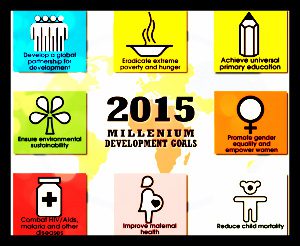
Twenty nations have made huge strides in just a few years towards the Millennium Development Goals (MDGs). The Millennium Development Goals are a series of international development goals set by the United Nations in 2000 that aim to eradicate poverty, hunger, and disease and improve the quality of life for the world’s poorest by the year 2015. Nations, that were described as troubled and conflict-hit, had not met any of the MDGs in 2010 have now at least met one. The World Bank cites better data collection and monitoring that have made progress more discernible.

The World Bank noted that countries Afghanistan, Nepal and Timor-Leste have decreased the number of people in extreme poverty by fifty percent or increased the number of girls enrolled in schools.

The World Bank aims to find ways to help countries that have relapsed such as Yemen which until the Arab Spring in 2011 was on course to reduce maternal mortality. It also aims to help conflict-hit countries transition from receiving humanitarian aid that ends once the cameras leave to building foundations for long-term development. To do so, the World Bank is working with the UN which has historically assisted with peace-keeping and humanitarian assistance.

World Bank President, Jim Yong Kim, called the results a wake-up call to “the global community [to] not dismiss these countries as lost causes. Development can and is being achieved, even amid fragility and violence.”

The World Bank plans to focus on aid effectiveness by studying how aid money is used and if it actually impacts the poor, particularly with the reduction of aid from the U.S. and Europe.

– Essee Oruma

Source: Reuters
Photo: A Celebration of Women

May 7, 2013
https://borgenproject.org/wp-content/uploads/borgen-project-logo.svg 0 0 Borgen Project https://borgenproject.org/wp-content/uploads/borgen-project-logo.svg Borgen Project2013-05-07 13:00:252020-05-26 08:45:52Progress Is Being Made Towards MDGs
Developing Countries, Development

Urbanization to Curb Poverty

urbanization-in-developing-countries
According to a study done by the World Bank, urbanization has proven to be a key factor in eradicating poverty. The bank’s Global Monitoring Report 2013 offers statics that positively reflect urbanization in developing countries and in countries that have made the most progress in reaching the 2013 Millennium Development Goals.

The Global Monitoring Report says that countries with large population centers such as Southeast Asia or China have made large strides in reducing poverty in comparison to sub-Saharan Africa, where 70% of the population lives in rural areas. Infant mortality rates are also up to nine percentage points lower in urbanized areas than in rural cities and villages.

Urbanized areas create jobs and are generally better at service delivery such as access to sanitation, health care, education and electricity. Access to sanitation varies as much as thirty percent, 80 percent in urban areas to 50 percent in rural areas. Poverty is also significantly lower in urban areas at 11.5 percent versus the 29.5 percent in rural areas. In Africa, poverty in urban areas stands at 33 percent in urban areas to 47 percent in rural areas.

The next step to urbanizing is to ensure resources are available and to move forward at a steady pace to avoid slum areas. Some people favor state support and the finance of health and education systems while others support a combination of public and private financing. The World Bank encourages countries with oil and mineral resources to use the revenues to finance urbanization and health care systems. However, countries such as Uganda, that do not have an abundance of natural resources, prefer to use those revenues to improve the infrastructure in rural areas. According to Maria Kiwanuka, Uganda’s Minister of Finance, there are trade-offs. When the government uses the oil revenue to strengthen the infrastructure in rural areas, it allows the people living there to make more money to eventually contribute to the health care system.

While there are many different ways to fund health and social services and contribute to urbanization and the ultimate end of poverty, the assurance of resources to create the change is most important, says Joe Verbeek, the lead economist for the Global Monitoring Report. By improving the health and education services for people living in rural areas, it will make the transition easier and improve their job skills if they choose to migrate to a city.

– Kira Maixner

Source Voice of America
Photo World Bank

May 5, 2013
https://borgenproject.org/wp-content/uploads/borgen-project-logo.svg 0 0 Borgen Project https://borgenproject.org/wp-content/uploads/borgen-project-logo.svg Borgen Project2013-05-05 02:55:352020-05-26 08:09:20Urbanization to Curb Poverty
Developing Countries, Development, Global Poverty, Poverty Reduction

The Open Borders Theory and Ending Global Poverty

Border_opt
Immigration has always been a hot button issue, especially considering the comprehensive reform laws currently being debated by U.S. congressional leaders. However, what effect would the opening of the nation’s borders have on global poverty? According to several developmental thinkers, quite a bit, as adopting many of the mass migration policies called for in the open borders theory could hypothetically eliminate global poverty forever.

The researchers responsible for the open borders theory, drawn from such disparate fields as Mathematics, Economics, and Philosophy, argue that through the enforcement of a closed border policy, individuals are stripped of their basic human right of self-determination. Furthermore, by allowing migrants to move freely between nations, the net loss of labor productivity could theoretically double the world’s GDP through the mitigation of capital flow inefficiencies.

In regards to the open borders theory, developmental economist Michael Clemens noted that, “Immigration is very, very far from being a zero-sum game of their poverty or ours. Within ranges that even slightly resemble current migration levels, it is rather simply ‘their poverty or their prosperity,’ while we remain prosperous.”

Additionally, supporters of the open borders theory debunked the notion that a huge influx of migrants would depress the wages of developed countries based upon the net employment gains of the managerial sector. And by enabling efficient use of migrant skill sets underutilized by the inadequate facilities of the global south, developed economies would reap huge financial dividends.

Although the open borders theory is still in its infancy and years away from being considered as a realistic solution to global poverty, innovative ideas such as these help to encourage further debate involving current developmental policy. Michael Clemens remarked that, “Development is about people, not places.”

– Brian Turner

Source: The Atlantic
Photo: Women On The Border

May 5, 2013
https://borgenproject.org/wp-content/uploads/borgen-project-logo.svg 0 0 Borgen Project https://borgenproject.org/wp-content/uploads/borgen-project-logo.svg Borgen Project2013-05-05 01:18:512020-05-26 08:23:47The Open Borders Theory and Ending Global Poverty
Page 159 of 163«‹157158159160161›»

Get Smarter

  • Global Poverty 101
  • Global Poverty… The Good News
  • Global Poverty & U.S. Jobs
  • Global Poverty and National Security
  • Innovative Solutions to Poverty
  • Global Poverty & Aid FAQ’s
Search Search

Take Action

  • Call Congress
  • Email Congress
  • Donate
  • 30 Ways to Help
  • Volunteer Ops
  • Internships
  • Courses & Certificates
  • The Podcast
Borgen Project

“The Borgen Project is an incredible nonprofit organization that is addressing poverty and hunger and working towards ending them.”

-The Huffington Post

Inside The Borgen Project

  • Contact
  • About
  • Financials
  • President
  • Board of Directors
  • Board of Advisors

International Links

  • UK Email Parliament
  • UK Donate
  • Canada Email Parliament

Get Smarter

  • Global Poverty 101
  • Global Poverty… The Good News
  • Global Poverty & U.S. Jobs
  • Global Poverty and National Security
  • Innovative Solutions to Poverty
  • Global Poverty & Aid FAQ’s

Ways to Help

  • Call Congress
  • Email Congress
  • Donate
  • 30 Ways to Help
  • Volunteer Ops
  • Internships
  • Courses & Certificates
  • The Podcast
Scroll to top Scroll to top Scroll to top