• Link to X
  • Link to Facebook
  • Link to Instagram
  • Link to TikTok
  • Link to Youtube
  • About
    • About Us
      • President
      • Board of Directors
      • Board of Advisors
      • Financials
      • Our Methodology
      • Success Tracker
      • Contact
  • Act Now
    • 30 Ways to Help
      • Email Congress
      • Call Congress
      • Volunteer
      • Courses & Certificates
      • Be a Donor
    • Internships
      • In-Office Internships
      • Remote Internships
    • Legislation
      • Politics 101
  • The Blog
  • The Podcast
  • Magazine
  • Donate
  • Click to open the search input field Click to open the search input field Search
  • Menu Menu

Archive for category: Development

Information and stories on development news.

Development, Global Poverty, Slums

Local Architecture and Government Planning in Rocinha, Brazil

Government_Planning
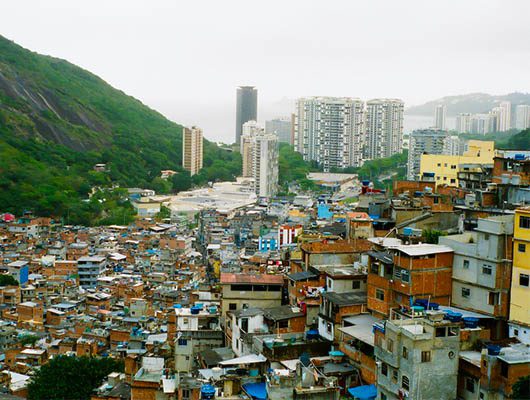
Rocinha, a neighborhood in Rio de Janeiro, Brazil, is one of the largest and densest slums in Latin America. The neighborhood that still struggles with drug cartels, lack of access to education and healthcare, and seemingly inescapable poverty is beginning to slowly change with the visionary architectural work of Ricardo de Olivera, as well as impactful government planning initiatives.

Featured in the series Rebel Architecture, architect Olivera has no formal training. This has given him the adaptable ability to work with the material of the local context of his favela, rather than imposing ineffective westernized techniques. “Ricardo is famous around here. Everyone wants his services,” says a local resident in the film entitled “The pedreiro and the master planner” directed by May Abdalla.

“A foreign architect would not get into this hole and dig. He would hire someone or would hire machines. But here in the favela, we are hands on… Most of the buildings here were built by pedreiros like me… I did all three things. I didn’t need an engineer or an architect or a decorator,” says Olivera in the film.

Olivera has built over 100 houses, as well as supermarkets and parking garages. He is visionary and passionate about improving the quality of life of his birthplace. Olivera’s simple designs meet the needs of his clients and neighbors both socially and financially. Favelas arise spontaneously with no help or design from the government, explains the film. Rocinha is considered Brazil’s most urbanized slum. The tiny 0.8 by 0.8 square mile, steep area is home to 100,000 to 200,000 people. Residents live in states of extreme poverty, in small shanties stacked on top of each other, up to 11 stories high.

Residents of Rocinha rarely have access to education. Citizens on average have had only 4.1 years of formal schooling, and less than one percent of adults have earned a degree above a high school diploma. Jobs in Brazil are reserved for citizens with formal degrees—so Rocinha residents do not have easy access to escaping the impoverished conditions they were born into.

“It has its problems—sanitation, access to quality housing. The other problem is because of the narrow streets where the police can’t go, drug traffickers settled in Rocinha. The government closed its eyes to the arrival of those forming the favelas because they didn’t have the resources to provide housing and they needed cheap manpower. This logic is present in each and every city in which there is a poverty belt,” says Luis Carlos Toledo, the architect behind the master plan for the government’s improvement plan for Rocinha in the film.

As Rio preps itself for the upcoming Olympic games, there are competing forces at play determining the future of Rocinha. The city has implemented pacification programs, which destroy slums in an attempt to make the city look cleaner and less impoverished to outsiders.

The city has also created an ambitious transportation plan— a cable car system that connects downtown Rio with Rocinha. Citizens are against this system, seeing it simply as an investment in the tourism industry rather than a viable transportation solution.

At the same time, various foreign urban planners, NGOs, and architects have come to Rocinha with good intentions, but without a working knowledge of the local community, threatening to bring gentrification to Rocinha.

Amidst these various forces, citizens of Rocinha are speaking up more than ever before. Community meetings in Rosinha have raised a collective voice against the cable car system. “Only the population of Rohica can preserve the spirit. And without that, there is no future for Rohinca,” declares the film.

“The residents have aspirations for the whole favela, not just their house,” explains the film.

Despite the Brazilian government’s mixed history with creating helpful change, localized urban planning by the government has brought improvements to parts of Rocinha. In 2011, an ambitious project to change the district called Rua 4 was successfully implemented. Residents were moved to public housing within their neighborhood, rather than being moved to the outskirts of the city which is often the case in attempts to improve housing.

Before the changes, the Rua 4 area was a 60 centimeter ally, known for having the highest tuberculosis rate in the world.

Dictated by the urban planning project, roads were widened in Rua 4 to about 12 meters. Buildings were improved structurally and painted brightly. Gardens and plazas shot up. Staircases were built to connect different levels. Residents have contributed to building playgrounds, a stage, mosaics and murals.

Here, people relax on their porches outside and no evidence of the drug trade is present. Head architect Luiz Carlos Toledo said “Rua 4 is… an example of how you can, without abandoning the traditional pathways of a favela, improve them, adapt them to the scale and the topography of the site.”

The successful government project and Olivera’s rebel architecture demonstrate that impactful change in favelas is possible. As the community begins to demand more change collectively, hope and greater improvements in Rocinha seem to be in the favela’s future.

– Margaret Mary Anderson

Sources: Arch Daily, Al Jazeera, Mundoreal, Rio On Watch
Photo: Flickr

July 24, 2015
https://borgenproject.org/wp-content/uploads/borgen-project-logo.svg 0 0 Borgen Project https://borgenproject.org/wp-content/uploads/borgen-project-logo.svg Borgen Project2015-07-24 10:53:072020-07-07 14:03:27Local Architecture and Government Planning in Rocinha, Brazil
Development, Food & Hunger, Global Poverty

This Year’s World Food Prize Winner

This Year’s World Food Prize Winner-TBP
BRAC founder Sir Fazle Hasan Abed received the prestigious World Food Prize on July 1 for his unparalleled accomplishments in alleviating global hunger.

The Bangladesh-based development organization combats global poverty in six ways. BRAC develops gender relations, provides grassroots-level services, provides quality health and education, supports small-scale farmers, uses microloans to build an inclusive financial environment, and upholds its values in self-sustaining solutions by using its surplus profits to reinvest back into its poverty reduction programs.

BRAC’s impact is enormous.

The site reports that its 97,000 health providers deliver basic healthcare ranging from maternal and neonatal services to child health services. These services tend to 24.5 million in Bangladesh alone. More than 1 million children found education in BRAC’s 38,000 primary and pre-primary schools, and 9.51 million received degrees. BRAC also provides youth empowerment clubs that have so far trained more than 260,000 teens from disadvantaged backgrounds.

The impact profile continues to report BRAC’s economic support. A total of 5.54 million people benefitted from microloans, totaling to a loan disbursement of $9.73 billion. In addition, 25 million received better hygiene and sanitation thanks to BRAC’s clean toilets.

Women living in poverty found solace in BRAC’s open forums for discussion, protests and proposals for change. Polli shomaj and union shomaj are two of BRAC’s 14,400 community-based organizations (CBOs). So far, there are 13,712 polli shomaj in 55 districts, serving an estimated 55 members per group. Similarly, there are 1,220 union shomaj in 55 districts.

Polli shomaj and union shomaj provide four much-needed services. They help poor communities access government and non-government organizations’ services and resources, protect female representation in rural regions, partner with local government developments and social initiatives, and actively thwart civil violence and conflict, especially against minority populations like women.

The BRAC site further profiles its contributions to the United Nations Millennium Development Goals. Since 1990, BRAC helped slash poverty and hunger in Bangladesh by 50%.

BRAC’s agricultural program developed two species of hybrid rice, one hybrid maize, one inbred rice and one vegetable strain for commercial sale, and more than 200 farmers have been trained in biodiversity creation and conservation. A total of 77,838 farmers practiced agriculture and aquaculture technology demonstrations, and 133,000 farmers learned how tech can improve crop yields. Further, 2,830 people in northern Bangladesh tried green methods in rice harvesting. By 2014, the program positively affected 107,157 people.

In 2012, BRAC’s integrated development programme (IDP) began to address health, education and microfinance in hard-to-reach areas. Two years after its launch, 7,951 people living in ultra poverty received soft loans. Concentrated livelihood planning was a success, as were BRAC’s many other programs in microfinance, social enterprise and investment, disaster relief, environmental protection, climate change reduction, health, nutrition, population, water, sanitation, hygiene, education, migration, advocacy for social change, community empowerment, gender, justice, diversity, human rights and legal services.

Thanks to Sir Fazle’s vision for change, BRAC’s work gave way for sustainable and lasting change, affecting millions of people worldwide.

– Lin Sabones

Sources: BRAC 1, BRAC 2, BRAC 3, World Food Prize
Photo: US News

July 24, 2015
https://borgenproject.org/wp-content/uploads/borgen-project-logo.svg 0 0 Borgen Project https://borgenproject.org/wp-content/uploads/borgen-project-logo.svg Borgen Project2015-07-24 08:34:012020-07-07 14:23:57This Year’s World Food Prize Winner
Development, Global Poverty, Sustainable Development Goals, United Nations

Sustainable Development Goals: Why They Matter

Sustainable_Development_Goals

In 2000, the United Nations set the Millennial Development Goals. Ambitious proposals that sought to improve the lives for the billions of impoverished around the world. Fifteen years later, many of those goals have been accomplished.

Globally, 700 million people were lifted out of extreme poverty. Millions were saved due to vaccinations for malaria, tuberculosis and other non-communicable diseases. The number of people who didn’t have access to freshwater dropped significantly and the disparity of boys to girls enrolled in school dropped in every region on earth.

This was all accomplished before 2015.

Some goals are still in progress. For example, efforts to lift people out of poverty can result in environmental degradation. The rate of hunger, while dropping, is not falling quickly enough to meet the goal set in 2000.

Despite this, the United Nations is now going even bolder. Set to be adopted by world leaders in September, the new Sustainable Development Goals seek to finish what the Millennial Development Goals started, while adding their own components.

The seventeen goals are comprehensive, and apply to individuals as well as countries. Despite their broadness in scope, these goals demonstrate that poverty, climate change, health and economic wellbeing are all interconnected issues.

These are the seventeen Sustainable Development Goals:

1. End Poverty in all its forms everywhere

2. End hunger, achieve food security and improved nutrition and promote sustainable agriculture

3. Ensure healthy lives and promote well-being for all at all ages

4. Ensure inclusive and equitable quality education and promote lifelong learning opportunities for all

5. Achieve gender quality and empower all women and girls

6. Ensure availability and sustainable management of water and sanitation for all

7. Ensure access to affordable, reliable, sustainable and modern energy for all

8. Promote sustained, inclusive and sustainable economic growth, full and productive employment and decent work for all

9. Build resilient infrastructure, promote inclusive and sustainable industrialization and foster innovation

10. Reduce inequality within and among countries

11. Make cities and human settlements inclusive, safe, resilient and sustainable

12. Ensure sustainable consumption and production patterns

13. Take urgent action to combat climate change and its impacts

14. Conserve and sustainable use the oceans, seas and marine resources for sustainable development

15. Protect, restore and promote sustainable use of terrestrial ecosystems, sustainably manage forests, combat desertification, and halt and reverse land degradation and halt biodiversity loss

16. Promote peaceful and inclusive societies for sustainable development, provide access to justice for all and build effective, accountable and inclusive institutions at all levels

17. Strengthen the means of implementation and revitalize the global partnership for sustainable development

Indeed, ambitious.

The United Nation website has a more comprehensive explanation of how each of these goals are to be accomplished by 2030.

It is estimated that these goals will cost roughly one trillion dollars a year. However with international tax reform, developing countries will generate more domestic tax revenue and be able to meet their own development agendas with less foreign aid. Members of the United Nations believe this will allow international aid to become a thing of the past.

In an interview with the BBC, International Development Secretary Justine Greening said the Sustainable Development Goals are different from other United Nation initiatives because it harnesses the private sector investment, in addition to developing country’s domestic resources.

She believes this will “turbo charge” development.

The ambitiousness of the Sustainable Development Goals is daunting. However the past fifteen years saw so much progress that the world can be cautiously optimistic.

– Kevin Meyers

Sources: BBC, Post2015.org, UN Department of Economic and Social Affairs
Photo: Fiinovation

July 23, 2015
https://borgenproject.org/wp-content/uploads/borgen-project-logo.svg 0 0 Borgen Project https://borgenproject.org/wp-content/uploads/borgen-project-logo.svg Borgen Project2015-07-23 08:49:412020-07-07 14:41:23Sustainable Development Goals: Why They Matter
Children, Development, Education, Global Poverty

40% of African American Children Living in Poverty

African_American
For the first time since the United States began keeping Census records, the number of African American children in poverty has surpassed that of white children. As of 2013, there were reportedly 4.2 million African American children living below the poverty line versus 4.1 million white children. What makes this statistic even more alarming is the fact that white children outnumber African American children under the age of 18 by three to one.

According to an article by USA Today published on July 16 of this year, “The poverty rates for Hispanic, white and Asian children improved as the United States emerged from an economic recession, but for African-American children, little changed. Poverty is defined as living in a household with an annual income below $23,624 for a family of four.” African American children have suffered more than any other demographic in the United States over the past few decades.

Location is largely to blame for the disparity among African American children. Poor black neighborhoods have remained in poverty for decades without any real sign of improvement. The poverty numbers are highly concentrated in these primarily urban, black areas. Detroit has emerged as a hot-spot for African American children.

In the Michigan city, roughly 60 percent of these children are in poverty, significantly higher than anywhere else in the area. An excerpt from CBS reporting on the matter says, “In Detroit, the jobs have left, the good schools have left, there is poor transportation, high insurance rates, and difficulty getting reasonably good paying jobs.” African American children in poverty suffer as a direct result of their environment.

This trend will continue to increase and spread rapidly across the country if real change does not come soon. More African American children are continually falling behind because of a lack of proper education and social reform. The numbers will continue to grow until the government begins to take this situation seriously.

– Diego Catala

Sources: USA Today, CBS Global
Photo: Flickr

July 22, 2015
https://borgenproject.org/wp-content/uploads/borgen-project-logo.svg 0 0 Borgen Project https://borgenproject.org/wp-content/uploads/borgen-project-logo.svg Borgen Project2015-07-22 19:12:042020-07-08 13:45:5840% of African American Children Living in Poverty
Development

UN Report Shows Progress on Poverty

Progress_on_Poverty
This past week, the U.N. released a report on the successes and failures of the Millennium Development Goals (MDGs). The report revealed that more than one billion people have successfully broken out of poverty since 1990. It showed China and India playing key roles in this significant reduction of and progress on poverty.

The report also showed that in addition to a sharp drop in extreme poverty, the MDGs have facilitated other major successes. Presently, just as many girls as boys are enrolled in primary schools around the globe. Simple steps like installing bed nets in parts of the developed world have prevented approximately six billion deaths from malaria.

Experts say that the most important MDG contribution has been the creation of a measuring system that depicts what countries have done for their people, and what issues they have neglected. Concrete measurements of well-being—like how many children are clinically malnourished—provide the most helpful insight on the most pressing needs.

The report stated that the world’s most populous countries, China and India, played a central role in global poverty reduction. Economic progress in China helped the extreme poverty rate in Eastern Asia fall from 61 percent in 1990 to a mere four percent in 2015.

By the same token, development in India helped extreme poverty in Southern Asia decline from 52 percent to 17 percent over the same time period. Additionally, Southern Asia’s rate of poverty reduction has accelerated over the past seven years.

While these remarkable gains should not be understated, there is still much more to be done. In India, an estimated 600 million people still defecate out in the open, which dramatically heightens risk of serious disease, especially for children. Additionally, jobs are still not keeping pace with the country’s population growth.

Despite much progress, certain MDG targets were still missed, including a two-thirds reduction of child mortality and women’s deaths in childbirth. Persisting gender inequality was acknowledged as “one of the starkest failures” in the report, as women are still more likely to be poor than men.

This is not to say that progress has not been made on both fronts, but to encourage an even greater collaborative effort in the future. The MDG target of halving the proportion of people living in extreme poverty was achieved ahead of the 2015 deadline five years ago. This is the kind of efficiency we must continually strive for.

The most recent estimates show that the proportion of people living on less than $1.25 per day fell globally from 36 percent in 1990, to just 15 percent in 2011. As of 2015, projections indicate that the global extreme poverty rate has fallen even further, to 12 percent.

At the launch of the report in Oslo, Secretary-General Ban Ki-moon proudly stated, “The report confirms the global efforts to achieve the goals have saved millions of lives and improved conditions for millions more around the world.” He encouraged the celebration of MDG successes across the global community.

Indeed, the report’s findings most certainly call for worldwide celebration. So too, however, they paint a picture of certain key areas in need of improvement. Looking ahead, findings such as these should help to pave the path for the post-2015 development goals agenda.

– Sarah Bernard

Sources: NY Times, Economic Times
Photo: NY Times

July 21, 2015
https://borgenproject.org/wp-content/uploads/borgen-project-logo.svg 0 0 Borgen Project https://borgenproject.org/wp-content/uploads/borgen-project-logo.svg Borgen Project2015-07-21 15:45:262020-07-08 14:43:10UN Report Shows Progress on Poverty
Development, Global Poverty

The Concept Behind $300 Housing

Housing
The concept of building cheap houses for the poor to improve their living standards is hardly a new one. However, a house that is sustainable, affordable, part of an “ecosystem” of services of electricity, water and sanitation, and, perhaps most importantly, maintains people’s dignity. Sounds far-fetched, especially with a price tag of just $300. Vijay Govindarajan and Christian Sarkar, the brains behind the idea, believe that it can be done.

Govindarajan and Sarkar first outlined their concept in a Harvard Business review blog a few years ago. Since then, architects, companies and other students have all tried to take up the challenge of building such a house. Some have had limited success, while others introduced ideas that make the concept even more inspiring.

The solution to the problem of affordable housing, Govindarajan and Sarkar argue, comes about when companies start treating the poor as valued customers. Once they are, innovation and efficiency will fill the gap governments and NGOs have not been able to satisfy. The market for affordable housing amounts to more than $5 trillion.

More than 1.5 billion people in the world lack houses that are sustainable and able to cater to their needs. More than 330 million of them live in slums, where poor quality housing compounds the problems of unsanitary practices and overcrowding. This number is projected to rise by another million by 2025.

Govindarajan and Sarkar believe that the secret to affordable and sustainable homes lies in three “D’s”: dignity, durability and delight. Building homes out of waste material furthers inequality and the segregation of poor communities from the richer. The house must be built of out materials that would maintain the dignity of the poor.

The house should also be durable because a house that constantly falls into disrepair will end up being more expensive to the owners. It should also be appealing to the eye and enjoyable to live in. When owners regard their house as more of a home rather than just their living quarters, they will be more inclined to look after it.

Harvey Lacey, an engineer from Texas, took these ideas even further. He calls his concept Ubuntublox, where people build their houses themselves. This helps create an attachment to the house and teaches them the skills they would need to maintain it.

— Radhika Singh

Sources: The Guardian, Harvard Business Review 1, Harvard Business Review 2, Harvard Business Review 3, Harvard Business Review 4
Photo: Flickr

July 18, 2015
https://borgenproject.org/wp-content/uploads/borgen-project-logo.svg 0 0 Borgen Project https://borgenproject.org/wp-content/uploads/borgen-project-logo.svg Borgen Project2015-07-18 07:37:462020-07-14 14:46:00The Concept Behind $300 Housing
Aid Effectiveness & Reform, Development, Global Poverty, Health

Financing Global Health

Financing_Global_Health

With the closing of the Millennium Development Goals window and various summits regarding foreign policy, international development and global health reform, the way that we fund many projects and initiatives is changing. The introduction of the Sustainable Development Goals, expected this fall, will redirect funds and call for new investment strategies.

The Development Goals outline specific targets for improving health worldwide, which facilitates investment for major donors. With the anticipated adoption of the lengthier Sustainable Development Goals, there is concern over whether or not the lack of a very specific, short list of aims could complicate and subsequently stall funding. The broader targets group things like communicable diseases together, where as in the past diseases had been separate goals. However, the past focus on specific individual diseases did give way for some unpredictability. For example, with such focus individual countries would oftentimes focus on specific diseases, so when a primary benefactor experienced some political or economic instability, so did the projects that they were funding. The introduction of the Sustainable Development Goals will shift funds from aims such as HIV/AIDS prevention, maternal mortality and child mortality, which typically receive the most aid, to new aims more focused on sustainability.

As we transition into more of a sustainability mindset, consideration of where the funds are coming from is increasingly important. In the past, the majority of funds in developing countries for development projects have come from foreign actors. If the aim of these goals, in the long-run, is sustainability, it would make sense that we would focus on helping these countries finance the projects domestically. This would involve continuing some financial aid, but also providing additional and extensive educational aid, to give people both the means and the tools to make sustainable changes to improve the health of their nations.

We will continue to see more collaboration on how to come at the new set of goals in terms of financing. One topic to be frequently discussed is how to use existing funds in more useful ways to minimize the additional capital needed to combat the updated list of health and development problems. Ways that can help include developing and disseminating tools, creating policies that minimize corruption and streamlining fund allocation specifically to targeted development projects. The new set of goals calls for in-depth analysis of past development financing and projects as well as development of new strategies and policies, so that the international development community can ease into the transition of alleviating the newly designated most pressing matters in the international community. Financing global health is truly a dynamic issue.

– Emma Dowd

Sources: Devex, Devex, Forbes, Humanosphere
Photo: World Affairs Council

July 14, 2015
https://borgenproject.org/wp-content/uploads/borgen-project-logo.svg 0 0 Borgen Project https://borgenproject.org/wp-content/uploads/borgen-project-logo.svg Borgen Project2015-07-14 09:38:332024-12-13 17:51:45Financing Global Health
Development, Women

How Clean-Burning Gas Stoves Can Help Sudan

world_globe_borgen_africa
The country of Sudan has been struggling with violent conflicts since an ongoing genocide began in the Darfur region in 2003. Over the past twelve years, nearly 400,000 citizens were killed and another 2.5 million were displaced by the Janjaweed militia. The country has been investigated for many human rights violations, but the suffering continues today. Currently, 2.7 million citizens reside in displaced persons camps, and 4.7 million rely on humanitarian aid to survive.

Daily life in Darfur is difficult for anyone, but women face an exceptionally dangerous reality. Rape has often been used as a tool of war in this region. Militias will enter villages, kill off the men of the households, and then rape the women. Many women do not report these experiences, but even when they do, the authorities do little to help. Victims may be ostracized, especially if they become pregnant.

In Sudan, wood burning stoves are commonly used for cooking. Being in charge of collecting firewood means miles of walking alone, and women often face violence when they go to gather fuel for these stoves. They could be attacked or raped while making these walks. Even when left alone, they still suffered from wounds on their hands and feet after dragging wood for miles.

Fueling these wood stoves was extremely dangerous for women. Furthermore, the stoves presented environmental concerns. Deforestation has damaged the fertile land in Sudan, and indoor wood stoves produce toxic smoke. To tackle these issues, The Darfurian Women’s Development Network began distributing gas stoves to thousands of households in Darfur.

The organization hoped to raise awareness of the negative health and environmental impact of wood stoves, reduce pressure on the dwindling natural resources necessary to fuel them and reduce indoor air pollution and toxic smoke production. They distributed gas stoves to 15,000 households in Darfur, specifically targeting the groups who struggled most: single women, displaced citizens, manual workers and farmers. These stoves are powered exclusively by LPG gas, a clean energy source.

So far, the gas stoves have had an overwhelmingly positive impact, especially for women. They no longer need to make frequent, dangerous treks to gather firewood, leaving them less vulnerable to sexual violence and giving them peace of mind. With a decreased need for wood to burn, ecosystems can begin to recover. Smoke from wood burning stoves could cause coughing and chest infections when inhaled, but the gas stoves pose no such health threats.

The gas stoves cannot solve all the problems that Sudanese citizens currently face, but they have improved quality of life for many. The Darfurian Women’s Development Network will continue distributing these stoves in order to keep steadily working towards a brighter future for Sudan.

– Jane Harkness

Sources: The Guardian, Practical Action, Response Magazine, United Human Rights Council

July 12, 2015
https://borgenproject.org/wp-content/uploads/borgen-project-logo.svg 0 0 Borgen Project https://borgenproject.org/wp-content/uploads/borgen-project-logo.svg Borgen Project2015-07-12 14:23:262024-05-27 09:25:49How Clean-Burning Gas Stoves Can Help Sudan
Development, Global Poverty

Is Hosting the Olympics a Good Investment for the Host Population’s Welfare?

Olympics-TBP

The purported benefits of hosting mega-events such as the Olympics have been increasingly criticized by economists and journalists, and questions are being raised. Are the host nations for the Olympics or similar events making a good investment? Could the money be better leveraged to help the poor via other means? What makes hosting mega-events beneficial or not?

The costs of hosting the Olympics used to be small, in the millions of dollars. In the past few decades, this has not been the case. Billions of dollars are poured into infrastructure projects and other related costs in order to create the environment for hosting the Olympic Games.

The huge investment and sunk costs put into hosting the Olympics are not always returning the same value. The stadiums built for the events are often left unused and in a state of decay within only a few years of the events. With little demand for such a large amount of new sports infrastructure, the huge construction costs rarely pay for themselves in the long run.

On the other hand, there is such a thing as the “Olympic Effect”—trade openness and overall transactions tend to increase for the host country following the Olympics. Prestige and attention is also granted to the host country, as the Olympics are a chance to showcase the host’s best qualities and cultural attractions. This is important—but is it worth the cost? Many would say it probably is not.

The Sochi Winter Games cost Russia $50 billion, the highest costs of all time for an Olympics Game. The national economy benefited negligibly from the Games but the regional effect may have indeed had some positive impact. Because of the expected increase in tourism and guests in the region, infrastructure of all kinds had to be upgraded to be able to accommodate the flash flood of spectators and athletes. This could mean a long-lasting positive impact on certain regions of the country, even if the new infrastructure is underused afterwards.

The more recent Olympic Games have been held in emerging economies such as Russia and China, with Brazil upcoming. This trend away from more developed nations such as the United States and European countries is important to recognize. Government spending is particularly important for these developing nations. Investing wisely is the name of the game for economic development, and the Olympics net return on investment is questionable at best. This is not a good sign for these countries. For example, Brazil built massive stadiums in small cities for the World Cup that had no use for them past the mega-events for which they would be used. The government even cleared out favelas (slums) in order to build new infrastructure and gentrify city outskirts. It begs the question, is it possible that Brazil should be using the billions of dollars to help those in the favelas and others like them, rather than build massive stadiums? These are the questions that emerging economies must consider carefully when they make the investment that most economists consider an economic net loss.

Norway recently withdrew its bid for the 2022 Winter Games due to concerns that the cost would be too large and a lack of public support. The lack of evidence that the Olympics produce the economic benefits advertised is a message that must be heeded. The hidden costs of hosting mega-events such as the Olympics and the World Cup are especially prominent to a developing economy like Brazil. First, they might end up losing money and, secondly, that money could have been leveraged to a much greater degree. Just imagine if instead of hosting the Sochi Games, Russia had the same enthusiasm for spending $50 billion—but on social and job-training programs designed to reduce poverty within their own borders. These are the hidden costs of hosting mega-events.

– Martin Yim

Sources: NBER, The Economist, International Business Times, Reuters
Photo: NPR

July 12, 2015
https://borgenproject.org/wp-content/uploads/borgen-project-logo.svg 0 0 Borgen Project https://borgenproject.org/wp-content/uploads/borgen-project-logo.svg Borgen Project2015-07-12 08:41:512020-07-10 11:23:37Is Hosting the Olympics a Good Investment for the Host Population’s Welfare?
Development, Disease, Education, Global Poverty

Rosenkranz Prize Winners Dedicated to Improving Healthcare in Developing Countries

Rosenkranz Prize
The Rosenkranz Prize aims to fund the work of Stanford University’s rising research stars who have the desire to improve healthcare in developing countries but who lack the necessary resources.

Most grants in the scientific field are awarded to established researchers. But because the Rosenkranz Prize is awarded to rising researchers, it is able to split funds between two young researchers.

Marcella Alsan, MD, PhD, is investigating how the division of labor among men and women begins at a young age in the developing world. Alsan theorizes that this is because young girls are responsible for taking care of younger siblings, missing endless days of school.

Alsan states, “Anecdotally, girls must sacrifice their education to help out with domestic tasks, including taking care of children, a job that becomes more onerous if their youngest siblings are ill.”

More than 100 million girls worldwide do not complete secondary school. Alsan will be analyzing whether medical interventions in children under the age of 5 show an increasing trend in schooling for their older sisters.

By analyzing this data, Alsan will be able to prove or disprove if sick siblings affect their older sister’s school participation. If this thesis proves true, implementing medical interventions in younger children will increase the number of girls in school. By completing school, girls will be able to not only take care of family and their own children but also have a strong background in education.

The second Rosenkranz Prize winner, Jason Andrews, an infectious disease specialist, is focusing his funds on the development of cheap, effective diagnostic tools for infectious diseases.

Andrews recalls working in rural Nepal as an undergraduate student and “founded a nonprofit organization that provides free medical services in one of the most remote and impoverished parts of the country . . . one of the consistent and critical challenges I encountered in this setting was routine diagnosis of infectious disease.”

Andrews realizes that the diagnoses are hindered by lack of electricity, limited laboratory resources and lack of trained personnel. To eliminate these obstacles, Andrews is developing “an electricity-free, culture-based incubation and identification for typhoid; low-cost portable microscopes to detect parasitic worm infections; and most recently an easy-to-use molecular diagnostic tool that does not require electricity.”

Andrews does not want to develop new diagnostic approaches. Rather, Andrews believes he can develop the diagnostic approaches already in place to function in an affordable and accessible manner.

With the Rosenkranz Prize, Andrews is also able to develop a simple, rapid, molecular diagnostic or cholera that is 10 times more sensitive than the tests currently available. Andrews plans to test this new technology in Nepal.

The Rosenkranz Prize has allowed two individuals dedicated to helping healthcare in developing countries by providing the necessary funding. With the help of Alsan, girls may be able to attend school without worrying about ill siblings, and Andrews has shed light on the problems facing many developing countries when providing medical help. But by further developing the diagnostic approaches available, healthcare will change for the better.

– Kerri Szulak

Sources: Scope, Stanford
Photo: PickPik

July 11, 2015
https://borgenproject.org/wp-content/uploads/borgen-project-logo.svg 0 0 Borgen Project https://borgenproject.org/wp-content/uploads/borgen-project-logo.svg Borgen Project2015-07-11 07:59:042024-05-27 09:25:35Rosenkranz Prize Winners Dedicated to Improving Healthcare in Developing Countries
Page 131 of 163«‹129130131132133›»

Get Smarter

  • Global Poverty 101
  • Global Poverty… The Good News
  • Global Poverty & U.S. Jobs
  • Global Poverty and National Security
  • Innovative Solutions to Poverty
  • Global Poverty & Aid FAQ’s
Search Search

Take Action

  • Call Congress
  • Email Congress
  • Donate
  • 30 Ways to Help
  • Volunteer Ops
  • Internships
  • Courses & Certificates
  • The Podcast
Borgen Project

“The Borgen Project is an incredible nonprofit organization that is addressing poverty and hunger and working towards ending them.”

-The Huffington Post

Inside The Borgen Project

  • Contact
  • About
  • Financials
  • President
  • Board of Directors
  • Board of Advisors

International Links

  • UK Email Parliament
  • UK Donate
  • Canada Email Parliament

Get Smarter

  • Global Poverty 101
  • Global Poverty… The Good News
  • Global Poverty & U.S. Jobs
  • Global Poverty and National Security
  • Innovative Solutions to Poverty
  • Global Poverty & Aid FAQ’s

Ways to Help

  • Call Congress
  • Email Congress
  • Donate
  • 30 Ways to Help
  • Volunteer Ops
  • Internships
  • Courses & Certificates
  • The Podcast
Scroll to top Scroll to top Scroll to top