Effects of Poverty on Development of Children
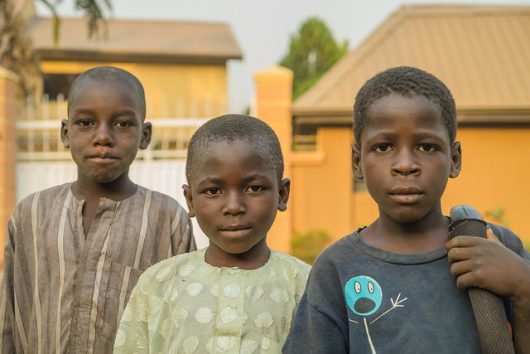 Of all the social issues faced by a developing country, poverty often feels especially overwhelming. Of the many factors working against the poor, the effects of poverty on the brain development of children is probably the most daunting yet.
Researchers have long suspected a correlation between a child’s behavior and cognitive abilities and their socio-economic status. This correlation becomes even more apparent among people living in extreme poverty. In a 2015 study published in Nature Neuroscience, a team led by neuroscientists Kimberly Noble from Columbia University in New York City and Elizabeth Sowell from Children’s Hospital Los Angeles, California, imaged the brains of 1,099 children, adolescents and young adults in several U.S. cities. Their findings revealed that children from the lowest income bracket of less than $25,000 had up to six percent less surface area than children from families making more than $150,000. Within the poorest families themselves, income inequalities of a few thousand dollars were associated with major differences in brain structure and cognitive skills.
Within countries that live on less than a dollar a day, researchers have found other developmental problems such as stunted growth and cognitive issues. In an unprecedented study conducted in 1960, a team of researchers began giving out nutritional supplements to young children in rural Guatemala. The study was aimed at collecting data to test the theory that providing enough supplements during a child’s formative years would help in reducing stunted growth. This theory was proved in the early 2000s, when the researchers returned to check on the children who had received the supplements in the first three years of their life. They found that not only did the children grow one to two centimeters more than the control group; they even scored higher in cognitive tests. This experiment proved the effects of poverty on the brain development of children.
In 2006, the World Health Organization (WHO) published a study into the heights and weights of children between birth and age five in Brazil, Ghana, India, Norway, Oman and the United States. The results showed that healthy children, regardless of their home countries, follow a very similar growth trajectory. Based on these results, the WHO established benchmarks for atypical growth. In countries like Bangladesh, India, Guatemala and Nigeria, over 40 percent of children meet the definition of stunted growth. In light of the growing awareness and consensus around effects of stunting, the WHO included the reduction in the number of children under five with stunted growth by 40 percent as one of its six global nutritional targets for 2025.
Similar studies were conducted in Brazil, Peru, Jamaica, the Philippines, Kenya and Zimbabwe, all with the same conclusion. However, pediatric cognitive development is a complex multidimensional problem and not all stunted growth, which affects an estimated 160 million children worldwide, is connected to malnutrition. Malnutrition is one side of this multifaceted problem; poor sanitation, stressful home environments, exposure to industrial chemicals, lack of access to good education and income disparities are other possible factors.
It would not be an overstatement to say that all research points to an urgent need to address the problem of world poverty. Factors such as lack of education, poor hygiene, lack of pre-post-natal care, nutritional deficiency, exposure to chemicals and stressful childhood are some of the paralyzing issues faced by those in extreme poverty. The daunting effects of poverty on the brain development of children have already been proven by researchers and new research and studies are further fortifying what is already known. In essence, even as officials start to take action in providing adequate nutrition, research cannot be clearer in building the case for the urgent need to eliminate world poverty.
– Jagriti Misra
Photo: Flickr
