• Link to X
  • Link to Facebook
  • Link to Instagram
  • Link to TikTok
  • Link to Youtube
  • About
    • About Us
      • President
      • Board of Directors
      • Board of Advisors
      • Financials
      • Our Methodology
      • Success Tracker
      • Contact
  • Act Now
    • 30 Ways to Help
      • Email Congress
      • Call Congress
      • Volunteer
      • Courses & Certificates
      • Be a Donor
    • Internships
      • In-Office Internships
      • Remote Internships
    • Legislation
      • Politics 101
  • The Blog
  • The Podcast
  • Magazine
  • Donate
  • Click to open the search input field Click to open the search input field Search
  • Menu Menu

Archive for category: Children

Information and stories addressing children.

Children, Food & Hunger, Food Aid

Food Alone Not Enough for Malnourished Children

Researchers studying malnourished children in Bangladesh have concluded that current therapeutic food interventions, while effective in saving lives, is not enough to reverse damage done in formative years.

Doctors have been trying to address problems that formerly malnourished children now in treatment still face such as stunted growth, immune deficiencies and slow intellectual growth. It is now becoming apparent that these development challenges are due to an immature system of microbial organisms that inhabit the digestive tracts of healthy children.

In the study, researchers compared fecal samples of 64 malnourished children to samples from 50 healthy Bangladeshi children that had been collected monthly over the first two years of their lives. In the healthy samples, 24 species of bacteria were found and used to predict the maturity of a child’s microbial system.

The study showed that when these children were afflicted with diarrhea, their microbial systems quickly recovered. The malnourished children hospitalized for diarrhea showed little recovery in the maturity of these systems after treatment with antibiotics and therapeutic foods, as they were lacking in healthy microbes to begin with.

This deficiency likely stems from undernourishment in the first two years of life, a formative period that is essential to developing a healthy brain, immune system and microbial system.

“Perhaps healthy growth and attainment of our full potential requires healthy development of our microbial organ, and also microbes living in other parts of our bodies,” said researcher Jeffrey I. Gordon of Washington University in St. Louis.

Current treatment for undernourishment includes rehydration, a liquid diet of milk suji (whole milk powder, rice powder, sugar and soya oil) and a series of multivitamins and antibiotics to help fight infection. This method has decreased the mortality rate in malnourished children by 47 percent and reduced risk of hypoglycemia.

Researchers in the recent study questioned the long-term results of such treatment protocols and the extent to which they restore normal growth and development. Gordon stated that the current methods should be adjusted to include probiotic supplements, as well as prolonged consumption of therapeutic foods.

“We need to think of food as interacting with this microbial organ,” he said.

Ed Yong, a science writer for Discover Magazine, writes that roughly 1,000 species of bacteria reside in the human bowel, though the makeup of these species varies from person to person. Each individual carries about 160 different bacterial species; it is estimated that 57 exist in the majority of the population. These microbes serve functions such as breaking down complex sugars, producing vitamins and fatty acids and converting chemicals into useful substances.

Factors that impact the development of healthy bacteria include diet, genetics and locale. Research has shown that even the method of delivery can impact the bacterial makeup of an infant; those that are delivered via C-section show less diversity in microbial systems than those delivered naturally. These differences can affect other facets of daily life including susceptibility to disease, predisposition to obesity and the ease with which certain foods are digested.

– Kristen Bezner

Sources: Discover, Science Direct, National Geographic 1, National Geographic 2, Nature
Photo: Chai Counselors

June 9, 2014
https://borgenproject.org/wp-content/uploads/borgen-project-logo.svg 0 0 Borgen Project https://borgenproject.org/wp-content/uploads/borgen-project-logo.svg Borgen Project2014-06-09 07:51:522024-06-05 01:57:30Food Alone Not Enough for Malnourished Children
Children, Global Poverty, Hunger, Malnourishment

Malnutrition in Mali

Ranking 182nd on the Human Development Index (the 6th lowest ranking on the planet,) Mali is recognized as one of the most nutritionally unstable and under developed countries in the world. About four in 10 children under the age of 5 are underweight, and one in four people are as well. As a study from 2014 indicates, over 1.5 million people are not sustained by a regular supply of food.

This landlocked country is often afflicted by droughts and insect infestations, which deplete the crops upon which they often rely on for food. While malnutrition in Mali afflicts the entire population, it is the second largest killer of children under the age of 5.

In her intensive ethnographic study of Magnambougou, Mali, “Dancing Skeletons: Life and Death in West Africa,” however, Dr. Katherine Dettwyler suggests that rather than poverty, a lack of education surrounding nutrition is the main root of malnutrition in infants and young children. It is the mothers’ misunderstanding that it is not simply enough to give children food, but in the early stages of development, it is crucial to distribute the right kinds of food.

On one of her visits to Mali, Dettwyler examined a little girl with kwashiorkor, of which the primary symptom is swelling all over the body and particularly in the abdomen. The disease is a result of protein deficiency combined with a high caloric intake and often appears when the child cannot sustain the same level of protein intake after being weaned.

The mother who summoned Dettwyler called the disease “funu bana,” meaning “swelling sickness,” and believed her daughter caught it from another child. She begged Dettwyler for medicine to cure her daughter despite Dettwyler’s assurance that all her daughter needed was to have a higher quantity of protein slowly introduced to her diet.

Dettwyler also offers an anecdote regarding misconceptions about nutrition that occurred when she brought her young daughter Miranda to Mali. When the two were eating with some of the villagers and Dettwyler gave her piece of chicken to her daughter, she was immediately questioned. One man explained that good food should not be wasted on the young, because they have their whole lives to eat, while the old should be honored because they will soon die. Dettwyler, however, tried to explain that children should be the ones to receive the better food because they need the protein to fuel their growth.

Moreover, a large reason for the high child mortality rate due to malnutrition is because adults often have trouble identifying the signs of malnutrition. In her ethnography, Dettwyler notes that “people simply get used to the way children look. If the typical child is mildly to moderately malnourished, then that becomes the standard… normal is what you’re used to” In addition to providing emergency relief, Dettwyler, along with Action Against Hunger, argue that the key to combating malnutrition in Mali is education, and that teaching Malians how to identify malnourished children will be an enormous step in the process.

– Jordyn Horowitz

Sources: Action Against Hunger, Dancing Skeletons, WFP
Photo: Flickr

June 9, 2014
https://borgenproject.org/wp-content/uploads/borgen-project-logo.svg 0 0 Borgen Project https://borgenproject.org/wp-content/uploads/borgen-project-logo.svg Borgen Project2014-06-09 07:49:552024-06-10 02:22:48Malnutrition in Mali
Child Soldiers, Children, Global Poverty, Slavery

Eight Child Labor Facts

child labor facts
The act of using children for free or cheap labor has been around for centuries, and while it is not often brought up in conversation, this dirty little secret lives on in numerous countries, including the U.S.

Here are eight Child Labor facts from all over the world:

1.  Child labor is not just something that happens overseas
China, Asia and Africa are not the only nations that use children for cheap labor. Tobacco fields in the U.S. use young children to pick the plants. These children are exposed to dangerous pesticides and nicotine on a regular basis and sometimes get so sick they can hardly stand.

2. Child labor in tobacco fields is legal in the U.S.
The U.S. allows children as young as 11 to legally work in tobacco fields where they spray harmful chemicals so close to them they can hardly breathe. To put this in perspective: a child working in tobacco fields is illegal in countries like Russia and Kazakhstan, but is legal in the United States.

3.  Pakistan participates in selling children as slaves
Children in Pakistan can be sold by their parents or, more often, are abducted and sold into slavery to companies for profit. Companies that have utilized this backwards practice include Nike and the Punjub province, which is the largest seller of stitched rugs, musical instruments and sports equipment.

4.   Afghanistan gives away young girls to pay off debts
Another fact about child labor comes from Afghanistan where children make up roughly half of the population. Children often work in the textile industry, the poppy fields, cement and food processing. Parents may also sell their underage daughters into slavery in order to pay off a debt.

5.  Zimbabwe’s Learn as You Earn Program
The Learn as You Earn Program in Zimbabwe may not sound too bad at first glance, but it is another ploy to bring in children for cheap labor. The program brings children into the forestry and agricultural sectors so they can “learn” about those markets. Children often choose this in place of a formal education.

6.  Child Soldiers
Children who are displaced in war-torn countries like Afghanistan or Sudan are often put to work as child soldiers. These children are given guns and minor training and are told to defend their country. Some children may even be used as suicide bombers.

7.  Underage girls and sexual slavery
Young girls from all over the world who are either displaced by war, abducted while visiting foreign countries or even sold by their parents for money often find themselves in forced sexual slavery.  This problem is growing in Sudan, Somalia, Thailand, Japan, India and the United States.

8.  North Korea outlaws underage labor, continues to hire children
The government of North Korea officially outlawed child labor, but children still make up a large percentage of the people who work in factories. They also have labor camps where they send children to work in order to be re-educated for any type of political offenses.

These facts about child labor around the world can seem gruesome and a maybe a little far-fetched, but the point is that there are children who live these nightmares every single day.

– Cara Morgan

Sources: Business Insider, CNN, The Nation
Photo: Flickr

June 6, 2014
https://borgenproject.org/wp-content/uploads/borgen-project-logo.svg 0 0 Borgen Project https://borgenproject.org/wp-content/uploads/borgen-project-logo.svg Borgen Project2014-06-06 12:54:272019-08-21 10:51:12Eight Child Labor Facts
Activism, Children, Global Poverty, Health, Women, Women & Children

Education and Menstruation in Uganda

Menstruation is a major reason for young girls in Uganda to miss school. Reasons for their absence stems from the stigma associated with “that time of the month,” a lack of sanitary napkins and the limited facilities available to students. Attending school while on their period forces girls to put their health at risk and chance being the subject of humiliation.

In an interview with a Guardian reporter, 16-year-old Lydia from Kampala, Uganda expressed why going to school during her period is difficult. She explained that some of the toilets did not have doors, so that if someone walked in, they would see her. Her school also has only four toilets for 2,000 students.  The toilets’ inability to flush or have water complicates the issue further, making menstruation in Uganda a problem in multiple ways.

In a recent study by SNV, officials report that girls miss between 8 to 24 days of school per year while menstruating.

Some girls attempt to prevent their clothing from being ruined by trying to absorb the blood with old cloth or old t-shirts, but these methods are not particularly successful. In another interview, Auma Milly commented that disposable pads are very expensive and are often not available in the more rural regions. Consequently, she felt embarrassed when she went to school and would soil her clothes so often that she chose not to attend.

In an attempt to address the problem regarding women’s sanitary needs, organizations including Save the Children, WaterAid, the Institute of Reproductive Health and local NGO Caritas Lira have begun to raise awareness and assist the cause.  Representatives from WaterAid commented on the importance of deconstructing the taboo regarding women’s health. The founder of 50 Cents. Period. described the battle as giving girls the basic right to hygiene. SNV and Caritas Lira have gone to schools in order to teach girls how to make reusable, affordable pads. Additionally, female Ugandan government officials have begun advocating for reduced taxes on sanitary napkins and improved facilities so that menstruation does not interfere with education.

– Jordyn Horowitz


Sources: The Guardian, The Guardian 2, UWASNET, 50 Cents Period, UWASNET, , SNV
Photo: A Global Village


June 5, 2014
https://borgenproject.org/wp-content/uploads/borgen-project-logo.svg 0 0 Borgen Project https://borgenproject.org/wp-content/uploads/borgen-project-logo.svg Borgen Project2014-06-05 20:14:442024-05-26 23:40:51Education and Menstruation in Uganda
Children, Education, Global Poverty

The State of Education in Peru

Education in Nicaragua
A brief description of Peruvian society is important to understanding the current state of education in Peru. Discussed below are key facts about Peruvian society.

  • The general population is around 30 million
  • 22 percent of the population lives in rural areas
  • 25.8 percent of the population lives in poverty at $2 a day (PPP)
  • According to the GINI Index, Peru ranks 25th for highest income inequality in the world
  • 85 percent of the population has improved drinking water sources
  • The unemployment rate is 9.5 percent
  • 34 percent of children ages 5 to 17 work in the labor force
  • The literacy rate is 90 percent
  • The main exports are minerals like gold and copper
  • 2.7 percent of the GDP is spent on health care

It is apparent that Peru has developed in some areas better than others. To see more comprehensive information on Peru, as well as country comparisons, go to the CIA World Factbook.


A Closer Look: Education in Peru


The system of education in Peru is somewhat similar to that of the United States. It has basic education (ages 3 to 5 years old), primary (ages 6 to 11 years old) and secondary (ages 12 to 16 years old), all of which are free. However school is only mandatory from ages 6 to 16 years old. There is higher education, but it is not mandatory or free, however, they do have scholarship programs.

Education in Peru has been expanding. The numbers were not all together low to begin with, but since 2005, enrollment has increased to 72 percent for ages 3 to 5 years old; the 6 to 11-year-old age group is at 97 percent and the 12 to 16-year-old age group is at 91 percent enrollment. However, these numbers do not tell the whole story. As stated earlier, 34 percent of children ages 5 to 17 are in the labor force. How can so many be working and going to school at the same time? It would seem that children may be enrolled at school, but do not actually go. Enrollment rates do not equal attendance rates.

Data taken from the National Institute of Statistics shows that since 1994, spending on education has quadrupled. However, Peru only spends 2.8 percent of the gross domestic product on education, which is one of the lowest in the world. It is hopeful to see the increase in spending over such a short period of time, but it is clear the Peruvian government can spend more on education.

There are problems with educating the indigenous population, as bilingual education is often not funded. Almost 46 percent of indigenous students are not provided education in their native language. Problems also arise when trying to educate the rural population. It is often hard for rural students, especially girls, to get to a school, as they come from isolated areas.

One of the biggest reasons Peru might spend more on education is the quality. In 2009, the Program of International Student Assessment ranked Peru near the bottom of the 65 countries studied for reading comprehension and science, while being second to last in math. Spending money is not enough by itself though. Money can be spent in productive ways. For example, in 2012, the government spent $225 million on 850,000 laptops and gave them to schools all over the country. The American Development Bank found that this laptop program did not increase the students’ levels in math or reading.

For children 7 years of age, only 13 percent reached required math levels and only 30 percent reached required reading levels. The laptops did not increase motivation or time spent reading and completing homework assignments.

Since 2003, the number of students at private universities has doubled and in public universities it has increased by 12 percent. This substantial increase in private education shows that the more privileged students are gaining access to higher education. As public university is not free, it is harder for those without money to access it. This makes sense considering Peru has one of the highest income inequalities in the world.

On the surface, it seems as though education in Peru has improved over the last decade. Literacy and enrollment rates are up as well as educational spending. However, when you look deeper, the quality and equal access to education is another story entirely. Increasing spending on education is a must, but investment in education needs to be done properly by way of researching effective policies, government organization, institutional change and societal support.

– Eleni Marino

Sources: UNESCO, CIA, Iberoamerican Universities Universia, INEI, Peru This Week, World Bank 1, World Bank 2, IPS News, The Economist, ICEF, UNICEF
Photo: Friends of Chimbote

June 4, 2014
https://borgenproject.org/wp-content/uploads/borgen-project-logo.svg 0 0 Borgen Project https://borgenproject.org/wp-content/uploads/borgen-project-logo.svg Borgen Project2014-06-04 04:00:062024-06-04 03:01:19The State of Education in Peru
Children, Global Health, Global Poverty, Health

Shot@Life Provides Vaccinations for Impoverished Nations

The United Nations Foundation Shot@Life aims to give everyone the shot they need to live a happy and healthy life.

The Shot@Life campaign is almost exactly like it sounds. This campaign works with volunteers to provide much needed vaccinations to the extremely impoverished nations of the world through advocacy and donations.

Shot@Life educates, connects and empowers the American people to support vaccines, and vaccinations are one of the most cost-effective ways to save the lives of children in developing countries.

The campaign is basically a national call to action for a worthy global cause. The foundation rallies the American public and members of Congress to help them understand the fact that together they can save a child’s life every 20 seconds just by expanding access to vaccines.

The global foundation encourages the American public to learn about, advocate for and donate to provide vaccines. Shot@Life aims to noticeably decrease vaccine-preventable childhood deaths and give every child a shot at a healthy life within the next 10 years.

This campaign began in 1998 as a U.S. public charity by philanthropist Ted Turner. The Shot@Life campaign was created in order to build upon the U.N. Foundation’s 13-year legacy in global vaccine efforts as a leading partner in the Measles Initiative and Global Polio Eradication Initiative.

The Shot@Life campaign draws on their core abilities through advocacy, community-building and communications in order to raise awareness for their cause.

There are a few causes in which they already have seen excellent success: the campaigns Nothing But Nets and Girl Up.

The Nothing But Nets campaign is dedicated to providing insecticide treated mosquito nets to impoverished peoples in order to prevent the spread of malaria from mosquito bites.

The Girl Up campaign was started in order to provide aid to young girls in poverty-laden nations. This campaign utilizes the help of teenage leaders in order to raise awareness about how young girls are being treated around the world.

Shot@Life is also partnered with some of the largest names in fundraising, nonprofits and charities. They have received partnerships from UNICEF, the Bill & Melinda Gates Foundation and The Lions Club, to name a few.

This U.N. Foundation is uniquely positioned with in-house expertise and leadership to successfully bring Shot@Life to the awareness of an American audience.

The nonprofit also utilizes social media in participation with news companies and webpages to give a portion of its advertising revenue on each company’s behalf for each like or share an article or blog post receives.

Providing vaccinations to the world’s poor is another huge step in the process to end global poverty. Getting vaccinations mean children will not die from diseases that are preventable such as smallpox, measles, polio and tuberculosis.

More children living into adulthood could potentially slow the birthrates and stabilize the life-expectancy of the people living in African nations as well as extremely impoverished parts of India.

The Shot@Life campaign is dedicated to providing peace of mind to all the nations of the world.

– Cara Morgan

Sources: CDC, GirlUp, HuffPost 1, HufFPost 2, NothingButNets, Shot@Life
Photo: Children’s Futures

June 2, 2014
https://borgenproject.org/wp-content/uploads/borgen-project-logo.svg 0 0 Borgen Project https://borgenproject.org/wp-content/uploads/borgen-project-logo.svg Borgen Project2014-06-02 08:00:032024-05-26 23:37:15Shot@Life Provides Vaccinations for Impoverished Nations
Activism, Children, Global Poverty, Human Trafficking, Women

Gender-based Inequality in Nepal

Gender Based Inequality in Nepal
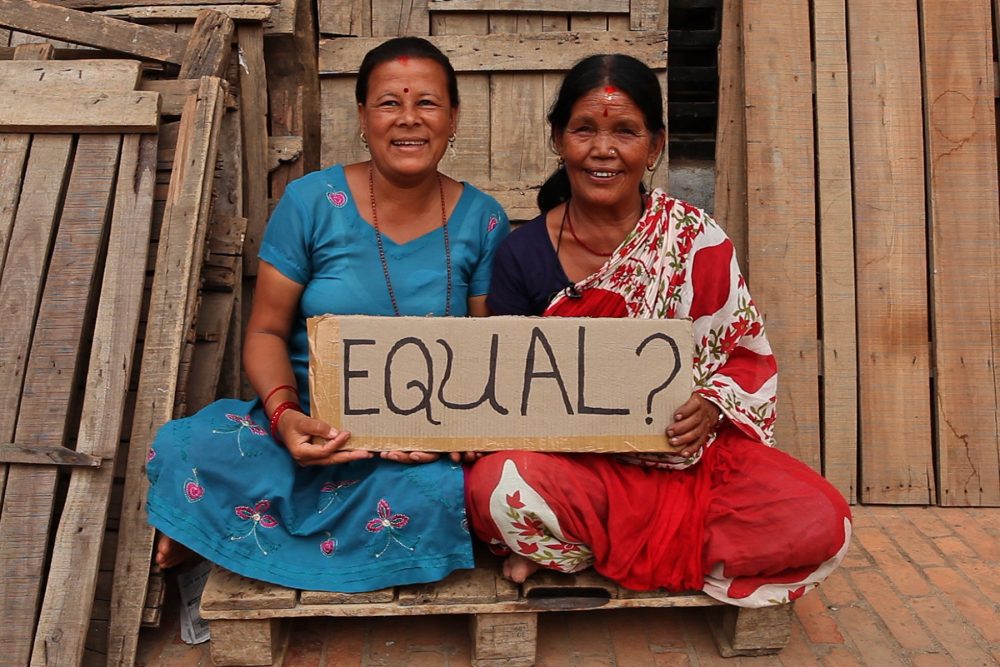
As more Nepalese men leave their homeland in search of employment, the women—especially in rural areas—have begun to take a larger role in society. Even with these new-found responsibilities, the women of Nepal remain trapped in the cycle of poverty and gender-based inequality that has plagued the country for generations. In Nepal, a woman can run a farm yet have no access to the profits the land yields.

Nepal’s economy relies largely on foreign aid, and despite the tremendous progress since the 1990s, 40 percent of the population continues to live below the poverty line. That number declined by 11 percent overall since the mid-90’s, but this still leaves one third of all Nepalese children living under such conditions.

Unemployment leads thousands of Nepalese to migrate to neighboring India in search of a way to provide for their families. Unfortunately, the open border allowing this migration also renders human trafficking, for both sexual and hard-labor purposes, much easier. The trafficking of an estimated 200,000 Nepalese women has filled brothels across India. Someone known to the family often tricks the victims with the promise of a well-paying job. In other cases, women are simply kidnapped and smuggled across the Nepalese border into India. Low-paid border police are easily bribed—an issue activist groups currently target with practical training for the police regarding how to spot a victim of trafficking.

Abuse also follows women who migrate willingly to countries like Lebanon. Under the Kafala system, one employer receives the work permits, meaning women who dare leave an abusive employer risk deportation. Because legal employment pays little, if any, wages, many Nepalese migrants turn to the illegal informal sector. The Nepalese government has reacted with heavy restrictions on women’s travel and migration to the country.

Evidence suggests that the expansion of women’s rights can relieve a country from poverty sooner. Yet, historically, gender inequality has been ingrained in Nepalese society. Chhaupadi, the practice of forcing a women in menstruation or having recently given birth to live apart from the family until the bleeding ends, is still practiced throughout the western and central regions of Nepal. Within the Nepalese family unit, women cannot live individually, which incapacitates victims of domestic abuse who might otherwise leave. Few women report abuse or trafficking to police.

The future of the Nepalese women requires addressing the two main factors of her suffering: economic and gender-based inequality. Microloans offered to rural women proves to be one method to fight the temptation of falsely-alluring jobs abroad. Survivors of trafficking have also received such loans. In 2007, the Nepalese government enacted the Human Trafficking and Transportation Act, but without proper implementation, the Act fails to serve its purpose. The issue demands further international attention, and increased financial independence for women in Nepal.

– Erica Lignell

Sources: The Economist, Unicef, BBC News, FORBES, The Guardian, AlJazeera, The New York Times, The New York Times(2)
Photo: Google Images

May 20, 2014
https://borgenproject.org/wp-content/uploads/borgen-project-logo.svg 0 0 Borgen Project https://borgenproject.org/wp-content/uploads/borgen-project-logo.svg Borgen Project2014-05-20 04:00:412024-12-13 17:53:52Gender-based Inequality in Nepal
Children, Global Poverty

Child Labor in the United States

Child Labor
Children have always been a source of cheap labor, and the United States is no exception. This article recounts the history of child labor in the United States, and the steps taken to fight against its practice.


A History of Child Labor in the United States


In the colonial period, child labor was commonplace. Children were expected to assist their parents and work on the family farm. Young boys (ages 10-14) later became apprentices in different trades.

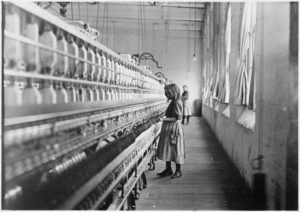
The Industrial Revolution, however, marked a new level of intensity for young workers. Children spent all day in factories with poor and dangerous conditions. Their small size allowed them to climb in and out of old factory machines. In addition to factory work, some employers used children in mines. These young workers were preferred because they were easy to control and direct. Salaries for children were also much less than those for adult workers. The large influx of immigrants into the United States in the mid 1800s led to an additional increase in child labor.

The most common reason for child labor in the United States during the Industrial Revolution was to support the family. Instead of going to school, children went to work in factories. During the nineteenth century some attempts were made to reform child labor laws and improve general working conditions. Education reformers promoted the idea that getting a primary school education was necessary to achieve self-advancement and a stronger nation. As a result, a number of states began to implement minimum wage and school attendance laws. However, they contained many loopholes and were rarely enforced.

American reformers have been actively working to fight child labor in the United States since the early 1900s. In 1904, the National Child Labor Committee was established. Along with smaller state child labor committees, the national chapter adopted a policy of “mass political action”–research reports, investigations by experts, dramatic photographs depicting oppressed children in factories, active lobbying, pamphlets, mass mailings and leaflets. However, progress was slow and often frustrating.

Committees identified state legislatures as the best vehicle to achieve reform. During the Progressive Era, many state laws regulating child labor were passed. Due to resistance from the southern states, federal child labor bills were later passed through Congress in 1916 and 1918. However, the Supreme Court ruled that they were unconstitutional.

Reformers decided to lobby for an amendment that would permit the government to pass a federal child labor law. The proposed amendment was passed through Congress in 1924, but several states failed to ratify it because of the conservative political environment at the time. Once the Great Depression hit America in the 1930s, child labor nearly disappeared as all the jobs went to adults instead of children. The National Industrial Recovery Act further placed regulations on child labor, and the Fair Labor Standards Act set federal minimum wage and maximum work hours. Children under 16 were not permitted to work in the manufacturing and mining sectors.

Due to the advancements in factory technology and the increase in required years of schooling, the issue of child labor has become largely insignificant. Violations of child labor laws still occur today, but the United States has definitely come a long way – “one of the more remarkable changes in the social and economic life of the nation over the last two centuries.”

Given its own struggle with child labor, the United States has taken action to end it abroad through initiatives like the Office of Child Labor, Forced Labor, and Human Trafficking (OCFT) – a division of the U.S. Department of Labor’s Bureau of International Labor Affairs (ILAB). The OCFT was founded in 1993 as part of a congressional request to investigate and report on child labor practices around the world. Using research conducted by the OCFT, ILAB maintains a list of international goods produced by child labor or forced labor: fireworks from China, corn from Bolivia, bricks from Burma, carpets from India, garments from Argentina and more. In addition to publishing reports like “Findings on the Worst Forms of Child Labor,” the OCFT assists with the development of labor legislation and supports relevant projects; so far, more than 270 projects have been funded, benefiting children in over 90 countries. Through the OCFT, the United States hopes to collaborate with other nations in order to strengthen the enforcement of child labor laws and raise global awareness of the issue.

– Kristy Liao

Sources: ContinueToLearn, Department of Labor 1, Department of Labor 2, History
Photo: Flickr

May 15, 2014
https://borgenproject.org/wp-content/uploads/borgen-project-logo.svg 0 0 Borgen Project https://borgenproject.org/wp-content/uploads/borgen-project-logo.svg Borgen Project2014-05-15 04:00:412024-05-26 23:30:22Child Labor in the United States
Activism, Advocacy, Children, Development

Top Celebrities at Milken Institute Global Conference

Philanthropist Michael Milken established the Milken Institute in 1990 with a focus on the interaction between education and job growth. The institute’s mission has expanded to include advancing economic and policy solutions to create jobs, widen access to capital and enhance health.

The institute has also expanded its reach. At this year’s Milken Institute Global Conference in Beverly Hills, guests included Matt Damon, will.i.am and Charlize Theron. The 17th annual conference attracted more than 3,500 entrepreneurs, executives, philanthropists, scientists and celebrities.

Co-founder of Water.org, Matt Damon, spoke about the water crisis, in which 780 million people in the world lack access to clean water. Damon and co-founder Gary White created the nonprofit organization to find new solutions, new financing models and real partnerships, with the vision of providing safe water and proper sanitation means for all. Water.org operates in Africa, South Asia and Central America.

Black Eyed Peas singer will.i.am spoke at the conference about his experience teaching disadvantaged children from his former neighborhood in Boyle Heights, Calif. He also spoke about entrepreneurship, presenting his wristwatch phone, which was an idea he designed and created with the help of an engineering team.

Charlize Theron, founder of Charlize Theron Africa Outreach Project, spoke at the conference about fighting AIDS in South Africa. Almost 6 million people in South Africa live with AIDS. Theron, a native of South Africa herself, established the project in 2007 to support African youth in the fight against HIV/AIDS. The youth of Africa are particularly vulnerable to HIV for many reasons including gender inequity, high crime rates, lack of cohesive family units, high incidence of rape, lack of information, chronic unemployment and lack of access to health services. The project focuses on community-based organizations and gives support in the form of grants, networking and building collaborative relationships based on trust and respect.

The Milken Institute Global Conference is organized into more than 160 panels that are grouped into 11 categories, including education, philanthropy, aging, health and environment. Next year’s conference will be held April 26-29.

– Haley Sklut

Sources: Forbes, Look to the Stars, Milken Institute, Water.org
Photo: Fulloma

May 14, 2014
https://borgenproject.org/wp-content/uploads/borgen-project-logo.svg 0 0 Borgen Project https://borgenproject.org/wp-content/uploads/borgen-project-logo.svg Borgen Project2014-05-14 04:00:212024-05-26 23:35:37Top Celebrities at Milken Institute Global Conference
Charity, Children, Global Poverty

World Vision: Sponsor a Child

Before deciding to sponsor a child through World Vision, 23-year-old Charlotte Bleeker bought a latte everyday on her way to work, ate out three to four times a week, and had her nails done on a regular basis.

“It’s not that they’re bad things, they’re just unnecessary. I have a coffee pot at home, food in my pantry, and am fully capable of painting my own nails,” Bleeeker said.

In 2013, Bleeker attended a local Christmas concert in which representatives from an organization called World Vision were there with pictures of children from around the world who needed to be sponsored. Bleeker saw the picture that is now on her fridge of four-year-old Eva from Zambia, and could not resist becoming her sponsor. Sponsorship entailed a monthly payment of $40 to allow Eva to go to school and buy necessities.

Bleeker’s mom immediately questioned her decision, urging her to save money to pay off loans and invest in her future. “You need to be more stable financially before you start sponsoring a child,” her mom would say.

What Bleeker’s mom was unable to foresee was that sponsoring a child was the best possible decision for Bleeker in making wise financial decisions.

“All of a sudden I was questioning the things that I used to instinctively spend money on,” Bleeker stated. Eva, halfway across the globe, was teaching Bleeker to appreciate and save her money for the first time.

“My parents always stressed the importance of saving my money, but because I had never experienced a lack of money I didn’t necessarily value it,” Bleeker admitted. Now when contemplating whether or not to stop at Starbucks in the morning, Bleeker thinks of Eva and how much additional money beyond the $40 will help her and easily resists the latte.

Bleeker is also able to write letters to Eva on the World Vision website as often as she likes.

“Sometimes I won’t hear back from her for months, it’s a process for them to get the letters to her but they always do and she always replies, thanking me numerous times in every letter. I feel like I should be thanking her for opening my eyes,” Bleeker expressed.

In addition to letters from Eva, Bleeker also receives reports courtesy of World Vision describing Eva’s progress as well as development in her community. In these reports, sponsors also receive an updated photo of their sponsored child.

Along with Eva, World Vision assists 100 million people in 100 countries today. For Bleeker it was not a matter of not having enough money to sponsor Eva but rather whether or not she was willing to give certain things up. For Bleeker, it means less dining out and more cooking.

“Eva has inspired me to be a better cook!” Bleeker proclaimed. Sponsoring Eva has enriched Bleeker’s life and given her a greater sense of purpose.

Americans hear countless stories of how sponsored children progress and thrive because of organizations like World Vision, but must also acknowledge the progress and growth that occurs when we put others before ourselves.

-Heather Klosterman

Sources: World Vision
Photo: World Vision

May 8, 2014
https://borgenproject.org/wp-content/uploads/borgen-project-logo.svg 0 0 Borgen Project https://borgenproject.org/wp-content/uploads/borgen-project-logo.svg Borgen Project2014-05-08 05:00:522024-05-26 23:35:06World Vision: Sponsor a Child
Page 124 of 137«‹122123124125126›»

Get Smarter

  • Global Poverty 101
  • Global Poverty… The Good News
  • Global Poverty & U.S. Jobs
  • Global Poverty and National Security
  • Innovative Solutions to Poverty
  • Global Poverty & Aid FAQ’s
Search Search

Take Action

  • Call Congress
  • Email Congress
  • Donate
  • 30 Ways to Help
  • Volunteer Ops
  • Internships
  • Courses & Certificates
  • The Podcast
Borgen Project

“The Borgen Project is an incredible nonprofit organization that is addressing poverty and hunger and working towards ending them.”

-The Huffington Post

Inside The Borgen Project

  • Contact
  • About
  • Financials
  • President
  • Board of Directors
  • Board of Advisors

International Links

  • UK Email Parliament
  • UK Donate
  • Canada Email Parliament

Get Smarter

  • Global Poverty 101
  • Global Poverty… The Good News
  • Global Poverty & U.S. Jobs
  • Global Poverty and National Security
  • Innovative Solutions to Poverty
  • Global Poverty & Aid FAQ’s

Ways to Help

  • Call Congress
  • Email Congress
  • Donate
  • 30 Ways to Help
  • Volunteer Ops
  • Internships
  • Courses & Certificates
  • The Podcast
Scroll to top Scroll to top Scroll to top