• Link to X
  • Link to Facebook
  • Link to Instagram
  • Link to TikTok
  • Link to Youtube
  • About
    • About Us
      • President
      • Board of Directors
      • Board of Advisors
      • Financials
      • Our Methodology
      • Success Tracker
      • Contact
  • Act Now
    • 30 Ways to Help
      • Email Congress
      • Call Congress
      • Volunteer
      • Courses & Certificates
      • Be a Donor
    • Internships
      • In-Office Internships
      • Remote Internships
    • Legislation
      • Politics 101
  • The Blog
  • The Podcast
  • Magazine
  • Donate
  • Click to open the search input field Click to open the search input field Search
  • Menu Menu

Archive for category: Children

Information and stories addressing children.

Children, Global Poverty, Health, Hunger

Malnutrition Persists Despite Economic Growth

Malnutrition claims the lives of more than 3.1 million children a year. Those who survive face mental impairment as well as a heightened risk of disease or disability.

Yet the rising gross domestic product (GDP) of low-income to mid-income countries fails to correlate with a decline in stunted, under-weighted or wasted children. In field of development, many presume economic growth and improved standards of living lead to greater food security. S.V. Subramanian, a social epidemiologist at Harvard, reports an “insignificant decline in stunting” during times of economic expansion. He and his associates researched 36 of these countries, collecting data on children from 1990 to 2011. The Journal Lancet Global Health published the results this month.

With every 5 percent gain in GDP, less than 1 percent of decrease in stunting results. This results in a “zero effect” of GDP on child malnutrition, according to Subramanian.

Derek Heady of the International Food Policy Research Institute objects to this conclusion. “Income growth is a necessary condition for increased spending on food, health, education, sanitation and so on,” he asserts.

Subramanian, however, attributes this “zero effect” to disparities in income distribution and the inefficient delivery of health services. A rising GDP, he remarks, may not benefit every individual, region, or sector. For instance, these countries often invest money into sectors that initially led to the this growth. Such investments, however, often fail to improve child health.

India highlights this tendency. Its GDP has grown rapidly in recent decades, reaching an estimated 5 percent increase per year. This growth far surpasses that of most Western countries. Yet nearly half of children appear stunted and an additional two-fifths underweight. This limited food security among children has persisted as early as 1990.

Rather than investing in nutrition efforts in schools or clinics, the government focused on highway construction. A large population currently lacks basic sanitation. Child malnourishment endures without interventions in safe water, breastfeeding practices and food aid. Economic growth alone cannot resolve this health threat.

Lawrence Haddad heads the Institute for Development Studies in England. He highlights Ghana, Vietnam and Brazil as success cases; in these countries, malnutrition declined as a result of both economic growth and investments in water, sanitation, health services and nutrition programs.

“Unfortunately, with malnutrition, there is no silver bullet,” he elaborates. “It’s like a series of links in a chain, and if any one of those links is weak, it undermines everything else.”

Understanding the driving factors in malnutrition, though, promises reform in government spending. These growing economies hold the potential to combat this health crisis. First, though, strategic investment in the fields of nutrition and sanitation must occur.

– Ellery Spahr

Sources: NPR, Voice of America
Photo: United Nations Photo via photopin

April 5, 2014
https://borgenproject.org/wp-content/uploads/borgen-project-logo.svg 0 0 Borgen Project https://borgenproject.org/wp-content/uploads/borgen-project-logo.svg Borgen Project2014-04-05 04:00:482024-05-26 23:24:10Malnutrition Persists Despite Economic Growth
Children, Global Poverty

Rwanda’s Lost Generation

The history of disparate rights between the Rwandan Hutu and Tutsi tribes exploded in April of 1994, followed by 100 days of genocide in which the Hutu extremists killed an estimated 500,000-1 million Tutsi people. Rape was encouraged to destabilize the community’s infrastructure and traumatize its people, resulting in the vicious, serial rape of 250,000 to 500,000 women.

Since the reinstatement of Rwanda’s government, all citizens have been allotted equal rights and the long road toward reconciliation has begun. Since the number of accused hugely outweighs the law officers, the Gacaca court system was set up allowing small communities to hold courts and trials where suspects may confess their crimes and promote reconciliation by disclosing the fates of lost community members.

The government’s newly instated laws of racial equality throughout the country extend to social stigmas as well, bolstering the marginalized. But one group was overlooked: children produced by the Rwandan genocide’s relentless rapes.

Chantal Mukeshimana, now 46, lost her husband and three of their children in the genocide during which she was repeatedly gang-raped. One of these attacks implanted her now-19 year old daughter, Angélique, who has always felt distanced by her mother and blames herself for the pain her existence recalls.

Angélique is one of 20,000 young adults who are products of the Rwandan genocide rapes. Kananga from the Unity and Reconciliation Commission has stated, “When we offered support to widows and children we thought we were supporting everyone.” These children of rape are suspended between their parents; they feel shunned by their Tutsi mothers for the horrific means of their conception, and have no means or wish to find their ‘genocidaire’ Hutu fathers.

Chantal is currently responsible for Angélique, two surviving children from her late husband, and her brother who was paralyzed in the genocide. With no government aid she relies on her community of women for support, most of whom have pasts similar to her own. None have had access to rehabilitation therapy, and they’ve banded together in an attempt to plug the holes of their shattered families.

Today, as they enter adulthood, children of the Rwandan genocide rapes are struggling to come to terms with their history. They are a constant reminder to their communities of the violence that killed their loved ones and stole their bodies. Without serious reconciliation many will remain emotionally crippled forever, extending the horror of the genocide beyond the lives of those who experienced it.

– Lydia Caswell

Sources: About, UN
Photo: Flickr

April 4, 2014
https://borgenproject.org/wp-content/uploads/borgen-project-logo.svg 0 0 Borgen Project https://borgenproject.org/wp-content/uploads/borgen-project-logo.svg Borgen Project2014-04-04 16:39:022024-05-26 23:25:11Rwanda’s Lost Generation
Children, Global Poverty

Australia Steals Aboriginal Children From Mothers

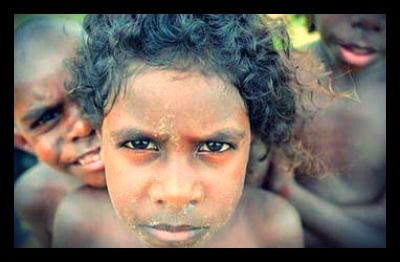
aboriginal_children
The Aboriginals are classified as an indigenous group native to Australia and already face many issues in the country. A Counterpunch article argues welfare officials have been stealing children from Aboriginal families since the 1970s.

According to the author, John Pilger, the stolen children “were given to institutions as cheap or slave labour.” Though officially banned by the Australian constitution, the act of separating children from their mothers is an assimilation policy similar to the eugenics movement in Nazi Germany.

“Today, the theft of Aboriginal children – including babies taken form the birth table – is now more widespread than at any time during the last century,” Pilger said. “As of June last year, almost 14,000 Aboriginal children had been ‘removed’.”

Pilger said the “secretive” Children’s Court often exploits the indigenous mothers for not being aware of their own constitutional rights.

Moreover, Olga Havnen, once the Co-ordinator-General of Remote Services for the Northern Territory, told Pilger that she was fired when she disclosed that the cost for removing Aborigninal children for political reasons in 2012 exceeded the cost of helping the community fight poverty ($80 million versus $500,000.)

“The primary reasons for removing children are welfare issues directly related to poverty and inequality,” she told Pilger. “If South Africa was doing this, there’d be an international outcry.”

Having their children taken from the state is not the only issue affecting the Aboriginal population. Today, indigenous Australians fall victim to health problems and other human rights abuses as well.

“While some health and socioeconomic indicators are improving for indigenous Australians, they still on average live [10 years to 12 years] less than non-indigenous Australians, have an infant mortality rate almost two times higher, and continue to die at alarmingly high rates from treatable and preventable conditions such as diabetes and respiratory illnesses,” said Human Rights Watch (HRW) in its 2014 World Report.

This is strange for the organization, considering Australia is among the world’s richest nations yet still fails to provide many indigenous people with access to food, water, and healthcare.

Just recently, the Australian parliament passed legislation that recognizes indigenous Australians as the nation’s “first inhabitants of Australia,” said HRW. But as Pilger describes in the Counterpunch article, these constitutional rights mean nothing since the Australian officials systematically abuse the indigenous population.

Support networks in Australia proclaim that the aid given to the indigenous people living in poverty is a “smoke screen” for the bureaucracy’s true intention: to divide and control the natives of the land.

The world community might investigate whether the policies regarding the indigenous population in Australia are indeed discriminatory.

– Juan Campos

Sources: Counterpunch, Human Rights Watch
Photo: The Stringer

April 2, 2014
https://borgenproject.org/wp-content/uploads/borgen-project-logo.svg 0 0 Borgen Project https://borgenproject.org/wp-content/uploads/borgen-project-logo.svg Borgen Project2014-04-02 08:46:292015-02-05 09:20:15Australia Steals Aboriginal Children From Mothers
Children, Global Poverty

Ghana’s False Orphans

It took the 2009 report of an eight-month-old boy being raped in an Accra care-house to alert Ghanaian officials that all might not be well with their country’s orphanages. Investigators of the rape discovered to their shock that, of the 32 children living in the orphanage, 27 were not orphans.

Since then, the Social Welfare Department has reported that only eight of the 148 orphanages currently in operation throughout the country are licensed, and that as many as 90% of the 4,500 children living in these homes have not lost both parents.

Young children are highly effective for fundraising. Ghana’s non-profit Child Rights International (CRI) estimates that a small orphanage could pull in as much as $70,000 a year with the vast majority of their funding coming from international donors and NGOs. However, CRI suggests that as little as 30% of yearly earnings are spent on child care.

Ghana isn’t alone in supporting a gross exploitation of children – roughly 28% of the 12,000 Cambodian children living in orphanages have lost both parents, and in Sierra Leone the number of true orphans living in a care-house is a minuscule 7%.

CRI’s Apiah explains that child-collectors target impoverished and rural communities where they “exploit the poverty and ignorance of parents” with promises of cash and an education for their children. There is a practice in some West African countries where poor families will send their children away to be cared for by relatives or caretakers who have the means to provide more for them, and many orphanages exploit this practice by having illiterate parents sign documents that sever all legal rights to their child.

“The problem stems from…systemic failure, which encourages the proliferation of unlicensed and unmonitored orphanage,” Apiah said. “These problems will be there as long as we continue to lack a firm social safety net to support poor parents to raise their children.”

Fred Sakyi Boafo, the National Coordinator of Orphanages and Vulnerable Children (OVC) has been pushing for placing children back in homes, whether with parents or surviving relatives, or with trained Foster Parents. He claims that when children stay in an orphanage rather than with a family unit it actually costs more to send them to school and provide care.

Joachim Theis, UNICEF head of child protection for West Africa, agrees when he says “A range of solutions, from safety nets to foster care to community care, have been shown to work, and re much cheaper than putting children in orphanages. Putting children into institutionalized care instead of a family setting must always be a last resort.”

It is also the responsibility of foreign donors and NGOs to thoroughly research the organizations they give money to as blind generosity is capable of causing more harm than good.

–Lydia Caswell

Sources: Irin News, Ghana Web, Ghana Web
Photo: Orphan Aid Africa

March 29, 2014
https://borgenproject.org/wp-content/uploads/borgen-project-logo.svg 0 0 Borgen Project https://borgenproject.org/wp-content/uploads/borgen-project-logo.svg Borgen Project2014-03-29 04:00:302024-06-04 01:17:36Ghana’s False Orphans
Children, Gender Equality, Women & Children

Human Rights Groups Fear Iraq Child Marriage Bill

After news broke of a child marriage bill in Iraq that would make it legal to marry girls as young as 9 years old as well as require women to be fully submissive to their husbands, human rights advocates were outraged.

The law is called the Jaafari Personal Status Law, based on ideas of a particular school of Shiite religious law. It was introduced last year, but was just approved by the current prime minister’s, Nouri al-Maliki, Council of Ministers. This action is a prerequisite for the law to be voted on in Iraq’s state assembly.

Many believe that this controversial law is an attempt by the government to create laws more representative of the Shiite majority of the population. The Shiite majority had been repressed prior to the 2003 U.S.-led invasion that effectively removed Saddam Hussein’s Sunni regime. Since that invasion, many Shiite leaders both political and religious have made efforts to demonstrate the strength of their new regime.

The draft law does not actually state a minimum age for marriage, but instead includes a section on divorce with rules for girls who have reached the age of 9 according to the lunar Islamic calendar. The law would also give a girl’s father the sole ability to accept or refuse a marriage proposal, effectively taking any influence away from a girl’s mother.

It is important to notice that the Islamic lunar calendar is about 10 days shorter than the Gregorian calendar. Therefore the age of 9 by the Islamic lunar calendar is the same as 8 years and 8 months old by the Gregorian calendar. Including these divorce rules implies that it would be allowed for girls as young as 9 to have first been married.

The legal age of marriage in Iraq is 18 years old without parental approval, but younger girls can be married with parental consent or consent of a guardian. Reports show that underage marriage is on the rise, with statistics from 2011 showing that 25% of marriages in Iraq included at least one person under the age of 18.

The draft law would also legalize a husband to have sex with his wife regardless of her consent and would require women to get the permission of their husband before leaving the house. Furthermore, the law would make it more difficult for women to obtain custody of children after divorce and would make it easier for men to have more than one wife.

Rights advocates and many Iraqi citizens alike see the law as a major regression of women’s rights. Many also believe that the law would further aggravate tensions between Shiites and Sunnis in the country.

Joe Storl, Human Rights Watch’s Middle East and North Africa deputy director, has said, “Passage of the Jaafari law would be a disastrous and discriminatory step backward for Iraq’s women and girls. This personal status law would only entrench Iraq’s divisions while the government claims to support equal rights for all.” There have also been outcries that the law legalizes the rape of women.

While the reactions to this law demonstrate a fear that Iraq is moving backwards, it appears that the Shiite government is not concerned. Prime Minister al-Maliki’s spokesman Ali al-Moussawi said, “Some media outlets show Iraq as it has gone backwards but this isn’t true. In the west, people are talking about gay marriage. This is something we would never discuss and it is against our religion, our nature, yet we don’t say that they are backwards.”

While protests continue, we can only wait to see what will happen and if this controversial law will actually be passed.

– Julie Guacci

Sources: TIME, The Huffington Post, The Guardian
Photo: Rasoul Ali

March 27, 2014
https://borgenproject.org/wp-content/uploads/borgen-project-logo.svg 0 0 Borgen Project https://borgenproject.org/wp-content/uploads/borgen-project-logo.svg Borgen Project2014-03-27 04:00:312024-05-26 23:21:45Human Rights Groups Fear Iraq Child Marriage Bill
Children, Education, Violence Against Women, Women and Female Empowerment

Sex-Ed for Girls in Pakistan

Girls in rural Pakistan are receiving groundbreaking sex education lessons from the Village Shadabad Organization. These lessons range from topics of puberty, sex, marital rape, menstruation, marriage, human rights and self-defense against attackers. These sex education lessons are being taught alongside normal education curriculum in eight different girls schools, which are funded by BHP Billiton, an Australian company.

Lessons on menstruation and puberty teach girls not to be ashamed by their own body, and lessons on marital rape explain that unwilling marital sex is a crime. The girls are taught to scream and fight if they are touched inappropriately, because their bodies are owned by no one but themselves. Uzma Panhwar, a 10-year-old student, declares “My body is only mine and only I have the rights on it.”

These lessons teach girls about their body, and about their sexual health. With greater knowledge and awareness of their bodies and their rights, girls can gain confidence and strike away feelings of guilt and shame thrust upon them by their conservative patriarchal society.

In a country where public discourse on sex is forbidden, these lessons are even more meaningful and relevant for these young girls. It is estimated that 70 percent to 90 percent of Pakistan’s women have experienced domestic abuse. Women in Pakistan experience high rates of sexual and domestic violence, fighting against a justice system that favors their male attackers. Both law enforcement and government officials have proved to be unresponsive towards violence against women.

The World Economic Forum’s Global Gender Gap report ranked Pakistan as 135th in the world due to its gender inequality. Pakistan has a history of honor killings, child marriages and violence against women. Although the country is making progress in women’s education, women still have little representation in their own government.

The families in these rural villages support sex education, but there are many others in Pakistan, especially from the education sector, who oppose it due to constitutional and religious reasons. The education minister for the Sindh province and the president of All Pakistan Private School Federation have opposed these sex education lessons in the rural villages.

These sex education lessons are important in providing a foundation for female empowerment in Pakistan. While reform and increased legislation on women’s rights from the government will be slow to create change, these lessons in rural villages are impacting transformation of social norms at the local level.

Women’s empowerment has been shown to not only combat poverty, but to promote development and greater well-being. Teaching these young girls in Pakistan to take control over their bodies also teaches them to take control of their own lives. These sex education lessons do not merely educate them about their bodies, it teaches them to respect themselves, and to demand the respect they deserve from their society and government.

– Sarah Yan

Sources: The Guardian, Global Public Square
Photo: Taipei Times

March 26, 2014
https://borgenproject.org/wp-content/uploads/borgen-project-logo.svg 0 0 Borgen Project https://borgenproject.org/wp-content/uploads/borgen-project-logo.svg Borgen Project2014-03-26 20:45:522024-06-05 01:57:20Sex-Ed for Girls in Pakistan
Children, Global Poverty

How China Overcame Poverty

china
During the past three decades, more than 500 million people in China were lifted out of extreme poverty. And now, those people are buying the same goods that Americans have been purchasing for decades.

The Birth of Entrepreneurship in China

Peasants wanted ownership over the land they farmed and they did not achieve this under Mao Zedong’s rule. Deng Xiao Ping dismantled the farm communes set up by Mao and established a household responsibility system that led towards a more stable society, thus allowing for the establishment of a civil society with growth in the non-government sector. In about 40 years, the number of Chinese NGOs went from 6,100 to 354,000.

Emerging Market Consumer

The number of Chinese people earning $1,000 or more is equal to the number of people earning the same amount in Brazil, Russia, India, Indonesia, Mexico, Saudi Arabia, South Africa and Turkey combined. China has been catching up to western markets and it has been catching up faster than other markets.

Youth in China Earning More and Spending More

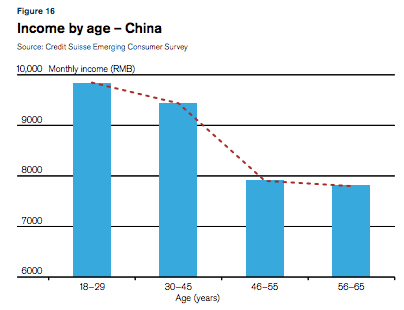
The new generation in China has more education and therefore, more opportunities to work outside of factories. The young Chinese people have the highest incomes and they are willing to spend it. Specifically, they are spending more to be connected; they are buying smartphones. As incomes rise, consumers spend money on food, personal care products and smartphones.

ChinaIncomeAge

China is the first developing country to half the number of people living in poverty. During the past 34 years, the number of people suffering from hunger was reduced from one-third to one-tenth. China is not only lifting its own people out of poverty, it is also lending aid to Asia and Africa. These efforts have made the China Development Bank the world’s largest lender.

– Haley Sklut

Sources: Skoll World Forum, The Atlantic, CNN
Photo: Flickr

March 24, 2014
https://borgenproject.org/wp-content/uploads/borgen-project-logo.svg 0 0 Borgen Project https://borgenproject.org/wp-content/uploads/borgen-project-logo.svg Borgen Project2014-03-24 15:47:222024-05-26 23:22:21How China Overcame Poverty
Activism, Children, Global Poverty

How Talia Leman and RandomKid Inspire Change

After Hurricane Katrina hit in 2005, then 10-year-old Talia Leman decided that she needed to do something to help. This desire to aid those in need led to the birth of RandomKid, a nonprofit organization that has made a difference in the lives of millions.

Leman was living in a small town in Iowa and was shocked by the media coverage of the hurricane’s disastrous effects. She began reaching out to the country’s youths in hopes of getting them to fundraise for the survivors of the hurricane. She started a movement encouraging other children to decide to collect donations towards a relief fund on Halloween, rather than collecting candy. Leman called the project Trick or Treat for the Levee Catastrophe (TLC) and created a website.

The project gained media attention, with Leman and her younger brother Zander being invited to appear on The Today Show, resulting in children across the country participating in fundraising efforts. After that, Leman explains that, “kids were reporting their totals in this TLC website and we’d call and verify the amount and the effort. Along the way, kids didn’t all trick-or-treat; kids also wanted to sell their 4H sheep or they wanted to wash cars and do others things as well.”

All of these efforts resulted in a huge number of young people raising money and ultimately reported $10 million worth of relief funds for Hurricane Katrina.


The Birth of RandomKid


When Leman saw how successful her efforts to inspire other children and young people were, she decided to co-found RandomKid, a nonprofit organization whose goal is mobilize efforts among these groups to bring about change.

Since then, RandomKid has been able to rally together about 12 million young people from 20 different countries to help people around the world. These efforts have resulted in the building of schools in Cambodia and play centers in Iowa as well as providing for water pumps in Africa and medical care, all working towards the overall goal of creating a more peaceful world.

As CEO and a founder of RandomKid, Leman has been an inspiration to young people around the world. She was appointed as UNICEF’s National Youth Ambassador and has been awarded nationally and internationally for her work. Leman has won the National Jefferson Award for global change, with the co-recipients of this award being Marlo Thomas and Ruth Bader Ginsburg. Back in 2008, she also received a World of Children Founder’s Youth Award.

RandomKid’s tagline is “The Power of ANYone,” which Leman credits to the organization belief in the “power of the in-, individual because it’s those small efforts along the way that lead to the biggest outcome.”

Today, RandomKid partners with other nonprofit organizations and services, with Leman running the organization with help from volunteers and her family and friends. Her mother Dana now serves as the Executive Vice President and has said in regard to RandomKid that, “There is nothing more fulfilling than helping a child to help another.”

Only 18 years old now, Leman has a long future of humanitarian efforts and projects ahead of her. When asked what she loves the most about RandomKid, Leman has said, “The moment when the random youth who come to us realize that we are here to work FOR them.”

Through projects like Leman’s, we can see that together, young people can fight a lot of the world’s issues, including poor conditions and global poverty.

– Julie Guacci

Sources: RandomKidE, The Story Exchange, Huffington Post, World of Children, Forbes
Photo: The Women’s Eye

March 24, 2014
https://borgenproject.org/wp-content/uploads/borgen-project-logo.svg 0 0 Borgen Project https://borgenproject.org/wp-content/uploads/borgen-project-logo.svg Borgen Project2014-03-24 04:00:392024-05-26 23:21:05How Talia Leman and RandomKid Inspire Change
Children, Food Aid, Global Poverty

The National Food Security Act in India

Food_Security_Act_in_India
Food has become a right, rather than a luxury, in India. Parliament approved the National Food Security Act (NFSA) in September 2013, requiring the government subsidize food for nearly 800 million people. Success of this program will lead to greater food security for nearly 70% of the Indian population and a political advantage to the ruling Congress Party.

Yet critics fear the program asks too much from an economy “burdened by a weakened currency and a large fiscal deficit.” This monumental step toward food security “relies on an unwieldy network of farmers, buyers, storage facilities, and sellers.” NFSA requires this network to supply an estimated 60 million tons of subsidized grains a year. Individuals receive an average of five kilograms per month. Those occupying the lowest income bracket receive more as well as assistance from state-run programs.

Supporters of NFSA highlight the past success in government food subsidies. In the 2011, more than 500 million Indians benefited from government programs. Delivering 51.3 million tons to those in need, the government provided 10 times more than the World Food Programme.

Those in opposition cite the 2005 incidents of “theft, corruption and difficulties identifying the needy.” In this fiscal year, the government estimates a 60% loss in grain, yet researchers returned to analyze recent government efforts, reporting gradual improvement in food delivery.

This program began at the start of the 2013 fiscal year and will cost the government an estimated $20 billion annually.

Supporters contend this modest increase from past years fulfills the “moral obligation of the government” to protect its people. Sonia Gandhi currently serves as the leader of the Congress Party and stands in staunch support of the program.

More than 100 million children attending school currently receive midday meals and a “take-home ration,” according to the New York Times. NFSA strengthens these entitlement programs, expanding access and improving efficiency. A number of studies support these school-based food programs, pointing to increased attendance and healthier development. The program also proposes revitalized efforts to protect maternal health, allocating 1,000 rupees, or $16.43 per month, for six months.

Maternal health during and following pregnancy directly affects the health and development of infants.

The success of NFSA depends on the strict government supervision and reform. Gandhi understands this and regards access to food as a fundamental right.

“The question is not whether we can do it or not,” she asserts. “We have to do it.”

– Ellery Spahr

Sources: TIME, New York Times
Photo: Commodity Online

March 17, 2014
https://borgenproject.org/wp-content/uploads/borgen-project-logo.svg 0 0 Borgen Project https://borgenproject.org/wp-content/uploads/borgen-project-logo.svg Borgen Project2014-03-17 04:00:092014-03-21 07:27:49The National Food Security Act in India
Children, Education, Global Poverty, Health, Hunger

School Lunch Program in Thailand Targets Malnutrition

Thailand is known for having one of the best nutritional programs in Asia. According to the World Food Programme (WFP), Thailand has successfully dropped child malnutrition from 36% to approximately 8.42% within 30 years.

Thailand’s success stemmed from an in-depth look at growth rates, nutritional education, supplementation of iron and vitamins, as well as a focus on health coverage. It was also one of the primary countries to reach out to the community as a basis for promoting an end to malnutrition – specifically in children.

One method for reducing malnutrition in Thailand among school-aged children is the School Lunch Program, which supplies lunch at no cost to children struggling to maintain a healthy weight, or students who are unable to afford lunch. These lunches also aim to “educate students about desirable eating habits, values, and social manners.”

Students from rural areas have specifically been the victims of malnutrition in Thailand. Although rice is a staple food, the large amount of production does not necessarily correlate with balanced meals or eating a satisfactory amount required for healthy growth, both physically and mentally. Since diet is mainly based on rice, a lack of protein in diets are a large contributor to malnutrition in Thailand; also among the nutrients lacking in diets are iron, iodine and vitamin A.

SLP is currently providing all kindergarten and elementary public schools, reaching about 30,000 schools and 700,000 preschoolers. School Lunch Program currently provides meals for students for 200 days during the school year. The program started off by focusing merely on the amount of meals that were able to reach students. Now the meals are geared around the nutritional value.

With the help from the School Lunch Program many students whose diets are lacking in balance, or worse nonexistent, now receive meals at school that they may not have been able to receive at home.

The meals that Thailand is able to provide to children not only helps their struggle with malnutrition, but also helps with their ability to focus, gain weight, and grow cognitively.

– Rebecca Felcon

Sources: Rappler, Right To Food Campaign, World Food
Photo: IIRR

March 13, 2014
https://borgenproject.org/wp-content/uploads/borgen-project-logo.svg 0 0 Borgen Project https://borgenproject.org/wp-content/uploads/borgen-project-logo.svg Borgen Project2014-03-13 04:00:232024-05-26 23:19:01School Lunch Program in Thailand Targets Malnutrition
Page 126 of 137«‹124125126127128›»

Get Smarter

  • Global Poverty 101
  • Global Poverty… The Good News
  • Global Poverty & U.S. Jobs
  • Global Poverty and National Security
  • Innovative Solutions to Poverty
  • Global Poverty & Aid FAQ’s
Search Search

Take Action

  • Call Congress
  • Email Congress
  • Donate
  • 30 Ways to Help
  • Volunteer Ops
  • Internships
  • Courses & Certificates
  • The Podcast
Borgen Project

“The Borgen Project is an incredible nonprofit organization that is addressing poverty and hunger and working towards ending them.”

-The Huffington Post

Inside The Borgen Project

  • Contact
  • About
  • Financials
  • President
  • Board of Directors
  • Board of Advisors

International Links

  • UK Email Parliament
  • UK Donate
  • Canada Email Parliament

Get Smarter

  • Global Poverty 101
  • Global Poverty… The Good News
  • Global Poverty & U.S. Jobs
  • Global Poverty and National Security
  • Innovative Solutions to Poverty
  • Global Poverty & Aid FAQ’s

Ways to Help

  • Call Congress
  • Email Congress
  • Donate
  • 30 Ways to Help
  • Volunteer Ops
  • Internships
  • Courses & Certificates
  • The Podcast
Scroll to top Scroll to top Scroll to top