• Link to X
  • Link to Facebook
  • Link to Instagram
  • Link to TikTok
  • Link to Youtube
  • About
    • About Us
      • President
      • Board of Directors
      • Board of Advisors
      • Financials
      • Our Methodology
      • Success Tracker
      • Contact
  • Act Now
    • 30 Ways to Help
      • Email Congress
      • Call Congress
      • Volunteer
      • Courses & Certificates
      • Be a Donor
    • Internships
      • In-Office Internships
      • Remote Internships
    • Legislation
      • Politics 101
  • The Blog
  • The Podcast
  • Magazine
  • Donate
  • Click to open the search input field Click to open the search input field Search
  • Menu Menu

Archive for category: Children

Information and stories addressing children.

Children, Global Poverty

10 Facts About Children Living in Poverty

There are millions of children living in poverty throughout the world. Children living in poverty are often malnourished, do not get proper education, lack safe drinking water, and do not have access to essential vaccines. They are more vulnerable to exploitation, abuse, violence, discrimination and stigmatization. Children are deprived from their childhood due to living in poverty. Not only does living in poverty affect a child’s nutrition, but it also damages their mental, physical, emotional and spiritual development.

Here are 10 quick facts about children living in poverty:

  1. There are 1 billion children worldwide living in poverty; this is every second child.
  2. According to UNICEF, 22,000 children die each day from poverty.
  3. In 2011 there was a reduced growth and development rate in 165 million children under the age of 5 due to chronic malnutrition.
  4. Every year, 2 million children die from preventable diseases like diarrhea and pneumonia because they cannot afford proper treatment.
  5. As of 2011, 19 million children worldwide are not vaccinated.
  6. 1 out of 6 infants are born with a low birth weight in developing countries.
  7. Every year, 3.1 million children die ( 8,500 children per day) due to poor nutrition.
  8. About 72 million children who are primary school aged were not in school in 2005.
  9. Every year, 1.4 million die from lack of access to safe drinking water and adequate sanitation.
  10. A child dies every 10 seconds from hunger-related diseases.

If less money were used on weapons for military purposes, then there would be billions of dollars available for better education and health for impoverished children. It is possible to end child poverty. Everyone needs to get together as a community and voice their opinions and interests in helping children living in poverty to their respective governments.

— Priscilla Rodarte

Sources: Do Something, Global Issues, The Hunger Project, UNICEF
Photo: Wikimedia

June 23, 2014
https://borgenproject.org/wp-content/uploads/borgen-project-logo.svg 0 0 Borgen Project https://borgenproject.org/wp-content/uploads/borgen-project-logo.svg Borgen Project2014-06-23 12:38:092024-05-26 23:48:4410 Facts About Children Living in Poverty
Children, Economy, Food & Hunger, Foreign Aid, Global Poverty, Malnourishment, Politics and Political Attention

Hunger in Pakistan: Famine or Inadequate Policy?

Hunger in Pakistan has killed many people and affected the lives of many more, especially children. After a drought hit the Tharparkar district of Pakistan’s southern Sindh Province earlier this year, at least 132 young children died, many as a result of malnutrition.

The problem of hunger in Pakistan is not limited to Sindh Province, however. While Sindh certainly has the highest rates of malnutrition and least access to food, Pakistan’s National Nutrition Survey reported that 58 percent of all Pakistani households were food-insecure.

Malnutrition is also widespread; the Pakistan Demographic and Health Survey found that 24 percent of Pakistani children under 5 exhibited “severely stunted growth.”

Why is hunger such a prevalent issue in Pakistan? Some of it has to do with past inflation of wheat prices in the late 2000s, as it was more difficult for people to afford domestic grain. Infrastructural difficulty, such as providing electricity to flour mills, also poses a problem.

Still, the largest factor causing food insecurity in Pakistan is the nation’s own government and its policies that hinder food production and distribution.

Take, for example, the deaths from the drought: the government did not work to distribute food until after the crisis. As the Pakistan Dalit Solidarity Network reports, “the government didn’t act until [it received] reports of children dying” last December, even though animals had been dying since October and rainfall was decreasing. Moreover, government-run hospitals and clinics in the region have been constantly understaffed, making it difficult to get medical care to those who needed it.

Other government policies affect all of Pakistan, not just Sindh. Under the Corporate Farming Ordinance, the Pakistani government leases large tracts of land to foreign investors looking to stockpile crops for their own countries. This takes valuable land away from local farmers while keeping the food away from Pakistani citizens that need it.

The government of Pakistan seems to prioritize profits over its people. During the inflation of wheat prices in 2008, the government increased its wheat exports, depriving many hungry people of food. Even today, much of the wheat that large corporate mills produce leaves the country.

In reality, Pakistan should be capable of providing its citizens with enough food to survive, and there should not be as much food insecurity as there is now. Arif Jabbar Khan, Oxfam’s Pakistan director, affirmed that “missing public policy action and persistent economic inequalities are the main causes of malnutrition,” not droughts or famine.

How can hunger and malnutrition be reduced in Pakistan? Foreign aid providers may be able to earmark funds for the redistribution of grain to poorer areas, and this aid could be cut if the government does not comply.

Nevertheless, political pressure to change food distribution policy must come from within Pakistan itself. The citizens of Pakistan must demand change and hold elected officials responsible for their actions in the polls if the system is to be fixed.

 — Ted Rappleye

Sources: The Guardian, South Asia Masala, Triple Bottom-Line
Photo: Tribune

June 22, 2014
https://borgenproject.org/wp-content/uploads/borgen-project-logo.svg 0 0 Borgen Project https://borgenproject.org/wp-content/uploads/borgen-project-logo.svg Borgen Project2014-06-22 20:00:022024-05-26 23:46:02Hunger in Pakistan: Famine or Inadequate Policy?
Children, Global Poverty

Team UNICEF: Playtime at its Best

“You can discover more about a person in an hour of play than in a year of conversation,” said Plato. Playing is something that every child should be able to do, no matter the race, gender, language or religion. Playtime is not only something that every child wants to do, but it is necessary that children get the chance to play every day. It enhances a child’s learning ability, social skills and overall childhood enjoyment.

Many children in third-world countries do not have the chance to play because they do not have time, due to child labor.

Team UNICEF was built to help improve children’s lives, and was launched this past fall. Team UNICEF’s goal is to “amplify its existing sport-related programs and partnerships to improve the lives of children globally.”

UNICEF has partnered up with other major organizations, UNICEF ambassadors, and celebrities to make Team UNICEF a success. Athlete celebrities are great to have as ambassadors in this program, because they are very influential and are very well known. Some of the sport-related UNICEF ambassadors that have taken part in Team UNICEF are Serena Williams, David Beckham, Leo Messi and Yuna Kim.

Team UNICEF is trying to get everyone involved. 

UNICEF believes that playing a sport that involves everyone will stop exclusion and discrimination. It is believed that through sport, a sense of community and union will be built.

Here are a few points about what good play could do for children:

– Increases self-esteem, self-respect and self-awareness
– Improves and maintain physical and mental health
– Gives them the opportunity to interact with other children
– Increases their confidence by developing new skills
– Increases their imagination, creativity and independence
– Mixing with children off all backgrounds
– Develops social skills and learning skills
– Helps them learn about their environment and community

Playing should not only be a privilege; it is a right that every child should have, no matter the background, ethnicity, language or religion. Team UNICEF has successfully gave children this right, and will continue to do so.

-Priscilla Rodarte

Sources: UNICEF ,Planning With Kids ,Play England

June 20, 2014
https://borgenproject.org/wp-content/uploads/borgen-project-logo.svg 0 0 Borgen Project https://borgenproject.org/wp-content/uploads/borgen-project-logo.svg Borgen Project2014-06-20 11:18:032024-05-26 23:47:55Team UNICEF: Playtime at its Best
Children, Education, Global Poverty

Project Creo: Artistic Empowerment in Ecuador

Creo. Language: Spanish. English translation: I believe or I create. Metaphorically speaking, it has incredibly optimistic implications. How fitting that an initiative focused on the belief that children can utilize the creative process of the arts to escape the evils of poverty would take the name this inspirational term.

Project Creo is an organization based in Quito, Ecuador that aims to empower children experiencing poverty through visual art, music, dance, theatre and film. With the help of project facilitators, the children’s creations emphasize their self-worth and the undeniable existence of love in the world. Facilitators include volunteers from the United States and Ecuador, prominent artists and the world’s leading fine arts teachers.

U.S. native Michael Sample founded the organization in 2001 when he visited Quito and felt a strong desire to live in the city and help its citizens. After returning to the U.S., Sample became a professional actor and choir director. He also earned a position with the Metropolitan Opera Guild. Despite all of his success in New York, he still felt his true vocation was with the people of Quito.

In 2011, Sample began the first art project with children in Quito. This was the humble beginning of Project Creo. Its partnership with the Metropolitan Opera Guild added a base in the U.S. and brought more attention to its positive effects on poverty in Ecuador.

Other U.S. contacts were enlisted through a partnership with ASTEP, Artists Striving to End Poverty. ASTEP is an organization originally established by Broadway Musical Director Mary-Mitchell Campbell and students from Julliard. It does research and then takes action to make a child more successful, socially and academically, with the arts. Many of the Project Creo volunteers come from ASTEP, making them more than adequately qualified.

Much of the time, volunteers work directly with children on their projects. Together, they create murals, musical compositions or other artistic projects to be displayed in their community. The projects showcase Project Creo’s message of total love or ways to improve life in the community. For example, one project focuses on ways that recycling and eco-friendly lifestyles lead to progress in society by forming art from reusable materials.

Other projects in Ecuador have included an art exposition promoting healthy living and informative approaches to starting small businesses with art. By working with the Secretary of Education in Quito, Project Creo also works to integrate art into curricula in Ecuador. The in-school programs allow Project Creo to reach a large number of children and introduce artistic methods for the learning process to teachers.

Artists and teachers help the cause by teaching children in person, if possible, or providing free online art lessons. They work through the online component of Project Creo, called iCreo. iCreo invokes technology to make art lessons accessible to impoverished children and share the initiative’s mission with people all around the world.

Since its beginning, Project Creo has expanded beyond Quito. First, the project organized programs in other Ecuadorian communities. Once large enough, centers were established in Africa and India. Now, through information available on iCreo, lessons and project ideas are available to anyone with internet access.

As stated on Project Creo’s website, “if you have a body, you have a child in there somewhere.” The initiative’s efforts embrace anyone seeking liberation through creativity, regardless of age. Music, visual art and other projects initiated by Project Creo provide hope for Ecuadorian “children” on both individual and societal levels.

 — Emily Walthouse

Sources: ASTEP 1, Project Creo, Youtube
Photo: Project Creo

June 20, 2014
https://borgenproject.org/wp-content/uploads/borgen-project-logo.svg 0 0 Borgen Project https://borgenproject.org/wp-content/uploads/borgen-project-logo.svg Borgen Project2014-06-20 04:00:382024-12-13 17:53:53Project Creo: Artistic Empowerment in Ecuador
Children, Food & Hunger, Food Aid, Global Poverty

10 Facts About Malnutrition in Children

Child hunger is a very significant issue today. World Hunger defines hunger as protein-energy malnutrition, or a lack of calories and protein. UNICEF estimates state that malnutrition in children affects nearly 195 million worldwide. Discussed below are the leading facts about malnutrition in children and its implications.


Top 10 Facts on Malnutrition in Children


  1. Malnutrition can begin as early as conception. If a mother does not receive proper nutrition during pregnancy, her child will already be at risk of developmental problems. This means that early intervention is crucial.
  2. Children have a two-year period, beginning at conception and continuing into infancy, known as the “window of opportunity.” During this time, a child can be guarded against the most devastating effects of malnutrition.
  3. Malnutrition presents itself in three ways: stunting (shorter-than-average height), wasting (having a low weight for one’s height) and being underweight (having a low weight for one’s age.)
  4. A malnourished child can suffer neurological damage. Brain damage is one of many health issues caused by malnutrition, and it can lower IQ, even resulting in mental retardation for some children.
  5. Children are affected in more areas than their brains — their immune systems are at risk, too. Children who are malnourished are more likely to die from common childhood ailments, like diarrhea and respiratory illnesses.
  6. Malnutrition is more than just a lack of food, it’s a lack of nutrients. Malnourished children often suffer from vitamin and mineral deficiencies, which have the most negative effects on their health. Recall that children suffering from hunger can develop brain damage. This is due in part to iron deficiency; so is the decreased ability to fight off common infections.
  7. Child hunger kills in colossal numbers. It contributes one-third of the 8 million deaths each year of children younger than 5 years old.
  8. The main cause of child malnutrition is poverty. Conversely, hunger contributes to poverty, creating a vicious cycle. Another factor contributing to malnutrition is conflict: years of civil war in Libya have put parents in a difficult position without access to food for their families. Natural disasters, particularly droughts and floods, are also contributors to child malnutrition.
  9. North Korea had the highest percentage of children under 5 years old who were underweight between the years of 1995 and 2000, and 60 percent of children under 5 were underweight during this time.
  10. As of 2000, more than half of the world’s underweight children lived in southern Asia.

Unfortunately, many of today’s food aid programs are not targeting malnutrition. The programs are relying heavily on a corn-soy cereal blend that simply does not contain the required nutrients to keep children from becoming malnourished. While these programs are relieving hunger, many children receiving aid are still deprived of valuable nutrients that they will need to grow into successful, healthy adults.

 — Rachel Davis

Sources: ChildFund, Starved for Attention, UNICEF, World Hunger
Photo: U.N.

June 18, 2014
https://borgenproject.org/wp-content/uploads/borgen-project-logo.svg 0 0 Borgen Project https://borgenproject.org/wp-content/uploads/borgen-project-logo.svg Borgen Project2014-06-18 20:11:272024-06-04 03:01:2010 Facts About Malnutrition in Children
Children, Inequality

High Childcare Costs in Ireland Cripple Economy

One-third of Irish children are at risk of living in poverty, and many are claiming that high childcare costs in Ireland is one of the reasons.

Childcare costs in Ireland are an outlier compared to the European Union’s average, taking up around 40 percent of the average wage, as opposed to 12 percent in Europe. High childcare costs are very detrimental to the more than 750,000 people living in poverty.

According to a report by the European Commission, which was designed to guild the Irish Government’s budget for 2015, the limited availability of childcare benefits means that parents bear almost the entire cost directly, unlike most other EU countries where childcare benefits are significant.

The report went on to state that the lack of childcare made it difficult for women and single parents to gain employment, thus leaving them without a way to improve their economic situation.

“Child poverty is a specific concern in Ireland and Britain,” said Employment Commissioner Laszlo Andor, “along with inequality, poverty and social inclusion.”

The report recommended changes to the social welfare system, including cutting off payments for a period of nine weeks if a recipient refuses to take a job offer or take part in a training course.

A report from the Central Statistics Office (CSO) shows that in 2012, 756,591 people were living in poverty. Included in those numbers were 68,740 people over the age of 65 and 220,411 people under the age of 18, only highlighting the effects of a five-year recession on the population.

“The CSO employment data shows that the much talked about 1,00o extra jobs a week has slowed to little more than 1,000 jobs a quarter,” said Fianna Fail finance spokesman Michael McGrath. “We have lost 5,000 jobs in the retail sector in the last three months and the domestic economy remains on the floor.”

Between 2007 and 2012, the number of people in Ireland living in poverty almost doubled, growing from 4.2 percent of the population to 7.7 percent. The number of people who were unable to afford new clothing increased from 5.2 percent in 2007 to 10.4 percent in 2012, the number of people unable to replace old furniture increased from 13.8 percent to 24.5 percent and the number of people who went without heating at some point in the past year went from 6 percent to 12.9 percent.

“The report highlights the critical importance of the social welfare safety net,” said Social Protection Minister Joan Burton, “namely jobseeker allowance, child benefit and state pension payments in protecting people against poverty.”

A new study from the Central Statistics Office shows that, while Ireland’s poverty line is shrinking, the number of people living in poverty has continued to grow. The study also showed that the annual income per household dropped by 5 percent and that there was an increase in income inequality. Those who live in the highest income bracket made five and a half times the amount made by those in the lowest income bracket.

“The report reflects that many of the actions in Ireland’s austerity program are ongoing,” said Economics Commissioner Olli Rehn, “but [they] need to be ended.”

– Monica Newell

Sources: Irish Examiner
Photo: The Guardian

June 13, 2014
https://borgenproject.org/wp-content/uploads/borgen-project-logo.svg 0 0 Borgen Project https://borgenproject.org/wp-content/uploads/borgen-project-logo.svg Borgen Project2014-06-13 13:23:312024-05-26 23:42:13High Childcare Costs in Ireland Cripple Economy
Children, Developing Countries, Education, Global Poverty

Child Labor Facts

child labor facts
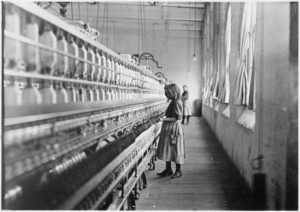
The existence of child labor is a prominent human rights issue in today’s world. The United Nations defines child labor as any work completed by children who have not yet reached the minimum legal age required for either a specific kind of work or any work that is generally viewed as unacceptable for children. Unacceptable work usually involves potential harm, dangerous conditions or physical strain unsuitable for underage youth.

To combat this issue, it is important to understand pertinent child labor facts. This knowledge will allow people to fully realize how many young workers never have the chance to be children:

  • Child labor is incredibly common and internationally practiced, and has affected billions of young lives. During the Industrial Revolution, employers sought out child workers because they could pay them lower wages, use their size as an advantage and benefit from their obedience. For years children made up a large majority of the labor force, and it wasn’t until the Great Depression that labor reforms began.
  • Even though child labor is prohibited in the United States, many other countries still exploit child workers. According to Free the Children, there are approximately 218 million child workers worldwide.
  • Many child workers are forced to work under hazardous conditions. Approximately 115 million children out of the aforementioned 218 million work in unsafe environments according to the International Labor Organization. This type of work is considered to be among the worst forms of child labor, especially since children are at greater risk of injuries and accidents.
  • Many children work out of necessity. In developing countries, it is common practice for kids to find work so that they can help provide for the family. In some cases, children are exposed to slavery, illegal activities and even armed conflict.
  • These children do not receive proper care or education. If there are no child labor laws in place, children work most of the day without receiving necessary nutrients or food and according to Free the Children, approximately 57 million children do not attend school. These limitations hinder children from reaching their full educational potential or advancing in the workforce.

Even though there has been a significant decline in the number of child workers, this is only a moderate decrease compared to the total number of children who are forced to work. As demonstrated by the facts above, this issue is still very present today, and perpetuates the cycle of poverty in developing countries.

– Meghan Orner

Sources: The United Nations, Free the Children, The International Labor Organization, The History Channel
Photo: Flickr

​

June 11, 2014
https://borgenproject.org/wp-content/uploads/borgen-project-logo.svg 0 0 Borgen Project https://borgenproject.org/wp-content/uploads/borgen-project-logo.svg Borgen Project2014-06-11 20:10:372024-12-13 17:50:15Child Labor Facts
Activism, Advocacy, Children, Nonprofit Organizations and NGOs

Save the Children

Save the Children helps children in over 120 countries, including the United States, gain access to health services and education while keeping them out of harm’s way. This organization was founded by Eglantyne Jebb in England in 1919. She aimed at helping children recover after World War I in central Europe. Eglantine dedicated her life to advancing human rights and the well-being of all children. Jebb believed that the world as a whole was entirely responsible for their welfare.

Eglantyne Jebb once said, “The only international language in the world is a child’s cry,”–words which have forever changed how the world views saving the children.

Save the Children’s theory of change creates noticeable impacts on children’s lives by investing in the impact of children by forming together to meet the demanding changes of the world we exist in. This notion is broken down into four pillars of impact.

The first pillar consists of being the voice for the world’s children. The focus is working toward policy reforms to help promote better child rights, particularly in areas of poverty. This will ensure that no child’s voice will go unheard.

The second pillar is the Save the Children foundation becomes the pioneer for innovation. This pillar will show the world that there is proof for solutions to helping these children and that it can be done.

The third pillar states that building partnerships and collaborating with other organizations of the same interest can help meet these goals faster by getting the word spread to a larger audience.

The fourth pillar is the final step. This is the achieved results of policy reforms and also the best patterns possible for implementing the right steps to follow through with, making life better for kids.

The Save the Children foundation has changed the lives of over 125 million people and this number continues to grow. An example of the success of the foundation is shown with children living in Kenya. The drought in Kenya has taken a toll on areas suffering from poverty because the land for livestock becomes unusable. This produced a regional wide shortage of milk, causing many of the children to become severely malnourished.

Save the Children has provided over 30,000 children and families with milk through their milk voucher program. A few months after the program began, children received over a 10 percent weight increase because of the program’s success.

Over the past several years, the Save the Children foundation has educated over 9 million children and will be continuing to do so in the future. Save the Children is working to ensure that children around the world survive threats like newborn complications, and preventable or treatable illnesses like malaria, through the use of vaccines. The Save the Children foundation aims to offer valuable evidence to increase government funding and influence global policies. Save the Children is working with governments, schools and nonprofit partners to improve the available access and the role of quality health and nutrition programs.

– Rachel Cannon

Sources: Charity Watch, Save the Children
Photo: Marketing Magazine

June 11, 2014
https://borgenproject.org/wp-content/uploads/borgen-project-logo.svg 0 0 Borgen Project https://borgenproject.org/wp-content/uploads/borgen-project-logo.svg Borgen Project2014-06-11 04:00:502024-05-26 23:41:18Save the Children
Children, Education, Nonprofit Organizations and NGOs, Women and Female Empowerment

Point of Concern: Education in Bangladesh

Education in Bangladesh
With roughly 57,000 square miles and over 150 million people, Bangladesh is one of the most densely populated countries in the world. It is also firmly entrenched in the rising power narrative that characterizes much of the south Asian region it occupies. For this reason, it is in the context of slow development where education in Bangladesh must be considered.

In 1990, the Primary Education Compulsory Act came into law and primary education became free and compulsory for all children up to grade five. Today in Bangladesh, there are approximately 56,867,000 people under the age of 18, 15 million of which are under the age of 5. There are currently 16 million children enrolled in grades one through five, and only 55 percent of children in Bangladesh who begin primary education make it to grade five. Only 50.7 percent complete all five years. The effects of this low rate of formal education are clear. In the young adult age range of 15 to 24, only 77.1 percent of male and 80.4 percent of females can read.

The many problems of education in Bangladesh can be linked to resources. As of 2009 Bangladesh spent 2.2 percent of its GDP on public education. In that same year the United States spent 5.2 percent. Despite government efforts to prove the contrary, education in Bangladesh remains an area in need of drastic reform. A total of 24 percent of primary school teachers are untrained and the average student-teacher ratio is 49 to one. These figures prove to be debilitating realities for the formative years of youth education.

To right the ship of education in Bangladesh, many private enterprises have lent their assistance. One such organization is BRAC. Formerly known as the Bangladesh Rehabilitation Assistance Committee, BRAC is now the world’s largest non-governmental organization. BRAC concentrates on impoverished rural areas. It also actively seeks female inclusion, often recruiting local women as teachers for their schools. These women receive extensive training and regular organizational evaluations. BRAC provides its education services free of charge and focuses on a unique curriculum that steers clear of the rote memorization techniques utilized in government schools. This innovative approach has proven beneficial, as BRAC students regularly outperform their government school counterparts. According to the New York Times, BRAC now administers “the largest secular non-governmental education system in the world.”

However, education in Bangladesh is still a concern. With high dropout rates and little access available to children in rural areas, the compulsory part of primary education in Bangladesh has not taken hold in the two decades since its legal codification. Potential resources remain untapped and a country of millions remains affected.

– Taylor Dow

Sources: The Financial Express, The Guardian, The New York Times, UNDP, UNICEF(1), UNICEF(2), Worldbank
Photo: The World Bank

June 10, 2014
https://borgenproject.org/wp-content/uploads/borgen-project-logo.svg 0 0 Borgen Project https://borgenproject.org/wp-content/uploads/borgen-project-logo.svg Borgen Project2014-06-10 04:00:372024-06-05 01:57:30Point of Concern: Education in Bangladesh
Children, Education

Primary Education in Somalia & the U.S.

Many years of civil war have led to unrest in all aspects of Somalian life. Among the areas most affected is primary education in Somalia. Though the United States is doing a great deal to help rebuild, significant differences in the infrastructures of both countries’ primary schools still remain.

Primary schooling is the earliest stage of education in a child’s life, aside from nursery, pre-schooling or kindergarten programs. It is an important phase in the learning process because it teaches children the basics of reading, writing and math that they need for later education and life in general.

Because primary schools are the foundation of an entire educational system’s organization, attention to their efficacy is critical. Comparing primary education in the U.S. to that of a developing country such as Somalia provides interesting insight into the reasons that higher education in both countries may differ so significantly.

From the beginning of formal schooling, fewer children are receiving an education in Somalia. While education at the primary level is mandatory for all children in the U.S., roughly 42 percent of primary school aged children are enrolled in school.

In the U.S., primary school lasts from first to fifth grade, resulting in five years of fundamental education. In Somalia, however, primary school ends in fourth grade. Though schooling continues beyond these four years, many children do not. Dropping out before the fifth grade level becomes almost a social norm, as only 8 percent of Somali children enroll in secondary school.

Accessibility to education in Somalia and the U.S. accounts for these staggering differences. Public education is available to all students in the U.S., making the compulsory nature of schooling possible. However, due to the number of schools destroyed by civil war in Somalia, easily accessible education is not a luxury available to all Somali children.

The children that do attend school in Somalia also face obstacles that U.S. students do not encounter regularly. For example, the teacher-to-student ratio in primary schools in Somalia is one to 33. The average number of pupils per teacher in the U.S. is less than half of that, giving each student greater opportunity for individual attention.

Gender inequality is also apparent in the Somali education system. The current social barriers in Somalia do not encourage women to receive an education, so it is not surprising that less than 36 percent of students are female. Because schooling is mandated by U.S. laws, gender disparity is not a noticeable issue in American primary schools.

Other issues U.S. pupils are less likely to face are disparity of textbooks and other learning materials, a lack of qualified teachers and unstandardized curricula.

In the U.S., curricula are standardized by state. Education at the primary level does not vary too much. Most students learn to read and write at the same age and acquire the same basic skill sets during first through fifth grade.

Consistency is lacking among primary schools in Somalia. What one child learns in second grade may be completely different from what another child learns in second grade at a different school. The lack of a standardized curriculum makes country-wide assessments difficult. Even though the Ministry of Education in Somalia would like to rebuild the educational system, the absence of standardization does not provide an adequate place to start making improvements.

A good place to start may be government funding. Public schools in the U.S. are government funded, but many of the primary schools in Somalia cannot function without receiving at least some financial support from students’ parents. A child raised in a poor family may not be able to afford primary education.

The quality of public education varies in the U.S. depending on the economic state of the school’s area, but public education is always available. In order to provide the most help to the Somali educational system, aid should be given to ensure that some sort of schooling is always available to children, especially at a young age.

The good news is that many U.S. aid programs are working to rebuild schools in Somalia.

SAFE, the Somali and American Fund for Education, works with schools in Somalia to ensure their credibility as learning institutions. The organization looks at the community’s involvement in their local schools and awards certain areas money to fund construction of new school buildings. The even better news is that these schools include all levels of learning through twelfth grade, including primary education.

– Emily Walthouse

Sources: SAFE, Classbase 1, Classbase 2, MOE Somalia, NCES, UNICEF
Photo: Atlanta BlacK Star

June 9, 2014
https://borgenproject.org/wp-content/uploads/borgen-project-logo.svg 0 0 Borgen Project https://borgenproject.org/wp-content/uploads/borgen-project-logo.svg Borgen Project2014-06-09 07:52:482024-06-05 01:57:30Primary Education in Somalia & the U.S.
Page 123 of 137«‹121122123124125›»

Get Smarter

  • Global Poverty 101
  • Global Poverty… The Good News
  • Global Poverty & U.S. Jobs
  • Global Poverty and National Security
  • Innovative Solutions to Poverty
  • Global Poverty & Aid FAQ’s
Search Search

Take Action

  • Call Congress
  • Email Congress
  • Donate
  • 30 Ways to Help
  • Volunteer Ops
  • Internships
  • Courses & Certificates
  • The Podcast
Borgen Project

“The Borgen Project is an incredible nonprofit organization that is addressing poverty and hunger and working towards ending them.”

-The Huffington Post

Inside The Borgen Project

  • Contact
  • About
  • Financials
  • President
  • Board of Directors
  • Board of Advisors

International Links

  • UK Email Parliament
  • UK Donate
  • Canada Email Parliament

Get Smarter

  • Global Poverty 101
  • Global Poverty… The Good News
  • Global Poverty & U.S. Jobs
  • Global Poverty and National Security
  • Innovative Solutions to Poverty
  • Global Poverty & Aid FAQ’s

Ways to Help

  • Call Congress
  • Email Congress
  • Donate
  • 30 Ways to Help
  • Volunteer Ops
  • Internships
  • Courses & Certificates
  • The Podcast
Scroll to top Scroll to top Scroll to top