• Link to X
  • Link to Facebook
  • Link to Instagram
  • Link to TikTok
  • Link to Youtube
  • About
    • About Us
      • President
      • Board of Directors
      • Board of Advisors
      • Financials
      • Our Methodology
      • Success Tracker
      • Contact
  • Act Now
    • 30 Ways to Help
      • Email Congress
      • Call Congress
      • Volunteer
      • Courses & Certificates
      • Be a Donor
    • Internships
      • In-Office Internships
      • Remote Internships
    • Legislation
      • Politics 101
  • The Blog
  • The Podcast
  • Magazine
  • Donate
  • Click to open the search input field Click to open the search input field Search
  • Menu Menu

Archive for category: Aid

Aid, Refugees and Displaced Persons

Should We be Accepting Refugees in America?

Accepting_Refugees_in America
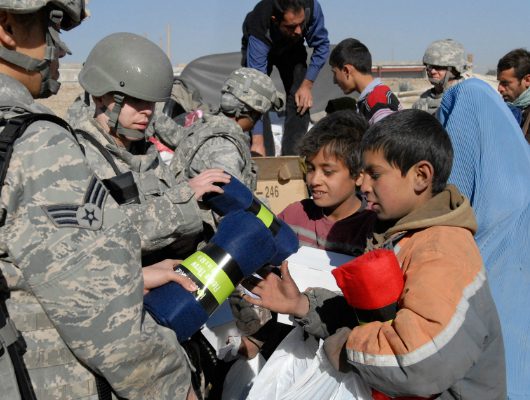
As Europe continues to struggle with a steady stream of refugees from Syria, Iraq and beyond, the United States is still debating a proper policy response to the crisis. It begs the question – what are the implications for accepting refugees in America on a large scale?

White House discussions regarding U.S. refugee policy have been held in recent weeks, but it still seems that the Obama administration is far from making a concrete decision.

President Obama has stated that the U.S. will accept around 10,000 Syrian refugees over the next year, but more longstanding U.S. involvement has yet to be confirmed.

In a recent op-ed for the New York Times, director of migration and refugee services of the United States Conference of Catholic Bishops William Canny laid out some key ways that genuine U.S. involvement could greatly aid Syrian refugees.

“In addition, the United States can resettle a much larger number of the 4 million Syrian refugees than the 1,600 we have to date,” Canny says. “The U.S. refugee program could absorb as many as 100,000 Syrian refugees if the political will to do so existed. Security checks are in place to ensure that those resettled are not a threat to us.”

According to the UN, 7.6 million Syrians have been internally displaced since the beginning of the conflict in 2011, and an additional 4.1 million have been displaced outside of the country altogether. The need for increased U.S. response is growing rapidly.

“A robust U.S. commitment to the resettlement of Syrian refugees would encourage other reluctant nations, especially those in Europe, to accept more and to keep their doors open until this horrific conflict can be ended,” Canny continues. “It also would show that the United States is not indifferent to human suffering and remains, as always, a beacon of hope to the world.”

– Alexander Jones

Sources: New York Times, US News, Washington Post
Photo: Google Images

September 20, 2015
https://borgenproject.org/wp-content/uploads/borgen-project-logo.svg 0 0 Borgen Project https://borgenproject.org/wp-content/uploads/borgen-project-logo.svg Borgen Project2015-09-20 14:17:122024-12-13 18:05:07Should We be Accepting Refugees in America?
Aid, Charity, Global Poverty

Mission of Hope Haiti Builds 500 Homes

Mission_of_Hope_Haiti
In 2010, an earthquake killed over 200,000 Haitians and left crumbling housing infrastructure. Since then, homelessness in Haiti has steadily declined but more than 85,000 people still remain without a home. Rebuilding from the damage is the toughest task for the poorest country in the Americas.

Before the earthquake, Haitians lived in relatively poor housing built from inadequate materials. Haiti ranks near the bottom in the world in providing shelter for their citizens. Shelter includes availability of affordable housing, access to electricity, quality of electricity supply, and household air pollution attributable deaths.

The international community has been very supportive of Haiti. The EU provided $996 million to Haiti from 2008 to 2013. Money that was used for roads, education, food security, human rights, agricultural, electricity, and trade.

On a smaller level, charities and volunteers have been a strong driving force for recovery in Haiti.

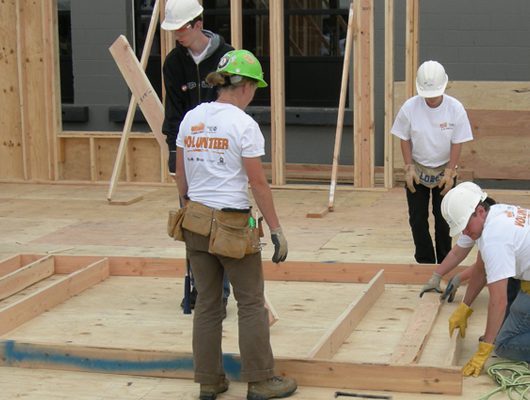
Mission of Hope Haiti, a Christian missionary organization, provides education for people in the island nation. The organization has a partnership with Hope for Haiti, and the government in Haiti to build homes. Recently, Mission of Hope celebrated its 500th home built for the affected families since 2010, an average of 100 homes each year.

Every house has three rooms, land for farming, detached bathroom, access to education, water, two fruit trees, and agricultural training. The cost of each home is relatively low at $6,000.

Mission of Hope has educated 6,000 children, provided 91,000 nutritious meals each day, and housing for hearing-impaired families. Their work has helped make Leveque one of the best settlements in Haiti.

“Our vision from the first home built has been to provide those who lost their homes with a quality, cost efficient Haitian home that will not only provide a place to live but a place to thrive,” said Mission of Hope President Brad Johnson.

Homelessness in Haiti is still a serious threat to human security, but organizations like Mission of Hope provide solutions and help that will benefit thousands of people’s lives.

– Donald Gering

Sources: EurActiv, Good News Network, Huffington Post, Social Progress Imperative
Photo: Google Images

September 20, 2015
https://borgenproject.org/wp-content/uploads/borgen-project-logo.svg 0 0 Borgen Project https://borgenproject.org/wp-content/uploads/borgen-project-logo.svg Borgen Project2015-09-20 01:30:412024-05-27 09:27:52Mission of Hope Haiti Builds 500 Homes
Aid, Global Poverty, Hunger, Nonprofit Organizations and NGOs

Bangladesh Nonprofit Wins World Food Prize

Bangladesh_Nonprofit
In early November of 1970 a category-3 tropical cyclone made landfall over what was then called Eastern Pakistan. It was the single deadliest tropical storm in human history with a death toll reaching over 500,000. The next year, in 1971, the region would fight a war to form the independent nation of Bangladesh.

Due to so much devastation in so little time, Bangladesh would go on to become the second poorest country on the planet. That’s where one man, Fazle Hasan Abed, felt something had to be done.

Abed formed BRAC, or the Bangladesh Rural Advancement Committee, in the early 1970s as a temporary organization dedicated to providing aid to individuals and their families who were affected by the catastrophes. But after providing immediate relief Abed realized the need for round the clock, global aid.

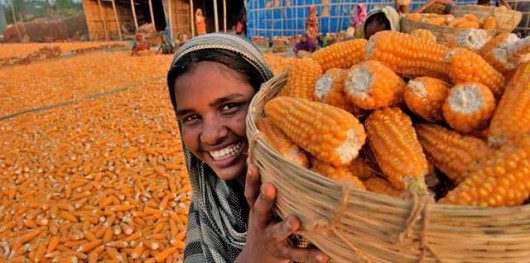
Since its creation, the Bangladesh nonprofit has evolved into one of the largest organizations fighting to end global poverty and hunger. As a result, Abed was announced as the recipient of the 2015 World Food Prize on September 2 in Des Moines, Iowa.

Estimates on the scope of BRAC’s now 40-year impact show that the organization has helped nearly 150 million people across Africa and Asia. The organization has plans to expand its reach into 10 additional countries.

The World Food Prize was created in 1986 to recognize individuals who contribute to the production, innovation and availability of global food supplies. The prize is a donation of $250,000. The award ceremony will take place in October.

Initially, Abed and BRAC worked to combat the incredibly high childhood mortality rates in Bangladesh before seeing the need to combat poverty on an even grander scale. In 2010, Abed was knighted by Queen Elizabeth II for his efforts to empower women through STEAM and agricultural education.

Most recently, BRAC has begun a self-sufficiency and financial training program in 9 different countries. The program gives participants a weekly stipend to discourage begging and menial labor.

A bank account is set up in their name so as to teach financial and practical skills. Participants may also receive a grant to buy a computer, a cow, or a chicken coop to begin their own business.

On the program Abed said, “In many countries, poor people are not seen as a solution to the problem but the problem. Poor people can be organized and become the solution to the poverty themselves…All we need to do is provide them opportunities and conditions and give them the tools.”

Sir Abed, who recently celebrated his 79th birthday, now has yet another trophy to add to his collection that shows his undying desire to end global poverty, suffering and hunger.

– Joe Kitaj

Sources: Fortune, Huffington Post, BRAC, Word Food Prize
Photo: Globalhand

September 20, 2015
https://borgenproject.org/wp-content/uploads/borgen-project-logo.svg 0 0 Borgen Project https://borgenproject.org/wp-content/uploads/borgen-project-logo.svg Borgen Project2015-09-20 01:30:342020-06-25 10:34:52Bangladesh Nonprofit Wins World Food Prize
Aid, Global Poverty, Refugees and Displaced Persons

Solidarity Symi: A Safe Haven for Syrian Refugees

syrian_refugees
The Syria Refugee crisis is becoming increasingly difficult to ignore. With the picture of the young refugee boy whose body washed up on shore grabbing the attention of the world, more people than ever are paying attention to this humanitarian crisis.

With increased awareness of the Syrian Refugees, comes an increase in advocacy (as people in many countries are stepping up to tell their governments how they feel about accepting refugees into their countries) and an increase in activism.

Individuals like hotel owner Andrew Davies and lettings agent Wendy Wilcox on the Greek island of Symi, are stepping up to help these those who are fleeing violence and pain in hopes of finding a better life.

Together, the pair has launched a reception service on the tiny Greek island called Solidarity Symi, using an abandoned post office as their resource headquarters.

This organization is a not-for-profit that works to provide food, clothing, shelter, and medical treatment to destitute Syrians who have crossed over the Mediterranean into Europe.

These heroic individuals work at this project eight hours a day in addition to the jobs they work at to make a living.

There are 30 core volunteers that work to get the refugees taken care of while they are in Symi and to direct them to resources about how to continue their journey safely.

Though some Symi residents worry about the influx of refugees hurting their tourism-based economy, Davies’ thoughts on the matter are simple. “How could we lie on the beach reading books when people were suffering?” he asks.

Many cross the Mediterranean in dangerously overloaded boats, with smugglers who overcharge them or delay the trip. But, in a country torn apart by war, many Syrians are left with no other choice.

As Francine Uenuma of Save the Children emphasizes based on the refugees she has spoken to near Serbia, “They’re fleeing violence. They’re fleeing persecution. And the risks they’re taking, I think, underscore that point.”

Right now, independent operations like Solidarity Symi are especially important in light of the strain on humanitarian aid agencies such as the U.N. High Commissioner on Refugees (UNHCR) and the U.N.’s World Food Program.

Solidarity Symi has raised over £26,000 through a Facebook site and donations from visitors. There are donation boxes set up around the island, and community members are working to raise awareness of the organization through on-site and online mediums so that it can continue to develop.

The Facebook page is also continually updated with items that the organization is in need of, so that those present on the island can make material donations such as soap, travel bags, specific foods, sleeping mats, and even toys for children.

The Solidarity Symi Facebook page is a very positive resource that updates supporters with pictures and posts about how their donations are helping and about refugees as individual people, not simply victims and members of a mass migration.

The people working tirelessly at organizations such as Solidarity Symi are a perfect testament to how each individual has the power to make a positive difference.

For more information about Solidarity Symi, or to donate to the organization, visit their website.

– Emily Dieckman

Sources: Blogspot, Daily Mail, Facebook, NPR 1, NPR 2, Reuters
Photo: cooksailing

September 19, 2015
https://borgenproject.org/wp-content/uploads/borgen-project-logo.svg 0 0 Borgen Project https://borgenproject.org/wp-content/uploads/borgen-project-logo.svg Borgen Project2015-09-19 01:33:272024-12-13 18:05:07Solidarity Symi: A Safe Haven for Syrian Refugees
Aid, Global Poverty, Women and Female Empowerment

Odisha Rural Livelihoods Project Improves Lives

Women Dream
For those who have lost everything, self-help groups may provide a shoulder to cry on. Unfortunately, these groups ultimately offer little relief in providing jobs on a daily basis for many who remain unemployed. Sometimes it is only through financial assistance from outside projects that hope for the future can begin.

The Odisha Rural Livelihoods Project, or Tripti, was launched with the goal of improving the socio-economic status of the poor, especially disadvantaged groups such as women. The project began in 2009 throughout 32 blocks in 10 coastal districts of Odisha.

A $70 million loan from the World Bank started the implementation of the Odisha Poverty Reduction Mission. Its aim, however, had more than just one objective.

“The Project was designed to improve livelihoods of deprived women by building and mobilizing community institutions, creating community investment funds, and providing specific livelihood funds,” states an article by the World Bank.

With this in mind, the process for eligibility within this program was ultimately carried out by examining income levels and assigning individuals to different categories such as good, average, poor and the destitute.

By providing financial assistance through loan relief, many women would have the opportunity to provide in new ways for their families.

Currently, the project has seen five successful years and over time has supported over 929,000 households covering around 78,460 self-help groups. More than 60 percent of these benefitting the most vulnerable, rural poor communities.

Recognizing that the livelihood of the people is based on agriculture, Tripti aims to implement their program through an executed partnership with the local NGO and agricultural department.

Through this program, “community members are directly involved in seed production, processing and marketing. The seeds produced are then marketed locally among the SHG members to ensure easy and affordable access to quality seeds for the farmers.

The Project has initiated a program under which 1,800 farmers have been mobilized into Producer Groups to develop five different varieties of paddy seeds, which have a high demand in the local area. The seeds are then certified by the Odisha State Seed 3 Certification Agency. In 2014, 1,900 metric tons of quality seeds were produced,” reports the World Bank.

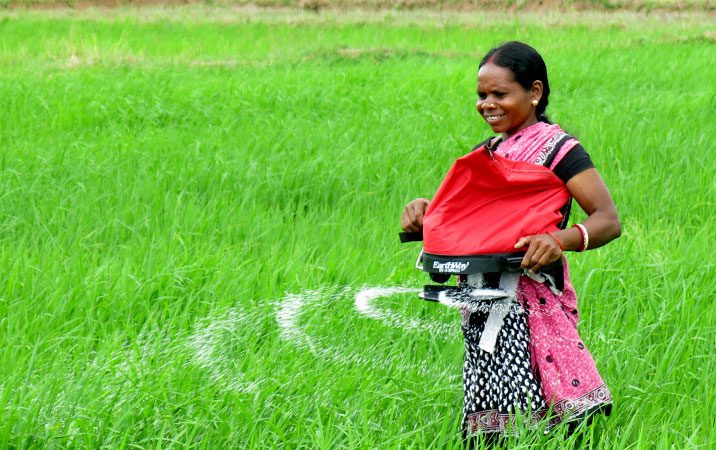
Tripti supports the promotion of agriculture through a program, which encourages households to create kitchen gardens by utilizing patches of grass and growing vegetables and other herbs. This will help communities meet the nutritional needs of their families.

Ultimately, this project has lifted women and their families out of poverty and sparked an economic recovery within regions devastated by natural disaster. This project is helping to give regions a chance for success.

– Nikki Schaffer

Sources: World Bank, Odisha
Photo: Irri Org

September 18, 2015
https://borgenproject.org/wp-content/uploads/borgen-project-logo.svg 0 0 Borgen Project https://borgenproject.org/wp-content/uploads/borgen-project-logo.svg Borgen Project2015-09-18 01:30:422024-12-13 18:05:06Odisha Rural Livelihoods Project Improves Lives
Aid, Aid Effectiveness & Reform, Global Poverty, Humanitarian Aid

Humanitarian Response Faces Increasing Pressure to Reform

Humanitarian_Response
The humanitarian system is facing increasing demand to reform its approach to crisis response. The demands are for the system to become more flexible and transparent in order to better meet needs, utilize resources more efficiently as well as improve local capacity. But, why now?

Our world is changing rapidly and there is an increasing demand to solve new problems in an ever-changing world of ongoing conflict. As a result, UN’s Secretary-General has initiated the World Humanitarian Summit to be held in Istanbul on May 23-24, 2016, where he seeks to challenge the ways humanitarian organizations work together to deliver aid and save lives.

In 2014, $23 billion was spent on crisis response. Yet, the international emergency aid system is still failing vulnerable regions such as Syria and Ukraine.

IRIN, an independent, nonprofit news organization, suggested various ways UN humanitarianism could change to Ertharin Cousin, head of the World Food Programme (WFP), and Kyung-wha Kang, Assistant Secretary-General of the UN’s humanitarian coordination body, OCHA.

Among the many ideas for reform is localizing the humanitarian response system. This not only involves having the local communities making crisis response decisions, but also changing the humanitarian funding methods. Currently, larger organizations such as OCHA and WFP receive the vast majority of the funding, while local organizations receive little funding.

Another important reform proposal, is making the top jobs available to everyone, not just permanent members of the Security Council. This is something the UN has been heavily criticized for.

Having only people on the inside of the organization and not bringing an outside perspective is definitely not conducive to change. It’s also not conducive to avoiding politicisation, one of the many causes of humanitarian problems.

Despite all of these ideas, the question still remains – is reform the answer to a more efficacious humanitarian response system or should we get rid of the system all together?

– Paula Acevedo

Sources: IRIN News, World Humanitarian Summit
Photo: Flickr

September 10, 2015
https://borgenproject.org/wp-content/uploads/borgen-project-logo.svg 0 0 Borgen Project https://borgenproject.org/wp-content/uploads/borgen-project-logo.svg Borgen Project2015-09-10 04:30:442024-05-27 09:27:44Humanitarian Response Faces Increasing Pressure to Reform
Aid, Global Poverty

Médecins Sans Frontières Responds to Congo Measles Outbreak

Measles_outbreak
A measles outbreak has been occurring in the Democratic Republic of Congo since the beginning of the year, with 16,500 cases reported from January to June.

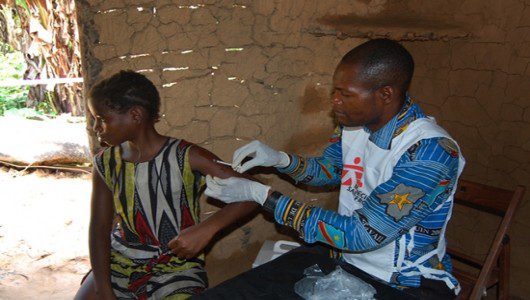
The Médecins Sans Frontières (MSF – also known as Doctors Without Borders in the U.S.) was able to take responsive measures starting in March, vaccinating over 287,000 children either to combat measles or to prevent it.

Since May, all of the children aged 6 months to 10 years in the Malemba Nkulu health zone – 101,000 in total – were vaccinated.

Over 500 members of the MSF team have been deployed to respond to the measles outbreak in the Congolese provinces. They are working to transport and administer vaccines and care for those afflicted by the disease. But the fight against measles calls for more than just brave, skillful responders.

The challenges in treating the epidemic are great and many, but organizations like MSF overcome them by being aware of these challenges so that they can be addressed.

The last time that Katanga (the Congolese province where the most cases are being seen) had a measles outbreak this serious was in 2011. MSF and other organizations involved in treating this outbreak are drawing on the lessons they learned from 2011 to treat this outbreak more efficiently.

The head of the MSF mission in the Congo, Jean-Guy Vataux, cites several barriers to fighting the disease: “shortage of funds, running out of vaccines, problems maintaining the cold chain. . . and a lack of qualified human resources.”

Shortage of funds is a problem humanitarian organizations have always been familiar with. Organizations like the Central Emergency Response Fund (CERF) and the Measles and Rubella Immunization Initiative provide grants to humanitarian organizations – they have funded several vaccination campaigns during the current outbreak.

Donations from governments, organizations, corporations, and individuals can be sent to groups like these, or also straight to the organizations fighting the disease on the ground (MSF, WHO, etc.)

Beyond the scope of finance, organizations are working together to make sure they reach as many people as possible.

In Sudan, health professionals involved in the response have noted the increased effectiveness of response when different organizations, such as MSF and UNICEF, work together. It is through the teamwork of different organizations that barriers, like marshy roads that make villages difficult to access, can be evaluated and worked through.

The Ministry of Health in Sudan and WHO are working together on a plan of action to help about 180,000 people in the Zamzam camp. Currently, the camp has ongoing routine immunizations for children and pregnant women. Eight different vaccination centers are up and running, staffed by 20 vaccinators.

Areas such as case investigation and response measures are also being reevaluated for efficiency. Investigations are particularly pertinent because oftentimes, the disease goes untreated, ad thus deaths go unreported and statistics are inaccurate. Without a proper understanding of the situation, resources can’t be allocated to where they are needed.

According to Dr. Malik Alabbasi, Director-General of the Public Health Care Directorate in the Federal Ministry of Health, recent reports have already reflected improvement in case management and implementation of vaccines.

The situation in the Congo and Sudan is grim in many ways, but through the collective effort of organizations determined to make a difference, the fight against measles is making slow and steady progress.

– Emily Dieckman

Sources: All Africa, WHO, MSF 1, MSF 2, Reuters, Time, OCHA, Vaccine News Daily
Photo: Doctors Without Borders

September 9, 2015
https://borgenproject.org/wp-content/uploads/borgen-project-logo.svg 0 0 Borgen Project https://borgenproject.org/wp-content/uploads/borgen-project-logo.svg Borgen Project2015-09-09 01:30:202024-05-27 09:27:29Médecins Sans Frontières Responds to Congo Measles Outbreak
Aid, Global Poverty, Technology

Humanitarian Data Exchange Speeds Up Relief Efforts

data_exchange
Humanitarian relief projects involve massive undertakings, and often organizations employ hundreds or even thousands of aid workers to get the job done. It’s no surprise then that relief efforts require huge amounts of logistic planning and coordination.

This can be difficult to achieve accurately and quickly as communication infrastructure may be downed or poorly developed to begin with.

Further, it is difficult to track the individual efforts of aid workers across large developing, or vastly affected regions. As a result, relief may be slow, disorganized, and ineffective. In order to deliver aid more quickly and efficiently, the UN has teamed up with San Francisco based tech company Frog to develop the Humanitarian Data Exchange, or HDX for short.

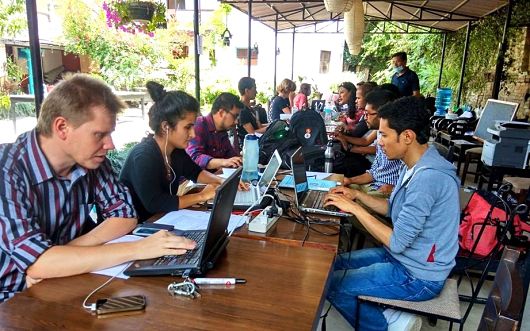
The goal of the project is to streamline humanitarian data. In the past, relief workers compiled thousands of documents and data points in a variety of formats. The HDX standardizes the methods in which data is entered and collected, thus making finding specific data points easier with less crucial time wasted.

The HDX contains numerous data points, most complied by aid workers on the ground. The network can be accessed from any computer or mobile device with an Internet connection. Users then search for a specific dataset using a basic search engine.

The data includes region-specific populations, available medical services and their inventories, national poverty indexes, the number of homeless in the area, and hundreds of others.

The UN first implemented the HDX in West Africa during the Ebola epidemic. Currently, aid workers coordinating earthquake relief efforts are most actively using the HDX in Nepal.

The HDX has currently 76 different datasets for Nepal; many of these include maps and topographical information, as remote Nepalese regions are difficult to traverse due to limited infrastructure.

Nepal is not the only country benefitting from more efficient aid; the HDX lists data in 244 locations. Data is available to the public as well, and can be found at their website.

– Joe Kitaj

Sources: Forbes 1, Forbes 2, RW Labs
Photo: Forbes

September 8, 2015
https://borgenproject.org/wp-content/uploads/borgen-project-logo.svg 0 0 Borgen Project https://borgenproject.org/wp-content/uploads/borgen-project-logo.svg Borgen Project2015-09-08 01:30:362020-06-30 18:42:10Humanitarian Data Exchange Speeds Up Relief Efforts
Aid, Global Poverty, Humanitarian Aid, United Nations

UN Funds Humanitarian Efforts in Central African Republic

Humanitarian_Efforts
On August 11, the United Nations Common Humanitarian Fund allocated $13.2 million to humanitarian efforts in the Central African Republic (CAR) in order to provide much needed life-saving aid to those affected by the ongoing conflict in the African country.

The funds will go toward supporting local humanitarian aid agencies that provide clean drinking water, access to education and healthcare, food, protection, and shelter to vulnerable and displaced people. Though the amount of funds will provide some people with necessary help, it is not nearly what is needed to be able to provide aid for the entire population in need.

“Thanks to donors who have contributed in 2015, this CHF allocation allows humanitarian partners to continue helping thousands of displaced people and host families,” said Aurélien Agbénonci, the UN’s Humanitarian Coordinator in the African country. “However, it is only three percent of the $415 million we still need by the end of the year if we are to save more lives and reach all people in acute need in 2015.”

The Civil War in the Central African Republic between the Muslim Séléka alliance and the anti-Balaka militias with CAR government forces, which are predominantly Christian, began at the end of 2012 and has claimed many civilian lives and displaced many more. Additionally, the Lord’s Resistance Army continues operations within the southeastern region of the country.

According to the United Nations Office of the Coordination of Humanitarian Affairs (OCHA), as of June 2015, there are about 463,400 refugees from the Central African Republic, and 368,900 internally displaced people. In total, OCHA concludes that there are presently 2.7 million people in the Central African Republic who are in critical need of humanitarian aid.

Unfortunately, the CAR is reportedly “one of the most difficult and dangerous environments in the world for aid workers.” On July 22, the UN condemned a surge of violence against aid workers along with the July 18 attack on a World Food Program food convoy which left a driver dead.

It is crucial that international humanitarian aid organizations continue to demonstrate their commitment to aiding those in need. The UN’s latest allocation of funds, though not sufficient to provide for every single victim, sent the right message. Aid organizations must never falter in the effort to protect and preserve the lives of innocent civilians, even in the face of danger.

– Jaime Longoria

Sources: UN Office for the Coordination of Humanitarian Affairs, UN News Centre 1, UN News Centre 2
Photo: UN News Centre

September 5, 2015
https://borgenproject.org/wp-content/uploads/borgen-project-logo.svg 0 0 Borgen Project https://borgenproject.org/wp-content/uploads/borgen-project-logo.svg Borgen Project2015-09-05 07:15:062024-06-11 02:48:14UN Funds Humanitarian Efforts in Central African Republic
Aid, Global Poverty

Nonprofit Helps Vaccinate Children in Developing Countries

Vaccinate_children“Together let’s vaccinate all of the world’s children,” reads the website for Alma Sana, a nonprofit organization started by Lauren Braun.

Braun, a former pre-med student at Cornell University, started the company after spending a summer traveling to villages in Peru to remind mothers to take their children in to get vaccinated.

Immunizations are critical in developing countries, where they can save the lives of children and help protect the health of others.

Due to donors such as the World Bank and the Bill and Melinda Gates Foundation joining forces, the number of immunizations in developing countries has soared in recent times. Estimates reveal that immunizations have prevented the future death of seven million children since 2000.

However, developing countries are still facing the problem of young mothers forgetting to vaccinate children on time, as vaccine schedules are becoming more complex. That’s where Braun stepped in to help.

Alma Sana creates flexible bracelets to serve as tiny calendars to remind mothers to make sure their children receive necessary immunizations on time.

The bracelets, which are made from silicon, fit around the ankle of a newborn child and contain symbols and numbers to communicate vaccination information. Words aren’t used so illiterate mothers have an easier time understanding.

A laminated information card comes with each bracelet and is used to decode the symbols.

For example, a triangle, circle, X and square are below the number four on the bracelet, representing four months of age. The triangle represents the vaccine for polio, the circle equals the vaccine for pneumonia, and the X represents the vaccine for rotavirus. The square serves as a reminder for the pentavalent shot, an immunization that protects against five diseases.

Once a child receives an immunization, a nurse will punch a hole in the symbol or number corresponding to the vaccine.

Funding for the bracelets came via a grant from the Gates Foundation, which Braun used to test the tiny reminders in clinics in Ecuador and Peru. The bracelets cost less than 10 cents and come in both blue and pink.

Braun is currently working on a video fundraising campaign to support a trial of the bracelets in Nigeria, Pakistan, and Colombia. The trial will be randomized and controlled, involving around 5,000 mothers and infants.

You can check out her video below:

– Matt Wotus

Sources: Alma Sana, Gavi, The New York Times
Photo: Flickr

September 3, 2015
https://borgenproject.org/wp-content/uploads/borgen-project-logo.svg 0 0 Borgen Project https://borgenproject.org/wp-content/uploads/borgen-project-logo.svg Borgen Project2015-09-03 08:07:232024-12-13 17:54:09Nonprofit Helps Vaccinate Children in Developing Countries
Page 60 of 65«‹5859606162›»

Get Smarter

  • Global Poverty 101
  • Global Poverty… The Good News
  • Global Poverty & U.S. Jobs
  • Global Poverty and National Security
  • Innovative Solutions to Poverty
  • Global Poverty & Aid FAQ’s
Search Search

Take Action

  • Call Congress
  • Email Congress
  • Donate
  • 30 Ways to Help
  • Volunteer Ops
  • Internships
  • Courses & Certificates
  • The Podcast
Borgen Project

“The Borgen Project is an incredible nonprofit organization that is addressing poverty and hunger and working towards ending them.”

-The Huffington Post

Inside The Borgen Project

  • Contact
  • About
  • Financials
  • President
  • Board of Directors
  • Board of Advisors

International Links

  • UK Email Parliament
  • UK Donate
  • Canada Email Parliament

Get Smarter

  • Global Poverty 101
  • Global Poverty… The Good News
  • Global Poverty & U.S. Jobs
  • Global Poverty and National Security
  • Innovative Solutions to Poverty
  • Global Poverty & Aid FAQ’s

Ways to Help

  • Call Congress
  • Email Congress
  • Donate
  • 30 Ways to Help
  • Volunteer Ops
  • Internships
  • Courses & Certificates
  • The Podcast
Scroll to top Scroll to top Scroll to top