• Link to X
  • Link to Facebook
  • Link to Instagram
  • Link to TikTok
  • Link to Youtube
  • About
    • About Us
      • President
      • Board of Directors
      • Board of Advisors
      • Financials
      • Our Methodology
      • Success Tracker
      • Contact
  • Act Now
    • 30 Ways to Help
      • Email Congress
      • Call Congress
      • Volunteer
      • Courses & Certificates
      • Be a Donor
    • Internships
      • In-Office Internships
      • Remote Internships
    • Legislation
      • Politics 101
  • The Blog
  • The Podcast
  • Magazine
  • Donate
  • Click to open the search input field Click to open the search input field Search
  • Menu Menu

Archive for category: Aid

Aid, Global Poverty, Women

SafePad: Revolutionizing Menstruation and Hygiene

SafePad
When thinking of the extremely poor, one’s mind may not immediately go to the inherent struggles that come with menstruation. This is not just cramping, bloating and irritability, but the associated sanitation issues that may arise without access to proper hygiene, not to mention the stigmatic buzz around womanhood and her period.

Real Relief, a small organization committed to supplying common life sustaining supplies, is devoted to making a difference and has developed a tool for menstruation hygiene for the extremely poor: SafePad, a period game changer in the sanitation industry. While sanitary napkins are nothing new to the women’s hygiene repertoire, SafePad exemplifies what certain basic life necessities encompass and how something so simple can impact the lives of millions of women and their younger counterparts.

The extremely poor cross many cultures as well as economic strains over a variety of different ages, races and religions. There are several different ways in which women have traditionally dealt with their menses. In some cases, these methods may be simply impractical. Rags may be used to deal with menses, but they often take time and privacy to wash and dry. Where menstruation cups may be available, some cultures may not accept this means or view it as reasonable.

Inadequate access to proper sanitation such as soap and clean water can also cause yeast infections, other serious illness or in extreme cases, infertility. When all else fails, women may choose to “free bleed,” which may not seem particularly harmful unless in the context of young girls attending schools in which they may take five or more days of leave, eventually leading to a poorer performance in their classes or even drop out.

Real Relief’s mission led to the production and distribution of SafePad through NGOs, religious communities and relief aid organizations of SafePad. SafePad has been specifically designed to combat bacteria by utilizing silica, nitrogen and carbon treatment agents, provide comfort, discretion and practical solutions to women where access to hygienic means of caring for the menses is difficult or impossible.

SafePad is also reusable and recyclable for women that do not experience reliable waste management in their communities and can withstand up to 100 washes, which translates to four years of use.

Menstruation is a part of most every woman’s life but if not taken care of properly, has the potential to have serious, life-long side effects. Menstrual health, education and supplies, however, can lead to so much more relief. Period.

– Casey Hess

Photo: Flickr

September 2, 2017
https://borgenproject.org/wp-content/uploads/borgen-project-logo.svg 0 0 Borgen Project https://borgenproject.org/wp-content/uploads/borgen-project-logo.svg Borgen Project2017-09-02 01:30:452024-05-28 00:16:11SafePad: Revolutionizing Menstruation and Hygiene
Aid, Global Poverty

How to Help People in the Dominican Republic

How to Help People in the Dominican RepublicA 2016 World Bank Report states that, despite the Dominican Republic’s status as one of the countries with the greatest growth in Latin America and the Caribbean, one in every three citizens is poor.

While there was a substantial decrease in poverty from 36.4 percent to 32.3 percent in 2015, the country is still in dire need of reform and aid. With limited access to healthcare, proper sanitation and developing industries outside of tourism, citizens often have little socioeconomic mobility. As a result, President Danilo Medina declared that reducing this extreme, widespread poverty is the key goal in the country’s 2016-2020 plans.

Although an April 2017 World Bank report did state that the business and investing climate has improved alongside access to social services, there is still a great need for improvement.

However, there are three organizations that are directly addressing and helping alleviate the issues plaguing the island. By doing so, they are showing not only U.S. citizens, but anyone concerned, how to help people in the Dominican Republic:

The Mariposa DR Foundation
Inspired by the United Nation’s Millennium Development Goals, this organization seeks to minimize both the gender gap and generational poverty through the education and empowerment of young girls. The organization assists in funding the education, health and empowerment of a girl, as “she will reinvest 90 percent of her income back into her family and her community, making her the most influential figure in the today’s world.” The Mariposa DR Foundation invests in girls’ education, enforces community engagement and service and provides a well-rounded health program to each girl. The foundation believes its model can be easily recreated in other poverty-stricken communities across the globe.

Many donations, volunteers (which include countless U.S. college students) and a capital campaign keep the young foundation afloat. The investment the Mariposa DR Foundation currently helps over 100 girls in more than 35 families while giving the Dominican Republic an educated generation of girls to round out their industries.

Sister Island Project
This organization’s mission is to foster “community empowerment, cultural exchange, diversity and equity awareness and action supporting social justice and compassion in the Dominican Republic and the U.S.” The project provides access to health care, education, creative outlets, political empowerment and safe housing to people in the Cruz Verde village and the Yabacao region. Volunteers keep the project going by teaching classes and helping build homes. Many volunteers are helping while staying in the U.S. by holding fundraisers and raising awareness.

The project maintains a learning center where health and education classes are taught. Sister Island Project has also built houses for community members, given scholarships to university students, coordinated micro-enterprise projects and distributed over a ton of donations. Sister Island is lifting communities up with an integrated approach.

The DREAM Project 
Based upon six values (integrity, opportunity, inclusion, quality, sustainability and transparency), the DREAM Project focuses on “early childhood education, high-quality primary education and holistic youth development.” Volunteers for the DREAM Project come from all over the U.S. and are never too young; a six-year-old can donate pencils and a girl once raised funds for the project at her bat mitzvah. With 14 programs in 27 different communities, the project is aiding over 7,000 children in the Dominican Republic. It promotes change first through early childhood education, then quality primary education, both of which lead to a holistic youth development in adolescence. This approach results in youth who are better-equipped with decision-making skills and job training, which creates more opportunities for success. With more opportunities for success and higher-quality education, poverty can be reduced in a generational way.

By donating to, volunteering for or simply raising awareness for these organizations, people can help these impoverished communities and subsequently show others how to help people in the Dominican Republic in more substantial ways.

– Gabriella Paez

Photo: Flickr

September 2, 2017
https://borgenproject.org/wp-content/uploads/borgen-project-logo.svg 0 0 Borgen Project https://borgenproject.org/wp-content/uploads/borgen-project-logo.svg Borgen Project2017-09-02 01:30:212024-06-05 23:47:14How to Help People in the Dominican Republic
Aid, Global Poverty

Get Involved: How to Help People in Libya Without Using Cash

How to Help People in LibyaLibya was war-torn for centuries before it experienced a brief respite in the spring of 2017; but this North African country has again entered into turmoil. Between rival militias, Egyptian bombing and Arab revolts, Libya has once again become vulnerable and at odds with not only itself but also neighboring countries. Citizens of the U.S. and world now ask how to help people in Libya affected by these conflicts, and thankfully, quite a few options exist.

As Charles R. Swindoll said, “The difference between something good and something great is the attention to detail.” There’s a plethora of possible ways to aid other countries around the globe, and just giving money can be a controversial and often ineffective method of reaching individuals, or the “details.”

Often times, impoverished individuals fail to receive money because donated monetary funds get lost in translation and/or siphoned to the elite; thus, essential money never makes it to the people who need it most. Also in many cases, only a fraction of the money donated to charities actually goes towards the cause because of the charity system’s filtration system.

Although effective and impactful ways to donate to causes such as those in Libya do exist — for example, “effective giving” as endorsed by Forbes, or NPR’s bypassing charities and giving directly to poor people method– here are three of the most impactful ways on how to help people in Libya without utilizing money.

1. Restoring Family Links

Conflicts in Libya separate families and friends on a regular basis. But, thankfully, organizations such as the Libyan Red Crescent and International Committee of the Red Cross (ICRC) work to connect family and friends separated, disconnected or lost due to migration, conflict and/or political and dissident activities.

The Red Cross and Red Crescent operate predominately on a volunteer basis, so the opportunities to become involved in the Libyan Red Crescent are (almost) endless.

2. Signing Petitions

The government and legislation in Libya dictate and incite many of the issues occurring in the country today. From prisoners of war to civilian protection rights, prosecutions and the environment, there exist numerous movements and debates that could really utilize global support.

Helping aid systemic issues can influence a larger portion of the population and create more rapid change in any country, and Libya is no exception to such universal effects.

3. Donating Supplies

Programs that donate supplies directly to impoverished or war-torn areas are commendable options for those that want to help Libya with “on-the-ground” measures. Organizations such as The Red Crescent and ICRC, and Medecins Sans Frontiers provide much-needed supplies, medicines and food directly to Libyan refugees or displaced persons.

Unlike money, this method ensures that the right resources actually get to those in Libya that need it most .

The ousting of Muammar Gaddafi in 2011 and the subsequent breakdown of his government afterwards created different kinds of political, social and fiscal turmoil within the country. With such unrest and displacement at work in this globally influential country, the ways on how to help people in Libya are almost infinite.

Focusing on the individual is critical, but the act of giving is always preferable to no action at all.

– Allegra Upton

Photo: Flickr

September 1, 2017
https://borgenproject.org/wp-content/uploads/borgen-project-logo.svg 0 0 Borgen Project https://borgenproject.org/wp-content/uploads/borgen-project-logo.svg Borgen Project2017-09-01 07:30:402020-06-25 10:42:14Get Involved: How to Help People in Libya Without Using Cash
Aid, Global Poverty

How to Help People in Benin

How to Help People in Benin
In Benin, 36.2 percent of the population lives on less than $1.25 per day. Although the country is a stable democracy, corruption and a lack of economic development prevent Benin from raising more of its population above the poverty line.

USAID supports Benin’s development in food security, human rights, gender equality and health. The best way to help people in Benin is to show support for USAID so that Congress will continue to allocate funds to this agency.

So, how to help people in Benin? Call local congressmen and urge them to protect the International Affairs budget. Proposed budget cuts will decrease funding for USAID and the State Department by 31 percent.

Benin has a Global Food Security Index score of 40.2 out of 100. USAID supports agriculture and food security by working to increase private investment in Benin’s agriculture and by encouraging sustainable agricultural productivity.

Benin scores well on measures of effective governance compared to the rest of sub-Saharan Africa, with a political corruption rating that is about half of the average for the surrounding region (a higher score indicates more corruption). Democracy and respect for human rights are encouraged by USAID’s two anti-corruption initiatives.

A civil society support program works with communities in Benin by educating people about high-level corruption and supporting legislation that reduces the likelihood of future corruption. The National Anti-Corruption Agency, directly supported by USAID, ensures that corruption cases are seen by the Ministry of Justice and are dealt with using appropriate judicial processes.

For measures of gender equality, Benin ranks lower than the average of the surrounding region, with only 7.2 percent of seats in national parliament occupied by women. USAID bolsters the ability of service organizations to provide support to victims of gender-based violence and educates local women leaders to spread awareness about gender-based violence laws.

Benin ranks well compared to its neighbors in health measures, but still has an average life expectancy of 59 years, which is significantly shorter than that of developed nations. USAID focuses on improving access to reproductive health services, fighting malaria and HIV/AIDS and training health workers to allow people in remote communities to access basic health care.

Part of USAID’s efforts within health in Benin is dedicated to obstetric fistula repair and prevention. Every year, 1,300 women in Benin do not survive childbirth, and 26,000 suffer from postpartum complications including obstetric fistula.

This condition is characterized by a hole in the birth canal due to prolonged labor without sufficient medical attention. The condition causes leaking of feces and urine, which often results in these women being shamed and ostracized from their communities.

USAID provides funding to the Integrated Family Health Project, which partners with local NGOs to combat fistula. The program focuses on treating existing fistulas, prevention, community education and helping recovered women resume their life.

One woman in Benin developed fistula at 34 years old after a prolonged childbirth. All of her friends and family abandoned her due to the smell of leaking urine and waste.

She learned of an opportunity for fistula repair through the radio, and she was transported to a hospital and given the surgery she needed for free thanks to USAID. She thanks the program for giving her back her life.

To help people in Benin in several influential ways, give local congressmen a quick phone call to support the International Affairs budget.

– Kristen Nixon

Photo: Flickr

August 31, 2017
https://borgenproject.org/wp-content/uploads/borgen-project-logo.svg 0 0 Borgen Project https://borgenproject.org/wp-content/uploads/borgen-project-logo.svg Borgen Project2017-08-31 01:30:382024-05-28 00:16:11How to Help People in Benin
Aid, Global Poverty

How to Help People in Ecuador: 3 Ways to Make a Difference

How to Help the People in EcuadorNatural disaster, domestic violence and overcrowded health facilities endanger the people of Ecuador. Despite being an oil-producing country, Ecuador’s economic resources cannot surmount these threats. Twenty-two percent of all Ecuadorians live in poverty, particularly in non-urban areas, where approximately 42 percent of rural residents are poor. Below are three solutions to the question of how to help people in Ecuador:

  1. On April 16, 2016, a 7.8 magnitude earthquake rocked the nation of Ecuador killing a reported 676 people and injuring 16,600. More than a year later, foreign aid is still needed to assist the country with this tragedy.The earthquake left 250,000 children and adolescents in need of relief. Many continue to suffer from post-traumatic stress disorder (PTSD) or are sick due to unsanitary conditions and lack of water or food. Hundreds of children are still living in shelters. Help is needed to rebuild structurally sound homes. Non-government agencies, such as SOS Children’s Villages, are supporting this process.
  2. Seventy-eight percent of Ecuadorian girls experience domestic violence. Roughly 69 percent of girls between the age of 10 and 15 are victims of sexual assault. Six out of 10 women in Ecuador suffer some form of sexual violence.The Fundacion Bolivar Education sponsors the Center for Women Struggling with Domestic Violence program in Quito, Ecuador. Volunteers are needed to assist psychology professionals with therapy. Additional help is needed performing administrative tasks to support the social workers and find sources of funding.
  3. While public healthcare is free in Ecuador, rural medical facilities are overcrowded. Volunteers are needed to assist medical personnel. Medical professionals who would like to know how to help the people in Ecuador should contact Volunteer Forever. Similarly, dental professionals can find volunteer placement through the American Dental Association website.

Additional information on how to help people in Ecuador is available on the International Federation of Red Cross and Red Crescent Societies (IFRC) Ecuadorian Red Cross website. The IFRC touches 150 million lives and works through the generosity of 17 million volunteers.

– Heather J. Hopkins

Photo: Flickr

August 31, 2017
https://borgenproject.org/wp-content/uploads/borgen-project-logo.svg 0 0 Borgen Project https://borgenproject.org/wp-content/uploads/borgen-project-logo.svg Borgen Project2017-08-31 01:30:202024-05-28 00:16:11How to Help People in Ecuador: 3 Ways to Make a Difference
Aid, Global Poverty

How to Help People in Burundi: 3 of the Most Vital Programs

How to Help People in BurundiCitizens of the Republic of Burundi are plagued by malnutrition, unclean water, unsanitary conditions, poor hygiene, low quality education, food scarcity, overpopulation, sexual and gender based violence and child labor. And the question is: why is this crisis prevalent and how can everyday people help? The long-term solution to helping people in Burundi is to fix how monetary resources are allocated by its government.

Seeing as that task is daunting for the layman, the following paragraphs provide information on how to help people in Burundi.

Helping people in Burundi is frankly, difficult. This is because the European Union, Belgium, United States and other western countries have decided to suspend all bilateral aid (when one country’s government gives financial aid to another’s country’s government) to Burundi’s government because of human rights violations and an unwillingness to engage in sincere negotiations for peace.

Prior to the freeze, bilateral aid accounted for about half of Burundi’s overall budget. Lack of bilateral aid will only further hurt the country’s economy, and Burundi’s economy was already one of the least developed in the world.

While bilateral aid has been suspended, humanitarian aid has not. Here are three humanitarian organizations you can donate to in order to help people in Burundi:

1. World Food Programme

People in Burundi need food. The World Food Programme (WFP), the leading humanitarian organization fighting hunger worldwide to help them get that food, needs donations. In Burundi, only 28 percent of the population are food-secure and as many as 58 percent are chronically malnourished. WFP provides hot meals to primary school aged children in food insecure areas to encourage school attendance. Two hundred thousand children currently receive assistance from this program.

WFP also offers food assistance to 70,000 pregnant and nursing women who are underweight 6 months before birth and for up to 3 months after birthing. In addition, WFP provides food to refugees and people living with HIV and AIDS. Finally, WFP teaches locals in Burundi how to be more efficient in agriculture through its Food-for-Training/Food for Assets program.

Three hundred and fifty thousand people are being taught infrastructure development, how to rehabilitate deforested areas, agro-forestry and micro-economic training.

2. BeyGOOD

People in Burundi need access to clean water. Donate to Beyonce’s organization, BeyGOOD. BeyGOOD is working with UNICEF to supply safe water to people in Burundi. A statement on Beyonce’s website states: “With your help, nearly half a million people will gain access to safe water, as BEYGOOD4BURUNDI and UNICEF will support building water supply systems for healthcare facilities and schools, and the drilling of boreholes, wells and springs to bring safe water to districts.”

Donation gifts range from $3.11 for a collapsible 68-ounce water container for one person to $1,430.06 for a water tank kit for 1,000 people.

3. The Burundi Education Fund 

People in Burundi need better quality education. Poverty and hunger have made it difficult for students to obtain an education. After the 6th grade, the Burundi Educational System simply does not have the room or resources to place children in schools. This results in students having to compete to be selected for the next grade by taking difficult placement tests. In some cases even if the student passes the test, he or she cannot move further in education due to the inability to afford tuition fees or school supplies.

The Burundi Education Fund, Inc. is a charitable Christian organization formed to provide materials and financial support to students and schools in extreme poverty in Burundi, Africa.

Specific successes of the organization that have helped students obtain their education include building a 26-bed dormitory safe house for the girls of Muramba High School, a running water fountain that provides clean drinking water to more than 1,900 students in the Mubimbi district and supporting a transfer student program.

The highly selective transfer program offers high school students a chance to continue their education in the U.S.

These are the most vital examples on how to help people in Burundi. The organizations above are addressing key needs of Burundian people’s lives that help them to obtain their basic human rights. While helping the people of Burundi may seem daunting, to be a responsible global citizen one must not turn a blind eye to tactics that can help others improve their quality of life.

Take action today and help one of the world’s poorest and hungriest nations become food and wealth secure.

– Jeanine Thomas

Photo: Flickr

August 29, 2017
https://borgenproject.org/wp-content/uploads/borgen-project-logo.svg 0 0 Borgen Project https://borgenproject.org/wp-content/uploads/borgen-project-logo.svg Borgen Project2017-08-29 01:30:242024-05-28 00:15:49How to Help People in Burundi: 3 of the Most Vital Programs
Aid, Global Poverty

How to Help People in Iraq from the US

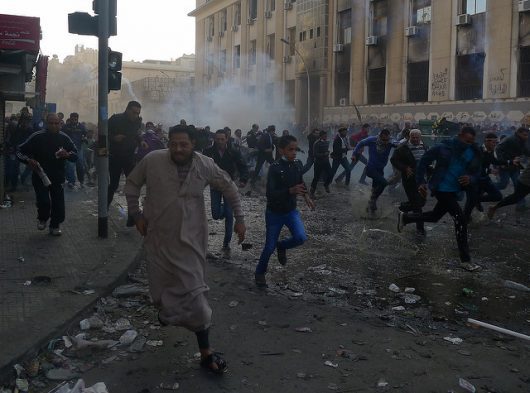
How to Help People in IraqWhile the people of Iraq certainly underwent extreme oppression under the former totalitarian leader Saddam Hussein, the United States’ stated mission to spread democracy by overthrowing Hussein and invading the country in 2003 has not proven to be a success by many standards.

While it has indisputably achieved important strategic military objectives, former President George W. Bush’s decision to do this has also cost U.S. taxpayers over $2 trillion thus far, resulted in approximately half a million civilian and combat casualties, devastated the quality of life for millions of Iraqi citizens and unfortunately, it does not appear to be a conflict that will be ending anytime soon.

Perhaps the two most damaging results of this conflict for Iraqi society have been the decline of education and widespread health problems and mental illness, both of which are byproducts of the violence taking place across the nation.

Fortunately, organizations and individuals across the globe have recognized these problems and have become actively involved determining how to help people in Iraq. Listed below are these two problems, the methods in which certain humanitarian organizations are seeking to combat them and also ways in which the average citizen can help to be a part of the solution.

Education
Education is necessary for the stability of any society, and, generally speaking, provides children with a safe and healthy socialization process, which is why it is important to consider the fact that roughly 3.5 million children in Iraq attend school infrequently, if at all.

From 2011 to 2013, the British Council and members of the European Union supported a project called the Support to Improving the Quality of Education in Iraq program, which was intended to improve educational conditions in Iraq. The project cost approximately $10 million and implemented programs designed to provide resources, improve teaching skills and develop high-quality curriculums. Overall, the project was a success, allowing 800,000 students of all ages in southern and central Iraq access to a quality education.

Another organization that fights for the improvement of education in Iraq, among other things, is the International Rescue Committee (IRC). Similarly to the British Council’s approach, the IRC is concerned with finding a long-term solution when trying to solve the problem of how to help people in Iraq get an education. They seek to do so by providing well-trained teachers, safe learning environments and reducing the problem of overcrowded schools. You can donate to their cause here.

Perhaps the largest organization that is making the largest strides for the improvement of Iraqi education is UNICEF. In 2016 alone, the organization helped to allow 682,000 children access to an education and provided over 520,000 children with school supplies such as backpacks and stationery. They have also created new ways of how to help people in Iraq by providing cash to families who are particularly vulnerable, offering summer classes to students who have fallen behind and even operating mobile schools in various parts of the nation. You can donate to their efforts here.

Healthcare
In a country where there an estimated 11 million people are speculated to need some form of humanitarian aid, there is no organization more noticeably devoted to providing adequate healthcare to Iraqi citizens in need than Doctors Without Borders (DWB). The organization currently has ongoing projects in almost the entire country with the exception of the southeastern region and works in five major cities or villages including Baghdad, the nation’s capital.

With many medical facilities and resources destroyed, medical care in Iraq is expensive and hard to come by. Millions of citizens have been displaced from their homes and others find themselves miles away from the nearest medical facility. While their mission is not over, DWB has effectively countered this negativity with tremendous success, providing healthcare and first aid to millions of people across the country, putting their own lives on the line to do so.

Currently, their main agenda is providing aid to those affected by the ongoing crisis in Mosul, the country’s second largest city. On the western side of the city, an estimated 60,000 civilians are trapped by the ongoing fighting, which has consistently produced large numbers of civilian casualties and severe displacement. To help solve this problem of displacement, DWB has created displacement camps in different areas of the country, camps who have seen dramatic influxes of people in the recent months.

In June 2017, DWB opened a project in western Mosul and reported a high number of patients needing life-saving treatments. In their June 2017 update, Jonathan Henry, the Emergency Coordinator for the DWB project in west Mosul, stated that “this influx of wounded patients is yet another example of the horrific suffering and indiscriminate violence suffered by civilians, including women and children, throughout the battle for Mosul.” You can donate to DWB here.

Above all, as an American, when asking the question of how to help people in Iraq, the quickest, easiest and best thing you can do is reach out to your congressional leaders and express to them a desire to increase the U.S. foreign aid budget. In doing so, you help to ensure that the wealthiest nation in the world will do more than it currently is to bring these atrocities to an end and allow the country and its neighboring regions to one day see an era of development and prosperity.

– Hunter Mcferrin

Photo: Google
August 28, 2017
https://borgenproject.org/wp-content/uploads/borgen-project-logo.svg 0 0 Borgen Project https://borgenproject.org/wp-content/uploads/borgen-project-logo.svg Borgen Project2017-08-28 07:30:142024-06-05 04:52:29How to Help People in Iraq from the US
Aid, Global Poverty

Six Easy Ways to Help People in the Philippines

Help People in the PhilippinesThe Philippines has had a tumultuous history rife with military conflict. Such conflict seems to go hand in hand with widespread According to the Philippine Statistics Authority, as of 2015, 21.6 percent of the country’s population lived in poverty. While this is a daunting number, it is comforting to know that it is significantly lower than previous years. Still, people must continue to help in order for the Philippines to progress. Here are just a few ways to help impoverished people in the Philippines:
1. Help build classrooms, libraries and other essential structures in rural areas. There are several organizations committed to building these structures across the Philippines. Two examples are the Philippine Business for Education – a nonprofit funded by top CEOs in the Philippines to better the country’s education – and the Kabayanihan Foundation, which works to improve the lives of Filipinos through fundraising and volunteering.

2. Fund a child’s education. Sponsoring a child as they strive for a quality education is one of the best ways to help change an individual person’s life in the Philippines. World Vision Philippines, for instance, offers an easy way to either completely sponsor a child or share a sponsorship.

3. Help people in the Philippines find business and livelihood opportunities. The Commission on Filipinos Overseas (CFO) is an organization started by native Filipinos living around the world; their goal is to help people in the Philippines by offering work and enterprise opportunities. To support the CFO, follow the organization on social media and spread the word.

4. Help build homes for homeless families. This can be done through direct action or through donation, and Habitat for Humanity-Philippines is a great place to start.

5. Support accountability and transparency in the government. This has been a longtime struggle for the Philippines and continues to be an issue. If the government is not accountable and honest to its citizens, it becomes much more difficult to end the cycle of poverty. To support efforts to make the government more accountable, reach out to the Movement for Good Governance in the Philippines – a group of people who have been advocating for a more honest and responsible government.

6. Buy Filipino products and visit the Philippines. Tourist dollars are incredibly important to the country’s economy, as are the profits from the country’s main exports including electronic equipment, copper, petroleum, coconut oil and various fruits. The Philippines also boasts an incredible landscape, from the beautiful and dramatic capital city of Manila to the white sand beaches of Boracay.

The Philippines is a country of both immense problems and immense potential; it is already on its way to improving the quality of life of its citizens. By making use of these six simple steps to help people in the Philippines, it may become much easier for the country to grow and reach its full potential.

– Audrey Palzkill

Photo: Unsplash

August 27, 2017
https://borgenproject.org/wp-content/uploads/borgen-project-logo.svg 0 0 Borgen Project https://borgenproject.org/wp-content/uploads/borgen-project-logo.svg Borgen Project2017-08-27 01:30:012024-05-28 00:15:43Six Easy Ways to Help People in the Philippines
Aid, Global Poverty

How to Help People in Egypt

How to Help People in EgyptEgypt has had issues for many years that cause the country to be undeveloped. Some of these issues have to do with the political instability, the poverty rate and the recent refugee crisis. With all of these issues there are multiple organizations work to provide aid for those in need in Egypt. Here is how to help people in Egypt.

There are a few issues that impact Egypt’s people today. Political instability is one of these issues. These political issues cause an inequality in the economy and lack of opportunities. There is a concentration on tourism as a source of income for the county in the Sinai region. However, there are not many working opportunities for other areas.

This causes another issue of widespread poverty. According to recent national statistics, 25 percent of the 82 million people are poor, and 30 percent of the population is illiterate. People in rural areas are affected the most, as there are less opportunities for work.

Most recently, the issue of the refugee crisis has been affecting Egypt’s people. With so many people in poverty already, the added number of people without homes and jobs is an added strain on the country’s economy. Refugee children, similar to impoverished Egyptian children, are not able to get the proper schooling and often remain illiterate.

There are many different ways to help people in need in developing countries; here is how to help people in Egypt. A great way to spread impact to people in need is through organizations such as CARE and Save the Children. CARE promotes education, resource management, government engagement and protects vulnerable groups including women and refugees. Save the Children focuses on young generation and promotes children’s good health and nourishment.

By supporting organizations such as these people in Egypt can get the help they need in order to decrease poverty levels, have their voices heard in the government and eventually lessen the economic gap.

– Deanna Wetmore

Photo: Flickr

August 26, 2017
https://borgenproject.org/wp-content/uploads/borgen-project-logo.svg 0 0 Borgen Project https://borgenproject.org/wp-content/uploads/borgen-project-logo.svg Borgen Project2017-08-26 07:30:142020-06-24 10:47:23How to Help People in Egypt
Activism, Advocacy, Aid, Global Poverty

Using Social Media Platforms for Advocacy

Social media is changing lives around the world, helping old friends reconnect and allowing people to share dancing cat videos with millions. People spend hours each day on social media platforms, using them to stay informed, share opinions, post photos, sign petitions, link articles and much more. There is potential to build incredible momentum for a movement and truly engage people by using social media platforms for advocacy efforts.

Your personal sharing, liking, retweeting and posting may seem like they aren’t creating enormous ripples of change, but research has found that content shared by individuals is shared 25 times more and receives eight times more engagement than content shared by organizations themselves. Social media has the ability to amplify a message, allowing great organizations to be introduced to new people and mobilizing communities to give to or advocate for a certain cause. So how can individuals focus social media attention on advocacy efforts and better the world through their news feeds?

Sharing is caring
The community of people you’re friends with or who follow you are those who care about you and are interested in what you have to say. If you show them that you care by sharing and posting about certain causes, they are more likely to engage with that content than if it was posted by an organization on their feed. Since people actually know who you are, things you share and post come off as more trustworthy and real. To this effect, find articles and organizations that matter to you and highlight their efforts. You are the most relatable person for people engaging with your social media, and that can powerfully increase mobilization.

#UseThatHashtag
While they may not always seem effective, intentionally using hashtags can really increase how many people interact with posts. Hashtags create networks of posts, linking them together into a common thread, and this is a great way to reach diverse groups on social media platforms for advocacy. Creating a specific hashtag that a person or organization always uses can help people learn about causes you’re passionate about, and adding information about an issue to a trending hashtag can help spread your message locally and globally.

Turn some heads
A visual appeal can really catch and keep people’s attention. One study found that seeing photos and infographics greatly influenced members of Congress, and others interacting with your postings and shares are equally as interested in nice visuals. By adding photos or cool graphics, your content will better capture people’s attention and enable you to use social media platforms for advocacy. Attaching images can create a 150 percent increase in retweets on Twitter and bring in an 87 percent engagement rate on Facebook, which is great news for mobilizing efforts!

Take that social media work offline
Social media is great for connecting people, but gathering your community offline is powerful, too. Use social media platforms for advocacy by creating events, gathering donations, sharing information and planning meetings, then take that advocacy into the physical world. Online calls to action such as signing petitions and contacting Congressional representatives can transform into in-person meetings with government officials either individually or at town halls, and mobilizing people for your cause can mean sharing through word of mouth or posting physical copies of an infographic around town. Building online engagement into a tangible movement can have an immense impact.

Rather than aimlessly scrolling through Twitter, Instagram, Reddit, Facebook, Tumblr and other social media platforms, infuse some world-improving efforts into your feed and use those social media platforms for advocacy. With such amazing tools available, it is important to increase the intentionality of our scrolling and harness social media platforms for advocacy.

– Irena Huang

Photo: Flickr

August 25, 2017
https://borgenproject.org/wp-content/uploads/borgen-project-logo.svg 0 0 Borgen Project https://borgenproject.org/wp-content/uploads/borgen-project-logo.svg Borgen Project2017-08-25 01:30:082024-05-28 00:15:54Using Social Media Platforms for Advocacy
Page 48 of 65«‹4647484950›»

Get Smarter

  • Global Poverty 101
  • Global Poverty… The Good News
  • Global Poverty & U.S. Jobs
  • Global Poverty and National Security
  • Innovative Solutions to Poverty
  • Global Poverty & Aid FAQ’s
Search Search

Take Action

  • Call Congress
  • Email Congress
  • Donate
  • 30 Ways to Help
  • Volunteer Ops
  • Internships
  • Courses & Certificates
  • The Podcast
Borgen Project

“The Borgen Project is an incredible nonprofit organization that is addressing poverty and hunger and working towards ending them.”

-The Huffington Post

Inside The Borgen Project

  • Contact
  • About
  • Financials
  • President
  • Board of Directors
  • Board of Advisors

International Links

  • UK Email Parliament
  • UK Donate
  • Canada Email Parliament

Get Smarter

  • Global Poverty 101
  • Global Poverty… The Good News
  • Global Poverty & U.S. Jobs
  • Global Poverty and National Security
  • Innovative Solutions to Poverty
  • Global Poverty & Aid FAQ’s

Ways to Help

  • Call Congress
  • Email Congress
  • Donate
  • 30 Ways to Help
  • Volunteer Ops
  • Internships
  • Courses & Certificates
  • The Podcast
Scroll to top Scroll to top Scroll to top