• Link to X
  • Link to Facebook
  • Link to Instagram
  • Link to TikTok
  • Link to Youtube
  • About
    • About Us
      • President
      • Board of Directors
      • Board of Advisors
      • Financials
      • Our Methodology
      • Success Tracker
      • Contact
  • Act Now
    • 30 Ways to Help
      • Email Congress
      • Call Congress
      • Volunteer
      • Courses & Certificates
      • Be a Donor
    • Internships
      • In-Office Internships
      • Remote Internships
    • Legislation
      • Politics 101
  • The Blog
  • The Podcast
  • Magazine
  • Donate
  • Click to open the search input field Click to open the search input field Search
  • Menu Menu

Archive for category: Aid

Aid, Developing Countries, Global Poverty

Build Change Helps Countries Survive Natural Disasters

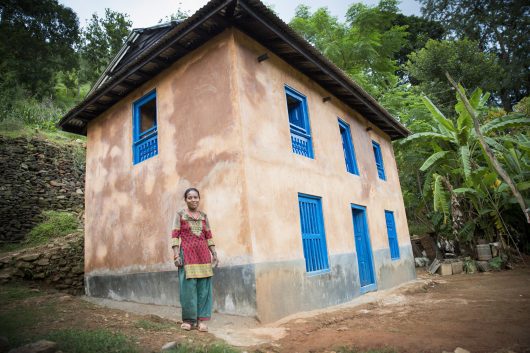
Build ChangeBuild Change, a nonprofit based in the United States, is helping people in developing nations build earthquake and typhoon resistant buildings.

The nonprofit was founded by earthquake engineer Elizabeth Hausler in 2004. The issue of resistant housing in developing nations had been on her mind ever since the 2001 earthquake in Gujarat, India. About 20,000 people were killed in this earthquake due to their unreinforced stone masonry housing collapsing.

This event made her realize the urgency of teaching safe construction methods to people living in developing nations that are at risk for natural disasters such as earthquakes. In an interview, Hausler said, “When earthquakes happen in the U.S. or Japan, very few people are killed. It costs a lot of money but there are very few deaths in earthquakes. But in developing countries thousands and thousands of people are still killed by earthquakes.”

In order to effectively introduce safer building alternatives to people in impoverished communities, Build Change takes a variety of approaches in the communities they hope to improve.

For example, it trains local builders, engineers, homeowners and government officials to build resistant houses and buildings. The organization makes sure the changes are simple and affordable for the community, yet effective. By introducing new construction methods that also involve new materials, Build Change creates more jobs in engineering, construction and materials production in the places they work.

Additionally, it works with governments to develop building code enforcement. It makes sure there are building inspectors within the society that ensure buildings are built according to the safety code.

The nonprofit also helps homeowners get access to the money they need to either strengthen their existing house or build it to be earthquake-resistant. They do this by by partnering with local governments to provide people access to microloans.

So far, Build Change has helped build 51,296 safer buildings, trained 27,857 people and created 12,303 jobs.

It currently works in Colombia, Guatemala, Haiti, Indonesia, Nepal and the Philippines, and has worked in Bhutan, China, India, Ecuador, Iran and Peru in the past.

Thanks to Build Change, thousands of people living in earthquake and typhoon-prone areas can now sleep peacefully at night, knowing they are protected if a natural disaster strikes.

– Anna Gargiulo

Photo: Flickr

September 17, 2017
https://borgenproject.org/wp-content/uploads/borgen-project-logo.svg 0 0 Borgen Project https://borgenproject.org/wp-content/uploads/borgen-project-logo.svg Borgen Project2017-09-17 01:30:172024-12-13 17:58:28Build Change Helps Countries Survive Natural Disasters
Aid, Global Poverty

Female Genital Mutilation Protection App Helps Girls

Female Genital MutilationIn 2017, five female Kenyan students created i-Cut, a female genital mutilation protection app that provides medical and legal assistance for girls who will or have gone through genital mutilation (FGM), a process where the outer part of the genitals are either partially or completely cut off.

The creators of the female genital mutilation app are Ivy Akinyi, Stacy Owino, Cynthia Otieno, Mascrine Atieno and Purity Achieng, who refer to themselves as the Restorers. According to CNN, Dorcas Adhiambo Owino was the girls’ mentor on the project.

The female genital mutilation protection app i-Cut, as explained in Ebony, has five options: “”help”, “rescue”, “report”, “information on FGM” and “donate and feedback”.” “Help” alerts the authorities when FGM is about to occur, and “Rescue” gives young women information about places to receive medical treatment after FGM. “Report” informs the authorities that an instance of FGM has occurred.

Although FGM is illegal in Kenya, it is still heavily practiced, with one in five girls experiencing it. According to Mashable, FGM is seen as a rite of passage in many communities, preparing young women for marriage and purportedly discouraging premarital sex. These traditions are commonly found in Africa, Asia and the Middle East.

Unfortunately, girls experience many challenges after FGM. According to Mashable, young girls are often unable to go to school, which prevents many of them from being employed. There is also a connection between girls who become young wives and mothers and FGM. Worse still, many girls die as a result of the process.

The creators of the female genital mutilation app have a personal connection with FGM: even though their tribe is opposed to the practice, a friend of theirs from school went through it. The friend, as they explained to Reuters, was intelligent, but dropped out of school after the procedure was done. The app is meant to combat situations like this.

i-Cut is currently one of the technological innovations competing for the Technovation Challenge award of $15,000, and is the only African country represented this year. “Sponsored by Google, Salesforce and Adobe, Technovation challenges girls aged 10-18 to create an app that solves problems faced by their communities,” according to CNN.

Regardless of whether or not they receive the prize, the young inventors of the female genital mutilation protection app are content that the app gives young girls a way “to decide their own destinies.”

– Cortney Rowe

Photo: Flickr

September 15, 2017
https://borgenproject.org/wp-content/uploads/borgen-project-logo.svg 0 0 Borgen Project https://borgenproject.org/wp-content/uploads/borgen-project-logo.svg Borgen Project2017-09-15 01:30:372024-05-28 00:16:22Female Genital Mutilation Protection App Helps Girls
Aid, Global Poverty

Uncovering New Methods: Cash Aid in Zambia

Cash Aid in ZambiaIn order to alleviate poverty, Zambia piloted a unique program with incredible results. In a trial run of the effectiveness of cash aid, the Zambian government gave the poor money—with no strings attached—and found that cash aid in Zambia dramatically improved the lives of its recipients.

Cash aid in Zambia is part of a greater change in thought regarding how best to help the poor. Since the early 2000s, some of the poor—beginning first in Latin America—have received conditional and unconditional cash transfers that have supported households throughout the developing world.

Zambia launched its trial cash aid program to determine how effective it would be to give the poor money. The study spanned the course of five years, during which 5,500 Zambian households were given a total of five million dollars.

Zambian officials were interested in determining not only whether recipients of cash aid spent their money responsibly, but also whether the money was used productively. The answers to these questions were a resounding yes.

This trial, as well as other studies, have showed that cash aid can be just as effective, or even more so, at alleviating poverty than more traditional methods, such as job training or food. Those that received cash aid became entrepreneurial and the benefits of this spilled over into the local economy.

Ashu Handa, the researcher and professor behind the Zambian pilot program, found that the recipients of cash aid boosted their spending by over 50 percent of the original amount they received from the government. This in turn helped businesses, who also saw their profits increase by 50 percent.

For a country like Zambia where poverty is widespread, cash aid could dramatically improve the lives of the poor. 64 percent of Zambians live below the poverty line and this percentage becomes even greater in rural areas.

The Zambian government recognized the impact of this program and is eager to extend coverage to the entire nation. However, the nationwide version comes with its own catch—only those that truly cannot work, like the elderly or the sick, will be eligible to receive cash aid.

Opponents of cash aid claim that it encourages laziness; that the poor would only spend money on vices and the money would be devoured in a “bottomless pit.” This assumption, that research has proven wrong, would leave many families—able-bodied, two-parent households—ineligible for the cash aid that could change their lives.

Regardless, cash aid in Zambia has had a tangible impact on the poor and could continue to promote a better quality of life for many in this African country, as well as in other parts of the developing world.

– Jennifer Faulkner

September 14, 2017
https://borgenproject.org/wp-content/uploads/borgen-project-logo.svg 0 0 Borgen Project https://borgenproject.org/wp-content/uploads/borgen-project-logo.svg Borgen Project2017-09-14 01:30:062024-05-28 00:16:21Uncovering New Methods: Cash Aid in Zambia
Aid, Global Poverty

How to Help People in Argentina

How to Help People in ArgentinaWith over 32 percent of the population living under the poverty line, nearly one-third of people in Argentina lack the funds to purchases a sufficient amount of food for their families. From 2015 to 2016 alone, the total number of citizens living under the poverty line increased by 1.5 million. In 2016, according to UNICEF, nearly half of Argentine children were living under the poverty line. Within the same report, findings showed that households with children are disproportionately affected by poverty than those without. Here are three nonprofits showing how to help people in Argentina who live in impoverished communities.

L.I.F.E. Argentina

This nonprofit works with youth living in extreme impoverished and marginalized communities within and in the surrounding suburbs of Buenos Aires. Partnering with local soup kitchens and community and education centers, L.I.F.E. Argentina aids school-age children by providing recreational and educational activities as well as supplying food, clothes and school supplies. Programs include Happy Birthday – a weekly celebration of birthdays at each community center, Play Time – a weekly recreational program that allows children to interact with games and crafts, as well as AIDS Awareness that informs youth about the HIV/AIDS epidemic. Their website offers examples on how to help people in Argentina, both by volunteering to work with youth in impoverished communities or by donating to help fund the continuation of their work.

Worldreader

According to UNESCO, there are 250 million children throughout the world who lack basic writing and reading skills. Worldreader strives to increase literacy among youth by providing e-readers – along with e-reader programs – to communities, promoting literary works by minority authors and conducting fieldwork to monitor the success of new digital publishing. Worldreader operates in 50 countries and 424 libraries and schools, and provides over 500,000 e-readers monthly. Individuals who are interested in helping can get involved in any of these three ways: making a single donation, sponsoring a school with monthly donations or becoming a corporate donor.

Medical Ambassadors International

The nonprofit Medical Ambassadors International works within impoverished communities to promote both spiritual and physical healing. The Christian medical organization focuses on providing medical resources for communities that lack basic access to health centers. This nonprofit also offers family and relationship counselling to help build stronger communities. For the past 35 years, Medical Ambassadors International has done work in 41 countries including Argentina. Making donations through their website allows funds to go toward geographic areas with the greatest need – one option for how to help impoverished people in Argentina.

Nonprofits such as these within Argentina are working to combat extreme poverty and the disadvantages it brings to marginalized communities. Spreading the word and getting people involved, either by donating or volunteering, is the first step to eradicating poverty and helping people in Argentina.

– Riley Bunch

Photo: Flickr

September 12, 2017
https://borgenproject.org/wp-content/uploads/borgen-project-logo.svg 0 0 Borgen Project https://borgenproject.org/wp-content/uploads/borgen-project-logo.svg Borgen Project2017-09-12 01:30:042024-05-29 22:26:38How to Help People in Argentina
Aid, Global Poverty, Politics

Agencies of the State Department Fighting Poverty Abroad

Fighting Poverty AbroadThe vast apparatus of the U.S. State Department can make it an overwhelming organization to understand. However, by assessing its individual offices, it becomes clear how vital these agencies are to the State Department fighting poverty abroad. These are some of the most prominent branches of the State Department and what they do to alleviate global poverty.

The Bureau of African Affairs (BAA) has operated for decades, promoting democracy, human rights and economic ties beneficial to both the U.S. and its African partners. Democratic transitions in unstable nations have been assisted and coordinated in conjunction with the BAA. The Africa Growth and Opportunity Act, coordinated by the agency, contributes to the economic development that has seen millions lifted out of poverty in Africa.

The diplomacy conducted through the BAA highlights the importance of strong relations in allowing poverty alleviation programs to be deployed. By ensuring the cooperation of host nations, the State Department has been able to implement the Power Africa and Feed the Future programs. This is supported by the Global Health Initiative, aimed at eradicating debilitating diseases on the continent, with around 63 billion now invested in the project.

The Office of Global Food Security is another branch of the State Department that contributes to poverty alleviation. As with the BAA, it utilizes its diplomatic toolbox to put in place development programs aimed at eradicating poverty.

The office is particularly focused on agricultural development and promotes employment and entrepreneurship opportunities in agricultural sectors to end famines and establish more secure rural economies.

Aside from boots-on-the-ground agencies, the Bureau of International Organization Affairs is vital for developing and sustaining relationships with important organizations in the fight against global poverty. This office uses diplomacy to strengthen ties with the U.N. and its auxiliaries (such as UNICEF) in concert with promoting U.S. leadership in democracy promotion and poverty reduction. Despite receiving scant media attention, U.S. cooperation with Amnesty International and the Red Cross depends on the IO Bureau.

These agencies of the State Department fighting poverty abroad emphasize how important diplomatic skills are for furthering poverty alleviation efforts. In order for the State Department to continue to promote American leadership in this area, its budget must be preserved.

– Jonathan Riddick

Photo: Flickr

September 10, 2017
https://borgenproject.org/wp-content/uploads/borgen-project-logo.svg 0 0 Borgen Project https://borgenproject.org/wp-content/uploads/borgen-project-logo.svg Borgen Project2017-09-10 01:30:412024-05-28 00:16:10Agencies of the State Department Fighting Poverty Abroad
Aid, Food & Hunger, Global Poverty

The State of Relative Hunger in Guernsey

Hunger in GuernseyThe small island of Guernsey, tucked away in the English channel, has an economy built on financial services, tourism and agriculture. However, with a decline in manufacturing and horticulture, the island has to rely on the financial services.
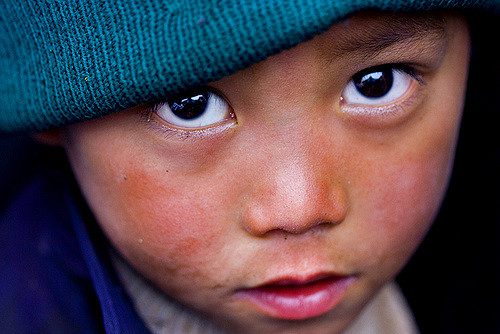
With 87 percent of the economy coming from services, the unemployment has remained at 1.2 percent, with an accompanying unknown percentage of those living below the poverty line. Due to other unknown data, there is no current percentage of those living in hunger in Guernsey.

Further, in 2011, it was reported that for Guernsey residents to maintain a minimum standard of living, residents need a 20-30 percent higher income, and this rises to 40 percent for older residents. The same goes for necessities such as electricity. Guernsey natives could spend upwards of $240 a month on garbage, water, heating and electricity alone for an 85-square-meter apartment. Even with a milder climate, natives still spend approximately 36 percent more on food and drink than U.K. residents.

However, even with higher costs on food, due to the decline in agriculture, residents are still able to maintain a sufficient lifestyle, and there have been no recent reports of a spike in hunger rates, depth of hunger or malnutrition prevalence.

Although there is no current data on the number of those living in hunger in Guernsey, with the economy supported by financial services and the island’s continued ability to send aid to countries in need like South Sudan, it can be inferred that hunger in Guernsey is not an immediate or existing problem.

– Amira Wynn

Photo: Pixabay

September 9, 2017
https://borgenproject.org/wp-content/uploads/borgen-project-logo.svg 0 0 Borgen Project https://borgenproject.org/wp-content/uploads/borgen-project-logo.svg Borgen Project2017-09-09 01:30:342024-05-28 00:16:05The State of Relative Hunger in Guernsey
Aid, Global Poverty

Five Ways to Help People in Vietnam

Help People in VietnamSince the days of the Vietnam war, Vietnam’s people and economy have seen tremendous improvement. This is in large part thanks to Doi Moi, a sweeping economic reform which began in 1986 and turned Vietnam’s economy into a market-driven one – rather than the tightly state-controlled economy that existed there before. While the country’s wealth saw a drastic improvement, as did the poverty rate, income inequality is prevalent in the country, meaning that many people still live in poverty. Here are five ways to help correct this inequality and help people in Vietnam:
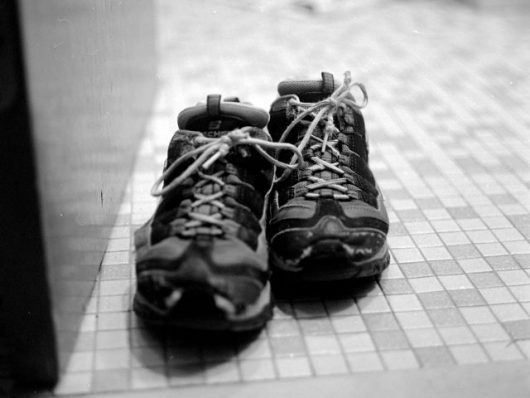
  1. Support education. Ensuring that poor children have a chance at a good education is essential in any country that wishes to see the cycle of poverty broken. In Vietnam, quality education for children can be supported in two ways: by sponsoring a child individually or by donating money to organizations committed to improving education in Vietnam. The Children of Vietnam is one such organization, providing direct educational, nutritional, medical and housing assistance to children and families in need.
  2. Invest in the country’s infrastructure. Infrastructure work not only creates thousands of jobs in and of itself, but also provides people living in rural areas with access to transportation, communication, electricity and clean water. In some areas, building a single road or bridge would make a huge difference in the quality of life.
  3. Help provide access to microfinance. Any poor person in Vietnam who hopes to start or grow a small business will need a loan to begin work. Yet, access to these types of loans is scarce and unreliable, and most people in Vietnam are forced to take private loans from their friends and family. To help people in Vietnam improve their livelihood, it is essential to make these loans more widely available. Currently, the Vietnam Bank for Agriculture and Rural Development, the People’s Credit Fund System and the Bank for Social Policies are all working to make these loans more accessible for poor people trying to better their lives.
  4. Support healthcare. As the best healthcare tends to be concentrated in large cities, rural citizens are often left with low quality care or no care at all. The East Meets West Foundation (a nonprofit in which U.S. residents partner with citizens of Vietnam) hopes to change this, providing low-income families with clean water, education and medical care.
  5. Demand government transparency. Unfortunately, both the government and charitable organizations in Vietnam have, throughout the years, been extremely susceptible to corruption which more often than not results in poor people losing out. Funds promised to the poor are embezzled or mismanaged, and charities promising food and other products cut costs, meaning that they receive low quality items. To truly make Vietnam’s poor a priority, the country and its organizations must become more accountable.

Though Vietnam’s economy has improved greatly in a relatively short amount of time, many of its poorest citizens are left in the dust. And while there are many small things to do to help people in Vietnam, these being just a few of them, it will take the country actively deciding to make its own impoverished people a priority for real change to occur.

– Audrey Palzkill

Photo: Flickr

September 9, 2017
https://borgenproject.org/wp-content/uploads/borgen-project-logo.svg 0 0 Borgen Project https://borgenproject.org/wp-content/uploads/borgen-project-logo.svg Borgen Project2017-09-09 01:30:292024-05-28 00:16:31Five Ways to Help People in Vietnam
Aid, Charity, Global Poverty

BOBS for Skechers Charitable Program Helps Children in Need

Skechers Shoes Leave a Charitable FootprintAlong with a reputation for designing comfortable performance shoes, Skechers is a brand praised for its philanthropic efforts. In the past year, through the BOBS for Skechers charitable program, more than 13 million pairs of new shoes have been donated to children in need around the world as well as throughout the nation, reaching those struggling with poverty, homelessness and natural disasters.
Skechers shoes leave a charitable footprint through its BOBS for Skechers charitable program, in collaboration with charities such as Delivering Good, Inc. and Soles4Souls. Delivering Good, Inc. (formerly K.I.D.S./Fashion Delivers) is a nonprofit that accepts donations in the fashion, home and children’s industries, which are then sent to help millions of kids, adults and families facing poverty and disaster. Since 1985, over $1.6 billion of donated products have been distributed through the charity’s network of community partners. Delivering Good, Inc. has been a partner of Skechers for five years and has distributed a total of 7.5 million pairs of shoes in that period to organizations domestically and internationally.

Founded in 2006, Soles4Souls has distributed more than 30 million pairs of shoes in 127 countries and all 50 U.S. states. Skechers, through its alliance with Soles4Souls, provides short-term relief and long-term solutions to individuals without access to a good pair of shoes. Every day children are kept from attending school and adults are unable to work because of the burden of walking without proper shoes, and a single pair has the power to provide relief in many developing nations around the globe. Furthermore, Soles4Souls states, “Our micro-enterprise model provides entrepreneurs the ability to start small businesses by providing a steady supply of high-quality, low-cost product; a powerful and sustainable way for people to lift themselves and their families out of poverty.”

In addition to working with various charities, Skechers involves celebrities in the process to help raise awareness about the brand and its mission to give back. Singer-songwriter Camila Cabello is the latest celebrity to work on a campaign with Skechers. The 20-year-old recently took to Twitter to share her upcoming involvement with the brand, on which she expressed, “One of the things that attracted me to Skechers is their philanthropic efforts to children in need and animals in need… because that’s something that’s important to me and close to my heart.”

Through its nonprofit partners and millions of donations, Skechers helps deliver individuals from extreme poverty, even in the simplest of ways. The Skechers movement has reached children and adults struggling with a variety of circumstances across the nation and in more than 30 countries worldwide, helping each of them one step at a time.

– Mikaela Frigillana

Photo: Flickr

September 8, 2017
https://borgenproject.org/wp-content/uploads/borgen-project-logo.svg 0 0 Borgen Project https://borgenproject.org/wp-content/uploads/borgen-project-logo.svg Borgen Project2017-09-08 01:30:592020-07-08 08:04:27BOBS for Skechers Charitable Program Helps Children in Need
Aid, Global Poverty

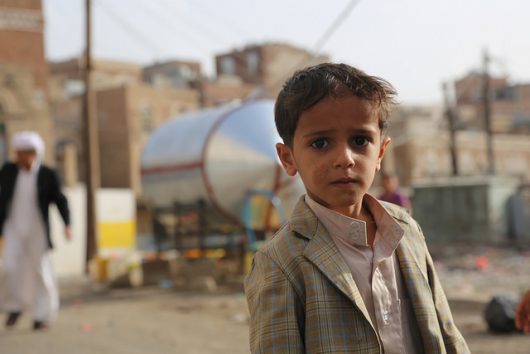
How to Help People in Yemen

In 2015, Shi’a rebels known as Houthis allied with forces loyal to former President Ali Abdullah Saleh to rebel against elected President Abdrabbuh Mansur Hadi, leaving the country in a state of chaos. The international community scrambled to determine how to help people in Yemen. The answer comes from ending the violence, increasing medical aid, and investing in infrastructure.

The civil war has already claimed the lives of nearly 10,000 civilians and seriously damaged infrastructure in Yemen. Banks in Aden temporarily shut down following a series of robberies, and Saudi-backed airstrikes have destroyed health care and water treatment facilities throughout the country.

Yemen imports 90 percent of its food, and battles over key shipping ports in Aden and Al Hudaydah make food security a serious concerns for citizens. This has grave implications for the nearly two million acutely malnourished Yemeni children and their families. Malnourishment leaves the Yemeni more susceptible to diseases, especially cholera.

There are 370,000 cases of suspected cholera and 1,800 associated deaths. Continued fighting damages Yemeni water infrastructure, contributing to what the World Health Organization is calling the “world’s worst cholera outbreak.”

Yemen, the poorest country in the Middle East, lacks the resources necessary to alleviate poverty on its own. Fourteen million people lack access to clean water, and 30,000 health care workers haven’t been paid in nearly a year.

The situation is dire, but not hopeless. The international community is beginning to recognize how to help people in Yemen. Thanks to support from international organizations, local NGOs are providing necessary food aid. They estimate that the number of malnourished children will be reduced from two million to 385,000.

Nearly everyone who receives adequate treatment for cholera will survive, but the key is getting treatment to those who need it. The World Bank and UNICEF have partnered to help maintain local health institutions in Yemen.
UNICEF has established 1,000 diarrhea treatment centers and oral hydration corners. They have also repaired water systems in rebel-held Taiz, giving 400,000 people access to clean water.

Ordinary citizens are also stepping up to help people in Yemen. 16,000 volunteers travel door to door, educating people on preventing cholera.

The threat of violence, however, still looms over Yemen. President Trump has recently brokered a deal to sell $110 billion in weapons to Saudi Arabia, some of which will most likely be used in Yemen. Currently, U.S. aid to Yemen totals only $526 million, which has not been enough to end the violence.

Foreign aid is making a significant positive impact for the people of Yemen, but it is currently not enough. A joint statement from UNICEF and the World Health Organization says the international community doubling its relief efforts is a good solution to the question of how to help people in Yemen, and can save the country from disarray for generations to come.

– Kirk Lee

Photo: Flickr

September 7, 2017
https://borgenproject.org/wp-content/uploads/borgen-project-logo.svg 0 0 Borgen Project https://borgenproject.org/wp-content/uploads/borgen-project-logo.svg Borgen Project2017-09-07 01:30:272024-05-28 00:15:56How to Help People in Yemen
Aid, Global Poverty

How to Help People in El Salvador

How to Help People in El SalvadorPoverty in El Salvador is high; in 2015 it was measured that 34.9 percent of the population lives below the poverty line. Comparatively, 15.1 percent of the population of the United States lives below the poverty line.

Poverty is high in El Salvador due to the remnants of its violent civil war from 1979 to 1992. Although a truce was agreed to, tensions between the communist rebel movement and the conservative government remain, which has led to the growth of violent street gangs. El Salvador has the highest murder rate in the world (excluding countries at war) due to the activities of its gangs. Violence and instability have created increased poverty within El Salvador.

People in the United States can help citizens in El Salvador. Many Salvadorans have fled to other countries – including the United States – due to the violence in their homeland. American citizens can help Salvadoran refugees by donating to The UN Refugee Agency’s Children on the Run campaign. This campaign is specifically aimed at providing shelter, education and physical and mental care for children and families fleeing the violence in El Salvador, Honduras and Guatemala. Donations can be made through UNHCR’s website.

Save the Children works within El Salvador to help improve the quality of living for Salvadorans. Through Save the Children, one can sponsor a child from early childhood through to early adulthood. The program supports children throughout their education by providing specialized programmings, such as early literacy programs for toddlers and life-skills programs for adolescents. Save the Children also provides families with seeds and livestock that they need for survival, and tools and temporary jobs to give them an income and teach them new skills. Donating to this cause is a great way to help the people, especially children, of El Salvador.

More hands-on approaches can be used to help people in El Salvador as well. Volunteer opportunities are abundant through a variety of organizations. One such organization is Help International. Help International works on an assortment of projects including building community centers, running outreach programs to assist at-risk youth and reforestation campaigns. One can apply to participate in Help International’s El Salvador program through their website.

Finally, simply sharing this information with friends and family and brainstorming ways you can help can go a long way in helping the people of El Salvador overcome poverty.

– Mary Kate Luft

Photo: Flickr

September 2, 2017
https://borgenproject.org/wp-content/uploads/borgen-project-logo.svg 0 0 Borgen Project https://borgenproject.org/wp-content/uploads/borgen-project-logo.svg Borgen Project2017-09-02 01:30:572024-06-07 05:07:44How to Help People in El Salvador
Page 47 of 65«‹4546474849›»

Get Smarter

  • Global Poverty 101
  • Global Poverty… The Good News
  • Global Poverty & U.S. Jobs
  • Global Poverty and National Security
  • Innovative Solutions to Poverty
  • Global Poverty & Aid FAQ’s
Search Search

Take Action

  • Call Congress
  • Email Congress
  • Donate
  • 30 Ways to Help
  • Volunteer Ops
  • Internships
  • Courses & Certificates
  • The Podcast
Borgen Project

“The Borgen Project is an incredible nonprofit organization that is addressing poverty and hunger and working towards ending them.”

-The Huffington Post

Inside The Borgen Project

  • Contact
  • About
  • Financials
  • President
  • Board of Directors
  • Board of Advisors

International Links

  • UK Email Parliament
  • UK Donate
  • Canada Email Parliament

Get Smarter

  • Global Poverty 101
  • Global Poverty… The Good News
  • Global Poverty & U.S. Jobs
  • Global Poverty and National Security
  • Innovative Solutions to Poverty
  • Global Poverty & Aid FAQ’s

Ways to Help

  • Call Congress
  • Email Congress
  • Donate
  • 30 Ways to Help
  • Volunteer Ops
  • Internships
  • Courses & Certificates
  • The Podcast
Scroll to top Scroll to top Scroll to top