• Link to X
  • Link to Facebook
  • Link to Instagram
  • Link to TikTok
  • Link to Youtube
  • About
    • About Us
      • President
      • Board of Directors
      • Board of Advisors
      • Financials
      • Our Methodology
      • Success Tracker
      • Contact
  • Act Now
    • 30 Ways to Help
      • Email Congress
      • Call Congress
      • Volunteer
      • Courses & Certificates
      • Be a Donor
    • Internships
      • In-Office Internships
      • Remote Internships
    • Legislation
      • Politics 101
  • The Blog
  • The Podcast
  • Magazine
  • Donate
  • Click to open the search input field Click to open the search input field Search
  • Menu Menu

Archive for category: Aid

Aid, Global Poverty, USAID

USAID Totals $265.3 Million to UNDP for Stability in Iraq

Stability in IraqAs fighting continues in cities like Mosul, which formerly served as a strong base for the so-called Islamic State (ISIS), there is a growing need to rebuild newly liberated areas and infrastructure for stability in Iraq. In an effort to address this, recent pledges were declared by the United States Agency for International Development (USAID) for an additional $150 million in funds to go to the United Nations Development Program (UNDP). This brings the total U.S. contribution to stability in Iraq to $265.3 million.

The UNDP manages to work with the Iraqi government, with backing from the prime minister and members of the Coalition to Degrade and Defeat ISIS, to assist retaken areas with the creation and subsidy of the Funding Facility for Stabilization (FFS). The FFS provides essential services like water and electricity, plus temporary employment opportunities and support for small businesses to help spur economic growth in the region.

Its approach is calculated, with teams dispatched into cities within days of them being approved as safe to consider damages and plans of action together with local authorities. They work to quickly repair water systems, electricity grids and other public infrastructure, employ youth in work brigades to remove rubble and clear transport routes, support businesses with cash grants and restore education, health and municipal centers.

The FFS grew to work in 28 areas cleared by the Stabilization Committee, with more than 1,100 projects in Nineveh, Anbar, Salah al-Din, Diyala, Kirkuk and Mosul, Iraq — the largest project yet. In Mosul, close to 300 schemes are being executed to fix central water treatment plants, electrical substations, schools and health facilities.

The program was initially capitalized at $7 million from the USAID and is now supported by around 23 donors and $420 million in funding. The United States was joined by the United Kingdom government, which contributed an additional $5.2 million to the Funding Facility for Stabilization, bringing the total U.K. contribution toward stability in Iraq to $15 million.

With the funding of the FFS, two million or so displaced Iraqis were returned home and cities are once again flourishing as hubs of development since the conflict started in 2014.

– Zar-Tashiya Khan

Photo: Flickr

August 12, 2017
https://borgenproject.org/wp-content/uploads/borgen-project-logo.svg 0 0 Borgen Project https://borgenproject.org/wp-content/uploads/borgen-project-logo.svg Borgen Project2017-08-12 01:30:572024-05-28 00:15:19USAID Totals $265.3 Million to UNDP for Stability in Iraq
Aid, Charity, Global Poverty

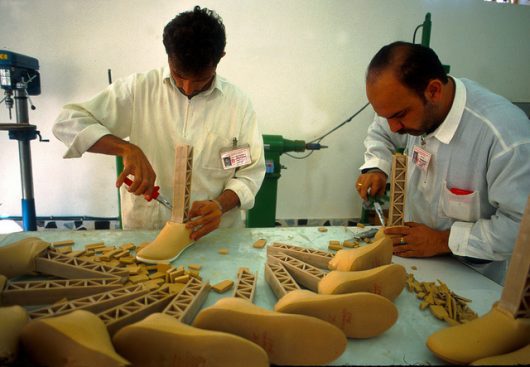
Three Organizations That Help People Without Shoes

Three Organizations That Help People Without ShoesShoes are much more than a fashion statement. Shoes play a major role in granting people health and access to opportunities. Several nonprofits and charities work to give shoes to people who need them. Before learning about three organizations that help people without shoes, here is why living barefoot is problematic and even deadly.
Across the world, around 300 million people cannot afford shoes. Shoes are often part of a school or work uniform, so without shoes, children and adults have a harder time getting an education or contributing to the household income.

In addition, going barefoot presents a number of hazards, from burns and injury to catching an illness or fungus. Any one of these dangers could negatively impact someone by keeping them sick at home or in a hospital.

More than 20 million orphaned children are without shoes in sub-Saharan Africa, where temperatures frequently rise above 100 degrees Fahrenheit. These harsh temperatures can be physically agonizing to bare feet.

Orphaned or homeless children who are shoeless can be at further risk of injury if they search for food or other items in places like abandoned buildings and garbage dumps. They could step on glass, nails and other sharp objects that could cause an infection.

People without shoes, especially in underdeveloped areas of Africa and Asia, are also susceptible to hookworm disease. A hookworm burrowing into the foot causes this parasitic disease. Hookworms live in soil or water contaminated by feces.

Without treatment, hookworm disease and other parasitic infections can lead to chronic illness, amputations and death. Hookworm disease has adverse effects on school performance, childhood growth, work productivity and pregnancy, according to the World Health Organization.

Here are three organizations that help people without shoes.

  1. The Shoe That Grows
    This organization believes in “putting kids in the best possible position to succeed.” It provides long-lasting shoes to children in need. It’s adjustable, expandable shoe design solves the problem of kids quickly outgrowing their shoes and needing new ones. The Show That Grows is working toward producing shoes in countries that need shoes and jobs, such as Haiti and Ethiopia. The organization works with partners that distribute the expandable shoes to underserved communities on every continent except Antarctica.
  2. The Shoe Project
    Shoes are not just a dream for people in underdeveloped countries. Some homeless people and others living in poverty in the United States need shoes to stave off extreme temperatures and infection, as well as to help them get back on their feet. The Shoe Project works around the world and in its home city of Cincinnati. In addition to breaking down education barriers and improving health, the organization believes “new footwear empowers people psychologically and economically to find a job.” With a new pair of shoes, people can regain confidence and find opportunities.
  3. Souls4Soles
    This nonprofit began as a disaster relief agency, distributing shoes to people impacted by natural events like tsunamis and hurricanes. Today it has expanded distribution year-round. Souls4Soles accepts all kinds of shoes and sends good quality ones to distribution centers in 127 countries. Shoes in need of repair are sent to micro-enterprise programs where workers clean and refurbish the shoes to sell in their small businesses. The Souls4Soles website says donations provide a constant supply of product to thousands of entrepreneurs, which allows them to sustain their businesses and rise out of poverty.

These three organizations that help people without shoes, as well as several others around the world, have helped millions of children and adults that cannot afford the basic necessity of footwear. The shoes can change the life of someone living in poverty by allowing them to go to school or work, safeguarding them from injury and infection and giving them the confidence they need to take hold of their future.

– Kristen Reesor

Photo: Google

August 12, 2017
https://borgenproject.org/wp-content/uploads/borgen-project-logo.svg 0 0 Borgen Project https://borgenproject.org/wp-content/uploads/borgen-project-logo.svg Borgen Project2017-08-12 01:30:372024-05-28 00:15:20Three Organizations That Help People Without Shoes
Aid, Global Poverty

How to Help People in Rwanda

Help People in RwandaFor more than twenty years, Rwanda has been a country in the midst of healing from its devastating mass genocide of 1994, a horrific episode in which Rwanda’s government sponsored the murder of approximately 800,000 people, mainly minority Tutsis and moderate Hutus. Hutu civilians carried out the majority of the attacks.
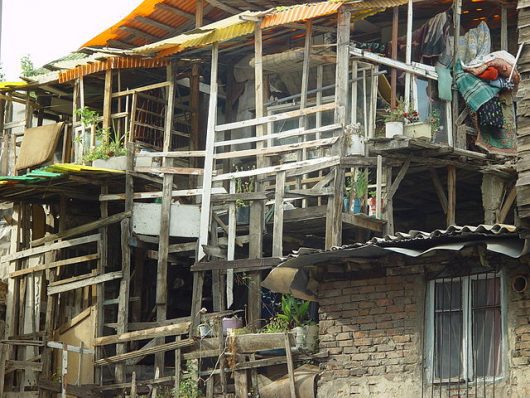
With this in mind, it is hard to imagine how to help people in Rwanda. And yet, the country has made remarkable progress in the years following the genocide, though there is still lots of work to be done. Here are five solutions that address how to help people in Rwanda:

  1. Support education
    With two out of three Rwandan citizens under the age of 25, the country has turned its attention and its hopes to children still in school. Schools in Rwanda are making a clear effort to discourage divisive ethnic labels; rather than Hutu or Tutsi, students are taught to identify themselves and others as Rwandans, all working toward a greater unity. There are many ways to support this effort, such as sponsoring a student through Foundation Rwanda or supporting one of the many organizations — Rwanda Aid, Aid for Africa and the Rwanda Orphans Project, to name a few — whose goal it is to further education in Rwanda.
  2. Support and encourage skilled labor
    While more Rwandan children are in school than ever before, there is a 40 percent unemployment rate among young people, and not enough Rwandans have skills necessary for the labor market. Part of this is because, while school attendance is very good, the quality of the schooling still needs improvement. One way to help is to support USAID’s work in Rwanda. USAID has been part of an effort to better students’ schooling and chances of finding a good job. Since 2011, USAID has helped equip 20,000 students with skills necessary to be employed, and 60 percent of those students have since gained new or better employment.
  3. Buy Rwandan coffee and tea
    One of the main sources of income for Rwanda comes from its production of coffee and tea. Rwandan coffee, apart from benefiting its economy, is known for its delicately sweet, citrusy and delicious flavor, and Rwandan tea, whether green or black, is known for producing a bold, rich flavor.
  4. Support survivors of genocide, especially those living with HIV/AIDS
    The genocide in 1994 also came alongside a horrifically large number of rapes, which resulted in many people in Rwanda becoming infected with HIV and AIDS. These people, along with the many, many others suffering from the trauma of the genocide, were and continue to be in need of both physical and mental help. Thankfully, many organizations continue to help people in Rwanda heal, such as Rwanda Gift for Life and the SURF Survivors Fund.
  5. Visit Rwanda
    While being known in recent history mainly for its horrors, Rwanda is also home to breathtaking areas of natural beauty. Another one of Rwanda’s main sources of income is its tourist trade, as people from around the world come to see the country’s dense rainforests and the 1,000 mountain gorillas, some of the last surviving on Earth, that live within them.

This is just a brief exploration of how to help people in Rwanda move past a painful part of their history. While Rwandans are grateful for any help, it has also become increasingly important that Rwanda stand on its own two feet, with the knowledge in mind that it cannot survive on aid forever. In 2012, the Rwandan government launched a fund to attract investments into the country in the hopes of generating more internal revenue, and gave the fund a firmly hopeful name: Agaciro, which means “dignity.”

– Audrey Palzkill

August 12, 2017
https://borgenproject.org/wp-content/uploads/borgen-project-logo.svg 0 0 Borgen Project https://borgenproject.org/wp-content/uploads/borgen-project-logo.svg Borgen Project2017-08-12 01:30:282024-05-28 00:15:21How to Help People in Rwanda
Aid, Global Poverty

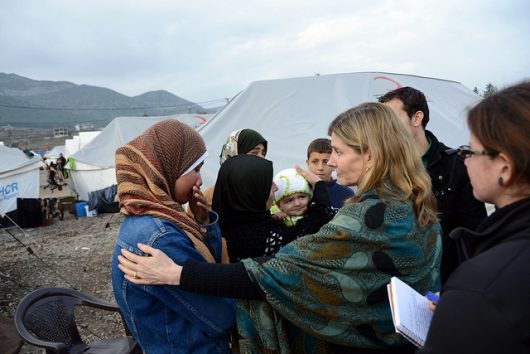
How to Help People in Turkey

How to Help People in Turkey
Turkey’s lower-class faces issues of poverty that affect the country’s food security, schools, economic development and more. In particular, an influx of Syrian refugees over the past few years has put stress on the country’s economy.

Approximately three million refugees live in Turkey, the majority coming from Syria. Approximately 260,000 of Syrian refugees living in Turkey still reside in camps and are not fully integrated into community life. Whether a person is from a large nonprofit or a small family, here’s how to help people in Turkey.

  1. Support an aid organization
    The World Food Programme is an organization that focuses on combating global hunger. It reports that high volumes of refugees entering Turkey have led to a 30% increase in the size of host communities. This, according to the organization, puts a hefty strain on local markets and infrastructure. A strain is also created by informal migration, according to the World Food Programme. In fact, in 2015 approximately 885,000 people entered Europe through Turkey. The International Rescue Committee began working in Turkey in 2013. They focus on how to help people in Turkey with respect to education, safety, economic status and legal aid.
  2. Take political action
    President Trump’s travel ban prohibits refugees from countries like Syria from entering the U.S., thus making them more likely to inhabit a close neighboring country like Turkey. An increase in Turkey’s refugee population has the potential to seriously weaken the country’s economy. Signing petitions, making regular calls to federal representatives and spreading public awareness about how the travel ban affects countries like Turkey are important strategies.

One of the most pressing issues in Turkey is the large presence of Syrian refugees. Even without the backing of a large organization working to combat poverty, there are still several approaches one can take when considering how to help people in Turkey.

– Leah Potter

Photo: Google

August 5, 2017
https://borgenproject.org/wp-content/uploads/borgen-project-logo.svg 0 0 Borgen Project https://borgenproject.org/wp-content/uploads/borgen-project-logo.svg Borgen Project2017-08-05 01:30:082020-07-14 08:49:42How to Help People in Turkey
Aid, Global Poverty, Human Trafficking

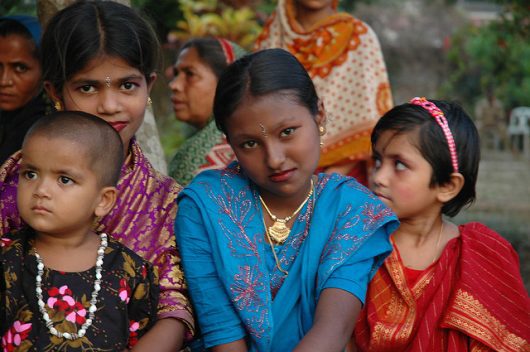
Bringing Home the Victims of Trafficking to Bangladesh

Victims of Trafficking
In addition to their hardships as victims of trafficking, Bangladeshi girls sold to India used to endure living in shelters for prolonged periods of time while waiting for travel permits back to their home country. The Bangladesh High Commission has recently been able to accelerate the repatriation process.

Human trafficking has been a major concern in Bangladesh for many years. Prof. Zakir Hossein from the University of Chittagong summarizes the key issues contributing to trafficking as “poverty, social exclusion, gender-based discrimination, widespread illiteracy, lack of awareness and poor governance.”

According to a 2010 report by the Protection Project, between 10,000 and 20,000 girls and women become victims of trafficking to India, Pakistan, Bahrain, Kuwait and the United Arab Emirates annually, in addition to internal trafficking. The report notes that traffickers also target boys and men.

The Indian state of West Bengal is the hub of human trafficking in India. It shares a long, mostly unfenced border with Bangladesh, which facilitates cross-border trafficking. Many girls tell similar stories: traffickers take advantage of their desperate economic situation and lure them with jobs in India. Once they cross the border, they are sold into modern-day slavery—mostly brothels, but also domestic, farming or textile work.

But, even if rescued, the girl’s hardships do not end there; the girls wait in shelters for their travel permits back home, which is a long and complicated bureaucratic process.

Even after founding an inter-country task force to organize repatriations, many girls stayed in shelters for two to three years. Shiny Padiyara, the superintendent of a shelter operated by Rescue Foundation, describes how waiting affected the girls: “They would get aggressive and in 2015, some girls broke a lot of things and a few ran away,” she said.

As the Thomas Reuters Foundation reports, the Bangladesh High Commission has become increasingly aware of the issue. The commission recently worked on accelerating the repatriation of Bangladeshi girls and women. Mosharaf Hossein, head of the consular section of the commission, cites that he “found girls and also boys from Bangladesh who were suffering a lot, waiting for long [times] to return home, because of our slow investigation,” including girls who had stayed in a government shelter for seven years.

The commission has been able to cut waiting periods significantly to about two to four weeks. In the past six months, over 200 victims of trafficking returned to Bangladesh—the highest number of repatriations in this time span. These girls finally reunited with their families, getting the chance to heal from their traumatic experiences and rebuild their lives.

– Lena Riebl

Photo: Flickr

August 3, 2017
https://borgenproject.org/wp-content/uploads/borgen-project-logo.svg 0 0 Borgen Project https://borgenproject.org/wp-content/uploads/borgen-project-logo.svg Borgen Project2017-08-03 07:30:232020-07-13 08:40:23Bringing Home the Victims of Trafficking to Bangladesh
Aid, Global Poverty

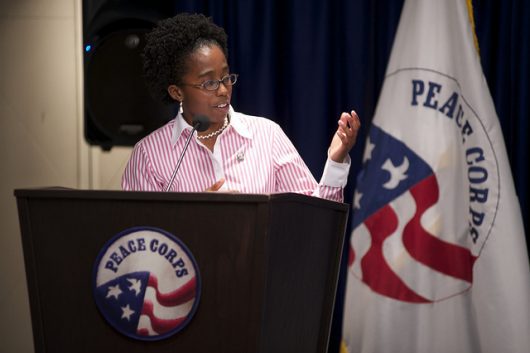
The 2018 Federal Budget Threatens the Peace Corps

2018 Federal Budget Threatens the Peace Corps
Most of the coverage of President Trump’s “America First” foreign policy has focused on budget cuts to foreign aid and drastic changes to USAID. Often overlooked among the alarming changes proposed by the president are the potential cuts to national service programs such as the Peace Corps. Since the 1960s, the Peace Corps has served as an important service that the United States offers to developing nations. The proposed 2018 federal budget threatens the Peace Corps with a 15% funding cut.

President John F. Kennedy founded the Peace Corps in 1961. The Peace Corps Mission has three goals: to help people in other countries; to encourage a better understanding of Americans; and for Americans to better understand others. The programs consist of three months of training and two years of service in an assigned country. Since its inception, almost 220,000 volunteers have served in 141 developing countries.

In the past half-century, the Peace Corps has run a variety of initiatives to meet the specific needs of developing countries. Peace Corps volunteers currently serve in over 60 countries, mostly in Latin America, Africa, Eastern Europe and Southeast Asia.

Ongoing initiatives include fighting HIV/AIDS; combatting hunger; protecting the environment and improving access to technology. One of the newest Peace Corps programs is Let Girls Learn. Led by former first lady Michelle Obama, this initiative aims to help girls around the world gain better access to education and prevent pregnancy at a young age.

The benefits of the Peace Corps go both ways. More than just providing foreign financial aid, the Peace Corps helps and instructs local populations to be healthier, more equitable and more sustainable. In turn, the volunteers that provide these services receive job and language skills in addition to an important cultural and learning experience.

President Trump cited balancing the national budget and emphasizing national security as reasons for the funding cuts. However, foreign aid funding currently takes up less than one percent of the national budget. This move is as unlikely to balance the budget as it is to strengthen national security. Goodwill missions like the Peace Corps improve U.S. relations with developing countries. And efforts that help stabilize these areas preempt extremism and other national security threats.

Assisting the Peace Corps is hardly most Americans’ top priority, but it is an effective government agency that benefits developing nations, young Americans and U.S. interests. Since the 2018 federal budget threatens the Peace Corps, U.S. citizens would do well to highlight the importance of the Peace Corps to their elected officials and urge them to secure Peace Corps funding in 2018.

– Bret Anne Serbin

Photo: Flickr/span>

August 3, 2017
https://borgenproject.org/wp-content/uploads/borgen-project-logo.svg 0 0 Borgen Project https://borgenproject.org/wp-content/uploads/borgen-project-logo.svg Borgen Project2017-08-03 01:30:102024-06-05 04:10:46The 2018 Federal Budget Threatens the Peace Corps
Aid, Global Poverty

US Donates $60 Million to Syria Recovery Trust Fund

Syria Recovery Trust Fund
As the death toll and damage continues to rise in Syria, nations rush to take action, whether military or monetary. In this effort, the United States Agency for International Development (USAID) has approved $20 million of further funding towards the Syria Recovery Trust Fund (SRTF) at a recent SRTF board meeting in Washington, DC. This brings the U.S. total contribution up to $60 million, whereby the U.S. donated $15 million initially, $15 million more in 2015, and $10 million in 2016. The organization is heavily reliant on its international donors and has up to date received $215 million in funds. Germany, Japan, Kuwait and France are some of the next biggest contributors after the U.S.

The Syria Recovery Trust Fund works with the current interim government and local groups to create transparent projects in Syria. This includes recovery initiatives and working with resident service providers to restore essential services such as electricity, water and sanitation, food security and waste removal in opposition-controlled territories. Hence, the SRTF focuses in these divisions alongside health and education and under particular circumstances agriculture, transportation and housing. Already looking to the future, they hope to shift their attention to rebuilding Syria’s infrastructure once fighting ceases.

Created by the Group of Friends of the Syrian People and its Working Group on Economic Recovery and Development and signed into practice in 2013, the Syria Recovery Trust Fund has already played a valuable role in the region. The group has successfully contracted engineers and equipment to expand electrical grids and water pipelines, restored medical clinics, supplied medical tools, and provided materials to improve production and storage of wheat harvests. Subsequently, they have helped more than two million Syrians progress and recover.

The newest contribution from the USAID will go to Syria Recovery Trust Fund interventions in newly liberated areas. The aid has paved a way for Syria and its people to rise from the rubble shortly again.

– Zar-Tashiya Khan

Photo: Flickr

August 2, 2017
https://borgenproject.org/wp-content/uploads/borgen-project-logo.svg 0 0 Borgen Project https://borgenproject.org/wp-content/uploads/borgen-project-logo.svg Borgen Project2017-08-02 07:30:082024-05-28 00:03:32US Donates $60 Million to Syria Recovery Trust Fund
Aid, Charity, Global Poverty

Rafiki Bracelets Are Changing Lives Around the World

Rafiki Bracelets
On a normal day in rural Kenya, women in this poverty-stricken nation seek to better their lives. The solution they’ve discovered is surprisingly simple; these women make “Rafiki Bracelets.” These bracelets are sold in developed nations, and the proceeds help rural villages in Kenya.

The word “Rafiki”—probably best known from the character Disney’s The Lion King—is Swahili for “friend.”

Rafiki bracelets are a part of the Me to We program, a social enterprise system that allows impoverished individuals to make certain goods (in this case bracelets). In turn, Me to We makes a donation to certain life-changing initiatives, like clean water or education.

The Me to We program makes donations to six different programs:  health, food, opportunity, education, freedom and water. Some initiatives are fairly straightforward, like providing access to primary education, clean water, and clean food. Others, however, are not. The “opportunity” initiative helps women in impoverished nations with financial planning. The “freedom” initiative allows American students to help combat poverty.

Cinemark movie theaters sell Rafiki bracelets in their lobbies and even advertise the bracelets with an infomercial before the screening of films. This is a great way for this social enterprise to reach a larger audience. By advertising before feature films, the Me to We program can reach those who otherwise may never hear of their programs.

Additionally, celebrities like Pretty Little Liars star Shay Mitchell wear Rafiki bracelets as a way to raise awareness. Mitchell has been quoted as saying, “I’m almost never without a Rafiki around my wrist. It looks cool, reminds me to live my life with a sense of gratitude, and is a symbol of the power we all have in our wallets to change the world.”

Rafiki bracelets are a great way for social enterprises to educate the public on global poverty. Due to their efforts, the plight of the world’s extreme poor reaches the world’s developed nations.

– Raymond Terry

Photo: Flickr

July 28, 2017
https://borgenproject.org/wp-content/uploads/borgen-project-logo.svg 0 0 Borgen Project https://borgenproject.org/wp-content/uploads/borgen-project-logo.svg Borgen Project2017-07-28 07:30:092024-05-28 00:03:26Rafiki Bracelets Are Changing Lives Around the World
Aid, Development, Global Poverty, United Nations

New UN Report on Environmentally Sustainable Development

Environmentally-Sustainable Development
On July 14, 2017, the United Nations Environment Programme (UNEP) published a new report addressing global initiatives towards environmentally sustainable development. The Green Finance Progress Report assesses the progress made by the G20 and other countries in creating policies and financial reforms that are sustainable. Despite many countries falling short in the amounts of capital they invest in sustainable development, the UNEP highlighted many promising institutional changes that have taken place in recent years.

In 2015, the U.N. Conference on Trade and Development found that developing countries lacked investments by approximately $2.5 trillion in implementing environmentally sustainable development initiatives. While this financial goal is still largely unmet, the report noted that the majority of G20 countries have undertaken significant projects and proposals that suggest positive steps towards green finance. Thus, financial shortcomings aside, environmentally sustainable development is becoming a profitable and high-priority investment for many countries.

According to the report, both public and private sectors have shown great improvements in laying the groundwork for green finance plans. With global initiatives in place such as the Paris Agreement and the 2030 Agenda for Sustainable Development, climate change has become of major importance in terms of global cooperation. This has greatly accelerated recently, with more developments in green finance taking place in the last year than any one-year period in history. Most notably, the number of green bonds, or money issued towards environmental projects, increased by 100 percent in 2016.

The plans underway are primarily large-scale, ambitious overhauls that will require careful and swift mobilization in upcoming years. According to the UNEP report, the majority of changes in the financial market have included developments to “reallocate capital, improve risk management, enhance transparency and clarify responsibilities of financial institutions.” The challenge is now to set these plans in motion and continue incentivizing projects towards environmentally sustainable development.

Achieving these goals requires global leaders to continue diverting funds toward sustainable development. This presents a huge opportunity for private market innovation, as the report emphasizes the need for businesses that, “support our sustainable development objectives and create commercially viable green businesses for decades to come.”

According to the UNEP, there are many ways businesses can meet investors’ increasing preference for sustainable projects. Primarily, the report suggests that providing investors with clear, accessible data on environmental impact is extremely important. Negative environmental impact is no longer a risk that can be overlooked, and a shift towards green finance is imperative in addressing climate change.

– Julia Morrison

Photo: Flickr

July 28, 2017
https://borgenproject.org/wp-content/uploads/borgen-project-logo.svg 0 0 Borgen Project https://borgenproject.org/wp-content/uploads/borgen-project-logo.svg Borgen Project2017-07-28 01:30:182024-12-13 17:58:25New UN Report on Environmentally Sustainable Development
Aid, Global Poverty

Why is Kosovo Poor, and How Are the Poor Being Helped?

Why Is Kosovo Poor
With approximately 30 percent of the population living in poverty, it is no surprise that Kosovo was ranked as the third poorest European country. Nearly 10 percent of the population lives in extreme poverty, and there is a 57.7 percent unemployment rate among people ages 15 to 24. With all of this shocking information, one might be compelled to ask: why is Kosovo poor?

One significant reason is the distribution of the government budget. While the government spent a whopping 210.2 million euros on roads in 2016, only 180.5 million euros went toward health and welfare. By prioritizing road development, Kosovars were left to pay for most of their medical needs. With the weight of their medical problems resting on them, many Kosovars remain in poverty.

The Kosovo government also spends an insufficient amount on education and science: only about 16 percent of the 2016 budget went toward these. This being noted, Kosovo’s youth received some of the lowest scores on the PISA test in 2015. The purpose of the exam is to determine the knowledge of 15-year-old students in the broad subjects of reading, science and math.

Having a strong educational system is crucial, especially in reducing poverty. Receiving an education gives one the opportunity to acquire a better-paying job. According to the Global Partnership for Education, if every single child could at least learn basic reading skills in school, then there would be a 12 percent drop in extreme poverty worldwide. This may not seem like much, but that is equivalent to 171 million individuals, who all possess different dreams and aspirations, and the potential to fulfill them.

With all of this information, instead of asking “why is Kosovo poor?”, it is now important to ask: what is being done to help Kosovo’s poor?

With more than two-thirds of the population living in rural areas, agriculture remains an important part of Kosovo’s economy. The World Bank is offering Kosovo a loan of 20.8 million euros to assist with agricultural purposes. The World Bank also supports the Agriculture and Rural Development Project, which helps finance investments in technologies that improve agricultural production.

Although Kosovo remains highly impoverished, there has been progress made. Over a span of a decade, the country’s GDP rose from $4.83 billion to $6.65 billion. With the help of different projects, Kosovo’s high poverty rates will continue to decrease.

– Raven Rentas

Photo: Flickr

July 27, 2017
https://borgenproject.org/wp-content/uploads/borgen-project-logo.svg 0 0 Borgen Project https://borgenproject.org/wp-content/uploads/borgen-project-logo.svg Borgen Project2017-07-27 07:30:582024-05-28 00:03:18Why is Kosovo Poor, and How Are the Poor Being Helped?
Page 50 of 65«‹4849505152›»

Get Smarter

  • Global Poverty 101
  • Global Poverty… The Good News
  • Global Poverty & U.S. Jobs
  • Global Poverty and National Security
  • Innovative Solutions to Poverty
  • Global Poverty & Aid FAQ’s
Search Search

Take Action

  • Call Congress
  • Email Congress
  • Donate
  • 30 Ways to Help
  • Volunteer Ops
  • Internships
  • Courses & Certificates
  • The Podcast
Borgen Project

“The Borgen Project is an incredible nonprofit organization that is addressing poverty and hunger and working towards ending them.”

-The Huffington Post

Inside The Borgen Project

  • Contact
  • About
  • Financials
  • President
  • Board of Directors
  • Board of Advisors

International Links

  • UK Email Parliament
  • UK Donate
  • Canada Email Parliament

Get Smarter

  • Global Poverty 101
  • Global Poverty… The Good News
  • Global Poverty & U.S. Jobs
  • Global Poverty and National Security
  • Innovative Solutions to Poverty
  • Global Poverty & Aid FAQ’s

Ways to Help

  • Call Congress
  • Email Congress
  • Donate
  • 30 Ways to Help
  • Volunteer Ops
  • Internships
  • Courses & Certificates
  • The Podcast
Scroll to top Scroll to top Scroll to top