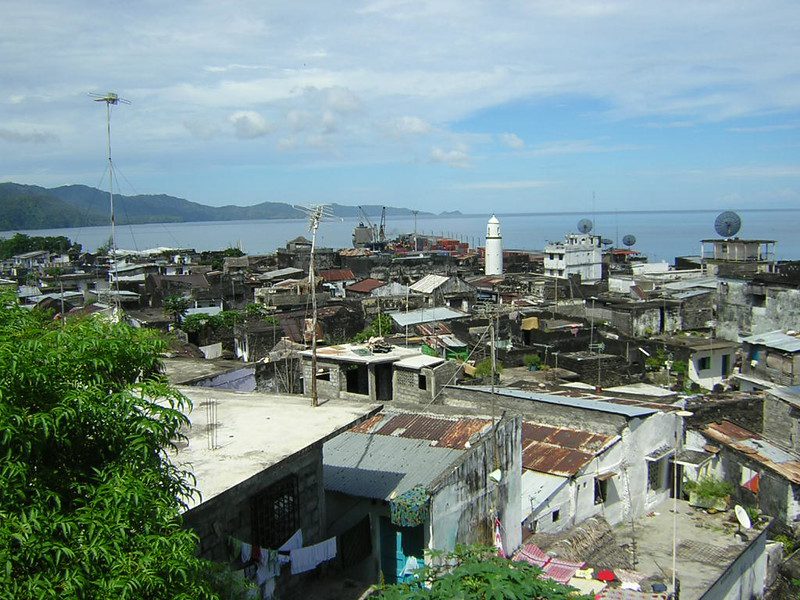
 Comoros is an archipelago of islands in the Indian Ocean, off the coast of Eastern Africa and home to a population of about 734,900 people. It is a nation that has struggled with political instability and poverty despite its picturesque beaches and natural beauty. The issues of poverty can be partially attributed to the poor state of infrastructure in Comoros.
In a worldwide comparison, Comoros ranked 198th, theoretically attributing 1.11 meters of infrastructure for each of the estimated 790,000 inhabitants currently residing in the country. Transport systems are particularly limited in Comoros, with only 673 km of the total 880 km of roads having been paved. Additionally, there are no railway systems of any nature available to its citizens.
The economy and infrastructure have been tied to each other for many years. This has been demonstrated in the fact that the weak infrastructure in Comoros and the business climate have severely hampered economic activity. It is currently ranked 153rd out of 190 countries in the World Banks’ most recent report, dropping one place since the previous assessment.
With these apparent issues in the infrastructure and economy of Comoros, there must be improvements made to these aspects of the country. Some work that has already been undertaken has come in the form of Public-Private Partnerships (PPP). These aim to create long-term contracts between a private party and a government entity, in which a public asset or service is provided, and bear all risk and management responsibilities.
One of these projects was established in 1998, called Comorienne de d’eau et de l’electricite (CEE), but it was cancelled soon after. There was an additional project in 2003, Mutsamudu Port, which received $500,000 in funding.
Other programs include the Infrastructure, Water, and Environment Project for the Comoros, which was established to support the objective of improving living conditions and stimulating economic growth. It aims to do this, while also protecting the environment, through investments to the basic infrastructure in Comoros.
The component of transport to the program is extremely important, as it assists Comoros with improving road maintenance, safety and management. Management improvements are achieved through three subcomponents: national and regional roads periodic maintenance, roads safety and institutional strengthening.
These subcomponents will rehabilitate earthworks, including pothole repair, local reinforcement, resurfacing and resealing. They will also maintain and repair road shoulders, finance the installation of traffic signals and strengthen the capacity of the executing agency, among other things.
The urban water supply is another component of importance that will rehabilitate and extend the urban water infrastructure. This will support technical assistance to strengthen the management and operation of urban water utilities.
With more efforts like these, improvements to the infrastructure in Comoros can make the fight against poverty achievable.
– Drew Fox
Photo: Flickr

The Success of Humanitarian Aid to Nigeria
This statement shows that humanitarian aid to Nigeria has been making a meaningful impact on the country. The large African country is home to 186 million people and is a large oil producer, but many people do not benefit from the inherent wealth.
The area that the U.K. and other international groups are concerned with is the North East region. According to the Humanitarian Aid Relief Trust, “Nigeria is a country riven with inequality. 85 percent of the population survive on less than two dollars a day, and certain regions, especially the North East, are far behind the rest of the country in terms of development.” It is extremely important to have funds to support this region.
Because of the poverty and poor living conditions of a large majority of Nigeria’s population, international aid organizations have been sending funds to the country. The U.K. pledged $250 million to Nigeria in August and has been a long-term supporter of its former colony’s development. This pledge was made to help stabilize Nigeria as the country is dealing with the terrorist group, Boko Haram. The U.K. had already given over $100 million in 2017 when they made this new pledge. Britain is concerned about the potential famine that could affect around a million people. According to News24, “The new aid is meant to restore key infrastructure and services, improve health care and education and help farmers.”
In addition to the U.K., USAID has also been helping to address food insecurity in the Northeast. The organization gave 2.2 million people emergency food assistance in September. This has been done through cash transfers so that people can buy locally. The success of this type of humanitarian aid to Nigeria occurs at a much more local level.
USAID has also been funding efforts to help improve road access to the North East so that food and supplies can reach those in need. This effort has positively affected over four million Nigerians.
Because of efforts like these, the international community and the people of Nigeria, specifically those in the North East, are seeing improvements. Providing food and resources in order to maintain stability is a continued effort in Nigeria. These efforts will continue to provide support for Nigerians in need of aid and hopefully, humanitarian aid to Nigeria will continue to thrive.
– Emilia Beuger
Photo: Flickr
Women’s Empowerment in Colombia
In 2012, 43 percent of women had joined the workforce, as opposed to 30 percent in 1990. In 2011, 94 percent of girls completed lower secondary school, a number that has been increasing and surpassing the percentage of boys, for years. Additionally, fertility rates have been reducing, with the average woman having two children in 2012. Thirty-two percent of the government’s cabinet was female, whereas in 1998 only 12 percent was.
As part of the Peace Accords of 2016, Colombia returned land to female victims of its 50-year conflict, indicating progress for women’s empowerment in Colombia. Additionally, the government provided start-up incomes to many women and families to kick-start their agricultural pursuits. Many of these women were forcefully displaced during the conflict. The return of their land shows an indirect step towards progress and an acknowledgment of women’s importance in the national economy.
The Peace Accords were also important because of a new commitment to promoting gender equality and the empowerment of women. This commitment was pushed, in part, and will be implemented by the Gender sub-Commission of the Havana Peace Talks Table. The agreement indicates an understanding of the importance of women in areas like rural development, political participation and the eradication of illegal drugs.
The United Nations Verification Mission works to effectively implement Resolution 1325 in Colombia. This resolution focuses on the participation of women in the negotiation and prevention of conflicts. The Colombian chapter of the Verification Mission has been one of the most successful in the world, with around 48 percent of the team made up of women. While this is an independent mission, it does collaborate with the Colombian government.
Ultimately, Colombia has made a lot of progress in terms of women’s empowerment and gender equality, but there is still a long road ahead. Women’s empowerment in Colombia has been improving, but it has benefited mostly upper-class urban women; women in poor, rural areas still face a lot of gender inequity. If the government continues to prioritize these issues and collaborate with the United Nations and other organizations, it has the potential to become a very progressive nation in terms of women’s rights.
– Liyanga de Silva
Photo: Flickr
Plague in Madagascar Affects Thousands
The WHO has reported 1,365 possible cases of the plague in Madagascar from the beginning of August to the end of October 2017. About eight percent of these cases have led to death.
Plague pneumonia is the most serious case of the plague disease, caused by a bacteria called Yersinia pestis, often found in rodents. The disease is easily spread: someone could become infected just by breathing in the bacteria after someone coughs, through touch, or by getting bitten by a plague-infected flea. Often times, swollen lymph nodes are the earliest symptom of the plague.
Forty of Madagascar’s 114 districts have reported cases of the pneumonic plague. The WHO reports that most of the deaths occurring from the plague are not in treatment centers. It is urging people to find a treatment center near them to prevent the spread of the plague. The WHO has provided medication and treatment to treat up to 5,000 people, protected 100,000 people who could have come in contact with the disease and have trained thousands of volunteers.
Not only does the plague pose a threat to individuals in terms of health, but it also affects socialization and education. The government has forbidden any public gatherings, as well as closed all of the schools at the risk of spreading the disease further. The airports in Madagascar are also taking measures to check temperatures and place medical teams to ensure those traveling are not taking it with them.
– Chloe Turner
Photo: Flickr
The Success of Humanitarian Aid to Nepal
CARE
CARE has been present in Nepal since 1978. Its work has been focused on food security, HIV/AIDS prevention, improving health, education and water sources. It also works to empower young girls and women. When the earthquake struck in 2015, CARE was one of the first organizations that was able to provide humanitarian aid to Nepal. It provided immediate assistance to 10,000 Nepalese with shelter and materials to thousands of others to repair their homes. CARE also distributed water purification tablets, built emergency latrines and provided the Nepalese with hygiene essentials.
Following natural disasters, it is common to see incidents of gender-based violence increase. As part of its humanitarian aid to Nepal, CARE created friendly spaces where women can seek protection, have access to information, education, support and various services. Its work with women has helped to empower many Nepalese women.
To date, CARE has provided humanitarian aid to over 130,000 Nepalese and it is estimated that by the early months of 2018 it will assist another 100,000 people.
Save the Children
Save the Children has worked in Nepal since 1976. The primary goal of its work is to partner with local communities and organizations to design sponsorship programs for kids. These sponsorship programs work to ensure that children have access to education and have the necessary tools to be successful in their education. Some of these tools include access to food, water and sanitation products.
While its work is geared towards assisting children, through providing access to education, Save the Children was also prepared to provide humanitarian assistance to Nepal following the earthquake. In 2016, the organization gave over 1 million children vital nourishment, helped nearly 25,000 families feed their children and supported more than 210,000 children in crisis.
While thousands of children and families have received services and support from Save the Children, its humanitarian aid to Nepal still continues. Many schools have been rebuilt following the earthquake, yet there seems to be a disparity in the number of children who are currently attending. Its current efforts are geared towards getting children back into school and giving them the necessary tools to live a healthy life.
Humanitarian aid to Nepal has been extremely successful. Thousands of Nepalese have been provided with the necessary items, tools and support to rebuild their lives following the earthquake. However, there are many regions of the country that have received little to no support and are still in need. Organizations should continue to provide humanitarian aid to Nepal and other organizations should join the efforts to reduce poverty in the country.
– Sarah Jane Fraser
Photo: Flickr
Infrastructure in Comoros Leads to Economic Struggle
In a worldwide comparison, Comoros ranked 198th, theoretically attributing 1.11 meters of infrastructure for each of the estimated 790,000 inhabitants currently residing in the country. Transport systems are particularly limited in Comoros, with only 673 km of the total 880 km of roads having been paved. Additionally, there are no railway systems of any nature available to its citizens.
The economy and infrastructure have been tied to each other for many years. This has been demonstrated in the fact that the weak infrastructure in Comoros and the business climate have severely hampered economic activity. It is currently ranked 153rd out of 190 countries in the World Banks’ most recent report, dropping one place since the previous assessment.
With these apparent issues in the infrastructure and economy of Comoros, there must be improvements made to these aspects of the country. Some work that has already been undertaken has come in the form of Public-Private Partnerships (PPP). These aim to create long-term contracts between a private party and a government entity, in which a public asset or service is provided, and bear all risk and management responsibilities.
One of these projects was established in 1998, called Comorienne de d’eau et de l’electricite (CEE), but it was cancelled soon after. There was an additional project in 2003, Mutsamudu Port, which received $500,000 in funding.
Other programs include the Infrastructure, Water, and Environment Project for the Comoros, which was established to support the objective of improving living conditions and stimulating economic growth. It aims to do this, while also protecting the environment, through investments to the basic infrastructure in Comoros.
The component of transport to the program is extremely important, as it assists Comoros with improving road maintenance, safety and management. Management improvements are achieved through three subcomponents: national and regional roads periodic maintenance, roads safety and institutional strengthening.
These subcomponents will rehabilitate earthworks, including pothole repair, local reinforcement, resurfacing and resealing. They will also maintain and repair road shoulders, finance the installation of traffic signals and strengthen the capacity of the executing agency, among other things.
The urban water supply is another component of importance that will rehabilitate and extend the urban water infrastructure. This will support technical assistance to strengthen the management and operation of urban water utilities.
With more efforts like these, improvements to the infrastructure in Comoros can make the fight against poverty achievable.
– Drew Fox
Photo: Flickr
Infrastructure in Peru: Benefitting its Entire Population
In 2016, prior to the floods, the government of Peru pledged $33 billion toward infrastructure projects. The money was pledged to construct highways, airports and a port. Local governments would also be involved in the projects, which was seen as a great way to involve communities. The President intended to extend potable and sewerage water services to 100 percent of the population over the next five years.
Since the floods, the country’s government has been working on projects to rebuild, as well as improve, the infrastructure to prepare for future disasters. Water supply is an important issue that the government wants to make sure is accessible to its entire population. There are plans to build reservoirs in the mountains.
Its first priority is rebuilding towns and communities, then working on the infrastructure in Peru for future disasters. The government also wants to control where people settle so that people are living in areas that are reachable and have adequate living conditions and resources.
Since Peru wants to continue growing its economy and improve its reputation in Latin America and the world, it must improve its infrastructure for the entire population. As such, it is important to make sure that many people in Peru will benefit from these projects.
The mining and commodity industry in Peru is growing very quickly, so organizations, like The Nature Conservancy, are focused on minimizing the impact of these industries on the environment and the surrounding communities.
The Nature Conservancy recognizes this “boom” as a great opportunity for the country, but wants to make sure that the environment is not affected. It is pushing for zero environmental impacts as well as the development of hydropower plants. It also focuses on informing Indigenous communities about the social and ecological effects the mining industry can have. Infrastructure in Peru must reflect and react to these implications.
At the moment, Peru is at a crossroads: it must rebuild its poorer infrastructure while allowing for economic growth through its mining and commodity industries. The U.N. has pushed for the country to implement multi-hazard warning systems and educate citizens about the environmental risks of these endeavors.
In short, Peru must continue to improve its infrastructure and garner international support for its initiatives. The steady improvements to infrastructure in Peru will have lasting, positive effects on its population.
– Emilia Beuger
Photo: Flickr
Infrastructure in Fiji Shows Growth and Development
Development of infrastructure is a key factor to establish a growing state. The infrastructure in Fiji benefits from a thriving tourism sector that energizes the islands. Roads, electricity, water supply, ports and the government are showing growth in a positive manner.
Transportation is a key component in the infrastructure of a state. In Fiji, the road system connects all town and cities and ferry rides offer water transportation. There are 25 local airports and two international airports serving as a trans-Pacific air traffic zone from the main island, Viti Levu. Ensuring access to transportation is necessary for the tourism industry in Fiji.
The developments also benefit access to clean water among the islands and electricity to most areas in Fiji.
Eighty percent of Fiji’s electricity comes from hydroelectric generation and 20 percent comes from imported fossil fuels. Electricity is coordinated by Fiji Electricity Authority, but a high demand, as a result of growth, has prompted other electric producers to partake in this industry.
Telecommunications is another avenue seeing great development. Full inter-island and international telephone access, as well as cable links and satellite access, are signs of growth. The deregulation and privatization of telecommunications have left an open market to internet providers. A Fijian-British joint venture gained an investment of $7.1 million in cellular telephone networks.
Infrastructure in Fiji is flourishing and has had large impacts on human rights and liberties as a result of government reforms. November 2014 marked the end of nearly eight years of military rule and the beginning of a free and fair democracy. Prime Minister Bainimarama promised to end corruption, promote economic growth and ease racial and religious tensions. While he is said to rule with a “heavy-hand,” voter turnout is up to 84 percent and reserved seats and special privileges for ethnic or religious groups in parliament are denied. The Fiji Independent Commission Against Corruption (FICAC) is also investigating many cases of corruption and working for better transparency within the government.
Unfortunately, FICAC lacks adequate resources to perform the number of investigations needed and some legislations are viewed as rushed, without due process. However, the Parliament is trying to be more transparent with live broadcasts of sessions, meeting notes and budgets posted for the public to see. The democracy of Fiji is taking action to acknowledge the Fijians.
The development experienced by Fiji is prompting investors to see it as an investment opportunity. The development allows for the people to experience more advantages such as freedom of religion and academy. Hinduism is openly recognized and no attacks on temples have occurred recently. Education can be sought without religious or ethnic bias, but limited resources lower the quality of institutions. Growth is evident within Fiji, allowing for further industries to emerge and prosper within the economy.
International trade was also restored with the emergence of democracy. China is a main trade partner, engaging in international trade and also contributing key foreign aid. The World Bank, European Union and Asian Development Bank (ADB) have invested in the water, water waste, roads and transportation sectors since Fiji’s return to democracy.
As a developing nation, the growth of infrastructure in Fiji has shown great promise for foreign investment and industries. This progress has benefited the locals that occupy the islands and tourists who visit. It has contributed to improving the overall quality of life within Fiji.
– Bronti DeRoche
Photo: Flickr
Finding a New Way Forward: Infrastructure in Mexico
In Mexico, one in four youths between the ages of 15 and 24 is neither employed nor enrolled in school. These “ninis” (“ni estudian ni trabajan—[those who] neither study nor work”) represent a potential labor pool of seven and a half million people for the cartels.
The “nini” phenomenon is partly fueled by a lack of accountability in the education infrastructure in Mexico. Mexican universities are not required to report data which would allow for ranking or evaluation of their educational effectiveness, effectively killing accountability and incentives to ensure that curricula adequately prepare students for the modern workforce.
Underdeveloped agricultural infrastructure in Mexico also contributes to the number of narcotics available for the cartels to traffic. Antonio Mazzitelli of the U.N. Office on Drugs and Crime states that “it is not drug production that generates underdevelopment[,] it is the lack of development that generates the opium cultivation.” In this, he agrees with the findings of the Open Society Foundation, which found that underdevelopment of agricultural infrastructure, in conjunction with other development factors, is common among regions where drug cultivation is high.
The Mexican government, recognizing these issues, is working to increase investment in infrastructure across the country. The Peña administration’s current National Infrastructure Plan is slated to inject nearly 7.75 trillion pesos (about $400 billion) into development, especially in transportation and communications infrastructure in Mexico.
Such projects promise to knit the country closer together and bring more opportunities to both rural areas and “ninis” nationwide. The U.S. is working to complement these efforts to improve infrastructure in Mexico through its Agency for International Development (USAID). USAID works with universities in both Mexico and the U.S. as part of the Training, Internships, Exchanges and Scholarships (TIES) program to create partnerships between higher education institutions in both countries to address development issues. USAID also supports training programs for Mexican educators in the U.S., with the intention that they return to rural, disadvantaged communities in Mexico to pass on their skills and help lead local development initiatives.
Whether these programs—and others supported by USAID—will survive potential cuts by the Trump administration remains to be seen. Following a deal with Democrats, a decision concerning the final fate of his budget proposal has been put off until the end of this year.
Domestic political conditions may also have a significant impact on infrastructure in Mexico. Elections will be held in July to vote for a new president. Andres Manuel Lopez Obrador, head of the National Regeneration Movement (MORENA), is currently ahead in the polls, according to Reuters. He is campaigning on a platform of eliminating corruption and putting the money saved towards economic development.
– Joel Dishman
Photo: Flickr
Infrastructure in Russia Falls Behind
Even with overall low rankings in infrastructure investment, Russia remains an “energy superpower” as a major exporter of oil and natural gas. Indeed, one active area of infrastructure development in Russia is pushing pipelines through Central Asia towards China in an effort to solidify the country’s hold on that market.
This commanding position hasn’t necessarily translated into widely-shared prosperity for the people of Russia. Poverty in the world’s largest country is up by nearly 15 percent. The majority of economic gains go to a fairly small privileged class. As it stands, only 110 households hold between 19 percent to 85 percent of all Russian financial assets. This uneven distribution of prosperity is in large part due to endemic corruption in Russia, facilitated by weak government institutions, a legacy of the breakup of the Soviet Union.
This disregard of the law threatens the future of investment for infrastructure in Russia. Andrey Movchan, senior fellow and director of the Economic Policy Program at the Carnegie Moscow Center, opines that due to corruption state investment in infrastructure not only would likely fail to revitalize the Russian economy but might actively damage it.
The Russian government under Vladimir Putin has actively blocked efforts by the U.S. to improve governance in the nation. Putin’s administration ordered the U.S. Agency of International Development (USAID) to shut its operations in Russia in 2012, claiming that the organization was engaging in subversive activities.
Domestic efforts to combat entrenched corruption likewise face challenges. Enemies of the state are notorious for being sidelined by illness, exile or death. One prominent example of such a suspicious neutralization is the case of Sergei Magnitsky, a Russian tax accountant who died in prison in 2009 following his investigation into potential tax fraud. This prompted the U.S. Congress to pass sanctions in 2012 targeting Russian officials believed to have been involved in human rights violations.
Despite the risks, Russians continue to fight for their futures and for better infrastructure. Alexei Navalny, head of the Anti-Corruption Foundation and a frequent inmate of Russian jails who attracts thousands to his rallies, has announced his intentions to run against Putin in the 2018 presidential elections.
– Joel Dishman
Photo: Flickr
Thailand’s Poverty Rate Declining Rapidly
Thailand’s economic growth started in the 1960s and continued until 1996 at a rate of about 7.5 percent per year. After the Asian financial crisis that lasted from 1995 to 2005, Thailand still saw remarkable growth at an annual rate of five percent. Millions of people were pulled out of poverty due to the many jobs that were created at this time.Thailand has made a great deal of progress in meeting the Millennium Development Goals (MDGs) and has created its own MDG-plus targets. The country has a firm commitment to the MDGs and to the U.N.’s Office for South-South Cooperation making Thailand an increasingly active global partner in development.
Some contributing factors to the decline of Thailand’s poverty rate are that a growing number of children are getting more years of schooling, almost every citizen is covered by health insurance and other forms of social security have expanded. HIV rates decreased in the 1990s from about 125,000 infections to fewer than 20,000 in 2003.
Thailand’s poverty rate has been declining considerably over the last four decades from 67 percent in 1986 to 10.5 percent in 2017. Thailand has the third-lowest poverty rate in Southeast Asia after Malaysia and Vietnam. Thailand has a 20-Year National Strategy that will last from 2017 until 2036 with the purpose to attain developed country status through reforms. These reforms will address economic stability, human capital, equal economic opportunities, environmental sustainability, competitiveness and effective government bureaucracies. Previous reforms included large multi-year infrastructure projects, improving state-owned enterprise governance, the approval of progressive inheritance and taxes and the beginning of the National Savings Fund.
There are still many issues facing Thailand but the good news is that there are many goals and deadlines being made by the Thai government to ensure that Thailand’s poverty rate keeps dropping. The country consistently meets target dates for development goals and gets one step ahead by creating newer objectives in order to reach the UNDP’s Sustainable Development Goal to end global poverty in all forms by 2030.
– Lorial Roballo
Photo: Flickr