 The modern history of the Democratic Republic of the Congo is marred by tragedy and injustice. Brutal colonization by the Kingdom of Belgium followed by the assassination of the democratically-elected leader after the nation’s independence from Belgium in 1960 led to a western-backed dictator, Joseph Mobutu, establishing rule. Joseph Mobutu then led the Democratic Republic of the Congo, and renamed the country and its famous river Zaire.
In 1996, rebels finally captured the capital while Mobutu was away for medical treatment; the dictator would die soon after this historic event. Today, as the people of the Democratic Republic of the Congo try to move on from their past and make a new future for themselves, violence and turmoil continue to wreak havoc on the state in the form of corruption and rogue rebels.
Aid from abroad is used to stabilize the country, and some of this money goes towards improving the infrastructure in the Democratic Republic of the Congo which is in dire need of repair.
The Congo River
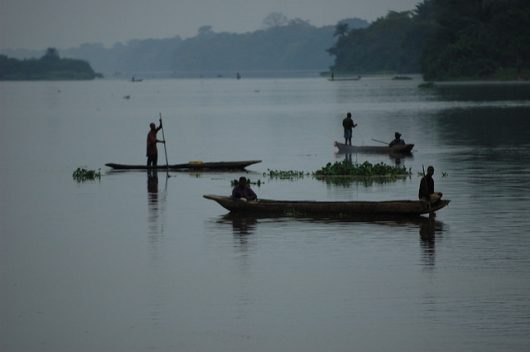
The Congo river is the lifeblood of the Democratic Republic of the Congo. Its source lies deep within the continent and its end spills into the Atlantic. The Congo river and its tributaries act as the main highway for the country, as no single railway runs the length of the country, and the few paved roads are in disrepair. Moving goods along the river allows them to be brought to the ports at the end of the river and near the coast, where the goods can then be shipped internationally.
Unfortunately, the entire river is not entirely navigable. Short sections of railway and roads are needed to move goods around obstacles such as waterfalls and rapids. According to the CIA, it is due to these obstacles that the river has never been accurately measured.
More innovative minds see the river as more than just a way to move goods and people; they see it as a way to power the country. The DRC lacks the infrastructure to power many of the homes, even within the cities. The African Development Bank group wants to invest $15 million into the feasibility of the Igna 3 project, which is estimated to produce 400,000 megawatts of power upon completion.
International Involvement
The World Bank also works to improve the infrastructure in the Democratic Republic of the Congo. Their $147 million project called DRC Electricity Access & Service Expansion (EASE) means to accomplish its namesake by first improving the existing network, especially in critical areas, and then helping the private sector obtain or improve their access to the electrical grid. The project began in May 2017 and is set to be completed by October 2022.
Initially colonized for ivory, slaves and rubber, other nations and international organizations have again taken notice of the rich natural resources within the DRC. For instance, China is one of the most active countries in the improvement of infrastructure in the Democratic Republic of the Congo.
In 2007, the governments of the DRC and China came to an agreement: in return for investment in Congolese infrastructure, China would receive beneficial terms when dealing with the rich natural resources of the DRC (especially copper as the mineral is one of the most valuable).
To access this copper and other resources, the Chinese government agreed to invest $8 billion into infrastructure in the Democratic Republic of the Congo. Much of the work was to be done by Sincomines, a Chinese company, but setbacks due to the instability of the country and lack of infrastructure have made the Chinese more hesitant to continue their work in the DRC.
Infrastructure in the Democratic Republic of the Congo requires the cooperation of many parties in order to see substantial improvement. Hopefully, as different governments, including the DRC’s own, slowly improve the infrastructure, economic political and social stability can be found in the coming years.
– Nick DeMarco
Photo: Flickr

Sustainable Agriculture in Mexico: Exporting Practices Worldwide
As home to the largest city in the Americas before the arrival of modern European settlers, Central Mexico has supported large-scale agriculture for over a thousand years. Later, in the twentieth century, Mexico was central to the Green Revolution that brought increased production and yields to feed a rapidly growing world population. Continuing this tradition today, advances in sustainable agriculture in Mexico are combining knowledge from both historical practices and modern innovations to assist farmers worldwide with the challenges of the 21st century.
Mexico was at the forefront of efforts in the middle of the last century to create higher yielding strains of both wheat and maize that fueled the Green Revolution. The International Center for the Improvement of Corn and Wheat (CIMMYT) was the leading institution in this work, focusing on the imminent problems of feeding an exploding world population. While CIMMYT’s work on crop yields was hugely successful, additional challenges have arisen in the years since.
Still in operation, the Center now focuses on initiatives to tackle the problems of a warming earth. These new efforts expand the work of CIMMYT into the development of grain varieties that can withstand the challenges of climate disruption and a still-growing population. As happened before, CIMMYT’s work is once again being exported beyond Mexico to solve the same problems in other countries.
Long before the Green Revolution and the advent of climate change, however, the predecessors of modern Mexican farmers developed technologies that allowed them to make effective use of difficult growing conditions and to farm in even marginal environments. Agricultural development experts are revisiting a number of these ancient practices and learning techniques that could power increased agricultural production in the future.
Intercropping, a technique that involves planting multiple crops close together, is a common feature of sustainable agriculture in Mexico, as practiced by indigenous groups. The cafetal, a system of growing plants under the shade of higher canopy trees along with ground cover crops, is already familiar to many westerners through the marketing of “shade-grown coffee.” The cafetal technique does far more than produce high-quality coffee in a sustainable fashion; it is a sophisticated method that renews soils and allows for a much higher diversity of crop yields when compared to ordinary plantation systems.
A similar system, the milpa, is much older and dates to some of the earliest civilizations in the Western hemisphere. Milpa farming is an intercropped system of corn, beans and squash that allows each plant to contribute to the success of the surrounding crops. Intercropped systems such as the milpa and the cafetal can yield up to 50 percent more produce than single crop plantings over the same area.
Along with research into indigenous systems and the large-scale institutional work of CIMMYT, smaller startup programs are also taking advantage of Mexico’s long growing season and diverse range of climates. One such program is The Biochar Company. Mexico is one of the pilot locations for this program that emphasizes biomass-based charcoal production. Not only is the product itself sustainable, but it enriches soils and increases regeneration rates when used as a soil additive.
All of these systems, whether 21st century innovations or time-honored indigenous techniques, are increasing the ability of agricultural methods to solve modern challenges. With its long history of success and the vast institutional knowledge of its farmers, sustainable agriculture in Mexico will remain a leader in food science and agricultural development well into the future.
– Paul Robertson
Photo: Flickr
4 Development Projects in Namibia
Scaling up Community Resilience to Climate Variability
Namibia has consistently faced problems over the years relating to water scarcity. In 2013, the country fought an intense drought that endangered one million of the 2.3 million people living there. As one of the driest countries in Southern Africa, Namibian farmers depend on rainy seasons to make a living. It did not arrive in 2013.
This UNDP project focuses on enhancing protective measures to ensure food and water security despite climate variations. The project focuses specifically on women and children. Close to 80 percent of the 4,000 involved households are led by women. The project also includes children from 75 Namibian schools.
The project will result in the use of sustainable agricultural practices and the restoration of wells and floodwater pools by the end of 2019.
Sustainable Management of Namibia’s Forested Lands (NAFOLA)
Namibia’s forests are vital to its citizens. In such a dry climate, forests promote biodiversity and water conservation, prevent soil erosion and provide food and resources for the Namibian people. Through this five-year project, the goal is to strengthen 11 community forests and promote community use and management of the resources NAFOLA provides.
This is one of the development projects in Namibia that also promotes sustainable agriculture and livestock practices. In turn, it aims to put less pressure on forest resources.
The Global Fund Grant to Combat Tuberculosis
Namibia ranks fourth on the list of countries worst affected by tuberculosis (TB). In 2014, 9,882 people were diagnosed with the disease, a 7 percent decrease from 2013.
The Global Fund to Fight AIDS, Tuberculosis and Malaria has given a $25.6 million grant to the Namibian Ministry of Health and Social Services to fight Tuberculosis within the country. This project includes enhancing patient quality of care and management of those living with TB and HIV as well as Multi-Drug Resistant TB.
Protected Areas System Strengthening to Sustainably Address New Management Challenges in Namibia (PASS Namibia)
Namibia is home to 21 Protected Areas consisting of forests, deserts and grasslands. These areas are also hosts to a diversity of species which includes mammals, birds and amphibians. Furthermore, 44 percent of this land is under conservation management.
This project was initiated in an effort to make Namibia a more advanced tourist destination. Not only does environmental tourism boost local economies, but it can also provide much-needed revenue to keep up with conservation efforts. The project also hopes to gain support for the implementation of an institutional framework by 2018 that will prolong conservation efforts.
The support of development projects in Namibia can make a significant difference for the citizens who live there. These projects will give Namibians a more sustainable and secure future.
– Megan Burtis
Photo: Flickr
Seeds of Sustainable Agriculture in Guatemala
In terms of agriculture, its main exports are fruits, vegetables and flowers. It also grows and exports a vast amount of biofuel substances, such as corn and sugar. Coupled with poverty and a strong penchant for agriculture in the economy, sustainable agriculture in Guatemala has grown as a viable method to fight poverty and continue growth.
Semilla Nueva Creating Sustainable Agriculture in Guatemala
Chronic malnutrition is a defining issue in Guatemala, especially for the rural poor. Of the entire population, it affects 50 percent. One organization that works towards sustainable agriculture in Guatemala is Semilla Nueva. Its name literally means “New Seed”.
Semilla Nueva focuses on working within the current system and making a staple food more nutritious. Its solution focuses on a more sustainable and healthier corn that has more nutrients than previous seeds. By using high-quality seeds, it has been able to prevent 845 cases of malnutrition since 2016.
A student named Darren received a grant from the Interexchange Foundation to volunteer in sustainable agriculture in Guatemala. In a detailed account, he describes working with Semilla Nueva. Its 52 farmers use small, inexpensive techniques such as green manures and no-till farming. These techniques greatly increase a farmer’s yield and reduce carbon emissions.
Addressing Chronic Malnutrition
Another group devoted to sustainable agriculture in Guatemala is USAID. The program is active in over 2500 communities focused in the Western Highlands of the country. In this region, chronic malnutrition for children under five is at 67 percent. This USAID program also works to increase employment through more labor-intensive crops and improve productivity in food staples such as corn and beans. In 2013 alone, it reduced malnutrition by seven percent and generated $20.3 million in sales for agriculture products.
While Guatemala faces the issues of malnutrition, certain programs continue to force this difficulty into the past. Moving past the simple donations of goods, these groups teach Guatemalans how to maneuver their own lives and take off the financial burden of those struggling.
– Nick McGuire
Photo: Flickr
Sustainable Agriculture in Belize Resorts to Ancient Practices
With practices used for over two thousand years, known as Milpa, the villages perform a control burn to restore soil and replenish carbon. Short term annuals are planted to fill the open space as plantains, avocados, fruits, fiber plants, leguminous trees and cocoa are planted and set to grow. After five to eight years, when the canopy closes, annuals are replaced with vanilla, coffee, ginger, allspice and other understory plants. This cycle of burning and planting continues every 15 to 30 years.
This ancient practice is different than the current “slash and burn” method that only plants the highest paying crops, such as corn and rice, and negates the need for crops as “nitrogen fixers” and wildlife habitats. This form also plants in steep terrain without swales or terrace, increasing the likeliness of soil erosion. This slash and burn method undermines the soil and potential future agriculture growth.
Governments and organizations are working to educate and remove this irresponsible practice and replace it with other forms of sustainable agriculture in Belize. Projects Abroad works in Belize on tropical agroforestry and sustainable farming, allowing for individuals to work on the processing of cacao and developing agroforestry systems that mimic the rainforest that originally grew in Belize.
Sustainable Harvest International-Belize (SHIB) delivers a five-year extensive training program that teaches impoverished families how to farm with sustainable practices while also providing for their families. This program works on family nutrition, sustainable and holistic farming, promoting soil conservation through the reduction of external additives and crop diversification. These methods tie into strategies that the Horizon 2030 development plan uses to promote sustainable agriculture in Belize.
The U.N. reported that the Horizon 2030 development strategy is progressing agriculture practices by teaching sustainable farming in schools, increasing finances for farmers with low-interest loans, developing agricultural insurance for crop losses, supporting communal farming operations and increasing investments in technology regarding irrigation, seeds and green pesticides. These are a few of the goals implemented to reach more sustainable farming practices in Belize.
Through these efforts, Belize could experience a shift from farming that is detrimental to the environment to sustainable agriculture that will bolster the economy and livelihoods of the people of Belize.
– Bronti DeRoche
Photo: Flickr
Human Rights in North Korea Need Major Improvement
Currently ruled by Kim Jong-Un and the Worker’s Party of Korea, North Korea is one of the most oppressive countries in the world. Its leaders and government are adamant about isolating the country to ensure loyalty to North Korea and its communist way of life. In order to do this, many human rights are stripped from individuals living there. Although it is difficult to understand everything about the country given the secrecy and protection that is enforced, there are certain things about human rights in North Korea that have been uncovered.
Top 10 Facts About Human Rights in North Korea.
In consideration of these facts about human rights in North Korea, it is clear that rights of the citizens are extremely limited. However, although human rights in North Korea may be lacking, there has been some improvement. North Korea’s leadership has ongoing engagement with U.N. human rights treaty bodies. These include the Committee on the Rights of the Child and the Committee to Eliminate Discrimination Against Women.
Committees like these and other organizations are constantly working to spread awareness and improve human rights conditions within North Korea. Further progress is needed in order to dramatically change living conditions in the country, but it is fortunate that measures are already being taken to improve the rights of North Koreans.
– McCall Robison
Photo: Flickr
Sustainable Agriculture in the Philippines a Model for the Region
ANSOFT looks to promote communication networks in terms of organic technology development, both nationally and internationally. The project produces a database of successful organic farming techniques, pest and soil management, traditional practices and knowledge of natural resources.
Here are more innovative projects underway in the region as the Philippines establishes its reputation as a leader in developing sustainable agriculture:
Empoldering technique bolsters agriculture
Empoldering, a method of reclaiming low-lying land from bodies of water by building up dikes and constructing drainage canals, has proven effective in the Philippines. After the technique was implemented, a 2008 study found that empoldering improved the fish, rice and vegetable production systems through better access to fresh water, as it creates a new upland microenvironment. The microenvironment serves as a seedbed and allows for the integration of fish into the rice crop. The high-impact method helped increase food availability and employment opportunities in farming, thereby increasing food security for the region.
Pasali Philippines Foundation and “Brain Gain”
Sustainable Agriculture Programs of the Pasali Philippines Foundations are housed under the larger concept called “From Brain Drain to Brain Gain”, a strategy to alleviate poverty by investing technologies and skills learned nationally and internationally into local development. The Brain Gain concept focuses on food security, economic sustainability and environmental sustainability through climate change mitigation.
The Pasali Foundation backs sustainable agriculture programs that work toward infrastructure support, capacity building, seed banking and agroforestry, as well as addressing issues of land tenure and seeking the interest of microfinancing institutions.
Philippine Rural Development Project
In 2014, the World Bank approved financing for the Philippine Rural Development Project. The project focuses primarily on farming infrastructure that supports sustainable agriculture in the Philippines, including farm-to-market roads, bridges, greenhouses, fish sanctuaries, solar dryers, and facilities for pre- and post-production and harvest storage.
The project estimates a direct impact for nearly two million farmers and fisherfolk, and indirect impacts for 22 million citizens in the region. Currently in its fourth year, the project expects to achieve major increases in the household incomes of farmers and fisherfolk, as well as small business incomes and product values. The project also partners with the Global Environment Facility, whose focus is on the conservation and protection of selected coastal and marine areas in the region.
As recognized by AFACI and through the implementation of other ambitious initiatives, the Philippines leads the way in setting the standard for sustainable farming practices in Asia. Accordingly, sustainable agriculture in the Philippines may just set the standard for alleviating poverty in Asia as well.
– Jaymie Greenway
Photo: Flickr
Differences Between Congressmen and Senators
The differences between congressmen and senators are often confusing. Oftentimes, the two roles are used interchangeably to represent someone who works and composes the legislature of the United States. However, the roles, influences and powers of congressmen and senators vary.
Congress refers to both the Senate and the House of Representatives. A congressman is any member of either the Senate or the House of Representatives. There are a total of 535 voting congressmen, 435 of which are representatives and 100 which are senators.
To become a senator of the U.S., the potential candidate must be elected by the people of the state. Like any election, the candidate with the most votes wins. Each senator has an office in Washington, D.C., as well as one in the home state.
Senators are members of the legislative branch – their job is to represent the people living in their state. For example, to support a bill which aims to reduce poverty, individuals can contact their state senator. These bills are voted on and passed by the U.S. Senate and the House of Representatives, which are then signed by the president to become law. Each state within the U.S. has two senators representing it, regardless of the size or population of the state.
In accordance with the Constitution, “all legislative Powers herein granted shall be vested in a Congress of the United States, which shall consist of a Senate and House of Representatives.” The Constitution grants the Senate its own unique power: ratifying treaties, approving presidential appointments and a two-thirds vote of Senate is required before a person is impeached from office.
The differences between congressmen and senators also relates to their level of authority. Congress has an important role in national defense, including the power to declare war, raise and maintain armed forces and create rules for the military.
The Senate and the House of Representatives must approve and ratify legislation before it is executed.
– Jennifer Serrato
Photo: Flickr
Success for Women’s Empowerment in Macedonia
These insecurities stem out of the traditional role that men play in the Macedonian society. Women still cannot inherit property, which hinders the ability to access bank loans for businesses and entrepreneurship advances. “Woman Has the Power” introduced participants to U.N. agencies and E.U. mission representatives. In the case of successful women, this event enabled them to reach out to other women to give guidance and help.
In 2011, successful actress and movie producer Labina Mitevska, through Women Unlimited Macedonia, advocated against drug addiction, violence, corruption and prostitution in regards to women. Women Unlimited Macedonia was a platform created with the help of The Art of Living Macedonia for women to network, to discuss and gain support and to practice yoga and meditation. These efforts in individual organizations fueled government involvement and initiatives.
Implementation to create equal rights for both men and women continued in the government of the former Yugoslav Republic of Macedonia’s commitment to end discrimination and violence against women. The National Strategy for Prevention and Protection against Domestic Violence, adopted by the government, focuses on domestic violence and placement of women in the social and economic sphere of society.
The National Strategy’s aim is to strengthen the capacities for courts to handle cases regarding violence against women, establish services for victims of such crimes and educate parents and children on prevention. These efforts were signed into the National Strategy for Gender Equality 2013-2020, in accordance with Step It Up for Gender Equality. The movement did not stop there to enhance women’s empowerment in Macedonia.
The International Foundation for Electoral System (IFES) works to promote women for candidacy for Parliament and local government positions. Fighting violence against women who attempt candidacy, both the IFES and the Club of Women promote the presence of women in the government. One of the significant success efforts of the Club of Women was a mandatory quota of no less than 30 percent of candidates be women running for Parliament and municipal councils.
Successes such as these provide hope for women in Macedonia. Progress is not perfect and women are still the less represented gender, but through organizations’ efforts, there is potential for improving women’s empowerment in Macedonia.
– Bronti DeRoche
Photo: Flickr
Development Projects in Dominica Helping Nation Rebuild and Grow
The Commonwealth of Dominica, not to be confused with the Dominican Republic, is a beautiful country located in the Caribbean. While the nation is still developing, it is making a lot of progress in improving its economic state. These five development projects in Dominica are helping to reduce poverty in the country.
Like many Caribbean countries, Dominica is greatly affected by hurricanes. The country aims to lessen the effects of hurricanes with this project. In addition, the River Defense Wall Project has social and economic benefits. Local citizens were hired to help build the wall and it is critical in its ability to preserve human life.
Investing in housing is important to developing an economy because it reduces homelessness, which could in turn reduce poverty. This project will create homes, retail outlets and jobs for people in one fell swoop. The homes will reduce homelessness and the outlets will increase foot traffic and spending in the area, which will boost the economy and reduce poverty. Of the current development projects in Dominica, this one could be the most far-reaching.
In the late summer of 2017, Dominica was struck by Hurricane Maria. The country needs to rebuild, and this project seeks to aid in that task. The Disaster Vulnerability Project will reduce vulnerability to natural hazards and climate change impacts in Dominica by investing in resilient infrastructure and improving hazard data collection and monitoring systems, according to the World Bank. This project has already helped the country rebuild roads that were damaged by the hurricane.
It is well known that one way to reduce poverty in a country is to create jobs and develop entrepreneurial skills. This project aims to support small businesses in the country in order to accomplish that goal. The funding from this project goes toward staff training and obtaining equipment that the potential business will need.
Another important way to reduce poverty is to invest in education. A person can increase their earnings by 10 percent with every year they are in school. This project’s goal is to improve individuals’ skills in order to better prepare them for the future. It focuses on teaching basic skills, such as woodwork or hospitality, in addition to math and English. Sometimes a trade skill is involved. Because of its collaboration with the From Offending to Achieving program, this project is also being used to educate individuals rather than incarcerate them.
Tourism is a major source of income in Dominica, but that is not necessarily the best way to sustain an economy. With these development projects, Dominica can grow its economy and reduce poverty in many different ways.
– Dezanii Lewis
Photo: Flickr
State of Infrastructure in the Democratic Republic of the Congo
In 1996, rebels finally captured the capital while Mobutu was away for medical treatment; the dictator would die soon after this historic event. Today, as the people of the Democratic Republic of the Congo try to move on from their past and make a new future for themselves, violence and turmoil continue to wreak havoc on the state in the form of corruption and rogue rebels.
Aid from abroad is used to stabilize the country, and some of this money goes towards improving the infrastructure in the Democratic Republic of the Congo which is in dire need of repair.
The Congo River
The Congo river is the lifeblood of the Democratic Republic of the Congo. Its source lies deep within the continent and its end spills into the Atlantic. The Congo river and its tributaries act as the main highway for the country, as no single railway runs the length of the country, and the few paved roads are in disrepair. Moving goods along the river allows them to be brought to the ports at the end of the river and near the coast, where the goods can then be shipped internationally.
Unfortunately, the entire river is not entirely navigable. Short sections of railway and roads are needed to move goods around obstacles such as waterfalls and rapids. According to the CIA, it is due to these obstacles that the river has never been accurately measured.
More innovative minds see the river as more than just a way to move goods and people; they see it as a way to power the country. The DRC lacks the infrastructure to power many of the homes, even within the cities. The African Development Bank group wants to invest $15 million into the feasibility of the Igna 3 project, which is estimated to produce 400,000 megawatts of power upon completion.
International Involvement
The World Bank also works to improve the infrastructure in the Democratic Republic of the Congo. Their $147 million project called DRC Electricity Access & Service Expansion (EASE) means to accomplish its namesake by first improving the existing network, especially in critical areas, and then helping the private sector obtain or improve their access to the electrical grid. The project began in May 2017 and is set to be completed by October 2022.
Initially colonized for ivory, slaves and rubber, other nations and international organizations have again taken notice of the rich natural resources within the DRC. For instance, China is one of the most active countries in the improvement of infrastructure in the Democratic Republic of the Congo.
In 2007, the governments of the DRC and China came to an agreement: in return for investment in Congolese infrastructure, China would receive beneficial terms when dealing with the rich natural resources of the DRC (especially copper as the mineral is one of the most valuable).
To access this copper and other resources, the Chinese government agreed to invest $8 billion into infrastructure in the Democratic Republic of the Congo. Much of the work was to be done by Sincomines, a Chinese company, but setbacks due to the instability of the country and lack of infrastructure have made the Chinese more hesitant to continue their work in the DRC.
Infrastructure in the Democratic Republic of the Congo requires the cooperation of many parties in order to see substantial improvement. Hopefully, as different governments, including the DRC’s own, slowly improve the infrastructure, economic political and social stability can be found in the coming years.
– Nick DeMarco
Photo: Flickr