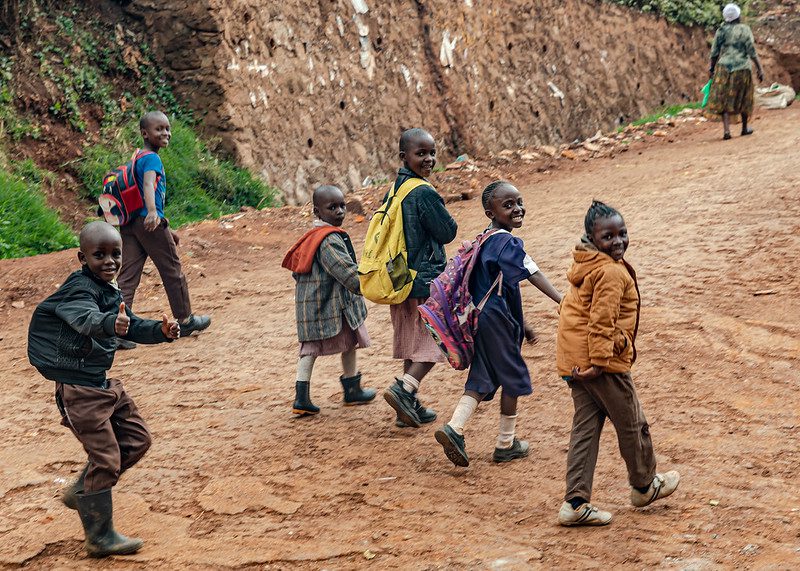
 Kenya’s school meal programs are supported by the World Food Program (WFP) and the Home‑Grown School Meals (HGSMP) initiative ensure that children in penurious communities receive reliable daily meals. Kenya’s School Meal Programs improve nutritional needs and maintain school attendance.
Malnutrition
Making up 36% of the population, Kenya’s children/adolescents face a dual nutritional crisis that accounts for undernutrition and obesity. The “Double burden” is the cause of several children’s physical growth, academic performance, cognitive skills and overall health. The World Health Organization (WHO) has urged countries to focus on developing food systems in school’s that actively promote health and sustain ability specifically in school environments where children “spend most of their time in school, about 75% of the year, where they consume more than half of their daily meals,” African Population and Health Research Center (APHRC) reports.
For instance, the Dishi Na County initiative from the Nairobi city county “targeting public primary schools and early childhood education centres in its jurisdiction” establishes centralized kitchens that prepare meals in bulk and distribute them to public schools and early childhood centers at highly subsidized rates. By reducing costs associated with decentralized infrastructure, the program aims to enhance nutrition, enrollment, and academic performance
The Evolution of It All
The National School Feeding Council (NSFC) managed the first ever school meal program in Kenya in 1966 whose purpose was to provide a supplement to mid-day meals to the children. Then in 1971, the government expanded the program to more marginalized groups that amplified enrollment of public primary schools holistically including “Samburu County increased by 31%, Wajir 71%, Isiolo 23%, Marsabit 20%, and Tana River County by 26%,” Kenya Insitute for Public Policy Research and Analysis (KIPPRA) reports.
In 1980, the government collaborated with the WFP for a five-year feeding initiative for rural communities to improve the education system, like attendance, performance, and retention. Between 1980 and 1989, there was a lot of success where hunger and malnourishment decreased and “enrollment increased by 56% among primary school children” in this time, KIPPRA reports. Due to this, the program extended into 1998 to 2003 and again from 2004 to 2007 under WFP Emergency operations.
The Transition to Home-Grown School Meals Program
The WFP’s school meals initiative in Kenya has played a vital role in combating hunger, malnutrition and school dropout rates, particularly in vulnerable and food-insecure regions. Initially launched in the early 1980s, the program provided cooked meals directly to schools, with a focus on arid and semi-arid areas (ASALs) where food scarcity was most severe. Over time, the initiative evolved into a more sustainable model. In 2009, the Kenyan government introduced the Home-Grown School Meals Programme (HGSMP), which shifted from food aid to a system where schools receive government funds to procure food from local farmers. This change not only enhanced the cultural relevance and freshness of meals but also empowered rural farmers and stimulated local economies.
Beyond just feeding students, the program has created ripple effects throughout communities. Women’s groups and youth cooperatives have been engaged as suppliers, school cooks and food processors, generating income and skills development opportunities.
In some counties, centralized kitchens like those in Nairobi’s Dishi Na County initiative, while separate from the national HGSMP, mirror the WFP’s goals of cost-effective, large-scale meal production and efficient delivery.
Additionally, since its inception in 2009, Kenya’s HGSMP Program has expanded significantly, growing from serving 200,000 children to nearly 1 million by 2016, WFP reports.
The Impact
Kenya’s school meal programs, rooted in decades of collaboration between the government, the WFP and local communities, demonstrate how targeted interventions can transform both education and nutrition outcomes. By addressing the dual burden of malnutrition and food insecurity, initiatives like the Home-Grown School Meals Programme and Dishi Na County not only keep children in classrooms but also improve their overall health, academic performance and prospects.
As these programs continue to expand, their integrated approaches, such as linking food systems, education, and community empowerment, offer a powerful example for sustainable development in Kenya and beyond.
– LaRaymee Lee
LaRaymee is based in Missouri City, TX, USA and focuses on Global Health for The Borgen Project.
Photo: Flickr

Revolutionizing Health Care: 3D Printing in Saudi Arabia
How 3D Printing Is Improving Health Care in Saudi Arabia
Conclusion
3D printing in Saudi Arabia is set to improve public health further as technology advances. Saudi Vision 2030 promises a future of personalized medical care for all, whether low-income, an expat or from a rural area. Sickness doesn’t discriminate and soon, neither will access to affordable health care in Saudi Arabia.
– Sydney Uhl
Photo: Flickr
Borders and Survival: Migrant Sex Workers in Thailand
An Underground Yet Thriving Industry
Thailand is often labeled a global hotspot for sex tourism and prostitution. Though estimates vary drastically, the Joint United Nations Programme on HIV/AIDS (UNAIDS) reports around 145,000 sex workers in the country. Many believe the number is underestimated due to the informal and criminalized nature of the industry.
Contrary to popular belief, the state prohibits prostitution under the 1996 Prevention and Suppression of Prostitution Act. In practice, however, enforcing regulations is inconsistent and ambiguous due to corruption and economic reliance. Sex is often negotiated in bars or massage parlors, with the actual transaction occurring off-site. This legal grey area not only reinforces the stigma surrounding sex work but also enables systemic corruption, including bribes to police and local officials.
From Neighbor To Undocumented Worker
Many women from neighbouring countries migrate due to poverty, lack of opportunity or political instability in their home countries, especially in Myanmar, where recent unrest has worsened economic conditions. Since 2023, approximately 1.5 million people from Myanmar have migrated to Thailand.
Sex work frequently pays more than other job options that are typically accessible to migrants or women of lower socioeconomic status. Alternatives like domestic work, agriculture or construction are physically demanding and underpaid. Limited legal migration channels for women, especially those with little education, push many to migrate through irregular routes or fall into trafficking.
Once in Thailand, they often remain undocumented and legally invisible. A study published in the International Journal of Environmental Research and Public Health found that most female migrant sex workers worked in karaoke venues (84.3%), massage parlors (9.1%) and traditional Thai massage shops (8.6%).
Double Stigma: Migrant and Sex Worker
The legal invisibility of undocumented migrant sex workers intensifies their vulnerability. Being both undocumented and part of a criminalized profession, these women face double stigma, as “illegal” migrants and as “immoral” workers. Health access is one of the most pressing issues: while Thailand’s public health care is often praised for its universality, in reality, sex workers report facing discrimination from providers and fear legal consequences if their work status is disclosed. Most migrants do not even have access to the system.
Additionally, authorities frequently use condom possession as proof against sex workers, which deters them from using condoms and makes them more susceptible to HIV infections. As researcher Christopher Hunter observed in the ’90s, “the Thai police are the largest perpetrators of rape and violence against migrant sex workers.” Although dated, these claims continue to echo in recent NGO reports, which document police abuse, extortion and lack of legal recourse for undocumented women.
Grassroots Supports
Where state protections fail, grassroots organizations have stepped in. For example:
Conclusion
Migrant sex workers in Thailand embody a layered crisis at the intersection of borders, poverty, gender and legal ambiguity. To address their realities requires more than charity; it requires structural change. Policies on migration, labor and sex work need to be aligned with human rights principles, while also listening to the voices of those most affected. In the meantime, grassroots networks continue to fill the gap left by states.
– Kai Xian Lim
Photo: Wikimedia Commons
Poverty and Cyclones in Madagascar
These extreme weather events devastate lives, livelihoods and infrastructure, driving vulnerable communities further into destitution. More than 80% of Madagascar’s population lives in poverty, heavily reliant on rain-fed agriculture and thus acutely exposed to climate shocks. When cyclones strike, homes built with weak, cheap materials are easily destroyed. Farmlands flood, leading to food insecurity and rising prices. Damaged roads hinder access to markets, schools and health care. Families lose assets, children are pulled from school and human capital erodes.
Madagascar’s large informal sector, employing more than 80% of the workforce, is particularly vulnerable, with job losses plunging households into debt. To combat this, five cyclone resilience strategies are vital. These measures protect against climate shocks, foster long-term development and reduce poverty.
Averting Immediate Poverty Shocks
Early warning systems give communities time to prepare, evacuate and protect valuables, often determining whether families can recover or are pushed further into poverty.
Investing in Climate-Resilient Infrastructure
Cyclones consistently destroy infrastructure, cutting off communities, disrupting supply chains and stalling recovery. Investing in resilient infrastructure ensures continuity and reduces poverty impacts.
Broadening Pathways Out of Poverty
Overdependence on subsistence agriculture makes communities highly vulnerable. Diversified livelihoods create buffers against crop failures and storm disruptions.
Safeguarding Crucial Ecosystems
Ecosystems like forests and reefs act as natural buffers against cyclones. However, environmental degradation, often poverty-driven, removes these protections.
Reinforcing Social Safety Nets
Even with strong prevention measures, cyclones in Madagascar will continue. Social safety nets are essential to protect the most vulnerable and speed recovery.
A Sustainable Future
Madagascar’s fight against poverty cannot be separated from its climate vulnerability. Cyclones in Madagascar continually erase development gains. But by strengthening early warning systems, infrastructure, livelihoods, ecosystems and social protection, Madagascar can build resilience and chart a path to long-term prosperity. These strategies, rooted in community engagement and sustainability, offer a chance to break the cycle of poverty and forge a future where the nation survives storms and thrives beyond them.
– Anoushka Rai
Photo: Flickr
Gender Equality in Brazil
Poverty and Gender Equality in Brazil
Oxfam reported that in Brazil, inequality is decreasing and to reach the United Kingdom’s (U.K.) current level of income equality, it could take 75 years. Furthermore, the lack of fiscal space to increase social spending and the reduced growth in the service sectors mean poverty reduction is likely to be much slower over the next few years.
In Rio, around 23% to 24% of the population lives in favelas and there are more residents in favelas in the city than all others in Brazil. The term favela often refers to slums, where people living in favelas are more at risk of poverty and health problems due to gangs that control these territories. Women are often most at risk in the favelas, which face high levels of violence and offer limited access to resources for women. However, there are women leaders in the favelas who are activists, symbolizing the daily struggles of the people who face limitations to their access to rights.
G20 Rio declaration
Officially known as the G20 Rio de Janeiro Leaders’ Declaration is the summit held at the end of 2024, detailing what promises and key priorities the leaders are committing to in the new year. It is often praised for its duty to sustainability, climate action and gender equality.
Women in poverty in Rio may see the positive impacts of some of the decisions made at this summit, as the Rio Declaration confirmed the G20’s commitment to gender equality and empowerment of women and girls. One of these key commitments is the condemnation of gender-based violence, which may improve the lives of women living in favelas that are most at risk of violence.
Other notable commitments are the support of gender equality in Brazil with the promotion of equal pay, leadership opportunities and career development for women. A significant change and move forward is the summit’s pledge to reduce the gender wage gap from 2025 and bridge the gender digital divide by 2030. Indeed, this pledge will help move women out of poverty by providing them with better and equal pay.
Lucia Xavier
Lucia Xavier is an activist who founded the anti-racist nongovernmental organization (NGO), Criola, in Rio de Janeiro and is a Brazilian social worker. Furthermore, Xavier founded NGO Criola in 1992, which acts in the defense and promotion of Black women, young women and girls. Xavier’s work across Brazil as an activist focuses on advocating for black women and girls from poor backgrounds who face violence, which she identifies as the biggest threat to women’s rights in Brazil.
For Xavier, Black women’s representation is a key issue and she believes their leadership is vital for an equal future. Xavier has said that “Black women [are] powerful political actors, capable of transforming society and reshaping the norms.”
Women Ministers in BRICS
BRICS is a group of five countries — Brazil, Russia, India, China and South Africa — that serves as a political and diplomatic coordination forum for nations in the Global South. BRICS Brazil April 2025, held a meeting of women ministers that reinforced the essential role of female participation in shaping a new global governance.
Gender equality policies took center stage at this BRICS meeting, which focused on women’s development and entrepreneurship, women’s empowerment, climate action, sustainable development and digital governance – misogyny and misinformation. Each of these areas looked at where women need help in Brazil and possible solutions. When discussing women’s development, the focus was on promoting initiatives and investments aimed at ensuring women’s equal participation in economic and social development. Recognizing technology-based violence against women and ensuring countries commit to promoting women’s equal participation in climate action are key concerns. This is critical because women and girls account for 80% of those displaced by natural disasters and the changing climate.
– Alice Haston
Photo: Flickr
Outbreak of Foot-And-Mouth Disease in South Africa
Foot-And-Mouth Disease in South Africa
Foot-and-mouth disease is a contagious viral infection that mainly affects hoofed animals such as cattle, pigs, sheep and goats. It causes fever, painful blisters in the mouth and feet and can lead to severe weight loss and reduced milk production. The virus spreads rapidly through direct contact or contaminated materials.
Due to the outbreak, there has been a pause in production, which has caused price shocks. Authorities have also placed export bans, which have impacted the financial stability of already struggling livelihoods within the beef sector. Karan Beef is in decline, causing a huge economic disruption that is affecting producers and consumers in a country already experiencing financial hardship.
Foot-and-mouth disease is impacting South African livestock, driving up domestic meat prices for consumers and food businesses. This inflation hits low-income households hardest, as they spend a significant portion of their income on groceries. In response, industry stakeholders are urging the government to declare a formal state of disaster to access emergency financial support.
The ongoing quarantine cuts off farmers’ income, often their sole livelihood, while livestock losses push many deeper into poverty. In South African culture, cattle are not only a source of income but also serve as collateral, dowries and emergency assets. This crisis is delivering a severe blow to the meat industry and threatening multiple social and economic stability layers.
Vaccination Program
On June 19, 2025, Agriculture Minister John Steenhuisen announced the arrival of the first batch of 900,000 foot-and-mouth disease vaccines from Botswana to help stabilize the livestock sector and restore trade flows. A few days later, on June 23, he visited one of Karan Beef’s facilities to launch the feedlot-level vaccination drive. Authorities hope the campaign will contain the outbreak, protect livestock and prevent further economic fallout.
The Future
As foot-and-mouth disease affects South African livestock, the government plans to build long-term local vaccine production in collaboration with the Agricultural Research Council. The Department of Agriculture is also working closely with industry stakeholders to coordinate rapid response strategies, strengthen surveillance systems and improve outbreak control measures.
Meanwhile, health agencies are actively importing and distributing these vaccines to the most affected areas. If everything goes according to plan, Karan Beef production should soon be back on track.
– Emily Herlehy
Photo: Wikimedia Commons
IVI and GAVI: The Future of Vaccination in Developing Countries
The Work of GAVI and IVI
Organizations such as Gavi, the Vaccine Alliance and the International Vaccine Institute (IVI) are doing life-changing work, especially in developing countries.
Since Gavi’s establishment in 2000, it has aided in vaccinating more than 1.1 billion children in 78 countries; this is one-eighth of the globe’s entire population. These immunizations have, subsequently, averted more than 18.8 million future deaths, decreasing the global mortality rate drastically. Gavi particularly focuses on “zero-dose” children who have not received a single dose of their base-level vaccines and ensures that they are the first to be immunized.
The IVI, established in 1997, devoted itself exclusively to protecting vulnerable citizens of developing countries, who are situationally less capable of receiving necessary vaccinations. The remoteness of these nations creates barriers to immunization, including the lack of concrete infrastructure, weather conditions and political turbulence, among other factors. Currently, IVI operates under a treaty signed by both the World Health Organization (WHO) and 35 countries on several different continents. It is cementing local partnerships in developing countries, which lead to the issuance of immunization technologies in these nations.
Key Players
Conclusion
By 2030, scientists are aiming to reach a neonatal mortality rate of at least 12 deaths per 1,000 live births, as compared to 17 deaths per 1,000 in 2024. With the increasing development and roll-out of advanced immunization technology in developing countries, this process should be faster than it has been in previous years. Deaths claimed by vaccine-preventable infectious diseases are on the decline. Thanks to numerous brilliant innovators, these numbers will keep decreasing.
– Sarina Maloy
Photo: Unsplash
Accessible Health Care for Indigenous People in Paraguay
Poverty Leads to Sickness
TB is a disease that is highly concentrated among Indigenous communities, who face a greater risk of contracting it due to ongoing displacement and exclusion from health care and other essential services. These issues are further worsened by food insecurity, inadequate housing and limited access to health care. More than a quarter of Paraguay’s population falls under the national poverty line, which puts people at a greater risk of TB, as well as many other infectious and non-communicable diseases.
Expanding Access to Health Care
In 2023, Paraguay’s Ministry of Health launched a partnership with the Pan American Health Organization (PAHO) and World Health Organization (WHO) to improve access to health care for Indigenous communities. PAHO and WHO made progress through their initiative, Expanding Access to and Quality of Primary Health Care and Integrated Health Services in the XIV Health Region, aimed at enhancing health services and increasing access for Indigenous People in Paraguay.
An outpatient care day event was held to encourage dialogue between health care providers and Indigenous People in Paraguay about the range of available health services through “outreach activities”. The program has also incorporated safeguards and adaptations for certain ancestral practices, such as “horizontal birthing”, to provide more culturally appropriate care. Home births remain the most common among pregnant women, typically with a midwife rather than in a hospital, which raises health concerns and increases the risk of infection.
Technological Innovations
The PAHO/WHO initiative helped to support a “geospatial analysis” device, used to “monitor and manage health services”. This tool has been installed and used in more than 900 Family Health facilities in rural areas of Paraguay. It has improved “service management” by recognizing areas with poor access to health services and locations of at-risk populations. It combines geographical data with “health-service planning,” which in turn helps to distribute resources more effectively.
Health Care Education
Public health training courses held by the Ministry of Public Health, with support from PAHO/WHO, helped improve health care workers’ response to epidemic outbreaks such as TB. The training enabled workers to recognize symptoms quickly, respond appropriately and treat cases effectively, helping to control the spread of these diseases. As a result, preventive actions for various illnesses have greatly improved.
Progress in Motion
The partnership between PAHO/WHO and Paraguay’s Ministry of Health has greatly improved not only the presence of health care and made it more accessible, but also visibility for the indigenous communities. Additionally, it has allowed the Indigenous People in Paraguay to become aware of the facilities that have become accessible to them. Overall, the health system is becoming increasingly supported and reinforced by these improvements and continues to get better each day.
– Bowie Aldrich
Photo: Flickr
Water Filtration in Cambodia: Transforming Lives
This lack does not just affect hydration — it directly impacts health, education, income and gender equality. In the face of this ongoing crisis, a new generation of community-centered programs are offering long-term solutions for water filtration in Cambodia that do more than deliver clean water — they are empowering rural Cambodians with jobs and dignity.
Safe Water, One Kiosk at a Time
At the heart of this transformation is Teuk Saat 1001. Since 2007, it has pioneered a simple yet powerful model: train local entrepreneurs in Cambodia to operate water kiosks that produce and distribute UV-filtered water at affordable prices. These kiosks, now numbering more than 300 across underserved rural areas, operate like social enterprises. In 2024 alone, they have provided clean water to more than 1.15 million beneficiaries.
Teuk Saat’s model links sustainable water access with livelihood creation, especially in areas where formal job opportunities are scarce. Instead of relying on external infrastructure, the community itself becomes the driver of its own progress, ensuring long-term maintenance, low-cost supply and local accountability. In addition, the kiosks help reduce the use of charcoal and wood to boil water, contributing to broader environmental goals.
Ceramic Filters and Women’s Empowerment
Another key player in the revolution of water filtration in Cambodia is Hydrologic Social Enterprise, a local business that came from the nonprofit International Development Enterprises (iDE). Hydrologic designs and distributes the Super Tunsai, a ceramic water filter capable of removing 99.99% of bacteria and producing up to 30 liters of clean water per day.
This seemingly small change has huge implications. For many Cambodian women and girls, fetching and boiling water traditionally requires time-consuming labor, exposes them to harmful smoke, and puts them at risk when gathering wood in isolated areas. Hydrologic filters eliminate these dangers while also cutting household expenses on wood fuel and medical treatment.
By selling more than 450,000 filters, Hydrologic has benefited more than 2 million Cambodians, avoided over 1.2 million tonnes of carbon emissions, and directly reached primarily female clients, around 85% of its user base. As a female- and locally-led social enterprise, Hydrologic demonstrates how access to clean water is also a path toward economic participation and gender equity.
Linking Health, Jobs and the SDGs
Programs like Teuk Saat 1001 and Hydrologic do not just address a humanitarian gap — they also contribute directly to SDG6 (Clean Water and Sanitation) and SDG8 (Decent Work and Economic Growth). By equipping rural communities to manage water distribution systems, these programs bridge the gap between short-term aid and long-term resilience.
Moreover, the reduction in waterborne illnesses, especially among children under five, has ripple effects: improved school attendance, reduced health care costs and stronger local economies.
The Path Forward
In 2025, Cambodia’s Ministry of Industry, Science, Technology and Innovation, along with the French Development Agency and the EU, announced plans to inject €275 million into Cambodia’s water infrastructure by 2027. As these national and international funds scale up, partnering with proven grassroots models like Teuk Saat 1001 and Hydrologic will be crucial to ensure that solutions remain community-driven, sustainable and inclusive.
As Cambodia works toward universal access to safe drinking water, the country’s rural social enterprises are proving that innovation does not always mean high-tech; it can mean training a neighbor, trusting a village and filtering change one household at a time.
– Kai Xian Lim
Photo: Flickr
Kenya’s School Meal Programs: Fighting Hunger
Malnutrition
Making up 36% of the population, Kenya’s children/adolescents face a dual nutritional crisis that accounts for undernutrition and obesity. The “Double burden” is the cause of several children’s physical growth, academic performance, cognitive skills and overall health. The World Health Organization (WHO) has urged countries to focus on developing food systems in school’s that actively promote health and sustain ability specifically in school environments where children “spend most of their time in school, about 75% of the year, where they consume more than half of their daily meals,” African Population and Health Research Center (APHRC) reports.
For instance, the Dishi Na County initiative from the Nairobi city county “targeting public primary schools and early childhood education centres in its jurisdiction” establishes centralized kitchens that prepare meals in bulk and distribute them to public schools and early childhood centers at highly subsidized rates. By reducing costs associated with decentralized infrastructure, the program aims to enhance nutrition, enrollment, and academic performance
The Evolution of It All
The National School Feeding Council (NSFC) managed the first ever school meal program in Kenya in 1966 whose purpose was to provide a supplement to mid-day meals to the children. Then in 1971, the government expanded the program to more marginalized groups that amplified enrollment of public primary schools holistically including “Samburu County increased by 31%, Wajir 71%, Isiolo 23%, Marsabit 20%, and Tana River County by 26%,” Kenya Insitute for Public Policy Research and Analysis (KIPPRA) reports.
In 1980, the government collaborated with the WFP for a five-year feeding initiative for rural communities to improve the education system, like attendance, performance, and retention. Between 1980 and 1989, there was a lot of success where hunger and malnourishment decreased and “enrollment increased by 56% among primary school children” in this time, KIPPRA reports. Due to this, the program extended into 1998 to 2003 and again from 2004 to 2007 under WFP Emergency operations.
The Transition to Home-Grown School Meals Program
The WFP’s school meals initiative in Kenya has played a vital role in combating hunger, malnutrition and school dropout rates, particularly in vulnerable and food-insecure regions. Initially launched in the early 1980s, the program provided cooked meals directly to schools, with a focus on arid and semi-arid areas (ASALs) where food scarcity was most severe. Over time, the initiative evolved into a more sustainable model. In 2009, the Kenyan government introduced the Home-Grown School Meals Programme (HGSMP), which shifted from food aid to a system where schools receive government funds to procure food from local farmers. This change not only enhanced the cultural relevance and freshness of meals but also empowered rural farmers and stimulated local economies.
Beyond just feeding students, the program has created ripple effects throughout communities. Women’s groups and youth cooperatives have been engaged as suppliers, school cooks and food processors, generating income and skills development opportunities.
In some counties, centralized kitchens like those in Nairobi’s Dishi Na County initiative, while separate from the national HGSMP, mirror the WFP’s goals of cost-effective, large-scale meal production and efficient delivery.
Additionally, since its inception in 2009, Kenya’s HGSMP Program has expanded significantly, growing from serving 200,000 children to nearly 1 million by 2016, WFP reports.
The Impact
Kenya’s school meal programs, rooted in decades of collaboration between the government, the WFP and local communities, demonstrate how targeted interventions can transform both education and nutrition outcomes. By addressing the dual burden of malnutrition and food insecurity, initiatives like the Home-Grown School Meals Programme and Dishi Na County not only keep children in classrooms but also improve their overall health, academic performance and prospects.
As these programs continue to expand, their integrated approaches, such as linking food systems, education, and community empowerment, offer a powerful example for sustainable development in Kenya and beyond.
– LaRaymee Lee
Photo: Flickr
The Gavi Board’s New Plan for Improving Global Health
The Impact of Gavi
In the last 25 years, Gavi has reduced child mortality by half. This has been made possible by providing children with access to life-saving vaccines, which is especially important for underserved countries. For instance, regions in West Africa still experience deadly outbreaks of diseases like meningitis, a disease which is extremely rare in the U.S. Developing nations are unable to afford the same vaccination access as countries like the U.S. or the U.K. Gavi aims to help finance this and allow children to be saved from preventable diseases.
Gavi has also helped many countries become financially independent. Nineteen countries that Gavi once supported have now become faithful donors. Not only has the organization provided vaccines for millions, but it has also helped whole countries escape poverty.
The Trump Administration’s Foreign Aid Review
Historically, the U.S. government has been one of Gavi’s largest donors, making up 13% of its total funding. However, this has all changed after the Trump administration’s foreign aid review earlier this year. The administration has announced that its Fiscal Year 2026 budget will not provide funding for Gavi.
Gavi has provided catastrophic estimates that outline what the lack of U.S. funding could mean for the world. Its statistics show that more than 1.2 million children will lose their lives because they will not have access to vaccinations. This is because the help that Gavi provides is only made possible through the support of other countries and organizations. These changes in funding are what inspired the Gavi Board’s new plan for improving global health.
Support From the UK
Like the U.S., the U.K. has been a long supporter of Gavi. However, while the U.S. is withdrawing its support, the U.K. is pledging more than $1.5 billion to Gavi. This will provide vaccination access to millions of children over the next five years.
The U.K. Foreign Secretary David Lammy was quoted as saying: “Our ongoing partnership with Gavi will give millions of children a better start, save lives and protect us all from the spread of deadly diseases.” This pledge will also have a positive impact on the U.K. Working with health organizations across the globe provides jobs for thousands of people within the U.K.
Additionally, by funding Gavi, there is better security for U.K. citizens. Funding research and vaccine development reduces the likelihood of deadly diseases reaching the U.K. This guarantees less stress on U.K. health workers and hospitals.
The Future of Gavi (2026-2030)
The Gavi Board’s new plan for improving global health has factored in its limited financial resources. Due to the Trump administration, as well as other donors who have withdrawn their support, Gavi is now operating with $3 billion less than it anticipated for the next five-year period. As a result of these budget cuts, Gavi will be giving less support to immunization programs. Yet, the organization is continuing to ask for more funding from potential donors, so hopefully, this can change in the future.
Despite the financial challenges Gavi is currently facing, the board has announced the creation of a Respiratory Syncytial Virus (RSV) maternal vaccine program. The details of this program aren’t yet released. However, the organization has stated that it will work to eradicate one of the key causes of pneumonia in children aged less than 5. The board is also now starting its funding for the development of an Mpox emergency vaccine stockpile.
In the case of an emergency outbreak, vaccines would be provided quickly to the areas affected. This is an essential step in working to end the current Mpox epidemic in Africa. Gavi is now working to provide children across the globe with access to vaccines through its first health system strategy. This strategy will create unique programs for a variety of countries with a simpler funding process. Primary health care will be a large focus of this operation.
New funding policies have been implemented as part of the Gavi Board’s latest plan for improving global health. The board has requested that countries participating in its vaccination programs make greater financial contributions. Additionally, an amended Health Systems and Immunization Strengthening (HSIS) policy will be introduced in 2026. This policy will help countries finance their vaccine programs effectively.
Conclusion
Overall, the Gavi Board’s new plan for improving global health overcomes the obstacles the Trump administration has put in place. Gavi is still managing to introduce lifesaving programs despite its limited resources. The organization is also hopeful that if other donors decide to re-commit to being sponsors, it will achieve even greater success in protecting the globe against deadly diseases.
– Katie Gray
Photo: Flickr