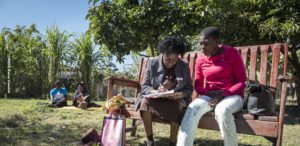
 In Zimbabwe, an ongoing revolution is transforming mental health care, driven by an unlikely group: the country’s grandmothers. These women, with little formal training, sit on park benches, offering not just a shoulder to lean on but evidence-based counselling that’s changing lives. Currently, they are using digital tools to extend their reach beyond the benches, bringing support to even the most isolated communities.
Mental Health Landscape in Zimbabwe
Zimbabwe’s road to its current mental health crisis took shape from years of trauma, from colonial history to the long fight for independence. Over time, socio-economic challenges, including hyperinflation, rampant unemployment and a failing health system, have deepened the emotional toll. As of 2021, the country faces one of the highest suicide rates in the world (23.6 per 100,000), alongside widespread depression and post-traumatic stress. With just 18 psychiatrists serving a population of 17 million, mental health care in Zimbabwe has been inaccessible for most and barely recognized.
The Birth of the Friendship Bench
The Friendship Bench began with a simple idea. Dr. Dixon Chibanda, a psychiatrist working in Harare, realized that Zimbabwe’s mental health crisis needed something different from more doctors. So, he turned to a deeply rooted tradition in Zimbabwean culture: the matriarchs of the community.
In 2006, psychiatrist Dr. Dixon Chibanda partnered with local health authorities to train a group of elderly women, many of whom had no formal education in mental health, in a simple yet effective form of therapy called Problem-Solving Therapy (PST). These women, affectionately known as the “grandmothers,” were among the few people with the time and willingness to serve as lay health workers, especially given the country’s severe shortage of mental health professionals. By shifting the model to rely on available, community-rooted personnel, something positive began to take shape.
Sitting on brightly painted benches outside local clinics, these grandmothers became trusted figures in their neighborhoods. They offered more than advice, they listened. Through open, empathetic conversations rooted in cultural familiarity, they used behavioral therapy techniques to address kufungisisa—a Shona term that translates loosely to “thinking too much” and often describes depression or deep emotional distress. Their approach was grounded in traditional values like kusimudzira (to uplift), kuvhurika pfungwa (opening up the mind) and kusimbisa (to strengthen). These weren’t just abstract ideas; they were culturally resonant tools for healing.
Clinical trials showed that after just a few sessions on the bench, 98% of people who had previously considered suicide were no longer suicidal six months later. People who arrived feeling hopeless left with a sense of dignity, strength and direction.
Taking a Digital Leap
The pandemic could have halted the progress of the Friendship Bench, but instead, it propelled it into a new era. With Zimbabwe’s already impressive mobile phone penetration (90% of the country has access), the grandmothers began reaching out through WhatsApp and voice calls, extending their therapy services to people who could not make it to a physical bench.
The shift kept the spirit of Zimbabwe’s Friendship Bench intact. This digital pivot meant that counselling could reach those in remote villages, women unable to leave their homes and even young people navigating mental health challenges in crowded urban centers. Unexpectedly, it also helped improve communication between the grandmothers and their supervisors, strengthening the support system behind the scenes. What started as a grassroots intervention under a tree had quietly evolved into a scalable, hybrid model.
A Model for Accessible Global Mental Health
As of 2025, more than 2,000 grandmothers in Zimbabwe are delivering therapy to at least 500,000 people across the 11 provinces. But the model has not stopped at the country’s borders. It is currently in more than nine countries, including Kenya, Malawi and even the United States (U.S.), with each country tailoring the approach to its own cultural and social contexts. Yet wherever it goes, the core stays the same: community-led care, empathy, accessibility and the belief that healing can begin with a simple conversation.
Scaling Zimbabwe’s Friendship Bench
According to experts, scaling the Friendship Bench model further will depend on strong collaboration between Zimbabwe’s government, local health authorities and international partners. Sustaining the program’s momentum could mean finding smart ways to integrate it into existing public health and technology infrastructures.
The mobile phone industry, for example, offers real potential, not just for reaching clients, but for training grandmothers, supervising their work, collecting data and enabling real-time support through virtual platforms. By continuing to build on what’s already available, the Friendship Bench could go even further, reaching more people, in more places, with the same message: healing doesn’t have to be out of reach. By adapting an age-old tradition of community care to the digital age, Zimbabwe has created a model for mental health that could potentially be replicated globally.
– Sriya Regulapati
Sriya is based in Vancouver, Canada and focuses on Business and Global Health for The Borgen Project.
Photo: Friendship Bench

HIV/AIDS in Seychelles and the National Strategic Plan
In the case of HIV/AIDS in Seychelles, the high-risk groups for increased HIV transmission include sex workers, intravenous drug users, migrant workers, adolescents and men who have sex with men. In the past, the local government in cooperation with international organizations, have taken up initiatives towards combating the spread of HIV among the local population. The Seychelles government has termed these the National Strategic Plans (NSPs) which are emblematic of the country’s response to the disease over the last 20 years. Here is some information about the plans.
Information About the National Strategic Plans (NSPs)
The Success of Addressing HIV/AIDS in Seychelles
Seychelles has almost completely eliminated extreme poverty, which contrasts with many other African countries. Per a recent report by the World Bank as of April 2025, the unemployment rate is only at 3.2%. However, multidimensional poverty remains an issue, since socioeconomic disparities exist due to factors such as teenage pregnancy and substance abuse. These are key factors that not only increase relative poverty rates and standards of living, but also are key drivers of HIV transmission, since they make up the populations experiencing the concentrated epidemic. The NSPs have specifically been implemented to target these vulnerable populations. A few initiatives that are part of these NSPs that have gone toward addressing the HIV/AIDS epidemic include youth-friendly health services with access to post exposure prophylaxis (PEP), and condoms and community-based interventions for youth experiencing drug abuse.
Looking Ahead
While Seychelles continues to face its concentrated AIDS epidemic, its strong governmental stance, international cooperation and commitment to short-term goals are strong indicators for the future of HIV prevention and care in the country.
– Nikhil Kumar
Photo: Flickr
Zimbabwe’s Friendship Bench
Mental Health Landscape in Zimbabwe
Zimbabwe’s road to its current mental health crisis took shape from years of trauma, from colonial history to the long fight for independence. Over time, socio-economic challenges, including hyperinflation, rampant unemployment and a failing health system, have deepened the emotional toll. As of 2021, the country faces one of the highest suicide rates in the world (23.6 per 100,000), alongside widespread depression and post-traumatic stress. With just 18 psychiatrists serving a population of 17 million, mental health care in Zimbabwe has been inaccessible for most and barely recognized.
The Birth of the Friendship Bench
The Friendship Bench began with a simple idea. Dr. Dixon Chibanda, a psychiatrist working in Harare, realized that Zimbabwe’s mental health crisis needed something different from more doctors. So, he turned to a deeply rooted tradition in Zimbabwean culture: the matriarchs of the community.
In 2006, psychiatrist Dr. Dixon Chibanda partnered with local health authorities to train a group of elderly women, many of whom had no formal education in mental health, in a simple yet effective form of therapy called Problem-Solving Therapy (PST). These women, affectionately known as the “grandmothers,” were among the few people with the time and willingness to serve as lay health workers, especially given the country’s severe shortage of mental health professionals. By shifting the model to rely on available, community-rooted personnel, something positive began to take shape.
Sitting on brightly painted benches outside local clinics, these grandmothers became trusted figures in their neighborhoods. They offered more than advice, they listened. Through open, empathetic conversations rooted in cultural familiarity, they used behavioral therapy techniques to address kufungisisa—a Shona term that translates loosely to “thinking too much” and often describes depression or deep emotional distress. Their approach was grounded in traditional values like kusimudzira (to uplift), kuvhurika pfungwa (opening up the mind) and kusimbisa (to strengthen). These weren’t just abstract ideas; they were culturally resonant tools for healing.
Clinical trials showed that after just a few sessions on the bench, 98% of people who had previously considered suicide were no longer suicidal six months later. People who arrived feeling hopeless left with a sense of dignity, strength and direction.
Taking a Digital Leap
The pandemic could have halted the progress of the Friendship Bench, but instead, it propelled it into a new era. With Zimbabwe’s already impressive mobile phone penetration (90% of the country has access), the grandmothers began reaching out through WhatsApp and voice calls, extending their therapy services to people who could not make it to a physical bench.
The shift kept the spirit of Zimbabwe’s Friendship Bench intact. This digital pivot meant that counselling could reach those in remote villages, women unable to leave their homes and even young people navigating mental health challenges in crowded urban centers. Unexpectedly, it also helped improve communication between the grandmothers and their supervisors, strengthening the support system behind the scenes. What started as a grassroots intervention under a tree had quietly evolved into a scalable, hybrid model.
A Model for Accessible Global Mental Health
As of 2025, more than 2,000 grandmothers in Zimbabwe are delivering therapy to at least 500,000 people across the 11 provinces. But the model has not stopped at the country’s borders. It is currently in more than nine countries, including Kenya, Malawi and even the United States (U.S.), with each country tailoring the approach to its own cultural and social contexts. Yet wherever it goes, the core stays the same: community-led care, empathy, accessibility and the belief that healing can begin with a simple conversation.
Scaling Zimbabwe’s Friendship Bench
According to experts, scaling the Friendship Bench model further will depend on strong collaboration between Zimbabwe’s government, local health authorities and international partners. Sustaining the program’s momentum could mean finding smart ways to integrate it into existing public health and technology infrastructures.
The mobile phone industry, for example, offers real potential, not just for reaching clients, but for training grandmothers, supervising their work, collecting data and enabling real-time support through virtual platforms. By continuing to build on what’s already available, the Friendship Bench could go even further, reaching more people, in more places, with the same message: healing doesn’t have to be out of reach. By adapting an age-old tradition of community care to the digital age, Zimbabwe has created a model for mental health that could potentially be replicated globally.
– Sriya Regulapati
Photo: Friendship Bench
Digital Libraries In Yemen Are Rebuilding Education
However, alongside massive initiatives, there is a smaller yet effective solution that is arising from the rubble. Digital libraries, libraries that offer educational resources from the cloud, in Yemen, are slowly giving education back to Yemeni children, a right that has been denied for so long.
The Crisis
Ever since conflicts started in the Yemen region, more than 2 million Yemeni children do not have access to education and have had to leave school. Education in Yemen faces both infrastructure issues due to the destruction of buildings and economic issues, as the economy of Yemen grapples with war.
The situation was dire as teachers were seen displaced from their classrooms, and the lack of supplies made the learning process nearly impossible. Additionally, a crucial piece of education infrastructure, electricity, is scarce, leaving even more educational initiatives out of reach for students.
However, digital libraries in Yemen offer a unique solution that provides a step towards the right direction.
A Solution
Digital libraries in Yemen offer a gold mine of offline and rewarding educational content. Initiatives like Rumie and Worldreader preload these digital libraries onto low-cost tablets or mobile phones that provide language books, STEM lessons and more.
These apps all run on affordable mobile devices, which students can update via Bluetooth or micro-SD card transfer, without requiring internet or electricity. Through these devices, students in Yemen are able to gain access to crucial pieces of literature or educational materials that they would have not been able to without digital libraries in Yemen.
The Impact
Long-term solutions are difficult, yet smaller solutions, such as digital libraries, provide a step in the right direction. By restoring access to education, these digital libraries can give opportunities to children to regain daily reading practice. This reduces dropout rates in a time of conflict, and digital libraries in Yemen serve as a temporary solution in an ongoing issue.
With that in mind, more initiatives just like digital libraries in Yemen not only provide a face-value impact to students in Yemen but a further motive for other organizations to put their part within the region.
While a single tablet may be able to serve a couple of children, a single tablet also encourages other organizations to provide more tablets. Through these impacts, digital libraries provide an exponential step towards restoring the educational rights of Yemen.
Restoring education in Yemen could have broader impacts on the economic crisis, conflict crisis, and general wellbeing of the Yemeni population. With the time being, digital libraries in Yemen and other initiatives will continue to serve children and Yemen as a whole.
– Kallen Zhou
Photo: Flickr
Solar Clinics in Malawi: How Off-Grid Power Is Saving Lives
Bringing Light to Rural Clinics
Malawi still faces stark energy inequities: only 11% of the population has grid access (4% in rural areas) and 13% of public health care facilities have no electricity, while another 32% rely solely on unreliable diesel generators. Unreliable power severely hampers vaccine storage, nighttime deliveries and emergency care—contributing to one of the world’s highest maternal mortality ratios.
In August 2024, We Care Solar launched its Light Every Birth initiative in partnership with Malawi’s Ministry of Health and the United States Agency for International Development’s (USAID) Momentum 1-Tiyeni Project. By mid-2025, teams had installed 800 solar suitcases — compact panels, batteries and LED lights — in rural clinics across all three regions and 28 districts. These units provide at least 12 hours of reliable light per night, power fetal monitors and charge mobile devices for telemedicine calls.
Complementing this, the United Nations Development Program’s (UNDP) Solar for Health programme has supplied and installed larger photovoltaic systems at secondary clinics and district hospitals. A 2020 feasibility study reported that 13% of Malawi’s 568 public health care facilities lacked electricity and another 32% depended on diesel, while only 21% had solar systems; UNDP estimates a full solar installation yields a 100% return on investment within 2 to 3.5 years through fuel savings and reduced maintenance costs.
Measurable Health Impacts
At more than 100 rural health centers, We Care Solar and the Judith Neilson Foundation support safer deliveries for at least 80,000 women annually. Midwives report that nighttime delivery complications have dropped by 60% since lights were installed and vaccine cold rooms maintain the required 2–8 °C range, reducing stock loss from 15% to under 1%.
A 2022 report by SolarAid and Mzuzu University found that 76% of off-grid solar systems in Malawian clinics fail within two years because of a lack of maintenance. Their joint pilot introduced local technician training and remote monitoring, achieving 90% system uptime after one year. Scaling this model, UNDP’s capacity-building component trains community-based technicians — 50% women — to install, maintain and repair both Solar Suitcases and larger photovoltaic (PV) arrays.
Sustainable Partnerships and Policy
In late 2023, Malawi’s Ministry of Health adopted a sustainability plan: by 2030, all public clinics will transition to hybrid solar–grid systems, with district health offices responsible for preventive maintenance. This aligns with the national target of 70% off-grid electrification by 2030.
International partners—USAID, UNDP, GIZ and the European Union (EU)—have coordinated through a technical working group to standardize equipment lists, set up long-term supplier agreements and develop an energy-as-a-service model that removes upfront costs for clinics. Community volunteer committees oversee solar equipment maintenance, ensuring that local voices guide the programme’s evolution.
A Model for Low-Income Regions
Off-grid solar clinics in Malawi reveal how decentralized renewable energy can transform health care in low-income settings. Indeed, by combining compact solar suitcases for basic lighting and power, larger photovoltaic systems for refrigeration and diagnostics and strong local capacity-building, clinics gain the reliability once thought impossible beyond the grid. As rural facilities report improved maternal outcomes, reduced vaccine spoilage and greater staff retention, this model offers a scalable blueprint for other countries with similar energy and health care challenges.
– Alexander Broermann
Photo: Flickr
Cartolandia: Tijuana’s Town Made of Carton
Cartolandia’s Story
Cartolandia has been present in Tijuana since the 1950s. Most of these inhabitants were impoverished migrants from the southern parts of Mexico looking for higher wages. By the 1970s, Cartolandia had expanded to 1,000 recorded homes. Tijuana was experiencing a severe flooding crisis and this affected Cartolandia residents. Cartolandia was originally located in what is now Zona Río, a profitable area near the United States (U.S.) border. Under Gov. Milton Castellanos’ Todo por Nuevo Tijuana (Anything for a New Tijuana) project, the army raided and destroyed Cartolandia.
With Cartolandia destroyed, the government was able to build the giant canal, which is protecting the city from future floods. Zona Rio, a profitable area due to its proximity to the U.S., is an affluent, popular and industrial area filled with theaters, restaurants and medical services serving not only Mexicans but also Americans. Yet, the people who once lived in Cartolandia were left homeless and unprotected. A new Cartolandia was established in Cañon del Padre, Tijuana, next to an Amazon warehouse.
Amazon and Cartolandia’s Fame
The placement of a billion-dollar company’s warehouse next to a cardboard town experiencing extreme poverty drew strong backlash in 2021. Many viewed the plant and the town’s proximity as a contradiction and a clear depiction of global economic inequality. In response to the criticism, the Amazon plant removed its logo from the front of the building and temporarily closed.
Cartolandia lacks paved roads, a reliable water supply and basic security. Reports suggest that police may not arrive until the next day after a robbery. The community has no plumbing system and only one school, leaving many basic needs unmet.
Looking Ahead
Residents of Cartolandia argue that Amazon should invest in the town by donating money, saying a billion-dollar company can afford to aid its workers living in extreme poverty. UCSD researcher Teddy Cruz and many in Tijuana also believe the responsibility lies with the government. Many nonprofits from both the U.S. and Mexico have taken action through donations and volunteer work. Notably, UniSocial and Los Niños de la Calle con Wendy have organized events and donated toys to the town’s children during the holiday season.
Cartolandia is a place where people without the economic resources to rent a property build their own homes out of cardboard or other found materials. The town has moved around in Tijuana since its beginnings in the 1950s. It seems like economic challenges still persist and that every time that Cartolandia almost disappears, it remerges in a new place in the city. From this, the answer is not to push away the town, but rather to create economic growth opportunities for the people of Nueva Esperanza.
– Andrea Roji
Photo: Flickr
Angela Stress Ministries: Fighting Poverty Through Faith
According to a GoFundMe page organized by Stress, which previously took donations to fund a mission trip to Uganda, she has organized multiple mission trips to Uganda, with at least three previous trips described as “very successful.” The page notes that her prior efforts have helped facilitate feeding efforts, shoe donations and spiritual outreach across orphanages and local churches, expanding on fighting poverty through faith in Uganda. The fundraiser emphasized the goal to empower orphaned children and children in need in Uganda through a Christ-centered environment that addresses both physical and spiritual needs.
According to the World Bank, as of 2019, the national poverty line was 20.3%, as estimated by the Uganda National Household Survey. The Borgen Project spoke with Davis, who said their mission was to raise money to buy food, supplies and school essentials in the area.
Pursuant Junior School in Bosawa
According to Davis, many children do not get to go to school and must pay for education. The ministry saw a need for education and started a Christian school for children to attend and help fight poverty through faith in Uganda. As of 2021, according to the World Bank, 9% of primary school-aged children in Uganda were not enrolled in school. Additionally, the cost per child for primary schooling was $104 in 2021, while 41% of people in Uganda lived on less than $2 per day, according to Opportunity International.
“Our biggest impact is the Pursuant School for the children,” Davis said. Through Angela Stress’ missionary donations, members built Pursuant Junior School in Bosawa and another school is under construction in Uganda.
According to a recent Facebook post, Pursuant Junior School Bosawa is now operational, with students referred to as “our babies” by Angela Stress. The post highlights ongoing classroom activities and the joy visible among young learners, showing tangible progress in a region previously lacking educational infrastructure. “Through the generosity of our donors, these young minds are empowered with education and surrounded by love, allowing them to see themselves as capable and deserving of bright futures,” Stress said in a Facebook post.
Building the Future
Davis mentioned that the new Pursuant Junior School in Uganda is under construction. According to Angela Stress’ Facebook Page, the founder of Angela Stress Ministries, efforts are underway to build a school in a region where children live in poverty. “We are creating a place where these children will be given more than just books and lessons,” Stress said in a Facebook post. “They will be given dignity, identity and a future.”
Stress said in a Facebook post that the building of this school will allow children who did not have access to education a safe space where they are “loved, taught and inspired to dream again.” She is currently taking donations for the construction of this school. According to Stress’s Facebook post, all donations go toward the needs of children in Uganda. “Together, we can transform lives one child, one classroom, one miracle at a time,” Stress said in a Facebook post.
Combating Hunger in Agricultural Communities
In many Ugandan households, according to the World Bank, the main source of income is agricultural income. Many residents depend on agriculture. According to Opportunity International, 76% of the Ugandan population resides in rural areas, where 73% are employed in agriculture. The World Bank reported that food inflation threatened food insecurity and impacted poverty in early 2025.
Emotional Support and Spiritual Growth
While the practical resources brought on mission trips, such as food and school supplies, help ease physical burdens, emotional care and presence also contribute to community well-being. “Mission trips are one of the biggest ways that we can help fight poverty,” Davis said. “It is a small step toward the future,” Davis said that despite challenging living conditions in Uganda, she hopes the ministries’ support will help instill love in children’s lives as they grow up and raise families. “We hope that giving these children love helps them realize people care about them,” Davis said..
Long-Term Vision and Faith-Driven Change
The impact of Angela Stress Ministries and other mission-led groups goes beyond short-term aid. By focusing on structural change, such as building schools and providing support, they aim to create a legacy that can outlast any single trip. For donors and volunteers, mission work can be a way to connect personal faith with tangible change.
– Clarissa Dean
Photo: Pixabay
Public Transportation and Health Access in Malawi
Lacking Transportation
Malawi has a population of around 21 million, the majority of whom live in rural areas. Roads lack proper infrastructure and accidents are frequent, and the majority of citizens lack the funds to buy a vehicle. There are railroads, but they are often insufficient both in convenience and cost. Bikes and taxes are present, but unsafe and costly, so most Malawians must walk to their destinations. Walking is problematic as well, as there is little to no sidewalk present and destinations can take hours to get to. Transportation is even more of a struggle in rural areas, which are often lacking in taxis.
Lacking transportation extends beyond daily activities and into public health care access in Malawi as well. As the population is largely rural, and there is a major lack of funding for health infrastructure, the majority of Malawians must travel long distances to get medical attention.
In 2016, the average travel time between an individual’s home and the nearest health centre was one hour, and 2.5 hours to get to a central hospital. In 2016, roughly 20,000 Malawians died of AIDS and roughly 10,000 of tuberculosis.
Improvement and Aid
Although the state of transportation in Malawi is not ideal by any means, it is not an impossible issue. The South Eastern European Journal of National Health shows that there are multiple paths to improving the standard, such as introducing community funds and increasing the number of hospitals. No solution is simple, however, due to Malawi’s poor economy and the sheer scope of the work that needs to be done.
There are various charity groups that serve Malawi, aiming to improve the state of its health system. Riders for Health Malawi has been serving Malawi by transporting vital test samples and medical waste since 2011. They have also established a driving school in an attempt to lower the disproportionately high accident rate.
CARE is a group that has a broader approach to aid, but still impacts health services. It provides both access to health services as well as education about health. It also supports hygiene and sanitation, and acts as a major uplifter for women in poverty.
Orant Charities Africa employs highly trained, fully Malawian staff and focuses on health care access. It established the Kasese Health Care Centre, which acts as the only source for clean medical aid for miles, and provides ambulances when critical patients require higher care. It also sends mobile clinics to rural areas, which struggle most to get care when needed, and has recently renovated its maternity ward, which provides private and clean care for mothers in labour.
Final Remarks
Transportation in Malawi is in a poor state. This affects everything from buying groceries to medical emergencies. With poor funding and lacking infrastructure, establishing proper health connections is a challenge. It is a challenge that can be triumphed, however, and with the aid of those willing to help triumph is certain.
– Cayle Harrison
Photo: Flickr
The Weaponization of Humanitarian Aid in Myanmar’s Civil War
According to the most recent U.N. Office for the Coordination of Humanitarian Affairs (OCHA) report on the humanitarian situation in embattled Myanmar, 19.9 million people are “estimated to need humanitarian assistance.” More than 15 million people face acute food insecurity, while almost 6.3 million children are counted among the individuals in need of assistance. This is out of a total population of roughly 54.8 million.
The Weaponization of Humanitarian Aid
“The junta has chosen to use aid as a weapon,” said U.N. Special Rapporteur on the situation in Myanmar Tom Andrews in a June article posted to the U.N. News website. After the devastating 7.7-magnitude earthquake that struck central Myanmar this past March, the country was left reeling.
In the weeks that followed, aid groups and international reporting outlets raised an outcry over the junta’s blocking of international humanitarian assistance. John Quinley, director of the international nonprofit Fortify Rights, told the BBC, “They pick and choose when aid can go in and if they can’t monitor it and they can’t use it how they want, they restrict it.”
This has long been a tactic favored by the junta, with examples of such exploitation going back to the previous 49-year stretch of junta rule in Myanmar. Cyclone Nargis ripped through southern Myanmar in May 2008, killing more than 140,000 people, mostly in and around the Irrawaddy Delta. However, the junta delayed and obstructed international aid and relief from entering affected areas for weeks.
Everyone Is an Enemy
The regime feared that such widespread foreign involvement would undermine its authority and spark possible dissent. Thus, it chooses to prioritize its control of its population over its people’s urgent humanitarian needs. Al Jazeera, speaking on the regime’s attitude after the cyclone, stated that, “They see everyone as a potential enemy intent on overthrowing their rule.”
Still, it is not only the junta that has harmed aid delivery. Though on a far lesser scale, anti-junta factions have also impacted food delivery and humanitarian supplies. The New Humanitarian reported in 2023 that after a recent offensive by the Three Brotherhood Alliance, the town of Laukkai in Shan State experienced shortages of basic resources after anti-junta forces blocked parts of the state from junta forces. Crucial roads and bridges were also damaged or destroyed by anti-junta forces in their fight.
Who Is Fighting Back?
The junta, which now fully controls only around 21% of the nation’s territory, continues the weaponization of humanitarian aid. However, many local groups have worked hard to fill the gaps in governmental and international aid. Humanitarian Outcomes reported that most international humanitarian action, done by “formal” entities such as the U.N., is limited to junta-controlled areas. Still, the same report makes note of local, clandestine groups and networks that work to smuggle money and goods into contested areas. Many of these are Burmese diaspora members or other groups operating from the other side of the Thai border.
Aid and support also move across the Indian border and are conducted by several humanitarian and anti-coup groups. The Free Burma Rangers (FBR) is among the most prominent aid organizations formed during offensives by the junta in 1997. It has worked to train 250 “multi-ethnic relief teams,” 71 of which are active in a dozen regions across Myanmar. The FBR teams provide “emergency medical, educational, spiritual, material and general assistance” to civilians in conflict zones.
Another notable aid organization is the Back Pack Health Worker Team. It sends out “mobile back pack teams of three-five trained health workers [who] provide a range of curative and preventative health care services to their communities.” The organization currently operates 113 backpack teams, with 456 total workers. These workers, with a network of nearly 2,000 community-embedded health services, provide health services to more than 292,000 IDPs and war-affected residents across the country.
All of this goes to show that formal humanitarian services often fail to reach many civilians in Myanmar. In their absence, thousands of local organizations and groups are stepping up for their communities and finding ways to circumvent the weaponization of humanitarian aid.
– Alex Degterev
Photo: Unsplash
Mobile Vaccination in Nigeria is Saving Kids Lives
What Are Zero-Dose Children?
Children who have not received any vaccinations are referred to as zero-dose children. These children make up a substantial portion of preventable deaths in children worldwide. Most zero-dose children live in lower and middle-income countries.
Globally, “Nigeria has one of the highest proportions of zero-dose children.” In 2021, experts estimated that more than 2.2 million zero-dose children were in the country. The children of teenage and young mothers are particularly likely to be zero-dose children.
There are many reasons parents do not vaccinate their children. The majority of zero-dose children in Nigeria are born to poor families. As a result, they often live in an area where a health center is not readily accessible. Meaning they have to pay for transportation to the health center, something many of them can not afford to do. This need to travel also means that parents must take a day off from work, meaning lost wages.
Another common reason is misinformation about vaccines and their safety. Young mothers face extra challenges, and many avoid traditional health centers due to stigmatization and hostility from other mothers there as well as the health care workers. The social stigma that comes with being a young mother prevents them from returning after their first visit.
Mobile Vaccination in Nigeria is Working
Several steps make up mobile vaccination in Nigeria. Step one is identifying an area with a high number of zero-dose children. In Nigeria, vaccination of children is “lowest in the north,” according to the New Incentives. This knowledge, together with short surveys of areas, gives decision makers real-time data on the vaccination status of children.
Step two is providing parents with correct information about vaccines and their importance. That includes talking about possible side effects and addressing misinformation about vaccines. The final step is vaccinating the children. All of this requires working with the local communities and their leaders.
Mobile vaccination in Nigeria has proven to be very effective. One study found that thanks to mobile vaccination, six states in Northern Nigeria saw an average increase in fully immunized children aged 12–23 months, from 19% to 55%.
Conclusion
Mobile vaccination in Nigeria has been proven to be effective and is saving lives. While there is still more work to do, particularly with the children of young mothers, this is a fantastic start. With continued use of mobile vaccination and strong leadership, Nigeria can help save more lives.
– Axtin Bullock
Photo: Flickr
Building Wells In Kenya: A Change For Education
Those walking for water often walk an average of 4 miles round trip. This can take multiple hours as the terrain is rough and the weather can be brutal. During the dry months when there is no rain, water cannot be collected from waterholes and will instead be retrieved from rivers infested with crocodiles. The walk to the river is more than six miles.
As young girls walk multiple times each day, they often lose the opportunity to receive education while also enduring health risks, social disparities, and environmental impacts.
Risks
As the walk for water takes up most of their day, children and, in particular, young girls, often miss school or do not focus properly on their studies. This lack of education allows a cycle of poverty to continue and limit future employment or economic advancement for these Kenyan families.
When collecting water, there is often no way of filtering out the dirt and bacteria in the water. The dirt and bacteria within the water causes the water to regularly run brown and serious waterborne diseases can easily be contracted.
Besides the risk of waterborne diseases, these Kenyan families often do not have enough water for proper hygiene and sanitation. This creates an environment where diseases such as respiratory illnesses, diabetes, diarrhea, malaria, typhoid and HIV will thrive.
Organizations Providing Clean, Sustainable Water
United Mission Relief (UMR) helps communities in Kenya with food insecurity, economic instability and health issues. They provide an initiative that trains women and children in water-efficient farming methods while giving hands-on experience and entrepreneurial skills in order to create some financial independence.
Water For Life Charity has projects providing wells in Kenya. The organization selects the best location for a well, then conducts a survey to choose an area with water bearing zones present before installing a well.
Water Wells For Africa is an organization that has installed more than 500 wells in Kenya for 29 years. Along with these pumps, they have seen a decrease in waterborne diseases. Many of the pumps installed are built to last and easy to maintain, many of which have already lasted 20+ years.
The Water Project works to equip, train and fund non-governmental organizations (NGOs) that have an established presence in countries such as Kenya, Uganda and Sierra Leone. These NGOs work with The Water Project to provide clean water with reliable access as well as maintenance for installed wells.
Improving Lives
The WellBoring Organization provided wells in Kenya to 40 schools and observed the long-term impacts. The results of the observation showed more education access as enrollment increased by more than 10% with only a 5% absenteeism rate.
As the organization provides safe water to more than 300 schools, the increase in school attendance rose to the millions. Schools with 500 students now have 75 additional students, as children would no longer have to take time out of their day to get water.
The promotion of hygiene practice, along with access to safe water, enhances community health. A significant reduction in waterborne diseases occurred in these communities because of easily accessible and clean water that these wells in Kenya provide.
– Eva Wakelin
Photo: Flickr