IVI and GAVI: The Future of Vaccination in Developing Countries
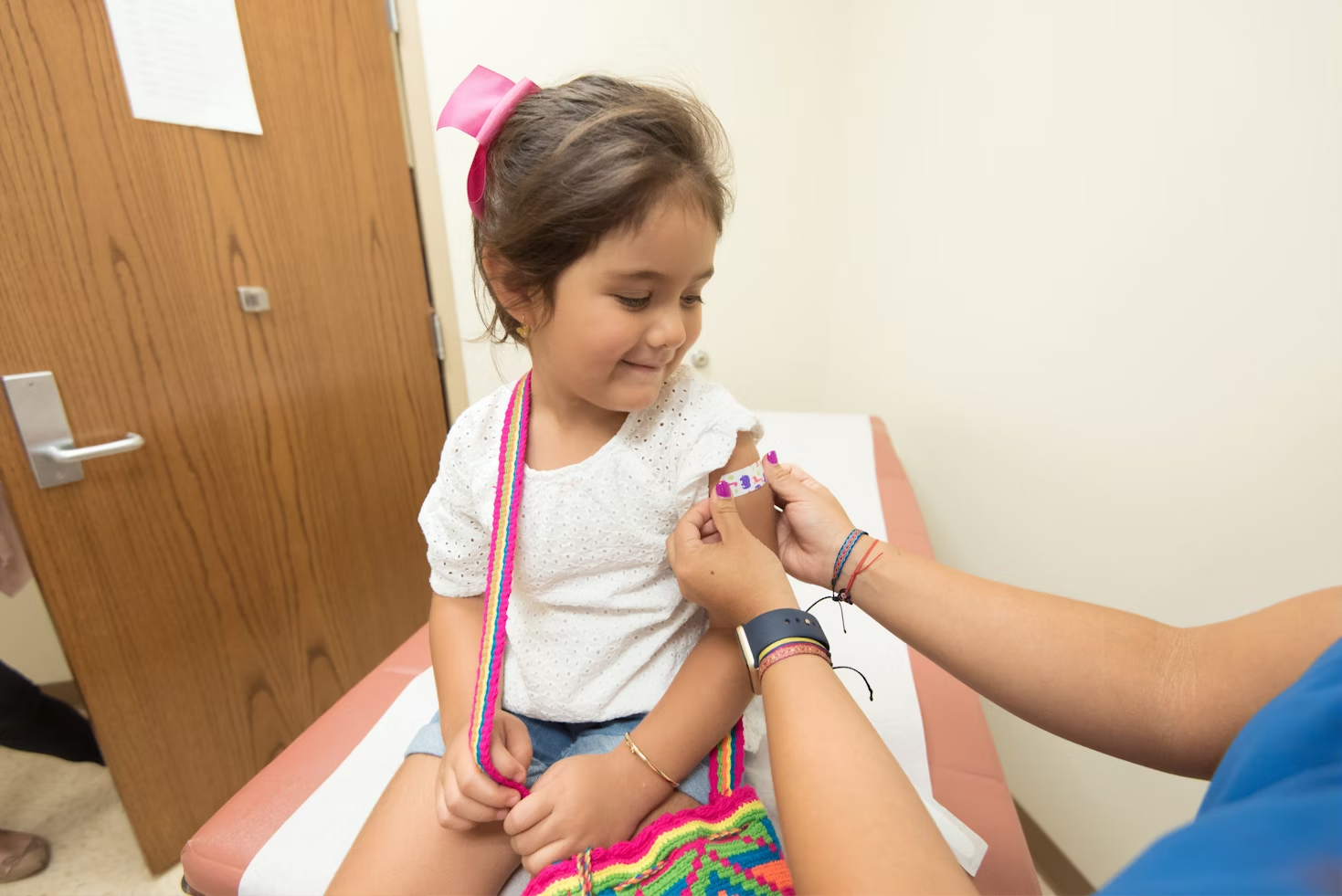 In 2024, 4.8 million children below the age of 5 died worldwide, including a staggering 2.3 million newborns. Though the global mortality rate of young children is still far too high, it has almost halved in the past 25 years. In 2000, child deaths worldwide stood at an estimated 9.92 million. This decreased rate is thanks to a myriad of factors at play, but perhaps none more so than the advancement in immunization technologies.
The Work of GAVI and IVI
Organizations such as Gavi, the Vaccine Alliance and the International Vaccine Institute (IVI) are doing life-changing work, especially in developing countries.
Since Gavi’s establishment in 2000, it has aided in vaccinating more than 1.1 billion children in 78 countries; this is one-eighth of the globe’s entire population. These immunizations have, subsequently, averted more than 18.8 million future deaths, decreasing the global mortality rate drastically. Gavi particularly focuses on “zero-dose” children who have not received a single dose of their base-level vaccines and ensures that they are the first to be immunized.
The IVI, established in 1997, devoted itself exclusively to protecting vulnerable citizens of developing countries, who are situationally less capable of receiving necessary vaccinations. The remoteness of these nations creates barriers to immunization, including the lack of concrete infrastructure, weather conditions and political turbulence, among other factors. Currently, IVI operates under a treaty signed by both the World Health Organization (WHO) and 35 countries on several different continents. It is cementing local partnerships in developing countries, which lead to the issuance of immunization technologies in these nations.
Key Players
- Dr. Sania Nishtar, CEO of Gavi, the Vaccine Alliance. Nishtar has devoted her career to campaigning and innovating solutions to global health issues. In 1998, Nishtar founded Heartfile, a nonprofit campaigning for health reform in Pakistan. More recently, Nishtar has focused on the improvement of vaccine delivery for Gavi. She has pioneered the integration of biometric technology into health care delivery, working with organizations like Simprints. Simprints has developed the first open-source biometric digital ID; its issuance in Bangladesh led to a 39% increase in maternal health coverage. Moreover, the introduction of Simprints in the Dhaka and Moulvibazar districts has confirmed the administration of more than 23,000 measles and rubella vaccines in these regions.
- Dr. Shabir A. Madhi. Madhi is the current Dean of the Faculty of Health Sciences and Professor of Immunology at the University of the Witwatersrand, Johannesburg, South Africa. Currently, Madhi is devoted to important work on vaccines that protect both mothers and unborn babies during pregnancy from Group B Streptococcus (GBS) and Respiratory Syncytial Virus (RSV).GBS causes at least 90,000 newborn deaths and 46,000 stillbirths yearly; RSV is the leading cause of lower respiratory tract infections in children and causes at least 100,000 infant deaths per year. These deaths are highly concentrated in developing countries. Madhi has recently received licensure for a maternal vaccine that fights RSV. Vaccinating the mother against this virus drastically decreases the risk of disease in infants up to 6 months old.The rollout of this vaccination in developing countries will, undoubtedly, save countless lives. Madhi has also been working on a maternal vaccine for GBS, which, if successful, could have the benefit of protecting the mother, reducing risks of stillbirth and preventing disease in newborns. This vaccine, according to Madhi, should arrive by the turn of the decade.
Conclusion
By 2030, scientists are aiming to reach a neonatal mortality rate of at least 12 deaths per 1,000 live births, as compared to 17 deaths per 1,000 in 2024. With the increasing development and roll-out of advanced immunization technology in developing countries, this process should be faster than it has been in previous years. Deaths claimed by vaccine-preventable infectious diseases are on the decline. Thanks to numerous brilliant innovators, these numbers will keep decreasing.
– Sarina Maloy
Sarina is based in Bath, UK and focuses on Technology and Global Health for The Borgen Project.
Photo: Unsplash
