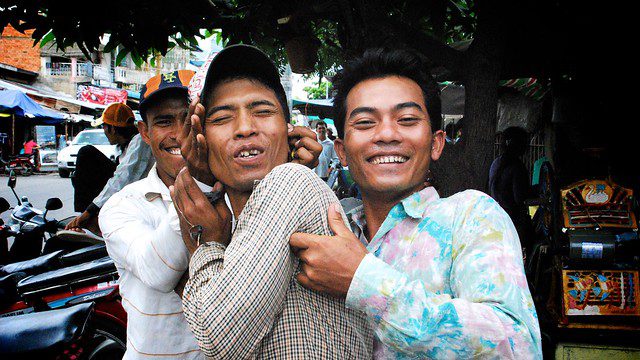
Cambodia is a country in Southeast Asia that has struggled to maintain a robust democracy for nearly its entire history. For decades, military coups and civil war have made democracy difficult to implement in Cambodia. Generally, the international community has struggled to find a way to successfully institutionalize democracy within the country. Back in January 2019, U.S. congressman Ted Yoho introduced the Cambodia Democracy Act of 2019 in order to deal with this problem. However, before delving into the details of the legislation, it is important to understand that democracy in Cambodia has a troubled history. Furthermore, it is essential to understand how those troubles have prompted a response from U.S. lawmakers.
History of Democracy in Cambodia
Prime minister Hun Sen is a key piece in understanding why democracy has struggled to firmly take hold in Cambodia. He became prime minister of Cambodia in 1985. At the time, various armed factions had plunged the country into civil war.
In the early 1990s, a massive United Nations peacekeeping force attempted to disarm and bring ceasefire between the various factions, run national elections and promote democracy in Cambodia. Nearly 20,000 military, police and other personnel made up the force.
In 1991, the Paris Peace Accords officially brought the conflict to an end, which outlined basic protections for human rights. The agreement also promoted free and fair elections within the country.
The 1991 agreements led to the creation of the United Nations Transitional Authority in Cambodia (UNTAC). The UNTAC facilitated national elections in 1993. During these elections, guerillas carried out violent attacks on U.N. peacekeepers. The Hun Sen-led Cambodian People’s Party (CPP) engaged in a massive campaign of violent intimidation against people who might vote against them.
The royalist Funcinpec party won the majority of seats in the National Assembly. Norodom Ranariddh, the son of the former Cambodian King Sihanouk, led the party. Hun Sen and the CPP did not accept the results of the election. As such, they were able to force their way into a power-sharing agreement. This ultimately allowed Sen to serve as deputy prime minister alongside Ranariddh.
However, this agreement broke down in 1997 when Hun Sen seized power from Ranariddh in a coup. Cambodia then elected him prime minister in the following elections. The CPP would go on to win elections in 1998, 2003, 2008, 2013 and 2018. In order to preserve his grip on the country, Hun Sen has wielded increasingly autocratic power to crush the opposition. In 2017, authorities arrested the leader of the Cambodian National Rescue Party (CNRP), the leading opposition party to the CPP, on trumped-up charges of treason. Two months later, the Supreme Court suspended the CNRP entirely. In the 2018 elections, which international observers considered illegitimate, the CPP won more than 100 of the 125 contested seats in the National Assembly.
The Cambodia Democracy Act of 2019
Following Hun Sen’s crackdown on dissent prior to the 2018 elections, U.S. lawmakers became increasingly vocal about promoting democracy in Cambodia. Ted Yoho has been chief among these lawmakers. He is a Republican congressman representing Florida’s 3rd congressional district.
Yoho introduced the Cambodia Democracy Act of 2018 during the 115th Congress. The bill managed to pass in the House, but the Senate did not pass it. Yoho re-introduced the bill during the 116th Congress as the Cambodia Democracy Act of 2019. Five Democrats and four Republicans co-sponsored the bill.
According to its description on GovTrack, the Cambodia Democracy Act of 2019 aims to “promote free and fair elections, political freedoms, and human rights in Cambodia.” Specifically, the bill would authorize the president to impose various sanctions on Cambodia’s security, military and government senior officials. It would also authorize sanctions on those who might be undermining democracy in Cambodia and controlled by said individuals. The International Emergency Economic Powers Act outlined these sanctions. It includes economic sanctions such as asset freezes and visa restrictions. Penalties for undermining democracy would be the same as those under the IEEPA, which can reach fines of up to $1 million.
There is a 4 percent chance that Cambodia will enact the Cambodia Democracy Act of 2019. This is an estimate according to Skopos Labs. However, Congressman Yoho is still confident about the bill’s prospects. In a phone interview with VOA Khmer, Yoho said, “We had a lot of bipartisan support last year and I think you’ll see the same amount this year…”
U.S. Support of Democracy in Cambodia
Overall, the fact that the legislation is drawing support from across party lines is an encouraging sign that the U.S. is willing to promote democracy in Cambodia. Additionally, there is a possibility that the U.S. could pressure the Hun Sen regime to put an end to its autocratic abuses of power.
– Andrew Bryant
Photo: Flickr

Poverty and Modern Slavery in India
India, with a population of approximately 1.29 billion people, is the world’s second-largest country. The South Asian nation currently has the third-highest overall GDP in the world. However, though it ranks third in overall GDP, India’s GDP per capita is considerably lower. This ranks India as 156th out of all the countries in the world. Certainly, a number of factors affect this disparity between national wealth and individual economic hardship. That said, one thing is certain: with an estimated 21.9 percent of the population living below the poverty line, India’s lack of wealth distribution feeds directly into the intersection of poverty and modern slavery in India.
Slavery is Still Prevalent
Many may not be familiar with the fact that slavery is still a very real issue in countries like India. This is because it simply does not receive the same media coverage as other topics. Slavery is quite prevalent in present-day India, especially in rural areas that heavily rely on agriculture. In fact, according to estimates by the Global Slavery Index, approximately 18.3 million people are living in modern slavery in India. This staggering number represents a portion of the many impoverished people in India who are trying to emerge from their socioeconomic situation.
Vishnu Rao-Sharma, a student who frequented New Delhi, gave The Borgen Project some insight on poverty and modern slavery in India. Rao-Sharma recalled that “Poverty in India is so jarring because of how visible it is. Within just miles of the New Delhi airport, one is plunged into a devastating reality that is foreign to many first-time visitors. This reality consists of mangled limbs, emaciated bodies, and rotting teeth. No one is spared. Indian men, women and children are all prone to India’s seemingly inescapable poverty.”
Lack of Other Options Leads Indians to Become Slaves
The issue with combating poverty and modern slavery in India is that they both affect each other. This is why so many poor people in India have few options to survive. Rather than living on the street and begging, they have little choice but to enter into realities like bonded labor. Bonded labor, one of the most common forms of modern slavery in India, is most similar to many people’s idea of indentured servitude. This is a service agreement in which employers bind laborers to them. They work long, arduous hours in exchange for food, shelter and small sums of money. The lack of sufficient employment opportunities leaves many impoverished Indians with no choice but enter into modern slavery. This feeds right back into the cyclical nature of poverty and modern slavery in India.
Fighting Poverty and Slavery in India
Though India’s poverty and slavery situations may appear dismal, there are groups and initiatives focused on resolving such issues. For instance, the international organization GlobeAware fights poverty in India by sending people to help the poor. Another example is Anti-Slavery International, a group committed to eradicating all forms of modern slavery around the world. Organizations such as these are working tirelessly to try and improve the dreadful conditions for many people in India.
Since the issues of poverty and modern slavery in India are so interwoven, organizations around the world are working to free India from both. Eliminating even one would hopefully result in the elimination of the other issue. If more groups, like the aforementioned, could invest time, money and resources into improving living conditions in the nation, the outlook for the situation in India should improve. Viable solutions may not be so far down the road after all.
– Ethan Marchetti
Photo: Flickr
10 Facts About Human Trafficking in the Philippines
Human trafficking is one of the most heinous crimes in the world. Trafficked individuals often have to do manual labor, become sex slaves or perform domestic servitude. Unfortunately, the prevalence of human trafficking in the Philippines is quite high. Experts estimate that the number of people in slavery in the Philippines totals over 780,000. Many believe that this large number stems from the Philippines’ low GDP per capita (the country ranks 118th out of 191 nations in this measure) and its high poverty rate of 21.6 percent. Listed below are 10 facts about human trafficking in the Philippines.
Top 10 Facts About Human Trafficking in the Philippines
Prostitution is illegal in the Philippines, as stated in Article 202 of the Philippine Constitution. However, many individuals in the Philippines in recent years have pushed to enact bills that focus less on punishing prostitutes and more on preventing and helping victims of human trafficking. Such bills have included The Magna Carta of Women, the Quezon City Ordinance, The Anti-Trafficking Persons Act and The Philippine Plan for Gender-Responsive Development. Each seeks to amend Article 202 in an attempt to end the unlawful exploitation of trafficked individuals.
The destruction from Super Typhoon Haiyan displaced more than 6 million people and left 1.9 million homeless. The typhoon hit the provinces of Leyte and Samar the hardest, two provinces that people already knew as places in which trafficking was common. The resulting chaos and economic instability have resulted in an increase in human trafficking in these regions.
Traffickers commonly target individuals who are either from indigenous communities or are living in more rural areas. They usually offer jobs as maids, waitresses or entertainers to trick individuals into trusting them. This tactic preys on the desperation of many economically disadvantaged individuals.
Children are at great risk for human trafficking in the Philippines. Estimates determine that 60,000 to 100,000 children are victims of human trafficking in the Philippines. These children either go to work in child sex rings in the Philippines or work abroad as prostitutes. To combat this issue, the Filipino government has begun to work with international organizations, foreign donors and NGOs to fund prevention efforts and increase awareness about human trafficking in the Philippines.
Much of the demand for prostitution in the Phillippines comes from tourists. Such commercial sex is popular in tourist cities such as Boracay, Angeles City, Olongapo, Puerto Galera and Surigao. While people do not advertise the locations where this prostitution occurs outwardly (due to the formal illegality of prostitution in the Philippines) the tourist prostitution system is unfortunately quite expansive and there are many individuals who have knowledge of these locations from other sources.
In some cases, relatives use children for profit and forced them to commit various sex acts in front of a webcam. The children committing these acts are typically no older than 12-years-old and each show can rake in about $100. In total, there were over 45,000 reports of online child sexual exploitation in 2017. In response to this, the Filipino government has begun to divert more funds towards helping identify situations in which people are sexually exploiting children.
Traffickers send some human trafficking victims in the Philippines to Manila, the country’s capital, while they traffick others abroad to countries such as Saudi Arabia, Kuwait, Hong Kong and Singapore. The Department of Foreign Affairs (DFA) and the Department of Social Welfare and Development (DSWD) have done good work recently in preventing this cross-border trafficking, but people must do more to ensure that these international human trafficking rings shut down for good.
Destiny Rescue is an NGO that works with government officials and task forces that deal with human trafficking and the sexual exploitation of children. It works with former victims to help them heal both mentally and physically from their experiences. It also gathers intelligence regarding trafficking and exploitation rings around Southeast Asia. Recently, Destiny Rescue helped the Filipino National Bureau of Investigation (NBI) bring down a trafficking agency, freeing 159 women in the process.
Many NGOs around the world have taken steps to help end the practice of human trafficking, including UNICEF. UNICEF has stepped into work with both the Filipino government and local communities to report and recognize trafficking. Efforts by UNICEF include working to better monitor and collect data about trafficking and informing officials such as social workers, prosecutors and church workers about laws regarding human trafficking. UNICEF has also aided in the rescue and recovery of trafficking victims and has worked to teach parents and communities about the typical behaviors and practices that lead to exploitation.
The government has taken huge steps to cut back on the amount of trafficking that takes place. The budgets of the Philippine National Police (PNP) and the National Bureau of Investigation (NBI) have increased with a specific interest in fighting trafficking. In addition, various government organizations such as the Interagency Council Against Trafficking (IACAT) and members of the DOJ and the DSWD have worked together to create new policies in the hopes of preventing human trafficking in the future. The IACAT has also worked to increase awareness about human trafficking by hosting various events open to the general public.
These 10 facts about human trafficking in the Philippines demonstrate that trafficking remains a major problem in the country. However, many are working to help improve the situation and there is hope that, in the near future, human trafficking in the Philippines will be a thing of the past.
– Sydney Toy
Photo: Wikipedia Commons
Cryptocurrency and Poverty Reduction
An increasing number of nonprofit organizations are looking to cryptocurrency to help reduce global poverty. The immediacy, inclusivity and stability that cryptocurrency promotes could be invaluable for those who are in crisis, lack access to a bank or struggle due to hyperinflation. Here are four examples of how cryptocurrency and poverty reduction are coming together:
GiveCrypto
GiveCrypto is a nonprofit organization that links cryptocurrency and global poverty reduction. Since founding members currently cover operating fees, 100 percent of the funds GiveCrypto accumulates goes to the recipients. While Bitcoin is the most recognized cryptocurrency GiveCrypto uses, this nonprofit also transfers money through Bitcoin Cash, Litecoin, Ethereum, XRP and Zcash. GiveCrypto emerged on June 20, 2018, and has raised $4 million so far. The founders hope that GiveCrypto will improve the well-being of individual people struggling in their communities. However, they also intend for GiveCrypto to build up the economies of these communities. For this reason, the ultimate goal of the organization is “to help spark economic growth by giving access to property rights and financial services on an open network.”
CareBit
The founders of CareBit specifically designed the CARE coin for charity purposes. Unlike GiveCrypto which is merely a platform to distribute several different types of cryptocurrency to those living in poverty or financial crisis, CareBit is its own cryptocurrency. The purpose of creating the CARE coin is to link cryptocurrency and poverty reduction more directly. Currently, CareBit is the only independent charity on blockchain, a technology that documents and decentralizes transactions. By directly implementing a charity model into blockchain, CareBit is able to trace transactions to ensure that 100 percent of each donation reaches its intended recipient. The ultimate goal for CareBit is to increase transparency and to decrease fees, corruption and fraud in any given transaction.
BitGive
BitGive emerged in 2013 and is Bitcoin’s first nonprofit charity. BitGive partners with international relief organizations and local charities such as The Water Project, Medic Mobile and Save the Children. Just like CareBit, BitGive implements its charity directly into blockchain in order to effectively track donations and increase its efficiency. Additionally, BitGive uses the blockchain technology GiveTrack to publicly track financial information and share this information in real-time. With GiveTrack, donors can track funds and ensure donations reach their final destination. The other benefit of BitGive is that processing fees are considerably less. On average, 3.61 percent of donations go towards processing fees for the average nonprofit. On the other hand, BitGive spends less than one percent of donations on fees.
Binance Charity Foundation
The Binance Charity Foundation (BCF) is the philanthropic extension of Binance Exchange. BCF uses Binance Coin to integrate cryptocurrency and poverty reduction. In contrast to the nonprofits mentioned above which focus on financial poverty reduction, BCF specifically focuses on improving the overall health of women in developing countries. For instance, BCF has recently partnered with 46 other organizations to provide a one-year supply of sanitary products to approximately one million women. Women will receive these sanitary products by using the Pink Care Token (PCAT), a redemption-only token on the Binance blockchain.
Uniting cryptocurrency and poverty reduction initiatives demonstrates the increasing demand for improved donating systems in response to a lack of trust in how charities spend their funds. Thus, the increased transparency that cryptocurrency offers through blockchain’s traceability feature could potentially reassure donors and encourage them to donate. Whether or not cryptocurrencies will become influential enough to directly strengthen the economies of the developing world, however, is still unclear.
– Ariana Howard
Photo: Unsplash
Single Motherhood in South Africa
Poverty in South Africa disproportionately affects women, a phenomenon people know as the feminization of poverty. Despite efforts by the South African government to combat severe female poverty and disadvantage, the feminization of South African poverty remains an important issue today. Single motherhood in South Africa is a huge problem because it puts a severe psychological and financial strain on both mothers and children. As of 2015, more than half of the South African population was living under the official poverty line, and homes headed by black African women are at greatest risk of impoverishment.
Despite government efforts to alleviate race-and-gender-skewed poverty with state-sponsored health care, free housing programs and subsidized basic services like water and electricity, poverty in South Africa remains overwhelmingly black and female. Half of South African children grow up in fatherless households, and the number of single mother households in the country has grown over the past several decades. Women must increasingly raise and support children alone, which increases a family’s risk of living under the poverty line.
Single-Mother Households and Poverty
The link between single-mother households and poverty is undeniable, impacting even the world’s most affluent nations. In Europe, single-mother households generally have more than double the poverty rate of two-parent households. Single-parent households are bound to bring in less money than married couples because they only have one source of income. As a result, children living in single-parent homes are three times as likely to be poor as children living with married parents.
South African women earn an average of 28 percent less than men, partly accounting for the disproportionate poverty of female-led households. Women also have a harder time finding jobs than men; almost 30 percent of working-age women are unemployed, compared to 25.2 percent of men. Women are also more likely to work in the informal, unregulated sector or do unpaid work. Other vulnerabilities, like domestic abuse, sexual assault, unwanted pregnancy and HIV prevent South African women from supporting themselves and their families.
There are psychological consequences for children in fatherless households as well as financial strains. Research has found that boys who grow up with absent fathers are more likely to display aggression and other hyper-masculine behaviors, which increases their risk for unhealthy relationships, crime and addiction. Fatherless girls are more likely to engage in high-risk sexual behaviors, experience an unwanted pregnancy or find themselves in an abusive relationship. These consequences propagate the cycle of fatherless homes.
Why is Single Motherhood in South Africa Common?
For almost 50 years, South Africa’s white-supremacist government crystalized systematic inequality on the basis of race through the system of Apartheid. Now, only 25 years into liberation, the South African people still feel these legacies deeply. One of the main contributing factors is the urban-rural divide. Apartheid relegated black South Africans were often in rural homelands far from metropolitan centers and, subsequently, jobs. Thousands of black men had to migrate to cities to find work. They lived in male-only hostels or townships, making low wages and sending money back to their families, who could not leave the homelands to join them.
Some argue that the destruction of the black family structure by the Apartheid regime contributed to patterns of male family-abandonment and neglect. This phenomenon may have had a hand in the recent increase in single-mother households.
Additionally, the vast gap in access to good education, well-paying jobs and respect in society created socio-economic inequalities in South Africa. Black South Africans remain poorly educated, and cyclical, persistent poverty traps many of them, leaving them unable to pull themselves out. In addition, 13 percent of all pregnancies in the country are teen pregnancies, which prevent mothers from finishing school and focusing on a career, resulting in continuous poverty.
The South African government recognizes the scope and seriousness of poverty in single-mother households and has adopted the National Development Plan: Vision 2030 to raise living standards, provide public services and reduce severe poverty and inequality. The policy outlines a plan to invest in education, health services, public transport, housing and social security, as well as welfare policies directed specifically at women and children, like a national nutrition program for pregnant women and a plan to increase women’s enrollment in schools, especially in rural areas. Single motherhood in South Africa is a dangerous phenomenon, and in order to alleviate this problem, women need better access to education, resources and job opportunities.
– Nicollet Laframboise
Photo: Flickr
Top 10 Facts About Living Conditions in San Marino
In the northeastern part of the Italian Peninsula lies San Marino, one of the world’s tiny micro states surrounded entirely by the country of Italy. Its modern form has shaped since 1463 and the country has maintained its autonomy until today. In fact, it is the world’s oldest republic. Here are the top 10 facts about living conditions in San Marino.
Top 10 Facts About Living Conditions in San Marino
These top 10 facts about living conditions in San Marino demonstrate why this small nation has been able to maintain such serenity for more than six centuries. As a result, it has been able to ensure its citizen’s freedom and security in all aspects.
– Diego Vallejo Riofrio
Photo: Flickr
Congressman Yoho and Democracy in Cambodia
Cambodia is a country in Southeast Asia that has struggled to maintain a robust democracy for nearly its entire history. For decades, military coups and civil war have made democracy difficult to implement in Cambodia. Generally, the international community has struggled to find a way to successfully institutionalize democracy within the country. Back in January 2019, U.S. congressman Ted Yoho introduced the Cambodia Democracy Act of 2019 in order to deal with this problem. However, before delving into the details of the legislation, it is important to understand that democracy in Cambodia has a troubled history. Furthermore, it is essential to understand how those troubles have prompted a response from U.S. lawmakers.
History of Democracy in Cambodia
Prime minister Hun Sen is a key piece in understanding why democracy has struggled to firmly take hold in Cambodia. He became prime minister of Cambodia in 1985. At the time, various armed factions had plunged the country into civil war.
In the early 1990s, a massive United Nations peacekeeping force attempted to disarm and bring ceasefire between the various factions, run national elections and promote democracy in Cambodia. Nearly 20,000 military, police and other personnel made up the force.
In 1991, the Paris Peace Accords officially brought the conflict to an end, which outlined basic protections for human rights. The agreement also promoted free and fair elections within the country.
The 1991 agreements led to the creation of the United Nations Transitional Authority in Cambodia (UNTAC). The UNTAC facilitated national elections in 1993. During these elections, guerillas carried out violent attacks on U.N. peacekeepers. The Hun Sen-led Cambodian People’s Party (CPP) engaged in a massive campaign of violent intimidation against people who might vote against them.
The royalist Funcinpec party won the majority of seats in the National Assembly. Norodom Ranariddh, the son of the former Cambodian King Sihanouk, led the party. Hun Sen and the CPP did not accept the results of the election. As such, they were able to force their way into a power-sharing agreement. This ultimately allowed Sen to serve as deputy prime minister alongside Ranariddh.
However, this agreement broke down in 1997 when Hun Sen seized power from Ranariddh in a coup. Cambodia then elected him prime minister in the following elections. The CPP would go on to win elections in 1998, 2003, 2008, 2013 and 2018. In order to preserve his grip on the country, Hun Sen has wielded increasingly autocratic power to crush the opposition. In 2017, authorities arrested the leader of the Cambodian National Rescue Party (CNRP), the leading opposition party to the CPP, on trumped-up charges of treason. Two months later, the Supreme Court suspended the CNRP entirely. In the 2018 elections, which international observers considered illegitimate, the CPP won more than 100 of the 125 contested seats in the National Assembly.
The Cambodia Democracy Act of 2019
Following Hun Sen’s crackdown on dissent prior to the 2018 elections, U.S. lawmakers became increasingly vocal about promoting democracy in Cambodia. Ted Yoho has been chief among these lawmakers. He is a Republican congressman representing Florida’s 3rd congressional district.
Yoho introduced the Cambodia Democracy Act of 2018 during the 115th Congress. The bill managed to pass in the House, but the Senate did not pass it. Yoho re-introduced the bill during the 116th Congress as the Cambodia Democracy Act of 2019. Five Democrats and four Republicans co-sponsored the bill.
According to its description on GovTrack, the Cambodia Democracy Act of 2019 aims to “promote free and fair elections, political freedoms, and human rights in Cambodia.” Specifically, the bill would authorize the president to impose various sanctions on Cambodia’s security, military and government senior officials. It would also authorize sanctions on those who might be undermining democracy in Cambodia and controlled by said individuals. The International Emergency Economic Powers Act outlined these sanctions. It includes economic sanctions such as asset freezes and visa restrictions. Penalties for undermining democracy would be the same as those under the IEEPA, which can reach fines of up to $1 million.
There is a 4 percent chance that Cambodia will enact the Cambodia Democracy Act of 2019. This is an estimate according to Skopos Labs. However, Congressman Yoho is still confident about the bill’s prospects. In a phone interview with VOA Khmer, Yoho said, “We had a lot of bipartisan support last year and I think you’ll see the same amount this year…”
U.S. Support of Democracy in Cambodia
Overall, the fact that the legislation is drawing support from across party lines is an encouraging sign that the U.S. is willing to promote democracy in Cambodia. Additionally, there is a possibility that the U.S. could pressure the Hun Sen regime to put an end to its autocratic abuses of power.
– Andrew Bryant
Photo: Flickr
Key Factors in Terminating Child Marriage
Child marriage and its confining consequences affect 650 million women across the world and violate human rights. Some of these are access to health care and economic opportunity. While UNICEF databases indicate that the prevalence of child marriage has considerably decreased by at least 6 percent since 1995, child marriage rates remain urgent and concerning; 12 million girls under 18 enter a marriage or early union globally each year.
The persistence of child marriage in a globalized age remains a barrier that obstructs the world from achieving international social justice. Aims to discover the key to terminating child marriage is only a modern development, as child marriage had been the norm virtually everywhere up until the 20th century. In the 21st century, the practice conflicts with a number of the Sustainable Development Goals (SDGs) set by the U.N. in 2015, such as gender equality, no poverty and decent work and economic growth.
The U.N. Sustainable Development Goals
Other SDGs that clash with child marriage include quality education and reduced inequalities. Given the prevalence and urgency of this human rights issue, to make true progress within the variety of goals, the U.N. set Target 5.3 of the SDGs to “eliminate all harmful practices, such as child, early and forced marriage and female genital mutilation.”
The UN’s Inter-Agency Program
Latin America and the Caribbean are regions with the highest prevalence of child marriage, following Southern Asia and sub-Saharan Africa. As such, the U.N. made it a priority to target this region to accomplish SDG target 5.3. Specifically, it intended to accomplish this with an inter-agency program covering five countries.
This program involved the uniting of the UNPF, UNICEF and U.N. Women in October 2017 to discuss their shared experiences alongside Latin American inter-institutional actors. Moreover, it was “to identify common challenges and strategies and develop national and regional roadmaps to contribute to compliance with the SDGs” according to UNICEF’s official file.
Those involved included members of civil society and international organizations, government officials and even adolescent girls serving as the program’s youth network representatives. The U.N. uses the power of diversity to effectively analyze, evaluate and prescribe for the pressing matter at hand.
Four Main Program Outcomes
The program ultimately proved that communication and cooperation among these diverse parties are key to terminating child marriage. The first step to progress is to discover and discuss the root causes of the critical issue. Through mutual respect for one another and collective discussion, key causes that participants agreed upon during the program included poverty and inequalities, as well as gender-based violence. With their first-hand experiences, the adolescent representatives disclosed the majority of the drivers discussed. Key causes they shared included school dropout, social harassment and the lack of resources available for pregnant and/or married girls.
Four main outcomes came out of the program, agreed upon by all involved parties as key to terminating child marriage. They were as follows:
Countries should consider each of the four outcomes when implementing future national and international developments and projects meant to end underage marriage. The evident prioritizing of international cooperation is key to terminating child marriage. While the battle in doing so is far from over, the future appears bright as endeavors for correspondence and correlating declines in child marriage rates represent the necessary effort— and potential— for change.
– Breana Stanski
Photo: Flickr
Reducing Poverty Through Farming in Africa
Africa has a long and complicated history. From the Portuguese exploration of the continent in 1460 to the Atlantic slave trade and modern-day ethnic conflicts in Sudan, it is, unfortunately, no surprise that the continent has long-standing issues with poverty. Ethiopia and Ghana are changing this trend. New, innovative farming techniques such as flexible growing practices and government-sponsored programs are reducing poverty, and famine rates have been declining in these countries. Worldwide organizations such as Africa Renewal are hoping that the agricultural reforms taking place in Ghana and Ethiopia can spread throughout the rest of Africa to reduce poverty.
While the mining industry is important for African countries such as South Africa, agriculture is by far the most important economic sector for a majority of African countries. Not only does agriculture provide jobs for residents, but it also acts as the main food source for over 1.2 billion Africans.
Farming in Ethiopia
Ethiopia has relied on ox-driven plows for centuries. Ethiopian farmers are primarily field farmers, which means they grow their crops on typical farmland rather than other alternatives such as in water-soaked rice patties. Ethiopia has dealt with severe famine over the past several decades, and farmers have helped alleviate famine by being flexible. Over the past century, Ethiopian farmers have shifted their main food source from enset to tef-based crops. Another change Ethiopian farmers are adopting is more flexible growing practices, which means rather than growing one crop at a time, farmers are beginning to grow as many as 10 different crops at once. Flexible growing practices add diversity to the food supply and help fight against weeds and pests, leading to increased food supplies, ultimately reducing poverty.
Ethiopia’s government launched the Growth & Transformation Plan II in 2015 that aims to significantly increase economic growth by investing heavily in sustainable and broad-based agricultural practices and manufacturing sectors. The end result of this initiative is for the world stage to recognize Ethiopia on the world stage as a lower middle-income country by 2025. While no one will know the full results of this initiative until 2025, the preliminary data shows that the program has been helping with Ethiopia’s GDP increasing from $64.46 billion in 2015 to $84.36 billion in 2018.
These new farming practices, along with government investment into agricultural practices, increased Ethiopia’s GDP by nearly 10.3 percent over the past decade, which is one of the fastest growth rates in Africa. The new agricultural practices that are stimulating the economy are a significant reason why Ethiopia’s poverty rate has also fallen from nearly 40 percent in 2004 to approximately 27 percent in 2016.
Farming in Ghana
Like Ethiopia, Ghana also has a history of poverty, with 24.2 percent of all residents facing poverty as of 2013. Ghana’s approach to reducing poverty is unique because the country is using economic growth. While Ethiopia is also focusing on economic growth, Ghana is not utilizing new farming practices in order to achieve economic growth. Rather, Ghana is using increased GDP to revitalize its agricultural sector.
Ghana’s unemployment rate is 6.71 percent as of 2018. With many residents unemployed, the agricultural sector provides job opportunities. Approximately 40 percent of Ghana’s available agricultural land is still available for use, which means there are many opportunities for agricultural expansion. Today estimates determine that the agricultural sector employs 33.86 percent of all Ghanian workers, meaning agriculture is the country’s main source of income for a third of its residents. Alarmingly, though, agriculture makes up only 19.7 percent of Ghana’s GDP as of 2017, which is the lowest total since 1983, when agriculture made up approximately 60 percent of the total GDP.
World Vision, a non-governmental organization, has worked in Ghana since 1979. Currently, World Vision implements 29 area programs. One such project is the Purdue Improved Cowpea Storage Project that provides instruction to farmers on how to store cowpea without chemicals. Storing cowpea without chemicals helps reduce post-harvest losses and maintain cowpea’s nutritional value.
With vast amounts of land still available and with the GDP increasing by 6.7 percent in the first quarter of 2019, the unemployment rate will decline significantly as more residents head to the fields and plant crops. Agriculture’s share of the GDP will also rise, reducing the downward trend since 1983, and ultimately, put more money into resident’s pockets.
Reducing Poverty
Ethiopia and Ghana have made gains in their plans to reduce poverty among their citizens. Poverty in Ethiopia has fallen from 71.1 percent in 1995 to 27.3 percent in 2015, and Ghana’s poverty rate has fallen from 52.6 percent in 1991 to 21.4 percent in 2012. While these countries are making improvements, there is still a lot of work remaining before all of Africa’s citizens are free from poverty.
– Kyle Arendas
Photo: Flickr
VISION 2020 Initiative
In 1999, the World Health Organization (WHO), in partnership with more than 20 other organizations, launched the VISION 2020: The Right to Sight campaign, which intended to “eliminate the main causes of all preventable and treatable blindness as a public health issue by the year 2020.” Since the beginning of the campaign, much progress has been made in reducing preventable blindness around the world. However, preventable blindness continues to be an issue around the world, particularly in impoverished countries.
Before diving into the origins, objectives and accomplishments of the VISION 2020 initiative, it will be useful to understand how blindness, MSVI and global poverty intersect.
Blindness and Global Poverty
Due to the fact that the overwhelming majority of blind and visually impaired people live in poor and middle-income countries, poor eye health has become deeply intertwined with global poverty. In general, blindness and MSVI are common among the global poor because of their inability to afford health services, which puts them at an increased risk of contracting eye diseases. Additionally, a lack of awareness about eye health exacerbates this problem.
Unfortunately, poverty can cause blindness just as much as blindness can cause poverty. Blindness can impose severe economic burdens on those affected by drastically reducing their ability to work and provide for themselves. Ninety percent of blind people around the world cannot work. High levels of blindness also create economic problems for whole countries, and even the world economy. In 2000, it was estimated that visual impairment cost the global economy between $19,223 million and $22,764 million in GDP.
Blindness can also bring negative social consequences, such as a loss of social standing and authoritative decision-making. This social stigma is particularly prevalent in blind women, 80 percent of whom report a loss of authority within their families. Additionally, the economic impact of blindness can lead the afflicted to feel an increased sense of social isolation and alienation from their communities.
The VISION 2020 Initiative
The VISION 2020 initiative is a multi-organization campaign, launched by the WHO in 1999, which aims to eliminate preventable blindness by the year 2020. In order to achieve this goal, VISION 2020 has used three core strategies. These include using specific programs to control and treat the major causes of blindness, training ophthalmologists and other eye doctors to provide eye care to those who need it, and improving technology and infrastructure to increase the accessibility of eye treatment.
Since the VISION 2020 initiative launched, some progress has undeniably been made toward reducing preventable blindness worldwide. Between 1999 and 2015, the prevalence of visual impairment decreased from 4.58 percent to 3.38 percent. Additionally, many low and middle-income countries are seeing increased rates of cataract surgery.
However, despite the fact that the campaign is in its final year, it will not achieve its goal of ending preventable blindness around the world. Compounding this problem, researchers are pointing to emerging global health trends that are expected to cause an increase in visual impairments around the world. For example, an increase in the elderly population will likely give rise to an increase in age-related visual impairments, like cataracts. Increased rates of diabetes around the world are causing higher rates of diabetic retinopathy.
It is important to recognize that while these health developments may complicate efforts to reduce blindness worldwide, the fact that researchers have knowledge of these trends can shape the strategies of future anti-blindness campaigns. Despite the failure of the VISION 2020 initiative to end preventable blindness around the world, experts can learn from the program’s shortcomings and build on its successes going forward.
– Andrew Bryant
Photo: Flickr
8 Facts About Poverty Among the Roma Population in Romania
Out of the many ethnic minorities that live in Eastern Europe, the Roma population often faces discrimination. While progress has been made to limit this discrimination and better integrate the people, there has still been little success. Here are eight facts about poverty among the Roma population in Romania and what is being done to solve the problem.
8 Facts About Poverty Among the Roma Population in Romania
These eight facts about poverty among the Roma population in Romania show how poverty seriously affects not just Roma in Romania, but in all of Eastern Europe. While it’s clear that outside influencers are seeking to improve the Roma situation, the main government within Romania seems resistant in solving the problem. With awareness, time and successful government programs, Romania can really help the Roma community.
– Collin Williams
Photo: Flickr