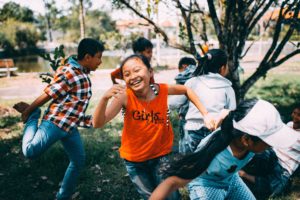
 For over a decade, UNICEF has hosted its annual Soccer Aid, a charity soccer match featuring both professional and celebrity players to raise money for keeping kids around the world happy, healthy and safe. This year, the match was held in London on June 16, and raised a record-breaking £6,774,764 ($8,577,528.70 USD) in one night alone and £1,000,000 more than last year. The UK public, ITV and STV users all contributed, and the UK government matched each donation up to £3,000,000 to defend play for every child.
Helping Sierra Leone and Zambia
The money raised from the match will support the work of UNICEF to ensure that over 80,000 children in Sierra Leone and Zambia can have a childhood of play. The funding will help to provide lifesaving food, vaccinations, clean water, support for caring for mothers and babies and protect children from violence, exploitation, and abuse.
Sierra Leone’s under-five mortality rate is in the 2nd percentile, having one of the highest infant mortality rates in the world. The many causes of death in children are preventable. Most deaths are due to nutritional deficiencies, pneumonia, diarrhoeal diseases, anemia, malaria, tuberculosis, and HIV/AIDS. Some of the attributable factors include limited access to safe drinking water and adequate sanitation, poor feeding and hygienic practices, and limited access to quality health services.
Zambia is a country with many adolescents. 53 percent of the population is under 18 years old, and many of these children–45.4 percent–are affected by extreme poverty. Almost 65 percent of children in rural Zambia are affected by three or more deprivations: access to nutrition, education, health, water sanitation, adequate housing, and physical and emotional abuse. While the infant mortality rate improved by 37 percent between 2007 and 2014, it is still in the 25th percentile. However, with the help of UNICEF Soccer Aid, these conditions can be improved.
UNICEF’s Impact
UNICEF has worked in 190 countries and territories over 70 years to fight for the lives of children around the world. Through their projects, including child protection and inclusion, child survival, education, emergency relief, gender discrimination, innovation, supply and logistics, and research and analysis, the organization saves the lives of nearly 3,000,000 each year.
UNICEF believes in the power of play and the joy of a carefree childhood. However, millions of children around the world are unable to be included in this objective due to disease, conflict, hunger and poverty.
Through play, children are able to learn how to interact with their peers and learn abstract concepts. Just 15 minutes of play can spark thousands of connections in a baby’s brain, and playing before they enter school has an impact on how they will perform.
Since its first match in 2006, UNICEF Soccer Aid has raised more than £35,000,000 and through projects funded by Soccer Aid and the UK government, they have improved the lives of 2,000,000 children and 903,000 pregnant women.
Over the last 13 years, UNICEF Soccer Aid has been able to change the lives of children by helping them reach their full potential. By bringing people together to watch a match and encourage donations, they are able to change lives in many in parts of the world.
– Alexia Carvajalino
Photo: Unsplash

Repairing Obstetric Fistula in Uganda
Obstetric fistula is an injury that is caused by a prolonged labor. Obstetric relates to childbirth and the postpartum period, and fistula is Latin for hole. The hole occurs between the birth canal and the bladder or rectum. The side effects of the injury commonly result in uncontrollable leakage of urine and feces.
Uganda’s fertility rate is ranked 11th in the world. Although there has been a decrease in the fertility rate, maternal mortality remains high. Much of this is attributed to mothers suffering from obstetric fistula. There are an estimated 140,000 women living with obstetric fistula in Uganda. Ugandan women are at high risk due to limited access to quality maternal care, and transportation costs to the repair facilities also contribute to the prevalence of the pregnancy-related injury.
Hidden Costs of Repair
In 2015, USAID supported a research study to better understand the financial barriers that Ugandan women face when seeking fistula repair surgery. Aside from medical expenses for fistula care, Ugandan women struggle with the cost of food and water during their recovery period at the facilities. In addition, the cost of child care or hiring employees to manage businesses create a larger financial burden. Thus, this injury has a direct impact on women living in poverty.
Most of the mothers both interviewed and in focus groups struggled with loss of income, lack of quality health services and transportation expenses. The non-medical costs of care like transportation, food and lodging become expensive for surgical patients. Ugandan women spend up to $25 on one-way transportation to a fistula repair facility. For these reasons, even free surgery is rarely actually free.
Care for Repair
In 2004, the USAID created the Fistula Care Plus Project, which has supported more than 51,124 fistula repair surgeries around the world. A total of 3,534 of these repair surgeries were for women with obstetric fistula in Uganda. Along with providing care, Fistula Care Plus trained 26 doctors and 761 nurses to perform fistula repair surgery in the country.
The project focuses on expanding efforts for community awareness, family planning services and maternal health care. Fistula Care Plus is working with three private, faith-based hospitals: Hoima Hospital, Kitovu Mission Hospital and Kagando Mission Hospital. It also works with two government-run hospitals: Kamuli Mission Hospital and Jinja Hospital. There are also other projects that work to provide care for Ugandan women.
As an international nonprofit organization, the Uganda Village Project works directly with community based organizations and local government. This project educates the community and maximizes public health. The Uganda Village Project collaborates with Uganda Childbirth Injuries Fund to repair women with the injury.
Through village outreach, health center referrals, radio shows, and word-of-mouth communication, the Project is able to identify women with obstetric fistula in Uganda. After gathering groups of women, the Uganda Village Project transports them to repair camps at the Kamuli Mission Hospital. Once the women arrive, they are repaired by surgeons from the Uganda Childbirth Injuries Fund. These organizations are making an effort to maximize the aid and services that Ugandan women need.
– Francisco Benitez
Photo: Flickr
Sub-Saharan Witchcraft Accusations
The origins of these witchcraft accusations are unclear. UNICEF records that these accusations are falsely believed to be a piece of African tradition, and this phenomenon is the symptom of social, economic and political struggles.
Who’s Accused?
There are three categories of children who are at risk for the sub-Saharan witch accusations. All of them represent a marginalized category in which noticeable difference leads to suspicion.
The urban myth of the “child witches” is the first. Accusations are most often cast towards the most vulnerable children in a community, such as orphans and those with a physical or learning disability. Children with behavioral oddities are also targets, including those who are talented, precocious or rebellious.
The second group of individuals at risk are babies who experience a peculiar birth. This can mean that they were born premature or were delivered facing an abnormal way.
Thirdly, children with albinism are often accused of witchcraft and believed to contain magic power within certain organs.
Many of these “bewitched” children believe their families, pastors and instructors when they are told they are agents of evil magic.
A Human Rights Violation
The sub-Saharan witchcraft accusations lead to negligence of international laws protecting children. In the countries where accusations are most rampant, police and judicial forces are inefficient in upholding national law.
Accusations manifest in a number of ways. Violence, abandonment, sexual exploitation and even murder are acts leveled against witch children. Some victims view these aggressions as rituals to release evil spirits. It is recorded that about 81,000,000 African children suffer from severe psychological issues due to the punishment they have endured.
As the accusations of witchcraft have escalated in recent years, the U.N. has expressed concern for the issues and has been pressing awareness and regulation. The U.N. Refugee Agency records that the abuse endured by these children is somewhat responsible for the uptick in displaced individuals around the world.
Efforts to Hinder the Problem
The Democratic Republic of the Congo is one sub-Saharan country that suffers abundantly with witchcraft accusations. The nation has an inordinate number of vulnerable orphans living in impoverished conditions due to its recent civil war. As such, many NGOs focus their attention on this particular country in the sub-Saharan region.
The International Catholic Child Bureau (BICE) is one NGO that is specifically fit to deal with this humanitarian issue in the DRC. The organization is involved in a mission to incorporate a child’s rights into state law. Sub-Saharan witchcraft accusations in the DRC have been hindered by BICE’s local activities across the country. The group has established rehabilitation and learning centers. These work to eradicate the notion that child witches are responsible for societal ills, as well as to reintegrate banished children into their communities.
BICE has been active in the DRC since 1996 and continues to work with the central government to better protect Congolese children.
More Needs to be Done
While the U.N. and its partner NGOs have worked to bring attention to and provide for the children suffering from the sub-Saharan witchcraft accusations, the issue is unlikely to disappear in the near future.
The belief that child witches are plaguing society is one that results from what UNICEF calls the “multi-crisis” pressuring many African nations. Left behind in the journey to modernization, many African communities have carried the weight of failed political systems and unfulfilled economic promises. If the sub-Saharan region is to leave behind ancient superstitions of witchcraft, international actors must aid these countries on the pathway to development.
– Annie O’Connell
Photo: Flickr
7 Ways WE Charity is Making an Impact
7 Ways WE Charity is Making an Impact
Together with its partner charities, WE Charity is working to raise awareness for a variety of social issues as well as focusing on putting an end to poverty and child labor. WE Charity has already helped millions of people by providing sustainable communities, access to healthcare, better education and safe water. Over the next several years they hope to double the number of people they have reached and make an even bigger impact around the world.
– Jessica Winarski
Photo: Unsplash
Sunny with a Chance of Innovation: Making Solar Power Better
While a great option for anyone, alternative energy sources are especially important for people in poverty. In undeveloped areas, electricity is up to five times more expensive per kilowatt hour. The cost is higher due to infrastructure problems. The price of expanding the electrical grid in largely remote areas is often limiting, which encourages people to use fossil fuels instead. Kerosene, diesel and coal, the most common fuel sources, pose serious health and environmental risks.
Solar power is easier to install and is safer to use. Unlike wind and geothermal power, it is fit for use in essentially every climate that humans can inhabit. Reliable electricity allows impoverished areas to leap closer towards development. People can power cellphones, radios and televisions; refrigerate food, medicines and vaccines; turn on the lights; pump and clean drinking water; cook; irrigate crops and more.
While the safety and convenience of solar power are wonderful, its contributions to peoples’ lifestyles are what truly make the difference against poverty. Students who can study at night with the help of lightbulbs learn more and perform better in school. People with electronic devices can access the internet and its infinite resources. Refrigeration allows for food to keep longer and can help preserve medications for easier dispersal when they are needed.
Current Problems with Solar Power
For all of solar power’s benefits, there are still some glaring inefficiencies. While this renewable energy is cheaper in the long-run, upfront costs can be staggeringly high for people living in poverty. While dozens of outreach groups are working hard to provide help where it is needed most, it is still a hard technology to access.
Additionally, solar panels don’t always work at maximum efficiency. They generally use one of three types of semiconducting materials: monocrystalline, polycrystalline or thin-film. Their compositions differ, and though there are nuances to the use of each type, the options simplify to this: higher efficiency panels use the more expensive materials.
Lastly, traditional solar panels simply can’t work at night. With no radiation from the sun, there is nothing to convert into useful electricity. That means that individuals who use solar power at night must ration what they could generate during the day. Multiple days with little sunlight could also make a negative impact on overall energy stores.
Ways to Improve Solar Power
Fortunately, there are many people who continue to see the benefits of this technology and who are making solar power better.
A study released in early 2019 outlined a “material defect” in solar cells’ silicon that they named “Light Induced Degradation.” Solar cells used to have a 2 percent drop in efficiency from the first hours of use, no matter what the circumstances. Scientists identified the defect, caused by an interruption in the flow of electrons and are now working to fix it. Other researchers are seeking brand-new materials for use in solar cells, including “perovskites,” which are man-made crystalline structures.
Other scientists are striving to do the improbable: make solar panels that work in darkness. Researchers at Curtin University conceptualized a “thermal battery” made of a metal carbonate and gas storage vessel. When solar radiation stops, at night or in cloudy conditions, the gas is released from storage. It gets absorbed by the carbonate, producing more heat, which is then generated into electricity.
There are also changes on a societal level. For families that can’t afford to install their own solar panels, some communities offer alternative programs. Students can charge a battery using their school’s equipment during the school day, which is used to power lanterns when they get home.
More than 12 percent of the world still has no access to electricity. With the help of this complex technology and all of the people who are making solar power better, those without electricity can soon have a brighter tomorrow.
– Molly Power
Photo: Flickr
Virgil Abloh: Designer of Fashion and Philanthropy
Virgil Abloh—designer, disc jockey, engineer and architect—has made major strides in the fashion world. His designs have also helped bring awareness and assistance to people in need.
Who is Virgil Abloh?
Virgil Abloh was appointed Louis Vuitton’s men’s artistic director in March 2018. Prior to his appointment, Abloh was running his own clothing line called Off-White. He launched Off-White in 2013 as a follow up to his streetwear project, Pyrex Vision, which he had started at Kanye West’s design agency, DONDA. His career as a designer serves as an homage to his mother, who used to be a seamstress, despite receiving a bachelor’s degree in civil engineering and a master’s in architecture.
Abloh’s Philanthropic Efforts for Solar Power
Abloh participated in the Copenhagen International Fashion Fair – Spring/Summer 2019 Edition by joining model Naomi Campbell, graphic designer Peter Saville and photographer Nick Knight in bringing awareness to the Little Sun Foundation, a program focused on the use of solar power. He designed a poster in which the main focus was a solar-powered lamp that comes with a strap so that it can be removed from its stand and worn around the neck like a torch.
This lamp is especially important in areas like sub-Saharan Africa, where electricity is not readily available. People usually light their homes with kerosene lamps, which release toxic fumes that are extremely detrimental to the environment and those around it. When kerosene lamps are replaced with solar-powered lamps, users notice improvements in their health, which also results in better school attendance for school-age children.
The Little Sun Foundation was founded by artist, Olafur Eliasson, whose goal is to provide solar energy to those communities that lack electricity. The foundation also trains youth through solar-education programs. The programs “aim to provide children with tools and knowledge that empower them to shape a sustainable future for themselves and for the planet,” the foundation’s website says.
Without proper lighting, refugee camps can seem like a scary and dangerous place to live, especially for women and children. Wearing the solar-powered lamp helps users feel more at peace about their surroundings. Not to mention, the lamps provide extra light to students who need it to perform well on their homework.
Abloh’s Philanthropic Efforts for Children of War
Abloh contributed his talents in FAMILY’s creative charity initiative to design a graphic t-shirt collection with proceeds going to War Child. War Child is an organization that provides education and a safe space for children and families who have been displaced by war. They also train victims of war to be able to provide for themselves after suffering the loss of their homes and jobs. Their services are offered in Uganda, Sudan, South Sudan, the Democratic Republic of Congo, Kenya, Iraq, Afghanistan and Jordan.
With his role at Louis Vuitton, Abloh hopes to accomplish great things, not just in the fashion industry, but in an ever-changing, diverse society.
“I want to use Louis Vuitton’s history with travel to really look at different cultures around the world to help make all our humanity visible. When creativity melds together with global issues, I believe you can bring the world together,” Abloh said.
– Sareen Mekhitarian
Photo: Wikimedia Commons
The Significance of Street Food Culture in Preserving Global Communities
Resourceful but innovative, street foods have a long history in many countries around the world. The foods are reflective of local and traditional cultures. Around 2.5 billion people eat street food around the world. It is one of the few things yet to be significantly touched by capitalist influence.
Perceived Risks
Not everyone thinks so positively about street food and its vendors. Some government officials around the world are concerned about food safety, sanitation problems, traffic congestion and taking up physical space. The greatest fear is of diseases caused by food lowering tourism rates.
Though these risks should not be disregarded, there is much more to street food culture that should be recognized by the greater public. In 2006, the International Labour Office did a thorough report of street food vendors in Bangkok, Thailand by interviewing numerous case studies from mobile to fixed vendors. Specifically, with fixed vendors, the report says: “More than 80 percent of vendors reported that their earnings were adequate,” and “88 percent reported to be satisfied with their occupation.”
The significance of street food culture in preserving global communities is evident in the following areas of cultural empowerment, employment opportunities and accessibility.
Cultural Empowerment
A large part of the significance of street food culture is its ability to create a familial network within specific global communities and enhance levels of inclusivity. The liveliness of street food makes streets vibrant and daily routines colorful. It catches the attention of those from every social class which breaks down barriers.
Additionally, the street food industry protects traditional recipes that run through ancestry lines. Food stalls are often owned and handled by a family. This makes the business an opportunity for multiple generations in the present and the future. Current generations are able to learn about where they have come from and where their country is going, culturally and socially.
Employment and Business Opportunities
Since street food stalls are micro-businesses, it is possible for newcomers to create their own stalls with only a small amount of money. They also have the potential to earn back gains in the long run. Cooking or selling food is commonly the first job for many migrants and women, providing real-life opportunities. Vendors also aid the businesses of small farms and markets by buying ingredients from them. The street food industry has offered new positions for employment. Therefore, it has prevented vulnerable social groups from slipping further into poverty.
A city authority report in Tanzania found that the street vending industry employed more than one million people in 2014. Also, in Hanoi, Vietnam, street vending makes up a six percent share of total employment and an 11 percent share of informal total employment, making the vending sector a significant employer.
Street food is considered part of the informal sector of the economy. However, the industry has developed its own self-sufficient economy without outside assistance. The underestimated sales of street food are contributing to the economy of developing countries. This is another aspect of the significance of street food culture.
Food Accessibility
The significance of street food culture also includes improved access to food across countries, including their poor communities. In the 1990s, the United Nations recognized street food as an overlooked method of distributing food to communities. Street food provides sustenance and nutrition to major groups of the population and helps to keep food security stable.
Since the cooks have low operation and maintenance costs, street foods are low in cost. People with very little to no income depend on street foods every day to support themselves and their families.
Nonprofits like InnoAid are supporting the street vending sector. The organization co-created an educational toolkit for street vendors in India that promotes alignment with the National Act of Urban Street Vendors. It includes training materials on hygiene, collaboration and workspace improvements. Adhering to these aspects of the project will add to its sustainability and benefits for vendors. The project has already helped more than 600 vendors through these entrepreneurial activities and is in the process of implementing a large-scale development project.
With support and increased research on the significance of street food culture, assumptions and overall suspicion of the industry can be reduced. Improving the reputation of street foods could help to preserve culturally significant recipes, provide employment opportunities and supply low-cost food options.
Photo: Flickr
Article 370 and Poverty in Kashmir
Kashmir has been a flashpoint for conflict between India, Pakistan and China for the 70 years since India and Pakistan gained independence. At the time, the area was a princely state, Jammu and Kashmir, and it had to choose between India or Pakistan. The Hindu king chose India, but Pakistan contested by saying that the Muslim majority would prefer to join Pakistan. A war between India and Pakistan resulted in the Kashmir area’s split with India, Pakistan and even China controlling different parts.
The Constitution of India’s Article 370 guaranteed autonomy for Kashmir, meaning that Kashmir had its own flag, constitution and several laws that gave it independence from the rest of India. For example, during Article 370’s existence, Indian citizens of other states could not buy property in Kashmir. Now that Prime Minister Narendra Modi revoked Article 370, Kashmir does not have its own constitution and must follow the rules and regulations of the Constitution of India.
Modi Promises a Better Economy for Kashmir
As for Kashmiri citizens, the Prime Minister promised economic growth due to the changes. Modi and his allies pointed out that Article 370 slowed economic growth, and that revoking the article would give Kashmir a chance to catch up to the growth of other Indian states. Many believe that poverty in Kashmir continues because restrictions on Indian businesses of other states hold back business potential.
For example, Kashmir’s manufacturing sector “has grown at just 32 percent – lower than national average of almost 50 percent.” Indian businesses now have the ability to buy land and create a business in the Kashmir region, which could effectively kickstart the slow economy.
Modi emphasizes that the autonomy of Kashmir resulted in “separatism, nepotism, corruption to the people of Jammu and Kashmir.” Since Kashmir does not have to compete with people from outside the region, corruption flourishes and remains unchecked by competition. Poverty in Kashmir continues to exist due to the lax attitude of corrupt officials who are unaffected personally by the reach of poverty in Kashmir.
Kashmiri Fear the Rise of Poverty
However, some fear that the negative effects of revoking Article 370 might actually increase the probability of Kashmiri people facing poverty. The autonomy and exclusivity of the Kashmir region meant that every Kashmiri citizen was able to find a job and buy land as a result of there being more jobs and land than people. Now, Indians of other states can get jobs and buy land in Kashmir, potentially leaving native Kashmiri people unable to obtain valuable jobs, and therefore, closer to poverty.
As with most important decisions, there are benefits and drawbacks, and Modi’s decision to scrap Article 370 is no different. Only time will tell if the move will help or hurt the common people, but poverty in Kashmir will definitely face drastic changes as Kashmir grows through several economic upheavals.
– Anish Kelkar
Photo: Wikimedia Commons
The Growing Technological Consumer Base in West Africa
When it comes to technological advances in smaller countries or regions of countries, some nations are way ahead of others. This is largely due to the fact that certain countries have more money than others to invest in these advancements. Even though money may be limited, some areas have found ways to achieve technological improvements.
The technological consumer base in West Africa has experienced a major increase in users in only a decade. Subscribers for the mobile economy of West Africa have reached 47 percent, up from 27 percent ten years ago. These advancements have created new opportunities for government, various industries, start-up businesses, and more. A conference held in April 2018 addressing West Africa’s digital revolution in the last ten years revealed two major factors that contributed to this new digital age: people and technology. People are the ones who rely on, create, and consume technology in increasing numbers while technology and technological advancements continue to broaden their impact the more they are improved upon. The conference was devoted to these two factors in an attempt to bring continued support for integrating mobile and digital technology into society in these regions and bolstering the new growing base of users.
An example of the impact of the increasing technological consumer base in West Africa occurred in 2017. To begin, 85 percent of the world’s population lives in Africa, Asia, and Latin America. Large companies such as Google realize that what works for citizens in western culture may not work in the most heavily populated regions of the world. When 1GB of data can cost a consumer almost 10 percent of monthly income, better user options must be considered to grow the consumer base. Recognizing this, Google broadened the YouTube Go app to Nigeria. This app is data-friendly and allows viewers to save and watch videos offline. Google also created an app called Datally for Android which helps users conserve data. As an internet conglomerate, Google realizes that areas like West Africa are the future of the world’s growth. It focuses on ways to enable these areas to grow in a technological age and improve life for its citizens.
Organizations, such as the World Bank Group, have been promoting a digital economy in all parts of Africa. A digital economy will connect Africa’s citizens to various industries, services, information, and each other. In addition, it will provide people with a digital ID to validate their identity and help them connect to necessary government services. Citizens will also gain easier access to formal financial services including mobile money, such as e-commerce and online markets. West Africa’s most recent technological developments and increasing consumer base provide proof that these advancements are possible, they work in these regions, and they make life better for its citizens. This can influence other regions of Africa to continue developing a digital economy.
West Africa’s growing technological consumer base is a possible stepping stone to a better future for Africa as a continent. This growth of the digital economy in Africa that will give citizens much-needed resources, provide more economic opportunities, and create a better way of life.
– Haley Saffren
Photo: Flickr
Foreign Aid in Sub-Saharan Africa
In recent decades there has been a debate regarding the importance of foreign aid in sub-Saharan Africa. Some have argued that foreign aid is not beneficial to developing countries, as it creates a dependence upon aid, rather than fostering growth. Empirical data does not support this view, which reveals that while there is much work necessary in developing countries, foreign aid has stimulated economic growth and positive results in the battle against poverty. The amount the United States spends on foreign aid represents a minuscule fraction of the federal budget, despite compelling evidence that foreign aid is mutually beneficial, serving the interests of the United States and other modern countries, as well as those of developing nations. One cannot overstate the importance of foreign aid in sub-Saharan Africa, and if anything, countries could benefit others by stepping it up.
Benefits of Foreign Aid
Foreign aid is useful for fostering economic development in impoverished nations. In 2015, a study that the University of Western Australia conducted concluded that foreign aid had a significant and long-term positive impact on GDP growth in the 25 countries it examined. It also found that economic growth in sub-Saharan Africa directly correlated with the increase in foreign aid from 1970 to 2012. Additionally, countries that received the largest amount of foreign aid also displayed the greatest amount of economic growth.
Foreign aid is also crucial for providing humanitarian aid and ameliorating suffering. In sub-Saharan Africa, the focus of foreign aid is often to reduce poverty and provide food. A 10-year case study that the Global Development Network conducted showed that Overseas Development Assistance (ODA) in Kenya had positive results on poverty reduction in the country between 1999 and 2009. The Global Development Network also found that foreign aid most largely benefits the poorest of the poor, who are most desperately in need of humanitarian aid.
US Involvement
The United States could benefit from increasing its contribution to foreign aid for sub-Saharan Africa. An increase in the budget allocated towards foreign aid would not carry any substantial financial burden, as the portion of the federal budget that the U.S. currently spends on foreign aid totals at less than one-fifth of 1 percent. Sub-Saharan Africa itself accounts for only about one-third of that minuscule amount. While the costs of increasing foreign aid to the country are insignificant, there are potentially heavy costs that one can associate with inaction. Poverty and state failure in Africa can lead to refugee crises and terrorist havens, which may pose a threat to the United States’ national security. Additionally, the provision of foreign aid cultivates favorable views of the United States worldwide. As a result of aid from other countries, sub-Saharan Africa perceives the United States very positively, as 80 percent of respondents report a positive view of the country. The potential benefits, coupled with insignificant costs show how the importance of foreign aid in sub-Saharan Africa extends also to the United States and other developed nations.
Following World War II, foreign aid to developing countries became a commonplace practice among wealthy nations. Foreign aid has been a successful strategy for promoting economic growth and lifting millions out of poverty in sub-Saharan Africa. Given the importance of foreign aid in sub-Saharan Africa, such aid programs should continue, and even expand.
– Karl Haider
Photo: Wikipedia Commons
Record-Breaking Match for UNICEF Soccer Aid
Helping Sierra Leone and Zambia
The money raised from the match will support the work of UNICEF to ensure that over 80,000 children in Sierra Leone and Zambia can have a childhood of play. The funding will help to provide lifesaving food, vaccinations, clean water, support for caring for mothers and babies and protect children from violence, exploitation, and abuse.
Sierra Leone’s under-five mortality rate is in the 2nd percentile, having one of the highest infant mortality rates in the world. The many causes of death in children are preventable. Most deaths are due to nutritional deficiencies, pneumonia, diarrhoeal diseases, anemia, malaria, tuberculosis, and HIV/AIDS. Some of the attributable factors include limited access to safe drinking water and adequate sanitation, poor feeding and hygienic practices, and limited access to quality health services.
Zambia is a country with many adolescents. 53 percent of the population is under 18 years old, and many of these children–45.4 percent–are affected by extreme poverty. Almost 65 percent of children in rural Zambia are affected by three or more deprivations: access to nutrition, education, health, water sanitation, adequate housing, and physical and emotional abuse. While the infant mortality rate improved by 37 percent between 2007 and 2014, it is still in the 25th percentile. However, with the help of UNICEF Soccer Aid, these conditions can be improved.
UNICEF’s Impact
UNICEF has worked in 190 countries and territories over 70 years to fight for the lives of children around the world. Through their projects, including child protection and inclusion, child survival, education, emergency relief, gender discrimination, innovation, supply and logistics, and research and analysis, the organization saves the lives of nearly 3,000,000 each year.
UNICEF believes in the power of play and the joy of a carefree childhood. However, millions of children around the world are unable to be included in this objective due to disease, conflict, hunger and poverty.
Through play, children are able to learn how to interact with their peers and learn abstract concepts. Just 15 minutes of play can spark thousands of connections in a baby’s brain, and playing before they enter school has an impact on how they will perform.
Since its first match in 2006, UNICEF Soccer Aid has raised more than £35,000,000 and through projects funded by Soccer Aid and the UK government, they have improved the lives of 2,000,000 children and 903,000 pregnant women.
Over the last 13 years, UNICEF Soccer Aid has been able to change the lives of children by helping them reach their full potential. By bringing people together to watch a match and encourage donations, they are able to change lives in many in parts of the world.
– Alexia Carvajalino
Photo: Unsplash