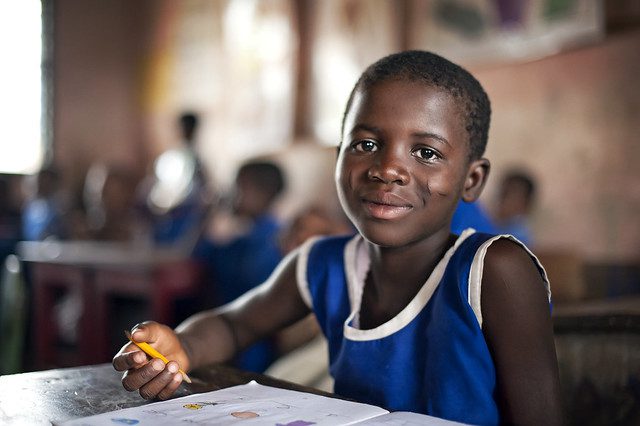
Violence or conflict internally displaces approximately 17 million children worldwide. Internally displaced persons (IDPs) are those who have been forced to leave their homes but remain within the borders of their country of origin. A majority of IDPs live in urban areas, where they often lack access to basic services, including health care, housing and education. Ensuring access to education for internally displaced children is essential to improving livelihoods and fostering social cohesion.
Initiatives in Nigeria and Kenya represent important steps toward ensuring education for all internally displaced children in those countries.
Barriers to Education
For internally displaced children, schools are crucial to integrating into their new host community and regaining some normalcy after fleeing violence. Unfortunately, a myriad of challenges prevents many of these children from being able to attend school. A lack of documentation, financial struggles, language barriers, physical distance from the nearest school and a lack of education facilities in the area could possibly prevent internally displaced children from pursuing their education.
Furthermore, child labor, child marriage and recruitment by armed forces and gangs are other significant barriers to education for internally displaced children. IDPs often experience severe poverty and, as a way to make more money, send their children to work within the informal sector, thereby preventing them from going to school.
Child marriage is seen as another way to help overcome poverty, as marrying into the host community can provide economic and social benefits. Child marriage is frequently forced onto internally displaced children, especially girls. For IDPs who choose to marry when they are young, becoming independent from their parents may be a motivating factor. Once married, children rarely begin or continue their education.
Additionally, internally displaced children tend to live in poor, crime-ridden districts. They are more likely to be recruited by local gangs or armed groups in these areas. In Colombia, armed groups seek out children because they are able to avoid heavy criminal sentences if caught.
Conflict also negatively impacts education infrastructure, hurting educational opportunities for internally displaced children. Displacement disproportionately affects girls, who face additional challenges. Girls are 2.5 times more likely to not attend school in countries experiencing conflict. Gender-based violence and harassment that occurs at school and on the route to and from education facilities keep many girls at home. The abduction and rape that has occurred in at least 18 countries, along with the bombing of girls’ schools, also encourages families to keep their daughters at home rather than sending them to school.
UNICEF Recommendations
UNICEF recommends several tactics to overcome these barriers to education for internally displaced children. The organization’s primary goal is to ensure humanitarian organizations and governments begin to see education as a greater priority for IDPs. Education is commonly seen as secondary to addressing violence. Unfortunately, when conflicts last for years and decades, waiting to invest in education can leave generations of internally displaced children without schooling.
Key recommendations include strengthening education systems, abolishing school fees to reduce financial constraints and adapting curricula to address prejudices and promote diversity and social cohesion.
Case Study: Kenya
A study conducted at a Kenya school in 2013 and 2014 provides valuable insight into the benefits of educating internally displaced children alongside local children. At the school studied, 71 percent of students were internally displaced. However, efforts were made to provide an inclusive education that strengthened community relationships.
The study found that many internally displaced children were initially apprehensive about being accepted by their new school community. This sometimes lasted, but usually dissipated after a few weeks as the children become comfortable with each other. One student, Jey, told an author from the International Journal of Child Care and Education Policy, “I like this school because pupils like me. I don’t have any enemies all of them help me.”
Furthermore, students at the school developed community-consciousness. Many were aware of social inequalities that existed in Kenya. Internally displaced children recognized the disadvantages they and their families faced and were motivated to complete school to improve their futures.
Overall, more schools like this one in Kenya are needed to help bridge gaps between host communities and IDPs. This will improve opportunities for internally displaced children.
Plan International: Nigeria
In Nigeria, Plan International is creating learning centers to provide education for internally displaced children. These centers are created in areas that lack educational infrastructure and seek to support IDPs.
Patim, one of the teachers at a learning center in Maiduguri, noted that many of the children she teaches have lost their parents and require a great deal of support. The learning centers are doing what they can but often lack adequate resources and staff. However, the work being done is still directly benefiting many children. Patim recognizes that many of her students would be working on the streets if it wasn’t for the learning center. Attending the center helps keep children safe during the day.
Moving Forward
More communities and nations need to adopt UNICEF’s recommendations to ensure the availability of education for internally displaced children. Hopefully, recent attention to this issue will spark significant change in more countries, improving the livelihoods of IDPs around the world.
– Sara Olk
Photo: Flickr

Free The Girls Targets Sex Trafficking in Mozambique
Located in southeastern Africa, Mozambique is a source, transit and destination country for human trafficking. Traffickers deceive girls migrating to Mozambique by promising education and employment opportunities to coerce them into sex trafficking. As a result, women are exposed to drugs, substance abuse, HIV/AIDS and violence. Free the Girls is one of many organizations fights sex trafficking in Mozambique.
About Free the Girls
Dave Terpstra, a priest at Duneland Community Church in Denver, and Kimba Langas, a church member, co-founded Free The Girls. This international nonprofit aims to help victims of sex trafficking by collecting bra donations. Originally starting as a Facebook page, Free The Girls quickly gained popularity and success.
Every six weeks volunteers gather at Duneland Community Church or “The Bra Church.” This is where they sort new and gently used bras and send them to Mozambique. Upon receiving these donations, survivors can start their own businesses selling bras at local second-hand clothing markets while they recover and build a new life.
Free the Girls fights sex trafficking in Mozambique by creating a pathway to economic freedom, restored health, social well being, education and opportunity for a more hopeful future.
Success
In 2015, volunteers packed 833 boxes containing 166,600 bras and shipped 769 boxes overseas containing 153,800 bras. Donations to correction facilities, domestic violence shelters and trafficking shelters totaled approximately 2,000 bras. In addition, the organization reached 23,400 supporters on social media. Through the help of the program, nine women bought land, three women bought or rented a house and one woman enrolled in university.
In 2016, donations totaled 183,000 bras, volunteers sent out 685 boxes and 59 boxes of bras went to women’s correctional facilities, shelters and pregnancy assistance centers. Likewise, Free the Girls gained 27,040 social media supporters. Most importantly, 13 women graduated from the program, seven pursued educational opportunities and four built a home or purchased land.
Selling bras has tremendously impacted the lives of women in Mozambique. It provides the opportunity for women to become financially and spiritually independent. Free the Girls has launched an empowering approach for women to reintegrate into society and take control of their futures.
– Merna Ibrahim
Photo: Flickr
Efforts to Tackle HIV/AIDS in Botswana
Botswana is a landlocked country in Southern Africa that is bordered by South Africa, Zimbabwe and Namibia. It has a relatively stable economy, boasting the fifth highest GDP per capita in Africa. However, in 2019, Botswana had the third-highest rate of HIV/AIDS in the world with 21.9 percent of the population living HIV positive. This article will discuss the efforts that the government of Botswana and other global companies and organizations have made to help bring this epidemic to a halt.
“Masa” Program
HIV/AIDS rates have been steadily declining every year in Botswana since 2000, when the HIV/AIDS epidemic reached its peak in the country with 26.3 percent of people testing positive. In 2001, Festus Mogae, the President of Botswana at the time, pledged to devote significant resources towards stopping the spread of the virus. In 2002, through a partnership with the Botswana government, the American pharmaceutical company Merck & Co offered to donate antiretroviral therapy drugs (ART) free of charge to individuals in communities throughout the country. By 2013, the program, called “Masa,” had reached more than 220,000 individuals.The Masa program also helped fund infrastructure development and health care professional training. In addition, new treatment centers and resource centers were constructed to help treat patients and contributed to the decline in HIV/AIDS rates.
UNDP Efforts
In 2010, the United Nations Development Programme (UNDP) entered into a cost-sharing agreement with the government of Botswana. The agreement called for increased funding to help improve the capacity and effectiveness of HIV/AIDS treatment in the country. So far, the agreement has helped to improve Botswana’s institutional capacity to fight HIV/AIDS. In addition to these efforts, in 2010, the UNDP, in conjunction with the Unified Budget Results and Accountability Framework (UBRAF) helped fund additional HIV/AIDS prevention efforts. These efforts included a commitment to reduce the stigma of using HIV/AIDS-related services. This program has been successfully implemented in various communities across the country.
“90-90-90” Targets
In 2011, UNAIDS set what they dubbed “90-90-90” targets for the year 2020. The goal is to diagnose 90 percent of individuals with AIDS, have 90 percent of diagnosed individuals on antiretroviral therapy (ART) and ensure that 90 percent of individuals with AIDS achieve viral suppression. Botswana has already achieved these targets, as have other countries including Cambodia and Denmark. This is a testament to the commitment made by the Botswana government to fight HIV/AIDS.
New Health Strategies
In 2017, of the estimated 380,000 people diagnosed with HIV/AIDS in Botswana, almost 320,000 had access to treatment. However, in June 2019, President Mokgweetsi Masisi announced a renewed commitment to fighting HIV/AIDS in Botswana. This renewed focus includes two new five-year health strategies — the Third National Strategic Framework for HIV/AIDS and the Multi-Sectoral Strategy for the Prevention of Non-Communicable Diseases — to help further tackle the problem of HIV/AIDS in Botswana. These health strategies are set to be reevaluated in 2023.
– Hayley Jellison
Photo: Flickr
Lotus Outreach Supports Girls’ Education in Developing Countries
What is the Lotus Outreach Program?
The Lotus Outreach Program, founded in India in 1993, began as a way to aid Tibetan refugees in India. It then expanded its focus to neglected groups in developing countries worldwide, and now has an affiliate in California which supports efforts to improve women’s education around the world. Lotus Outreach International is currently working in India and Cambodia to empower women and has broadened access to education in the two countries.
Lotus Outreach International has provided 1,449 high school scholarships for female students in India, along with 327 university training scholarships. The organization has also provided 2,500 bikes to female students as transportation to and from school. Lotus Outreach International has also donated 409,020 kilograms of rice for educational programs.
Educational Statistics from India
Since Lotus Outreach International primarily operates in India, it is important to understand the scope of the educational system in the country. India has one of the largest school-age populations in the world, with around 270 million children between the ages of 5 and 17. Education is required from 6 to 13 and the educational system has four tiers: pre-primary, primary, secondary and tertiary. Pre-primary is for children from 3 to 6 years old, primary is between ages six and 10, secondary is between ages 11 to 17, and tertiary is between ages 18 to 22. The current primary to secondary transition rate is high for female students, with 90.37 percent of females continuing to secondary education in 2016.
The country still has low secondary and tertiary female enrollment, however, which Lotus Outreach International is addressing through programs and aid outreaches in rural areas around India. Many students are struggling in both math and reading, as seen through mean achievement scores from 2015. During that year, the mean achievement score for math in rural areas was 247, while the urban score was 256. In English, the mean score was 19 points higher in urban areas than in rural ones. For these reasons, Lotus Outreach supports rural women’s education to close the urban/rural gap.
Lotus Outreach International Programs
The organization has created multiple programs to support girls’ education in developing countries. Some notable programs include Blossom Bus, Lotus Petals and Education Quality Addition.
Lotus Outreach International has worked tirelessly through multiple programs to support girls’ education in developing countries. These three programs and many more are increasing female enrollment and helping more women finish their education.
– Kristen Bastin
Photo: Wikipedia
Selena Gomez and UNICEF
In 2009, Gomez added UNICEF ambassador to her already decorated resume. She previously acted as a spokesperson for the organization for a year. At the age of 16, Gomez became the youngest UNICEF brand ambassador at that time. Together, Selena Gomez and UNICEF advocate for the world’s most vulnerable children by participating in campaigns, events and initiatives. “Every day, 25,000 children die from preventable causes. I stand with UNICEF in the belief that we can change that number from 25,000 to zero,” said Gomez.
Gomez in Ghana and Chile
In October 2009, one month after partnering with UNICEF, Gomez took a week-long trip to Ghana on behalf of the organization. This was an opportunity for the new ambassador to get a firsthand look at what the organization is all about. “My trip to Ghana was life-changing. I couldn’t believe the things I saw. They were so loving, compassionate and strong. Watching these kids fight for what they want was so inspirational,” said Gomez.
In 2016, when compared to adults, children were 40 percent more likely to live in poverty in Ghana. This number has increased significantly from the 1990s when it was only 15 percent. Over the past few years, Ghana’s economy has shown steady, positive growth and transformation, but clearly more needs to be addressed in regards to childhood poverty.
In February 2011, Gomez performed at a sold-out concert in the coastal city of Valparaiso in Chile. While there, Gomez met with some of the poorest Chilean women. Eighteen percent of children live in poverty in Chile; therefore, some children must work. Street children pose a large issue, especially indigenous children because they do not retain the same rights as other Chilean children.
Selena Gomez Turns to Fans for Support
In 2010, Gomez became the Trick-or-Treat for UNICEF spokesperson. The Kids Helping Kids Ⓡ event raised nearly $177 million as of 2018. In August 2011, Gomez joined more than 70 musicians for the George Harrison Fund as part of UNICEF’s Month of Giving.
Gomez took to social media to share a personally recorded message with her fans encouraging them to support the effort. In total, the efforts raised $1.2 million for children in the Horn of Africa affected by famine and droughts. Gomez closed out 2011 by participating in 12 Days of UNICEF, an annual tradition in which individuals are able to purchase a life-saving gift in remembrance of a loved one for children in need.
Gomez has performed three charity concerts for UNICEF with all proceeds benefiting the U.S. fund for UNICEF. Her concerts have raised more than $200,000 for UNICEF. She teamed up with Rihanna, Robin Williams, Taylor Swift, Dwight Howard and Adrian Grenier to participate in UNICEF’s Tap Project Celebrity Tap campaign by bottling tap from her home and taking part in PSA’s on behalf of UNICEF’s clean water programs.
Gomez in the Sahel Region and Nepal
In April 2012, Gomez traveled to the Sahel region of West and Central Africa to advocate for the millions of children facing malnutrition. Furthermore, she took to the media and created a public service announcement encouraging donations for the Sahel. She also used her Twitter following to promote #SahelNOW to initiate conversation and prompt awareness. The United Nations recognized a 50 percent increase in hungry children in the Sahel region as more than 1.3 million children faced acute malnutrition in 2018.
While in Nepal in 2014, Gomez visited with children at the Satbariya Rapti Secondary School, female health volunteers in Gangaparaspur Village, female mediators in the Hapur village and watched a skit about sanitation in Gangaparaspur Village. Nearly half of the Nepalese population lives below the poverty line with children fighting for their lives each as their fundamental needs go unfulfilled.
“Nothing is more important than helping children in need around the globe. I’m thankful that I can use my voice to bring awareness and much-needed funds to UNICEF, so they can continue their critical work. Together, with my fans, we can save lives,” said Gomez. Thanks to Selena Gomez’s work, conditions are slowing improving for children around the world.
– Gwen Schemm
Photo: Flickr
5 Ethical Fashion Brands Focused on Poverty Reduction
5 Ethical Fashion Brands Focused on Poverty Reduction
This brand focuses on providing ethical fashion by supporting economic opportunities for women in an effort to eradicate poverty. After seeing firsthand the effects of generational poverty in Ethiopia, Barrett Ward, ABLES’s founder, created the company to give “women an opportunity to earn a living, empowering them to end the cycle of poverty.” With 45 million women employed in the fashion industry, ABLE sees the investment in women as a necessary business strategy to bolster communities and economies worldwide. The company is proud that 98 percent of its employees are women and challenges the culture of the fashion industry by publishing wages, an act of transparency directly attributed to the protection and empowerment of the women it invests in.
Parker Clay is a company that values timeless craftsmanship in order to provide quality leather goods to its consumers and economic opportunities for its artisans. But at its core, the founders saw an “opportunity to empower vulnerable women through enterprise” after learning that many women and girls are targets for prostitution and human trafficking in Ethiopia. In fact, in the country’s capital, around 150,000 work in the commercial sex industry.
Parker Clay partners with Ellilta – Women At Risk, a nonprofit based in Ethiopia that helps women from being lured into prostitution or trafficking. Many of the women supported by this organization work at Ellilta Products where Parker Clay sources its blankets. Providing women with an opportunity to work is more than just a job, Parker Clay believes it is the start to social and economic stability.
By reimagining the process of apparel production, KNOWN SUPPLY works “with underserved populations … to show the powerful impact clothing purchases can have” by supporting the women who make the clothes in more than one way. KNOWN SUPPLY chooses to celebrate each maker by “humanizing” each product with signatures.
The company also provides consumers with clear information about the country where each ethical fashion good is made, accompanied by a gallery of the women who make them. This feature gives consumers a look into the lives and communities being directly impacted by their purchases.
At Carry117, providing economic empowerment to at-risk women is a necessary foundation for sustainable development. This brand, based in Korah, Ethiopia — a place where disease and poverty run rampant — believes that when women are empowered, families are strengthened. Their goal is to give these individuals “a hand up out of poverty, with a unified desire to bring change to the community.”
In 2010, Colleen Clines, Co-Founder and CEO of Anchal, was inspired to start the company after a trip to India where she learned about “the extreme oppression women faced as commercial sex workers.” Today, the nonprofit not only sells fair-trade goods made of artwork and textiles significant to the artisans’ journey to empowerment but also provides holistic opportunities for the artisans to stay empowered in their communities.
– Danyella Wilder
Photo: Flickr
5 Facts About Prime Minister Sheikh Hasina
Prime Minister of Bangladesh Sheikh Hasina took office in Bangladesh in 2008 and continues to increase the development of the country. Her persistent implementation of policies that aid economic and human development shows the strength of her vision for Bangladesh. These five facts about Prime Minister Sheikh Hasina showcase the illustrious leadership of one of the most powerful women in the world.
5 Facts About Prime Minister Sheikh Hasina
In the end, these five facts about Prime Minister Sheikh Hasina exemplify the efforts of a leader that wants the best for the people of her country and works hard to give them ample security in her leadership. Bangladesh has made tremendous strides as a country with Prime Minister Sheikh Hasina’s support. Although Hasina’s upcoming fourth term may be her last, she has forever changed the face of Bangladesh.
– Nia Coleman
Photo: Flickr
The End Neglected Tropical Diseases Act
Rep. Christopher Smith introduced the End Neglected Tropical Diseases Act to the U.S. House of Representatives on Jan. 28, 2019. The proposed bill addresses international development regarding NTDs as well as provides funding for those who strive to help end NTDs. The bill also states that it will expand the U.S. Agency for International Development’s Neglected Tropical Diseases program and the Global Fund. Here are five facts that explain the primary objectives of the End Neglected Tropical Diseases Act.
Five Facts About the End Neglected Tropical Diseases Act
The End Neglected Tropical Diseases Act aims to produce programs that will help eliminate tropical diseases that are rampant in developing countries. If it passes, it could bring much-needed hope for approximately one billion people in developing countries around the world.
– Logan Derbes
Photo: Flickr
5 Facts About Feed The Future in Ethiopia
USAID began assisting Ethiopia with improvements to food security and nutrition after the country was devasted by a famine-causing drought in the 1970s. Under the Feed the Future program — designed by the Obama Administration — further initiatives have been implemented to ameliorate hunger and improve the economy. Here are five facts about Feed the Future in Ethiopia.
5 Facts About Feed The Future in Ethiopia
Feed the Future is an American investment. Helping another country boost its economy can result in gains for the United States. Today, 11 of the United States’ top trading partners are previous recipients of USAID and hopefully owing to the efforts of Feed the Future and other organizations, one day, Ethiopia can also join these ranks.
– Rebekah Askew
Photo: Flickr
Overcoming Barriers to Education for Internally Displaced Children
Violence or conflict internally displaces approximately 17 million children worldwide. Internally displaced persons (IDPs) are those who have been forced to leave their homes but remain within the borders of their country of origin. A majority of IDPs live in urban areas, where they often lack access to basic services, including health care, housing and education. Ensuring access to education for internally displaced children is essential to improving livelihoods and fostering social cohesion.
Initiatives in Nigeria and Kenya represent important steps toward ensuring education for all internally displaced children in those countries.
Barriers to Education
For internally displaced children, schools are crucial to integrating into their new host community and regaining some normalcy after fleeing violence. Unfortunately, a myriad of challenges prevents many of these children from being able to attend school. A lack of documentation, financial struggles, language barriers, physical distance from the nearest school and a lack of education facilities in the area could possibly prevent internally displaced children from pursuing their education.
Furthermore, child labor, child marriage and recruitment by armed forces and gangs are other significant barriers to education for internally displaced children. IDPs often experience severe poverty and, as a way to make more money, send their children to work within the informal sector, thereby preventing them from going to school.
Child marriage is seen as another way to help overcome poverty, as marrying into the host community can provide economic and social benefits. Child marriage is frequently forced onto internally displaced children, especially girls. For IDPs who choose to marry when they are young, becoming independent from their parents may be a motivating factor. Once married, children rarely begin or continue their education.
Additionally, internally displaced children tend to live in poor, crime-ridden districts. They are more likely to be recruited by local gangs or armed groups in these areas. In Colombia, armed groups seek out children because they are able to avoid heavy criminal sentences if caught.
Conflict also negatively impacts education infrastructure, hurting educational opportunities for internally displaced children. Displacement disproportionately affects girls, who face additional challenges. Girls are 2.5 times more likely to not attend school in countries experiencing conflict. Gender-based violence and harassment that occurs at school and on the route to and from education facilities keep many girls at home. The abduction and rape that has occurred in at least 18 countries, along with the bombing of girls’ schools, also encourages families to keep their daughters at home rather than sending them to school.
UNICEF Recommendations
UNICEF recommends several tactics to overcome these barriers to education for internally displaced children. The organization’s primary goal is to ensure humanitarian organizations and governments begin to see education as a greater priority for IDPs. Education is commonly seen as secondary to addressing violence. Unfortunately, when conflicts last for years and decades, waiting to invest in education can leave generations of internally displaced children without schooling.
Key recommendations include strengthening education systems, abolishing school fees to reduce financial constraints and adapting curricula to address prejudices and promote diversity and social cohesion.
Case Study: Kenya
A study conducted at a Kenya school in 2013 and 2014 provides valuable insight into the benefits of educating internally displaced children alongside local children. At the school studied, 71 percent of students were internally displaced. However, efforts were made to provide an inclusive education that strengthened community relationships.
The study found that many internally displaced children were initially apprehensive about being accepted by their new school community. This sometimes lasted, but usually dissipated after a few weeks as the children become comfortable with each other. One student, Jey, told an author from the International Journal of Child Care and Education Policy, “I like this school because pupils like me. I don’t have any enemies all of them help me.”
Furthermore, students at the school developed community-consciousness. Many were aware of social inequalities that existed in Kenya. Internally displaced children recognized the disadvantages they and their families faced and were motivated to complete school to improve their futures.
Overall, more schools like this one in Kenya are needed to help bridge gaps between host communities and IDPs. This will improve opportunities for internally displaced children.
Plan International: Nigeria
In Nigeria, Plan International is creating learning centers to provide education for internally displaced children. These centers are created in areas that lack educational infrastructure and seek to support IDPs.
Patim, one of the teachers at a learning center in Maiduguri, noted that many of the children she teaches have lost their parents and require a great deal of support. The learning centers are doing what they can but often lack adequate resources and staff. However, the work being done is still directly benefiting many children. Patim recognizes that many of her students would be working on the streets if it wasn’t for the learning center. Attending the center helps keep children safe during the day.
Moving Forward
More communities and nations need to adopt UNICEF’s recommendations to ensure the availability of education for internally displaced children. Hopefully, recent attention to this issue will spark significant change in more countries, improving the livelihoods of IDPs around the world.
– Sara Olk
Photo: Flickr
Aboriginal Homelessness in Canada
In 2017, the Reputation Institution ranked Canada the most reputable country in the world in its Reptrak survey. In fact, in the prior six years that the institution conducted the RepTrak survey, Canada never ranked worse than second. Many know the country for its welcoming disposition, health care and welfare programs. Unfortunately, Aboriginal homelessness in Canada proves that the quality of life is very poor for one particular minority group.
The Problem
Every country, no matter the reputation, faces its own set of problems. For Canada, a key problem is the under-representation of Aboriginal voices in government and the over-representation of Aboriginals living in the streets. Indeed, one of the most reputable countries in the world contains an impoverished indigenous population, a remnant of the atrocious treatment of aboriginals since colonial times.
Caryl Patrick, a York University researcher finds that “Aboriginal homelessness in Canada is a crisis that should be considered an epidemic.” He attributes this to the disproportionate native representation in homeless populations. In major urban zones, Aboriginals account for between 11 percent to almost 100 percent of the homeless population, even though only 4 percent of the Canadian population is native. In Yellowknife, the Northwest Territories, 95 percent of the homeless population is native.
A study by the Social Planning and Research Council of British Columbia found that aboriginal Canadians face a different set of challenges than non-Aboriginals. On the issue of homelessness, these inequalities are very evident.
Aboriginal people in Canada are 10 times more likely than non-Aboriginal people to become homeless. Although homeless people all have similar challenges, Aboriginal homeless people have to deal with the additional issues of racism and discrimination. Exclusionary practices in treatment programs that should address everyone equitably exacerbate the problem.
Reports state that Inuit populations in Montreal avoid using shelters and charitable organizations because they experience discrimination from not only the non-native workers that serve them but from non-native homeless people as well. In addition, Aboriginal homeless people are more likely to be younger and completely homeless rather than in a shelter. It is clear that the Aboriginal homeless in Canada face more difficult challenges than non-native homeless.
Cause of Aboriginal Homelessness
Aboriginal homelessness in Canada is part of the larger issue of homelessness, housing inadequacy and poverty in Canada. Moreover, Aboriginal homelessness intricately connects to their history with the Canadian government. The aforementioned exclusionary practices which only perpetuate the racism and poverty in Canada are a symptom of a failure to provide culturally appropriate services that take into consideration the scars of intergenerational trauma. In any case, when a service does not tailor to its users, it is less effective.
There are general pathways to homelessness, but for the native population, there are many more. Beyond the broader context of increasing income inequality and decreasing availability of affordable housing across Canada, Aboriginal people must cope with unresolved historical and cultural trauma and discriminatory community systems and services.
Solutions
Like any other systemic, structural problem, the Canadian government has made funding commitments toward the housing and well-being of both reserve and urban-dwelling Aboriginal people. In 1999, the federal government allocated $753 million toward resolving homelessness across the country. The government devoted $59 million to addressing urban Aboriginal homelessness, and it continues to replenish the budget as the problem continues. However, money alone cannot solve the problem.
Some Aboriginal-specific healing strategies have proven effective. In order to successfully reverse historical and cultural trauma, people must apply culturally appropriate and responsive methods. An example of this approach on a local level is the Lu’Ma Native Housing Society in Vancouver, BC. The program provides 300 culturally-appropriate and affordable housing units for low-income Aboriginal peoples and offers culturally-relevant programs like ceremonial activities and traditional clothing and jewelry making courses.
Additionally, the Society ensures Aboriginal representation at employee, management and board levels. Culturally responsive programs like these decrease Aboriginal homelessness in urban centers and combat discriminatory practices.
On a national level, the Canadian government has launched Reaching Home, a strategy that aims to prevent and reduce homelessness by doubling support for at-risk communities. Communities involved in Reaching Home are attempting to reduce chronic homelessness by 50 percent. In 2016, the government doubled its investment in reducing indigenous homelessness. Reaching Home played a key role by supporting the delivery of culturally appropriate responses to the needs of Aboriginals in vulnerable conditions, including women, youth and mothers.
Looking Ahead
People often overlook Aboriginal homelessness in Canada, even though the country has a top-tier reputation. It is a complex aspect of poverty that intricately connects the larger issue of homelessness to the nuanced history and culture of Aboriginal peoples. Although only 4 percent of the population is native, the over-representation of indigenous peoples living on the streets is a startling statistic. It illustrates the magnitude of the issue and the need for resolution. Hopefully, through local and nationwide efforts that fund and support communities in need through culturally appropriate approaches, perhaps every person living on the streets can find not just shelter, but a home.
– Andrew Yang
Photo: Flickr