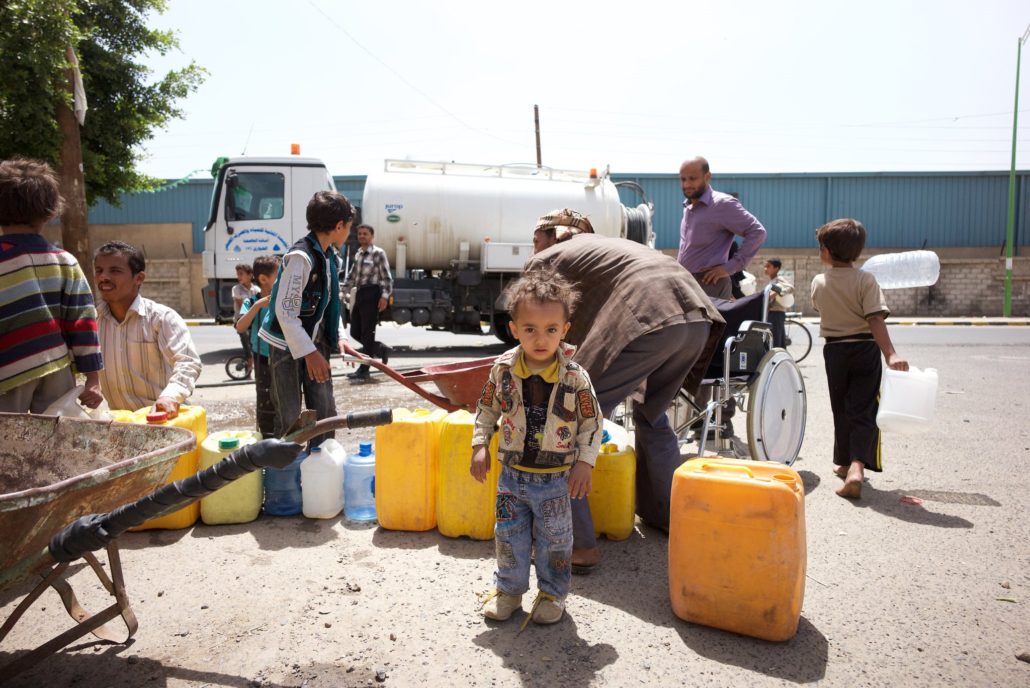
A massive resurgence of cholera afflicts Yemen, a bacterial infection that can kill within hours if untreated. Between January 2018 and June 2019, reports have determined there have been about 800,000 cases of cholera in the country. Here is a breakdown of the cholera health crisis in Yemen and the response from four notable organizations.
What is Cholera?
Cholera is a potentially fatal bacterial infection that can cause diarrhea, severe dehydration, nausea and vomiting. It mainly spreads through the consumption of water and food contaminated with the bacterium Vibrio cholerae.
Industrialized countries with proper water sewage filtration systems are unlikely to experience surges of cholera outbreaks. However, countries with inadequate water treatment are at a much higher risk of experiencing a cholera epidemic. Areas afflicted by natural disasters, poverty, war and refugee settings are at an exacerbated risk of experiencing cholera outbreaks.
The oral cholera vaccine is highly effective but the vaccine was not available in Yemen prior to the epidemic outbreak in 2017. Since then, more than 300,000 Yemenis received the cholera vaccination but continuous conflict provides a barrier between health care officials and the rest of the population. Doctors Without Borders maintains that the vaccine, while highly effective, is not enough to end cholera due to its low supply and short term protection.
Cholera Health Crisis in Yemen
As Yemen faces its fourth year of war, the country also fights a looming health crisis. The cholera health crisis in Yemen affects 22 of 23 governorates and almost 299 of Yemen’s 333 districts. Recording over one million cholera cases in 2017, Yemen’s crisis is the worst cholera epidemic on record.
Driven by years of war, the country has experienced a significant collapse in access to food, safe drinking water and health care. With millions of Yemenis facing famine, malnourishment increases the risk of cholera infections becoming fatal.
Many organizations are on the ground in Yemen, treating as many cholera cases as possible. Organizations responding to the health crisis in Yemen include Médecins Sans Frontières (MSF) or Doctors Without Borders, Save the Children, Islamic Relief Foundation and World Health Organization (WHO).
If left untreated, the mortality rate of cholera can be very high. With proper treatment, cholera is very easy to cure. The problem is that it is not easy for cholera victims to get to a medical center quickly, especially amidst times of war. One MSF treatment center in the governorate of Khamer explains the hardship that increasing fuel prices pose on those seeking health care.
During the peak of the cholera health crisis in Yemen, MSF treated over 100,000 patients with cholera. The use of cholera kits, essentials to treat the infection, allows the charity to respond quickly and effectively to any cholera outbreak. MSF also has cholera treatment centers in the heart of areas with cholera outbreaks.
Since cholera can lead to severe dehydration, the main cause of death in cholera cases, MSF has rehydration points conveniently located closer to communities than medical centers. Such rehydration points are effective in treating mild cholera cases.
Save The Children Offers Health Care
Since children with malnutrition are three times more likely to die from cholera, groups that provide nourishment in Yemen are essential. Save the Children, the first-ever international aid group in Yemen, not only distributes cash and food vouchers to families but also provides food for children and pregnant women.
Supporting 167 health facilities in Yemen, Save the Children provides training to health care professionals and volunteers in malnutrition management and prevention, a step taken to further alleviate the cholera crisis in Yemen.
Islamic Relief USA Provides Access to Clean Water
Islamic Relief USA works to provide vital aid, emergency food assistance and emergency water supply in the war-torn country. Clean water is vital to the country because cholera mainly spreads through contaminated drinking water. Islamic Relief USA is actively providing a clean supply of water to the governorates of Aden and Taiz. Both Taiz and Aden will have water tanks installed close to homes and schools so they remain water-secure when the organization is no longer active in these governorates. About 4,000 internally displaced people in these governorates will be at a decreased risk of cholera infection due to an increase of clean water supply from the water tanks.
The World Health Organization Increases Defenses Against Cholera
The World Health Organization maintains that Yemen is beginning to see a decrease in cholera infections. Financial aid from Saudi Arabia and the United Arab Emirates are contributing to this decrease. Millions of Yemenis now have access to health care unlike before. WHO is working on increasing the availability of diarrheal treatment centers, cholera vaccines and training of health providers in Yemen.
With 17.8 million water insecure people, Yemen is a breeding ground for cholera. Organizations like those listed above are essential to promoting prevention, care, and hopefully soon, the suppression of the cholera health crisis in Yemen.
– Rebekah Askew
Photo: Flickr

Drug Resistant Malaria Causes Concern
A new variation of the parasite causing malaria has captured the attention of medical professionals in South East Asia. They first noticed a strain of drug-resistant malaria in 2013 and it has spread aggressively throughout the region. Medical researchers from the Wellcome Sanger Institute, University of Oxford and Mahidol University noticed that the new strain has replaced local malaria strains in Vietnam, Laos and northeastern Thailand. They have also seen the strain developing new mutations from when they initially identified it in 2013 and this may be enhancing resistance even further.
Resistance Through Time
In 2018, studies showed that the usual first-line drug used for malaria failed to cure the disease at an overall rate of 50 percent, 13 percent in northeastern Thailand, 38 percent in western Cambodia, 73 percent in northeast Cambodia and 47 percent in southwestern Vietnam.
The advancement of the new drug-resistant malaria might stem from the heavy usage of anti-malaria drugs in the region. Medical professionals commonly distribute the drug throughout the area, forcing the parasite to evolve or die out. Patient usage is also giving the parasite a leg up, as often people are taking a weaker dosage or do not finish the treatment but terminate usage when they begin feeling better.
Cause of Malaria
Malaria is the result of the Plasmodium parasite that transmits through a mosquito bite. The drug-resistant malaria strain is called KEL1/PLA1 because of its combination of genetic mutations. A recent study has noted that KEL1/PLA1 has diversified into a subgroup of strains that contain the genetical modifications causing resistance. These parasites are also showing resistance to several classes of anti-malarial drugs. The new adaptations are limiting treatment options and making them increasingly expensive. Currently, clinical trials have begun to test the effectiveness of a triple combination treatment for the new drug-resistant malaria.
The current front-line defense is a two-drug combination of dihydroartemisinin and piperaquine or DHA-PPQ. But a 2018 study showed the resistance to dihydroartemisinin-piperaquine spread undetected for five years in Cambodia, giving the drug time to mutate further and wipe out existing non-resistant strains. One solution is to change the partner drug, piperaquine, to a drug that is currently effective such as mefloquine or pyronaridine. Cambodia and Thailand have implemented this solution but it could be logistically challenging on a large scale.
Consequences of Infection
For now, health officials believe they will be able to manage the situation as malaria rates are lower in Southeast Asia. Officials, however, believe if the drug-resistant malaria parasite spreads to Africa, the consequence could be dire. Sub-Saharan Africa sees the most substantial numbers of malaria and faces the most significant logistical problems when attempting to treat it. In the 1960s, a similar situation occurred where a strain developed in Asia and spread to sub-Saharan Africa, where due to a lack of alternative medications, malaria-related deaths double.
People are currently using rapid test kits to help prevent and treat drug-restraint malaria. The kits can identify which parasite strain is causing malaria, allowing medical professionals to treat malaria accordingly. This tool will be increasingly important if the drug restraint parasite spreads to Africa. Sub-Saharan Africa alone accounted for 66 percent of the 276 million rapid diagnostic test sales worldwide in 2017. The test allows for professionals to best allocate supplies that are scarce in sub-Saharan Africa. As the fight against drug-resistant malaria continues, the rapid test kits are a cost-efficient way to increase their odds of eradicating the parasite.
– Carly Campbell
Photo: Flickr
Cholera: Health Crisis in Yemen
A massive resurgence of cholera afflicts Yemen, a bacterial infection that can kill within hours if untreated. Between January 2018 and June 2019, reports have determined there have been about 800,000 cases of cholera in the country. Here is a breakdown of the cholera health crisis in Yemen and the response from four notable organizations.
What is Cholera?
Cholera is a potentially fatal bacterial infection that can cause diarrhea, severe dehydration, nausea and vomiting. It mainly spreads through the consumption of water and food contaminated with the bacterium Vibrio cholerae.
Industrialized countries with proper water sewage filtration systems are unlikely to experience surges of cholera outbreaks. However, countries with inadequate water treatment are at a much higher risk of experiencing a cholera epidemic. Areas afflicted by natural disasters, poverty, war and refugee settings are at an exacerbated risk of experiencing cholera outbreaks.
The oral cholera vaccine is highly effective but the vaccine was not available in Yemen prior to the epidemic outbreak in 2017. Since then, more than 300,000 Yemenis received the cholera vaccination but continuous conflict provides a barrier between health care officials and the rest of the population. Doctors Without Borders maintains that the vaccine, while highly effective, is not enough to end cholera due to its low supply and short term protection.
Cholera Health Crisis in Yemen
As Yemen faces its fourth year of war, the country also fights a looming health crisis. The cholera health crisis in Yemen affects 22 of 23 governorates and almost 299 of Yemen’s 333 districts. Recording over one million cholera cases in 2017, Yemen’s crisis is the worst cholera epidemic on record.
Driven by years of war, the country has experienced a significant collapse in access to food, safe drinking water and health care. With millions of Yemenis facing famine, malnourishment increases the risk of cholera infections becoming fatal.
Many organizations are on the ground in Yemen, treating as many cholera cases as possible. Organizations responding to the health crisis in Yemen include Médecins Sans Frontières (MSF) or Doctors Without Borders, Save the Children, Islamic Relief Foundation and World Health Organization (WHO).
If left untreated, the mortality rate of cholera can be very high. With proper treatment, cholera is very easy to cure. The problem is that it is not easy for cholera victims to get to a medical center quickly, especially amidst times of war. One MSF treatment center in the governorate of Khamer explains the hardship that increasing fuel prices pose on those seeking health care.
During the peak of the cholera health crisis in Yemen, MSF treated over 100,000 patients with cholera. The use of cholera kits, essentials to treat the infection, allows the charity to respond quickly and effectively to any cholera outbreak. MSF also has cholera treatment centers in the heart of areas with cholera outbreaks.
Since cholera can lead to severe dehydration, the main cause of death in cholera cases, MSF has rehydration points conveniently located closer to communities than medical centers. Such rehydration points are effective in treating mild cholera cases.
Save The Children Offers Health Care
Since children with malnutrition are three times more likely to die from cholera, groups that provide nourishment in Yemen are essential. Save the Children, the first-ever international aid group in Yemen, not only distributes cash and food vouchers to families but also provides food for children and pregnant women.
Supporting 167 health facilities in Yemen, Save the Children provides training to health care professionals and volunteers in malnutrition management and prevention, a step taken to further alleviate the cholera crisis in Yemen.
Islamic Relief USA Provides Access to Clean Water
Islamic Relief USA works to provide vital aid, emergency food assistance and emergency water supply in the war-torn country. Clean water is vital to the country because cholera mainly spreads through contaminated drinking water. Islamic Relief USA is actively providing a clean supply of water to the governorates of Aden and Taiz. Both Taiz and Aden will have water tanks installed close to homes and schools so they remain water-secure when the organization is no longer active in these governorates. About 4,000 internally displaced people in these governorates will be at a decreased risk of cholera infection due to an increase of clean water supply from the water tanks.
The World Health Organization Increases Defenses Against Cholera
The World Health Organization maintains that Yemen is beginning to see a decrease in cholera infections. Financial aid from Saudi Arabia and the United Arab Emirates are contributing to this decrease. Millions of Yemenis now have access to health care unlike before. WHO is working on increasing the availability of diarrheal treatment centers, cholera vaccines and training of health providers in Yemen.
With 17.8 million water insecure people, Yemen is a breeding ground for cholera. Organizations like those listed above are essential to promoting prevention, care, and hopefully soon, the suppression of the cholera health crisis in Yemen.
– Rebekah Askew
Photo: Flickr
Top 10 Facts About Living Conditions in Malta
Top 10 Facts About Living Conditions in Malta
These top 10 facts about living conditions in Malta highlight that, in spite of the country’s tumultuous history, it has persisted. While there are aspects Malta must improve upon such as transportation reliance and employment rates, Malta is a tiny country with an impressive development story.
– Emi Cormier
Photo: Flickr
#DanceForChange Petition Fights Global Poverty
With increased awareness and assistance from the IFAD, the duo intend to create opportunities for young people living in rural areas around the world. Since 1978, IFAD has provided $20.9 billion in grants and loans for international projects that have affected around 483 million individuals.
Numbers of Impoverished Children
The number of youths living in areas with extremely high levels of poverty remains high today. Almost 385 million of the world’s children live in extreme poverty. Around 260 million youths around the world do not receive a formal education, and children are considered twice as likely as adults to live in a state of extreme poverty. Global hunger is also rising; one in nine people in developing nations go to bed hungry each night. The dance challenge supports creating opportunities for youth to combat hunger and poverty, and is becoming an integral piece of the fight for change.
Sherrie Silver and Mr. Eazi
Silver and Mr. Eazi believe that the current generation has both the capacity and resources to put an end to global hunger. Their mission is to spark that change by reaching world leaders and establishing sustainable agricultural investment for current and future farmers. Silver was born in Rwanda and received a formal education in the United Kingdom. She has been recognized for her choreography in Childish Gambino’s award-winning video, “This is America,” which went viral in 2018. For the current campaign, she created a unique dance move for participants to mimic and believes that young people living in rural areas are beneficial and influential resources. According to Silver, “they have the power to feed the world and transform food systems if given the opportunity to succeed.”
Her partner, Mr. Eazi, is a singer, songwriter and entrepreneur from Nigeria. He recorded the song “Freedom,” written for and molded specifically towards the initiative. He wrote the song with the intention of portraying the agricultural industry in a positive light and enticing young people to get involved in farming. In a recording posted on TikTok, Mr. Eazi said he believes that “more investment in young people and farming means more food, more jobs and more freedom for us all.”
#DanceForChange
The global dance challenge creates opportunities for youth to advocate for sustainable agriculture and employment outlets. Young people around the world are encouraged to record a dance video that is up to 15 seconds long on short-form video app TikTok. For the challenge, Participants must download the app and create an individualized dance routine inspired by Silver’s choreography to “Freedom.” They then upload the video with the hashtag #DanceForChange to help spread the message and gain a wider reach. In June 2019, the IFAD released a Rural Development Report focused on developing opportunities for rural youth across Africa. The report is designed to identify what impactful roles young people can play in economic transformation and will be central to advocating for increased investment.
Sustainable Agriculture
In rural areas in Africa, agriculture is considered one of the largest sources of livelihood. It is not only a widespread source of income, but a means of food generation and familial support. Across the continent, it is estimated that 11 million young people will enter the job market over the next 10 years, and supporting sustainable agriculture can develop opportunities for rural youth searching for employment in urban areas. Agriculture accounts for 44 percent of all land use across sub-Saharan Africa, therefore designating the farmers that work on the land as key contributors to the international economy. Political figures and branches of government play a vital role in enforcing continued investment in agricultural systems and maintaining natural resources such as soil, water, forests and wildlife.
Success on TikTok
In May, the TikTok app ran a pre-launch promotion for #DanceforChange to project how widespread their reach may be. Nearly 5,000 individuals around the globe uploaded creative dance videos or memes with the hashtag to express their support for creating youth employment opportunities and fighting global hunger, proving that the unique dance challenge creates opportunities in a number of domains. Canada, India, Germany, the U.K. and the U.S. had the highest levels of engagement.
Simply utilizing a creative initiative such as the #DanceForChange challenge can help spread awareness toward issues like global hunger, poverty, unemployment and other difficulties facing youth in developing nations. Through an art form as universal as dance, individuals across the globe are speaking to the combined power of media engagement and self-expression.
– Anna Lagattuta
Photo: Flickr
Five Questions About African Immigration to Spain
While Eastern and Central Europe have been dealing with the brunt of the refugee crisis—thanks to conflicts in Syria and the rest of the Middle East—Western Europe is far from unaffected. However, a large number of immigrants in Spain originate from West Africa, and they come to Spain for a variety of different reasons; both as refugees, and in search of economic opportunity unavailable to them in their home countries. This article takes a look at the causes of African immigration to Spain, as well as the living conditions immigrants experience in their new host country.
Five Questions and Answers
1. Why are People from Western and Central Africa Leaving their Home Countries?
The short answer is a variety of reasons. While the overall volume of immigrants to Europe has dropped to pre-2015 levels, African immigration to Spain is still spurred by more than just garden-variety economic migration—though that certainly still plays a large role. The reasons for migration vary greatly by gender, with most men emigrating for economic reasons while most women are leaving due to threats of violence.
2. Why Spain?
Spain has a labor shortage and is more welcoming to migrants than other European countries. While geography is a major factor in emigration from Spain to Africa (the Strait of Gibraltar is slightly over seven nautical miles from the African mainland to Spain), Spain has—until very recently—been a notable exception to the anti-immigrant sentiment overtaking much of Europe. The current Spanish government is center-left, with over 80 percent of adult poll respondents saying that they would be in favor of taking in irregular refugees. New agricultural sectors in the south of Spain—mainly greenhouse farming—have also created an unskilled economy that few Spaniards find attractive, but looks promising to refugees.
3. How do Immigrants get There?
Refugees arrive in Spain either by the Spanish enclaves in Morocco or the dangerous crossings of the Mediterranean. The most immediate destination for African immigration to Spain is the enclave city of Ceuta, which is politically Spanish and geographically Moroccan but is governed more or less autonomously, like Catalonia or the Basque Country. Some also arrive via ship, in the infamously choppy Mediterranean. The first decision of Prime Minister Pedro Sanchez’s administration was to admit the Aquarius, a ship of more than 600 migrants, into Spain after Italy turned it away.
4. What Kind of Life is Waiting for Immigrants Once they Arrive?
“Nobody talks about what it’s really like.” Many of the African migrants in Spain live in the southern regions, doing seasonal agricultural work. This is especially true for the men who emigrated to Spain for economic reasons, trying to send money back home to their loved ones. Despite the supposed greater economic opportunity that comes from a Eurozone nation, many of the African migrants in Spain live in ramshackle chabolas, makeshift shacks comprised of wood and plastic leftover from agricultural scrap. In these settlements, more migrants have mobile phones than access to a toilet or kitchen.
5. Is Spain’s Generosity Towards Migrants Coming to an End?
The short answer is yes. The majority of African immigration to Spain comes through Morocco and the Strait of Gibraltar, but the path of many migrants does not end there. Recently, Spain has come under fire from other European leaders for being the exception to an otherwise-ubiquitous tight border policy, which has put pressure on the Spanish government to somehow stem the tide. In response, Spain has outsourced its border security to Morocco, the country that processes most migrants to Spain. This has alarmed left-leaning political groups and human rights NGOs, who claim that Morocco’s human rights record is inadequate.
While Spain has upheld the Sanchez government’s initial promise of being more accepting of migrants, large-scale African immigration to Spain and pressure from other European leaders has prompted a tightening of the flow of migrants through Morocco and the Mediterranean. While the conditions African migrants find in Spain are far from luxurious, the work is good enough for them to continue to migrate. What Spain ultimately decides to do in regard to the influx of immigrants from Africa could either continue to serve as a lone exception to the rest of Europe or join the continent in its increasing anxiety over immigration.
– Rob Sprankle
Photo: Flickr
Caribbean Development Bank Improves Hurricane Resilience
For the estimated 10 percent of the population of the Bahamas who live below the poverty line, recovering from natural disasters such as this is a particular challenge. As a result, there is a massive need for programs that not only address the short-term impacts of hurricanes but also focus on the importance of long-term hurricane resilience.
The Caribbean Development Bank (CDB), based in Barbados, has pledged to provide $1 million in aid to the Bahamas, with $700,000 in the form of a loan and the remaining $300,000 as a grant. While disaster relief helps improve recovery for local economies and minimize the impact for impoverished communities, there are also other avenues of aid that the CDB could pursue which take the form of mental health programs and debt repayment plans.
Mental Health
As a part of the Stronger Together campaign, in collaboration with the Pan-American Health Organization, the CDB has also placed an increased focus on addressing the negative mental health impacts of hurricanes — which traditionally get little attention. However, this type of support is key to help uplift those who experience the trauma of losing their homes or worse, their loved ones.
The campaign, launched in July 2019, aims to train 16 new mental health service professionals, ranging from psychologists to social workers to promote resilience in the face of natural disasters. This program could have a major impact on helping people in the Bahamas recover, while also offering a path towards future mental resilience in the event of another damaging hurricane. This is especially valuable for communities living in poverty.
Debt Repayment
High levels of debt are a substantial impediment to the massive discretionary spending needed to successfully recover from a hurricane, as nations are often forced to choose between allocating resources towards serving the immediate needs of their citizens or maintaining their current repayment plans. As such, a debt relief program could prove incredibly beneficial in the Bahamas, as the country had a debt burden of $8.2 billion prior to the events of Hurricane Dorian.
There is already precedent for the CDB to offer debt restructuring opportunities. For instance, following Hurricane Ivan, Grenada was able to re-negotiate its debt repayment plan to cease repayment following a natural disaster. Some have argued that this program should be extended to all nations in the event of a natural disaster.
This would help to reduce an unsustainable reliance on foreign aid, as nations find themselves falling deeper into debt and failing to provide adequate assistance to their own citizens. Not only do such increases in debt leave countries less prepared for another similar natural disaster, but they also limit the amount of aid which governments can extend to the citizens facing the most significant damages as a result of the disasters.
Conclusion
While the recent pledge of $1 million in aid to the Bahamas by the CDB is a useful step in mitigating the impact of Hurricane Dorian, the CDB also has several other methods of improving not only hurricane recovery but also hurricane resilience. With investment in the mental health field, the CDB is working to train mental health services professionals who can provide psychological support to citizens. This could be supplemented by a re-negotiated debt repayment plan for the Bahamas, with many arguing that such a program would reduce the financial burden placed on the Bahamas by the need to take more loans.
– Alexander Sherman
Photo: Flickr
Improving Access to Electricity in Eswatini
Governmental Efforts
In Eswatini, the Eswatini Energy Regulatory Authority (ESERA) regulates the country’s electric supply industry, while the Eswatini Electricity Company (EEC) acts as the national utility. The Eswatini Electricity Company is state-owned and controls hydropower stations in Maguga, Ezulwini, Edwaleni and Maguduza. Despite this, Eswatini is a net importer of electricity due to the fact that its domestic electricity generation is insufficient to meet national demand. This can be attributed in large part to a lack of water storage, which has led to severe variations in annual domestic generation output over the years. However, the Eswatini Government is looking to become more energy independent in the near future and has implemented the Rural Electrification Program (REP), which has increased the percentage of Eswatini residents with access to proper electricity to almost 75% in 2017.
The World Bank’s Role in Eswatini’s Electrical Supply
In conjunction with the REP, the World Bank has also aided in improving Eswatini’s electricity supply. One of the World Bank’s most notable projects in Eswatini is the four-part Network Reinforcement and Access Project. The first two components focus on strengthening the transmission and distribution network in Shiselweni and building upon the REP program to finance additional household connections. The third component provides analytical support by financing technical aid and the fourth component is designed to improve Eswatini’s ability to respond to major economic or social emergencies. These efforts by the World Bank have proved to be extraordinarily helpful in Eswatini’s efforts to become a nation that produces its own energy.
Final Steps
Eswatini has taken major steps forward to address its electricity dependence issues. However, the country is still struggling overall in this regard and more work is necessary in order for the nation to become energy independent. Funding from the World Bank, as well as from organizations like the United Nations, will be of great help to Eswatini as the government seeks to improve access to electricity for residents.
– Jade Thompson
Photo: Flickr
How Popes Helped End International Conflict
The Pope stands in the international arena as a unique authority without traditional elements of influence that countries hold. In place of an impressive military or a large economy, the Pope controls the hearts and minds of 1.28 billion Catholics globally.
Over the course of the past century, various Popes have stepped up in international discussions as mediators, condemned human rights violations and organized days of prayers and fasting for those caught in conflict zones. Here are the five most well-known examples of how Popes helped end international conflict.
Pope Benedict XV and WWI
Pope Benedict initially attempted to stop Italy from entering WWI and, when that failed, he offered papal peace mediation throughout the war. He wrote up the 1917 Papal Peace Appeal, which focused on free seas, war reparations, disarmament and Belgian independence. It emerged as a skeleton of a treaty that the leaders of the various states would expand upon, the negotiations in which “the Holy See would not necessarily itself be involved.” In the end, the Treaty of Versailles copied the points of the Papal Peace Appeal two years prior but excluded the Pope from talks.
Pope John Paul II and Poland’s Solidarity
As a native Pole, Pope John Paul became personally invested in the swift conclusion of martial law in Communist Poland in 1981. The Pope directed the Primate of Poland to meet with the Polish Prime Minister at the time, Wojciech Jaruzelski, to broker peace talks between the worker union Solidarity and the government. Additionally, John Paul II published a letter in which he substantiated this meeting and supported the goal of peace.
Pope John Paul II, Israel and Palestine
In 1993, after three years of negotiations, the Pope established diplomatic relations with Israel under the condition the country invite him to regional summits. When talks broke down between Israel and Palestine after the 1994 mosque massacre in the West Bank, the Israeli prime minister Yitzhak Rabin asked Pope John Paul II to help restart the discussions. Unfortunately, the Palestine Liberation Chairman, Yasser Arafat, rejected this offer of mediation due to his resolute stance that he would not resume talks unless the Israelis guaranteed that Palestinian women, children and holy sites would have protection. By 2000, the Holy See legitimized Palestinian territory, stopping just short of fully recognizing it. This put the Vatican on extremely good terms with both Israel and Palestine and strengthened its sway in the region.
Pope Francis, Israel and Palestine
In a continuation of the previous Pope’s work in the region, Pope Francis invited the leaders of Palestine and Israel to the Vatican for a day of prayer in 2014. He requested both sides to live in peace together, advocating for the two-state solution. Rather than force politically charged discussions, the Pope simply brought the two leaders together for a prayer summit followed by a private discussion. Years later, Francis’ 2018 Christmas Address further urged for peace in the region.
Pope Francis and South Sudan
South Sudan, with 70 percent of its population Christian, plunged into civil war in 2013 after an alleged coup that the vice president designed. Two years into the conflict, Pope Francis privately met with South Sudanese President Kiir in Uganda while he was visiting the region. In a similar manner to how other Popes helped end an international conflict before them, Francis aimed to create an open dialogue between the warring factions. In 2019, Pope Francis invited President Kiir to the Vatican to discuss and encourage the implementation of the 2019 ceasefire agreement.
By wielding their immense power in these five instances, these popes helped end international conflicts. At the very least, their efforts as a neutral party created opportunities for hostile forces to move towards peace. While this list highlights major interventions by recent popes, these men also influence international politics every day in extraordinarily subtle and powerful ways.
– Daria Locher
Photo: Flickr
5 Facts About Climate Change in Central America
The effects of climate change are more apparent in some areas than others. Central America is one of these areas with drought, high temperatures and floods contributing to agricultural problems and a rise in migration out of the region and into the U.S. These five facts about climate change in Central America provide a glimpse of how it affects the country and the people who live there.
5 Facts About Climate Change in Central America
Climate change in Central America is already causing serious problems and will continue to do so in the future. On a positive note, USAID and others are cooperating with Central American governments to respond to the changes taking place. Countries in the area are already implementing innovative, agriculture-based solutions. The efforts of aid organizations will continue to be vital as the global climate continues to change.
– Emelie Fippin
Photo: Flickr
Top 10 Interesting Facts about George Washington
Top 10 Interesting Facts About George Washington
Why These Facts About George Washington Are Important
These facts reveal that, although known for being the face of the American Revolution, Washington was also an advocate of diplomacy. He spent the majority of his presidency trying to find diplomatic solutions to international conflicts. They also display his concerns with basic human issues such as morality, religious freedom and health. Washington spent his entire life trying to promote the importance of these issues, yet his efforts are often unheard of. These top 10 interesting facts about George Washington are important because they shed light onto the incredible efforts of America’s first president to fight for the causes he believed in.
– Gabriella Gonzalez
Photo: Flickr