• Link to X
  • Link to Facebook
  • Link to Instagram
  • Link to TikTok
  • Link to Youtube
  • About
    • About Us
      • President
      • Board of Directors
      • Board of Advisors
      • Financials
      • Our Methodology
      • Success Tracker
      • Contact
  • Act Now
    • 30 Ways to Help
      • Email Congress
      • Call Congress
      • Volunteer
      • Courses & Certificates
      • Be a Donor
    • Internships
      • In-Office Internships
      • Remote Internships
    • Legislation
      • Politics 101
  • The Blog
  • The Podcast
  • Magazine
  • Donate
  • Click to open the search input field Click to open the search input field Search
  • Menu Menu

Tag Archive for: USAID

Information and news about mobile technology

Posts

Development, Global Poverty, USAID

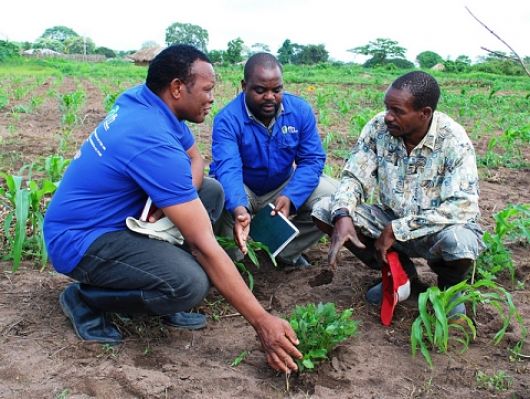
U.S. Support for Mozambican Farmers

mozambican_farmers
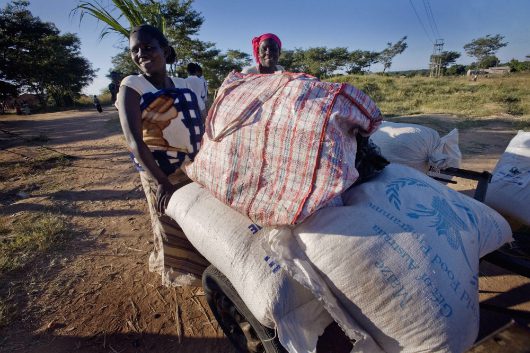
In order to help improve access opportunities between smallholder farmers and private sector distributors in Mozambique, the United States Agency For International Development (USAID) initiated four public-private partnerships amounting to $30 million in 2014. On June 3, USAID signed four memorandums of understanding to further propel the partnerships into action. The memorandums were signed in the presence of Deputy Minister of Agriculture Luisa Meque, and U.S. Ambassador Douglas Griffiths.

USAID launched the partnerships as a part of Feed the Future Partnering for Innovation, a program that creates partnerships for development between USAID missions and the private sector. The partnerships in Mozambique are predicted to increase opportunities for 50,000 smallholder farmers in the provinces of Manica, Nampula, Tete and Zambezia.

The project has partnered the U.S.’s National Cooperative Business Association CLUSA International with farmer-owned company IKURU and start-up seed-provider Phoenix Seeds to facilitate better distribution of services and inputs. Various representatives from IKURU and Phoenix Seeds will also be trained to better serve small communities. This partnership is expected to assist 10,000 smallholder farmers within three years.

Export Marketing Company Limited, Agro Tractors and Techno Brain have also partnered to create 23 retail hubs comprised of agro-input retailers, equipment suppliers and storage facilities to benefit 23,000 smallholder farmers. Rental services and training workshops will be available for farmers, along with new market opportunities.

Additionally, 10,000 Mozambican farmers in Zambezia and Nampula will receive access to imported seeds and inputs through the new partnership between Portuguese supplier Lusosem Mocambique, Lda., Colorado-based International Development Enterprises and HUB Assistancia Technica e Formacao. The partnership will involve guidance in agro-dealer expansion and training for agribusiness development in rural communities.

Through the final partnership, Illinois-based Opportunity International will provide financial training to Banco Oportunidade de Mozambique in order to provide banking services for 5,000 sesame and soybean farmers.

These partnerships are part of a larger 10-year strategic agricultural development plan developed by USAID with the Mozambican government. According to USAID, Mozambique’s agricultural sector provides employment for the vast majority of the nation’s labor force and has the potential to boost the country’s economic growth significantly. Additionally, USAID in Mozambique focuses on agricultural development in order to create sustainable systems, which can ultimately decrease malnutrition and poverty rates throughout the country.

– Arin Kerstein

Sources: All Africa, Feed the Future, Partnering For Innovation, Star Africa, USAID
Photo: Feed the Future
June 22, 2015
https://borgenproject.org/wp-content/uploads/borgen-project-logo.svg 0 0 Borgen Project https://borgenproject.org/wp-content/uploads/borgen-project-logo.svg Borgen Project2015-06-22 10:45:462024-05-27 09:25:13U.S. Support for Mozambican Farmers
Global Poverty

Tom Emmer Shows Foreign Aid Need Not Be a Partisan Issue

congressman_tom_emmer
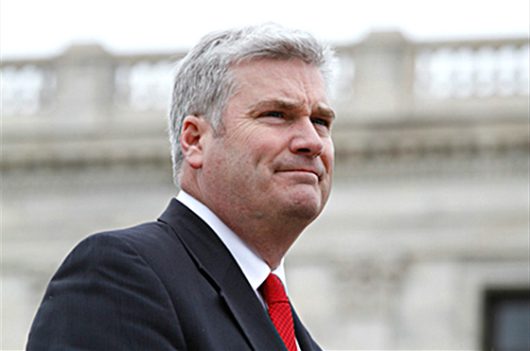
It’s not often that one hears a Tea Party conservative publicly supporting the use of the United States’ Federal Budget on foreign development aid. That’s what makes Rep. Tom Emmer’s, R-M.N., newfound support for the program both promising and surprising.

During a live online Q & A session held on May 12, Rep. Tom Emmer – whose conservative voting record includes challenges to Minnesota’s minimum wage and efforts to nullify the Affordable Care Act – described the ways in which his recent visit with recipients of U.S. foreign aid in Eldoret, Kenya influenced his perspective on the program.

“I have made the statement in the past that a dollar that we are spending for instance in Africa, in Kenya, is a dollar that we could probably be using at home to build a road or a bridge,” Emmer said. “Well, it’s not that simple.”

During his time in Eldoret, Emmer met with two dairy farmers who, with funding from USAID, improved their operation to such an extent that their increased income allowed them to accumulate enough money to send their three children to boarding school. “That bodes well for the future,” Emmer said, “and I guess I look at it this way: a dollar spent on that is a dollar that we won’t have to spend on additional bombs and bullets and God-forbid boots on the ground in the future.”

This sentiment is consistent with an argument commonly made by proponents of foreign development aid: investing in a greater quality of life for the world’s poor prevents them from looking for it in the form of violent extremist groups like ISIS or al-Shabaab.

The congressman also noted the potential benefits global poverty reduction holds for the U.S. economy. “Well, we need to have trading partners, both here within our boundaries, our borders, but [also] outside of our borders, because remember, 90% of the world’s future customers actually live outside of the United States,” Emmer stated. “We need to make sure that we’re constantly growing those markets so that we can realize a return of value, a valuable return on [our] products.”

Emmer’s change of heart is particularly encouraging given the staunch opposition to foreign aid among many leading Republicans, including presidential aspirant Rand Paul, who in 2012 argued the United States ought to eliminate foreign aid entirely. Indeed, this new stance is consistent with his recent deviation from the standard voting line of far right Republicans, a move that has earned him criticism from a number of his constituents.

That Rep. Emmer’s newfound attitude toward foreign aid so radically differs from that of more moderate Republicans like Paul shows that foreign aid doesn’t need to be an issue that is determined simply – and superficially – by party affiliation. A U.S. presence in impoverished nations, defined by effective economic assistance, creates opportunities for American companies abroad and increases the security of the United States by improving the lives of those whom extremist groups strive to recruit. These are outcomes that should appeal to Republicans and Democrats alike.

– Zach VeShancey

Sources: Think Progress, Business Week Think Progress Think Progress MPR News
Photo: University of Alaska Fairbanks

June 15, 2015
https://borgenproject.org/wp-content/uploads/borgen-project-logo.svg 0 0 Borgen Project https://borgenproject.org/wp-content/uploads/borgen-project-logo.svg Borgen Project2015-06-15 09:22:472024-12-13 17:51:27Tom Emmer Shows Foreign Aid Need Not Be a Partisan Issue
Foreign Aid, Global Poverty, United Nations, USAID

What is International Aid & Why Should We Care?

What is International Aid
What is International Aid? International aid is any form of needed assistance by one country, or multilateral institution, to another.

Aid is most commonly provided as official developmental assistance (ODA), which targets poverty reduction and the promotion of public welfare and economic development. The World Food Programme and the United Nations are examples of international organizations that provide significant amounts of aid to developing countries.

Investing in foreign aid is a just cause. The leading U.S. Government agency, USAID, alone saves more than 3 million lives each year through immunization programs. Over 850,000 people are educated about HIV prevention annually through USAID, and 40,000 have been trained to protect their countries for the long-term. Other forms of lasting education strategies include USAID’s population program, which serves more than 50 million couples worldwide, and USAID land cultivation training in Honduras that helps 21,000 families to practice subsistence farming and has reduced soil erosion by 70,000 tons.

Foreign aid is not just giving away money and resources; it means making a concerted attempt to restructure sectors in need of improvement. USAID invested $15 million in technical assistance for developing countries’ energy sectors, which created a $50 billion annual market for private power.

With all this good, would it surprise you that U.S. foreign assistance uses less than 1% of the total federal budget?

Less than 1% of the U.S. total federal budget values to about $50 billion. In comparison, the U.S. military defense budget totals to about $663 billion. To put this in per capita terms, The Guardian calculated that the U.S. spends $73 per person on aid and $1,763 per person on defense.

In 1970, The U.S. joined the ranks of many other wealthy nations with plans to give 0.7% of their gross national income as ODA. Of the twenty-three players, only five succeeded in 2011,and the U.S. was not one of them.

The U.S. gave 0.2% of their net ODA.

But why is this even a problem?

Other countries with fewer capabilities are doing more than their part while the U.S. is falling short. Public perception plays a huge role in how the budget is made and, subsequently, the degree of U.S. involvement in global aid. Americans, on average, estimated 28% of the federal budget is spent on foreign aid. Four in ten Americans also believe aid is given remotely, allowing the recipient to use it as they see fit. As a result, few people vote for budget increases.

In actuality, most U.S. foreign aid is issued to a specific issue and program with clear endpoints.

Most commonly, Americans believe foreign aid to be a waste of resources. Who does the money help and in what ways? In fact, it helps both the recipient and donor.

International aid strengthens national security, garners international support and establishes diplomatic ties between the donor and recipient countries.

Today, the donor-consumer relationship is far more influential than ever because developing countries and economies are in transition. Africa’s net growth momentum, for example, is expected to continue to rise with GDP growth increasing from 4.6% in 2015 to 4.9% in 2016. Home to five of the world’s twelve fastest growing economies, the supercontinent hosts a growing middle class and large youth population. While Africa’s political and economic history promises a challenge, its potential is enormous.

– Lin Sabones

Sources: Encyclopaedia Britannica, UN, The Guardian, OECD, USAID, CNBC
Photo: Flickr

June 15, 2015
https://borgenproject.org/wp-content/uploads/borgen-project-logo.svg 0 0 Borgen Project https://borgenproject.org/wp-content/uploads/borgen-project-logo.svg Borgen Project2015-06-15 08:33:402024-05-30 22:22:56What is International Aid & Why Should We Care?
Foreign Aid

Understanding Foreign Aid

Foreign_aid
Foreign aid is a broad term that defines the assistance of one country to another, usually a developed country helping another nation. This assistance can be monetary or otherwise and can be intended for many different purposes or reasons.

The origins of foreign aid in the United States stem from the Marshall Plan and the U.S. assisting Europe in its post-World War II recovery. More recently, the United States Agency for International Development’s stated mission is to help fledgling democracies and end extreme poverty.

Most people in the U.S. believe that foreign aid is substantially higher than its actual value, which is equivalent to or lower than one percent of the federal budget. The money sent to other countries as aid is fairly small for the U.S., yet it is capable of producing a host of benefits for the recipient countries.

Humanitarian assistance is the most common reason for giving foreign aid. The recent earthquake in Nepal triggered a response by USAID whose contribution of over $47 million have been used to help with disaster relief in the region. Other reasons for humanitarian-related aid include extreme poverty, hunger and the effort to improve global health by fighting preventable, communicable diseases that are common in the developing world.

Infrastructural development is a commonly cited purpose for aid dollars. China, for example, has been investing heavily on infrastructure in Africa, including a $15 million aid deal with Sierra Leone for fiber optics installations. This investment is only one example of how aid is used to build communications, transportation, medical and other critical infrastructure in order to help facilitate economic growth and development.

Aid earmarked for education assists countries while preparing them to be more independent. Aid programs often focus primarily on improving access to education, which can be a limiting factor for education’s effectiveness. These programs also target teachers’ training in order to improve the quality and impact of the education being provided. Building human capital by establishing skills such as basic literacy cannot be underestimated.

In the past eight years, the European Union Commission has invested well over four billion euros in improving education and literacy in multiple developing countries. They were able to put at least nine million children into schools and train hundreds of thousands of teachers in order to improve standards of education. Rudimentary reading and writing skills that are taken for granted in developed countries can change the lives of those in developing countries where literacy rates are low. Literacy can be thought of as a gateway toward further human capital and economic development.

Foreign aid can also be motivated by strategic and geopolitical forces. Helping other countries can leverage support for the gifting nation or help build strong relationships in a certain region.

Israel received the most foreign aid from the U.S. in its 2012 fiscal year. Though Israel does not face the same low literacy rates or high levels of poverty as countries in Africa, there are strong geopolitical motivations that have led to this phenomenon. In addition, five of the top ten recipients of aid in the same year were from the Middle East. Some states in the region are rife with war and turmoil. As a result, the U.S. provides foreign aid to help these states recover from the damages of war or to aid in creating and sustaining stability across the region as a whole.

Developed countries are in a position to help those in foreign countries who are in need of assistance. Foreign aid is an essential and fairly pain-free way for developed countries to fight against global poverty and support global health, education and peace.

– Martin Yim

Sources: USAID 1, RAND, Washington Post, Aid Data, USAID 2, European Commission, ABC News USAID
Photo: Georgetown Public Policy Review

June 12, 2015
https://borgenproject.org/wp-content/uploads/borgen-project-logo.svg 0 0 Borgen Project https://borgenproject.org/wp-content/uploads/borgen-project-logo.svg Borgen Project2015-06-12 08:00:272024-12-13 17:50:12Understanding Foreign Aid
USAID

Azerbaijan’s Oil Money – What Will it Do With it?

Azerbaijans_Oil_Money_What_Will_it_Do_With_it
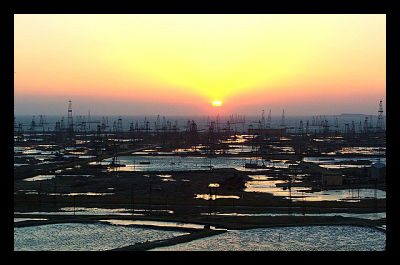
Since 2005, the Baku-Tbilisi-Ceyhan pipeline has brought Azerbaijan a newfound prosperity, but the money from the oil windfall is still tightly concentrated, and inequality remains a huge issue. Even with the enormous bounty from the pipeline, it is still a struggle for the average Azerbaijani to make a living.

Azerbaijan, a former member of the USSR, is home to some of the richest people around the Caspian Sea. Despite its lack of universities, public services, or manufacturing sectors, it has a plentiful supply of oil.

This is the first time in centuries that Azerbaijan has had a lucky break in geopolitics. It has been occupied by Cyrus the Great, Alexander the Great, the Seljuks, the Mongols, the Persians, the Russians, the Ottomans and, finally, the Soviets over the centuries. Now, finally, Azerbaijan has a chance of controlling its own destiny. Between 2006 and 2008, Azerbaijan’s economy grew at an annual average rate of 28 percent, the fastest in the world.

Many would argue that Azerbaijan is not spending its new money wisely. Instead of overhauling its creaking social security system, or investing in schools, it is building sports stadiums and luxury mega-developments. Gulnara Suleymanova, an impoverished mother living in the shadow of Azerbaijan’s brand-new stadium, built especially for the European Games, said that she can barely afford to feed her children, let alone provide them with an educated and treatment for their health problems.

“They build sports complexes, construct roads, but who benefits from them? Why don’t they help children? Why don’t they think that there are small children, sick and poor people living in this country? Why don’t they help them?” she asks.

Huge undertakings like the stadium and the mega-development can be argued to have some merit, as the publicity from the games and the over-the-top extravagance of the mega-developments can signal to investors that the country’s government supports growth. They serve as a kind of international billboard, advertising a friendly business climate to anyone who wants to build anything spectacular.

That being said, experts at USAID have said that Azerbaijan must diversify its economy if it wants to maintain a high rate of growth. Right now, there is too much emphasis on the extraction-sector and not enough focus on other sectors, or on investments for the future. Without movement into other sectors, a failure in the oil supply could send Azerbaijan back into an agrarian economy.

Azerbaijan used to rely primarily on its exports of pomegranates and hazelnuts to make money, but even high-worth crops like these are subject to droughts, floods, blights, and other events outside of the country’s control. USAID hopes to help Azerbaijan achieve a diverse and sustainable economy, with much less inequality than is present now.

If USAID succeeds, Azerbaijan may be able to mold its new-found wealth into a well-rounded and diverse economy.

– Marina Middleton

Sources: USAID, Doing Business, New York Times, Massispost, The Guardian
Photo: Flickr

June 6, 2015
https://borgenproject.org/wp-content/uploads/borgen-project-logo.svg 0 0 Borgen Project https://borgenproject.org/wp-content/uploads/borgen-project-logo.svg Borgen Project2015-06-06 16:00:072020-07-17 20:33:14Azerbaijan’s Oil Money – What Will it Do With it?
Global Poverty

‘My Village, My Home’ Tool Helps with Vaccination

Vaccination_My_Village_My_Home
Small villages can be like family, and viewing their communities like houses is helping nurses save lives. One in five children worldwide are not receiving vaccinations for dangerous but preventable diseases. According to the World Health Organization, this is not up to par with the expectations that were set for the year 2015.

However, with the introduction of “My Village, My Home” to health workers, children who still need to get a vaccination can be documented.  Introduced by the Maternal and Child Health Integrated Program to 28 different health centers in India in 2011, “My Village, My Home” is a tool used to keep track of the vaccinated children in the community.

Each child in the village receives a “plank” that makes up the foundation of the sketched house. The oldest children are at the bottom of the drawn home. Once a child is vaccinated, their plank is shaded in, turning the plank into a metaphorical brick. The idea is that a strong, well-built house is the safest place to live. The less shaded bricks there are, the weaker the house is. A new house can be drawn each year to document newborns.

A study conducted by USAID shows that keeping records of vaccinated children in this simple way makes a significant difference. When the concept was implemented in Deoghar and Jamatara, districts in eastern India had poor vaccination rates. Today, only a mere  1.9 percent of children remain unvaccinated. USAID is attempting to spread the word and encourage health workers to make a point of congratulating parents who make the decision to vaccinate their child.

“By using the tool, I am able to count all the [children] in my community with their immunization status on a single chart,” says Esther Das, a health worker in an Indian village called Chandradeepa. Das, who was acknowledged in 2014 at a celebration for “India’s three-year freedom from polio” as the district’s best performer, credits “My Village, My Home” for making a huge difference for the infants in her community. With any luck, word of this tool will spread to more communities and save even more lives.

– Melissa Binns

Sources: USAID, MCHIP
Photo: Usnews.com

May 9, 2015
https://borgenproject.org/wp-content/uploads/borgen-project-logo.svg 0 0 Borgen Project https://borgenproject.org/wp-content/uploads/borgen-project-logo.svg Borgen Project2015-05-09 16:00:132020-07-22 09:09:07‘My Village, My Home’ Tool Helps with Vaccination
Global Poverty, Health

Improvements in Health and Hygiene

Health and Hygiene
A detrimental aspect of living in poverty is the issue of health and hygiene. Without access to clean water and food, people living in poverty run the risk of attaining serious diseases.

“Forty percent of the world’s population—2.5 billion people—practice open defecation or lack adequate sanitation facilities, and the consequences can be devastating for human health as well as the environment,” says The Bill and Melinda Gates Foundation website. Organizations such as The Gates Foundation are trying their best to resolve this ongoing issue.

As a result of these inadequate living conditions, children suffer from chronic diarrhea causing them to lose vital nutrients. The Gates Foundation is approaching the problem with a focus on traditional plumbing systems implemented in rural areas. It has invested in developing a new-age toilet that requires no water or electricity, offering a way for developing nations to improve hygiene and expand the lifespan of people living in these areas.

Along with creating new ways to improve sanitation, Bill and Melinda Gates have partnered with USAID to develop the WASH for Life initiative. Inventors are invited to apply for the Development Innovation Ventures (DIV) and share their technological ideas on how to improve sanitary conditions in developing countries. “USAID launched Development Innovation Ventures (DIV) in October 2010 to find, test, and scale ideas that could radically improve global prosperity,” said USAID.

While USAID and The Gates Foundation are making a difference in health, progress has been made in the developing world. According to the World Health Organization (WHO), “2.3 billion people gained access to improved drinking-water between 1990–2012.” In the same time span, the number of children dying has also been drastically reduced in half.

Two of the U.N. Millennium Development Goals, or MDGs, focus on reducing child mortality and improving maternal health. These goals go hand in hand since healthier mothers will create healthier children. “The number of deaths in children under five worldwide declined from 12.7 million in 1990 to 6.3 million in 2013,” according to the U.N.

Although there is still much to be done to improve health and hygiene worldwide, education is an important aspect of sustaining health in these developing countries.

– Kimberly Quitzon

Sources: The Bill & Melinda Gates Foundation, U.N. News Center, USAID, WHO
Photo: Flickr

May 4, 2015
https://borgenproject.org/wp-content/uploads/borgen-project-logo.svg 0 0 Borgen Project https://borgenproject.org/wp-content/uploads/borgen-project-logo.svg Borgen Project2015-05-04 12:00:422024-05-27 09:23:49Improvements in Health and Hygiene
Global Poverty

Youth Inclusion for Peace in Colombia

Over five million Colombians have been displaced since the nation’s armed conflict began over 50 years ago. Of this figure, two million Colombians under the age of 26 have been displaced between the years 1985 and 2013. The Colombian government and the FARC (Revolutionary Armed Forces of Colombia) have been in peace talks since November 2012. In order to move toward progress and peace, the relationship between the Colombian government and its citizens must incorporate youth inclusion.

In February 2015, the FARC announced that it would discharge soldiers under 15 years of age.

The FARC, criminal gangs, and other organized crime groups have forced young adults to participate in the conflict. Lack of education and employment opportunities, combined with high poverty and conflict, create a space where joining organized crime is the logical choice for protection and wealth. For this reason, focusing on youth inclusion as a sustainable peace model is exigent.

Unfortunately, it was released in March 2015 that youth unemployment (14 to 28 years) is at 15 percent in Colombia. It has stayed steadily around this figure for one year.

National and local government efforts have tried to reintegrate adolescents who were involved with the FARC. For example, the Colombia Youth department is a space for young adults to be involved with public policy and dialogue within the national government. On Colombia Joven’s website, the department highlights its values as: honesty, respect, responsibility, compromise, loyalty, tolerance and solidarity. All form the idea of ensuring youth participation.

As a way to encourage youth inclusion for those who were displaced or involved with the conflict, young victims of the conflict in the department of Meta (located in the middle of Colombia) have come together to create the Department Youth Roundtable (comprised of 5,000 members) from 29 municipalities in the department. The organized meetings are for professional and educational development.

The Meta department created the Intergenerational Youth Public Policy initiative in 2010 (supported by numerous organizations including USAID and UN Population Fund) in order to improve youth socio-political conditions by the year 2019. This organization was governmentally spearheaded from the Public Policy for Youth organization under the Department Youth Roundtable. In its published report, “Meta: Vivir al Derecho,” it discusses youth vulnerability and potential to engage in illegal activities. The goal is to create conditions that guarantee life, integral human development, adequate educational inclusion, work, and civic and socio-cultural development in the department of Meta.

Colombia is making clear strides to acknowledge the importance of including youth, but the lagging youth unemployment rate form challenges for the future of the state. Despite these advancements, it is difficult to implement outreach policies to reintegrate ex-child soldiers because of their experiences. Some feel marginalized and continue to seek illegal activities as a living. The surging organized crime network known as BACRIM is comprised of new offenders and demobilized militia members. This poses as a major threat to the security of the state and the future of the young adult population.

Nevertheless, displaced youth and other victims of the conflict have demonstrated resilience through their formation of regional youth development projects. Based on these efforts and others, youth inclusion strategies are occurring at a productive triangular process, from the grassroots level, department/municipal level and the national government level. In this way, sustainable peace may be attained.

– Courteney Leinonen

Sources: BBC 1, BBC 2, Colombia Joven 1, Colombia Joven 2, Juntos Construyendo, OECD, UNFPA
Photo: Flickr

April 23, 2015
https://borgenproject.org/wp-content/uploads/borgen-project-logo.svg 0 0 Borgen Project https://borgenproject.org/wp-content/uploads/borgen-project-logo.svg Borgen Project2015-04-23 04:00:152024-12-13 17:51:22Youth Inclusion for Peace in Colombia
Global Poverty

Guatemala’s Fight Against Child Malnutrition

child-malnutrition
Guatemala has one of the highest rates of child malnutrition in the Western Hemisphere and the sixth highest in the world. Half of all children under five are considered severely malnourished. Malnutrition is highest among the indigenous population and nearly two-thirds of indigenous children do not get enough to eat. In some of the poorest villages that number rises to 90 percent.

This is significantly higher than nearby Honduras and Nicaragua, both of which are significantly poorer than Guatemala. Haiti is the poorest country in the Western Hemisphere and the average Guatemalan earns four times more than the average Haitian, but Guatemala’s childhood malnutrition rates are twice as high as Haiti’s.

The reason child malnutrition rates are so high is largely the result of high levels of income inequality, some of the greatest in the world. Another primary factor is  neglect toward indigenous communities on the part of the central government.

In recent years the situation has become worse due to a prolonged drought in many parts of the country resulting in lower crop outputs. This has led to food shortages and higher prices for those who are already too poor to put enough food on their tables.

Child malnutrition is both the result of and a primary cause of extreme poverty, it creates a sort of poverty trap. When children grow up malnourished, their education suffers and they are more likely to drop out of school and have trouble finding employment. They are also more likely to suffer from psychological and physical health defects.

Studies show that high levels of child malnutrition have stunted the growth of Guatemala’s indigenous population. Indigenous Guatemalans are on average several inches shorter than indigenous people in southern Mexico who belong to the same indigenous group and share similar physical and genetic features. The difference is that Mexico has much lower levels of malnutrition.

Due to low rates of tax collection and entrenched corruption, it has been difficult for the Guatemalan government to come up with the resources to tackle the problem. But it has begun to address it and work towards a solution.

Partnering with foreign donors, the Guatemalan government has instituted a program aimed at providing food supplements to some of the country’s poorest villages. The EU has provided 186 million euros (about $200 million) in development aid to Guatemala. Progress is being made and several villages are benefitting, but corruption is hampering the program. Many Guatemalans accuse the government of embezzling much of the money for personal use.

USAID is funding farming cooperatives aimed at boosting income and food security. Several villages that have benefitted from the programs report better crop yields, higher levels of income and reduced levels of malnutrition.

But despite these important victories, there is still a long way to go. Most villages continue to struggle and have yet to benefit from any assistance. But progress is being made and things are moving in the right direction.

– Matt Lesso

Sources: DW, The Economist, USAID
Photo: Flickr

April 10, 2015
https://borgenproject.org/wp-content/uploads/borgen-project-logo.svg 0 0 Borgen Project https://borgenproject.org/wp-content/uploads/borgen-project-logo.svg Borgen Project2015-04-10 04:00:252020-07-03 08:27:32Guatemala’s Fight Against Child Malnutrition
Global Poverty

The Fight Against Poverty in Sub-Saharan Africa

Sub Saharan Africa AgricultureFor those in sub-Saharan Africa, or SSA, around 47 percent of people live on less than $1.25 a day. Even more jarring are the statistics on child poverty throughout SSA, represented in a recent paper on deprivation analysis from the UNICEF Office of Research.

The paper defines and analyzes poverty in the form of various deprivations related to health, sanitation, food, water and education. Based on available data from 30 SSA countries, 86 percent of children under the age of 18 live with at least one deprivation. Within that 86 percent, 247 million children live with two or more deprivations, identified as lack of sanitation and poor infant feeding. In addition, 87 million children live with four or five deprivations, which include a lack of sanitation, poor vaccine coverage, unclean water and poor education. While research demonstrates a downward trend in poverty for the majority of the countries in SSA, Rwanda, Mozambique, the Ivory Coast and Guinea continue to see a rise in poverty, and the region is clearly left with pressing needs.

We have the numbers—now what? Some believe that the key to overcoming poverty in SSA is to promote and invest in science. SSA countries are encouraged to focus on scientific research and education to accelerate development and stimulate economic growth. The U.S. Agency for International Development has been a proponent of the initiative, vital to the success of these impoverished areas.

Two recent inventions that aid the poor are simple chlorine dispensers in Uganda, and a texting system that uses codes from prescription medications to ensure authenticity. USAID has taken additional poverty-fighting actions through the establishment of Power Africa, a program that collaborates with the government, private sector and others to allow more access to electricity for the SSA population. A reported 600 million people are without power.

In its regional economic outlook, the International Monetary Fund reported modest positive development in SSA, but also acknowledged that difficulties remain. Progress in the majority of these economies has sparked primarily through agriculture, infrastructure and services, but the widespread Ebola outbreak and security issues in the South Sudan and Central African Republic have left many with dimmed optimism.

Those working toward economic growth in SSA must not only direct their efforts toward scientific research, but also support for a post-Ebola recovery plan and promotion of regional stability. Costing lives and resources, Ebola has significantly hindered the progress of the economy. Tourism is at a notable low, along with manufacturing. The number of agricultural exports has also declined as farmers flee their land in fear of Ebola. Stability remains a challenge for many SSA countries; however, Chad, which has benefited greatly from a continuing era of stability, could serve as a leader on the forefront of peace. Although there has been some improvements to date, the SSA poverty crisis will require a global effort if it is to be ameliorated.

– Amy Russo

Sources: IMF, The World Bank 1, The World Bank 2, UNICEF, USAID 1, USAID 2
Photo: Sci Dev

April 5, 2015
https://borgenproject.org/wp-content/uploads/borgen-project-logo.svg 0 0 Borgen Project https://borgenproject.org/wp-content/uploads/borgen-project-logo.svg Borgen Project2015-04-05 16:00:572024-06-05 01:58:26The Fight Against Poverty in Sub-Saharan Africa
Page 80 of 92«‹7879808182›»

Get Smarter

  • Global Poverty 101
  • Global Poverty… The Good News
  • Global Poverty & U.S. Jobs
  • Global Poverty and National Security
  • Innovative Solutions to Poverty
  • Global Poverty & Aid FAQ’s
Search Search

Take Action

  • Call Congress
  • Email Congress
  • Donate
  • 30 Ways to Help
  • Volunteer Ops
  • Internships
  • Courses & Certificates
  • The Podcast
Borgen Project

“The Borgen Project is an incredible nonprofit organization that is addressing poverty and hunger and working towards ending them.”

-The Huffington Post

Inside The Borgen Project

  • Contact
  • About
  • Financials
  • President
  • Board of Directors
  • Board of Advisors

International Links

  • UK Email Parliament
  • UK Donate
  • Canada Email Parliament

Get Smarter

  • Global Poverty 101
  • Global Poverty… The Good News
  • Global Poverty & U.S. Jobs
  • Global Poverty and National Security
  • Innovative Solutions to Poverty
  • Global Poverty & Aid FAQ’s

Ways to Help

  • Call Congress
  • Email Congress
  • Donate
  • 30 Ways to Help
  • Volunteer Ops
  • Internships
  • Courses & Certificates
  • The Podcast
Scroll to top Scroll to top Scroll to top