• Link to X
  • Link to Facebook
  • Link to Instagram
  • Link to TikTok
  • Link to Youtube
  • About
    • About Us
      • President
      • Board of Directors
      • Board of Advisors
      • Financials
      • Our Methodology
      • Success Tracker
      • Contact
  • Act Now
    • 30 Ways to Help
      • Email Congress
      • Call Congress
      • Volunteer
      • Courses & Certificates
      • Be a Donor
    • Internships
      • In-Office Internships
      • Remote Internships
    • Legislation
      • Politics 101
  • The Blog
  • The Podcast
  • Magazine
  • Donate
  • Click to open the search input field Click to open the search input field Search
  • Menu Menu

Tag Archive for: USAID

Information and news about mobile technology

Posts

Activism, Global Poverty, USAID

Young Social Innovation Around the World

social_innovation
Countries are growing younger than ever. One quarter of the world’s population is made up of adolescents, and more than half of the world is under the age of 30.

Paired with technology and a global trend for social responsibility, the young majority is making headway in addressing youth crises and global issues.

While this demographic change poses potentially destabilizing risks, USAID is working to enable the youth bulge to make positive change in their communities through social innovation.

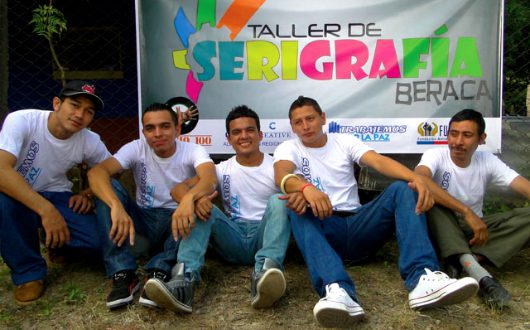
In Honduras, young people are mapping crime violence along its urban public bus systems. According to USAID, the United Nations and the Honduras National Police tracked 86 homicides per 100,000 people in 2011, the highest in the world. Due to gang violence and armed robbery, busses are ripe for extortion and murder. In June 2012, young Hondurans traveled through Tegucigalpa’s dangerous buses with a global positioning system (GPS) in order to develop blueprints for a public bus map for citizens to follow so they could avoid problematic hotspots. The GPS data was then entered into Google Earth.

This was a part of a USAID-led volunteer program. Members of the national anti-violence youth movement, Movimiento Jovenes contra la Violencia, took part in mapping fifteen of the busiest and most risky bus routes in their area, according to USAID.

The Kyrgyz Republic found USAID support when they experienced significant political and social conflict in 2010. Protests and violence, subsequently, gave way to a cynical youth population.

USAID partnered with Youth of Osh, a nongovernmental, secular organization from Osh, Kyrgyzstan. Youth of Osh leads community development projects in the city. In the October 2011 presidential election, USAID and Youth of Osh applied SMS technology to monitor the elections in more than 70 voting stations. They located approximately 1,300 violations via text. This was a groundbreaking accomplishment in political transparency in the Kyrgyz Republic’s election processes.

USAID continued to support the youth bulge in Haiti. Similarly to Honduras, USAID helped construct a mapping device for the urban St. Marc region. The maps pinpointed post-earthquake refugee spots. Thirty local Haitian youth roamed their streets to draw the blueprints.

USAID’s Frontlines also followed Sri Lanka’s diverse social communities. USAID funded a project that taught Sri Lankan youth how to create and broadcast documentaries about Sri Lanka’s people. Eighteen young reporters practiced in journalism, camera and audio equipment, and production and editing, according to USAID’s Frontlines: Youth & Mobile Technology–September/October 2012 issue. The team developed 45 stories that they called “Development Diaries.” USAID continued to support a second season covering minority voices and post-war issues.

Liberian students enrolled at the Kwame Nkruman University of Science and Technology in Ghana pursued master’s degrees thanks to a USAID program. The program follows a development plan sponsored by the U.S. Millennium Challenge Corporation Threshold Program, and looks to establish better management of land rights and access.

USAID’s LAUNCH energy forum on November 10-13, 2011, starred Gram Power, an energy tech company based in the United States but servicing India’s poor electricity market. The self-described “micro solution to India’s major energy woes” was co-founded by Yashraj Khaitan and Jacob Dickinson. The men both graduated from UC Berkeley in 2011 with Bachelors in Electrical Engineering and Computer Science.

The highly selective LAUNCH event led to Gram Power building its first micro-grid installation and electrification in the Khareda Lakshmipura village. They soon brought electricity to 200,000 homes in five years. Gram Power hopes to bring power to 1.4 million people by the end of 2016.

USAID also works in the Philippines, teaching young people at the University of Cebu the prospect of “technopreneurship.” USAID’s Innovative Development through Entrepreneurship Acceleration (IDEA) works with higher education engineering and science programs to engage students on the possibility of bringing their ideas to life.

IDEA offers the Global Entrepreneurship Symposium and Workshop, which teaches young students how to create products, research, understand the global market and work with venture capital, according to Frontlines.

By 2016, IDEA will have garnered more than $2 million, which more than matches the U.S. Government’s $1.5 million investment.

In addition to IDEA, USAID invested $34 million to help higher education in the Philippines. The programs offer study abroad opportunities in the United States and funds for many students to obtain master’s degrees in science and technology.

– Lin Sabones

Sources: USAID 1, USAID 2, USAID 3, USAID 4, USAID 5, United Nations Population Fund
Photo: Creative
July 18, 2015
https://borgenproject.org/wp-content/uploads/borgen-project-logo.svg 0 0 Borgen Project https://borgenproject.org/wp-content/uploads/borgen-project-logo.svg Borgen Project2015-07-18 10:43:052024-05-27 09:25:40Young Social Innovation Around the World
Global Poverty, Health

How Cell Phones are Helping Us Fight Ebola

fight_ebolaThe Ebola outbreak in West Africa continues remains a major public health concern worldwide. In the face of this tragedy, technology provides great hope in managing the disease and providing aid to individuals and healthcare providers. Many technologies are on the forefront of fighting disaster, but the most valuable tool to fight Ebola is probably in your pocket.
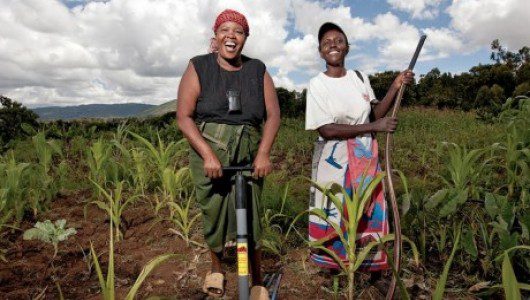
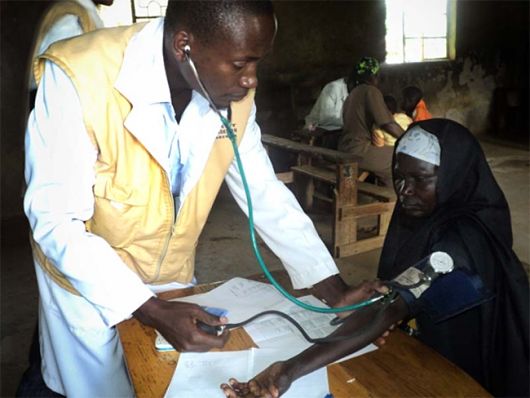
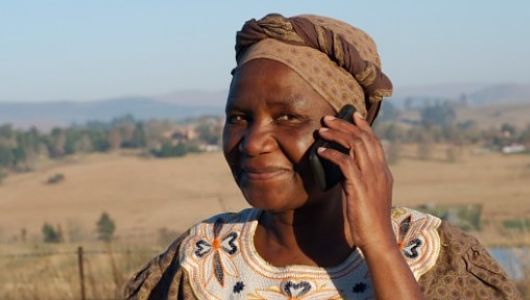
Africa has experienced a boom in cell phone ownership in recent years, which has extended to West Africa. As a result, cell phones are providing patients and families of patients with services such as ebola hotlines. Cell phones also allow health workers to be paid electronically, allow clinics to flag when they’re low on supplies and allow individuals to resolve rumors of ebola by texting local radio stations.

Eric King, an innovation specialist who worked with USAID’s Disaster Assistance Response Team in Liberia, said, “among the technological tools that have amplified the Ebola response, arguably none has been more helpful than the mobile phone.”

And it’s not just helpful for individuals. Cell phone companies collect “call data records,” which manage caller identity and the time of the call, along with being able to identify the customer’s location. These records, held by CDRs, are highly valuable to epidemiologists.

But cell phones have been most valuable in fighting Ebola in the hands of health care workers. The mHero program uses information to bring together people making a difference in coordinating a response to this crisis.

The mHero program brings cell phones together with many services. These services include the iHRIS program, a human resource tracking service used within the health sector of 19 countries, along with UNICEF’s SMS platform and information sharing systems such as OpenHIE and DHIS 2.

The mHero programs bring all of this together to allow key text messages to be sent to heath workers internationally, even in remote areas where there is traditionally less access to cell phone service. Having access to this large database of information allows for messages to be targeted to health workers in relevant locations.

According to intrahealth, mHero is also useful to government officials, who can use it to conduct monitoring processes along with data analysis and surveys. The service, which launched in Liberia in September, represents perhaps a major victory in the fight against Ebola.

Information is power. Cell phones are an accessible technology which provide people worldwide with information. It should be no surprise, then, that cell phones are an incredible source of power in responding to the Ebola crisis.

– Andrew Michaels

Sources: Intrahealth, Harvard, The Economist, USAID
Photo: Empower Magazine

July 13, 2015
https://borgenproject.org/wp-content/uploads/borgen-project-logo.svg 0 0 Borgen Project https://borgenproject.org/wp-content/uploads/borgen-project-logo.svg Borgen Project2015-07-13 14:04:502020-07-09 22:36:24How Cell Phones are Helping Us Fight Ebola
Activism, Global Poverty, Technology, USAID

Global Development Lab Brings Silicon Valley to Washington

Global Development Lab Brings Silicon Valley to Washington-TBP

USAID’s mission to fight global poverty has just received significant support with the recent addition of the Global Development Lab. USAID has long been the leading government agency seeking to alleviate poverty, yet their mission has primarily been that of implementation. The agency is now not only committed to the physical deployment of aid, but also the development of future relief systems.

Founded in April of 2014, the new subdivision seeks to change the ways in which aid is delivered and developed. According to the official website, “The U.S. Global Development Lab is a new entity within USAID that brings together a diverse set of partners to discover, test, and scale breakthrough solutions to achieve what human progress has only now made possible—the end of extreme poverty by 2030.”

The Global Development Lab is bringing the fight against extreme poverty into the 21st century information age. Its aim is to use strategies that top technology companies have used, such as crowd sourcing, big data collection, and constant research and development to find the best solutions in terms of ending extreme poverty.

USAID has appointed Ann Mei Chang as Executive Director for the Global Development Lab. Chang worked for twenty years in Silicon Valley, spending eight of them working for Google as lead engineer of its mobile division. With both experience in the technology and nonprofit sectors, Chang brings a fresh outlook on new ways to implement global development.

The lab is revolutionary in its mission to use resources and partners from both the public and private sectors. The Global Development Lab is partnered with technology companies that are synonymous with innovation. Microsoft, Intel and Nike are listed as cornerstone sponsors. Many of the nation’s top universities, including the University of California, Duke and the Massachusetts Institute of Technology, have also partnered with the lab. USAID hopes that these partnerships will “leverage the combined skills, assets, technologies, and resources of the public, private, and nonprofit sectors to deliver sustainable development impact.”

USAID and its new Global Development Lab are not only attempting to alleviate extreme poverty through donations and other tried methods, but the agency is now attempting to end the suffering of millions around the globe by seeking cutting edge solutions through science, innovation, and collaboration.

– Joe Kitaj

Sources: USAID, The White House
Photo: USAID Blog

July 11, 2015
https://borgenproject.org/wp-content/uploads/borgen-project-logo.svg 0 0 Borgen Project https://borgenproject.org/wp-content/uploads/borgen-project-logo.svg Borgen Project2015-07-11 11:58:462024-12-13 17:51:41Global Development Lab Brings Silicon Valley to Washington
Aid Effectiveness & Reform, Foreign Aid, Global Poverty, USAID

How USAID Is Falling Apart

USAID-Falling-Apart

The United States Agency for International Development, USAID, is the United States’ lead agency for international development and poverty reduction. The organization is credited with a multitude of successes, but in recent years it has faced organizational problems that have for the most part gone unnoticed by governmental higher-ups.

These organizational pitfalls threaten the agency’s ability to combat poverty and promote development worldwide. Recently, USAID has come under attack in the news for providing the wrong geographical coordinates for health centers that the agency funded in Afghanistan. A further look into the organization to find what internal problems are facilitating such mistakes revealed administrative and staffing discrepancies.

The USAID staff has become a major debilitating problem for the agency. There seems to be a rift between new and established staff members when there needs to be collaboration and unity among them. The veterans of the agency should be advising and teaching the newer members so that when they move on or retire, the staff remains steady and prepared. According to the U.S. Global Leadership Coalition, two-thirds of USAID’s professional staff has left. Over 50% of professionals still with the organization are over retirement age. As these older employees are gearing up to leave, the agency is left with a young, new workforce. Over 70% of USAID’s younger employees have less than five years of work experience.

Another problem USAID is facing is the lack of support from Obama’s administration. The slip up in Afghanistan was acknowledged but underscored by USAID, who defended the error with the fact that knowing the geographical coordinates for the center is not the first priority. However, the mistake undermines international credibility and domestic trust in the agency. USAID officials are also claiming that as the United States continues to prepare to fully leave Afghanistan, their own on-the-ground operations are threatened by a lack of firsthand protection. However, the avoidance and negation of blame that such statements allude to may come from a larger internal frustration with a lack of attention from the government and a lack of experienced staff.

Continued increases in spending on military and defense, despite widespread support of development as a better investment for long-term national security measures, undermines the work that USAID can do. Military-led humanitarian efforts rarely focus on the real core issues contributing to the problems and instead expend energy on the symptoms, which makes it unsustainable and often ineffective in the long-term.

The development sector of the government receives only a fraction of what the military receives. Development needs to be made a priority in order for it to receive the recognition and funding that it deserves so it can not only improve countries around the world, but our own country as well.

– Emma Dowd

Sources: Foreign Policy, Huffington Post, U.S. Global Leadership Coalition
Photo: Washington Post

July 11, 2015
https://borgenproject.org/wp-content/uploads/borgen-project-logo.svg 0 0 Borgen Project https://borgenproject.org/wp-content/uploads/borgen-project-logo.svg Borgen Project2015-07-11 09:44:192024-12-13 17:51:45How USAID Is Falling Apart
Health

Education and Healthcare Access in Kenya

Education-and-Healthcare-Access-in-Kenya

I will never forget hearing the story about the woman in Kenya who ran away when a soldier pulled out a condom. She had heard a rumor that if someone tried to use a condom, it meant that they had HIV.

In Kenya, healthcare and education about sex and general health is limited. Moreover, the small amount of health and sex education that does exist is often misguided.

In the past ten years, three people that my family and I were close to died of HIV. All three of them were parents and the breadwinners of the family. On Monday, my mother called to inform me that yet another person that we know is ill, and may be dying of HIV.

According to USAID, around 1.6 million people are living with HIV/AIDS in Kenya. In addition, about 1.1 million children in Kenya are orphans because of AIDS.

People in Kenya with HIV/AIDS, and those at risk, often lack access to healthcare.

In Kenya, healthcare is a constitutional right, but the cost is too high for a majority of Kenyans. In addition to the cost, the closest healthcare facility is often way too far away for poor Kenyans to reach.

According to the World Bank, “only 20 percent of Kenyans have access to some sort of medical coverage.” In April 2014, the Kenyan government launched the Health Insurance Subsidy Program in order to make healthcare more affordable for people in Kenya. While this is a good first step, it does not help the many people who are unable to reach a healthcare facility.

An article by Allianz states that if poor Kenyans living in rural areas are able to seek healthcare, they are often only able to find treatment at a primary care facility. These facilities are often under-staffed and under-equipped, and have limited medicines. One of the three people in my life who died of HIV/AIDs died in a hospital due to HIV-related dehydration. It is possible that he could have been saved by something as simple as an IV if the doctors had known what to do.

Luckily, organizations like USAID and the World Bank are working on treating and preventing HIV/AIDS and giving Kenyans greater access to healthcare.

In 2003, USAID launched the President’s Emergency Plan for AIDS Relief. The program is focused on prevention, treatment and care. These programs have made steps in the past 12 years. For instance, mother-to-child transmission rates have dropped from 28.3% to 8.5%.

However, transmission rates are not the only numbers that have been dropping. Between 2010 and 2013, USAID’s funding to Kenya was cut in half.

HIV/AIDS is continuing to spread in Kenya, and the people who need aid the most are not receiving it. The United States could be doing much more to aid the poor in Kenya. So why is the government decreasing funding, rather than continuing the work that has just begun?

– Clare Holtzman

Sources: Allianz Worldwide Care, USAID, The World Bank
Photo: Zakat

July 10, 2015
https://borgenproject.org/wp-content/uploads/borgen-project-logo.svg 0 0 Borgen Project https://borgenproject.org/wp-content/uploads/borgen-project-logo.svg Borgen Project2015-07-10 07:23:432024-05-27 09:25:44Education and Healthcare Access in Kenya
Development, Foreign Aid, United Nations

Foreign Aid Successes and the Millennium Development Goals

foreign_aid_successes
Tracking foreign aid successes is essential to understanding how state actions affect the world’s poorest places, as well as dispelling myths about the ineffectiveness of aid. Aid works, and there have been dramatic improvements in education, health and the basic quality of life in the developing world because of it.

The Millennium Development Goals (MDGs) were established and adopted by all members of the United Nations in 2000. Some of these goals include reducing child mortality, combating HIV/AIDS rates and severely curbing extreme poverty by 2015. While not all of these goals have been met, there has been remarkable progress in others. Tracking progress toward these goals thus far can help fill in knowledge gaps about which aspects of global poverty need to be addressed the most.

For example, the rate of extreme poverty since 2000 has been cut in half (extreme poverty being defined as living on less than $1.25 per day). In about a decade, nearly half a billion people were pulled out of extreme poverty, especially in China and India. Poverty rates in Africa are also expected to fall below 40% this year. A Brookings Institute report estimates that this halving of extreme poverty rates took place as early as 2008, a full seven years before the deadline, and continued despite the global recession.

Foreign aid has also had a huge impact on global health. Another one of the MDGs was to reduce under-five child mortality by two-thirds by 2015. This goal was met in Rwanda, a country which only two decades ago was engulfed in a violent civil war; additionally, child mortality was reduced by one- to two-thirds in the last decade in some of the top U.S. aid recipients, such as Ethiopia. Globally, this amounts to a 10% reduction in infant mortality between 2005 and 2013.

Another oft-overlooked example of foreign aid successes are the health services and products that the United States Agency for International Development (USAID) provides to millions of people in the developing world. These products and services, among other things, have led to a total eradication of smallpox. One specific example of the effectiveness of USAID health programs is that U.S. foreign aid saves 3 million lives annually in the developing world through immunizations. USAID was also instrumental in providing 1.3 billion people with safe drinking water, and 750 million others with sanitation by supporting the United Nations Drinking Water Supply and Sanitation Decade.

Millennium Development Goal 6 calls to combat HIV/AIDS and other diseases. The U.S. leads the way in HIV/AIDS treatment and prevention, having established the U.S. President’s Emergency Plan for AIDS Relief (PEPFAR). Since its inception, this program has, according to the National Academies Institute of Medicine, saved millions of lives by providing antiretroviral drugs to affected regions. Additionally, the program has served as a proof-of-concept that HIV/AIDS prevention and treatment services can be effectively implemented on a large scale, something that was thought to be impossible only a few decades ago.

USAID has also helped affect change in education in the developing world. Since 1950, the rate of enrollment for children in primary school has gone from less than half to about 90% globally. Consequently, literacy rates have increased by a third in the last 25 years. Two of the Millennium Development Goals were to achieve universal primary education as well as promote gender equality. USAID is pursuing these two goals by promoting robust programs that expand access to education for women in countries like Liberia and Mali.

There are many reasons to be optimistic about the efficacy of foreign aid. Aid programs should be subject to scrutiny and review so that they may be made more efficient and target the populations that most need them. However, it is also important to take into account the many foreign aid successes that USAID and other donors have had in the developing world. Acknowledging that aid works is the first step in achieving the Millennium Development Goals.

– Derek Marion

Sources: Washington Post, Brookings Institute USAID, World Bank Foreign Affairs, IOM
Photo: International Institute for Sustainable Development

July 6, 2015
https://borgenproject.org/wp-content/uploads/borgen-project-logo.svg 0 0 Borgen Project https://borgenproject.org/wp-content/uploads/borgen-project-logo.svg Borgen Project2015-07-06 06:15:342024-12-13 17:51:39Foreign Aid Successes and the Millennium Development Goals
Global Poverty, USAID

Flood Warning System Saves Lives in the Philippines

Flood_Warning_System

The Philippines is the most exposed large country in the world to tropical cyclones. The storms have shaped settlement patterns in the northern islands for centuries and have killed thousands of people, wreaking havoc on rural communities already mired in poverty. A simple yet effective new flood warning system is already saving lives.

In November 2012, the United States Agency for International Development (USAID), in partnership with the Philippine Partnership for Development of Human Resources in Rural Areas, launched the Agusan Marsh Climate Change Adaptation Project to help 61 villages, including La Flora, increase their resiliency to climate change.

The Agusan Marsh Wildlife Sanctuary is a protected area in the Philippines, roughly the size of metro Manila and home to approximately 120,000 people, 80 percent of which belong to the indigenous Manobo tribe. The tribe is dependent on the regions numerous large lakes, forests and rice paddies, which are all essential to the tribe’s way of life. The region’s features are necessary for fishing, farming and wood gathering, however, they also make the land extremely susceptible to flooding. Although its inhabitants are fully aware of the dangers, the rains have increased over the years and the storms that bring them have become more frequent.

Villagers settled along the marshes in stilted homes and floating communities are acutely aware of the flooding that occurs. However, as climate change is fiercely debated but not felt in the largest carbon producers of the world, the problem hits very close to home in the Philippines, with storms intensifying and recurrent flooding destroying lives.

According to USAID, the Agusan Marsh Climate Change Adaptation Project, in addition to educating villagers about adapting farming techniques to environmental changes, has also developed hazard maps using geographic information systems and flood early warning systems. Outreach campaigns taught families how to prepare for and respond to natural disasters.

In La Flora, USAID introduced a simple flood warning system consisting of color codes painted on houses designed to be easily understood by the whole population, spreading the message about flood severity and evacuation.

The system works using colors. The colors act as watermarks: yellow suggests monitoring weather, orange indicates pre-evacuation measures and red represents full evacuation.

In 2014, the warning system proved valuable when a tropical depression storm swept through the area devastating half a million people. In La Flora, residents adhered to the warning system and although water reached 24 feet almost submerging even the tallest buildings, the entire village of 1,120 survived.

As climate change intensifies and the flood waters rise, with the help of USAID and its partners, those affected most—the indigenous cultures of the low lying islands and marshes—will be more prepared and adaptive to the disasters that will inevitably come.

– Jason Zimmerman

Sources: USAID, United Nations Development Programme,
Photo: Telegraph


June 30, 2015
https://borgenproject.org/wp-content/uploads/borgen-project-logo.svg 0 0 Borgen Project https://borgenproject.org/wp-content/uploads/borgen-project-logo.svg Borgen Project2015-06-30 16:48:242024-12-13 17:51:42Flood Warning System Saves Lives in the Philippines
Aid, Global Poverty, USAID

Increase US Aid to Darfur

us_aid_to_darfur
While Darfur has been at the head of aid policy for a long time, aid may be more important to the region than it has been historically.

In 2003, war in Darfur erupted, partially due to the lack of resources and the diversity of groups living in the area.

Poverty and diversity working together to create conflict is not unique to Sudan, but rather is something that I have seen as well in Kenya. Africa was split into countries, not by groups who wanted to live together, but by European countries seeking land and resources. Now, the people of those countries, including Kenya, are impoverished and left with few resources.

It is easy for groups who did not ever mean to live together to fight over the remaining resources. In Kenya, the conflict is often in the form of cattle raids. In Darfur, there was a split between Arabs and non-Arabs that led to a war against the non-Arab population in Darfur, leaving thousands dead and many more as refugees.

The United States has been providing assistance to Sudan since before this conflict, starting in about the 1980s, but US aid to Darfur did not begin until much later. When the conflict began, USAID became a leader in the effort to stabilize Darfur.

USAID had made progress in transforming the Government of Southern Sudan into a stable government (although civil war has broken out once again). In addition, the organization has provided a million people with access to clean water, as well as increasing the number of children in school.

In May, USAID provided Sudan with emergency food assistance of 47,500 metric tons of grain.

This assistance is crucial at this point in time. Violence in Darfur is increasing and Sudanese people are being recruited into ISIS. Recently, a groups of Sudanese students fled to Syria in order to join the organization.

Areas undergoing political transition and violence are easy places for terrorist groups like ISIS to target as recruitment grounds and safe havens. Darfur is possibly more at-risk for this because of its conflict that began, in part, from Arabs in the region feeling discriminated against.

If Muslims in Darfur continue to feel as if there is no future in their country, because of conflict and poverty, and continue to feel discriminated against, even the United Nations is afraid that Darfur could be a “breeding ground” for extremist groups like ISIS.

Khartoum, the capital of Sudan, however, would like for the African Union and United Nation’s troops to pull out of Darfur. Yet, this is not the time.

In light of the conflict, and rise of ISIS, Darfur can use all of the aid that it can get. The United States should continue to be a role model in helping Darfur by increasing aid to the region. With increased aid, hopefully other leaders in world aid will follow suit and increase aid to the region.

The increased emergency food aid was a good first step, but perhaps increased structural aid should come next.

– Clare Holtzman

Sources: Aid Data, All Africa, WN, Brookings, National Bureau of Economic Research, Open Democracy, Poverties, Reuters, Slate, Time, Thomas Reuters Foundation, USAID
Photo: End Genocide

June 30, 2015
https://borgenproject.org/wp-content/uploads/borgen-project-logo.svg 0 0 Borgen Project https://borgenproject.org/wp-content/uploads/borgen-project-logo.svg Borgen Project2015-06-30 16:47:132024-12-13 17:51:42Increase US Aid to Darfur
Advocacy, Development, Global Poverty

5 Countries Committed to Ending Extreme Poverty

extreme_poverty
The end to extreme poverty will not occur solely as a result of charities, businesses or governments. Defeating extreme poverty entails changing the rules, systems and structures that are designed to keep people poor. Change must occur through a country’s specific policies and practices that contribute to keeping people in extreme poverty.

Countries should ensure that governments, businesses and individuals act to establish alignment in the vested interests of the world’s poor. If executed progressively and strategically, such systems, structures, policies and processes can make a change. Five countries have made a boisterous and public commitment to ending poverty – Brazil, Colombia, Malawi, the United Kingdom and the United States.

Brazil – The Bolsa Familia Program

Efforts to end extreme poverty in Brazil originated from Bolsa Familia. The program directly transfers cash to pre-designated households deemed impoverished. The decisions about allocation are based on assessments of the depth of poverty rather than household composition. Over 45 million people are currently enrolled in the program. As a direct result of Bolsa Familia, the number of those living in extreme poverty in Brazil has dropped from 20.4 million to 11.9 million.

Colombia – Oxford Poverty and Human Development Initiative

In 2010, Colombia created a poverty reduction plan and multidimensional solution to address poverty. Their national development plan has three pillars: employment, poverty reduction and security. Due to a lack of successful poverty reduction results by the original program, adoption of a new poverty reduction strategy called the GOC occurred. According to the Oxford Poverty and Human Development Initiative, the strategy outlines the poverty index designed to monitor and measure different indicators of multidimensional poverty. This initiative will reflect the multiple deprivations that people suffer by identifying disparities across health, education and living standards. It will indicate the number of people who are poor on a multidimensional level and assist in allocating funds and determining efforts to eliminate extreme poverty.

Malawi – Malawi Growth and Development Strategy and the Farm Input Subsidy Programme

In 2002, the Malawian government launched the Malawi Poverty Reduction Strategy (MPRS), which had the express purpose of achieving “sustainable poverty reduction through empowerment of the poor.” In 2005, the MPRS was reorganized as the Malawi Growth and Development Strategy (MGDS). Currently, the MGDS comprises the overarching policy framework for social and economic development to reduce extreme poverty. In 2005, the Farm Input Subsidy Programme was introduced as a measure to increase agricultural production. In an effort to ensure food security, the government provides subsidized agricultural inputs to farmers with smaller land holdings. This has matured into agricultural policy. An estimated 50 percent of the Ministry of Agriculture’s budget is spent on methods to reduce expenditures of research and extension. The subsidy program is now a firmly established pillar of Malawian agricultural policy.

The United Kingdom – The Department for International Development

In the United Kingdom, The Department for International Development (DFID) leads national efforts to end extreme poverty. Their primary areas of focus are creating jobs, empowering girls and women and saving lives. The DFID honors the international commitments and purpose to achieve the United Nations Millennium Development Goals. Their objectives are achieved through the effective improvement of governmental transparency, openness and value of money and policy development on economic growth and wealth creation.

The United States – USAID

In the United States, the USAID is the leading agency that works to end extreme global poverty. Their philosophy suggests an interconnected world in which instability anywhere around the world can impact us domestically. Thus, the focus is on military collaboration in active conflicts, efforts to stabilize countries and the building of responsive local governance. Essentially, the main objective is to utilize the transition period between conflict and long-term development by investing in agriculture, health systems and democratic institutions.

In order to end global extreme poverty, we must invest in common solutions. If all countries make the pledge commitment to end 0.7 percent of poverty, we can end extreme poverty by 2030.

– Erika Wright

Sources: Global Citizen, Global Humanitarian Assistance, Global Poverty Project, UK GOV Rural Poverty Portal, World Bank USAID
Photo: The Atlantic

June 30, 2015
https://borgenproject.org/wp-content/uploads/borgen-project-logo.svg 0 0 Borgen Project https://borgenproject.org/wp-content/uploads/borgen-project-logo.svg Borgen Project2015-06-30 01:30:502024-05-27 09:25:185 Countries Committed to Ending Extreme Poverty
Global Poverty, Hunger, USAID

Feed the Future Helps Small Farmers in Africa

feed_the_futureDaniel Obare used to be a subsistence farmer. His family ate most of the tomatoes and green peppers he grew, and he sold the surplus on the side. Today, he cultivates watermelons on three acres of land and uses cutting-edge farming techniques. He and his family have experienced a huge lifestyle improvement thanks to the agricultural guidance of USAID’s Feed the Future initiative.

Most Tanzanian farmers do not have the training or equipment required to properly use chemical fertilizers and pesticides. They use untreated seeds planted at random distances apart in sunken beds and often rely on rainfall for precious irrigation. These inefficient techniques result in lower yields, farms that are more vulnerable to extreme weather and high levels of pollution caused by chemical runoff.

In September 2014, Obare attended a farmer’s convention in Mbeya called the Nane Nane Fair. There, he met members of the Tanzania Horticultural Association, a group run by Tanzanians and supported by USAID.

With their help, Obare learned more modern farming techniques and dramatically increased his yield. “My lifestyle has completely changed. For instance, my daughter, who was in a government school, has been transferred into a private school that has more facilities. I can confidently pay 1.5 million TZS [$740] for her annual school fees,” Obare said.

Obare’s experience in Tanzania is indicative of a greater trend throughout Africa. USAID’s Feed the Future initiative works in 12 African nations supporting groups like the Tanzania Horticultural Association. The programs differ by country, from the small farmer training and support in Tanzania to trade hub programs in Zambia, Lesotho, Swaziland, Namibia, South Africa, Botswana, Malawi and Mozambique.

“The trade hub provides targeted technical assistance to governments, the private sector and civil society organizations to advance regional trade within southern Africa while incorporating gender integration, environment compliance and strategic outreach in all activities,” a USAID report stated.

Feed the Future is ultimately trying to give developing nations a strong economic base in sustainable agriculture. Their initiatives focus on efficiency, resilience in the face of a changing climate and gender equality. Their impact has been felt by small farmers and administrators alike.

James Bever, a former mission director for USAID, is enthusiastic about the program’s potential. When asked about the Feed the Future programs in Ghana, he told reporters that agribusiness has the potential to really take off, especially in northern Ghana.

“It is a sustainable model and we are extremely excited about it,” he said. “I think Ghana is in the path to an agricultural revolution that really can turn the northern part of the country to a bread basket and reduce imports. The north is where there is a real potential for quick improvement in grain production such as rice, white and yellow maize and sorghum, which are marketable.”

The dedication of local agricultural groups is turning USAID’s support into skills and their goals into reality. More farmers are being helped every day, and despite the challenges they face, small farmers in Africa are living markedly better lives.

– Marina Middleton

Sources: Feed the Future 1, Business Ghana USAID 1, Feed the Future 2 USAID 2
Photo: Flickr

June 25, 2015
https://borgenproject.org/wp-content/uploads/borgen-project-logo.svg 0 0 Borgen Project https://borgenproject.org/wp-content/uploads/borgen-project-logo.svg Borgen Project2015-06-25 11:00:272024-05-27 09:24:09Feed the Future Helps Small Farmers in Africa
Page 79 of 92«‹7778798081›»

Get Smarter

  • Global Poverty 101
  • Global Poverty… The Good News
  • Global Poverty & U.S. Jobs
  • Global Poverty and National Security
  • Innovative Solutions to Poverty
  • Global Poverty & Aid FAQ’s
Search Search

Take Action

  • Call Congress
  • Email Congress
  • Donate
  • 30 Ways to Help
  • Volunteer Ops
  • Internships
  • Courses & Certificates
  • The Podcast
Borgen Project

“The Borgen Project is an incredible nonprofit organization that is addressing poverty and hunger and working towards ending them.”

-The Huffington Post

Inside The Borgen Project

  • Contact
  • About
  • Financials
  • President
  • Board of Directors
  • Board of Advisors

International Links

  • UK Email Parliament
  • UK Donate
  • Canada Email Parliament

Get Smarter

  • Global Poverty 101
  • Global Poverty… The Good News
  • Global Poverty & U.S. Jobs
  • Global Poverty and National Security
  • Innovative Solutions to Poverty
  • Global Poverty & Aid FAQ’s

Ways to Help

  • Call Congress
  • Email Congress
  • Donate
  • 30 Ways to Help
  • Volunteer Ops
  • Internships
  • Courses & Certificates
  • The Podcast
Scroll to top Scroll to top Scroll to top