• Link to X
  • Link to Facebook
  • Link to Instagram
  • Link to TikTok
  • Link to Youtube
  • About
    • About Us
      • President
      • Board of Directors
      • Board of Advisors
      • Financials
      • Our Methodology
      • Success Tracker
      • Contact
  • Act Now
    • 30 Ways to Help
      • Email Congress
      • Call Congress
      • Volunteer
      • Courses & Certificates
      • Be a Donor
    • Internships
      • In-Office Internships
      • Remote Internships
    • Legislation
      • Politics 101
  • The Blog
  • The Podcast
  • Magazine
  • Donate
  • Click to open the search input field Click to open the search input field Search
  • Menu Menu

Tag Archive for: USAID

Information and news about mobile technology

Posts

Global Poverty, Humanitarian Aid

Global Poverty & the Economy

Humanitarian work is intuitively selfless; it is an opportunity to positively impact a stranger’s life without any expectations that he will return the favor. Although this makes a certain amount of sense, the sentiment is not entirely true.

In fact, when federal government agencies such as the United States Agency for International Development invest to eliminate global poverty, they see huge economic returns. Global markets expand and jobs are created. Financial gain should not necessary be the sole motivation for aid, but humaneness and generosity are not always the federal government’s prime movers. Boosting the economy makes for a good supplement.

The process, from foreign aid to market expansion, works like an investment. The investor, the one providing the aid, is essentially buying consumers who will then in turn spend money on foreign goods.

“From an economic perspective, what happens in one country has ripple effects throughout the world,” says Christopher Policinski, the CEO of Land O’Lakes.

The ripple effects starts like this: a small investment is made in a poor overseas community. Maybe this money provides clean and accessible water, maybe it champions education, or maybe it funds electricity and energy projects. In every possibility, it begins to raise the community out of poverty, making consumerism more viable.

The working poor, for example, may have money for apples, soaps, toothpastes and wheat. Middle to upper classes may now have money for plane tickets, clothing, technologies and cars. These goods are purchased from the United States and from other industrialized countries, boosting their economies.

Current data backs this theory. Here are some statistics you will find on the Borgen Project website:

1.

One out of five U.S. jobs is export-based. This means that one out of five U.S. jobs relies on global markets to succeed. Investments in foreign, impoverished communities expand these markets by creating new buyers of U.S. products, bolstering U.S. export-based business.

2.

Developing nations receive 45 percent of our country’s exports. This is important because it shows how much the U.S. really does rely on foreign communities that are still “developing.” Aiding those people in those markets will likely produce strong economic benefits in the U.S.

3.

The list of the countries with the fastest growing gross domestic products (GDP,) according to their annual average GDP increase percentage, may be surprising. The list goes: Angola (11.1,) China (10.5,) Myanmar (10.3,) Nigeria (8.9,) Ethiopia (8.4,) Kazakhstan (8.2,) Chad (7.9,) Mozambique (7.9,) Cambodia (7.7) and Rwanda (7.6.) In comparison, the U.S. GDP growth rate in 2013 was 1.9 percent. Investing in countries like Angola is smart business.

History backs this theory as well.

“From Germany to South Korea, nearly all of the United States’ top trading partners were once recipients of U.S. foreign aid,” reads the Borgen Project’s “Global Poverty & U.S. Jobs” page.

There is a lot of reason to promote foreign aid for its economic benefits, but it is important not to forget that at its core it is a humanitarian act. People are not only consumers. If Congress needs to think otherwise to secure bipartisan support and increase generosity in development projects, which it could stand to do, then so be it. It could be for the best.

– Adam Kaminski 

Sources: The Borgen Project, Bloomberg Businessweek
Photo: Bloomberg Businessweek

August 14, 2014
https://borgenproject.org/wp-content/uploads/borgen-project-logo.svg 0 0 Borgen Project https://borgenproject.org/wp-content/uploads/borgen-project-logo.svg Borgen Project2014-08-14 12:00:582024-05-27 09:20:47Global Poverty & the Economy
Global Poverty

Modern Education in Pakistan

Education in Nicaragua
When it comes to education in Pakistan, there’s no beating around the bush: the country is home to one of the worst education systems in the world. Over 5 million children in Pakistan are out of school. This is the second highest number of out-of-school children in the world, amounting to one in 12 of the world’s out-of-school children.

All told, nearly 50 million adults in Pakistan are illiterate. That represents the third largest illiterate population globally.

And worst of all, Pakistan’s meager spending on education is declining. Education spending in Pakistan dropped from 2.6 percent of the nation’s GDP in 1999 to 2.3 percent in 2010.

The ramifications this has on the people of Pakistan are devastating. Twelve-year-old Fatma goes to school in an abandoned brickyard, one of about 20,000 “shelterless” schools in Pakistan.

“I study at the Government Primary School in Lahore,” Fatma said. “I study English language, and I like it. There are no chairs. We have to sit on the ground. It’s a problem in the winter. When it rains there is nowhere to sit.”

Those schools that are bonafide buildings are not much better off. Sixty percent of these buildings have no electricity, while 40 percent lack access to drinking water.

According to some, the abysmal state of education in Pakistan is the result of a war between the powerful elite and the impoverished masses. Some claim that the rich in Pakistan are purposefully keeping the poor illiterate to stay in power.

Frustrated, one of Fatma’s school council members has said, “Government officials send their own kids to air-conditioned classrooms. Let’s see them make their kids sit here and see what it is like!”

Indeed, disparities in income mean that the most privileged group will receive a far better education in Pakistan. Ninety-one percent of the richest members of society complete their primary education, while only 26 percent of the poorest can say the same.

Still, education in Pakistan for the rich and the poor alike remains dismal. The poor hold classes outdoors, while the main luxury for “rich” schools is air-conditioning.

Yet there is hope for education in Pakistan. USAID has established a set of lofty goals that would significantly improve the quality of education in the country. The organization plans to “bring 3.2 million children to read at or above their grade level by 2018.” Furthermore, USAID has pledged that 120,000 children will get access to new schools. For many of them, it will be their first time in a school with a roof.

There is reason to hope that USAID can accomplish these goals. In the past three years, the organization has built or renovated over 600 schools while also supplying those schools with new computers and books. Similarly, USAID has trained 15,000 teachers and administrators since 2009.

In the end, only time will tell if Pakistan can overcome its pervasive inequality and government spending issues to turn its failing education system around.

– Sam Hillestad

Sources: UNESCO, USAID, PBS, WIDE
Photo: Pakistan Today

July 30, 2014
https://borgenproject.org/wp-content/uploads/borgen-project-logo.svg 0 0 Borgen Project https://borgenproject.org/wp-content/uploads/borgen-project-logo.svg Borgen Project2014-07-30 04:00:562024-06-04 03:01:22Modern Education in Pakistan
Global Poverty, USAID

USAID’s Strategies to End Child Marriages

USAID recently renewed its commitment to end child marriages – as well as early and forced marriage – both by allocating U.S. $4.8 million dollars to be spent over the next year on prevention efforts and by announcing a new set of strategies for combating the practice that leaves so many children (mostly girls) devoid of resources, health, and dignity.

With the support of several key U.S. legislators, USAID will implement new prevention programs in seven nations: Africa, Asia, and the Middle East, Bangladesh, Burkina Faso, Ethiopia, India, Nepal, Tanzania, and Yemen. These prevention programs, which have been updated after analyzing the weaknesses of previous prevention programs, are customized to the needs and features of each of the countries USAID is targeting, making their eventual success very probable.

The advent of child marriage is highly correlated not only with increased rates of poverty, but also with increased maternal and infant mortality and increased incidence of HIV/AIDS and other sexually-transmitted diseases. Ending the practices of forced child marriage, which is “perpetuated by cultural norms, poverty, and lack of access to education,” will re-empower over 10 million girls per year, as well as the families from which they were taken, to make their own choices about their health, education, and futures.

Though child marriage by definition includes all children wed before their 18th birthdays, as many as a third of child marriages occur before the 15th birthday, and some children are married at as young an age as eight years old.

Among USAID’s new strategies for preventing child marriage are improved legislation advocacy measures, increased public awareness of the effects of child marriages and cash incentives to families whose girls have not been married at the age of 18. USAID is setting an influential and inspiring example to other organizations, like The Borgen Project, to continue to promote a change.

USAID’s previous commitment to preventing child marriage was already impressive. Their renewed focus will only serve to keep more children from the bonds of early matrimony.

– Elise L. Riley

Sources: USAID, AllAfrica, The Guardian
Photo: The Guardian

July 28, 2014
https://borgenproject.org/wp-content/uploads/borgen-project-logo.svg 0 0 Borgen Project https://borgenproject.org/wp-content/uploads/borgen-project-logo.svg Borgen Project2014-07-28 15:24:572024-05-27 09:19:04USAID’s Strategies to End Child Marriages
Advocacy, Foreign Aid, USAID

Seven Questions to Ask About Foreign Aid

1. Why does the U.S. give foreign aid?

The U.S. gives aid for several reasons: economic interests, national security and American values. Economically, aid builds trading partners and supports the demand for U.S. goods. For national security, U.S. aid can sustain efforts to reduce injustice and poverty, which can contribute to instability and social tensions. Providing aid can also validate the kindness of the American people, advance democracy and human rights and build a better world.

2. What types of U.S. assistance does it include?

Foreign aid is a very comprehensive term. It incorporates several types of assistance, from the international affairs budget to poverty-focused assistance. The international affairs budget includes the resources to finance U.S. endeavors abroad. For example, it provides funds for USAID and the Department of State’s diplomatic costs and expenses that are sustained in protecting the interests of U.S. citizens and businesses abroad. In addition to helping people in poor countries, this aid provides money to allies for strategic purposes. Poverty-focused assistance concentrates on promoting economic growth and providing services like education and health care.

3. How much does the U.S. government spend on poverty-reducing foreign aid?

The U.S. government spends around $80 per taxpayer on foreign aid. To put that into perspective, compare that number to what Americans spend on other items: $204 per person on soft drinks, the $126 per person on lawn care and $101 per person on candy.

4. What is Americans’ understanding of how much the U.S. spends on this aid?

Americans think the U.S. spends more money on foreign aid than Medicare and Social Security – as much as 30 percent. However, only 0.7 percent of the U.S. federal budget is spent on poverty-focused foreign aid.

5. How can we ensure development aid is not wasted by corrupt governments?

Most poverty-reducing foreign aid is not actually provided directly to foreign governments. Around 85 percent goes through NGOs and U.S.-based government contractors. It may actually force governments to increase transparency and accountability.

6. What is the U.S. doing to make this kind of aid more effective?

The U.S. is doing many things to make foreign aid more efficient, such as defining aid’s purpose, modernizing USAID, developing new models of providing aid and making it more transparent. In 2010, President Obama put forth the first U.S. Global Development Policy which clarifies that the main purpose of U.S. development aid is to pursue global economic growth to fight global poverty. For modernizing USAID, USAID Forward is a new reform agenda that is working to make USAID more efficient, transparent and accountable. President Bush introduced the Millennium Challenge Corporation (MCC) during his presidency. MCC is a “United States foreign aid agency that is applying a new philosophy towards foreign aid.” The MCC model demands that countries to meet criteria in three areas: investments in people, economic freedom and good governance.

7. How can the U.S. improve it to better fight poverty?

There are a few ways. The United States could focus aid more on combating poverty worldwide, provide more transparent information about their foreign aid and give more aid to effective local leaders.

– Colleen Moore

Sources: Alliance for Peace Building, Oxfam America, The Borgen Project
Photo: The Spectator

July 18, 2014
https://borgenproject.org/wp-content/uploads/borgen-project-logo.svg 0 0 Borgen Project https://borgenproject.org/wp-content/uploads/borgen-project-logo.svg Borgen Project2014-07-18 04:00:442024-05-27 09:18:29Seven Questions to Ask About Foreign Aid
Education, Women, Women and Female Empowerment

Women’s Education: Threat to Terrorism

The recent kidnapping of 300 Nigerian girls by the extremist group Boko Haram has sparked a global dialogue around the issue of women’s rights. Everyone seems to be wondering: why would an extremist group of alpha males feel so threatened by young, educated girls that they would be inclined to abduct nearly an entire village? The answer lies in the facts.

Around the world a vast portion of women are denied basic rights — that is access to education, jobs and health care — and are victims of sexual and physical abuse. According to USAID, 62 million girls are not in school. UNESCO’s latest statistics show that there are an estimated 862 million illiterate adults in the world, about two-thirds of whom are women.

The residual effects of an uneducated female population are far-reaching. There are social, political and economic consequences, there are health corollaries, but the common motivator seems to be to keep men in power.

USAID studies show that a girl who completes basic education is three times less likely to contract HIV/AIDS. An educated women re-invests 90 percent of the income in her family. A child born to a literate mother is 50 percent more likely to survive past the age of 5. Women with some formal education are more likely to seek medical care and ensure their children are immunized.

So, an educated female population would completely uproot a conservative, dictatorial society and act as a threat to terrorism. It is, therefore, entirely threatening to those men in positions of power. A literate woman does not simply read her children bedtime stories — she changes their conception of the world.

Various global efforts have been launched to ensure that women are granted access to education. Let Girls Learn is a new endeavor that provides the public with meaningful ways to help all girls receive a quality education. USAID has contributed $230 million in support of the cause and for new programs that promote universal education.

The United States government has intervened in the global arena as well. It has invested one billion per year through USAID in low-income countries to ensure equitable treatment of boys and girls, to establish safe school environments and to engage communities in support for girls’ education.

When delving into the facts, the answer seems clear. The prospect of an educated female population is extraordinarily threatening. Education is a fundamental tool and means for societal change. Thomas Staal, USAID’s deputy administrator, sees the issue plain and simple; education is essential in fighting poverty and its grim consequences — hunger, disease, resource degradation, exploitation and despair. And “women are the caretakers and economic catalysts in our communities. No country can afford to ignore their potential.”

– Samantha Scheetz

Sources: USAID 1, USAID 2, USAID 3, USAID 4, PBS
Photo: FT Magazine

July 17, 2014
https://borgenproject.org/wp-content/uploads/borgen-project-logo.svg 0 0 Borgen Project https://borgenproject.org/wp-content/uploads/borgen-project-logo.svg Borgen Project2014-07-17 12:00:392024-05-27 09:18:28Women’s Education: Threat to Terrorism
Advocacy, Children, Education, Global Poverty, Women, Women & Children, Women and Female Empowerment

5 Reasons to Invest in Educating Women

Education is the single most impactive weapon to empower women and save them from the cycle of poverty. While the gender gap in primary education has decreased over the past two decades, significant inequalities still remain. With women comprising two thirds of the illiterate population, and 2.6 million more girls out of school compared to boys around the world, now is not the time to deny females the right to a decent education.

That’s why USAID recently launched Let Girls Learn, an effort to give girls around the world access to quality education, backed by $230 million in new programs.

Based on statistics from USAID and the World Bank, here are five reasons why an investment in a girl’s education is an investment in a better world:

1. Educating Women Saves Lives
According to USAID, 99 percent of maternal deaths occur in the developing world. However, based on data from the World Bank, child mortality is reduced by 18 per thousand births with each additional year of female education. Giving young women access to education will decrease birth related deaths, as well as safeguard the health of all families. Women who complete primary school education are more likely to ensure their children are immunized, meet their children’s nutritional requirements and practice better sanitation.

2. Educating Women Increases GDP
Family earnings are increased when a wife has received an education. Educated women are better able to provide for their families, and help make smarter financial decisions. USAID reports show that one extra year of primary school boosts a girl’s future wage 10 to 20 percent. On the larger scale, USAID data reveals that when 10% more girls go to school, a country’s GDP increases on average by 3 percent.

3. Educating Women Limits Overpopulation
Investing in women’s education keeps girls in school longer. In the developing world, 1 in 7 girls will marry before they are 15. If a girl stays in school for seven or more years, on average, they will get married four years later and have two fewer children. Additionally, when women are educated about birth control, they are equipped to practice safe family planning.

4. Educating Woman Decreases Disease
Women make up nearly 52 percent of the global total of people living with HIV. A girl who completes a basic education is 3 times less likely to contract HIV/AIDS.

5. Educating Women is the right thing to do
The bottom line is: every child deserves the right to a quality education, and girls are no exception. With programs that ensure safe, quality and empowering education –like those implemented by USAID and Let Girls Learn –the world is one step closer to being a more just and equitable place.

– Grace Flaherty

Sources: USAID, USAID 2, USAID 3, World Bank
Photo: Colorado Chamber of Commerce

July 11, 2014
https://borgenproject.org/wp-content/uploads/borgen-project-logo.svg 0 0 Borgen Project https://borgenproject.org/wp-content/uploads/borgen-project-logo.svg Borgen Project2014-07-11 04:00:042024-05-27 09:18:095 Reasons to Invest in Educating Women
Activism, Children, United Nations, USAID

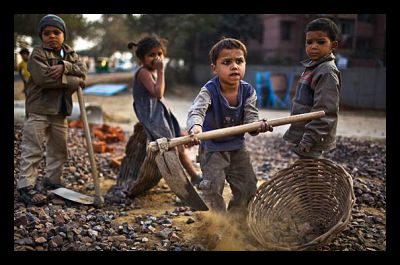
Global March Against Child Labor: Continued Progress

Global March Against Child Labor
In 1998, a group of forward-thinking activists organized the Global March Against Child Labor. It took groups from over 100 countries to lead a march that crossed 103 countries and ended at the International Labour Organization (ILO) in June 1998, where activists from all over the world rallied to end child labor.

In response, the ILO began the World Day Against Child Labor in 2002. Every year on June 12, governments, citizens and civil societies gather to focus the world’s attention on child laborers and create campaigns to help them.

The movement has lofty ambitions but is still doing a great job of fulfilling them. Before the turn of the millennium, there were nearly 250 million children who were child slaves. The figure has now dropped almost 100 million and is estimated to be around 168 million.

Girls in particular have benefited from this as their numbers have dropped nearly 40 percent since then, while boys have dropped 25 percent. Despite this, some 88 million children still work in potentially fatal jobs.

Like many problems that need to be solved, one method employed in the reduction of child labor is simply raising awareness. The Global March Against Child Labor has proven to governments and civil societies around the world that this is something that needs to be stopped.

The U.S. Department of Labor has played a critical role in producing promotional documents and reports that have been quite successful in raising awareness of this terrible issue. Additionally, USAID acknowledged the power of video and strung together compelling footage in what eventually came to be a feature film about child labor, titled “Stolen Childhoods.”

USAID has played a big role as well in raising awareness. Through the Global Labor Program, USAID has helped workers in Liberia mobilize against employers and has ensured that any exploitative wage practices were discontinued. As children were typically employed in rubber plants in Liberia, USAID managed to ensure that children would not be separated from their parents if they worked, and also oversaw the building of a school on the plant. The employers agreed to pay the adults a living wage.

Another entity that is vital to ending child labor is business. Thanks to the Global March Against Child Labor and USAID’s awareness campaigns, a spotlight has been placed on businesses and their obligation to ensuring that children are not working.

The most prominent advocate of this is the program GoodWeave. This is a system by which companies in India can be certified to ensure that children are not used in the creation of rugs or carpets. Since its inception in 1995, GoodWeave has approved of over 11 million carpets. In that time, the number of children who work in carpet factories has dropped from 1 million to 250,000.

The Global March Against Child Labor was the beginning of a bold social movement, but now we must celebrate and continue its ongoing achievements.

– Andrew Rywak

Sources: USAID Blog, International Labour Organization, U.S. Department of Labor, Global March
Photo: List Top Tens

July 10, 2014
https://borgenproject.org/wp-content/uploads/borgen-project-logo.svg 0 0 Borgen Project https://borgenproject.org/wp-content/uploads/borgen-project-logo.svg Borgen Project2014-07-10 04:00:532024-12-13 17:50:24Global March Against Child Labor: Continued Progress
Global Poverty, Health

Every Newborn Action Plan Targets Preventable Deaths

Five babies are born every second, and every day over 400,000 women around the world facilitate the miracle of life. Many of these children, however, are given poor chances of survival. 44 percent of children who die before their fifth birthday are taken from the world within their first month of life. 2.9 million babies die within the first month, and an additional 2.6 million babies are stillborn. Arguably more alarming than the statistics is that these deaths are typically preventable.

That’s where the Every Newborn Action Plan (ENAP) comes in. Endorsed in May and launched on June 30, ENAP is an initiative aimed at accelerating action to prevent the numerous newborn deaths around the world. USAID, the UN and other global organizations have banded together to support and promote this plan.

Children are at their most vulnerable during the child delivery process and the first few months of life. Prematurity, asphyxiation and infection are among the serious threats to newborn survival, but they can be minimized with the right steps. Training doctors and nurses to anticipate and prevent these possibly fatal conditions is a vital step in minimizing newborn deaths, and ENAP aims to address this.

ENAP was launched in Johannesburg, South Africa, where the UN Secretary General, Ban Ki-Moon spoke. He said, “If we increase investments, focus on equity and promote human rights, we can create a world free of preventable maternal and child deaths in just one generation.”

The plan has a timetable, hoping to reduce the neonatal mortality rate per 1000 live births from 15 to 7 by 2035, with less extreme mile markers between now and then. To achieve these goals, over 90 countries have to get behind the movement and accelerate their progress and 29 of these countries will have to “more than double current rates of progress in policy and private sector commitments to save newborn lives.” ENAP outlines how this can be achieved.

ENAP focuses on improving healthcare across myriad specialties including prenatal, pregnancy, postnatal and infant care. It emphasizes thoroughness at every stage, beginning with early pregnancy and not ending until the child and the mother are experiencing stable health. Their plan includes a checklist of criteria for improved pregnancy healthcare, including points like “early initiation of breastfeeding” and “birth companion of choice and skilled attendant at birth.” These things are often a given in the U.S., but are sometimes a luxury in impoverished countries.

Higher survival rates for newborns and mothers would mean great things for fighting global poverty. Population growth is often uncontrollable in impoverished areas because, without a guarantee that children will survive, families often have more children than they can support. This puts strain on communities and lowers quality of life standards significantly. As ENAP reduces newborn deaths, population growth can transition to a steadier rate that can be more easily supported by countries, which will lead to more stable economies and happier people.

With the backing of countries worldwide, the support of institutions such as USAID and the UN and effective implementations of the guidelines of the plan, Every Newborn Action Plan has the potential to save millions of lives in just over two decades.

– Magdalen Wagner

Sources: United Nations, World Health Organization, GhanaWeb, Huffington Post, Mail Online
Photo: IBTimes

July 5, 2014
https://borgenproject.org/wp-content/uploads/borgen-project-logo.svg 0 0 Borgen Project https://borgenproject.org/wp-content/uploads/borgen-project-logo.svg Borgen Project2014-07-05 01:57:412024-05-27 09:18:08Every Newborn Action Plan Targets Preventable Deaths
Global Poverty

Hunger in Tanzania

It is difficult to believe that large quantities of people could go hungry in a country that relies heavily on agriculture to sustain its economy, but that’s exactly the case in Tanzania. Not only does agriculture account for a quarter of Tanzania’s GDP, but also approximately 75 percent of Tanzanians (most of whom are women) are employed by that sector. Yet nearly half of households don’t have access to adequate amounts of food, and Tanzania’s malnutrition levels are among the highest in Africa. Something isn’t adding up.

What is the problem? It isn’t that Tanzania is exporting all of its food, leaving its own people to starve. Tanzania is actually considered “food self-sufficient,” meaning that it makes most of the food its people need to live. The problem is poverty. Classified as a low-income country and ranked in the bottom fifth of countries in terms of human development, Tanzania simply hasn’t yet developed the infrastructure necessary to get the food from the fields into the hands of those who need it most.

The future is bright, though. Tanzania’s economy has been growing for several years and has the potential for continued growth. Targeted agricultural infrastructure investments could radically reduce the number of hungry Tanzanians, as Tanzania already has excellent land and water resources, in addition to international access via a major port city (Dar es Salaam.) The climate disposes itself to a wide variety of crops, and simply improving the quality and amount of seeds available to Tanzania’s agriculture sector and building the rural roads necessary for the distribution of food could vastly increase Tanzania’s food yield.

International aid organizations like USAID are already working to make hunger in Tanzania a thing of the past. The Tanzanian government is also taking steps to eradicate poverty in its country by instituting policies and programs such as Kilimo Kwanza (which means “agriculture first”) and the Southern Agricultural Growth Corridor of Tanzania, which aim to eliminate hunger and reduce poverty by promoting agricultural growth. Motivated to feed themselves, the Tanzanian people simply require the capital to make prosperity a reality.

— Elise L. Riley

Sources: IFPRI, UNDP, USAID, World Food Programme
Photo: WFP

June 29, 2014
https://borgenproject.org/wp-content/uploads/borgen-project-logo.svg 0 0 Borgen Project https://borgenproject.org/wp-content/uploads/borgen-project-logo.svg Borgen Project2014-06-29 18:47:492024-05-27 09:10:14Hunger in Tanzania
USAID

Global Cost of Violence Hits $9.8 Trillion

The Institute for Economics and Peace (IEP) released its 2014 estimates about the costs of wars and violence this June, and the numbers continue to disappoint. The think tank’s report, called the Global Peace Index (GPI,) found that the world spent $9.8 trillion on resolving violent conflicts. This number is up from the 2013 expenses of $9.46 trillion, and the GPI has reported rising costs since 2008.

$9.8 trillion, written as $9,800,000,000,000, is an enormous amount of money. To put this number in context, IEP founder Steve Killelea noted that “increases in the global economic impact of violence and its containment are equivalent to 19 percent of global economic growth from 2012 to 2013” and that the cost of violence for 2014 is “around $1,350 per person.” $9.8 trillion is 11.3 percent of the entire world’s GDP.

What is causing such large increases in violence and its economic impact? Internal strife and civil wars account for most of the problem. Furthermore, Europe, North America and most of Asia do not experience much conflict; violence seems to be localized in specific countries. According to the report, Syria, Afghanistan and South Sudan were the countries most affected by violence, while Iraq, Pakistan, Russia and North Korea also were ranked highly.

While countries with more violence are not centered in a specific region, they all have high rates of poverty. Of the 500 million people living in countries with high rates of conflict, 200 million live in extreme poverty, surviving on less than $2 per day. Poverty and conflict are closely linked, and strategies to reduce the global impact of war must also help the poor.

Despite the need to fight poverty as part of conflict resolution, the United States spends significantly more on its military than it does on international development. In 2014, USAID’s total budget was $47.8 billion. While this may seem large, the military’s budget request for 2014 was more than 10 times that amount, at $526.6 billion. The U.S. has the economic ability to fight poverty and reduce the amount it would need to spend on its military, but it prioritizes the military over foreign aid in international affairs.

The international development budget itself is not completely devoted to fighting poverty directly. USAID has allocated $8.6 billion to bolstering security forces abroad and has separate multi-billion dollar funds for funding the governments of Iraq, Afghanistan and Pakistan. However, the Feed the Future initiative, which works to eradicate hunger and root causes of extreme poverty, only gets $1.1 billion. The FAO estimates that the world must provide $30 billion per year to completely eliminate hunger; while this is affordable to the USAID even without redirecting military spending, it is not being done.

Although international conflict has greatly decreased in the last few decades, the rise of civil unrest has made violence more prevalent in certain countries and more costly to the whole world. Spending extra money to eliminate poverty may prove to be a strong long-term investment: as poverty decreases, expensive wars happen less often. The U.S. in particular can afford to shift some of its military budget to efforts to feed the hungry and fight poverty. In doing so, it can ultimately reduce both its military and foreign aid spending in the future.

 — Ted Rappleye

Sources: The Guardian, FAO, USAID, US Department of Defense
Photo: USAID

June 27, 2014
https://borgenproject.org/wp-content/uploads/borgen-project-logo.svg 0 0 Borgen Project https://borgenproject.org/wp-content/uploads/borgen-project-logo.svg Borgen Project2014-06-27 04:00:172024-05-26 23:50:52Global Cost of Violence Hits $9.8 Trillion
Page 82 of 92«‹8081828384›»

Get Smarter

  • Global Poverty 101
  • Global Poverty… The Good News
  • Global Poverty & U.S. Jobs
  • Global Poverty and National Security
  • Innovative Solutions to Poverty
  • Global Poverty & Aid FAQ’s
Search Search

Take Action

  • Call Congress
  • Email Congress
  • Donate
  • 30 Ways to Help
  • Volunteer Ops
  • Internships
  • Courses & Certificates
  • The Podcast
Borgen Project

“The Borgen Project is an incredible nonprofit organization that is addressing poverty and hunger and working towards ending them.”

-The Huffington Post

Inside The Borgen Project

  • Contact
  • About
  • Financials
  • President
  • Board of Directors
  • Board of Advisors

International Links

  • UK Email Parliament
  • UK Donate
  • Canada Email Parliament

Get Smarter

  • Global Poverty 101
  • Global Poverty… The Good News
  • Global Poverty & U.S. Jobs
  • Global Poverty and National Security
  • Innovative Solutions to Poverty
  • Global Poverty & Aid FAQ’s

Ways to Help

  • Call Congress
  • Email Congress
  • Donate
  • 30 Ways to Help
  • Volunteer Ops
  • Internships
  • Courses & Certificates
  • The Podcast
Scroll to top Scroll to top Scroll to top