• Link to X
  • Link to Facebook
  • Link to Instagram
  • Link to TikTok
  • Link to Youtube
  • About
    • About Us
      • President
      • Board of Directors
      • Board of Advisors
      • Financials
      • Our Methodology
      • Success Tracker
      • Contact
  • Act Now
    • 30 Ways to Help
      • Email Congress
      • Call Congress
      • Volunteer
      • Courses & Certificates
      • Be a Donor
    • Internships
      • In-Office Internships
      • Remote Internships
    • Legislation
      • Politics 101
  • The Blog
  • The Podcast
  • Magazine
  • Donate
  • Click to open the search input field Click to open the search input field Search
  • Menu Menu

Tag Archive for: USAID

Information and news about mobile technology

Posts

Foreign Aid, Global Health, Global Poverty, USAID

USAID: Interview with International Development Worker

international_development
Since 2009, USAID’s budget has gone down by about 16 percent. The United States’ foreign aid organization is already underfunded, making up less than one percent of the federal budget. Yet, USAID has 1,920 projects across almost every continent in the world.

With so little funding, it is impressive how much the organization can accomplish. Given the funding cuts, I talked to an active international development specialist and visiting professor at Colorado College.

Dr. Joseph Derdzinski had much experience with law and security forces in foreign countries during his time in the U.S. Air Force. Since then, he has conducted research on the democratic consolidation processes of post-authoritarian states as well as serving on election observation missions in Afghanistan and Egypt.

Q: Why do you think that USAID’s funding has gone down so significantly since 2009?

A: USAID was a main focal point of building infrastructure in Iraq and Afghanistan, so USAID funding was contingent on Afghanistan and Iraq. The reduction in USAID’s funding and budget is largely due to a reduction of foreign military personnel as well as development agencies from Afghanistan and Iraq.

Q: Why is the organization so underfunded?

A: It would make sense to fund more fully the agency, but there’s very little will from taxpayers or incentive for elected officials to increase USAID’s funding. In the annual federal budget, foreign aid doesn’t get the same level of attention as other budget items or priorities. This is due in part to the low level of understanding of how little funding foreign aid programs actually receive.

During or in the immediate wake of a war, foreign development funding is easier to justify, but it’s harder for a lawmaker to make a case for aid once the war is over. Moreover, everything to do with the war in Iraq, including development projects, was never part of the annual budgets. They were a supplement to the annual budget.

Q: Can you give me an example of how foreign aid helps the United States?

A: What’s happening in Greece in terms of migrations of people into Greece is a good example. The great majority who aren’t from Syria are fleeing authoritarian regimes and economic woes. And that’s the same as what’s happening at the U.S. border. Migrants to the US are fleeing social unrest and oppressive regimes.

And so, if the goal is to keep people in their home countries, one potential impact of international development is to allow people the option to remain in their home countries.

Q: Would you say that the budget cuts make working in international development difficult?

A: Yes, now more than ever it is more challenging to work in international development.

Conclusion: USAID is an important and undervalued organization in the United States. While at first glance, the work that USAID is doing may appear to primarily benefit the countries that are receiving assistance, it is in fact work that is beneficial to the United States as a whole. International development creates jobs for Americans, protects national security, and as Dr. Derdzinski described, can assist with the United States’ immigration dilemma.

With all of these factors kept in mind, foreign development assistance should no longer be something that is difficult for lawmakers to justify, but rather should be an integral part of policymaking.

– Clare Holtzman

Sources: Colorado College, Foreign Policy, USAID 1, USAID 2
Photo: United States Air Force Academy
September 5, 2015
https://borgenproject.org/wp-content/uploads/borgen-project-logo.svg 0 0 Borgen Project https://borgenproject.org/wp-content/uploads/borgen-project-logo.svg Borgen Project2015-09-05 07:36:142024-06-05 01:53:29USAID: Interview with International Development Worker
Food Aid, Global Poverty, Humanitarian Aid, USAID

World Food Program Increases Food Assistance to Syrians

food_assistance
As fighting persists in Syria, life for the population remains a struggle and food security a challenge. Millions of people have been affected amid the escalating violence and the situation is rapidly deteriorating. The U.S. has announced a contribution of $65 million dollars to the World Food Program, which is operating within the Syrian borders.

The armed conflict in Syria, also called the Syrian Civil War, has been ongoing for years since unrest began in 2011. In the wake of the Arab Spring, a revolutionary wave of demonstrations and protests occurred across the Arab world. What began as protests against the government gradually morphed into a rebellion after a violent military force used by President Bashar al-Assad’s government.

As of January 2015, the death toll in Syria had risen above 220,000 and approximately 6 million people have been displaced, cut off from basic human needs such as water, food and electricity.

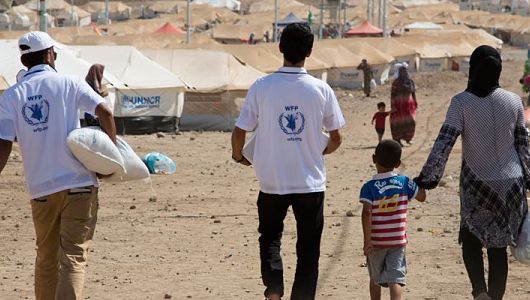
The United States Agency for International Development (USAID) is giving $65 million dollars to the United Nations World Food Program (WFP) to achieve their goal of providing food assistance to 4 million starving people inside the country and 1.6 million more in the neighboring countries of Jordan, Lebanon, Turkey and Egypt.

In Syria, the WFP has been running dangerously low on funding but the money infusion from USAID will keep the WFP afloat and operating through November preventing what could have been a complete shutdown.

The U.S. being the biggest donor to the Syrian crisis has contributed more than $4 billion dollars overall, allowing millions of needy families within Syria and those affected outside access to food and clean water.

According to USAID, the U.S. has now given more than $1.2 billion to the WFP for its Syrian operations – including more than $530 million for operations inside Syria and more than $693 million for operations benefiting Syrian refugees.

Although USAID has donated billions to the WPF, the international community has for the most part dropped the ball, forcing the WFP to devalue their food vouchers by half to refugees and lowered the amount of food in monthly household parcels inside Syria. USAID and the WFP continues to reach out to other governments hoping to rally more support and pressure them to take more actions.

In a press release by USAID on Friday, July 31, 2015, Dina Esposito, Director of USAID’s Office of Food for Peace said, “we have heard tragic stories of hungry refugees returning to war-torn Syria and taking children out of school to beg.” He continued, “We hope this new funding will help mitigate such difficult choices and help Syrians as the winter months approach.”

In war torn Syria, families are fleeing what were once their homes, desperately seeking safety. Starving and suffering from illness, people are getting life-saving food, water and medical care, thanks to the WFP and the disaster averting financial rescue from USAID.

– Jason Zimmerman

Sources: USAID, Reuters
Photo: Huffington Post

August 22, 2015
https://borgenproject.org/wp-content/uploads/borgen-project-logo.svg 0 0 Borgen Project https://borgenproject.org/wp-content/uploads/borgen-project-logo.svg Borgen Project2015-08-22 01:30:072020-07-02 10:27:41World Food Program Increases Food Assistance to Syrians
Foreign Aid

5 Fascinating Effects of Foreign Aid on Politics

foreign_aid
Here are five ways foreign aid impacts politics:

  1. It fights terrorism – With ISIS as a major concern and a possible threat to U.S. national security, it is important to come up with different solutions. While aid alone cannot defeat ISIS, it can certainly help. Terrorist organizations have an easier time growing and residing in areas that are impoverished or unstable. Therefore, in order to prevent ISIS from growing, one tactic could be to work on building infrastructure and lowering poverty in the areas directly surrounding ISIS.
  2. It helps the U.S. compete with international rivals – China has increasingly been using foreign aid to gain influence across the world. Specifically, China is targeting Latin America and Africa. The United States needs to increase its aid to those regions if the country wishes to maintain its influence. If it does not, China could easily overtake the United States. African and Latin American countries are not the only countries that currently rely heavily on China. Russia and Greece are two other countries that may soon be heavily reliant on China as well.
  3. It helps the U.S. gain international favor – Foreign aid can make the United States’ relations with other countries much easier. Every time aid from Washington helps a life across the world, there is potential for making one more person appreciate the United States. If Washington can gain the favor of a large number of people in impoverished countries, then the United States is well on its way to being loved by that country. One major example of this is the President’s Emergency Plan for AIDS Relief. The Washington Post states that this program “has improved perceptions of the United States among the public in recipient countries.”
  4. It spreads democracy – One of USAID’s goals is democratization. One saying goes that democracies don’t go to war with democracies. USAID believes that “democratic governance and human rights are critical components of sustainable development and lasting peace.” Since the 1990s USAID has been working on spreading democracy and has so far been very successful. The reason for this success is largely due to foreign aid. According to a paper by the Munich Personal RePEc Archive, “both the Freedom House and Polity indexes indicate clear trends toward democratization over the 1975 to 2000 period.”
  5. It prevents future military conflicts – Cutting aid funding can hurt already fragile states economically. When countries are economically weak, it is easier for them to be manipulated by countries that may wish to harm the U.S. If these manipulations happen and escalate, they could lead to military conflicts in the future. According to interaction.org, “there is no doubt that foreign assistance helps ward off future military conflicts.

Unfortunately, in recent years, aid funding in the United States has decreased significantly, which is hard to believe when aid has so many positive effects on the United States’ politics and safety. Hopefully, in the coming years, politicians will turn this downward trend around in order to continue reaping these benefits.

– Clare Holtzman

Sources: Forbes, InterAction, Munich Personal RePEc Archive, USAID, Washington Post
Photo: Bloomberg

August 15, 2015
https://borgenproject.org/wp-content/uploads/borgen-project-logo.svg 0 0 Borgen Project https://borgenproject.org/wp-content/uploads/borgen-project-logo.svg Borgen Project2015-08-15 01:30:022024-12-13 18:04:445 Fascinating Effects of Foreign Aid on Politics
Aid, Humanitarian Aid, USAID

USAID’s Camp Hope Provides Relief in Nepal

Camp_Hope
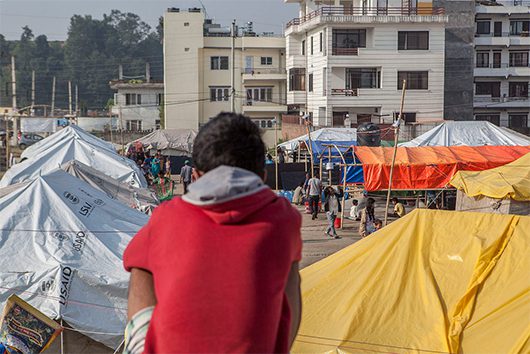
Camp Hope is giving survivors of the Nepal earthquake a beacon of light and symbol of recovery. A single square kilometer compound in Jorpati, Kathmandu, Camp Hope is composed of innumerable tents that house 330 families who once lived in five villages north of Kathmandu. Eighty-eight percent of these families had no houses to return to after the earthquake—they were utterly destroyed. This tight community is representative of the broader 500,000 Nepalese who were displaced after the earthquake last April, which shook hilly terrain that once served as housing foundations into rubble.

However, Camp Hope is permeated with a sense of, well, hope. Children laugh in the open spaces between their temporary houses, people relax in the line for the water pump, the elderly bask in the sun amid clucking chickens. Set up by the owner of the boutique hotel chain, Dwarika, the camp is full of people of all ages strengthening a community that will one day serve as a launchpad for rebuilding and recovery. Sangeeta Shrestha, founder of the camp, describes how she came to acquire the land for the camp when a local youth club donated their soccer field.

“I am lucky to have my hotel team of engineers and technicians whom I could call on to help set up the camp,” she said. The resources offered by the hotel have certainly come a long way in making the camp what it is. A kitchen tent run by the Dwarika offers residents three meals a day that often include chicken and eggs. Beyond basic medical services, housing and meals, the camp also offers its residents emotional solace. There are prayer tents, job training facilities and field trips for the 83 children enrolled in the local school.

Beyond being an awe-inspiring emblem of growth after disaster, Camp Hope also serves as a prime example of the benefits that come when public and private partnerships cooperate to further a cause. USAID stepped in to provide heavy plastic shelters that would sustain heavy rains during monsoon season. Additionally, the organization provided shelter to 310,000 families across affected regions.

There’s clearly more to be done, both within Camp Hope and beyond its walls. At the recent International Conference on Nepal’s Reconstruction, USAID pledged emergency relief and early recovery assistance totaling $130 million, with promises of more funding in the coming years. The U.S. government has also committed to helping rebuild Nepal through a number of programs, including:

  • Training Nepalis to build earthquake-sustainable houses;
  • Establishing approximately 1,000 Temporary Learning Centers for displaced children;
  • Distributing cash to the most at-risk families to help them immediately begin to reestablish their lives and strengthen the country’s agricultural system, which supports 75% of its population;
  • Protecting those who are vulnerable to human trafficking and other breaching of human rights; and
  • Planning and organizing groups that can efficiently tackle future natural disasters.

Despite the immense amount of work that lies ahead, the work of USAID in partnership with local groups such as Dwarika demonstrate how shared work between the private and public sectors can bring international resources to help build sustainable growth in at-risk communities. These efforts, like Camp Hope, are a source of inspiration for all.

– Jenny Wheeler

Sources: USAID, Dwarikas
Photo: Flickr

August 11, 2015
https://borgenproject.org/wp-content/uploads/borgen-project-logo.svg 0 0 Borgen Project https://borgenproject.org/wp-content/uploads/borgen-project-logo.svg Borgen Project2015-08-11 08:41:542020-03-20 13:26:49USAID’s Camp Hope Provides Relief in Nepal
Food Security, Global Poverty, USAID

USAID Helps Vietnam Boost Rice Yields

USAID Helps Vietnam Increase its Rice YieldsAs climate change affects agriculture across the developing world, food security is a painful reality for farmers who depend on their crops to eat and eke out a meager living. Every grain of rice they grow is valued — USAID is helping farmers in Vietnam to bolster their harvest yields.
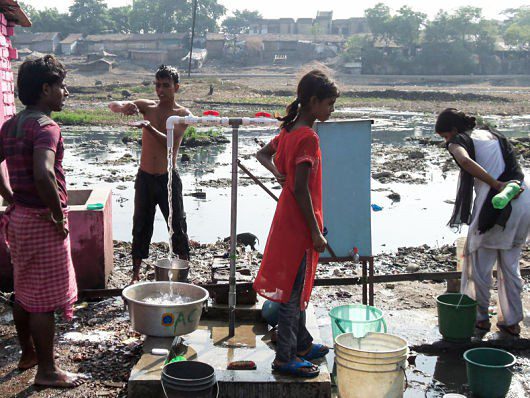
USAID, the United States Agency for International Development, implemented the Vietnam Forests and Deltas Program in 2012, aimed at promoting rice production practices that can reduce greenhouse gas emissions and improve livelihoods with Vietnam’s agricultural extension services.

The program is focused on enhancing climate change resilience and working with all echelons of the Vietnamese society, from the community level up to the national level. Farmers are learning new agricultural techniques and are putting into practice climate-smart livelihoods in order to improve quality of life. They are applying new national policies and strategies in response to rising temperatures and changing weather pattern concerns. The program mainly concentrates on environmental conditions in Vietnam’s vulnerable forest and delta landscapes.

The Thanh Hoa and Kon Tum provinces have been selected by pilots for moving green growth strategies. With the implementation of innovative land use planning and training programs including local government, civil society and the private sector are demonstrating measurable improvements in carbon stocks and environmental services.

The Mekong and Red River Delta areas are increasingly falling victim to climate-related hazards such as storms, flooding, drought, salinity and sea level rise. These deltas are home to some of the most heavily populated and economically productive areas of Vietnam, making the region especially important as well as vulnerable to the country’s stability. USAID is working with the government and communities of the Long An and Nam Dinh provinces to help the population identify climate-related risks and how to take action in order to provide long term resilience.

USAID is working in partnership with several organizations including Winrock International, Vietnam’s Ministry of Agriculture and Rural Development, provincial governments, the Netherlands Development Organization, American Red Cross, Vietnam Red Cross and the Center for Sustainable Rural Development.

In Long An province, with training provided by USAID, farmers across the region have boosted rice yields dramatically, in many cases up to 25 percent more. This means that families once struggling with food insecurity and little to no profit from rice sales are eating better and making a better living, improving quality of life.

Before The Vietnam Forests and Deltas Program went into effect, farmers with minimal agricultural experience suffered preventable crop losses due to ignorance such as overuse or imbalance of fertilizers. As a result of the program, people learned how to apply new techniques including development of internal drainage lines and favoring conditions that lead to stronger and healthier rice plants such as rice paddy leveling.

No matter what one’s views of climate change are, it is a very real problem for the poor with real effects on the people struggling to survive in the delta and forest regions of Vietnam. USAID has proved an essential resource in the developing world. With the programs offered by the agency and its partners, poverty could soon be a thing of the past.

– Jason Zimmerman

Sources: USAID 1, USAID 2, Winrock, MARD

Photo: OceanBitesE

August 1, 2015
https://borgenproject.org/wp-content/uploads/borgen-project-logo.svg 0 0 Borgen Project https://borgenproject.org/wp-content/uploads/borgen-project-logo.svg Borgen Project2015-08-01 01:13:482020-07-06 12:23:07USAID Helps Vietnam Boost Rice Yields
Global Poverty, Sanitation

Innovation Countdown 2030

Innovation_Countdown_2030

As many under-developed countries begin to enter the global market, the struggles their people face are becoming increasingly apparent. Luckily, an amazing NGO called Innovation Countdown 2030 is seeking to fund ideas today that may save the developing world tomorrow.

Innovation Countdown 2030 (IC2030) is an NGO that is mainly focused on advancing global health. In collaboration with PATH, one of the leading innovators in global health, IC2030 has created “a platform to identify, evaluate, and showcase high-impact technologies and interventions that can transform global health by 2030.” The ideas that they have supported include technologies that will add vitamins to rice, long-lasting injectable contraceptives, and devices that can help newborn baby’s breathe better. All of these ideas were the result of massive crowd-sourcing efforts and will inevitably help the world towards reaching the United Nations Sustainable Development Goals (SDGs). People from all over the world submitted their ideas and a panel of expert’s selected 30 innovations which they believed could feasibly change the world in the next 15 years.

For years, innovation has been focused on development. From new types of tractors all the way to robot vacuums, technology development has been focused on developing a better life for those living in developed countries. As the years have gone by, people have become increasingly aware of how reliant we are on one another and the importance of bringing up the developing world in order to benefit the whole world. We are living in a time where children still die from completely treatable diseases and malnourishment, but what if there was a way to provide a sustainable form of nourishment, and a reliable place of medicine? What if people no longer had to worry about basic survival and could instead focus on innovation of their own? This is the philosophy behind many development and global health NGOs, presumably including IC2030, and is one that can only lead to a more prosperous global community.

Much of IC2030’s work focuses on pregnant women and their newborn babies as in line with the SDGs. One invention in particular, a uterine balloon tampon, is predicted to save the lives of over 150,000 pregnant women. The idea was developed in the United States in Massachusetts General Hospital and essentially utilizes water pressure to prevent hemorrhaging in a mother who have just given birth. This device is made out of a simple condom and a catheter and can be filled with water to create pressure. It is low-cost and highly effective, making it an ideal candidate for IC2030’s top 30 devices.

Several of the innovations included on IC2030’s list have already been utilized in more rural areas of Africa and have already begun to save lives. The organization is being led by PATH and has received funding from the Bill & Melinda Gates Foundation, the U.S. Agency for International Development, as well as the Norwegian Agency for Development Cooperation.

Hopefully this organization gains more support, but so far it has succeeded in carrying out its goal of saving lives and promoting innovation throughout the world.

– Sumita Tellakat

Sources: IC2030, NPR
Photo: NPR

July 31, 2015
https://borgenproject.org/wp-content/uploads/borgen-project-logo.svg 0 0 Borgen Project https://borgenproject.org/wp-content/uploads/borgen-project-logo.svg Borgen Project2015-07-31 09:59:382020-07-06 12:32:25Innovation Countdown 2030
Refugees and Displaced Persons, Women & Children

Protecting Displaced Mothers-to-Be

Displaced-Mothers-to-be

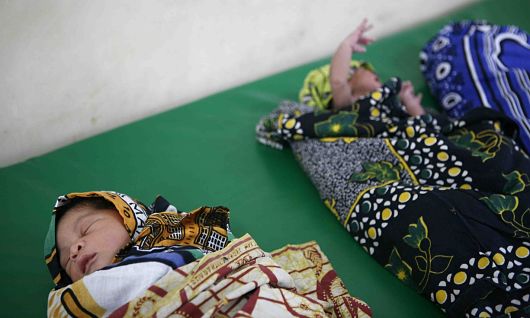
For mothers-to-be, few things are scarier than not knowing where they will have their baby. During wars and conflicts like those in Yemen, Sudan and Nigeria, people flee and become refugees. Some of those leaving are pregnant women. Despite being displaced persons, they still need the same care during their pregnancies and deliveries; however, many times refugee camps are unsanitary and have few medical staff with limited supplies. The United Nations Population Fund (UNFPA) and USAID work together to bring proper medical care to pregnant refugee women in Nigeria who have fled from Boko Haram.

The goal is to provide safe, clean, dignifying births to mothers. USAID sent UNFPA birth kits from Deluxe Childbirth Services to be handed out to mothers and potential mothers. This ensures that no matter where a woman ends up giving birth, she will have with her the items necessary for safe delivery. Included in the kit are a delivery mat, three infant diapers, antibacterial soap, methylated spirits, five pieces of gauze, cotton wool, an infant cord clamp, a scalpel and mucus extractor. USAID is also providing funding for training skilled delivery nurses in refugee camps and areas. Upon delivery, mothers receive baby packs with clothes and items that newborns need.

The goal of the packs is to provide the tools for doctors and nurses to deliver a baby in resource-limited areas as well as necessary sanitation items to prevent infection. Infections and lack of proper tools are the leading cause of maternal deaths in developing countries.

It is expected that there will be 60,000 births by displaced women in Nigeria alone this year. That means already limited resources will be taxed. The birth kits are a welcomed item in refugee camps because it means more women can have a safe and healthy delivery.

– Katherine Hewitt

Sources: Premium Times, news24
Photo: Premium Times

July 28, 2015
https://borgenproject.org/wp-content/uploads/borgen-project-logo.svg 0 0 Borgen Project https://borgenproject.org/wp-content/uploads/borgen-project-logo.svg Borgen Project2015-07-28 12:22:392024-05-27 09:26:15Protecting Displaced Mothers-to-Be
Foreign Aid, Global Poverty, USAID

Can Aid Abroad Aid Detroit?

Detroit
In 2013, Detroit filed for bankruptcy. The city is full of empty factories and dirty streets. Two years ago, when crossing the border from Canada back into Detroit, my family and I commented on the dramatic change in scenery that occurs when crossing this small border. On one side of the border, the streets are immaculate and bright with blues and greens, there are ongoing construction projects, and polite signs telling drivers to, “pull over and take a nap.” On the other side in Detroit, it seemed to me that almost everything was grey and brown. Many of the people crossing the street appeared to be living in poverty.

An article by economyincrisis.org comments that the city looks, “war-torn,” partially thanks to the fact that, “American automakers shipped their jobs to Canada and Mexico.” While Detroit could use economic assistance in its transportation, educational and architectural sectors, what the city really needs is jobs. Perhaps one place that these jobs could come from could be foreign aid.

USAID has lost funding since 2009. While a loss in funding is always an issue, USAID was already understaffed in 2009.

Foreign aid is shown to boost the United States’ economy and create jobs, so why is the countries aid organization losing funding?

USAID is one source of potential in the U.S. job market. If USAID were better funded, it would have the ability to create more jobs and expand in order to have locations to manage and contain those jobs. One city that could perhaps become a place of USAID expansion could be Detroit. In addition, USAID works with many partner organizations in order to help people abroad. If USAID had the economic ability to utilize these partners more often, then the partner organizations would expand as well. This leaves yet another avenue open for expansion into Detroit, or at the very least providing some of the unemployed people there with jobs.

Detroit had an unemployment rate of 24.8 percent in 2010, according to the Bureau of Labor Statistics.

While USAID expansion could in itself be at least a partial solution to the Detroit job crisis, sending more aid abroad will also be a great solution. AIPAC.org says that “by law, nearly all of U.S. assistance must be spent on American-produced items.” If the U.S. sends more aid, then it will have to open up factories in order to create projects to keep up with the increase in aid. As the aid brings greater numbers of people out of poverty, these aid products will become purchased products.

If more people abroad can afford these products from the United States, then more people will buy them. While these factories may begin as “aid” factories, they will in the end boost the American economy. The United States was once an industrial giant and Detroit was in some ways at the center of the industry.

Perhaps the solution is to return Detroit back to its roots and get the empty “war-torn” factories running again.

– Clare Holtzman

Sources: AIPA, Bureau of Labor Statistics, The Detroit News 1, The Detroit News 2, Economy In Crisis, Foreign Policy, Jalopnik
Photo: Urban Ghosts

July 27, 2015
https://borgenproject.org/wp-content/uploads/borgen-project-logo.svg 0 0 Borgen Project https://borgenproject.org/wp-content/uploads/borgen-project-logo.svg Borgen Project2015-07-27 14:12:152024-05-27 09:26:10Can Aid Abroad Aid Detroit?
Aid, Aid Effectiveness & Reform, Global Poverty

Foreign Aid Investments Saved Over 30 Million Children’s Lives

foreign_aid
The Institute of Health Metrics and Evaluation (IHME), the top international agency for global health data collection and analysis, has provided a new report which scores the impact of foreign aid investments made over the past fifteen years.

The study, recently published in the Lancet Medical Journal, determined that between 2000 and 2014, low and middle-income nations invested $133 billion US into child health initiatives. These investments are estimated to have saved the lives of 20 million infants and children.

An additional $73.6 billion US of foreign aid investments provided by donors, both governmental and privatized, accounted for the saving of an additional 14 million infant and child lives, the IHME estimates.

In total, an estimated 34 million children’s lives have been saved in the past 15 years. The report estimates that US foreign aid investments saved the largest number of children under-five, with 3.3 million lives saved. The UK was also noted as a significant factor in this progress and is estimated to have saved 1.7 million lives through their own development funding. The Bill and Melinda Gates Foundation proved to be the largest privatized donor, having saved an estimated 1.5 million lives.

Ray Chambers, the UN Secretary General’s Special Envoy for Financing the Health Millennium Development Goals and Malaria, collaborated with the IHME to produce this report and hopes to use this form of analysis in the future to track the success of the Sustainable Development Goals.

Chambers said in an interview about the new score, “We know that despite the efforts of governments and donors to improve health in low-income and middle-income countries, too many children die before the age of five. Without a way to monitor and publicly share progress regularly, we will miss the opportunity to build on the momentum we have seen since the millennium declaration.”

The IHME estimates that within the most impoverished nations, the cost to save a child’s life is about $4,000 US. The organization stated in its report that within countries such as Tanzania and Haiti, the costs are $4,205. They estimate within nations such as Botswana and Thailand, where economies are more developed, that the costs to save a child’s life are above $10,000 US due to high health care costs.

The Director of the IHME, Dr. Christopher Murray, said in a recent interview, “You can spend $4,000 on many different things, but there are very few places where the money would deliver the kind of impact you get by investing it in child health.” He continued in reasoning, “If you invest in the poorest countries, you will see the biggest impact in child health because the costs of things like nutrition programmes, vaccines and primary care are lower.”

The report analyzed both governmental and privatized donors and included internationally renowned agencies such the Global Fund, World Bank, UNICEF, USAid and Gavi. The study concluded that the efforts and financial support of Gavi, a global non-profit organization focused on vaccination, has saved over 2.2 million lives.

Looking towards future development initiatives such as the Sustainable Development Goals, Dr. Murray said, “We have seen such incredible success in saving children’s lives over the past 15 years. We need to take what we have learned from that experience and push for more progress and more accountability as we enter the era of the Global Goals for Sustainable Development.”

The Sustainable Development Goals were developed at the UN Rio+20 Conference in 2012 and are designed to build upon the progress of the Millennium Development Goals in the coming years.

– James Thornton

Sources: The Guardian, News-Medical
Photo: The Guardian

July 24, 2015
https://borgenproject.org/wp-content/uploads/borgen-project-logo.svg 0 0 Borgen Project https://borgenproject.org/wp-content/uploads/borgen-project-logo.svg Borgen Project2015-07-24 18:23:102020-07-07 13:50:15Foreign Aid Investments Saved Over 30 Million Children’s Lives
Global Poverty, Hunger, Malnourishment, USAID

Online Meal Planner Reduces Malnutrition in Ghana

malnutrition_in_ghana

Ghana is one of the most successful countries in the Sub-Saharan Africa region in combating hunger and malnourishment. The proportion of undernourished people went from 23.5% in 1996 to 2.9% in 2013, allowing them to achieve the first Millennium Development Goal (MDG1) target for halving the proportion of people suffering from hunger.

In northern Ghana, 63% of the population lives in extreme poverty, and most rely on crop production. Most of the service and industrial industries are in the south, where poverty is less prevalent.

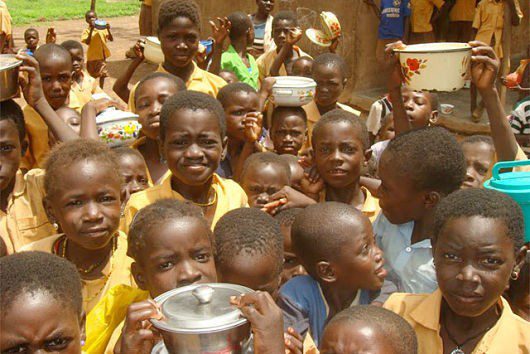
School feeding helps keep malnutrition low: every day, 368 million children around the world eat a meal at school. The World Food Programme (WFP) provides monthly rations to families who send their daughters to school, and they provide scholarships for secondary school to those who complete the program with an 85% attendance rate.

Over 1.7 million children every day are fed through the Ghana School Feeding Program. The Partnership for Child Development (PCD) is collaborating with the government to link nutrition with school meals and community training. One way the PCD is developing nutritious school meals is through the use of an online meal planner.

The web-based planner allows the user to create and add the costs from local ingredients. It links prices from local markets and displays the total cost of each meal. Only 12.3% of the population has access to the Internet, so for those who do not have access, the PCD developed an offline meal planner.

“By coupling high-tech digital resources such as the meals planner with low-tech engagement, integrated school feeding and health programs are vital if governments are to tackle the malnutrition crisis facing the next generation,” said Dr. Lesley Drake, executive director of PCD.

PCD is also combating malnutrition in Ghana through community meetings and 400 community-based champions of health and nutrition in order to convey the importance of proper nutrition and hygiene.

Feed the Future is fighting for food security in Ghana by focusing on rice, corn and soybean production to help farmers where poverty is most prevalent. The agricultural industry needs more support in order to do more research for crop-yielding and improve irrigation infrastructure.

USAID is committed to sustaining agricultural productivity by managing natural resources. Feed the Future and USAID activities support Ghana’s goals of reducing poverty and increasing food security.

Malnutrition in Ghana is declining due to programs like the online meal planner and the work of organizations like Feed the Future and USAID. Undernourishment and hunger continue to decline, but since 2007, the prevalence of underweight children under the age of five in Ghana has only dropped 0.5% after declining 11.8% between 1997 to 2007. Today, 13.9% of children under five in Ghana are underweight.

– Donald Gering

Sources: HGSF, Impatient Optimist, Knoema, Social Progress Imperative, UNDP, USAID WFP 1, WFP 2
Photo: Modern Ghana

July 24, 2015
https://borgenproject.org/wp-content/uploads/borgen-project-logo.svg 0 0 Borgen Project https://borgenproject.org/wp-content/uploads/borgen-project-logo.svg Borgen Project2015-07-24 08:50:422024-06-05 03:46:37Online Meal Planner Reduces Malnutrition in Ghana
Page 78 of 92«‹7677787980›»

Get Smarter

  • Global Poverty 101
  • Global Poverty… The Good News
  • Global Poverty & U.S. Jobs
  • Global Poverty and National Security
  • Innovative Solutions to Poverty
  • Global Poverty & Aid FAQ’s
Search Search

Take Action

  • Call Congress
  • Email Congress
  • Donate
  • 30 Ways to Help
  • Volunteer Ops
  • Internships
  • Courses & Certificates
  • The Podcast
Borgen Project

“The Borgen Project is an incredible nonprofit organization that is addressing poverty and hunger and working towards ending them.”

-The Huffington Post

Inside The Borgen Project

  • Contact
  • About
  • Financials
  • President
  • Board of Directors
  • Board of Advisors

International Links

  • UK Email Parliament
  • UK Donate
  • Canada Email Parliament

Get Smarter

  • Global Poverty 101
  • Global Poverty… The Good News
  • Global Poverty & U.S. Jobs
  • Global Poverty and National Security
  • Innovative Solutions to Poverty
  • Global Poverty & Aid FAQ’s

Ways to Help

  • Call Congress
  • Email Congress
  • Donate
  • 30 Ways to Help
  • Volunteer Ops
  • Internships
  • Courses & Certificates
  • The Podcast
Scroll to top Scroll to top Scroll to top