• Link to X
  • Link to Facebook
  • Link to Instagram
  • Link to TikTok
  • Link to Youtube
  • About
    • About Us
      • President
      • Board of Directors
      • Board of Advisors
      • Financials
      • Our Methodology
      • Success Tracker
      • Contact
  • Act Now
    • 30 Ways to Help
      • Email Congress
      • Call Congress
      • Volunteer
      • Courses & Certificates
      • Be a Donor
    • Internships
      • In-Office Internships
      • Remote Internships
    • Legislation
      • Politics 101
  • The Blog
  • The Podcast
  • Magazine
  • Donate
  • Click to open the search input field Click to open the search input field Search
  • Menu Menu

Tag Archive for: USAID

Information and news about mobile technology

Posts

Education, USAID, Women and Female Empowerment

USAID Funds Partnerships for Women’s Leadership

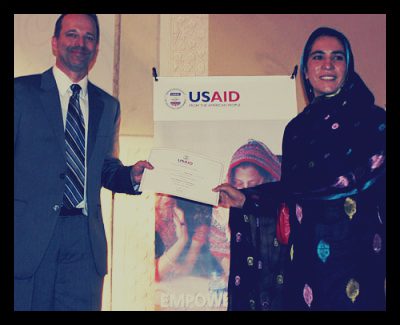
USAID Funds Partnerships for Women's LeadershipUSAID funds partnerships with Higher Education for Development (HED) to encourage women’s leadership throughout a number of developing countries, including South Sudan, Rwanda, Paraguay, and Armenia. As part of the new Women’s Leadership Program, five American universities will partner with universities and colleges throughout the select countries.

The partnership between universities aims at encouraging women’s status in a number of vital sectors for economic development, including agriculture, business, and education. The goals of the program also fall in line with previous goals laid out by USAID as part of the Gender Equality and Female Empowerment Policy, which was released in 2012.

HED will be in charge of administering the programs, which will total one in each country and two in Rwanda. Funding for the program from USAID will total $8.75 million.

Some of the more specific goals of the Women’s Leadership Program will include increased access to higher education and advanced degrees for women, increases in foreign universities research on women’s leadership, and encourage women’s leadership through advocacy in struggling communities. The American universities that are participating in the program are Arizona State University, Michigan State, Indiana University, UCLA, and the University of Florida.

USAID Senior Coordinator for Gender Equality and Women’s Empowerment, Carla Koppell, said “USAID is very excited to be collaborating with academic institutions in the United States and abroad in advancing women’s leadership. These partnerships offer a meaningful and important opportunity to ensure women are empowered and advance in economies and societies globally.”

– Christina Kindlon

Source: USAID

March 27, 2013
https://borgenproject.org/wp-content/uploads/borgen-project-logo.svg 0 0 Borgen Project https://borgenproject.org/wp-content/uploads/borgen-project-logo.svg Borgen Project2013-03-27 09:00:532020-05-26 01:04:42USAID Funds Partnerships for Women’s Leadership
Aid Effectiveness & Reform

Myanmar: Spending Aid Effectively

myanmar-USAID-aid-effectiveness

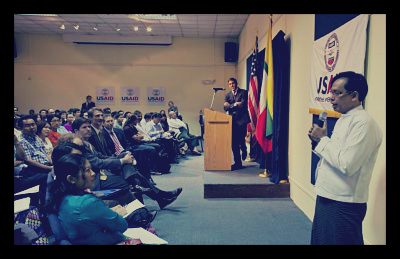
A Brookings Institution article by Lex Rieffel and James Fox (Former Chief, Economic Growth Evaluation at USAID/Policy & Program) analyses aid effectiveness in Myanmar. “The transition in Myanmar that began two years ago — from a military to a quasi-civilian government — is the largest and most encouraging turnaround in the developing world in years.”

They give significant credit to President Thein Sein and social activist Aung San Suu Kyi for collaborating to lift the country out of turmoil. Their three main obstacles or agendas were: ending the civil war, providing an institutional framework to increase the general standard of living, and sharing the wealth of the country’s natural resources with the whole population.

When other countries saw the progress being made, then the World Bank, USAID, and more than 100 other aid agencies and international non-governmental organizations (NGOs) started to offer rapid assistance to Myanmar. This time, the aid agencies and government officials are intent on making sure aid is delivered effectively. All donors have committed to adhere to the 2005 Paris Declaration on Aid Effectiveness, and all subsequent additions to it. And the Myanmar government held an all-donor meeting in January 2013, to get an agreement on ground rules for spending aid effectively.

However, here are five common ways aid can be ineffective:

• Senior government officials of Myanmar end up spending hours every day meeting with delegations from international NGO’s and donor countries – not just their aid agencies but also their government representatives, corporations, media, and more. The endless meetings divert the attention of the local officials, not allowing them to formulate and implement actual progress.

• Each aid organization has its own pressure to “make a difference,” to show results.  For instance, USAID has allocated millions of dollars for their own agriculture sector projects, but only committed $600,000 to the multi-donor LIFT Fund – which is a more effective way of delivering aid.

• Local staff from financial institutions are overwhelmed by the donor organizations’ need to “move the money.” Pressure to distribute project funds is ever-present.

• Donors are often non-transparent as each competes to gain the most favorable position within a region.

• Host countries engage in “donor shopping” to get the most money for the least change.

So, for Myanmar, here are the three ways to make aid more effective:

• Slow down and do more collaborative operations. This act does not overwhelm local officials. Donors should help control the pace, and commit at least 30 percent of their funding to joint operations.

• Provide “scholarships for foreign study.” It will take years for Myanmar to raise its standard of education to the level required for meeting its development objectives. The solution is education abroad, so the students can return home with knowledge to invest in the country. This form of aid also has the least potential for mis-use.

• “Be more innovative” – for instance “cash on delivery aid.” This reinforces good management within the local government, minimizes the administrative burden of the rapid aid influx, and ensures that every dollar of aid goes to support successful projects.

– Mary Purcell

Source: Brookings
Photo: USA Myanmar


March 22, 2013
https://borgenproject.org/wp-content/uploads/borgen-project-logo.svg 0 0 Borgen Project https://borgenproject.org/wp-content/uploads/borgen-project-logo.svg Borgen Project2013-03-22 10:44:182020-04-27 05:48:26Myanmar: Spending Aid Effectively
Developing Countries, Development, Education, Technology, USAID

USAID and Cisco Promote Development in Burma

Cisco_USAID_Burma
The U.S. Agency for International Development (USAID) has partnered with U.S. technology and communications giant, Cisco, to provide Burma with two new technical education centers. The two Cisco Networking Academies will provide valuable skills in information and communications technology to the developing nation, and provide citizens with job-ready abilities to bolster the country’s growing information and communications tech (ICT) industry.

The USAID Administrator, Dr. Rajiv Shah, has said that technology infrastructure can create stable and continued economic growth and development, and that “ICT can expand economic opportunities, transform public service delivery, and provide more opportunities for citizen engagement.”

Cisco has been a continual partner of USAID, having established networking education centers in over 165 countries, which have provided relevant skills for entry-level careers in ICT while also developing other valuable general career abilities including “problem-solving, collaboration, and critical thinking.”

In Burma, Cisco has agreed to donate the equipment needed to start the two Networking Academies and the training for 15 faculty members. Sandy Walsh, Director of Cisco’s Social Innovation Group, said that Cisco is dedicated to providing education to help continue technological development in “emerging economies,” and that the academies will aid Burmese citizens in gaining career skills needed in the 21st century.

Three additional American tech leaders, including Intel, Microsoft, and Hewlett-Packard, participated in a technology delegation to Burma, also led by USAID, in hopes of continued collaboration that will increase internet access and promote digital literacy and government openness. The partnership between USAID and Cisco hopes to create alliances with American tech companies, the local government, and the private sector to increase “social and economic development” using technological resources.

 – Christina Kindlon

Source: USAID
Photo: VOA

March 17, 2013
https://borgenproject.org/wp-content/uploads/borgen-project-logo.svg 0 0 Borgen Project https://borgenproject.org/wp-content/uploads/borgen-project-logo.svg Borgen Project2013-03-17 09:01:592020-05-01 20:05:56USAID and Cisco Promote Development in Burma
Foreign Aid, USAID

Indian Version of USAID Bodes Well

Indian Version of USAID Bodes WellThe United States Agency of International Development (USAID) claims that they are very pleased to see the development of India’s own international aid program that is modeled after USAID. USAID Administrator Dr. Rajiv Shah has just returned from a visit to Myanmar and India.


India, which has one of history’s fastest-growing economies, will stop receiving foreign aid from the United Kingdom in just a few years and they are already working to distribute their own aid dollars to neighbors near and far. At this point, India has become the perfect example of what a developing country can become; India is less and less dependent upon international aid each year and they continue to grow their domestic economy. Unfortunately, the country’s massive population still suffers from some serious issues. About 20% of the world’s children that die of preventable disease before the age of five are from India. Nonetheless, USAID plans to work with their Indian counterparts on a number of important issues while focusing on health, energy-creation and industry, and agriculture.

Some may think that India isn’t ready for such a step, but the country boasts the world’s ninth-highest nominal GDP, a giant workforce that is becoming increasingly better educated, and one of the world’s biggest food surpluses. The impressive growth of the country over the last decade along with their expansive resources and close cooperation with USAID and the United Nations will help to create a well-organized series of programs that will be able to assist countries such as Afghanistan, where the Indian version of USAID is already working with a group that aims to create job opportunities for women.

– Kevin Sullivan

Source: Economic Times, United Nations,

March 14, 2013
https://borgenproject.org/wp-content/uploads/borgen-project-logo.svg 0 0 Borgen Project https://borgenproject.org/wp-content/uploads/borgen-project-logo.svg Borgen Project2013-03-14 21:16:052020-05-24 23:01:27Indian Version of USAID Bodes Well
USAID

USAID Funding Power Station in Pakistan

USAID Funding Power Station in Pakistan
The first phase of construction on the Tarbela Hydel Power Station, located in Lahore, Pakistan, has been completed. The project, which is being financed by the United States Agency for International Development (USAID), allowed the Water and Power Development Authority (WAPDA) to add 128 megawatts of electricity to the station.

U.S. Ambassador to Pakistan, Richard Olson, visited the power station and was briefed by WAPDA Chairman Syed Raghib Shah. Shah said that the WAPDA appreciates the United States’ aid in updating Pakistan’s energy sector, and also stated that these upgrades will allow more consistent electricity to be provided to the people of Pakistan for a very affordable price.

Along with upgrading current power stations throughout Pakistan, WAPDA is also using funds from USAID to construct brand new power stations.

Ambassador Olson stated, “The United States understands that Pakistan is facing an energy crisis and we are committed to doing our part,” and also said that the recent upgrade at the Tarbela station will contribute enough power to provide electricity to 2 million people, and to ensure a consistent source of electricity to avoid blackouts and outages.

As part of a larger project, USAID is providing WAPDA with $16.5 million to repair three additional power stations and to train employees that will finish the Tarbela Hydel Power Station in Pakistan. Besides these three power plants, USAID is also funding additional hydropower projects throughout Pakistan – these efforts include the construction of two dams that will provide an extra 35 MW of power and irrigate 200,000 acres of land.

– Christina Kindlon

Source: The News
Photo: Pakistan Today

March 9, 2013
https://borgenproject.org/wp-content/uploads/borgen-project-logo.svg 0 0 Borgen Project https://borgenproject.org/wp-content/uploads/borgen-project-logo.svg Borgen Project2013-03-09 15:00:272024-06-05 01:28:27USAID Funding Power Station in Pakistan
Aid Effectiveness & Reform, USAID

Death of Hugo Chavez Impacts US Aid

Death of Hugo Chavez Impacts US AidLike it or not, foreign aid usually follows the paths that are set by political relationships. U.S.-Venezuelan relations have been stressed ever since Hugo Chavez came to power, and even before then. How could the death of Hugo Chavez affect the aid relationship between the U.S. and Venezuela?

The first time that Chavez met President Obama, he gave him a copy Eduardo Galeano’s book “Las Venas Abiertas de America Latina”, a history of colonial rule over the Americas that focuses on how the United States became the colonizing power of modern age in Latin America, especially in Central America where American corporations and military interventions created the infamously titled “banana republics.” That first meeting is the perfect anecdote to represent the relationship between the two countries over the last five years. Chavez had always been extraordinarily outspoken against the United States and, because of that tense relationship, the U.S. has given very little to Venezuela with the exception of small amounts of disaster relief assistance. It is important to note that Venezuela, the founding member of OPEC, is one of the wealthiest countries in the Americas, yet nearly 32% of the country’s population lives below the poverty line.

In order to begin building a more amicable relationship, the U.S. may begin giving more to causes that aren’t related to politics and focus more on job creation and training. Providing this type of aid would not only benefit Venezuela, but it may also help build a much less tense relationship with a resource-rich country that has significant pull in international oil markets and price control. A well-executed increase in aid could end up being very beneficial for both parties as Venezuela changes leadership.

– Kevin Sullivan

Sources: The New York Times, CIA World Factbook
Photo: Biography

March 6, 2013
https://borgenproject.org/wp-content/uploads/borgen-project-logo.svg 0 0 Borgen Project https://borgenproject.org/wp-content/uploads/borgen-project-logo.svg Borgen Project2013-03-06 11:02:122024-05-24 23:43:14Death of Hugo Chavez Impacts US Aid
Education, USAID

USAID Fighting Terrorism With Wool

US AID Fighting Terrorism With WoolQuinoa seems to be on everyone’s mind lately, but for the district of Mastung – a district located on the border of Afghanistan and Pakistan– sheep and shepherding account for more than 40% of the economy. Unfortunately, many farmers in Mastung use outdated techniques which limit their production even though demand for wool is high.

To help with this dilemma, USAID has funded an agricultural project in which Australian shepherds, who are among the world’s finest, instruct a best-practices workshop which teaches Mastung farmers current techniques and educate the farmers on how to use current technologies. These new techniques have been combined with direct marketing practices and, with the two disciplines combined, the result is an 80% growth of income for farmers in the communities where these practices have been implemented.

While this type of growth does help border communities in Pakistan, the strengthening of these communities has an unforeseen effect on U.S. national security and global security as a whole. It is no secret that extremist groups target poor communities by offering financial assistance and other forms of aid. In a region that has been plagued with extremist groups such as the Taliban, contributing to the economic growth of communities and helping them remain stable prevents the spread of terrorism and extremist ideology. For the Mastung, fighting terrorism with wool production is a win-win situation.

Not only do these contributions help create a better life for those in the border communities of Afghanistan and Pakistan, but they also help these communities as a means to furthering global security as a whole.

– Pete Grapentien

Source: TheNews.com
Photo: Pakistan Today

March 5, 2013
https://borgenproject.org/wp-content/uploads/borgen-project-logo.svg 0 0 Borgen Project https://borgenproject.org/wp-content/uploads/borgen-project-logo.svg Borgen Project2013-03-05 21:17:252020-05-19 22:04:01USAID Fighting Terrorism With Wool
Global Poverty

US AID Says Ghana’s Fishing Industry is Rapidly Depleting Supply

US AID Says Ghana's Fishing Industry is Rapidly Depleting Supply
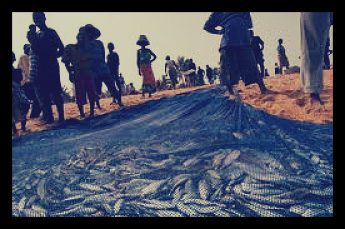
At the third National Fisheries Governance Dialogue, the Mission Director for the U.S. Agency for International Development (USAID), Cheryl Anderson, revealed that Ghana’s unsustainable fishing industry is on the verge of collapse after its peak catch has dwindled significantly within the last 10 years. Just 10 years ago, the country’s fishermen were able to bring in 120,000 metric tons of fish, while today the peak catch is at a mere 30,000 metric tons.

The country’s artisanal fisherman contributes nearly 70 percent of the country’s fish supply, and fish is a main dietary staple in many households throughout Ghana, with nearly 60 percent of citizens citing fish as their main source of protein. Because of this, USAID says it is of the utmost importance to reverse unsustainable fishing practices and mitigate for what damage has already been done to the supply.

The Coastal and Fisheries Initiative, financially sponsored by US AID, is working to come up with a system that will include more efficient management of fisheries and that would allow for swift action and changed policies. The talks will include input from “Members of Parliament, traditional leaders, district chief executives, fisheries stakeholders, international consultants, chairman and officials of Fisheries Commission and World Bank representatives.”

Anderson said that US AID hopes the measures to be taken will prevent Ghana from falling into economic disarray and hunger crisis, as other countries who relied so heavily on the fishing industry have done in the past.

The Minister for Fisheries and Aquaculture Development for Ghana admitted that the country had not used its fishing resources efficiently, with many fishing communities still poverty-ridden, but said that the administration was ready and willing to consider new methods for encouraging sustainable practices in Ghana’s fishing industry.

– Christina Kindlon

Source: GhanaWeb

March 1, 2013
https://borgenproject.org/wp-content/uploads/borgen-project-logo.svg 0 0 Borgen Project https://borgenproject.org/wp-content/uploads/borgen-project-logo.svg Borgen Project2013-03-01 12:50:152020-05-13 23:43:00US AID Says Ghana’s Fishing Industry is Rapidly Depleting Supply
Global Poverty

India Organizes Call to Action Summit

UNICEF India 2_opt
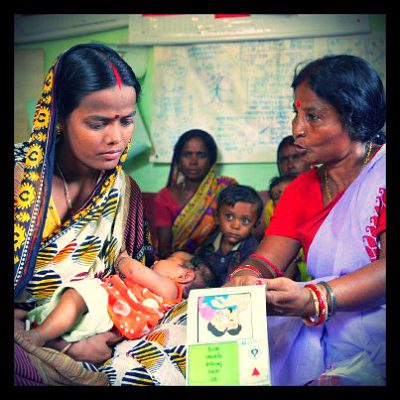
India has organized a national summit on Call to Action for Child Survival and Development from February 7th to 9th. Held in Mahabalipuram, the summit brought together both national and international experts, policymakers, as well as representatives of developmental agencies including the U.N., to assess challenges and work toward achieving India’s development goals.

India is the regional front-runner when it comes to social entrepreneurship and its rapid advances in the health sector, specifically in dealing with maternal and child mortality rates. The summit additionally presents the need to build upon this great momentum both locally and globally. Since the 1990s, India’s maternal mortality rate has dropped by more than 50 percent, while its child mortality rate has reduced by 45 percent.

The United States government has pledged its support for India’s Call to Action initiative. USAID has been actively working with the government of India in its development undertakings, especially eradicating preventable child deaths. USAID is now initiating the Country Development Cooperation Strategy, which will focus on fostering partnerships locally and work towards co-funding rather than fully funding agreements in support of the efforts for finding solutions for child survival.

USAID expressed its commitment to this effort voicing, “An investment in India’s children is an investment in India’s future.”

– Pimrapee Thungkasemvathana

Source: USAID
Photo: UNICEF India

February 11, 2013
https://borgenproject.org/wp-content/uploads/borgen-project-logo.svg 0 0 Borgen Project https://borgenproject.org/wp-content/uploads/borgen-project-logo.svg Borgen Project2013-02-11 12:20:592024-12-13 17:49:13India Organizes Call to Action Summit
Aid Effectiveness & Reform, USAID

Accountability and Transparency with U.S. Aid

USAID Claims Further Transparency and Accountability

Financial foreign assistance is one of the most powerful ways that developed nations can help lower-income countries fight their way through poverty. It also provides the most immediate results, given that aid investment is effectively distributed both to short-term direct programs as well as long-term indirect programs. Many in aid-giving communities, including the United States, criticize foreign aid spending because they believe it a wasteful investment, used to line administrator’s pockets or be lackadaisically distributed to corrupt governments.

Futuregov estimates that annually, around $150b is contributed globally to aid and assist socio-economic and social development.

Given the global community’s demands for greater accountability and transparency in funding, the AidData Centre for Development Policy organization was established.  The organization is “a joint venture between the College of William & Mary, Development Gateway, Brigham Young University, the University of Texas at Austin, and Esri.” AidData will be funded $25 million over five years in its conjoined efforts with the United States Agency for International Development.

The program will combine the work of experts in a menagerie of different fields to track and make public the effects of specific foreign aid projects. The purpose of the program assessments is also self-reflective, as programs become more stringently criticized. The aim is to have less money spent will have efficiently maximized impacts.

– Nina Narang

Source: futureGOV
Photo: BIPPS

February 9, 2013
https://borgenproject.org/wp-content/uploads/borgen-project-logo.svg 0 0 Borgen Project https://borgenproject.org/wp-content/uploads/borgen-project-logo.svg Borgen Project2013-02-09 09:58:082024-05-24 23:41:40Accountability and Transparency with U.S. Aid
Page 92 of 92«‹909192

Get Smarter

  • Global Poverty 101
  • Global Poverty… The Good News
  • Global Poverty & U.S. Jobs
  • Global Poverty and National Security
  • Innovative Solutions to Poverty
  • Global Poverty & Aid FAQ’s
Search Search

Take Action

  • Call Congress
  • Email Congress
  • Donate
  • 30 Ways to Help
  • Volunteer Ops
  • Internships
  • Courses & Certificates
  • The Podcast
Borgen Project

“The Borgen Project is an incredible nonprofit organization that is addressing poverty and hunger and working towards ending them.”

-The Huffington Post

Inside The Borgen Project

  • Contact
  • About
  • Financials
  • President
  • Board of Directors
  • Board of Advisors

International Links

  • UK Email Parliament
  • UK Donate
  • Canada Email Parliament

Get Smarter

  • Global Poverty 101
  • Global Poverty… The Good News
  • Global Poverty & U.S. Jobs
  • Global Poverty and National Security
  • Innovative Solutions to Poverty
  • Global Poverty & Aid FAQ’s

Ways to Help

  • Call Congress
  • Email Congress
  • Donate
  • 30 Ways to Help
  • Volunteer Ops
  • Internships
  • Courses & Certificates
  • The Podcast
Scroll to top Scroll to top Scroll to top