• Link to X
  • Link to Facebook
  • Link to Instagram
  • Link to TikTok
  • Link to Youtube
  • About
    • About Us
      • President
      • Board of Directors
      • Board of Advisors
      • Financials
      • Our Methodology
      • Success Tracker
      • Contact
  • Act Now
    • 30 Ways to Help
      • Email Congress
      • Call Congress
      • Volunteer
      • Courses & Certificates
      • Be a Donor
    • Internships
      • In-Office Internships
      • Remote Internships
    • Legislation
      • Politics 101
  • The Blog
  • The Podcast
  • Magazine
  • Donate
  • Click to open the search input field Click to open the search input field Search
  • Menu Menu

Tag Archive for: USAID

Information and news about mobile technology

Posts

Education, Global Poverty, USAID

Five IGO Plans For Global Educational Improvement In 2016

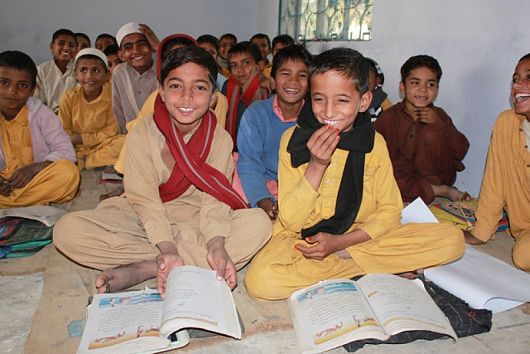
Five-IGO-Plans-For-Global-Educational-Improvement-In-20162015 was an active and often successful year for global education in terms of aid and education programs. UNESCO and USAID have several programs that will continue to be enforced into 2016. The following list of International Governmental Organization, or IGO plans provide various global education agreements.

1. UNESCO’s International Institute for Educational Planning

This program is designed for communicating the importance of a quality primary and secondary education. The site includes education reports on several countries, suggestions for improving learning outcomes such as a “contextualized [education] to each regions specific realities,” and financial strategies for covering program costs.

The learning portal has been accessible since January 2016, from anywhere and at no cost to individuals.

2. The Joint Programme

This program,continuing enforcement in 2016, consists of educational focus in Mali, Nepal, Niger, Pakistan, Sudan and Tanzania. The program lists its four main components:

  • Improving the quality of education in the regions
  • Increasing relations between health and education sects
  • Creating an enabling environment
  • Advancing the data and evidence-base

The program is unique in that it seeks to eliminate the social problems young girls deal with beginning in puberty. It seeks to educate girls about the risks of pregnancy, and their rights to refrain from young and enforced marriages.

3. UNESCO And Panasonic

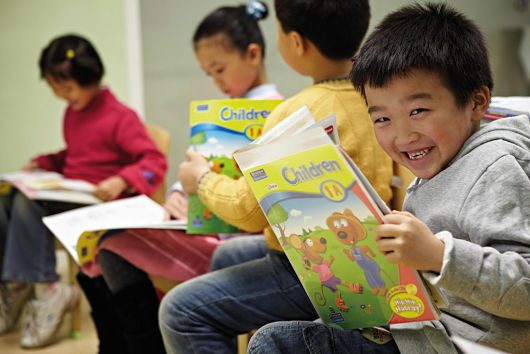
UNESCO has entered a public-private relationship with Panasonic, launching the program Strengthening Schools for Education for Sustainable Development in Myanmar. The program seeks to teach young children to read while promoting sustainable and effective global citizen lifestyles.

It will also advocate the principles of protecting the environment, ethical and civil principles and sustainable development.

Additionally, Panasonic has donated 500 Eneloop Solar Storage Units to 40 schools for an effective learning environment. The Chief Representative of Panasonic expresses their hopes the donation will be useful to students studying late at night and during power outings.

4. USAID in Jordan

Through USAID, the U.S. Government plans to build 25 new schools in Jordan in collaboration with the Let Girls Learn Initiative. With overcrowded classrooms the norm in urban Jordan, the plan is to construct more schools. The initiative will be available to 25,000 children each year.

The funds will be directed towards 70 percent of girls’ schools, also available to the thousands of Syrian refugees finding safe haven in Jordanian schools. The initiative will be particularly advantageous for girls in Jordan who are known to have limited access to education.

5. USAID’s Enrichment Initiative To Increase Literacy At The Primary School Level

This initiative is planned to continue into March 2016 in Jamaica. The program has successfully shown improvements in literacy in 2015. This has been accomplished through integrating technology into lessons and advocating for parental and teacher participation. To date, the program has reached 43,000 students and hopes to reach thousands more in 2016.

UNESCO claims that worldwide 250,000 children are not learning the basic skills needed to successfully participate in society and receive a decent livelihood. Furthermore, the organization explains that it isn’t enough to increase student enrollment alone, but also the quality of the education they’re receiving.

– Mayra Vega

Sources: UNESCO 1, USAID 1, UNESCO 2, UNESCO 3
Photo: Google Images
February 10, 2016
https://borgenproject.org/wp-content/uploads/borgen-project-logo.svg 0 0 Borgen Project https://borgenproject.org/wp-content/uploads/borgen-project-logo.svg Borgen Project2016-02-10 01:30:082024-12-13 18:05:38Five IGO Plans For Global Educational Improvement In 2016
Education, Global Poverty, USAID

Improving Education in Pakistan’s Sindh Province

sindh province

The United States Agency for International Development (USAID) recently pledged more than $100 million towards improving education in Pakistan‘s Sindh Province. The funds will go towards the Sindh Reading Program (SRP) which will work to improve reading and mathematics in primary school.

The Sindh Reading Program is a five-year initiative that works under the umbrella of the Sindh Basic Education Project (SBEP). The SRP aims to address critical issues that are affecting reading and mathematics scores in primary school. It will do this through continuous teacher development, improving student assessment, providing supplementary materials and promoting family involvement.

A crucial component of the SRP is its focus on improving teacher performance. The program will provide 25,000 teachers with professional development opportunities in order to improve their instructional competencies in reading and mathematics.

New lesson plans will also be provided to the teachers to increase student engagement. The format of the teachers’ lesson plans will become activity-based, which will result in a positive student-teacher relationship.

USAID’s program manager for Sindh Basic Education, Dr. Randy Hatfield, added to this sentiment when he said, “USAID is striving for quality assurance of teaching and learning practices in schools by creating avenues that empower teachers in the classroom.”

So far, the USAID-funded program has distributed more than 120,000 teaching and reading resources in almost 1,500 schools in the Sindh province. This is in an effort to reach the SRP’s goal of reaching 750,000 students through improved teaching, learning and assessment testing in grades K-5.

The program also hopes to enroll 100,000 out-of-school children, of which there are more than four million in Sindh province. The goal is for these children to reenter school, and have a greater likelihood of escaping poverty. The program also aims to enroll the parents of these children in literacy programs.

The SRP works under USAID’s Sindh Basic Education Project. The SBEP is similar to the SRP in its goals but differs in scope. Instead of focusing only on improving reading and mathematics, SBEP aims to improve Sindh’s education as a whole.

SBEP’s main objective is to increase student enrollment. It achieves this by creating school environments that are conducive to learning and renovating or constructing schools that were harmed by the 2010 floods.

USAID’s SBEP also has a goal of increasing girls’ enrollment and improving the nutrition of the students.

To date, the USAID-funded SBEP has achieved the construction of 26 new schools, the financing of seven schools, 1000 new girls enrolled in primary classes and a survey of student nutrition. Dr. Hatfield praised the program’s success when he said “We welcome and appreciate these strategic interventions by US Government, which are facilitating fulfillment…for children between the ages of five and 16 in Pakistan.”

Through its Sindh Reading Program, the Sindh Basic Education Project hopes to lower the 10 percent illiteracy rate in its province. Considering the statistically proven relationship between poverty and illiteracy, SBEP hopes to increase literacy to lower poverty.

– Andrew Wildes

Sources: Chemonics, Daily Times, Language and Literacy for All, Sbep, USAID
Picture: Google Images

January 19, 2016
https://borgenproject.org/wp-content/uploads/borgen-project-logo.svg 0 0 Borgen Project https://borgenproject.org/wp-content/uploads/borgen-project-logo.svg Borgen Project2016-01-19 01:30:172024-12-13 17:54:10Improving Education in Pakistan’s Sindh Province
Global Poverty, Women & Children

Saving Millions: Reach Every Mother and Child Act

Reach Every Mother and Child Act
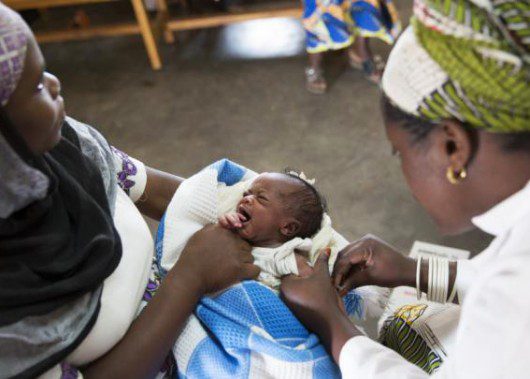
On the African continent, women are 47 times more likely to die from preventable complications during childbirth than they are in the United States. That amounts to approximately 800 women dying a day in developing nations. Mothers are not the only vulnerable ones. Each day, an estimated 17,000 children under the age of five will also die from treatable conditions.

Delaware’s Senator Chris Coons and Maine’s Senator Susan Collins hope to dramatically shrink and ultimately eliminate these statistics. In July 2015, the senators introduced the Reach Every Mother and Child Act of 2015 in order to increase the amount of U.S. aid being directed toward ending these tragic and preventable deaths. The bill establishes a framework to implement the existing tools and focus necessary for winning the battle against preventable mother and child deaths.

The bill calls for a strategic and attainable 10-year plan to succeed in ending preventable maternal, newborn and child deaths by 2035. This includes the creation of a permanent Maternal and Child Survival Coordinator at the United States Agency for International Development (USAID) who will be responsible for implementing the 10-year plan and to confirm that resources and interventions are being effectively utilized in target nations.

The U.S. government will also create a financing framework that will allow the use of U.S. funds to leverage additional funds from nongovernmental organizations, partner countries and international organizations.

While introducing the bill in their floor speeches, Senators Coons and Collins both stressed that the Reach Every Mother and Child Act is not a bolt-from-the-blue or a handout.

“Investing in maternal and child health in developing countries is an investment in the future, and I look forward to working with my colleagues to help all mothers and children around the globe get the health care they deserve,” said Senator Coons.

Acting USAID Administrator Alfonso Lenhardt echoed Coons’ sentiment. “As children survive and thrive, parents are choosing to have smaller families,” said Lenhardt, “unleashing a virtuous cycle of progress and prosperity.”

USAID recently released a new report showing that previous efforts to improve the survival rates of mothers, newborns and children under the age of five have already saved 2.5 million children and 200,000 mothers since 2008. This demonstrates substantial evidence that the new act will be successful.

“There are simple, proven and cost-effective interventions that we know will work if we can reach the mothers and children who need them to survive,” said Senator Collins. The Reach Every Mother and Child Act, if passed, is anticipated to improve the health of millions of impoverished and at-risk mothers and children.

World Vision’s Director of Government Relations Lisa Bos is particularly excited about the bill, praising Senators Collins and Coons for championing the bill. “The goal of ending preventable maternal and child deaths is achievable, but it will take renewed commitment, coordination and resources,” said Bos. “This bill builds on the progress we’ve made and is critical for ensuring we reach every mother and child. We hope every Member of the Senate will support this legislation.”

– Claire Colby

Sources: Senate, USAID, World Vision

November 29, 2015
https://borgenproject.org/wp-content/uploads/borgen-project-logo.svg 0 0 Borgen Project https://borgenproject.org/wp-content/uploads/borgen-project-logo.svg Borgen Project2015-11-29 01:30:422020-06-24 20:17:53Saving Millions: Reach Every Mother and Child Act
Global Poverty

Why Poverty Exists Still

Why_Poverty_Exists

The United States began assisting foreign countries in 1961 with the establishment of USAID. So, if we have been fighting poverty for 54 years, why does it still exist?

In total, the United States gives $30 billion to the world’s poor. That number alone may sound like a lot but not when compared to the $663 billion going toward military spending.

Even so, with $30 billion going toward the fight to end global poverty, why do the problems of poor health and education, hunger and lack of adequate housing persist?

According to new studies, violence is the answer. In a Ted Talk given back in March of 2015, Gary Haugen discussed violence and how it is the hidden reason for why poverty exists to this day. He stated, “The truth is, the poor of our world are trapped in whole systems of violence.”

He went on to talk about how everyday violence must be controlled if our efforts at foreign assistance are ever going to work. “And so the epidemic of everyday violence, it just rages on,” he said. “And it devastates our efforts to try to help billions of people out of their two-dollar-a-day hell.”

An article written in 2011 in The Economist showed similar findings. The magazine reported that violence “is not just one cause of poverty among many: it is becoming the primary cause. Countries that are prey to violence are often trapped in it. Those that are not are escaping poverty.”

The good news is that with this knowledge we can see the way to a better future. Toward the end of Haugen’s talk, he showed areas where such improvements are already being processed.

“Recently, the Gates Foundation funded a project in the second largest city of the Philippines, where local advocates and local law enforcement were able to transform corrupt police and broken courts so drastically, that in just four short years, they were able to measurably reduce the commercial sexual violence against poor kids by 79 percent.”

Other such stories are out there. Guatemala has a program that was put into place to retrain officers in how to deal with violence issues. In El Salvador, Creative was started to help with violence.

“The program is creating municipal observatories, which will collect and corroborate crime and violence data, and developing municipal crime and Violence Prevention Committees that will create action plans in their communities.”

As programs target violence directly, efforts to decrease poverty will have a better chance of success.

– Katherine Martin

Sources: Poverties, USAID, OECD, Defense, Global Issues, TED, Economist
Photo: Flickr

November 10, 2015
https://borgenproject.org/wp-content/uploads/borgen-project-logo.svg 0 0 Borgen Project https://borgenproject.org/wp-content/uploads/borgen-project-logo.svg Borgen Project2015-11-10 01:30:092024-05-27 09:23:47Why Poverty Exists Still
Global Poverty, USAID

Natural Disaster Education Eases Economic Blow

natural_disaster_education

As El Niño once again stirs the atmosphere. Skiers look forward to a good amount of snow and developing countries anticipate disaster.

El Niño is defined as “above-normal sea surface temperatures in the eastern and central equatorial Pacific Ocean.” It occurs every two to seven years and can last for several months.

When ocean temperatures change, so do wind and precipitation patterns and land temperatures. Some areas receive life-saving rainfall while others experience heavy flooding and droughts. Tropical cyclones and wildfires are also common side-effects.

Countries vulnerable to harsh weather, such as agriculture-based economies and areas with unstable infrastructure, face famine, disease and increased poverty. Economies without the means to make repairs deteriorate further, and families are left homeless and hungry.

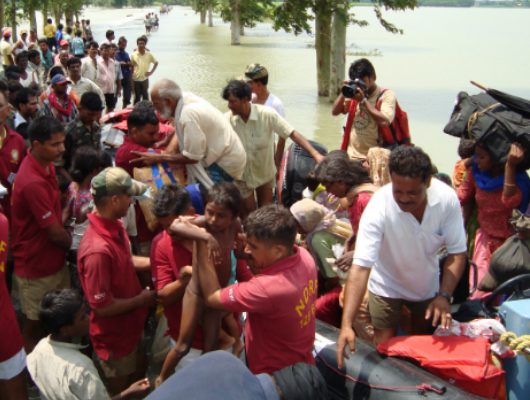
This year, as the world faces one of the strongest El Niños in 50 years, USAID is implementing natural disaster education in vulnerable countries. The more prepared a country is to respond to and prevent natural disasters, the quicker its economy can recover.

In New Guinea, where a combination of drought and floods decimated the sweet potato crop and left many without a source of income, USAID is providing agricultural training to make fields more resilient. Techniques such as planting over last season’s crop stubble and using cover crops help the soil retain three times as much moisture.

Latin American meteorologists are learning to use the Flash Flood Guidance System to predict flash floods. Studying rainfall and absorption buys as much as six hours to evacuate people and animals. It’s not a lot of time, but it’s enough to prevent heavy casualties.

As more people move in Nacala, Mozambique, they risk settling in areas that are vulnerable to the climate. Flooding, erosion and water scarcity can damage infrastructure and impede development.

USAID founded the Climate Resilient Infrastructure Services program to educate newcomers about climate vulnerabilities and high-risk areas, as well as teach natural disaster response techniques. Climate change awareness saves a lot of money and prevents future heartache.

Similar to Nacala, Vietnam has begun studying climate change and proper responses. One of its cities, Hue, experiences frequent heavy floods, which encourage extreme poverty and disease.

USAID is helping Hue, and Vietnam in general, to predict flooding and create infrastructure that can withstand heavy water over an extended period of time.

As a result of warnings, communities in Africa organized food, medicine and housing in anticipation of natural disasters and resulting diseases. El Niño is occurring more frequently in Africa, leaving little time for recovery, so food and supply storage is vital.

Families who lose their homes and occupations can utilize the supplies until they regain their livelihood. Instead of dissolving, communities will remain intact and functional and poverty will be kept at bay.

Natural disasters leave thousands dead or impoverished each year, but it doesn’t have to be this way. Natural disaster education saves lives and prevents poverty. Instead of having to rebuild their lives from the ground up, people in developing countries can continue to move forward and improve their situations.

– Sarah Prellwitz

Sources: USAID 1, USAID 2, NOAA, Accuweather, IB Times, Live Science
Photo: Wikimedia

October 26, 2015
https://borgenproject.org/wp-content/uploads/borgen-project-logo.svg 0 0 Borgen Project https://borgenproject.org/wp-content/uploads/borgen-project-logo.svg Borgen Project2015-10-26 01:30:012024-06-04 04:33:51Natural Disaster Education Eases Economic Blow
Education, Global Poverty, Technology, USAID

Smartphones Affect Education Gaps in Rural Pakistan

smartphones_affect_education
Throughout rural Pakistan, many teachers don’t have access to quality educational training for a variety of reasons, including cost, distance and family commitments.

Online distance learning could easily fill-in these educational gaps, but limited Internet coverage has proven to be a stumbling block for educators and students alike.

Developments in Literacy (DIL), a nonprofit founded by Pakistani-Americans in order to bring quality education to disadvantaged children in underdeveloped regions, has created a revolutionary solution to end this problem.

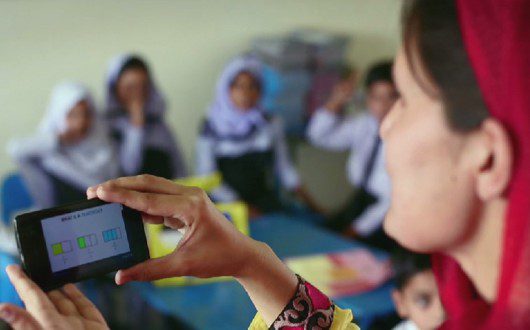
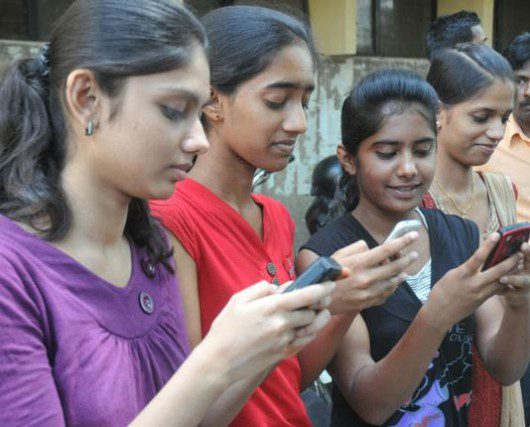
Funded by USAID, DIL created a mobile distance learning program known as mLearning. The parameters of the program were straightforward. Teachers were each given a smartphone with video lessons loaded onto them, giving teachers unlimited access to the material.

Once a month, teachers would meet at one of the 23 WiFi hubs DIL established throughout the nations to download more training videos. The 8- to 10-minute videos cover a variety of techniques to engage and inspire students to love learning, especially math and English.

Although the program’s focus is on bettering the understanding of school subjects and the teaching ability of rural educators, the end-game is to inspire children to stay in school. The goal is to have smartphones affect education gaps in rural Pakistan.

MOBILELEARN_2048847g

The average number of years that Pakistani children stay in school is only eight years, with most dropping out before age 16. This low level of academic participation has capped the Pakistani literacy rate at 57 percent, with only 45 percent literacy for women.

Because of this, mLearning is aimed at improving the education and opportunities of poor children and at-risk rural girls through better teacher training and learning resources.

During the course of the initial mLearning program, 200 teachers were given smartphones and completed the program from January 2013 to November 2014. Currently, more than 5,000 children benefit from being taught by teachers who have participated in mLearning.

Since the end of mLearning, the educational aid videos have been shared with 40 schools not affiliated with DIL, and countless teachers have shared the videos personally from their smartphones.

That’s the real brilliance behind mLearning using smartphones as its method of delivery. Since DIL owns the majority of the content, teachers are able to share the videos freely.

mLearning’s results thus far have been impressive. Across the board, teachers reported a 30 percent increase in their English skills and a 40 percent increase in their comprehension of mathematics. As the mLearning videos continue to be spread around, DIL is looking to expand the program.

– Claire Colby

Sources: USAID, World Factbook
Photo: USAID
Photo: The Hindu.Com

October 22, 2015
https://borgenproject.org/wp-content/uploads/borgen-project-logo.svg 0 0 Borgen Project https://borgenproject.org/wp-content/uploads/borgen-project-logo.svg Borgen Project2015-10-22 09:15:342024-05-27 09:28:14Smartphones Affect Education Gaps in Rural Pakistan
Children, Education, Global Poverty

Deaf Children in Poverty: A Right to an Education

Deaf Children in Poverty: a Right to an Education
Obtaining an education in a poverty stricken country is hard for most children living in those conditions. It’s almost impossible when that child is deaf and has no access to sign language assisted learning. Millions of children are struggling to learn or not attending school at all because of this fact.

Educational; Disadvantage

In countries like Nepal, Kenya, China and Northern Uganda, parents, teachers and the wider community often see deaf children as mentally impaired or just altogether incapable of learning. So while these children may be lucky enough to obtain cochlear implants or hearing aids, they are forced to miss out on important learning milestones.

Kenyan Natha Yare recalls being denied her right to an education growing up because she was deaf. Natha talks about how her quality of education was compromised even though she was able to attend a school for the deaf, which was a 15 hour trip by bus.

The teachers there did not know Kenyan Sign Language. They simply wrote on the board, expecting the children to copy down what they saw, which they did. The children were then allowed to play, never actually gaining an understanding of what had been copied.

USAID Provides Resources to Deaf Children

USAID is dedicated to changing the way deaf children in poverty are treated in many countries worldwide. Many poverty stricken countries simply do not have the funds or even the resources to provide sign language teachers or aids.

USAID has helped to promote the implementation of sign language projects in several countries including Ecuador, Georgia and Morocco.

It is important for deaf children to learn sign language in order to allow them the opportunity to be able to express themselves, communicate and learn. In order to ensure this, teachers who are qualified to teach national sign language, and at all educational levels, must be hired.

Deaf children who never learn sign language are highly likely to develop into adults who have a hard time communicating with family, friends and the larger community. This will make it very hard for them to achieve true independence and to lead fulfilling, successful lives.

Education is Always the Key

Every child deserves to have access to a proper education and “the right to education in sign language for deaf people is safeguarded by the United Nations Convention on the Rights of People with Disabilities.”

By safeguarding this right, especially for those children living in extreme poverty, we give each deaf child the opportunity to reach their full potential and break the cycle of poverty.

– Drusilla Gibbs

Sources: USAID, HRW
Photo: Pixabay

October 13, 2015
https://borgenproject.org/wp-content/uploads/borgen-project-logo.svg 0 0 Borgen Project https://borgenproject.org/wp-content/uploads/borgen-project-logo.svg Borgen Project2015-10-13 01:30:212024-12-13 18:05:12Deaf Children in Poverty: A Right to an Education
Global Poverty, Technology, USAID

NASA and USAID Partnership: Mekong River


What do you think of when you think of NASA technology? “Space” is probably going to be the answer most people give, unless they’ve heard of SERVIR, the result of a partnership between NASA, USAID, the World Bank in Washington, and several other organizations.

Daniel Irwin, the director of the program, knows this better than anyone. “When people think of NASA,” he says, “they think of Mars Exploration Rovers or finding water on the moon, but a big part of our mission is to study earth from space, to advance scientific understanding and meet societal needs.”

SERVIR is actually not an acronym – it is taken from the Spanish word meaning “to serve,” because the goal of the initiative is to do just that.

By combining NASA’s technology and humanitarian groups’ understanding of what areas need what resources and what would benefit people the most, SERVIR is able to better serve the needs of populations.

The NASA website says that the resources developed by SERVIR can help governments and other agencies to more effectively “respond to natural disasters, [improve] food security, safeguard human health, [and] manage water and natural resources.”

SERVIR has hubs at locations throughout the globe, ad just this August, SERVIR-Mekong was launched in Bangkok, Thailand.

The Mekong river is located in Southeast Asia that acts as a major trade route to China. Depending on the seasons, the Mekong sometimes floods the surrounding area, leaving the residents of the Mekong area in severe need.

This is one of the reasons why Mekong was chosen as a location for this SERVIR project.

The Mekong center in particular was the result of NASA and USAID partnership with the Asian Disaster Preparedness Center (ADPC.) This is a partnership that will work to make land use more sustainable and to monitor and (hopefully) decrease the effects of climate change.

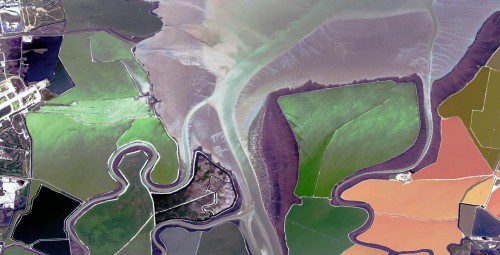
For example, the Normalized Difference Vegetation Index (NDVI) is something that can be monitored with NASA technology. It is an indicator that comes from the amount of light reflected off of the surface of the earth based on the quantity and quality of plant life.

Areas that have lots of healthy vegetation will have a high NDVI and vice versa. Understanding the NDVI of an area can provide everyone from small farmers to forestry service personnel a better understanding of where to plant crops, develop urban centers, and more carefully preserve vegetation.

The power to help individuals and populations all over the world better respond to the effects of climate change extends to areas of food security and water resourcing as well. It truly is a remarkable innovation.

NASA technology can also be used to chart the course of natural disasters. For example, in the past, during hurricanes, it has allowed scientists to map out the paths of mudslides, which allowed them to understand which areas would be most affected and need the most help.

SERVIR’s track record has been vastly successful. Its team has worked with over 200 institutions in over 30 countries to develop local solutions, and to link local offices all over the globe in a network of ideas and innovations. Over 40 custom tools have been developed through the work of SERVIR.

It’s an excellent example of many of the tenets of humanitarianism: utilizing technology, creating partnerships, thinking big (even beyond the global scale) and dedicating existing resources towards a worthwhile cause.

As Irwin says, NASA technology and USAID’s resources together are helping to create “real time, real world applications that are changing the lives of people where they live.”

– Emily Dieckman

Sources: USAID, NASA, Servir Global, Washington Post
Photo: AmericaSpace

September 30, 2015
https://borgenproject.org/wp-content/uploads/borgen-project-logo.svg 0 0 Borgen Project https://borgenproject.org/wp-content/uploads/borgen-project-logo.svg Borgen Project2015-09-30 10:18:542024-12-13 18:05:11NASA and USAID Partnership: Mekong River
Global Poverty, USAID, Women & Children

Maternal and Child Health: Keeping Mother and Baby Alive

Maternal_and_Child_HealthDuring the 2015 Call To Action Summit, health ministers and global experts take a look at the progress that has been made. USAID has helped save the lives of an estimated 2.5 million children and nearly 200,000 mothers since 2008.
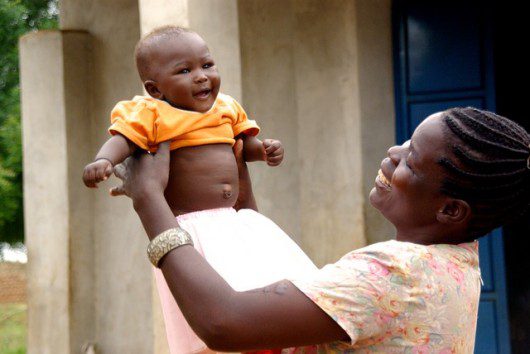

It has been a little over a year, in June 2014, since USAID introduced its newest strategic plan for maternal and child health. They hope to prevent the deaths of 15 million children and 600,000 mothers by 2020.

At the summit the participants reviewed the impact the USAID’s support has had all around the world; often putting a name and a face to those benefitting from the aid provided.

In India, mothers like Satyawati now know how to best take care of their newborns and other children thanks to the ability to obtain health-related knowledge and help from a local health worker.

Because Satyawati has access to this information, she has had her children properly vaccinated and employs proper hygiene practices in her home. In 1990 in India, children under the age of five had a mortality rate of 126 per 1,000 live births but in 2013 that number has been reduced to 53 per 1,000 live births.

Also, thanks to the support of the USAID, 27 hospitals in Malawi now have a device called a Pumani bCPAP that helps newborns with underdeveloped lungs breathe until they can do so own their own.

This device has tripled the survival rate of babies like Gloria Mtawila’s son Joshua, who stayed on the machine for a month until he could breathe on his own and is now a completely healthy baby.

All across the world bundles of joy are being born to tired but radiant mothers. Hospital staff assures that both have the best possible care in these first crucial hours, days and sometimes weeks after childbirth.

But also all across the world there are mothers on makeshift cots or laying on dirt floors. They and their babies do not have dedicated hospital staff looking after them.

Mom did not have access to prenatal vitamins and baby may not have access to life-saving vaccines. With poor living conditions, poor pre and post-birth care, and a poor quality of life all around, mom and her little one may not make it.

This is what USAID is working to prevent. USAID’s maternal and child health programs focus on cost-effective initiatives such as enabling access to nutritional supplements and vaccines.

The USAID has achieved great success. Maternal death rates have decreased by five percent in each of its 24 target countries while child mortality rates went down by four percent.

But this is still not enough. The USAID hopes to receive $850 million in funding for the maternal and child health program in order “to reduce child mortality to 20 or fewer deaths per 1,000 live births in every country by 2035, and to end preventable maternal deaths” (interaction.org).

Through this initiative, the USAID has inspired developing countries to develop strategies to reach these goals, and make the eradication of unnecessary maternal and child deaths possible.

– Drusilla Gibbs

Sources: USIAD, Interaction, Call to Action
Photo: Google Images

September 28, 2015
https://borgenproject.org/wp-content/uploads/borgen-project-logo.svg 0 0 Borgen Project https://borgenproject.org/wp-content/uploads/borgen-project-logo.svg Borgen Project2015-09-28 07:39:422024-05-27 09:27:52Maternal and Child Health: Keeping Mother and Baby Alive
Developing Countries, Global Poverty, USAID

USAID Sets New Goals for Maternal Health

maternal health
The United States Agency for International Development, or USAID, is a government organization in charge of allocating funds and aid to global issues.

Millions around the globe have felt such power and emotion in the form of kisses, hugs, listening ears, and countless late nights.

However, maternal and child survival continues to be among the key issues that feed into the poverty crisis in developing countries around the world.

According to the UN, “a woman dies from complications in childbirth every minute – about 529,000 each year – the vast majority of them in developing countries.”

As part of the Millennium Development Goals, which concluded earlier this year in 2015, several countries banded together in order to increase maternal and child survival by three-quarters. While the target was not met, significant progress was made and millions of lives were saved in countries that normally do not receive the care and resources required for a healthy delivery.

Now that 2015 is coming to an end, many countries and organizations are now setting new goals to improve maternal and child survival. USAID recently came out with its new goal to reach an additional 38 million women with increased access to care during childbirth.

With this goal in mind, an action plan was put together in order to achieve this milestone. On their site the organization stated, “the USAID report details how to reach 38 million of the most vulnerable women around the world with increased access to health care during delivery by 2020.”

This plan includes a focus on 24 target countries including, but not limited to Ethiopia, Nepal, Afghanistan, Haiti, and India.

With this aid, more mothers have had access to care during and after the birth of their children. A recent article from the USAID Impact blog reported successes within some of these target countries.

The organization reports that in Ethiopia, 38,000 workers have been trained and dispatched around the country to help mothers and children. In Nepal, female workers travel to provide women with antiseptic gel, free of charge, to reduce infant infection. Malawi has increased efforts to save infants born without fully developed lungs.

Similar stories are beginning to flourish in developing countries around the world. With countries receiving the necessary resources and aid during this vulnerable time for both mother and child, lives are being saved and general health standards improved.

The survival of these mothers and children around the globe is imperative if we are to alleviate the poverty crisis our world now faces.

To quote the USAID Impact post, “When a child dies, and when a mother dies giving birth, it is a tragedy for all of us…because it continues the cycle of extreme poverty that holds the entire world back. Together, we can break that cycle.”

When a mother is lost, children and fathers feel the strain and the community as a whole is affected. When a child is lost, the community misses out on that child’s potential accomplishments and impact. With USAID reaching out to the formerly unreachable, maternal and child survival increases and the community as a whole improves.

– Katherine Martin

Sources: UNICEF, USAID 1, USAID 2
Photo: pixabay

September 21, 2015
https://borgenproject.org/wp-content/uploads/borgen-project-logo.svg 0 0 Borgen Project https://borgenproject.org/wp-content/uploads/borgen-project-logo.svg Borgen Project2015-09-21 01:30:072024-12-13 18:05:08USAID Sets New Goals for Maternal Health
Page 77 of 92«‹7576777879›»

Get Smarter

  • Global Poverty 101
  • Global Poverty… The Good News
  • Global Poverty & U.S. Jobs
  • Global Poverty and National Security
  • Innovative Solutions to Poverty
  • Global Poverty & Aid FAQ’s
Search Search

Take Action

  • Call Congress
  • Email Congress
  • Donate
  • 30 Ways to Help
  • Volunteer Ops
  • Internships
  • Courses & Certificates
  • The Podcast
Borgen Project

“The Borgen Project is an incredible nonprofit organization that is addressing poverty and hunger and working towards ending them.”

-The Huffington Post

Inside The Borgen Project

  • Contact
  • About
  • Financials
  • President
  • Board of Directors
  • Board of Advisors

International Links

  • UK Email Parliament
  • UK Donate
  • Canada Email Parliament

Get Smarter

  • Global Poverty 101
  • Global Poverty… The Good News
  • Global Poverty & U.S. Jobs
  • Global Poverty and National Security
  • Innovative Solutions to Poverty
  • Global Poverty & Aid FAQ’s

Ways to Help

  • Call Congress
  • Email Congress
  • Donate
  • 30 Ways to Help
  • Volunteer Ops
  • Internships
  • Courses & Certificates
  • The Podcast
Scroll to top Scroll to top Scroll to top