• Link to X
  • Link to Facebook
  • Link to Instagram
  • Link to TikTok
  • Link to Youtube
  • About
    • About Us
      • President
      • Board of Directors
      • Board of Advisors
      • Financials
      • Our Methodology
      • Success Tracker
      • Contact
  • Act Now
    • 30 Ways to Help
      • Email Congress
      • Call Congress
      • Volunteer
      • Courses & Certificates
      • Be a Donor
    • Internships
      • In-Office Internships
      • Remote Internships
    • Legislation
      • Politics 101
  • The Blog
  • The Podcast
  • Magazine
  • Donate
  • Click to open the search input field Click to open the search input field Search
  • Menu Menu

Tag Archive for: USAID

Information and news about mobile technology

Posts

Education

Top 10 Reasons Why Female Education is Important

Top 10 Reasons Why Female Education is Important
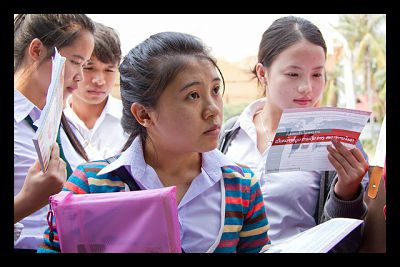
From Cairo to Beijing, offering quality and universal education to young girls promotes progress for society as a whole. Carla Koppell of the United States Agency for International Development, better known as USAID, even called female education a “silver bullet” for empowerment and progress. To better understand the far-reaching effects of a few books and a classroom, here are the top 10 reasons why female education is important.

The Unmatched Importance of Female Education

  1. Increased Literacy: Of the 163 million illiterate youth across the globe, nearly 63 percent are female. Offering all children education will prop up literacy rates, pushing forward development in struggling regions.
  2. Human Trafficking: Women are most vulnerable to trafficking when they are undereducated and poor, according to the United Nations Inter-Agency Project on Human Trafficking. Through providing young girls with opportunities and fundamental skills, this billion-dollar industry can be significantly undermined.
  3. Political Representation: Across the globe, women are underrepresented as voters and restricted from political involvement. The United Nations Women’s programmes on leadership and participation suggests that civic education, training and all around empowerment will ease this gap.
  4. Thriving Babies: According to the United Nations Girls’ Education Initiative, children of educated mothers are twice as likely to survive past the age of five. Foreign aid for schoolhouses and curriculum development could greatly benefit the East African country of Burundi, where nearly 16,000 children die per year.
  5. Safe Sex: A girl who completes primary school is three times less likely to contract HIV. With these statistics in mind, The World Bank calls education a “window of hope” in preventing the spread of AIDS among today’s children.
  6. Later Marriage: As suggested by the United Nations Population Fund, in underdeveloped countries, one in every three girls is married before reaching the age of 18. In a region where a girl receives seven or more years of education, the wedding date is delayed by four years.
  7. Smaller Families: Increased participation in school reduces fertility rates over time. In Mali, women with secondary education or higher have an average of three children. Counterparts with no education have an average of seven children.
  8. Income Potential: Education also empowers a woman’s wallet by boosting her earning capabilities. According to the United Nations Educational, Scientific and Cultural Organization, also known as UNESCO, a single year of primary education has shown to increase a girl’s wages later in life by 20 percent.
  9. Thriving GDP: Gross domestic product also soars when both girls and boys are being offered educational opportunities. When 10 percent more women attend school, GDP increases by three percent on average.
  10. Poverty Reduction: When women are provided with equal rights and equal access to education, they go on to participate in business and economic activity. Increased earning power and income combat against current and future poverty through feeding, clothing and providing for entire families.

The sustainability and progress of all regions depend on the success of women across the globe. As President Obama said while addressing the United Nations General Assembly in 2012, “The future must not belong to those who bully women. It must be shaped by girls who go to school and those who stand for a world where our daughters can live their dreams just like our sons.”

– Lauren Stepp

Sources: PRB, U.N. Women, CFR, World Bank

Photo: Flickr
May 23, 2016
https://borgenproject.org/wp-content/uploads/borgen-project-logo.svg 0 0 Borgen Project https://borgenproject.org/wp-content/uploads/borgen-project-logo.svg Borgen Project2016-05-23 12:00:072024-05-27 09:23:57Top 10 Reasons Why Female Education is Important
Global Poverty

Solutions for Addressing the Famine in South Sudan

famine in south sudan
According to the World Food Programme, 2.8 million people are experiencing famine in South Sudan. That is roughly one-fourth of the country’s population.

With the country on the brink of famine, approximately half the population or 6 million people will need humanitarian assistance or protection.

As the world’s youngest country, South Sudan has been facing serious difficulty since civil war broke out. It was less than three years old when the violence escalated. As a result, more than 2 million people, one-fifth of the country’s population have been displaced, with over 700,000 of the displaced seeking refuge in neighboring countries.

The displacement has prevented farming in a country with favorable climate and adequate rainfall as farming takes time and planning in one place.

SOLUTIONS

One short-term solution to addressing the imminent famine in South Sudan is to increase relief aid. Fortunately, the United States provided $86 million of relief aid for South Sudan on April 27, 2016.

However, other factors continue to negatively impact relief efforts. Extortion takes place at illegal checkpoints throughout the country. In addition, at least 52 relief workers have lost their lives since the civil war broke out.

On April 13, 2016, United Nations Secretary-General Ban Ki-moon stated: “[M]aintaining a spirit of cooperation will be crucial as the country’s leaders begin the work of reversing the years of destruction this conflict has brought upon the people of South Sudan.”

On the other hand, ranking member of the U.S. House of Representatives Foreign Affairs Committee, Representative Eliot Engel (D-NY) has expressed misgivings on any peace deals, stating for that the South Sudan peace deal in August of 2015 was signed by “the political elites who created this conflict in the first place . . . and has little to do with the millions of people who have been affected.”

Therefore, the remedy requires something more than just food and funding because South Sudan has extensive means to feed its population.

The long-term answer to addressing the famine in South Sudan is unquestionably peace.

Roughly 16,000 child soldiers have been recruited while South Sudan has the world’s lowest rate of children ages 5-16 in school. As the United Nations and U.S. law-makers suggest, effectively establishing peace is of the utmost importance for this country.

– Jonathan L. Hull

Photo: Flickr

May 23, 2016
https://borgenproject.org/wp-content/uploads/borgen-project-logo.svg 0 0 Borgen Project https://borgenproject.org/wp-content/uploads/borgen-project-logo.svg Borgen Project2016-05-23 01:30:012024-12-13 17:54:27Solutions for Addressing the Famine in South Sudan
Global Poverty

Satellite Technology Fighting Drought in Ethiopia

drought in Ethiopia

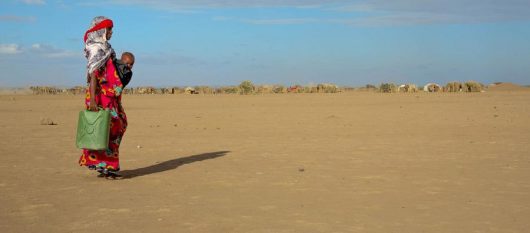
Ethiopia is no stranger to drought. However, as they face their worst bout in decades, Middle Eastern turbulence and the Refugee Crisis have spread international relief funds thin.

Determined not to be overcome, Ethiopians and partners like UNICEF are stepping in—with the unexpected help of satellite technology.

The introduction of satellite remote sensing allows areas affected by the drought in Ethiopia to be mapped rapidly, increasing the impact and timeliness of first-response measures. The satellites can also identify ideal well sites, providing valuable freshwater supply when other wells go dry. This technology is moving the approach to facing drought from reactionary to pre-planned, which is making efforts to alleviate the effects of drought more efficient, while preempting some of them all together.

The innovation comes at a pivotal time, with the 2015-2016 El Nino bringing devastating drought in Ethiopia and impacting some of the nation’s most impoverished people. Food security, livestock survival, national economy and basic human needs are all jeopardized by the water shortage. The Ethiopian government and the United Nations have identified 10.2 million Ethiopians in need of food assistance funding.

For Ethiopian farmers and herders, who represent over 80 percent of the nation, groundwater access is fundamental to ensuring food security. That security is greatly jeopardized by freshwater wells going dry at rates as high as 70 percent in some regions. Satellite remote sensing enables farmers to place new wells in more strategic location, using information on hydrogeology, ground vegetation, topology and morphology to find the most successful well locations.

That same satellite technology has the potential to address drought long before those wells go dry. Used to monitor precipitation, vegetation health, and soil moisture, the technology signals where the need is greatest for preventative action.

Satellite use in the region has swiftly made a positive impact. In the hard-hit northern region, satellites have been utilized to identify locations for new water boreholes which could provide water for 100,000 people. The project and others like it, have combined the efforts of the Ethiopian government, UNICEF and private contractors.

The effects of drought in Ethiopia extend beyond crop failure, malnutrition and death of livestock. For impoverished students, it can mean forgoing school in order to walk distances of eight or more hours to fetch water. Others drop out after contracting water-borne diseases from sharing water with animals, or lack the energy to attend school due to their living circumstances. For the international community, it means deciding how to bare and share the burden of 10 million Ethiopians in need of food assistance and six million in need of emergency water.

As the U.N. warns of millions of Ethiopians in danger of acute malnutrition, the U.S. has sent aid in the form of 4 million dollars in maize and wheat seed for households, as well as a variety of disaster experts to work on the ground. Working to counteract drought in Ethiopia represents a growing commitment by the U.S. to humanitarian aid, as well as the protection of a valuable counter-terrorism ally. The seeds sent by the U.S. are expected to feed 226,000 households.

While conditions remain dire, innovation like satellite technology represents a larger atmosphere of determination. Such determination is vital in keeping the more dire reaches of famine at bay.

– Charlotte Bellomy

May 21, 2016
https://borgenproject.org/wp-content/uploads/borgen-project-logo.svg 0 0 Borgen Project https://borgenproject.org/wp-content/uploads/borgen-project-logo.svg Borgen Project2016-05-21 14:30:342024-12-13 18:06:05Satellite Technology Fighting Drought in Ethiopia
Children, Global Poverty, Health

USAID Combats Maternal, Neonatal & Child Mortality in Ethiopia

Health_mother_ Child Mortality

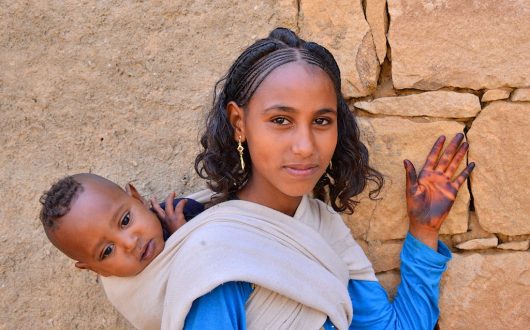
USAID is working with the Ethiopian government to reduce maternal, neonatal and child mortality rates, according to their website. Ethiopia has one of the highest rates of maternal deaths in the world.

“Women have a one-in-52 chance of dying from childbirth-related causes each year,” according to USAID. “Every year, more than 257,000 children under the age of five die and 120,000 die in the neonatal period. More than 60 percent of infant and 40 percent of under-five deaths in Ethiopia are neonatal deaths.”

Increasing Health Care Services

This dire situation calls for extensive health care services. Ninety percent of Ethiopian women give birth in their homes in order to observe cultural traditions and be surrounded by company they trust. Health facilities can spread awareness about the value of institutional delivery in decreasing mother and child mortality rates; many mothers have never heard the benefits of skilled birth attendance and postnatal care.

Preventable complications like hemorrhage, infection, unsafe abortion, hypertensive disorders and obstructed labor are to blame for 80 percent of maternal deaths.

USAID has intervened in family, community and facility care by increasing accessibility of health services. A health extension program includes basic obstetric and newborn care, essential newborn care, management of neonatal and childhood illnesses, coverage of immunizations and the early identification and treatment of sick children, all of which go a long way to decreasing the child mortality rate.

Additionally, they funded the Integrated Family Health Project, an activity that seeks to promote and strengthen family planning and maternal, newborn and child health practices and services. With the cooperation of health programs throughout Ethiopia, the IFHP impacts about 40 percent of the country’s entire population.

The Health Ministry and various organizations provide health facilities with ambulances, equipment and skilled staff. The majority of communities in Ethiopia lay in rural regions that place women in a vulnerable position when a complication arises during childbirth, and many fatalities occur in the transfer to a health facility.

Global Involvement

The Government of Germany recently contributed 10 million euro to UNICEF, bolstering its emergency response to drought affected regions in Ethiopia. This support will provide life-saving assistance to severely malnourished children and pregnant and lactating women. Lack of nutrition threatens close to half of a million children under the age of five and nearly 140,000 lactating women in the Somali area.

By providing preventive, promotional and basic curative health and nutrition services to mothers, infants and young children, USAID and other organizations like UNICEF are saving lives and combating illness and disability.

– Emily Ednoff

Photo: Flickr

April 27, 2016
https://borgenproject.org/wp-content/uploads/borgen-project-logo.svg 0 0 Borgen Project https://borgenproject.org/wp-content/uploads/borgen-project-logo.svg Borgen Project2016-04-27 01:30:092020-06-19 06:22:12USAID Combats Maternal, Neonatal & Child Mortality in Ethiopia
Global Poverty

Sustainable Development of Coffee in South Sudan

Cofee_farmers_sustainability

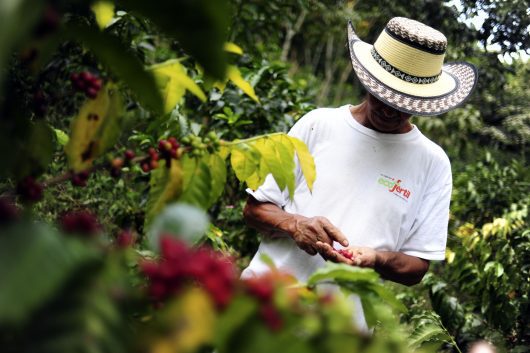
This April, the U.S. Agency for International Development (USAID) announced it would contribute $3.18 million to foster the growth of South Sudan’s coffee industry. This investment is a continuation of Nespresso’s and TechnoServe’s efforts that began in 2011, according to a spokesperson for the USAID.

Focus on Local Farmers

Nespresso and TechnoServe work with local farmers to ensure efficient coffee production occurs while progressing South Sudan’s commercial channels.

This program will continue for three years and will focus on increasing local coffee farmers’ income while alleviating poverty levels.

An example of the work already being done by Nespresso and TechnoServe is the creation of South Sudan’s first wet mills. These wet mills serve the function of processing coffee cherries into coffee beans.

Nespresso’s spokesperson, George Clooney, has opined that grassroot developments are the first steps toward ensuring a country’s economic sustainability.

Further, this investment will enable further training for local farmers and the USAID has the goal of reaching 1,500 farmers, 25 percent of whom are women.

A Crece study in Colombia demonstrated the effectiveness of Nespresso’s work showcasing that local farmers in Colombia experienced 41 percent increased economic output.

The international nonprofit organization named The Rainforest Alliance, describes Crece as a study, “analy[zing] the impact that the Nespresso AAA Sustainable Quality™ Program has had in the lives of coffee farmers in Colombia during the period 2009 to 2011.”

Bringing South Sudan to the Coffee Market

When describing Colombian farms specifically, Nespresso stated, “…farms outperformed a control group of non-member farms in three areas.” These areas include higher environmental values and higher social impact.

Through training of farmers, leaders of the Nespresso organization hope to alleviate poverty and act as the first brand to offer coffee from South Sudan.

A local farmer describing the benefits received from the program told USAID, “We can now afford to take our children to good schools and meet the basic needs of the family. This wouldn’t have been possible without that technical support.”

– Mayra Vega

Photo: Flickr

April 26, 2016
https://borgenproject.org/wp-content/uploads/borgen-project-logo.svg 0 0 Borgen Project https://borgenproject.org/wp-content/uploads/borgen-project-logo.svg Borgen Project2016-04-26 06:28:572024-12-13 18:05:59Sustainable Development of Coffee in South Sudan
Development, Global Poverty

Bank Loans in Bangladesh Open Doors for Poor Farmers

Loans in Bangladesh

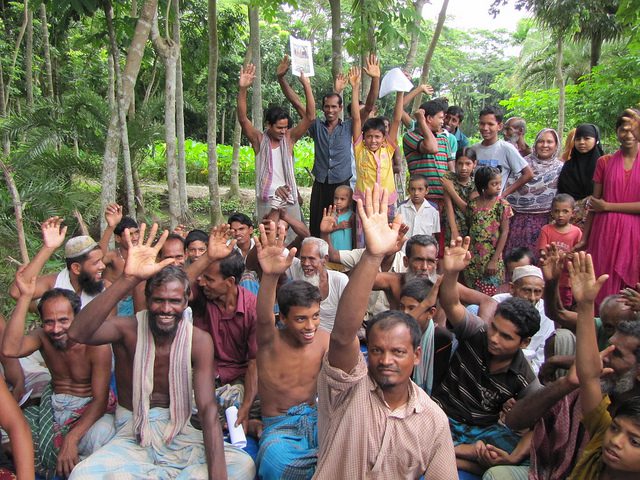
Nearly half of the population in Bangladesh work in the poor agricultural sector where they have traditionally been excluded from accessing credit facilities that could improve their livelihoods.

To help farmers lift themselves out of poverty, USAID’s Development Credit Authority has partnered with Bangladeshi banks to provide customized financing options that fit the needs of local communities. Here are Benefits of Small Loans in Bangladesh.

3 Benefits of Small Loans in Bangladesh

  1. Bank loans give farmers the opportunity to become self-sufficient. Many poor farmers lack the resources to invest in the land they work on and often spend a significant portion of their income on rent or lease  agreements. Through credit facilities, small farmers can purchase the land they work on providing them with stability and opportunities for growth.
  2. Some farmers have used loans to diversify or increase their crop production or to purchase livestock. Through loans, some workers have even been able to make the switch from being a laborer on someone else’s farm to developing a farm of their own. Each small investment that farmers are able to make moves them one step closer to economic stability.
  3. Entrepreneurs have the option to expand their businesses through bank loans. One of USAID’s success stories is of a man who had run a carp farm for 16 years. His business was well-established but in order to expand he required a loan, which he received through the USAID program. Farmers can increase their livelihoods when they have more land, because they can cultivate more crops or raise more livestock.

The availability of loans in Bangladesh that are customized for small borrowers will go a long way to benefit farmers, their families and local communities.

– Emily Milakovic

Photo: Flickr

April 25, 2016
https://borgenproject.org/wp-content/uploads/borgen-project-logo.svg 0 0 Borgen Project https://borgenproject.org/wp-content/uploads/borgen-project-logo.svg Borgen Project2016-04-25 05:18:512024-12-13 17:54:18Bank Loans in Bangladesh Open Doors for Poor Farmers
Aid, Food & Hunger, Food Aid, Global Poverty, USAID

Hope on the Horizon: Increase in Food Assistance for Iraq

Food Assistance in IraqAn increase in food assistance for Iraq will become a reality thanks to the U.S. Agency for International Development (USAID). The U.N. World Food Program (WFP) in Iraq will receive an additional $20 million in emergency food assistance per an announcement from Stuart E. Jones, U.S. Ambassador to Iraq, made on Feb. 29, 2016, according to USAID.
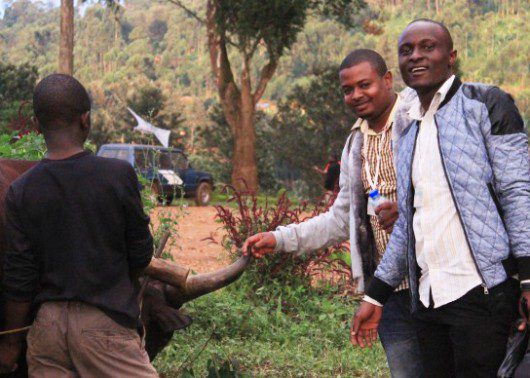
With this new support, provided through USAID’s Office of Food for Peace (FFP), the U.S. government has contributed nearly $623.8 million to support humanitarian activities in Iraq since the 2014 fiscal year, according to USAID’s Iraq-Complex Emergency Fact Sheet.

The new funding will support the distribution of household food parcels, including beans, dry peas, flour, oil and rice — and immediate response rations for vulnerable populations comprising ready-to-eat food items, such as beans, biscuits, canned meat, canned peas and dates according to USAID’s Iraq-Complex Emergency Fact Sheet.

USAID is helping the WFP reach 1.5 million displaced and conflict-affected Iraqis throughout the country according to USAID’s Feb. 29, 2016 press release.

This significant boost in aid has the potential to help Iraqis who were adversely impacted by cuts to the WFP last year. In August 2015, the WFP was forced to cut back food assistance due to a funding shortfall, according to the U.N.

“Unfortunately, lack of funds and the rise in the number of displaced Iraqis forces us to reduce the size of the food rations we provide to tens of thousands of families living outside camps,” said Jane Pearce, WFP representative and country director in Iraq, in an August 2015 press release.

This recent increase in food assistance for Iraq comes at a crucial time. The food and medicine shortage in Iraq resulted in the death of approximately 20 children and older persons in recent weeks according to a report by the International Organization for Migration (IOM).

Between December 2015 and January 2016, the price of some food commodities in Fallujah increased by more than 800 percent, according to the WFP; as of late February, a 110-pound bag of rice cost $400 and a 110-pound sack of wheat flour was priced at $550, reported the IOM.

There is hope that this increase in food assistance for Iraq is a sign of more good to come for internally displaced persons living in the country.

– Summer Jackson

Sources: UN, USAID 1, USAID 2
Photo: Wikipedia

March 23, 2016
https://borgenproject.org/wp-content/uploads/borgen-project-logo.svg 0 0 Borgen Project https://borgenproject.org/wp-content/uploads/borgen-project-logo.svg Borgen Project2016-03-23 01:29:532024-06-11 02:48:18Hope on the Horizon: Increase in Food Assistance for Iraq
Development, Global Poverty

Sharing the Land in the DRC

Sharing Land DRCSharing the Land is a peacekeeping initiative started by the Christian Bilingual University of Congo in January 2015. Funded by Texas A&M University’s Center for Conflict and Development (ConDev) and USAID’s Higher Education Solutions Network, the organization has made enormous strides in peacefully settling land disputes in one of Beni’s 30 quarters in eastern Congo.
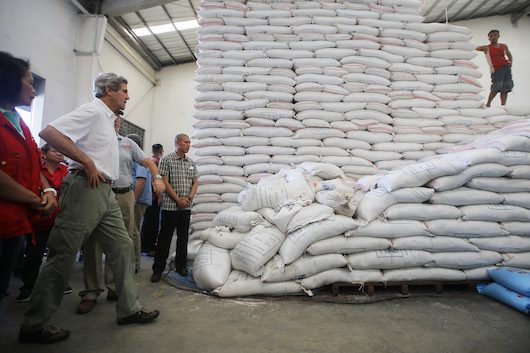
Sharing the Land uses GIS and GPS mapping technology to compile land claim and conflict data as well as road names, neighborhood boundaries, geographic features and points of interest. Data comes from household surveys and government records. The maps are already being used to settle land disputes between individuals, families and large companies in Beni.

Archip Lobo, Sharing the Land’s project leader, grew up in eastern Congo amidst violence and severe abuse of human rights, much of which revolved around land disputes. Though the country has a tragic and ongoing history of violence, Lobo felt that land disputes were preventable and not a grounds for continued, unhindered violence.

Rampant conflicts over land began when King Leopold of Belgium usurped much of the land from Congolese chiefs and initiated a tyrannous rule over eastern Congo in the late 1800s. With a new form of governance entangled in the traditional ways of land management, violence became prevalent.

In the years since Congo gained its independence from Belgium on Jun. 30, 1960, the country has endured great instability, insecurity, corruption and pervasive violation of human rights. Removing land disputes as a cause for violence is a step in the right direction for bringing Congo towards a peaceful future.

Sharing the Land provides Beni with data-driven land management practices instead of relying on differing traditions or interpretations of inheritance rights. While the project aims to bring peace through nonviolent land dispute resolutions, it is also reducing disputes in the first place by making the information publicly available and educating all those involved in urban planning.

According to Texas A&M, 85 percent of court cases in Beni relate to land disputes. The Sharing the Land initiative is already making progress to reduce this statistic in Beni.

This project has two immediate benefits. First, official maps using government data help to standardize the land purchasing process. It also enables land managers to continue to add and update data on the stable ArcGIS platform so that land ownership can be accurately and reliably documented.

Aside from using GIS software to map the land, the Sharing the Land project is encouraging community leaders, government professionals, civil society organization representatives, lawyers and the greater community to collaborate in understanding the origins and consequences of land conflict and together engineer viable solutions.

To date, with the help of ConDev and USAID, Sharing the Land has mapped 531 land parcels and documented 29 conflicts. This year, the organization will collaborate with UN-Habitat to provide land management training to government officials in several Congo provinces in an effort to strengthen and standardize urban planning.

Sharing the Land envisions that this new aspect of the project will position a new generation of government officials to enforce and continue to develop peaceful and sustainable land management practices.

– Mary Furth

Sources: IRIUCBC, Codev Center 1, USAID, Codev Center 2, USAID, Eastern Congo

March 12, 2016
https://borgenproject.org/wp-content/uploads/borgen-project-logo.svg 0 0 Borgen Project https://borgenproject.org/wp-content/uploads/borgen-project-logo.svg Borgen Project2016-03-12 01:30:462020-06-21 19:34:46Sharing the Land in the DRC
Aid, Development, Education, Foreign Aid, Global Poverty, Health

USAID to Provide Millions in Aid Abroad Through ASHA

ASHAThe U.S. Agency for International Development (USAID) has established the goal of ending poverty by the year 2030. Contributing to this effort is $23 million in awards that will be released by USAID to 25 countries this year through the agency’s Office of American Schools and Hospitals Abroad (ASHA).
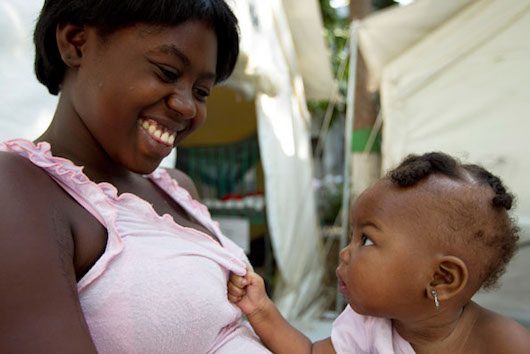
The funding will go to “U.S. organizations and their overseas partners to support construction projects and to purchase equipment for 15 hospitals and clinics, six secondary schools, 16 universities, and one library,” as stated on the USAID website. The awards were announced on Feb. 1, 2016, and will be allocated toward global innovation and development.

USAID/ASHA provides assistance to international schools and hospitals. The organization has also served a public diplomatic role in fostering positive relationships between countries. It provides health services and education to over 80 countries and 300 international institutions.

“It is a remarkable honor to play a role in overseas institutions which advance education and health in their countries and around the world,” says Katherine Crawford, director of USAID. The education awards will reach universities in regions of the Middle East, Asia, Latin America, the Caribbean and Africa.

Among the winners is Ashesi University College in Ghana, which received $700,000 to go toward classroom innovation. This funding will provide students with a rich engineering education that compares to top U.S. universities. Further contributions include the development of educational facilities in Somalia and Zambia.

In Somalia, USAID funding will help create a new science building, an auditorium and more areas for student dining. In Zambia, the award will help build a library that provides educational outreach and innovative programs to more than 35,000 children.

In the area of health, USAID will provide $570,000 in funding to the CURE Ethiopia Children’s Hospital. The funds will be utilized for operating room equipment, training and the delivery of medical care.

Other countries receiving a portion of this funding include India, where labor rooms for six women and a neonatal intensive care unit for 25 children and 45 mothers will become available.

In India, nursing training will also be accommodated by the grant. Medical equipment for maternal and pediatric programs will be made available in Afghanistan along with a diabetes-fighting program.

This grant will continue USAID’s overseas programs in the areas of health and education. USAID seeks to educate and provide care to the globally disadvantaged while promoting innovation in sciences and technology.

Through these awards, ASHA can impact communities and continue to stimulate progress.

– Mayra Vega

Sources: Foreign Affairs, USAID,
Photo: IBT

February 22, 2016
https://borgenproject.org/wp-content/uploads/borgen-project-logo.svg 0 0 Borgen Project https://borgenproject.org/wp-content/uploads/borgen-project-logo.svg Borgen Project2016-02-22 01:30:552024-05-27 09:33:13USAID to Provide Millions in Aid Abroad Through ASHA
Global Poverty

Facts About the Reach Every Mother and Child Act

Reach Every Mother and ChildThe Reach Every Mother and Child Act of 2015 seeks to provide foreign assistance in order to end preventable maternal, newborn and child deaths globally within a generation.

Every day, approximately 800 women, almost entirely from developing countries, die from preventable causes related to pregnancy and childbirth. The risk of a woman dying in childbirth is 47 times higher in Africa than in the United States. More than 17,000 children under five years old will die daily from treatable conditions.

Aiding women during pregnancy, childbirth and post delivery, newborns in their first 28 days and children under the age of five is of utmost importance.

Countries that experience the greatest need and highest burden of maternal and child deaths around the world will be primary targets. This strategy focuses on evidence-based interventions, country ownership, monitoring and evaluating programs, transparency and accountability, sustainability and public-private financing mechanisms.

The U.S. government will work with target countries and donors to implement a five-year plan established by the president to achieve the goal of ending preventable maternal and newborn deaths within a generation.

A Child and Maternal Survival Coordinator role will be created to oversee the strategy and ensure all U.S. government funds appropriated are used for international maternal and child health and nutrition programs.

USAID grants, contracts and cooperative agreements designated for the strategy will include targets for increased implementation of high-impact, evidence-based interventions and baseline measurements to quantify progress.

The president will publicly report on the U.S. government’s progress in implementing the strategy annually. Maternal and child health and nutrition initiatives will be detailed in the report along with descriptions of interventions or program designs, reporting on grants, contracts and cooperative agreements awarded and any innovative public-private financing tools that could be used to fund the strategy.

USAID is authorized to grant loans, set aside funds for the implementation of financing tools and make equity investments to carry out provisions of this act.

As of Jan. 29, 2016, the act has received bipartisan support from 37 Democrats and 28 Republicans in the House of Representatives and six Democrats and five Republicans in the Senate.

– Summer Jackson

Sources: Borgen Project, Senate, Thomas – Library of Congress
Photo: Art Connect International

February 17, 2016
https://borgenproject.org/wp-content/uploads/borgen-project-logo.svg 0 0 Borgen Project https://borgenproject.org/wp-content/uploads/borgen-project-logo.svg Borgen Project2016-02-17 01:30:002020-06-23 07:59:01Facts About the Reach Every Mother and Child Act
Page 76 of 92«‹7475767778›»

Get Smarter

  • Global Poverty 101
  • Global Poverty… The Good News
  • Global Poverty & U.S. Jobs
  • Global Poverty and National Security
  • Innovative Solutions to Poverty
  • Global Poverty & Aid FAQ’s
Search Search

Take Action

  • Call Congress
  • Email Congress
  • Donate
  • 30 Ways to Help
  • Volunteer Ops
  • Internships
  • Courses & Certificates
  • The Podcast
Borgen Project

“The Borgen Project is an incredible nonprofit organization that is addressing poverty and hunger and working towards ending them.”

-The Huffington Post

Inside The Borgen Project

  • Contact
  • About
  • Financials
  • President
  • Board of Directors
  • Board of Advisors

International Links

  • UK Email Parliament
  • UK Donate
  • Canada Email Parliament

Get Smarter

  • Global Poverty 101
  • Global Poverty… The Good News
  • Global Poverty & U.S. Jobs
  • Global Poverty and National Security
  • Innovative Solutions to Poverty
  • Global Poverty & Aid FAQ’s

Ways to Help

  • Call Congress
  • Email Congress
  • Donate
  • 30 Ways to Help
  • Volunteer Ops
  • Internships
  • Courses & Certificates
  • The Podcast
Scroll to top Scroll to top Scroll to top