• Link to X
  • Link to Facebook
  • Link to Instagram
  • Link to TikTok
  • Link to Youtube
  • About
    • About Us
      • President
      • Board of Directors
      • Board of Advisors
      • Financials
      • Our Methodology
      • Success Tracker
      • Contact
  • Act Now
    • 30 Ways to Help
      • Email Congress
      • Call Congress
      • Volunteer
      • Courses & Certificates
      • Be a Donor
    • Internships
      • In-Office Internships
      • Remote Internships
    • Legislation
      • Politics 101
  • The Blog
  • The Podcast
  • Magazine
  • Donate
  • Click to open the search input field Click to open the search input field Search
  • Menu Menu

Tag Archive for: United States

Posts

Foreign Policy, Global Poverty, Government

Death Penalty Holds Firm in Outlier Nations

death penalty
A decreasing number of nations around the world utilize capital punishment, but according to Amnesty International, countries that use the death penalty do so at an “alarming rate.” Between 2010 and 2011, known executions increased from 527 to 676, a 28% rise.

In 2012, the number increased again to 680. There are many executions in nations such as Iran, China and Syria that go unreported. Amnesty International has not published Chinese reported figures on executions since 2009 because the organization declares that the government’s official numbers are exceptionally inaccurate. The organization estimates that annual executions in China are likely to be in the thousands.

Iran faces similar criticism. Amnesty states that it has received “credible reports” of a high volume of clandestine and unconfirmed executions in the country. Adding in these reports would effectively double Iran’s death penalty numbers.

In 2011, only 20 out of 198 countries, or roughly 10%, performed executions, and in 2012 the number of countries that had abolished the death penalty was five times higher than those that had not.

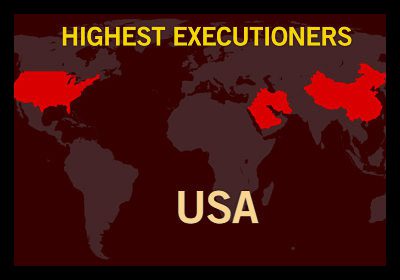
Iran, Saudi Arabia, Iraq and the United States have the highest total number of executions from 2007 to 2012. The Middle East has the highest number of executions of any region (557 executions in six nations.) With the notable exception of the U.S., most countries that still use the death penalty are in the developing world.

The U.S. is the only G7 country where capital punishment is legal.

Methods of executing prisoners vary globally but include lethal injection, beheading, hanging and shooting. In some nations such as Iran, North Korea, Saudi Arabia and Somalia, public executions still occur.

Crimes that are punishable by death also vary but can include drug offenses, rape, sorcery, adultery, “crimes against the state” and murder. Amnesty International also articulates concern over an increase in military courts sentencing people to death in Bahrain, Egypt, Lebanon, the U.S. and other nations.

Japan, India and Pakistan, contrary to global trends, all reinstated the death penalty after long periods of not executing prisoners. In these nations, changes generally occur because different political parties come into power, which leaves sentenced prisoners’ fate to the politics of the moment.

More than half of the world’s nations voted in December 2012 for a United Nations resolution, creating a worldwide moratorium on the death penalty. And the international pressure on countries like the U.S. has intensified.

Due to stated ethical obligations, the European Union banned the export of drugs such as sodium thiopental to the U.S. because they were being used for lethal injections.

Richard Dieter of the Death Penalty Information Center states that the E.U. embargo has stalled, but not ended, executions in the U.S. He asserts, “It has made the states seem somewhat desperate and not in control, putting the death penalty in a negative light, with an uncertain future.”

Amnesty International, Human Rights Watch (HRW) and many other human rights groups oppose the death penalty in all circumstances. HRW states that capital punishment violates people’s innate dignity, is “unique in its cruelty and finality and is “inevitably and universally plagued with arbitrariness, prejudice, and error.”

When asked if he thought the world was closer to abolishing the death penalty, Brian Evans, acting director of Amnesty International’s Death Penalty Abolition Campaign, seemed to remain hopeful, if hesitant.

“They’ll come around when they take a longer look at their death penalties,” Evans states, “but it’ll be a while.”

– Kaylie Cordingley

Sources: National Geographic, The Atlantic, The Huffington Post, The Huffington Post, Amnesty International, Amnesty International, The Guardian, Death Penalty Information Center
Photo: Amnesty International

February 28, 2014
https://borgenproject.org/wp-content/uploads/borgen-project-logo.svg 0 0 Borgen Project https://borgenproject.org/wp-content/uploads/borgen-project-logo.svg Borgen Project2014-02-28 09:44:512024-05-26 23:15:26Death Penalty Holds Firm in Outlier Nations
Foreign Aid, Global Poverty, Poverty Reduction

10 Facts for a School Report on Global Poverty

global poverty
Although it is true that poverty affects the United States, people often fail to notice how poverty ties the U.S. to the rest of the globe. Here are 10 facts about global poverty that will help you gain a better understanding of the specifics, and also earn you an A on your school report:

1. Poverty Does Not Just Affect Adults

People often overlook the fact that poverty affects a wide array of age groups, including both adults and in many cases, teens and adolescents. Children under the age of 18 are actually 60% more likely to be poor than adults. There are 2.2 billion children in the world, and approximately one billion of those children are currently living in poverty. Furthermore, 48% of the population in developing countries is comprised of impoverished children under the age of 18. In industrialized nations, the percentage of children living in poverty is 21%. Of this large population, approximately nine million children ages 5 and under will die each year from starvation, malnourishment and the inability to survive on $1.25 or less per day.

2. Cutting Global Poverty Will Positively Affect the U.S. as Well

Poverty is slowly wearing away the fabric of the U.S. society. The less the U.S. does to support developing nations, the less support we will receive in the future. Moreover, the differences in income are a threat to the level of investment in the U.S., the level of security and the nation’s profits. By investing resources in poverty stricken countries, we are also investing money in the overall security of Americans. Less money will be needed to support military forces because there will be a severe drop in hostile threats and attacks by other countries.

3. Investing in Other Countries Will Increase the Employment Rate in the U.S.

Building strong economies in developing countries will not only protect the U.S., it will also grow new economic markets. There will be an increase in market consumers as well as a rise in jobs needed to support American exports. This is especially the case since one out of five jobs in the U.S. involves exportation to growing nations. A bigger need for exports means there is a greater request for employment.

4. Heightening Employment Rates Means Lowering Overpopulation

By establishing a rich economy in other countries, the U.S. will also see a decline in overpopulation globally and domestically. Resources will become more immediate and people who were once unable to support their families medically will see a decrease in child mortality rates. It has been proven that countries with larger infant and child mortality rates also tend to be countries struggling with overpopulation.

5. A Lack of Education and Poverty Work Hand in Hand

Research shows that children who are from low-income families are more likely to not attend school. Often times, in low-income households, education takes a backseat to working and caring for family members, but education is also a key determinant for creating progress and pulling developing countries out of poverty. Some families are not able to afford school uniforms and some countries, such as Haiti, require a school fee, which disables children from gaining an education. Students ages 16 to 24 years old who are in low-income families are seven times more likely to drop out of school than students from average to high-income families.

6. Geography Relates to Poverty in the United States

Poverty takes on a geographical pattern in the U.S., with a significantly larger percentage of people living in poverty in the southern states than anywhere else in the U.S. In fact, 41% of those who live in poverty within the U.S. are located within the South; this is as opposed to 24% in the West, 19% in the Midwest and 16% in the Northeast.

7. Poverty Does Not Necessarily Cause Death

The cause of death within communities faced with extreme poverty is most often a lack of sanitation and clean drinking water. As it stands, clean drinking water and sanitary conditions can lower the likelihood of disease and illness and can also help keep communities hydrated; this lowers the risk of dehydration, which can jeopardize immune systems. A failing immune system and lack of sanitary conditions combined can cause very risky conditions for younger children and infants who are already susceptible to disease.

8. Nutrition

Living in poverty often makes it difficult to eat a well-balanced and nutritionally rich diet; foods that provide the necessary ingredients to form a nutrient full meal are usually hard to afford. As such, poor affordability of healthy foods can lead to diets that do not consist of fruits, vegetables, grains and especially meat. The lack of vitamins and minerals found in these foods can cause nutrient deficiencies, which can have a negative affect on mental and physical growth. Food insecurity, as it is called when someone does not know where his or her next meal will come from, is found to correlate directly with poor nutrition.

9. Foreign Aid

Though the public believes that Foreign Aid receives 25% of the Federal Budget, in actuality, only 1% of the Federal Budget is going to Foreign Aid. As it stands, only .5% of the Federal Budget is helping to improve poverty conditions.

10. Cost Comparisons

The U.S. annually spends $28 billion on assisting the world’s poor, but approximately $660 billion on the U.S. Military. This gap within the U.S. funding is a huge indicator of where the nation’s priorities lie. If one in 10 Americans donated their weekly coffee budget towards poverty reduction causes, it could end global poverty.

Poverty is a global issue, and in order for the U.S. to better its population internally it needs to form a positive relationship with other countries. Hopefully these 10 facts illuminate important factors that contribute to poverty and show ways to help eliminate poverty globally.

– Rebecca Felcon

Sources: Children’s Defense Fund,, Compassion, Food For the Poor, UC Davis Center for Poverty Research, The Washington Post, The Borgen Project, The Borgen Project
Photo: Mashable

February 26, 2014
https://borgenproject.org/wp-content/uploads/borgen-project-logo.svg 0 0 Borgen Project https://borgenproject.org/wp-content/uploads/borgen-project-logo.svg Borgen Project2014-02-26 16:37:162024-12-13 17:50:0610 Facts for a School Report on Global Poverty
Developing Countries, Global Poverty

Carbon Emissions Outsourced to Developing Countries

Carbon_Emissions_Climate_China
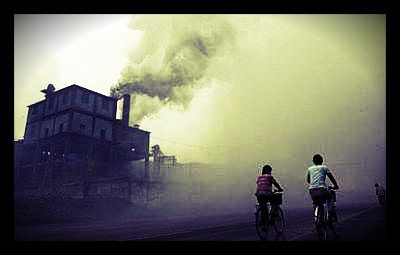
Currently, carbon emissions from the burning of fossil fuels are sought to be decreased on an international scale. Nations have been working together to combat the dilemma of climate change by seeking zero emissions technologies and by addressing carbon emissions within their own borders. 

However, what makes it more difficult to calculate carbon emissions by country is that many institutions of wealthy, developed nations have been able to outsource their carbon emissions to developing countries. Apparently, studies show that, “the United States, Japan and many Western European nations have managed to ‘outsource’ more than half of their carbon dioxide emissions and evade responsibility for their share of the climate-altering pollution.”

There is already a prevalence of goods manufactured in developing countries such as India or China and consumed in developed countries in the United States and Europe. Accordingly, the carbon emissions produced by businesses or corporations are often unconsidered in regards to their total impact on the world.

After all, climate change is a global issue rather than regional or domestic. When carbon emissions are outsourced, the only winner is the public image of the institution that outsources the pollution—that is unless it is uncovered.

With prior calculations of carbon emissions categorized by country, analysts say that they will apparently have to be redone to account for all of the outsourcing. The implications are substantial for European countries who—in comparison to the rest of the world—seem to have low carbon emissons. However, with European nations accounting for a large amount of carbon emission outsourcing, the numbers may reflect their status differently.

Additionally, nations such as China and India—who attain international status as some of the highest ranking carbon polluters—see that many of their emissions actually ought to be attributed to institutions of other developed nations, such as the United States.

China and India in particular serve as examples that reflect the problems that may arise from outsourcing outdated and polluting technologies to developing countries in order to boost their economies. While their rapid industrialization has been able to increase their economic status to an extent, it has done much harm to the environment with their heavy reliance on fossil fuels.

Therefore, the issues presented require much more in-depth analysis on the true extent of carbon emissions. Thus it seems as though categorizing emissions by nation are essentially misleading.

– Jugal Patel 

Sources: Carnegie Science, The Guardian, Stanford
Photo: Lemonde

February 14, 2014
https://borgenproject.org/wp-content/uploads/borgen-project-logo.svg 0 0 Borgen Project https://borgenproject.org/wp-content/uploads/borgen-project-logo.svg Borgen Project2014-02-14 11:45:382024-05-26 23:10:00Carbon Emissions Outsourced to Developing Countries
Global Poverty

Wasted Electricity Can Be Prevented and Redistributed

Wasted Electricity Can Be Prevented and Redistributed
Energy efficiency is extremely important for the economy and a green future. However, that statement seems to be undervalued in the U.S. for the amount of energy efficiency estimates to around 43.8% whereas the amount of wasted electricity is estimated at 56.2%. In other words, Americans are wasting more energy than their actual usage. A fifth of the wasted energy actually comes from commercial and residential buildings.

In residential buildings, the most common type of wasting energy is people leaving their light on when they are not at home, keeping their computers running when they are not in use or simply leaving appliances plugged in. In commercial buildings, companies leave their lights on to showcase the offices and keep companies on standby.

Even in educational buildings, computers in the libraries and computers in media labs are kept on around 12 to 16 hours a day. When computers are on standby, they consume less energy, but the large amount of computers causes the huge waste in electricity.

Saving on energy is saving money. People can reduce their energy cost and spend in more useful ways. To illustrate one instance, reducing energy cost for companies can mean more profitability, higher pay for employees or passing the savings down to the consumers.

Saving energy is not difficult, and it is an effective means of saving money. By reducing electric consumption by only 1.7 TWH — or 0.002%of total residential energy consumption — people can save more than one billion dollars each year.

Around the world, more than 1.6 billion people are living without electricity.  Saving energy might be an interesting solution that contributes beneficially to such urgencies.

Consider how the saved income from prevented energy waste can be distributed to aid a cause ending global poverty: Lets say one billion dollars saved from saving energy, 17,000 farmers can be trained, 10,000 hectares of land can be under protection and almost 600 kilometers of road can be built to offer better transportation and facilitate the world economy. One billion dollars is also equal to one-fifth of the United Nations Development Program’s budget and one-fourth of the World Food Program’s annual budget.

– Phong Pham

Sources: Oil Price, MN Energy Challenge, Tree Hugger
Photo: Giphy.com

January 19, 2014
https://borgenproject.org/wp-content/uploads/borgen-project-logo.svg 0 0 Borgen Project https://borgenproject.org/wp-content/uploads/borgen-project-logo.svg Borgen Project2014-01-19 01:29:062014-02-04 10:55:54Wasted Electricity Can Be Prevented and Redistributed
Global Poverty

Global Poverty Threat to U.S. National Security

National_Security_In_Danger_from_Gloabl_Poverty
The volatile national security climate resonating throughout the United States is fickle, and at times hostile. Political partisanship clamors and clashes against the tide of uncertainty – an uncertainty that resides deep within the veins of the American people.

In the midst of this madness, where should efforts of national security be focused? Global poverty remains rampant and begs the question: does the cure for our own security begin with aiding in the security of others? According to the Pentagon’s “3Ds” highlighted by the Borgen Project – Defense, Development and Diplomacy – it is in the best interests of U.S. national security to focus energy on combating global poverty.

Vincent Ferraro, professor of international politics at Mount Holyoke College, spoke candidly on this issue in his publication, “Globalizing Weakness: Is Global Poverty a Threat to the Interests of States?”

“While there is no necessary trade-off between economic growth and environmental protection in the long run, a poor state needs significant outside resources to realize both objectives simultaneously,” Ferraro stated. “This situation will only worsen over time, as poorer and more populated states become more integrated into the global economy and adopt the industrial techniques of the richer states.”

The United States is an essential part to a whole interconnected entity. This is referred to simply as the international economic system. The dichotomy between poor and rich nations is linked to, but not directly responsible for, national security issues such as global terrorism.

Combating poverty may be the first step to begin building a more unified global network of national security, beginning with a more powerful nation such as the United States.

The Global Poverty Project quotes the National Security Strategy to describe the cost of this dichotomy: “America is now threatened less by conquering states than failing ones.”

Military personnel and international intelligence cooperation agrees that although combating global poverty may not be the outright solution to violent conflict, it can be a method by which to better utilize global diplomatic unity.

According to the Borgen Project, “84% of military officers said that strengthening non-military tools, such as diplomacy and development efforts, should be at least equal to strengthening military efforts.”

Global poverty is the antithesis to worldwide security and peace, specifically when rich and poorer nation-states are unfairly divided economically without a reasonable process of growth.

The Global Poverty Project encapsulated this idea in stating, “Violent conflict is development in reverse. It destroys societies and is a shortcut to extreme poverty.”

The ongoing concern of national security is not only a diplomatic issue but also a vulnerable look into the realm of the human condition. Perhaps it is in the providing basic necessities to those less fortunate where feeling safe can once again become a social truth.

– Lance Moore

Sources: ECSP, Borgen Project, State Department, Global Poverty Project
Photo: The Daily Mail

January 12, 2014
https://borgenproject.org/wp-content/uploads/borgen-project-logo.svg 0 0 Borgen Project https://borgenproject.org/wp-content/uploads/borgen-project-logo.svg Borgen Project2014-01-12 05:00:572024-05-25 00:51:40Global Poverty Threat to U.S. National Security
Global Poverty, Health

Poverty, Poor Health and Access to Healthcare

healthcare_poverty
It is an obvious fact that living in poverty makes one more vulnerable, less secure and more likely to need assistance. When combating poverty issues of health and accessibility to health care providers in a crucial factor in creating the stability that helps people leave poverty and with appropriate polices to prevent future poverty crisis.

In the United States, it is clear that many have fallen into poverty. The U.S. Census Bureau’s annual report on poverty provides clear evidence that more Americans are struggling financially. Nearly 46 million people, which would be 14.6 percent of the population, are living in poverty. Of that, hundreds of thousands of these people were once counted among the middle class. Something beyond employment and GDP has effected security in the U.S. and made it difficult to not be impoverished.

When comparing the U.S. with other wealthy countries, the U.S. has one of the highest reported numbers of people living in poverty. Additionally, Americans also face a high risk of becoming poor. The disparity begs for answers.

When countries do not protect rights and basic securities it often leads to a poorly functioning economy and a poor standard of living.  States that do not have affordable health care have high rates of poverty. High rates of economic growth or their level of wealth cannot circumvent the absence of human rights protections and the statistics reflect that.

With such high costs of coverage and access, it is not surprising that the new census report also shows that 16.7 percent of Americans are without health insurance. The passage of the Affordable Care Act has brought this discussion of the value of human health to the forefront, and is the first major piece of anti-poverty legislation in decades.

The ACA mandates that quality healthcare must be provided to all Americans no matter what their income level is. In addition to accessible healthcare for those in need, the bill also reaffirms the belief that health care is a human right.

The health insecurity of the poor puts everyone at risk and the lack of care is trapping people in systemic poverty and risking lives that could otherwise be saved. When people live in extreme poverty they a more frequently and severely ill and face greater complications with more demands on an already over-burdened healthcare system.

Unless we can contain this spiral out of the cycle of poverty it will only continue. Job creation offers security through employment; however it cannot make a sick individual a healthy worker, and cannot always cover the high costs of health treatments and coverage.

The causes of poverty are varied and not always identified. Unless poverty is fought simultaneously from multiple points of vulnerability, it is not a winnable fight. With affordable accessible healthcare is provided along with increased social services, benefits and job creation, there are enough steps for individuals to finally leave poverty and find the security to participate economically and thrive.

– Nina Verfaillie
Feature Writer

Sources: Huffington Post, The Atlanta Journal-Constitution, CNN
Photo: The Economist

January 7, 2014
https://borgenproject.org/wp-content/uploads/borgen-project-logo.svg 0 0 Borgen Project https://borgenproject.org/wp-content/uploads/borgen-project-logo.svg Borgen Project2014-01-07 10:30:372024-12-13 17:49:49Poverty, Poor Health and Access to Healthcare
Foreign Aid, Global Poverty

Mozambique & Foreign Aid

This past week, the United States Millennium Challenge Corporation (MCC) has refused to grant a second aid package to the government of Mozambique. These aid packages, also known as compacts, are given in the hope that the funds will allow the countries to build more infrastructure and combat national issues. The first compact of $506.9 million previously given to Mozambique was directed toward water supply, sanitation, road and agricultural improvements; however, many of these projects were delayed.

Because the conditions for a second aid package required that all projects funded by the first compact be completed, Mozambique was not eligible for more aid. The U.S. MCC did, however, contribute more funding to the current projects in Mozambique.

The first compact has supported Mozambique’s Farmer Income Support Project, Land Tenure Services Project, Rehabilitation of Roads Project, and Water and Sanitation project. The Farmer Income Support project aims to remove trees, provide support to increase crop yields and help farmers develop alternative sources of income. The Land Tenure project will address issues with land distribution laws and provide land-related services. The Rehabilitation of Roads project will attempt to improve markets by rehabilitating parts of the National Route 1, and the Water and Sanitation project will improve access to clean water supplies, especially in rural areas.

The government of Mozambique was taken aback by the rejection from the MCC; however, the country is also becoming less dependent upon foreign aid. In the past, foreign aid has been the center of the budget of the nation but in the future, Mozambique expects domestic resources to pay for 66.5 percent of the budget.

This increase in budget will allow an increase in education, health care, agriculture and rural development, the judicial system, security and more. The increase will also create new jobs, which will create a cycle of economic improvement.

– Lienna Feleke-Eshete

Sources: All Africa, All Africa
Photo: The OGM

January 2, 2014
https://borgenproject.org/wp-content/uploads/borgen-project-logo.svg 0 0 Borgen Project https://borgenproject.org/wp-content/uploads/borgen-project-logo.svg Borgen Project2014-01-02 04:00:422024-05-26 23:01:17Mozambique & Foreign Aid
Advocacy, Children, Developing Countries, Global Health, Global Poverty, Health, Human Rights, Poverty Reduction, United Nations

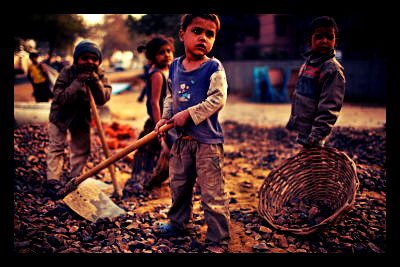
Child Labor: An Overview

Child_Labor_an_Overview
“Millions of children are victims of violence and exploitation. They are physically and emotionally vulnerable and they can be scarred for life by mental or emotional abuse. That is why children should always have the first claim on our attention and resources. They must be at the heart of our thinking on challenges we are addressing on a daily basis. We know what to do, and we know how to do it. The means are at hand, it is up to us to seize the opportunity and build a world that is fit for children,” remarked Ban Ki-moon, Secretarty-General of the United Nations on November 20, 2009, on the Twentieth Anniversary of the Convention on the Rights of the Child.

Just as Ban Ki-moon mentioned, children are not physically or mentally ready to enter the labor force. With the lack of physical abilities, the safety of the workplace cannot be ensured, for both the children and other employees. In fact, children are more likely to be abused and mistreated in an environment centering around child labor.

“Few human rights abuses are so widely condemned, yet so widely practiced. Let us make (child labor) a priority. Because a child in danger is a child that cannot wait,” stated Kofi Annan, Former UN Secretary-General. Around the world, more than 211 million children between the age of 5 and 14 are being forced to work. Among these children, 120 million children are working full time.

To eradicate child labor, people should first understand what leads to such situations. For example, poverty is the first and foremost reason of child labor.  Since many parents do not have the capability to support their household, children end up working to help support the family’s daily lives. Another reason for child labor is a poor education system.

When education is expensive or not readily available, impoverished parents do not see the benefit of learning and think that working is a better alternative. In the United States, there are many laws that prohibit child labor, however, in some countries, child labor laws exist, but are not enforced. Companies can thus take advantage of the cheap labor and further exploit it.

On the other hand, many organizations have been striving to put a stop to child labor by various programs. For example, the United Nations has been running campaigns to raise the awareness of child labor across various nations and airing them in global events such as the World Cup. Moreover, in order to raise the level of education in poverty stricken areas, the Red Cross and governments of third world countries have been recruiting teachers to volunteer in remote areas.

– Phong Pham

Sources: Child Labor Public Education Project, UN: Agencies Urge Greater Action, International Labor Rights Forum, UN: Child Labor
Photo: Addicting Info


Facts about Child Labor

December 26, 2013
https://borgenproject.org/wp-content/uploads/borgen-project-logo.svg 0 0 Borgen Project https://borgenproject.org/wp-content/uploads/borgen-project-logo.svg Borgen Project2013-12-26 04:00:472024-05-25 00:32:50Child Labor: An Overview
Charity, Education, Global Poverty, Nonprofit Organizations and NGOs

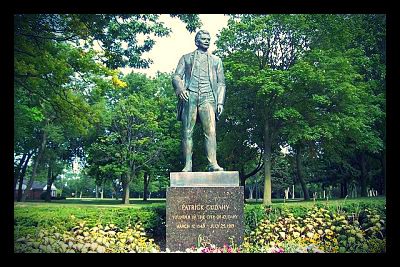
Patrick and Anna M. Cudahy Fund: What You Should Know

Patrick_Anna_Cudahy_Fund
The Patrick and Anna M. Cudahy Fund is a foundation that grants money to nonprofit organizations involved in social and youth services, education, art and culture.

The premise of the fund dates back to the early 1920s, when Articles of Association were drawn to break ground on the Alice Dickson Cudahy Clinic. This clinic was created to provide free services to dependent family members of employees at the Cudahy Brothers Company. Some of these free services included medical attention, and education on matters such as child welfare, domestic science and social hygiene. The clinic was able to open on August 1, 1923, thanks to a $19,270.77 donation made by Michael F. Cudahy.

On August 22, 1935, the name of the organization was changed to the Michael F. Cudahy Fund. Upon this change, the association broadened its spectrum of philanthropy efforts to include the severely poverty-stricken and ill. On September 29, 1943, the name of the organization was once again changed, this time to the Patrick and Anna M. Cudahy Fund, in honor of Michael’s parents.

Today, the Fund primarily assists youth organizations located in Wisconsin and Chicago, though some money is granted to charities involving public interest and environmental conflicts. The Fund also accepts international requests affiliated with U.S. nonprofits.

– Meagan Hurley

Sources: Business Journal, Cudahy Fund

October 17, 2013
https://borgenproject.org/wp-content/uploads/borgen-project-logo.svg 0 0 Borgen Project https://borgenproject.org/wp-content/uploads/borgen-project-logo.svg Borgen Project2013-10-17 13:53:402017-03-20 13:09:27Patrick and Anna M. Cudahy Fund: What You Should Know
Foreign Aid, Global Poverty, Women & Children

John Kerry Announces Initiative to Fight Gender-Based Violence

Sunglasses John Kerry
This past Monday, Secretary of State John Kerry announced a new U.S. initiative aimed at preventing and responding to gender-based violence in humanitarian emergencies worldwide. Known as “Safe from Start,” the $10 million will be funded to allow the U.N. High Commissioner for Refugees, the International Committee of the Red Cross, and other humanitarian organizations to hire specialized staff, start new programs, and “develop innovative methods” to protect women and girls at the onset of emergencies around the world.

“In the face of conflict and disaster, we should strive to protect women and girls from sexual assault and other violence,” Kerry emphasized in a press release. The statement also mentions that the U.S. will coordinate with other donors and stakeholders to develop a framework for action and accountability to ensure that efforts to address gender-based violence are routinely prioritized as a life-saving interference, along with other vital humanitarian help.

The initiative builds on the framework established by the U.S. National Action Plan on Women, Peace and Security, and the U.S. Strategy to Prevent and Respond to Gender-based Violence Globally. The Bureau of Population, Refugees, and Migration (PRM) and the U.S. Agency for International Development (USAID) will be responsible for the initiative.

Most conflict-ridden countries such as Syria, Egypt, or the Democratic Republic of Congo are reporting high rates of rape. Seen as a tool to terrorize villages and break the will of the opposition, rape has been routinely incorporated as a weapon of war during conflicts. According to Save the Children, up to 80 percent of war rape victims are under 18, while an Oxfam report states that rape is the “most extensive form of violence” women and girls are currently facing in Syria.

Although the press release mentions women and girls as the primary victims of gender-based violence, the U.S. Strategy to Prevent and Respond to Gender-based Violence Globally states that this type of aggression can also be directed towards men and boys, as well as sexual and gender minorities.

According to this document, gender-based violence is “violence directed at an individual based on his or her biological sex, gender identity, or perceived adherence to socially defined norms of masculinity and femininity.” It includes physical, sexual, and psychological abuse, as well as threats, coercion, arbitrary loss of liberty, and economic hardship.

– Nayomi Chibana
Feature Writer

Sources: U.S. Department of State, CNS News, Huffington Post
Photo: Cloture Club

October 6, 2013
https://borgenproject.org/wp-content/uploads/borgen-project-logo.svg 0 0 Borgen Project https://borgenproject.org/wp-content/uploads/borgen-project-logo.svg Borgen Project2013-10-06 07:26:482017-01-31 10:32:16John Kerry Announces Initiative to Fight Gender-Based Violence
Page 15 of 17«‹1314151617›»

Get Smarter

  • Global Poverty 101
  • Global Poverty… The Good News
  • Global Poverty & U.S. Jobs
  • Global Poverty and National Security
  • Innovative Solutions to Poverty
  • Global Poverty & Aid FAQ’s
Search Search

Take Action

  • Call Congress
  • Email Congress
  • Donate
  • 30 Ways to Help
  • Volunteer Ops
  • Internships
  • Courses & Certificates
  • The Podcast
Borgen Project

“The Borgen Project is an incredible nonprofit organization that is addressing poverty and hunger and working towards ending them.”

-The Huffington Post

Inside The Borgen Project

  • Contact
  • About
  • Financials
  • President
  • Board of Directors
  • Board of Advisors

International Links

  • UK Email Parliament
  • UK Donate
  • Canada Email Parliament

Get Smarter

  • Global Poverty 101
  • Global Poverty… The Good News
  • Global Poverty & U.S. Jobs
  • Global Poverty and National Security
  • Innovative Solutions to Poverty
  • Global Poverty & Aid FAQ’s

Ways to Help

  • Call Congress
  • Email Congress
  • Donate
  • 30 Ways to Help
  • Volunteer Ops
  • Internships
  • Courses & Certificates
  • The Podcast
Scroll to top Scroll to top Scroll to top