• Link to X
  • Link to Facebook
  • Link to Instagram
  • Link to TikTok
  • Link to Youtube
  • About
    • About Us
      • President
      • Board of Directors
      • Board of Advisors
      • Financials
      • Our Methodology
      • Success Tracker
      • Contact
  • Act Now
    • 30 Ways to Help
      • Email Congress
      • Call Congress
      • Volunteer
      • Courses & Certificates
      • Be a Donor
    • Internships
      • In-Office Internships
      • Remote Internships
    • Legislation
      • Politics 101
  • The Blog
  • The Podcast
  • Magazine
  • Donate
  • Click to open the search input field Click to open the search input field Search
  • Menu Menu

Tag Archive for: United States

Posts

Global Poverty

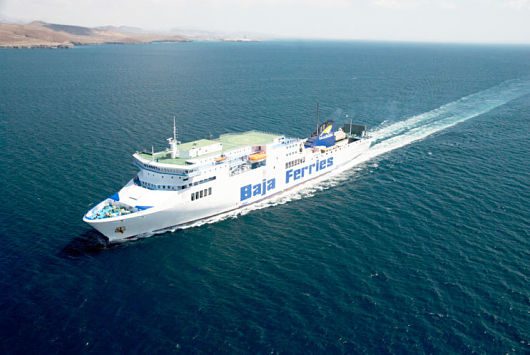
Ferries Between Cuba and Florida Set to Begin

Ferry-Between-Cuba-and-Florida
For the first time in half a century, diplomatic relations between Cuba and the U.S. are being restored. Ferry operators in Florida are quickly receiving the approved licenses to begin offering transit to and from Havana. It is estimated that as early as this coming fall, the once popular U.S. travel destination will no longer be off limits for tourists after more than half a century.

During this time, hundreds of thousands of Cubans have attempted to brave the 90-mile ocean journey between Cuba and Florida. In lieu of proper aquatic vessels, many of these migration attempts have been made on makeshift rafts and old converted cars.

Since the renewing diplomatic discussions, there has once again been a recent surge of Cubans attempting to make the voyage to the U.S. This past year alone, the U.S. Coast Guard detained almost 4,000 Cubans in the waters off the coast of Florida. In fact, during the past two years, the number of Cubans attempting the journey has doubled.

In 1965, Fidel Castro opened the port of Camarioca, which allowed almost 3,000 Cubans to flee, before he suddenly announced its closure and revisited restrictions. Once more in 1980, Castro opened the port of Mariel, and a mass exodus of over 125,000 Cubans took their chances in the open water.

In 1991, when the Soviet Union collapsed, a severe economic downfall in Cuba happened. This resulted in hundreds of thousands fleeing the country and making the perilous sea journey. This influx of immigrants and detainees caused President Clinton to amend the Cuban Adjustment Act (CAA) in 1994.

The revisions effectively limited asylum to refugees who were not intercepted by the U.S. Coast Guard. Refugees who made it to dry land were allowed to stay; all others were detained and sent back to Cuba. This distinction became known as the “wet foot-dry foot” policy.

In 2013, Cuba altered its own travel policy, allowing Cubans to travel and work abroad for up to two years without losing their citizenship. While this policy provided leeway, it did not provide transportation due to the travel ban, and Cubans were also subject to the “wet foot-dry foot” policy in the U.S.

For a long time, hopeful refugees had been left with few options: brave the seas themselves in homemade water crafts or rely upon human smuggling networks who charge upwards of US$10,000. Since Cuba’s annual GDP is approximately US$6,000, the former option proved to be the most common. Cubans had to wait for months to save enough money to buy parts and to build their own makeshift water crafts.

Like migrants from many poor countries, Cubans have been fleeing their country in efforts to find economic opportunities and escape Communist oppression. Many also have been seeking to provide for their families who still reside in Cuba. These severe risks that come with the journey combined with the adverse conditions clearly state the desperation of Cuban citizens. These ferry services offered are symbolic of the new era of cooperation and could signal the end to a tragic side effect of the 50-year standoff.

Renewed relations between the two nations will provide Americans a chance to visit Cuba, but, more importantly, desperate Cubans will have the opportunity to provide for themselves and their families. One-way tickets will be starting at around US$150. The combination of the relatively inexpensive ticket price coupled with Cuba’s reformed travel policy provides desperate Cubans better chances of economic opportunity.

– The Borgen Project

Sources: Daily Signal, BBC, Miami Herald, The New York Times
Photo: Tampa Bay Times

July 20, 2015
https://borgenproject.org/wp-content/uploads/borgen-project-logo.svg 0 0 Borgen Project https://borgenproject.org/wp-content/uploads/borgen-project-logo.svg Borgen Project2015-07-20 08:31:122024-12-13 17:51:54Ferries Between Cuba and Florida Set to Begin
Advocacy, Education

DREDF: People with Disabilities Serving Each Other

DREDF
People with disabilities make up one of the largest minorities in the U.S. with 75 percent who are unemployed and more than 25 percent living in poverty.

However, some social and economic challenges the disabled face are not the consequence of physical limitations but are the result of a lack of accessibility provided by public policy. One leading national civil rights law and policy center is trying to change this by advancing the civil rights of people with disabilities through legal advocacy, training, education, public policy and legislative development. The Disability Rights Education and Defense Fund, or DREDF, has worked toward advocating for the disabled since 1979.

The DREDF is directed by people with disabilities and by those who have children with disabilities. Thus, people with disabilities are able to serve and be served in the areas that fall under their expertise, as these are issues they face everyday. They work with the core principles of equality of opportunity, disability accommodation, accessibility and inclusion to fulfill their mission and vision of a just world where all people can live full and independent lives free of discrimination.

They do this by employing the following strategies:

1.  Training and Education

  • DREDF staff trains and educates people with disabilities and parents of children with disabilities about their rights under state and federal disability rights laws so that they can use the laws as tools to challenge exclusion.
  • The DREDF educates lawyers, service providers, government officials and others about disability civil rights laws and policies.
  • Through a legal clinic in the San Francisco Bay Area, DREDF has operated a disability rights legal clinic in collaboration with law schools for over 15 years.

2.  Legal Advocacy

  • DREDF lawyers represent clients in leading edge disability rights litigation.
  • DREDF serves as co-counsel and prepares briefs on behalf of parties that include disability community representatives and members of Congress in disability rights cases heard by the U.S. Supreme Court.
  • DREDF advocates for the legal rights of all people.

3.   Public Policy and Legislative Development

  • DREDF advocates design and implement strategies that strengthen public policy and lead to the enactment of federal and state laws protecting and advancing civil rights for people with disabilities, such as the Handicapped Children’s Protect Action.

The DREDF also runs an ongoing campaign for healthcare justice for people with disabilities called Healthcare Stories, which is a video advocacy tool that tells the stories of real people with disabilities facing healthcare disparities.

– Chelsee Yee

Sources: DREDF, USICD, Law Help CA,
Photo: Google+

January 29, 2015
https://borgenproject.org/wp-content/uploads/borgen-project-logo.svg 0 0 Borgen Project https://borgenproject.org/wp-content/uploads/borgen-project-logo.svg Borgen Project2015-01-29 16:00:512024-12-13 17:51:18DREDF: People with Disabilities Serving Each Other
Global Poverty, Health

What is Health Diplomacy?

health_diplomacy
The United States government has led the world as one of the largest supporters of global health efforts, with foreign assistance investments in over 80 countries. Health Diplomacy is vital in maintaining strong relationships with the international community and is crucial in advancing foreign policy.

But what is health diplomacy exactly? Although defined in many different ways, in essence, it is a multi-level process that involves international stakeholders and local organizations that are aimed at improving healthcare delivery by exporting medical equipment, expertise and human resources to those who need it most.

As an interconnected global community, health diplomacy is demonstrated to help out the allies of the United States in creating sustainable health programs to meet the needs of the people. The U.S. Department of State’s Office of Global Health Diplomacy uses diplomatic outreach to promote shared responsibility for the well-being of the world’s citizens.

In cases where diplomatic efforts may be strained or negotiations are hard to come by, health diplomacy can open doors to foster new dialogue and create more partnerships on a non-political level.

On the other hand, the U.S. Department of Health and Human Services brings in much needed technical expertise and scientific research to the interrelated fields of public health and international development. By exchanging scientific and evidence-based knowledge with leaders and health educators abroad, the United States continues to maximize its objectives in security, development and health.

One of the greatest examples of health diplomacy is the Global Fund to Fight AIDS, Tuberculosis and Malaria. Started in 2002, this international financing institution spurred a multitude of partnerships between foreign governments, civil societies and non-profit organizations to fight these three pandemics. From 2002 to 2016, 56 donor governments have pledged an astounding $42 million to the fund, with the U.S. being the largest donor. These donations will allow local experts to tackle the infectious disease issue whether it is by distributing mosquito nets to protect people from malaria, training health personnel or providing medical equipment for the diagnosis of tuberculosis.

– Leeda Jewayni

Sources: Global Health Diplomacy Net, Global Health, U.S. Department of State, The Global Fund
Photo: Flickr

October 26, 2014
https://borgenproject.org/wp-content/uploads/borgen-project-logo.svg 0 0 Borgen Project https://borgenproject.org/wp-content/uploads/borgen-project-logo.svg Borgen Project2014-10-26 04:00:272024-12-13 17:51:16What is Health Diplomacy?
Global Poverty, Water

The Benefits of the LifeStraw

In the United States, the LifeStraw is a popular tool for those interested in backpacking and hiking. But while these uses might be popular, it was never intended to be the primary function of the plastic device.

For those unaware, the LifeStraw is a plastic personal water filter designed by a company of the same name. The product allows an individual to take contaminated water and clean it. According to studies, the device removes a minimum of 99.9999 percent of waterborne bacteria and can fit into a pocket. Additionally, the LifeStraw contains no moving parts or batteries, which increases its longevity.

In addition to the regular LifeStraw, there is a LifeStraw Family. The latter is capable of filtering up to 18,000 liters of water, an amount that would be able to sustain a four-person family for three years. The individual product can filter 1,000 liters, and can sustain an individual for one year.

The LifeStraw was introduced and field-tested in 2005 as an on-the-ground relief for humanitarian crises. Feedback was positive and it is now available in the United States since it passed EPA standards for clean water.  Shortly after the test period ended, the product was honored with the TIME magazine invention of the year award.

The LifeStraw is hailed as one of the most cost-effective and eco-friendly ways to bring water to the 884 million people who do not have access to a clean water supply, but is not meant to supplant other, more traditional humanitarian solutions.

One LifeStraw success story comes from an island nation of Kiribati, located in the central tropical Pacific Ocean. Around one in 20 infants do not survive due to malnutrition that is often caused by dehydration.  In a response to this, Carol Armstrong started the Island Rescue Project. While the campaign has traditional, large-scale methods of curbing this high death rate, it also encourages the use of low-tech simple solutions.

To no surprise, the LifeStraw is among the highest rated of these. Armstrong commented on the ability of the device to sustain an individual for up to a year. It was especially promising compared to the other solution—the “sodi method.” This method involves putting water into an empty plastic bottle and letting UV rays hit it. After seven hours, the water should be clean to drink.  However, the water will only be clean for a few days and it will not clean the water to the standard that the LifeStraw does. But it’s a solution that anyone can do, and at virtually no cost.

– Andrew Rywak

Sources: ABC, Men’s Journal, Digital Journal, Hills News
Photo: Future of Cities

August 31, 2014
https://borgenproject.org/wp-content/uploads/borgen-project-logo.svg 0 0 Borgen Project https://borgenproject.org/wp-content/uploads/borgen-project-logo.svg Borgen Project2014-08-31 12:00:162024-06-05 01:58:08The Benefits of the LifeStraw
Activism, Aid Effectiveness & Reform, Nonprofit Organizations and NGOs

Silicon Valley Community Foundation

Launched in 2007 through a merger between the Peninsula Community Foundation and the Community Foundation Silicon Valley, the Silicon Valley Community Foundation has developed a new approach for giving. The organization’s overall aim is to maximize the impact each donation will have for any given cause.

The Silicon Valley Community Foundation,  led by CEO Emmett D. Carson, operates by working to “simplify giving so donors can focus on their charitable passions, partner with the most effective organizations to create change, and advance innovative philanthropic solutions to challenging problems.” Moreover, its five basic strategies (economic security, education, immigrant integration, regional planning and a community opportunity fund) help ensure the foundation’s success.

In order to achieve maximum outreach, the Silicon Valley Community Foundation collaborates with other foundations and initiatives. Many of these foundations target early childhood education and community leadership projects focused on “strengthening organizations serving low-income and communities of color.”

Initiatives that have recently been completed include the Fostering the Future initiative, which took place over a six year period (2005-2011). Its objective was to provide a better life for youth that are subjected to abuse from either their biological families or foster families, as well as for children who have become too old for foster care. The Envision Bay Area initiative, that took place from 2010-2012, aimed to build a community of both leaders and constituents that made daily decisions based on what would be best for the environment. The Silicon Valley Community Foundation made use of YouChoose Bay Area in order to make this initiative successful. The work from this initiative ultimately “convinced the local planning agencies to set higher greenhouse gas emissions than their staff had initially recommended.”

The Silicon Valley Community Foundation is currently responsible for $2.9 million in assets and has over 1,600 philanthropic funds.

– Jordyn Horowitz

Sources: The Chronicle of Philanthropy, Silicon Valley Community Foundation
Photo: Future Partners

August 5, 2014
https://borgenproject.org/wp-content/uploads/borgen-project-logo.svg 0 0 Borgen Project https://borgenproject.org/wp-content/uploads/borgen-project-logo.svg Borgen Project2014-08-05 12:00:432024-05-27 09:20:38Silicon Valley Community Foundation
Global Poverty

Talks Collapse as Argentina Defaults

Recent talks between Argentine economic officials and U.S. creditors have fallen through, forcing the South American country to default on billions of dollars in bonds. June 30 was the end of a 30 day grace period for Argentina to pay $539 million in interest to investors that hold $29 billion of the country’s restructured bonds. This is the second time in 13 years that the country has defaulted.

Negotiators from both the U.S. creditors and Argentinian representatives had until 04:00 GMT on June 30 to come to an agreement. The U.S. creditors have been holding out since Argentina restructured their debt in 2005 and 2010. At least 90 percent of the investors agreed to accept new bonds that had reduced payments.

The last remaining investors were holding out because they refused the terms of the most recent restructuring, and were eventually backed from a ruling by a U.S. District Court judge in New York. Argentina has tried offering these holdouts similar terms to those extended to the investors who had initially accepted the restructuring, but the holdouts continued to refuse the offers throughout the process.

The Argentine minister firmly held the position that the country would be unable to pay the holdout hedge funds an amount different from their most recent restructuring deal. They firmly held this stance throughout the negotiations, in spite of the ruling by a U.S. judge that requires them to pay the hedge funds.

Alex Kicillof, Argentina’s economic minister and representative at the talks, has repeatedly called the holdout investors “vultures,” and has placed the blame on the U.S. It’s still up for debate which side is at fault for Argentina’s predicament, but one lasting result from this situation is that it will create a new set of questions about what kind of and how much power U.S. courts have in cases that involve other nations.

This new default would place a new set of pressures on Argentina, which is still struggling to recover from its most recent recession. As of right now, it is anticipated that the currency will weaken, but it will take more time before other effects will be felt by the public. However, the general consensus is that this new default won’t have as drastic an effect on the country as their previous default in 2001.

Daniel Pollack, the mediator of these talks, however, indicated that there will be some demonstrable effect of Argentina’s default. As he explained, “Default is not a mere ‘technical’ condition, but rather a real and painful event that will hurt real people. The full consequences of default are not predictable, but they certainly are not positive.”

Despite the pessimistic future facing Argentina, there is a sign of hope. Even through the 30 day grace period has ended, both sides are still continuing their talks in an effort to mitigate the effects of the default before they worsen. As of this writing, though, no agreement has been reached, despite the efforts by both Argentine officials and U.S. creditors.

– Andre Gobbo

Sources: Wall Street Journal, BBC, Reuters
Photo: Reuters

August 1, 2014
https://borgenproject.org/wp-content/uploads/borgen-project-logo.svg 0 0 Borgen Project https://borgenproject.org/wp-content/uploads/borgen-project-logo.svg Borgen Project2014-08-01 10:10:562024-05-27 09:20:47Talks Collapse as Argentina Defaults
Foreign Aid, Global Poverty

Thailand Under Threat of US Aid Withdrawal

As of  June 24, the United States announced the possibility of reducing U.S. foreign aid to the Kingdom of Thailand in response to the repressive military junta.

Typically, Thailand receives about $10.5 million in security-based aid from the U.S., and Washington, D.C. recently cut off $4.7 million from their long-time ally.

Another sign of high tensions between the two nations is the suggested removal of U.S. regional major exercises out of Southeast Asia. Since 1980, Thailand and the U.S. have participated in Cobra Gold, one of the biggest military exercises that also influences relations, together with about 13,000 participants from around the Southeast Asia region. It has not been confirmed whether the exercises will go on or be stopped.

The chair of the House Foreign Affairs subcommittee on Asia, Representative Steve Chabot, acknowledged the possible dangers of continuing with the exercises, stating it “could clearly send the wrong message” to Thailand and other global figures “in light of the repressive nature” of the military junta currently puppeteering the nation.

Levels of unrest are also extremely high in Thailand at the moment due to the intense regime in which the constitution has been suspended. This forces many repressed people to find other, more combative ways, to express the dissent with the junta. Should the U.S. get too deeply involved by keeping the military exercise in Thailand this year, there is a threat of long-term expenses and involvement not accounted for by the U.S.

The U.S. is not the only world power to acknowledge the danger Thailand is facing. The European Union also commented in a statement on June 23 that they condemn the junta, stating that a credible government should form “as a matter of urgency, the legitimate democratic process and the Constitution, through credible and inclusive elections.” The response from Thai spokesperson, Sek Wannamethee, explains the disappointment felt by the lack of support from the E.U. for not viewing the coup from all angles and seeing the supposedly measured reasoning on the part of the military.

This military coup stands out from the previous ones experienced in Thailand before due to the oppressive measures taken and the sense of permanency it holds. Should this continue, it is likely that the U.S., as well as other nations, will withdraw more security-based funds as the junta continues their reign.

– Elena Lopez

Sources: Channel News Asia, Bangkok Post, Wall Street Journal
Photo: Flickr

June 30, 2014
https://borgenproject.org/wp-content/uploads/borgen-project-logo.svg 0 0 Borgen Project https://borgenproject.org/wp-content/uploads/borgen-project-logo.svg Borgen Project2014-06-30 20:23:192024-05-26 23:58:39Thailand Under Threat of US Aid Withdrawal
Global Poverty

Health Care Systems Around the World

The well-being of global citizens relies heavily on the health of their health care systems. However, the type of medical attention you will receive when you go to the doctor, or even the likelihood you will attempt to seek care, varies vastly depending on where you live. Indicators like average life expectancy, infant mortality and obesity prevalence highlight the success of the health care systems. With this wealth of information, we can assess why certain nations’ health care systems are in better condition than others.

1. France

France had the best health system in the world in 2000, according to the World Health Organization’s (WHO) most recent assessment of world’s health systems. So what makes France’s method so successful? First, statistics on doctors and life expectancy are often on France’s side. France has less doctors per capita than second place Italy at 3.07 per 1,000 people, but more annual doctor visits than most of the top 10. It also has 3.43 hospital beds per 1,000 people, which is rivaled only by Japan and Italy of those in the top 10. Life expectancy is 81.66 and infant mortality rate is 3.31 of every 1,000 live births.

It falls on the government to negotiate doctor and hospital fees in an effort to keep costs low. In addition, a national insurance program flips 70 percent of the bill for everyone. The other 30 percent is picked up by private insurance. This means that out of pocket spending on health care is only $307 per capita.

2. The United States

The United States has one of the biggest economies in the world, yet it ranks 36 this year on the success of its health care system. Perhaps this is because the United States, while a wealthy nation, has an infant mortality rate of 6.17 per 1,000 births and a life expectancy of 79.56, neither of which are something to cheer over compared to other industrial nations where the average is higher. In addition, obesity prevalence has reached 36.5 percent, about three times as high as France. This signals that while the United States has the capability to provide good health care, it is falling far behind its peers. That being said, the United States is often considered the leader in medical research and cancer treatment.

In this country, insurance is provided mostly by for-profit private insurance groups, with some exceptions. Those over 65 years old qualify for Medicare and the disabled or low-income population qualifies for Medicaid, which are sponsored by the federal government and paid for by taxes. The number of uninsured is dropping, and in 2014, only about 15.6 percent of the population goes without insurance. However, citizens still pay a whopping $987 per capita out of pocket for health care. Changes will occur over the next few years with the implementation of the Affordable Care Act, but it is still early to assess how recent patterns will change the ranking of the health care system.

3. Pakistan

Pakistan ranked 122 according to the WHO in 2000 and continues to struggle with health care and disease today. The average life expectancy is 67.05 in 2014, below that of Syria and Iran. In addition, infant mortality is a frightening 57.48 of every 1,000 births. Pakistan has only .6 hospital beds and .8 doctors per 1,000 people. All this indicates that the health care system in Pakistan is struggling, leaving its citizens in serious trouble.

There is much to learn from the health care systems of other nations, but changes can be made at different levels for different countries. For countries like the United States where some tweaking to the costs and the insurance sector would vastly increase the overall health of the citizens and the system, taking notes on France’s system would be beneficial. Changes would allow more people to get coverage for less money from the federal budget. But for places like Pakistan where the system is in shambles, a functioning health care system must be in place first. Overall, different nations stand in different positions, but health care systems across the world could use a restructuring.

– Caitlin Thompson 

Sources: CIA(1), CIA(2), Commonwealth Fund, Gallup Poll, NPR, The Patient Factor, PBS, WHO(1), WHO(2), World Bank(1), World Bank(2)
Photo: Telegraph

June 17, 2014
https://borgenproject.org/wp-content/uploads/borgen-project-logo.svg 0 0 Borgen Project https://borgenproject.org/wp-content/uploads/borgen-project-logo.svg Borgen Project2014-06-17 04:00:582024-12-13 17:50:19Health Care Systems Around the World
Global Poverty

Detained Immigrants Refuse Food Until Congress Acknowledges Rights

Thousands of immigrants in the state of Washington are demanding the attention of United States Immigration and Customs Enforcement (ICE) by staging a large hunger strike at the Federal Northwest Detention Center in Tacoma. Along with better food and safer work conditions, their campaign is directly aimed at immigration reform and U.S. President Barack Obama.

The strikers want Obama to sign an executive order that would halt all deportations, as well as provide alternatives to detention while immigrants in question await trial. Tacoma’s facility is owned by GEO Group, the largest provider of detention and correctional services in the country, who lobbied against these reforms in Congress last year. At the core of the argument is the economic fate of 11 million workers currently immobilized by investigations into their legality.

ICE reports that the strikes are comprised of 550 detainees. However, there are conflicting statistics from the Latino Advocacy Organization, which claims there are actually 1,200 immigrants involved. This means the majority of the detention facility’s 1,300 total inmates are involved. Additionally, these numbers do not even take into account the hundreds of advocates who have been joining outside every afternoon to display their support.

The Tacoma campaign is not an isolated event, either. Similar protests and strikes have been emerging in various immigrant detention centers across Arizona, Illinois, California and Virginia. It is also linked to a popular advocacy project, called “Not One More Deportation,” started by the National Day Laborer Organizing Network as a way to host events against unlawful deportation across the country. April 5 is expected to be a similar day of action, with sit-ins and strikes in front of the White House.

Immigration reform has become an increasingly contentious dilemma under the Obama Administration, whose efforts have been repeatedly stalled by GOP Congressional members. Lenient new measures are frequently criticized by the Republican Party as unnecessary “amnesty” at the expense of America’s well-being.

In response, Obama notes that the children of undocumented immigrants “study in our schools, play in our neighborhoods, befriend our kids, pledge allegiance to our flag. It makes no sense to expel talented young people who are, for all intents and purposes, Americans.”

In 2012, Obama declared an end to the deportation of young undocumented immigrants who entered the country as children. The order protects anyone under 30 years of age who came to the United States before they were 16, citing the improbability of their posing a security or criminal threat and the benefits they have provided for the military and work force. The same year, the Development, Relief, and Education for Alien Minors Act was approved, providing similar protections for the children of undocumented immigrants.

Protection over the human rights of immigrant families is increasingly necessary, as recent years prove. In 2011, 396,906 individuals were deported, the largest number in ICE history. This is even more shocking, considering a 2009 study proved that four million immigrants are inaccurately defined “illegal,” having been born here despite their parents’ having entered the country without proper documentation. This means that the majority of “illegal” immigrants are thus wrongfully and systematically denied access to the rights that other American citizens enjoy.

The participants of the hunger strike in Tacoma complain of experiences with this first hand. They allege that GEO Group only compensates them $1 per day for the janitorial and kitchen services they fulfill. Effectually, they are then earning almost no money while they await their trial, causing a severe financial burden for themselves and their families. The status of immigrant detainees is practically that of slave labor.

“Its just ironic that the government is detaining people for working without a social security number; meanwhile, they allow this company to exploit their labor,” states Latino Advocacy founder Maru Moro Villalpando.

The strikes began March 7 and are projected to continue until they receive congressional acknowledgement. Friday was chosen as the start purposefully to honor those who have already been deported, as that is the day of the week prison guards round up all those who will be sent back the following Monday morning.

– Stefanie Doucette

Sources: Al Jazeera, CNN, Huffington Post, Washington Times, Washington Post, Think Progress
Photo: Al Jazeera

March 24, 2014
https://borgenproject.org/wp-content/uploads/borgen-project-logo.svg 0 0 Borgen Project https://borgenproject.org/wp-content/uploads/borgen-project-logo.svg Borgen Project2014-03-24 04:00:282024-12-13 17:50:10Detained Immigrants Refuse Food Until Congress Acknowledges Rights
Foreign Aid, Global Poverty

How Foreign Aid Saved the United States

Foreign_Aid_cartoon
A common refrain from critics of USAID is the lack of benefits they see would come back to the United States. It is hard to see the longterm benefits of these foreign aid programs, especially when things look so bad when they’re shown on the news. For many, it is easy to write off dire circumstances in distant nations as lost causes rather than potential areas of promise. Many fail to see how the United States was once such a seemingly hopeless region.

If the nations of Europe had the mentality that detractors of foreign aid have today, the United States wouldn’t have had a chance in its fight for independence from Great Britain. This decision took place during an era when it was much more difficult to give support to struggling groups from distant parts of the world.

France was one of the first countries to step up and provide foreign aid for the fledgling United States. While most of that foreign aid was military based, the loans they gave to the United States helped the nation function and get on its feet when it had few options. The loans that France made to the United States went beyond just military help. It also helped with needed supplies for the populace; supplies that kept the nation afloat.

Spain was another country that provided important foreign aid to a developing United States. Spain still had possessions in the Caribbean at the time of the Revolutionary War, making it easy for them to send over supplies to port cities that had been cut off by a British blockade. The goods that Spain was able to supply from such a close outpost helped offset the losses that many Americans were feeling in dealing with the might of the British Empire.

A number of other nations stepped in to help the United States in its struggle. The Netherlands gave some important trade support to help subvert the blockade, and even a number of Indian colonists helped the American cause. This foreign support was a key part to the war, and is arguably undervalued by people today.

While military support is most notable when looking back at this period of foreign involvement in the United States, the supplies and exports other countries provided kept the United States on its feet. It is this type of support for struggling economies that the United States as a superpower should be providing today. The U.S. is in the position to keep others from sinking from the status of a promising democracy into chaos, and organizations like The Borgen Project hope to encourage that type of foreign aid. It just repays the moral debts that the United States benefited from long ago.

– Eric Gustafsson

Sources: History, American Revolutionary War, America’s Library
Photo: Development Diaries

March 20, 2014
https://borgenproject.org/wp-content/uploads/borgen-project-logo.svg 0 0 Borgen Project https://borgenproject.org/wp-content/uploads/borgen-project-logo.svg Borgen Project2014-03-20 04:00:102017-03-20 14:06:45How Foreign Aid Saved the United States
Page 14 of 17«‹1213141516›»

Get Smarter

  • Global Poverty 101
  • Global Poverty… The Good News
  • Global Poverty & U.S. Jobs
  • Global Poverty and National Security
  • Innovative Solutions to Poverty
  • Global Poverty & Aid FAQ’s
Search Search

Take Action

  • Call Congress
  • Email Congress
  • Donate
  • 30 Ways to Help
  • Volunteer Ops
  • Internships
  • Courses & Certificates
  • The Podcast
Borgen Project

“The Borgen Project is an incredible nonprofit organization that is addressing poverty and hunger and working towards ending them.”

-The Huffington Post

Inside The Borgen Project

  • Contact
  • About
  • Financials
  • President
  • Board of Directors
  • Board of Advisors

International Links

  • UK Email Parliament
  • UK Donate
  • Canada Email Parliament

Get Smarter

  • Global Poverty 101
  • Global Poverty… The Good News
  • Global Poverty & U.S. Jobs
  • Global Poverty and National Security
  • Innovative Solutions to Poverty
  • Global Poverty & Aid FAQ’s

Ways to Help

  • Call Congress
  • Email Congress
  • Donate
  • 30 Ways to Help
  • Volunteer Ops
  • Internships
  • Courses & Certificates
  • The Podcast
Scroll to top Scroll to top Scroll to top