• Link to X
  • Link to Facebook
  • Link to Instagram
  • Link to TikTok
  • Link to Youtube
  • About
    • About Us
      • President
      • Board of Directors
      • Board of Advisors
      • Financials
      • Our Methodology
      • Success Tracker
      • Contact
  • Act Now
    • 30 Ways to Help
      • Email Congress
      • Call Congress
      • Volunteer
      • Courses & Certificates
      • Be a Donor
    • Internships
      • In-Office Internships
      • Remote Internships
    • Legislation
      • Politics 101
  • The Blog
  • The Podcast
  • Magazine
  • Donate
  • Click to open the search input field Click to open the search input field Search
  • Menu Menu

Tag Archive for: United States

Posts

Global Poverty

Poor People: Do They Hold Societies Back?

poor_people

You’ve probably heard people discuss the burden that poor people place on society, or the need for them to “pull themselves up by their own bootstraps.” If not, only look to Mitt Romney’s infamous comment from the 2012 presidential campaign, in which he referred to the 47% of Americans who are “dependent on the government” and who could never be convinced to “take personal responsibility and care for their lives,” for an example.

Psychologist Herbert Gans writes about the labeling of the poor as “undeserving” and the effects that such labels have in society. He posits that deeming the poor undeserving fulfills a wide array of functions for the affluent. Primarily, this phenomenon distances the labeled from the labelers, allowing the situation to be cast firmly as “us-versus-them.”

By casting poverty as something that happens to “them,” but not to “us,” one can tap into a well-known psychological bias explained by psychologist Jeremy Dean on PsyBlog.

He describes the phenomenon using sports teams. When a fan sees a member of their team score, they are likely to praise the player’s talent and hard work. On the other hand, when a fan sees a member of the opposite team score, it’s usually attributed to dumb luck or a missed call. By the same token, when a fan’s team loses, it can easily be chalked up to a rough week or a rowdy crowd.

However, a fan would rarely claim that his team won because another team had a difficult week. In other words, one works much harder to make excuses for people that they perceive as “one of us.” This same principle can be applied to almost any facet of society, including poverty.

When poor people are considered to be fundamentally different from us, it becomes more difficult to empathize with their situations. Unfortunately, it also becomes easier to blame the poor for their poverty and struggles, consciously or otherwise.

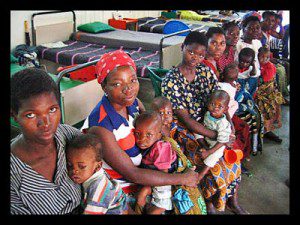
Some may not concretely be thinking that women in sub-Saharan Africa should just stand up for themselves already, but it is often easier to sympathize with women who live in societies that look most like ours.

For example, when America discovered that Ariel Castro had held three women captive in his Ohio home for a decade, outrage erupted. People were horrified that something this appalling could happen here, to people “like us.” Meanwhile, similar atrocities are happening worldwide every day and our indignation may go just far enough to get us to make an online donation.

While it is incredibly difficult for one to truly comprehend the obstacles faced by the poor, it is important to remember that “we” are not so terribly different from “them.” The balance between recognizing these differences and the similarities is a delicate and important one, and one that is immensely tough to strike.

It is imperative to acknowledge that everyone has different experiences and struggles, and that the wealthy often do not know how best to help the poor. Simultaneously, it is important to keep in mind that the wealthy and the poor are both just groups of people, who usually have a lot more in common than they think.

– Katie Fullerton
Sources: The American Journal of Sociology, PsyBlog, NY Daily News, ABC News
Sources: Danutm
August 23, 2013
https://borgenproject.org/wp-content/uploads/borgen-project-logo.svg 0 0 Borgen Project https://borgenproject.org/wp-content/uploads/borgen-project-logo.svg Borgen Project2013-08-23 20:16:132024-05-25 00:19:00Poor People: Do They Hold Societies Back?
Developing Countries, Development, Food & Hunger, Food Aid, Foreign Aid, Global Poverty, Poverty Reduction, USAID

US Foreign Aid to Africa: What We Give and Why

us_foreign_aid

In 2012, the United States provided nearly $12 billion in official development assistance (“ODA”) to African nations. The ODA is allocated to education, health, infrastructure and economic development programs in recipient countries. Currently, the United States allocates foreign aid to 47 African nations and USAID operates 27 missions on the continent.

US Foreign aid to Africa began in the 1960s as many African nations gained independence and the United States sought strategic alliances to counter the influence of the Soviet Union. With the exception of disaster and famine relief, most foreign aid to Africa began to decrease with the collapse of the Soviet Union.

In the 2000s, President Bush more than tripled aid to Africa by establishing programs such as the Child Survival and Health Programs Fund as well as the Global HIV/AIDS Initiative.

Though foreign aid programs are designed to assist recipient nations with development, they also benefit the United States in a number of ways.

First, these programs help build strategic alliances and foster support for democratic transitions. It also stimulates Africa’s growth and development, which provides opportunities for increased trade and direct investment in the continent’s emerging markets.

But for all the benefits, foreign aid to Africa has no shortage of detractors. Many critics point out that much of the money allocated to Africa never reaches the people who most need the assistance. “Eighty percent of U.S. aid to Africa is spent right here in America — on American contractors, American suppliers, and so forth,” said George Ayittey, president of the Free Africa Foundation.

In more corrupt nations, politicians and civic leaders are often charged with misappropriating funds designated for the people. Others critics claim that foreign aid to Africa simply does not work—after 50 years of assistance, Africa still confronts the same issues.

But even critics would have to agree on one crucial point: foreign aid is an integral part of U.S. foreign policy. In Africa, aid programs support a large framework of social and economic assistance for developing nations.

Critics are correct that American companies and corrupt politicians siphon a large portion of foreign aid. But aid to Africa has also done much to improve infrastructure, bolster economic development and improve health care conditions for millions of people on the continent.

– Danial Bonasso
Sources: Foreign Policy Initiative, Washington Post, NPR, One.org
Photo: James Bovard

August 21, 2013
https://borgenproject.org/wp-content/uploads/borgen-project-logo.svg 0 0 Borgen Project https://borgenproject.org/wp-content/uploads/borgen-project-logo.svg Borgen Project2013-08-21 11:44:212024-12-13 17:49:39US Foreign Aid to Africa: What We Give and Why
Development, Politics and Political Attention

2012 USGLC Report on Reports: What We Can Learn

usglc
The United States Global Leadership Coalition (USGLC) has released a publication titled the “Report on Reports” every year since 2008. These publications are designed to analyze reports issued by different groups that address development and diplomacy, and to then come to a consensus about the best way to address certain areas.

The USGLC was established in 1995 and works with over 400 businesses and non-governmental organizations to create viable solutions for global development and diplomacy. They also work with religious leaders, academics, and community leaders in an effort to reach out to people from many different perspectives.

Members of the USGLC Advisory Board include Colin Powell, Madeleine Albright, Hillary Clinton, Henry Kissinger, and Condoleezza Rice.

The 2012 Report on Reports was issued in June of this year. The report, which analyzed more than 30 reports across the political spectrum, outlined six major areas of consensus that the USGLC wanted to focus on in order to improve the United States’ diplomatic relationships and development efforts across the globe.

The first area identified is to strengthen civilian power. The USGLC concluded that the civilian foreign service workforce must continue to grow in order to protect national security and promote our interests.

The second area of consensus is to ensure results-driven development, emphasizing transparency, accountability, and regular evaluations of all development efforts.

The third area is to leverage the private sector. Rather than focusing purely on public and governmental development efforts, the USGLC supports increased cooperation with private sector groups like academic institutions and foundations.

The fourth area identified is to maintain sufficient resources, particularly to support civilian contributions to national security.

The fifth area of consensus is to improve coordination among the players, especially streamlining government agencies to improve coordination, clarity of leadership, and consistency in our development and diplomacy.

The sixth and final area is simply to prioritize. The USGLC emphasizes that although the need for development will continue to increase, we must do our best to match that need with our efforts.

Clearly, the overall emphasis of the 2012 Report on Reports is increased civilian and private-sector participation in U.S. diplomacy and development efforts across the globe. The Center for Strategic and International Studies noted that this will require support for budget reallocation from both ends of the political spectrum to fund this increased participation in these efforts. Furthermore, the bipartisan emphasis of the Report on Reports indicates the need for policymakers to reach across political lines in order to pursue the best interests of both the United States and the developing world.

What does this mean for the United States and the way that it proceeds in its global development efforts? In simple terms, the 2012 USGLC Report on Reports seeks to expand the base of participants in global development by including the civilian and private sectors and also seeks to improve bipartisan cooperation about these efforts. As we move forward in the upcoming years, the USGLC’s recommendations will improve the efficiency, participation, and success of our diplomatic and developmental projects around the world.

– Sarah Russell Cansler

Sources: United Global Leadership Coalition, United States Global Leadership Coalition 2013 Reports on Reports, The Center For Strategic and International Studies
Photo: One

August 17, 2013
https://borgenproject.org/wp-content/uploads/borgen-project-logo.svg 0 0 Borgen Project https://borgenproject.org/wp-content/uploads/borgen-project-logo.svg Borgen Project2013-08-17 06:56:042017-11-30 10:46:282012 USGLC Report on Reports: What We Can Learn
Children, Global Poverty

What Causes Child Poverty in Wealthy Nations?

Child Poverty in the United States
Today, when most people think of poverty they do not think of nations like the United States and the United Kingdom. Nonetheless, these two countries face serious problems regarding child poverty. Up to 20% of children in the U.S. live in poverty, while the United Kingdom faces some of the world’s highest child poverty rates. In spite of being two of the world’s wealthiest nations, both nations are struggling to address the causes of child poverty.


Leading Causes of Child Poverty


Of the many root causes of child poverty, most sources point to an absence of one parent, particularly the father, as having the greatest impact on a child’s future. In the U.K., 23% of children in two parent families live in poverty, while over 40% of children in single parent households fall into the same category. As women generally earn less in the same professions as men, children in single parent households where the father is absent face an even higher rate of poverty.

Children living with only their mother are

  • 5 times more likely to live in poverty
  • 9 times more likely to drop out of school
  • 37% more likely to abuse drugs
  • 2 times more likely to be incarcerated
  • 2.5 times more likely to become a teen parent
  • 20 times more likely to have behavioral disorders
  • 32 times more likely to run away

Ethnicity has also been linked to higher child poverty rates in both the U.S. and the U.K. Part of the reason for the correlation between ethnicity and child poverty in the U.S. is due to the level of crime in minority communities. Not only are families in these communities more likely to be the victims of crime, but they are also more likely to have a parent, more often the father, incarcerated than families in areas with less crime. A child whose father has been incarcerated is five to seven times more likely to be incarcerated in their lifetime.

Although unemployment is a major contributor to child poverty, it is not the only problem. In any economy, poor adults often find they are forced to take dead-end jobs, without advancement opportunities, while middle management and other placements are given to college graduates whose families could afford higher education. In these situations, the wage-earning adult from a poor family is only offered part-time work or the position they currently occupy pays too low a salary and the family suffers.

Clearly, the issues related to child poverty are not limited only to less developed nations. Indeed, child poverty rates are surprisingly high in the world’s most developed nations, including the U.S. and the U.K. If we are unable to address these issues in our own countries, how are we to act as role models for the rest of the world?

– Herman Watson

Sources: Child Poverty Action Group, The Future of Children, Fight Poverty, The Guardian, Barnardo’s

August 3, 2013
https://borgenproject.org/wp-content/uploads/borgen-project-logo.svg 0 0 Borgen Project https://borgenproject.org/wp-content/uploads/borgen-project-logo.svg Borgen Project2013-08-03 04:35:212024-05-25 00:12:10What Causes Child Poverty in Wealthy Nations?
Developing Countries

Vulture Capitalism Circles Argentina and Developing World

1_opt-24
Long before the global recession, Argentina defaulted on a staggering $81 billion of national debt in 2001. The government was able to renegotiate with its bondholders in subsequent years—93 percent of them agreed to make do without the monetary sum previously owed by accepting exchange bonds with lower returns. The remaining holdouts, however, refused the offer—demanding that they be repaid in full despite the country’s continued economic plight.

Moreover, many of the indignant creditors swept in immediately after the default to buy the bonds under-priced. These vulture funds systematically buy up cheap credit from nations in crisis only to sue them later in order to profit. One of the major vulture funds behind Argentina’s ensuing litigation headache is NML Capital. Its owner, Paul Singer, is an American CEO with a net worth of $1.3 billion and is oft-credited as the father of vulture capitalism.

Historically, Singer’s cunning entrepreneurship has spared no mercy. In 1996, he purchased a bond from Peru for $11 million, sued, and received a return of $58 million. In subsequent years, he would go on to sue the Republic of Congo for a sum 40 times the original $10 million he paid and take nearly $40 million of the nation’s oil sales. Argentina, Singer’s latest victim, has likewise been struggling against his tactics.

As a prominent businessman, Singer not only has the financial support but also the political backing he needs to win these big cases. Not only has he made a name for himself as one of the leading contributors to Republican election campaigns, but he has also worked with Democrats to lobby against Argentina through the American Task Force Argentina—which claims to represent hardworking American taxpayers. This allegation, however, could not be any further from the truth. After all, NML Capital is strategically headquartered in the Cayman Islands for tax evasion purposes.

Argentina, on the other hand, has equally eminent supporters. The International Monetary Fund was amicus curiae to Argentina. As Eric LeCompte, Executive Director of Jubilee USA, states, “The IMF understands the ruling will go well beyond Argentina – it will have serious repercussions on poverty around the globe. If these hedge funds win it will harm legitimate investors and poor people.” The Obama administration has expressed similar sentiments and lent vocal support on behalf of Argentina’s national sovereignty.

Although the United States Court of Appeals for the Second Circuit recently upheld a lower court ruling in favor of NML Capital and its fellow hedge funds—ordering Argentina to pay $1.3 billion to the plaintiffs, no measures to enforce the ruling were established.

In the meantime, it remains to be seen whether the case will be granted certiorari by the United States Supreme Court, Argentina’s final platform of hope before President Cristina Fernandez de Kircher is forced to default on even the exchange bonds—which would only serve to further exacerbate the country’s financial quagmire.

If the Supreme Court justices choose to pick up the case and rule in favor of Argentina, they could establish precedent that benefits impoverished nations and legitimate creditors everywhere. Conversely, if the Court of Appeals ruling is upheld, vulture fund activity would go largely unchecked—creating conditions for a bleak world in which developing nations find themselves constantly indebted to unethical lenders and unable to escape from the cycle of poverty.

– Melrose Huang

Sources: Common Dreams, New York Times, IPS, The Guardian, FRANCE 24, Huffington Post

August 2, 2013
https://borgenproject.org/wp-content/uploads/borgen-project-logo.svg 0 0 Borgen Project https://borgenproject.org/wp-content/uploads/borgen-project-logo.svg Borgen Project2013-08-02 20:07:512024-06-04 01:07:57Vulture Capitalism Circles Argentina and Developing World
Extreme Poverty

Extreme Poverty in the United States

Extreme Poverty in the United States
Throughout the world, extreme poverty rates have decreased significantly in the past years. According to the United Nations, “the number of extreme poor has dropped by 650 million in the last three decades.” Economic investment and poverty relief work in developing countries have played a significant part in reducing extreme poverty rates across the globe.

Although the majority of the people living in extreme poverty reside in developing nations, extreme poverty has yet to be eradicated from even the wealthiest of countries in the world. A recent study conducted by sociologists from Harvard and the University of Michigan have determined that extreme poverty in the United States still exists. Nearly 1.65 million households in the United States survive on less than $2 a day. This figure “accounted for 4.3% of all non-elderly households with children” in the United States.

The conditions of an American living in extreme poverty are certainly different than those of people who live in the developing world. Fortunately for the American impoverished, the United States has established a number of programs to assist people living under the poverty line. Food stamps, housing subsidies, and refundable tax credits are available to ensure that a person’s basic needs are met. The United States spent $9.6 billion on funding Temporary Assistance for Needy Families in 2011. This program provides temporary financial assistance to the impoverished, allowing them to pay for daily expenses when they are struggling to earn a sufficient income.

Although extreme poverty is concentrated in developing nations, extreme poverty is truly a global issue. Poverty reaches rich and poor countries alike, and the impoverished need aid no matter where they live. The difference between the impoverished living in a wealthy country and a developing one, however, is that wealthy countries have well-established safety nets for those living below the poverty line. In other parts of the world, this is not the case, making foreign assistance to these areas even more critical to ensure that the impoverished have their most basic human needs fulfilled.

– Jordan Kline

Sources: CNN, UNDP, Washington Post
Photo: HandsOn Blog

July 23, 2013
https://borgenproject.org/wp-content/uploads/borgen-project-logo.svg 0 0 Borgen Project https://borgenproject.org/wp-content/uploads/borgen-project-logo.svg Borgen Project2013-07-23 06:52:082024-12-13 17:49:27Extreme Poverty in the United States
Children, Global Poverty

Countries with High Rates of Child Poverty

Countries with High Rates of Child Poverty
3. Romania

After the fall of the Soviet Union in the early 1990s, Romania struggled economically. Farmers were especially vulnerable, and the impact of the USSR’s collapse is evident today in the status of Romania’s children. Children in rural areas are exceptionally poor, often not receiving the nutrition needed to maintain good health. This results in many physical problems that are left untreated. Many children in rural areas are also deprived of an education.

2. The United States
Yes, you read that correctly. The United States is second place among the developed countries of the world in the percentage of children below the poverty line. This shocking number is due to the stark income equality in America. UNICEF’s research reveals that American children are more likely to fall below the poverty line than children in any other developed country due to the growing wealth gap in the United States.

1. Bulgaria
The Southern European nation of Bulgaria is the developed nation with the highest child poverty rate in the world. Plagued by increasingly low wages and high utility prices, the children of Bulgaria are suffering in families that can no longer afford to put food on the table. The unemployment rate reached 10% in the last year, inciting a wave of protests that threaten the stability of the country. Several desperate Bulgarians, unable to feed their families, have resorted to self-immolation in dramatic protest to get the government to implement changes.

– Josh Forgét

Source: The World Bank, The Washington Post, The Economist
Photo: Press TV

June 26, 2013
https://borgenproject.org/wp-content/uploads/borgen-project-logo.svg 0 0 Borgen Project https://borgenproject.org/wp-content/uploads/borgen-project-logo.svg Borgen Project2013-06-26 04:05:272024-12-13 17:49:25Countries with High Rates of Child Poverty
Development

Budget Cuts & Global Health Programs

sequestrian-budget-cuts-global-health-programs
“Sequestration”, the popular buzzword going around Washington, is the term for a series of automatic spending cuts that went into effect after Congress and the White House failed to agree on a budget for the 2013 fiscal year. While much of the conversation about sequestration has highlighted Washington gridlock and the heated and partisan nature of the negotiation process, the $85 billion dollars in sequestration cuts has caused a number of organizations to worry that the cuts could negatively impact global health programs.

Using figures from a March 1 report by the U.S. Office of Management and Budget, the group amFar, (The American Foundation for AIDS Research) estimates that the required 5% cuts to discretionary government spending would have the following negative impact on global health programs:

  • HIV/AIDS treatment for 162,200 people will not be available, potentially leading to 37,000 more AIDS-related deaths and 72,800 more children becoming orphans.
  • Funding for food, education, and livelihood assistance will not be available for 225,000 children.
  • 1.16 million fewer insecticide-treated mosquito nets will be procured, leading to over 3,000 deaths due to malaria; 1.9 million fewer people will receive treatment.
  • 35,300 fewer people with tuberculosis (TB) will receive treatment, leading to 4,200 more deaths due to TB; 190 fewer people with multidrug-resistant TB will receive treatment.

In addition, amFar estimates that sequestration cuts in contributions to the Global Alliance for Vaccines and Immunization will mean 789,500 fewer pentavalent vaccines for children, resulting in 8,400 more deaths from preventable diseases. The group also states that required sequestration cuts to the Global Fund to Fight AIDS, TB, and Malaria would mean:

  • 1.5 million fewer insecticide-treated mosquito nets will be available, leading to 4,000 deaths from malaria.
  • 54,000 fewer TB patients will receive treatment, leading to more than 6,400 TB deaths.
  • An additional 59,800 people will not be treated for HIV/AIDS.

Another group, The Global Health Technologies Coalition, notes that organizations like the National Institutes of Health (NIH), The Centers for Disease Control & Prevention (CDC), and the U.S. Agency for International Development (USAID), all of which fund research and development on projects like HIV/AIDS, and malaria and meningitis vaccinations, will have budgets slashed by significant amounts because of the required sequestration cuts. The result will be an interruption in research projects, including late-stage projects for vaccines that could help millions of people. They argue that such an interruption is not merely an inconvenience, but a potential health risk.

Both groups also argue that while sequestration cuts could negatively impact global health programs in these ways, they would have very little positive impact on the US deficit or debt reduction because spending on global health programs amounts to only .01% of the US Gross Domestic Product.

– Délice Williams

Source: National Journal,amFar,Global Health Technologies Coalition
Photo: University of Washington

June 18, 2013
https://borgenproject.org/wp-content/uploads/borgen-project-logo.svg 0 0 Borgen Project https://borgenproject.org/wp-content/uploads/borgen-project-logo.svg Borgen Project2013-06-18 10:56:002024-05-24 23:54:18Budget Cuts & Global Health Programs
Global Poverty

What is Sequestration?

Sequestration

Se·ques·tra·tion (n) /ˌsēkwiˈstrāSHən/: a four-syllable word that hasn’t been part of average American vocabulary for long. Now the term is ubiquitous, even blamed for a vast number of completely unrelated problems. High gas prices? Must be sequestration. Long wait time on a business license? Probably the sequester. Got a flat tire? That darned sequester is to blame.

So what is sequestration? Etymologically speaking, the verb “sequester” itself derives from the Latin sequester which meant “trustee” or “mediator.” It has links to the root sequi (“to follow”), but by the early 16th century the word “sequester” meant “to seize by authority, confiscate.” Today “sequester” also carries a similar meaning to “isolate” or “withdraw.” In budget contexts, sequestration implies withholding funds normally disbursed.

For the United States government, the Sequester was a massive set of budget cuts enacted by The Budget Control Act of 2011. This Act contained provisions that if the United States Congress could not formulate and pass a federal budget by a certain date, these massive budget cuts would occur across most departments and agencies (about 50/50 between defense and domestic spending). Other countries have proposed and enacted similarly drastic spending cuts to balance their budgets, but have typically called those measures “austerity policies.”

Congress’s threat of sequestration was supposed to incentivize compromise on reducing the deficit in the federal budget. After all, those who support a large defense budget would hopefully work harder to come up with a budget to keep this funding intact; those who support high amounts of domestic spending would fight tooth and nail to pass a budget to avoid those cuts.

Multiple attempts to compromise were made on both sides of the aisle, but in the end, Congress was unable to agree, and the government plunged over what many called “the fiscal cliff.” Many saw this as the point of no return for Congressional compromise — or, rather, the lack thereof; others winced at the blunt nature of the cuts but expressed support for the step towards a balanced federal budget. For invaluable foreign aid programs, however, the sudden budget cuts threaten to hurt many more people than just Americans.

– Naomi Doraisamy

Source: CNN,Online Etymology Dictionary,USA.gov
Photo: Esibytes

June 16, 2013
https://borgenproject.org/wp-content/uploads/borgen-project-logo.svg 0 0 Borgen Project https://borgenproject.org/wp-content/uploads/borgen-project-logo.svg Borgen Project2013-06-16 07:30:442021-06-21 17:18:05What is Sequestration?
Global Poverty

6 U.S. States That Give The Most

States That Give The Most
Last year The Chronicle of Philanthropy published a list of the most charitable U.S. states based on total donations, but another way to find the states that give the most is through tax deductions. The Tax Foundation did just that with more recent tax data from 2011 to see how the numbers compare with the Chronicle‘s study.

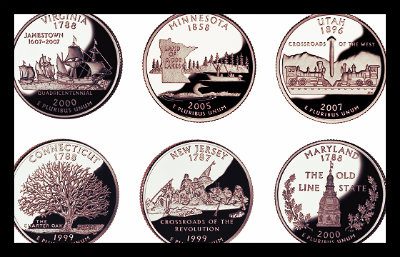
1. Maryland: This was the state that gave back the most, according to the Tax Foundation’s study, with 40.1% of tax returns in Maryland including a charitable deduction. The total state donations amounted to $3.9 billion, or approximately $2,969 per taxpayer.

2. New Jersey: 36% of taxpayers in this state deducted a donation to charity in 2011, creating a total of $4.5 billion of donations and a median amount of $2,181.

3. Connecticut: In a very close third place, this state had 35.9% of their taxpayers deduct charity donations on their tax returns, which amounted to $2.3 billion and a median of $1,916 per person.

4. Utah: 33.1% of Utah resident taxpayers donated to charity, giving back a total of $2.4 billion, which is a whopping $5,255 median contribution per taxpayer.

5. Minnesota: In this state, 32.7% of taxpayers noted a deduction for charity on their returns, creating a total of $2.6 billion of donations and a median contribution amount of $2,213.

6. Virginia: In another close rank, 32.5% of Virginia taxpayers deducted a donation for charity, totaling $4.2 billion and a median amount of $2,790 per taxpayer.

There are a few things to note after viewing this short list of the states that give the most. One is that the list is compiled based on the percentage of people who donate even a small amount, not the amount that the state donates as a total. Another is that the numbers in this list include donations from companies as well, and a third consideration is that the only money counted was that from itemized deductions, not standard deductions, which could affect the total amounts.

Of the six states in this list, only two of them (Utah and Maryland) also made to The Chronicle of Philanthropy‘s top ten list of states that donate the most.

– Katie Brockman

Sources Daily Finance, The Chronicle of Philanthropy

June 6, 2013
https://borgenproject.org/wp-content/uploads/borgen-project-logo.svg 0 0 Borgen Project https://borgenproject.org/wp-content/uploads/borgen-project-logo.svg Borgen Project2013-06-06 04:30:082024-05-30 22:22:536 U.S. States That Give The Most
Page 16 of 17«‹14151617›

Get Smarter

  • Global Poverty 101
  • Global Poverty… The Good News
  • Global Poverty & U.S. Jobs
  • Global Poverty and National Security
  • Innovative Solutions to Poverty
  • Global Poverty & Aid FAQ’s
Search Search

Take Action

  • Call Congress
  • Email Congress
  • Donate
  • 30 Ways to Help
  • Volunteer Ops
  • Internships
  • Courses & Certificates
  • The Podcast
Borgen Project

“The Borgen Project is an incredible nonprofit organization that is addressing poverty and hunger and working towards ending them.”

-The Huffington Post

Inside The Borgen Project

  • Contact
  • About
  • Financials
  • President
  • Board of Directors
  • Board of Advisors

International Links

  • UK Email Parliament
  • UK Donate
  • Canada Email Parliament

Get Smarter

  • Global Poverty 101
  • Global Poverty… The Good News
  • Global Poverty & U.S. Jobs
  • Global Poverty and National Security
  • Innovative Solutions to Poverty
  • Global Poverty & Aid FAQ’s

Ways to Help

  • Call Congress
  • Email Congress
  • Donate
  • 30 Ways to Help
  • Volunteer Ops
  • Internships
  • Courses & Certificates
  • The Podcast
Scroll to top Scroll to top Scroll to top