• Link to X
  • Link to Facebook
  • Link to Instagram
  • Link to TikTok
  • Link to Youtube
  • About
    • About Us
      • President
      • Board of Directors
      • Board of Advisors
      • Financials
      • Our Methodology
      • Success Tracker
      • Contact
  • Act Now
    • 30 Ways to Help
      • Email Congress
      • Call Congress
      • Volunteer
      • Courses & Certificates
      • Be a Donor
    • Internships
      • In-Office Internships
      • Remote Internships
    • Legislation
      • Politics 101
  • The Blog
  • The Podcast
  • Magazine
  • Donate
  • Click to open the search input field Click to open the search input field Search
  • Menu Menu

Tag Archive for: United Nations

Posts

Global Poverty

Indonesia and the UN Create Green Growth Project

Green Growth Project
On Oct. 25, Indonesia launched the Tropical Landscapes Finance Facility (TLFF), a green growth project to finance projects that encourage eco-friendly growth and improve the lives of citizens in rural areas. The TLFF initiative will collaborate with the United Nations’ Environment Program and agents in the private sector, such as the French bank BNP Paribas.

The program will include a loan fund and a grant fund, leveraging public capital to stimulate economic development while working toward the Paris Climate Agreement goals. This will give access to long-term funds at affordable rates for farmers.

In the past, Indonesia lost a significant portion of its forests due to logging and intentional fires. The government tried to implement a permit scheme for deforestation, but the country still has the highest rate of deforestation globally.

According to U.N. figures, between 2000 and 2005, Indonesia lost 310,000 hectares of forest every year. The rate of deforestation rose to 690,000 hectares per year between 2006 and 2010.

Industrialization has driven workers out of the agricultural sector and into the industrial and services sectors. Yet agriculture remains the dominant employer in the country, with a workforce of 40.8 million people.

Palm oil is its largest export, and palm oil plantations have increased dramatically in the past decade. Forests are sliced to make room for palm oil plants. However, the price of this commodity has steadily declined and farmers are destroying the environment for a product that is losing its value.

The new green growth project will use public funding to unlock private investment. It is looking to make strides in the development of renewable energy and sustainable landscape management. The latter will minimize deforestation and restore degraded lands.

The green investment fund will stimulate the productivity of small farms without compromising the productivity of the land in the future. Chair of the Steering Committee of the facility, Dr. Kuntoro Mangkusubroto, told the audience at the launch event that “This ground-breaking and innovative financial platform, a world’s first, can transform the lives and livelihoods of millions of Indonesians in rural areas that deserve it the most.”

Officials hope the fund will steer farmers away from practices that deplete the land of its natural resources and hinder long-term productivity, hindering the growth of the per capita income of poor farmers.

– Eliza Gkritsi

Photo: Flickr

November 6, 2016
https://borgenproject.org/wp-content/uploads/borgen-project-logo.svg 0 0 Borgen Project https://borgenproject.org/wp-content/uploads/borgen-project-logo.svg Borgen Project2016-11-06 01:30:272024-05-27 23:54:12Indonesia and the UN Create Green Growth Project
Global Poverty

Green Revolution in Africa: Rescuing Farmers from Poverty?

Green Revolution in Africa
Agriculture is the key industry in developing countries. It grants a generous number of employment opportunities to the local population and therefore, is an important source of income for poor households. Farmers are responsible for harvesting fresh produce and contribute significantly to the health of the local community.

The Green Revolution, with its roots predominantly in Africa, proposes specific targeted measures to increase yields from farming. It advocates the use of scientific research to complement traditional farming techniques. By doing this, farmers can be advised on the optimum conditions to grow their crop, the comparative effectiveness of fertilizers and even the best technology that can aid farming.

Approximately a decade ago, Africa substantially increased its core investments in agriculture. The investment not only involved increasing support for farmers but also directing more resources towards research and development to discover more effective farming strategies.

One important objective of the Green Revolution in Africa is to transition from a highly human labor dependent farming system to a mechanized system, whereby machines perform repetitive tasks with greater efficiency.

Ren Wang, Assistant Director of the Food and Agriculture Organization of the United Nations, expresses his belief that “mechanization in its broadest sense can contribute significantly to the sustainable development of food systems globally, as it has the potential to render post-harvest, processing and marketing activities and functions more efficient, effective and environmentally friendly.”

The Green Revolution in Africa also aims to improve farmers’ links with external supply outlets to maximize incomes and increase job prospects.

Increasing farming productivity and output is likely to contribute to better incomes for farmers and greater opportunities for entrepreneurship. Farmers are more likely to be encouraged to continue farming if equipped with good quality resources such as fertile soil, controlled climatic factors and efficient machinery.

Organizations such as the Bill and Melinda Gates Foundation have demonstrated support for this ambitious revolution by donating millions of dollars to the cause. The reasoning for these donations lies in the fact that the agriculture industry has made considerable progress, yet poor nutrition remains an important cause of mortality and morbidity in Africa.

Malnutrition, especially in younger children, has resulted in approximately 18 percent of children under the age of five being underweight. This not only has detrimental consequences for normal physical development, but also future social capital. If children do not receive adequate nutrition, their ability to learn is impaired and they will only be able to contribute to society in a limited number of ways.

According to the United Nations, by 2050, Africa is estimated to have approximately 2.4 billion individuals — nearly double its current population. With such a precipitous increase in population, the Green Revolution can only aspire to transform farming into a profitable and productive proposition.

– Tanvi Ambulkar

November 4, 2016
https://borgenproject.org/wp-content/uploads/borgen-project-logo.svg 0 0 Borgen Project https://borgenproject.org/wp-content/uploads/borgen-project-logo.svg Borgen Project2016-11-04 01:30:282024-06-11 02:48:24Green Revolution in Africa: Rescuing Farmers from Poverty?
Global Health, Global Poverty

Vaccination Can Combat Poverty by Saving Lives

Vaccination can Combat Poverty
Vaccination has perpetually been a vital aspect of the fight against poverty. Global health is one of the most imperative causes and immunization is the foundation for global health. Consequently, organizations like GAVI, WHO, MSF and UNICEF have put in their combined efforts into promoting this cause. Their endeavors have also highlighted how vaccination can combat poverty.

The efficient provision of vaccination and immunization schemes has been augmented by the exponential progress that the medical field has experienced over the past few years.

An estimated 2-3 million children, 1.5 million of which are under the age of five, die every year due to diseases that could have been averted by more readily available vaccines.

There are numerous underlying reasons for why vaccination can combat poverty. These mainly revolve around lowering infant mortality rates, dedicating more medical facilities and improving health care services.

Moreover, the rapid yellow fever outbreak that has plagued Angola, along with neighboring Kinhasas and Kwango, is being closely monitored by MSF. As yellow fever can lead to death for 15-50 percent of associated cases, Congolese people in the region are especially threatened.

Fortunately, the entire city of Matadi was successfully vaccinated. This move has culminated in the establishment of more vector-control activities for the people. This will especially be efficacious in improving awareness on household protection.

The inaccessibility of the pneumococcal vaccine has endangered the lives of countless children in developing countries. This malady affects millions of children all over the world.

Despite Pfizer’s advancement in this aspect, MSF has tried to rebuff its patent application as it sees it as a form of monopolistic competition because it restricts the development of the vaccine by other entities.

Furthermore, higher prices for the vaccine will be detrimental as it would not be affordable for people from lower socio-economic backgrounds. Therefore, it is imperative that vaccines of this nature be both affordable and easily accessible.

Vaccination has also played a pivotal role in the U.N. health agency’s emergency response in Nigeria. The polio vaccination programs have been an integral aspect.

Similarly, the Gombe state government of Nigeria approved the polio immunization of 900,000 individuals who have traveled from disputed areas under the control of the Boko Haram militant group. Vaccination can combat poverty by this method as it is a precautionary regulation that can alleviate the pressures of mass influx.

In addition to this, the steady progression that has been made with regards to Zika vaccine trials has accentuated the sense of urgency that is needed to address this crucial issue.

Consequently, the recently proposed approval for the performance of Zika clinical trials on humans will pave the way for a breakthrough that could help thousands of communities in the Americas. The upcoming launch of the leprosy vaccine in India also echoes this resonance of hope.

The GAVI Alliance has invested an exorbitant amount of $800 million for bolstering health care sectors in developing countries. Such maneuvers will hopefully result in stimulating the interests of private and public sectors in the country towards the cause.

– Shivani Ekkanath

Photo: Flickr

November 1, 2016
https://borgenproject.org/wp-content/uploads/borgen-project-logo.svg 0 0 Borgen Project https://borgenproject.org/wp-content/uploads/borgen-project-logo.svg Borgen Project2016-11-01 01:30:382020-05-26 11:11:27Vaccination Can Combat Poverty by Saving Lives
Foreign Aid, Poverty Reduction

Five Lessons the Marshall Plan Taught About Poverty Relief

The Marshall Plan
The battles from World War II resulted in some of the worst devastation in history, as military and civilian areas alike were targeted in aerial bombardment, which left millions dead and entire cities reduced to rubble. Devastation and breakdown of social fiber were so prevalent in Europe that the basic building block of civilization — the trade between farmers and urban dwellers offering food for goods and services — began to break down.

George C. Marshall, serving as the newly appointed secretary of state in 1947, outlined a plan to aid Europe with funds for rebuilding key infrastructure and industry. Though it has been criticized for reforming European markets in the style of the U.S. economy, the Marshall Plan undoubtedly helped spur economic recovery in Europe devastated by one of the most destructive wars in history.

The U.S. spent over $13 billion for the economic recovery of Europe between 1948 and 1951. In 2016 dollars the equivalent would be almost $130 billion. By helping to rebuild Europe, the U.S. found a new market for its manufactured goods that helped the country from sliding back into depression following the war. Today, the plan still holds lessons for combating poverty in the 21st Century.

Economic Development is Critical

Any approach to aid that doesn’t take the economic situation into account is doomed to short term success. The Marshall Plan made a point of focusing on rebuilding the economies of Europe including “…promoting industrial and agricultural production with the object of becoming independent of outside assistance…include(ing) projects for increased production of coal, steel, transportation facilities, and food.”

Oversight is Essential

The provisions of the Marshall Plan created a new organization, the Economic Cooperation Administration, consisting of an administrator, a deputy and a staff composed of economists, accountants, lawyers and administrative workers. The Act empowered the administrator to create rules and regulations regarding the distribution of aid based on ground conditions. The administrator was on equal footing with the secretary of state, which the president of the U.S. set as the arbitrator in any disputes between them. Other rules outlined two advisory boards and a special “roving ambassador” to aid the administrator. The plan even established a congressional “watchdog committee” for additional governmental oversight. These clearly defined duties helped to ensure the aid outlined in the plan made it to refugees who needed it most.

Confidence Must Be Restored in Local Economies

The Marshall Plan took measures to restore vital infrastructure and public schooling, which helped to give ordinary citizens the semblance of order necessary to build consumer confidence in their economies. Provisions in the plan also provided for “taking necessary financial and monetary measures to stabilize currency and exchange and balance the governmental budget of the signatory country.” The end goal of the stabilizing effects was to create a favorable environment for American investment in Europe.

Aid Should Be Focused Regionally, Not on Single Countries

Experts believe one of the greatest reasons for the success of the Marshall Plan was that it focused on rehabilitating an entire region as an economic unit rather than singling out specific countries. Aid efforts crossed borders and gave a sense that the continent was in the fight together to return to previous levels of economic development. Under the Marshall Plan, assistance was available to countries in the Western Hemisphere. The agreement tasked the U.S. secretary of state with negotiating the free entry of supplies to countries participating in the plan. The administrator was still able to refuse aid in the interest of national security in case it had become clear supplies were supporting military forces. Under this provision, countries in Eastern Europe falling under the Soviet bloc did not receive aid.

Aid Should Be Coordinated Through the UN

Aid through the Marshall Plan filtered through U.N. organizations for distribution. Also, the rules of the plan required the administrator to send progress reports to the international organization. By coordinating efforts through the U.N., the U.S. increased the legitimacy of its aid programs and allowed some measure of input from U.N. officials.

Marshall himself outlined the reasoning behind the aid in a speech at Harvard University on June 5, 1947. In the address he stated, “It is logical that the U.S. should do whatever it is able to do to assist in the return of normal economic health in the world, without which there can be no political stability and no assured peace. Our policy is directed not against any country or doctrine but against hunger, poverty, desperation, and chaos.”

– Will Sweger

Photo: Flickr

October 29, 2016
https://borgenproject.org/wp-content/uploads/borgen-project-logo.svg 0 0 Borgen Project https://borgenproject.org/wp-content/uploads/borgen-project-logo.svg Borgen Project2016-10-29 01:30:492020-06-08 15:34:57Five Lessons the Marshall Plan Taught About Poverty Relief
Education

A Call for Education for Indigenous People

Education for Indigenous People
The indigenous community of many countries often becomes the most disadvantaged group of people in the country. In Latin America and the Caribbean, only about 40 percent of aboriginal children complete their secondary education.

The U.N. is promoting the need for greater access to education for indigenous people with events in many countries around the world including Colombia, Ghana, Honduras, Indonesia, Peru and Sri Lanka. One of the major hurdles facing the global education sector in order to provide education for indigenous communities around the world is providing an education that fulfills their linguistic and cultural necessities.

Many indigenous children are unable to take full advantage of the education provided to them by their country because of linguistic and cultural barriers. A country’s educational system most often utilizes their national language, which disregards native languages spoken by indigenous communities. Particularly in Latin America and the Caribbean, history lessons focus on teaching history from the colonial empirical standpoint versus the perspective of the indigenous community.

By not providing the tools necessary for public education for indigenous people, they will be marginalized in the wider community. U.N. Secretary General Ban Ki-moon stated, “Indigenous peoples regularly face stigmatization of their cultural identity and lack of respect and recognition for their heritage and values, including in textbooks and other educational materials.” This creates an uncomfortable learning environment for indigenous students in schools where they are often the minority.

The lack of assistance towards the indigenous community is most evidently seen in the statistics that reveal that indigenous people represent only five percent of the global population but account for 15 percent of the world’s most impoverished according to the World Bank.

The International Work Group for Indigenous Affairs (IWGIA) reports that in Latin America alone there are about 41 million, or about 6.3 percent, of the region’s population that identify as indigenous people. Most governments in the region have chosen not to accommodate the needs of the students belonging to this demographic which explains why graduation rates are much lower compared to the national majority population.

When discussing countries like Bolivia, where 10.6 million of the population, or 62 percent, identify themselves as belonging to an indigenous community, it’s a problem that must be addressed. UNICEF stated that in Bolivia, a non-indigenous child in an urban zone belonging to the upper-middle class completes approximately 14.4 years in education, while an indigenous girl in a rural zone from a low-income family is only able to complete two years of education.

All indigenous people are at a disadvantage in Australia. Participation of indigenous 15 to 19-year-olds in higher education was 60 percent in 2013, below the 80 percent participation for all Australians in the same age group. The numbers concerning indigenous communities can be disheartening but the U.N. has called on all countries to improve the lives of 370 million indigenous people.

Although currently, indigenous communities worldwide have been marginalized, they are finally receiving the international recognition they deserve in terms of education. Experts suggest that the solution to the problem lies in providing education for indigenous people that is linguistically and culturally fitting for each community. Special attention is being given to girls and women because they are at an even greater disadvantage and possibly in more danger than their male counterparts.

The U.N. has declared a firm position on the issue concerning the report that is due to be released later this year on the education of indigenous communities worldwide. The World Bank has also shown solidarity by working actively with indigenous people worldwide on a number of issues. The topic of educating indigenous people is now part of the global education conversation.

– Mariana Camacho

Photo: Flickr

October 20, 2016
https://borgenproject.org/wp-content/uploads/borgen-project-logo.svg 0 0 Borgen Project https://borgenproject.org/wp-content/uploads/borgen-project-logo.svg Borgen Project2016-10-20 04:39:332024-05-27 23:53:19A Call for Education for Indigenous People
Global Poverty

Hurricane Matthew’s Impact on Living Conditions in Haiti

Hurricane Matthew
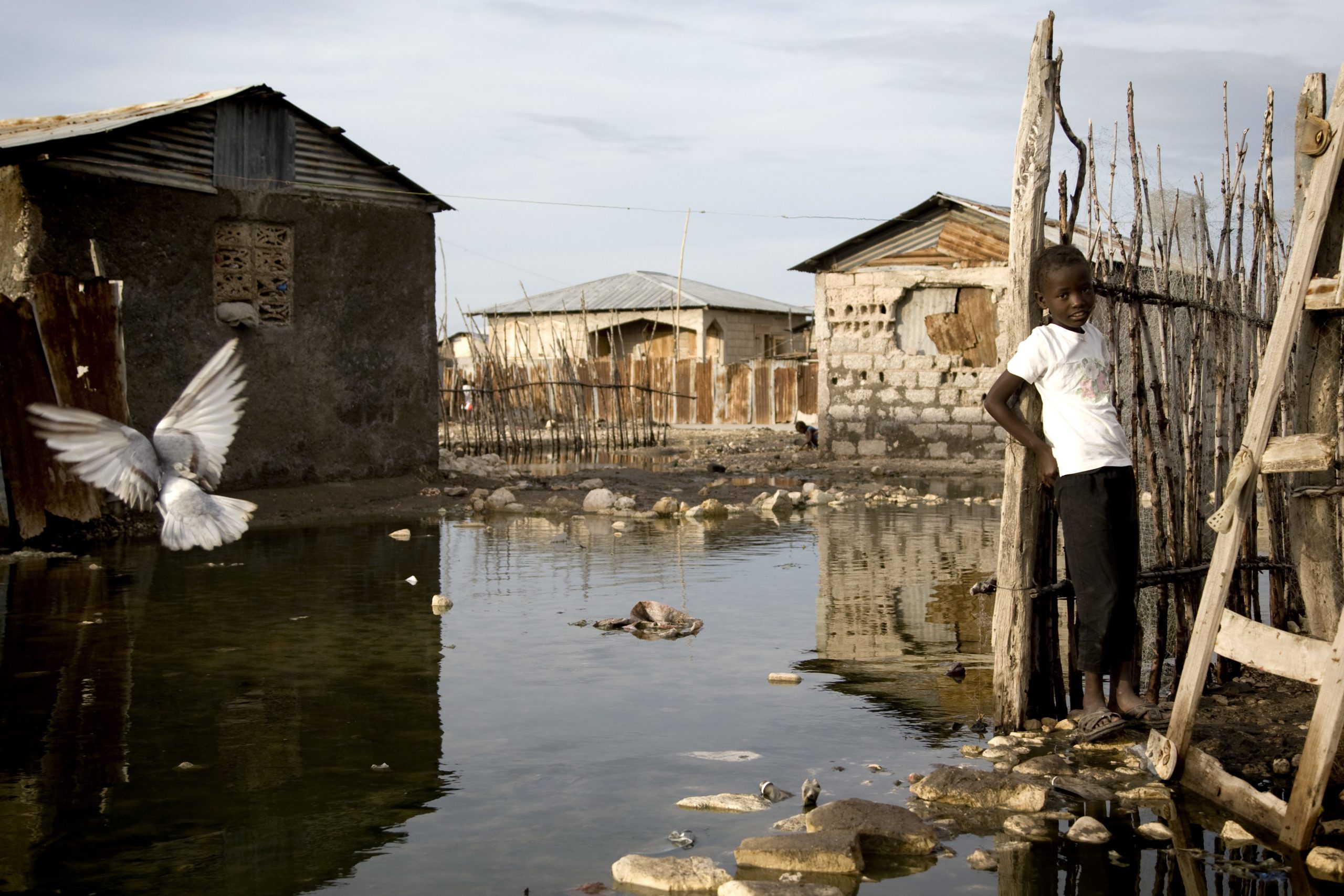
Hurricane Matthew was a devastating category four hurricane sustaining winds of upwards of 140 mph when it first swept through into the Southern peninsula of Haiti on October 3-4, 2016.

Hurricane Matthew was the strongest natural disaster to hit the country in a decade, completely destroying towns and villages. Food reserves and roughly 300 schools have been damaged.

Haiti Liberte, a local news source of Haiti, estimates nearly two feet of rain impacted the area during Hurricane Matthew.

Reuters estimates that the death toll in Haiti is currently at 1,000 and rising, causing the community to create mass graves for their deceased. The death toll is continuing to rise due to the cholera outbreak in the wake of the devastation caused by Hurricane Matthew. Thousands are also displaced in the wreckage.

Cholera Rises in Aftermath of Hurricane Matthew

According to CNN, Haiti has the highest rates of Cholera worldwide. An estimated 10,000 people have died from the epidemic since 2010 when soldiers from the U.N. accidentally brought the disease to the area in the aftermath of an earthquake. The World Health Organization (WHO) reported in 2016 that 880 new cases each week arise out of Haiti.

With cholera projected to increase in the aftermath of Matthew, WHO is sending one million cholera vaccines to the area in hopes of preventing an outbreak of the waterborne disease.

Developmental Struggles to Haitian Economy

Haiti is the poorest country in the Americas and the Western hemisphere. The New York Times reported that, prior to the devastation left by Hurricane Matthew, Haiti was on the path of developing into a more prosperous country. Cell phone services were widely enabled in the community, and farmers and businesses were improving.

Forests, swamps and other forms of vegetation are now ruined. Roadways are blocked and destroyed and homes are no longer standing as they once were. Only the mounds of stones that were used as the foundation for homes still stand in Jérémie, Haiti.

Minister of commerce and industry in the Grand Anse department Marie Roselore Auborg of Jérémie stated, “Instead of going forward, we have to restart…This storm leveled all of the potentials we had to grow and reboot our economy.”

Widespread Famine

BBC reported from U.N. officials and the Haiti government that widespread famine will impact Haiti in the three to four months to come if the situation is not addressed properly and promptly. Haiti Interim president Jocelerme Privert states that “real famine” following the “apocalyptic destruction” made by Hurricane Matthew could prevail.

U.N. Secretary-General Ban Ki-moon is proactively responding to the crisis by investing $120 million in the three months following the hurricane to aid in the restoration of Haitian infrastructure and provide medical and famine relief.

France and the U.S. have pledged to send aid to Haiti. The American Red Cross is providing $6.9 million to aid in relief efforts as well.

– Haylee M. Gardner

Photo: Flickr

October 17, 2016
https://borgenproject.org/wp-content/uploads/borgen-project-logo.svg 0 0 Borgen Project https://borgenproject.org/wp-content/uploads/borgen-project-logo.svg Borgen Project2016-10-17 01:30:542020-06-09 12:18:59Hurricane Matthew’s Impact on Living Conditions in Haiti
Education, Global Poverty

Bridging the Global Youth Skills Gap

Youth Skills Gap
On July 15, the U.N. celebrated World Youth Skills Day. U.N. Secretary-General Ban Ki-moon called for sustained investment in youth skills to help achieve the 2030 Sustainable Development Goals. Across the world, a huge generation of young people is entering the workforce.

Unfortunately, many of them lack the skills necessary to have successful and engaging careers or even to be gainfully employed. Those aged 15-24 make up 40% of those unemployed worldwide, even though they only make up 18% of the global population. Many of those who are lucky enough to be employed are working jobs that provide little in the way of remuneration or protection.

The inability of young people to find good jobs is a major contributor to continuing poverty. This poverty, in turn, plays a powerful role in breeding both localized violence and global extremism. Addressing this situation calls for many responses, one of which is attacking the global youth skills gap.

In today’s economy, digital and communicative skills are in demand but schooling, especially in poorer countries, often emphasizes traditional skills, meaning that educational models that may have been successful in the past are in danger of becoming outmoded. According to a survey from the Asian Development Bank, communicative and language skills are seen as being most valuable. More broadly, in many places, there is a significant mismatch between the skills needed for work and the skills that people have.

Fortunately, there are many steps that can be taken to address the youth skills gap head-on. According to the World Economic Forum, social and emotional learning (SEL) provides children with the framework they need to adapt to a wide array of situations in their future careers. Training children to adapt to different situations, rather than over-focusing on specific skills that may or may not be useful, increases their readiness to participate in a wide range of careers.

The World Bank has sought to address the issues of the youth skills gap and youth unemployment head-on through a variety of individual programs. From the Caribbean to South Asia to Sub-Saharan Africa, these programs have helped increase employment and provided youth with skills of lasting value.

Efforts to improve the effectiveness of education, direct job training projects and job-search assistance are just a sampling of the work being done to bridge the gap.

Like so many contributors to global poverty, the youth skills gap is anything but an intractable problem. Rather, with the concerted effort of individuals, governments, businesses and multilateral organizations it can become less and less of an obstacle to shared prosperity.

– Jonathan Hall-Eastman

Photo: Flickr

October 14, 2016
https://borgenproject.org/wp-content/uploads/borgen-project-logo.svg 0 0 Borgen Project https://borgenproject.org/wp-content/uploads/borgen-project-logo.svg Borgen Project2016-10-14 01:30:282024-06-11 02:48:22Bridging the Global Youth Skills Gap
Global Health, Health

United Nations Plans For The Eradication of AIDS by 2030

eradication of AIDS
Recently, the United Nations unveiled its plan to combat global health concerns. If earnestly implemented, the international community could see the eradication of AIDS by 2030. The plan is a part of the U.N.’s Sustainable Development Goals (SDGs), which identified 17 developmental goals and 169 sub-targets.

The SDGs were constructed on the successes of the recently concluded Millennium Development Goals, which addressed global development issues through “time-bound and quantified targets.” The eight U.N.-brokered goals have become synonymous with the “the most successful global anti-poverty push in history” as it has reduced HIV infections by 33% since 2001.

Despite the unprecedented developmental success, the United Nations General Assembly wanted to pursue a refined and more robust approach to the eradication of AIDS. Therefore, in 2015 as the Millennium Goal expired, the United Nations High-Level Political Forum on Sustainable Development announced a program aimed at eradicating AIDS, particularly through United Nations General Assembly Resolutions.

Notably, Resolution A/69/856 identifies that the eradication of AIDS and prevention must go beyond providing sufficient doses of anti-retroviral treatments. In addition to medicine, it is necessary for governments alike, the international community and civil society to advocate for safe-sex practices.

The task of implementing treatments towards pursuing a world free of global health concerns should not disproportionately fall on the United Nations, however. Moreover, other actors have provided significantly to health movements such as the United States President’s Emergency Plan for AIDS Relief (PEPFAR). PEPFAR is a bipartisan policy that supports HIV testing and counseling for more than 14.2 million pregnant women; HIV testing and counseling for more than 56.7 million people as well as training for more than 140,000 health care workers.

Other efforts are being made by NGOs and nonprofits such as The Global Fund, which has given $22.9 billion to over 1,000 initiatives in 151 countries.

– Adam George

Photo: Flickr

October 11, 2016
https://borgenproject.org/wp-content/uploads/borgen-project-logo.svg 0 0 Borgen Project https://borgenproject.org/wp-content/uploads/borgen-project-logo.svg Borgen Project2016-10-11 01:30:452024-12-13 17:55:51United Nations Plans For The Eradication of AIDS by 2030
Hunger

Japan Gives $21 Million to Relieve Hunger in Africa and Asia

Hunger in Africa and Asia
The fight against hunger in Africa and Asia remains a life-threatening issue. However, in an attempt to end this crucial battle for good, the government of Japan has generously donated a total of $21.6 million to the World Food Programme (WFP).

Distributed among 11 countries, the cash contribution will be used strictly to provide both food and nutrition assistance while consciously adapting to each country’s current needs, necessities and issues.

Countries receiving a majority share of the funding include Guinea ($3.8 million) and Uganda ($2.5 million), while Sri Lanka, the lone South Asian country benefiting from the endowment, will obtain $2.2 million.

In Guinea, the money will be specifically focused on assisting an estimated 150,000 school children in areas where food insecurity has significantly worsened as a result of the recent Ebola outbreak, while mothers in Uganda will receive essential education in health and growth monitoring.

Worldwide, malnutrition and undernutrition are two serious problems for children under five. Nearly half of all deaths in this portion of this population can be connected to undernutrition, while estimated one-in-five children under five are directly affected by malnutrition.

Food insecurity issues are immensely consequential and severe as they greatly increase the harshness and rate of contractible common infections, stall recovery and reduce one’s education.

In addition to this contribution, a number of organizations and initiatives such as The Hunger Project and Feed the Future are currently working to end hunger in Uganda.

The WFP was established in the early 1960s and is presently the world’s largest humanitarian agency dedicated to fighting hunger worldwide. The voluntarily funded organization reaches more than 80 million people in 82 different countries on average annually.

In 2015 alone, total contributions to WFP reached $5 billion, and as of Sept. 25, donations for 2016 are at $4.3 billion.

This funding from the government of Japan will surely go far in ending hunger in Africa and Asia. With a multitude of organizations and momentous contributions annually, the fight against food insecurity truly doesn’t stand a chance.

– Jordan J. Phelan

Photo: Flickr

October 10, 2016
https://borgenproject.org/wp-content/uploads/borgen-project-logo.svg 0 0 Borgen Project https://borgenproject.org/wp-content/uploads/borgen-project-logo.svg Borgen Project2016-10-10 01:30:422024-12-13 17:55:53Japan Gives $21 Million to Relieve Hunger in Africa and Asia
Refugees

Ten Facts about Refugees in Iceland

Refugees in Iceland
As Iceland stands geographically remote with wisps of chilly Arctic air and an intimate population of 323,000, refugees in Iceland who have been granted asylum have experienced a unique assimilation. In a Telegraph article, a Syrian refugee commented, “For us, [Iceland] is the freezer” while Audur Magnuscdottir, a biochemist helping a family settle said, “[Iceland] is dark, it’s cold and it’s windy – it must be hell. Just to get used to going out in the cold is a huge step.”

Yet in light of Iceland’s unusual characteristics, the majority of Icelanders have welcomed refugees with open arms. Here are 10 facts about refugees in Iceland:

  1. Since Iceland’s refugee policy first initiated in 1956, the country has accepted a grand total of 584 refugees, a rate lower than other Nordic countries. According to data from the United Nations High Commissioner for Refugees, there has been a total of 17,785 refugees accepted in Denmark, 142,207 in Sweden and 47,043 in Norway.
  2. Since 1956, groups and families of refugees have arrived from a diverse range of countries — Vietnam, Poland, Hungary, former Yugoslavia and Serbia.
  3. Post-recession, Iceland’s economy has recovered at a four percent growth rate per year. However, according to a PBS report, Iceland would require 2,000 new immigrants a year to maintain that level of growth — refugees would contribute to this number. Mayor of Akureyri, Iceland, Eirikur Bjorgvinsson, explains that refugees contribute more to Iceland’s economy than the amount of assistance that they are actually receiving.
  4. In order to become assimilated in Iceland society, the government offers financial assistance, education, health services, housing, furniture and a telephone for up to one year to refugees in Iceland.
  5. According to the Ministry of Welfare, the policy in Iceland has welcomed a quota of 25 to 30 refugees every year. However, this quota has changed in the last few years with the crisis in Syria, protests from Icelandic citizens and an exception in 1999 with the outbreak of the war in Kosovo.
  6. The largest group of refugees accepted together in Iceland was comprised of 75 people, who were all from Kosovo in 1999. The smallest group to migrate to Iceland in a single year was comprised of five people in 2014, who hailed from Zimbabwe, Cameroon, Uganda and Syria.
  7. In September 2015, via Facebook, 11,000 Icelanders called on the government to increase its intake of refugees. At that time, the Icelandic government had only pledged to accept 50 refugees.
  8. Amid the conflict in Syria, with 4 million Syrians fleeing the country and a further 7.6 million being displaced inside Syria, 48 Syrian refugees from the United Nation’s refugee camp in Lebanon have found new homes in Iceland since January 19 of this year. An additional 40 refugees will be arriving in Iceland this fall.
  9. A refugee committee suggested that the municipalities of Reykjavik, Árborg and Hveragerði, Iceland receive Syrian refugees due to its strength in employment opportunities, housing and abundance of Red Cross chapters.
  10. Although many refugees in Iceland have found peaceful relocation to Iceland with citizens embracing the new diversity created with the influx among their predominantly white and Christian population, many who have entered Iceland with false and forged passports have been jailed due to a violation of international law. The typical sentence is 30 days in jail, legal fees from 50,000 to 125,000 ISK.

– Priscilla Son

Photo: Flickr

September 30, 2016
https://borgenproject.org/wp-content/uploads/borgen-project-logo.svg 0 0 Borgen Project https://borgenproject.org/wp-content/uploads/borgen-project-logo.svg Borgen Project2016-09-30 01:30:372024-05-27 23:53:22Ten Facts about Refugees in Iceland
Page 28 of 44«‹2627282930›»

Get Smarter

  • Global Poverty 101
  • Global Poverty… The Good News
  • Global Poverty & U.S. Jobs
  • Global Poverty and National Security
  • Innovative Solutions to Poverty
  • Global Poverty & Aid FAQ’s
Search Search

Take Action

  • Call Congress
  • Email Congress
  • Donate
  • 30 Ways to Help
  • Volunteer Ops
  • Internships
  • Courses & Certificates
  • The Podcast
Borgen Project

“The Borgen Project is an incredible nonprofit organization that is addressing poverty and hunger and working towards ending them.”

-The Huffington Post

Inside The Borgen Project

  • Contact
  • About
  • Financials
  • President
  • Board of Directors
  • Board of Advisors

International Links

  • UK Email Parliament
  • UK Donate
  • Canada Email Parliament

Get Smarter

  • Global Poverty 101
  • Global Poverty… The Good News
  • Global Poverty & U.S. Jobs
  • Global Poverty and National Security
  • Innovative Solutions to Poverty
  • Global Poverty & Aid FAQ’s

Ways to Help

  • Call Congress
  • Email Congress
  • Donate
  • 30 Ways to Help
  • Volunteer Ops
  • Internships
  • Courses & Certificates
  • The Podcast
Scroll to top Scroll to top Scroll to top