• Link to X
  • Link to Facebook
  • Link to Instagram
  • Link to TikTok
  • Link to Youtube
  • About
    • About Us
      • President
      • Board of Directors
      • Board of Advisors
      • Financials
      • Our Methodology
      • Success Tracker
      • Contact
  • Act Now
    • 30 Ways to Help
      • Email Congress
      • Call Congress
      • Volunteer
      • Courses & Certificates
      • Be a Donor
    • Internships
      • In-Office Internships
      • Remote Internships
    • Legislation
      • Politics 101
  • The Blog
  • The Podcast
  • Magazine
  • Donate
  • Click to open the search input field Click to open the search input field Search
  • Menu Menu

Tag Archive for: United Nations

Posts

Global Poverty, Hunger, United Nations

Incrementally Changing Hunger in Uruguay


In recent decades, Uruguay has taken strides to eliminate poverty and the prevalence of hunger. Only 3.3 percent of the country’s population was considered undernourished in 2016. Only 1.3 percent of children under the age of five experienced wasting conditions. The elimination of hunger in Uruguay can be attributed to both broad changes in infrastructure and the contributions of nonprofit organizations.

How Uruguay is Successfully Addressing Hunger

Uruguay succeeded in meeting the first U.N. Millennium Development Goal, known as the “Zero Hunger Challenge” in 2013. The country achieved this goal two years ahead of schedule.

The government’s success in its social policies against poverty has received international attention. The U.N.’s Food and Agricultural Organization (FAO) especially praised the implementation of monthly income subsidies. Households classified as “vulnerable” receive a monthly income subsidy of 700 Uruguayan pesos. “Highly vulnerable” families receive twice that amount.

As an outcome, moderate poverty decreased from 32.5 percent in 2006 to 9.7 percent in 2015. Additionally, extreme poverty decreased from 2.5 percent to 0.3 percent in the same period.

Alongside broad government initiatives to eliminate poverty in general, a number of small-scale nonprofit organizations have arisen in recent years. Many share the goal of eliminating residual hunger in Uruguay.

Niños con Alas, or Children with Wings, works specifically to improve the infrastructure of Uruguayan schools. The organization provides schools with staple pantry products like flour, sugar, rice, cornmeal, tomato pulp, oil, noodles, milk powder and minced meat on a weekly basis. Through its contributions, Niños con Alas supplies three meals a day for more than 1,000 children.

Argentine national Santiago Abdala created Uruguay’s Banco de Alimentos, in 2012. Originally operating from Santiago’s home, the food bank now delivers food to more than 45 charities and helps feed more than 7,000 individuals. Banco de Alimentos is supported by the Global Food Banking Network and partnerships with international companies like Unilever.

Overall, the Uruguayan government and charitable nonprofit organizations have provided the people with options in terms of hunger. The defeat of hunger in Uruguay sets a good example for countries all over the world looking to meet the Millennium Development Goals.

– Casie Wilson

Photo: Flickr

April 15, 2017
https://borgenproject.org/wp-content/uploads/borgen-project-logo.svg 0 0 Borgen Project https://borgenproject.org/wp-content/uploads/borgen-project-logo.svg Borgen Project2017-04-15 01:30:202024-12-13 17:57:46Incrementally Changing Hunger in Uruguay
Developing Countries, Global Poverty, United Nations

Fast Fashion and Ethical Fashion

 Fashion and Ethical Fashion
The fashion industry is having a dramatic impact on the environment and on the lives of people around the world, predominantly those in poverty. Fashion can be bucketed into two categories: fast and ethical. To the regular consumer in the United States or in Europe, it might be hard to know the difference between the two.

Negative Global Impacts of Fast Fashion

We are living in a world of fast fashion, a term Merriam-Webster defines as, “an approach to the design, creation and marketing of clothing fashions that emphasizes making fashion trends quickly and cheaply available to consumers.” Some of the large-scale fast fashion brands include H&M, Levis and Nike. With fashion trends changing quicker and fashion seasons getting shorter, cheap clothing is purposely being made poorly in order to not last.

With these big brands producing so much clothing at such a fast rate, there are more and more amounts of clothing going to thrift stores. Thrift stores can’t keep up either, though. What many don’t know is that about 40 percent of donated clothes end up getting baled up and sent to different countries overseas. In New York City, most donated clothes end up making their way to Africa.

Besides the overwhelming amount of tangible fabric leftovers, fast fashion is having a dramatic impact on the people who make our clothing. Garment workers are practically invisible, with 97 percent of our clothes being made overseas in developing countries.

Workers in the fashion industry are exploited; they receive extremely low wages while working in inadequate conditions. About 40 million people around the world (85 percent who are women) create clothes. In 2013, an eight-story garment factory called Rana Plaza collapsed in Bangladesh killing 1,135 people and injuring around 2,500. The average monthly income for a garment worker in Bangladesh is only 68 dollars.

Ethical Fashion is Gaining Visibility as a Solution

With such problematic issues surrounding the fashion industry, it is increasingly important consumers make responsible and sustainable purchases. Ethical fashion has gained popularity as many companies and organizations are adopting fair-trade and other responsible business practices.

The United Nations’ Ethical Fashion Initiative is just one of many such initiatives. Seeing fashion as a means for development, this initiative upholds that, “in all things, people need to come first.” This initiative also stresses the significance of “fair supply chains” and “dignified working conditions” that do not involve “any form of labor exploitation.”

There are many people who put work into creating the things we purchase. There is fast fashion and ethical fashion – it is our choice which one to support.

– Shannon Elder

Photo: Flickr

April 10, 2017
https://borgenproject.org/wp-content/uploads/borgen-project-logo.svg 0 0 Borgen Project https://borgenproject.org/wp-content/uploads/borgen-project-logo.svg Borgen Project2017-04-10 01:30:572024-12-13 17:57:51Fast Fashion and Ethical Fashion
Developing Countries, Global Poverty, Women and Female Empowerment

8 Examples of Gender Discrimination in the Middle East and North Africa

Gender Discrimination Examples
The inception of the United Nations (U.N.) Millennium Goals spearheaded the push towards achieving more social progress by promoting gender equality and the empowerment of women. Despite the fact that two-thirds of the developing world have achieved a level of parity, the problem still persists in the Middle East and North African countries. The lack of access to education, the right to marriage, ownership and custody rights are some very common and debilitating issues that contribute to gender discrimination. However, some of the following examples of gender discrimination shed light on the more uncommon and often overlooked examples of gender inequality.

8 Powerful Examples of Gender Discrimination

1. The Gender Gap
Developing and developed countries have faced this social issue, although to varying degrees. Women in developed countries still face social hindrances owing to the gender – wage gap – a phenomenon that will still take 188 years to even up, according to the World Economic Forum. Women also have fewer responsibilities and are given fewer rewards for their work.

2. Being Forbidden to Drive
Across many conservative communities in Saudi Arabia, women still face this major social bulwark. Despite it not being a law, women are still not allowed licenses and can only exercise the right to go out in public if accompanied by a chaperon. The Arab Spring in 2011 resulted in a deluge of rallies and protests among women. Even though society is becoming more progressive, especially with regards to allowing women to contribute to the labor force, it will take further social reform to overcome this hindrance.

3. Restrictions on Clothing
Upon the pretext that women should not ‘flaunt their beauty,’ women in many conservative communities have to wear the complete body burqa, coupled with loose-fitting clothes when they are out in public as an interpretative exegesis of the Sharia Law. Many world leaders like U.K. Prime Minister Theresa May have spoken against the issue which is very pervasive in Saudi Arabia, Gambia, Sudan and North Korea.

4. Not being Allowed to Travel
In some extreme cases, women are not allowed to leave the country without the consent of their husbands. Up until the age of 40, single women are required to ask their father for permission. For example, Niloufar Ardalan, the Captain of the Iranian Women’s Soccer team was banned from taking part in the Women’s Futsal Championship of Malaysia in 2015 by her husband as it was in violation of Islamic Law.

5. Honor Killing
This is a deplorable practice that revolves around the hidebound idea that girls have to uphold the supposed ‘cachet’ of their families and abide by the patriarchal demands of the society. Honor killing is largely attributed to the poor education system and ineffective government legislation among rural communities. Consequently, Qandeel Balcoh was killed by her brother Waseem Ali in 2016 because she had supposedly brought dishonor upon her family because of how she expressed herself on social media.

6. Female Genital Mutilation
This problem is prevalent in Sub-Saharan African countries, Egypt and other countries in South Asia due to lack of sex education and awareness. The practice stems from a fundamentalist cultural ideology still held by many traditional communities and based on ensuring a girl’s fidelity before marriage. It is one of the very dire examples of gender discrimination and is a human rights violation. It results in severe pain, difficulties in urination and spread of infection.

7. Female Infanticide
Unfortunately, this practice is rather prevalent among rural communities in India, Pakistan and China. For example, China’s one-child policy has contributed to this issue. Boys are thought to galvanize the financial security of the family, while women are treated as burdens and often seen only as child-bearers and caretakers of the household. In some regions, there are as low as 300 girls for every 1,000 boys. Moreover, Beti Bachao, Beti Padhao (Save Girls, Teach Girls) in India, is a social reform initiative that is cracking down on related issues like child marriage.

8. Lack of Legal Rights
This form of gender discrimination is ubiquitous in many countries. From child custody and rape laws, this broad term encompasses many aspects where women are not given enough legal counsel. Spousal rape is not criminalized in many countries and complaints lodged with the police never materialize. In many countries in the Middle East, divorce laws are very weak. The evidence is often not admissible in court and eyewitnesses are always required for cases to be considered.

The progress made over the decade to combat gender discrimination is truly remarkable. Historically pivotal revolutions like the Suffrage movement have been the foundation for women’s rights activism today. Both modern and classical feminism are becoming widespread concepts that many in the international community are adopting. The steady momentum of human rights organizations like Amnesty International, the International Alliance for women, U.N. Women and other local non-governmental organizations have already made a big difference.

Achieving women’s rights is an effective way to crumble ramparts made by society. Female participation greatly helps bolster the economy and catalyze social development in the long run.

– Shivani Ekkanath

Photo: Flickr

April 10, 2017
https://borgenproject.org/wp-content/uploads/borgen-project-logo.svg 0 0 Borgen Project https://borgenproject.org/wp-content/uploads/borgen-project-logo.svg Borgen Project2017-04-10 01:30:212024-12-13 17:57:528 Examples of Gender Discrimination in the Middle East and North Africa
Children, Global Poverty, United Nations, War and Violence

Why Are Child Soldiers Used In War?

Soldiers Used In War
The use of child soldiers in war is a persistent issue, despite ongoing international efforts to stop the practice. The U.N. defines a child soldier as anyone under age 18 who is recruited or used by an armed force or group in any capacity. The International Criminal Court further designates recruiting or using children under age 15 as a war crime. Yet, military groups continue to recruit children because they are cheap and manipulable.

Many children are forced to join military groups at a young age. Child soldiers are also easier to manipulate and force into conflict. Recruiters typically target children from troubled areas or conflict zones, likely accustomed to violence and with fewer educational or work opportunities.

Other children join military groups voluntarily to flee poverty, gain protection, or to connect with something resembling a family. Military organizations are viewed as a safe and secure group of comrades, distant from their difficult lives.

There are several roles that militant groups fill with child soldiers. In many cases, children participate directly in conflict, but they can also be used for other dangerous support roles. Many are porters who carry heavy loads of ammunition or injured soldiers, while others are lookouts or cooks. Girls are often forced to be sex slaves.

Participating in armed conflict has significant consequences for the physical and emotional development of children. Many endure abuse and witness extreme violence or death. Even worse, they are forced to commit horrific acts, resulting in lifelong psychological distress. Child soldiers also have a higher risk of sexual abuse by adults or other children. These children are plagued by depression, anxiety, insomnia and numerous other health issues.

While the issue of child soldiers remains daunting, progress is being made to reduce the practice across the globe. UNICEF created a campaign in 2014 called “Children, Not Soldiers” aimed towards global prevention of the use of child soldiers. The campaign focuses on seven countries: Afghanistan, Chad, the Democratic Republic of the Congo, Myanmar, Somalia, Sudan, and Yemen. Thousands of soldiers have been released and introduced back into civilian life because of the campaign.

National campaigns have also helped countries make significant strides towards reducing the use of child soldiers. Countries have implemented disarmament, demobilization and reintegration programs to make a change. Stopping such an ingrained practice and rehabilitating children who have grown up in conflict is a difficult task. However, these programs represent a strong effort to stop the recruitment and use of child soldiers.

– Lindsay Harris

Photo: Flickr

April 7, 2017
https://borgenproject.org/wp-content/uploads/borgen-project-logo.svg 0 0 Borgen Project https://borgenproject.org/wp-content/uploads/borgen-project-logo.svg Borgen Project2017-04-07 01:30:052024-06-04 01:08:20Why Are Child Soldiers Used In War?
Global Poverty, Sustainable Development Goals, United Nations

“Small Smurfs, Big Goals” and US Sustainable Development Goals

Sustainable Development Goals
“Smurfs: The Lost Village” and the U.N. are working together on the Small Smurfs, Big Goals campaign. The campaign aims to promote the United Nation’s Sustainable Development Goals for 2030. The International Day of Happiness, which the U.N. has celebrated since 2013 on March 20, was central to this campaign.

Demi Lovato, Joe Manganeilio and Mandy Patinkin, three of the main voice actors from the “Smurfs: The Lost Village” movie, came to the International Model U.N. Conference to honor a few students for their projects to help achieve the Sustainable Development Goals (SDGs).

Karan Jerath, a 20-year-old, created a device to protect marine life from oil spills. Sarina Davin, a 17-year-old, helped with a U.N. girl empowerment program. Noor Samee, also 17, blogs for UNICEF about social justice issues.

Patinkin, who plays Papa Smurf in the film, congratulated the students at the conference.

“On behalf of all Smurfdom,” he said, “thank you for your work in awakening everything, in your community, through your social media, all over the world, in the ways that you have chosen to encourage people everywhere to make this world a better place for those who are so vulnerable in every way imaginable.”

Each of the students received a symbolic key to Smurf Village.

The visit to the International Model U.N. Conference was one way the Small Smurfs, Big Goals campaign honored the International Day of Happiness and the SDGs. On March 20, the Smurf cast and the U.N. lit the Empire State building blue.

On the Small Smurfs, Big Goals website, visitors can take a quiz to find which Smurf they are most like based on the issues they care about. Then, they can share their smurfs and support or learn more about what they can do to support these issues.

The campaign also has a lesson plan for elementary school teachers to use “Smurfs: Lost Village” to teach children about SDGs.

World leaders in September 2015 adopted the SDGs for 2030 and implemented them in January 2016. The SDGs build on the Millennium Development Goals (MDGs.) The goals focus on education, equality, access to jobs and other key issues.

– Jennifer Taggart

Photo: Flickr

March 28, 2017
https://borgenproject.org/wp-content/uploads/borgen-project-logo.svg 0 0 Borgen Project https://borgenproject.org/wp-content/uploads/borgen-project-logo.svg Borgen Project2017-03-28 16:49:112024-12-13 17:57:43“Small Smurfs, Big Goals” and US Sustainable Development Goals
Children, Education, War and Violence

UN Protects Education in the Central African Republic

Education in theEducation in the Central African Republic
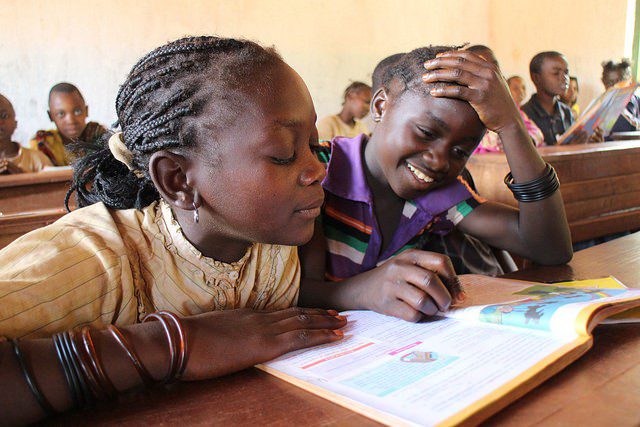
In 2016, militiamen in the Central African Republic began setting up base at schools and preventing students from attending classes. In September, the U.N. responded by ordering the militia groups to vacate the schools, threatening to send in forces if they didn’t comply. The U.N.’s goal was to enable children to resume their education in the Central African Republic.

The Central African Republic, a land-locked nation of 5 million people, was thrown into a brutal civil war when its government was forced out in 2013 by Muslim Seleka rebels. According to the national post, the civil war has led to the country being ranked 187 out of 188 countries on the human development index.

According to the U.N., 10,000 children in the Central African Republic were kept from school due to the presence of militiamen. About a third of all schools in the country were either set on fire, shot by bullets, pillaged or occupied by armed groups. As a result, approximately 400 primary schools were shut down.

The U.N. took a firm stand against the militia and issued a statement known as “Minusca,” which mandated that no armed forces go within 1,650 feet of schools and warned against further interference in education in the Central African Republic.

UNICEF also denounced the militia groups’ behavior. UNICEF’s Chief of Communications in the Central African Republic, Donaig Le Du, issued a firm statement that despite the conflict and civil war occurring, education in the Central African Republic should be spared. School is not politically affiliated or party to the conflict, she said, and children should not be prevented from attending.

Despite disruption in areas near Bangui, the capital of the Central African Republic, children across the country returned back to school to resume their educations at the end of September as a result of the U.N.’s warning.

The U.N. recently reported that since the civil war broke out in the Central African Republic, “considerable progress” has been made. Ten thousand U.N. troops and 1,700 police are keeping peace as well between armed groups, and an additional 12,000 peacekeepers are stationed in the country. Although the state of the nation remains fragile, it is in a better place overall than it was in 2013.

– Alex Fidler

December 1, 2016
https://borgenproject.org/wp-content/uploads/borgen-project-logo.svg 0 0 Borgen Project https://borgenproject.org/wp-content/uploads/borgen-project-logo.svg Borgen Project2016-12-01 01:30:312024-12-13 17:55:59UN Protects Education in the Central African Republic
Global Poverty

Argentina’s Poverty Status After Three-Year Gap

Argentina's Poverty Status
In 2013, Argentina’s President Cristina Fernández de Kirchner came under intense scrutiny when she announced that the country’s poverty rate was 4.7%. However, a recent report by the Instituto Nacional de Estadística y Censos (INDEC) closed the three-year gap revealing that close to a third of the population is living below the poverty line.

Argentina’s Poverty Status Based on Statistics

With a vibrant Spanish culture and colossal landscape, Argentina’s population sits just shy of 44 million. However, this nation is faced with severe poverty rates and economic inflation. During the reveal of the 2016 second quarter statistics; 32.2% of the population is currently experiencing household poverty at 23.1%, 4.8% below the household poverty line. Unemployment within the population also remains a threat with the open unemployment rate reaching 9.3% meanwhile the underemployment rate was 11.2%.

Homelessness a Possible Threat

With the population being plagued with Argentina’s poverty status, homelessness becomes a threat to the nation’s indigent. The total urban population of Argentina is 27.2 million and consists of 8.7 million households. Statistics of the second quarter reveal that 2 million households, including 8.7 million people are below the poverty line. Within the group, 45,000 households are living in poverty inclusive of 1.7 million homeless individuals.

Reaching Zero Poverty

There will be difficulty in reaching President Mauricio Macri’s zero poverty goal. The inflation rate in Argentina has risen to 40.5% since April 2016 following the three-year non-disclosure. The government intends to transfer the control of economic factors to the private sector from the public sector. Policies are aiming for a laissez-faire approach that allows for transactions between private parties devoid of government intervention.

One Forbes magazine contributor presents President Macri’s revelation of Argentina’s poverty statistics as heroic and the basis for the return of neoliberalism. “What we are starting to have in Argentina are real statistics. What we had until a few months ago was a fiction with no reality. It was a manipulation,” said Macri.

Progress in Process

Ban Ki-moon, the U.N. secretary-general, commended the Argentine Government Council for their support in international affairs and their commitment to sustainable development. The country has made great strides in tackling gender inequality as well as maintaining its commitment to the Paris Agreement.

President Macri acknowledges the present conditions of the country and moves in hopes that he would be appraised on his efforts to reduce the current figures. “This is our reality and I want to be evaluated on whether or not I was able to reduce poverty from now on,” said Macri.

– Shanique Wright

Photo: Flickr

November 13, 2016
https://borgenproject.org/wp-content/uploads/borgen-project-logo.svg 0 0 Borgen Project https://borgenproject.org/wp-content/uploads/borgen-project-logo.svg Borgen Project2016-11-13 01:30:042024-12-13 17:55:57Argentina’s Poverty Status After Three-Year Gap
Global Poverty, Water

Jordan Examines Plan to Increase its Water Supply

Jordan Examines Plan to Increase its Water Supply
According to a recent report in Petra, the news agency of Jordan, a considerably large incursion of Syrian refugees has intensified Jordan’s already distressed water supply.

During a panel discussion between the U.N. and the World Bank on developing and managing water resources and improving water and sanitation related services, the Jordanian minister of Planning and International Cooperation, Imad Fakhoury, said the Kingdom’s demand for water has risen 25 percent in the last five years. He further stated that due to the massive influx of Syrian refugees, the country now hosts more than 1.3 million or 19 percent of the population.

Fakhoury also stated that water is a significant and unrelenting concern for Jordan because of the country’s critical water shortage. In terms of water supply, Jordan is considered one of the world’s most vulnerable. The World Health Organization (WHO), has asserted that water scarcity in Jordan will grow more daunting in the next two decades as its population of 6 million doubles and the effects of climate change produce increased precipitation uncertainty.

Currently, Jordan has one of the lowest concentrations of available water supply per capita. The minister emphasized the importance of “partnership between governments, the private sector, civil society, institutions and the U.N.” as pivotal to establishing a sustainable water and sanitation policies.

EcoMena, a consulting and environmental awareness raising organization, has said the Jordanian government seeks to begin a water supply management program that would impose regulation on water extracted from groundwater aquifers. Lack of rigorous legislation has led to illegal well-drilling and irresponsible use of water and untenable water extraction from aquifers. The natural water replacement procedure is being thwarted due to the aquifers being used at twice the allowable recharge rate.

The government is also discussing plans to renew old and rusted water pipes allocated to private homes. According to EcoMena, water leaks in the U.S. alone account for 1 trillion gallons of water wastage each year. Wastewater treatment plants that allow for the use of wastewater are also an important element in the government’s supply management program as it allows for supporting water supplies in addition to reducing dependence on natural water supplies which will give aquifers adequate time to recharge.

Fakhoury emphasized the importance of the international community’s support to assist Jordan with any financial variance brought on by the large inflow of Syrian refugees.

– Heidi Grossman

Photo: Flickr

November 12, 2016
https://borgenproject.org/wp-content/uploads/borgen-project-logo.svg 0 0 Borgen Project https://borgenproject.org/wp-content/uploads/borgen-project-logo.svg Borgen Project2016-11-12 01:30:002024-05-27 23:53:49Jordan Examines Plan to Increase its Water Supply
Global Poverty, Sustainable Development Goals, United Nations

Power to The People: Reaching Sustainable Development Goals

Power to The People: Reaching Sustainable Development GoalsSustainable development goals, also known as Transforming Our World: the 2030 Agenda for Sustainable Development, is comprised of 17 global goals that elucidates 169 targets. The goals were founded by the U.N., and are listed as follows:

  1. End global poverty
  2. Achieve food security, thereby ending world hunger
  3. Ensure healthcare for everyone
  4. Make education accessible to all
  5. Achieve gender equality
  6. Ensure availability to sanitary water for all
  7. Provide jobs and sustainable economic growth
  8. Build resilient infrastructure and foster innovation
  9. Make cities and other dense human settlements inclusive and safe
  10. Ensure sustainable consumption and production patterns
  11. Take urgent action to combat climate change by regulating emissions
  12. Conserve and use marine resources sustainably
  13. Switch to affordable and clean energy
  14. Reduce income inequalities
  15. Protect and conserve the biodiversity of terrestrial ecosystems
  16. Provide access to justice for all
  17. Strengthen global partnership

While it is important for the global community to focus on the macro-cosmic picture of tackling these issues, having local governments and citizens face these issues is equally vital. Beneficiaries are often the last group to be consulted about the efforts that are being implemented to help their lives. Problem solving that addresses the specific needs of different communities is so beneficial because it does not focus on one overarching idea, but rather the specific needs of the people within the community.

With the global community and local communities working simultaneously, there is a greater chance for more widespread empathetic progress being made in terms of achieving sustainable development goals worldwide. One of the largest problems is that those who have political power are not impoverished and those who are impoverished do not have political power.

Thus, poverty is often overlooked by those in seats of power. This starts with education. If education is made available to those people who are impoverished, then they are being given an effective say in their communities, and therefore some degree of power.

Eradication of global poverty will not happen unless we are able to give power over to the people who are impoverished and thereby have a more nuanced understanding of the situations that they themselves face. This empowers people in lower income communities to receive an education, making it possible for them to impart the change they want to see in their communities.

However, this is still a tandem effort. By supporting the Education for All Act, a bipartisan initiative that would advance basic education worldwide while protecting U.S. security interests, even those who are citizens of developed nations can help to empower individuals to reach sustainable development goals in developing nations to help themselves and their communities.

– Kayla Provencher

Photo: Flickr

November 10, 2016
https://borgenproject.org/wp-content/uploads/borgen-project-logo.svg 0 0 Borgen Project https://borgenproject.org/wp-content/uploads/borgen-project-logo.svg Borgen Project2016-11-10 07:53:112024-12-13 17:55:58Power to The People: Reaching Sustainable Development Goals
Global Poverty, United Nations

António Guterres Named U.N. Secretary-General

António Guterres, Former Head of UNHCR, Named New U.N. Secretary General
In early October, the 15 ambassadors that make up the U.N.’s Security Council were presented with the challenging decision of choosing a new secretary-general. The vote was characterized as the most important decision from the U.N. this year. In the end, António Guterres, the former socialist prime minister of Portugal, was nominated as the new U.N. secretary-general.

Guterres was favored for the position for many months leading up to the actual vote. He accepted the nomination from Lisbon after the Council’s decision and did so with “gratitude and humility.”

He will replace current Secretary-General Ban Ki-moon in January. Historically, the Security Council has been polarized in their decision-making, so the consensual conclusion to choose Guterres was met with his resounding agreement. Guterres described the decision as an “exemplary process of transparency and openness.”

The decision to choose António Guterres ignored the Council’s traditions of rotating the presidency based on region. The only region that hasn’t held the presidency is Eastern Europe, which is one reason why Danilo Turk, a former Slovenian president, and Irina Bokova, a Bulgarian director-general of the United Nations Educational, Scientific and Cultural Organization (UNESCO), finished closely behind Guterres in the vote.

The Council also ignored external pressures to elect a woman secretary-general, despite seven of the 13 candidates begin female. Well aware of this, Guterres has pledged to exercise gender equity as he moves forward with his new position.

After acting as the prime minister of Portugal from 1995 to 2002, Guterres was elected to serve as the head of the U.N.’s High Commission for Refugees. While serving in this position, Guterres repeatedly called for humanitarian action from countries with appropriate resources.

In particular, after U.N. agencies failed to meet funding goals that would provide humanitarian aid for displaced peoples in Jordan, Lebanon and Turkey, Guterres called for financial commitment from Western countries.

His experience leading a major U.N. institution was looked at as a huge strength in the voting process. He has promised to demonstrate “the humility that is needed to serve especially those that are most vulnerable.”

Guterres will have to face many difficult challenges as he moves forward with his new position of leadership, like maintaining and negotiating support from Russia and the U.S. and facing the impacts of the global refugee crisis.

Despite these inevitable challenges, the ambassadors of the Security Council are confident that Guterres will be able to act justly and level-headedly as the new U.N. secretary-general.

– Peyton Jacobsen

Photo: Flickr

November 10, 2016
https://borgenproject.org/wp-content/uploads/borgen-project-logo.svg 0 0 Borgen Project https://borgenproject.org/wp-content/uploads/borgen-project-logo.svg Borgen Project2016-11-10 05:29:282024-12-13 17:55:59António Guterres Named U.N. Secretary-General
Page 27 of 44«‹2526272829›»

Get Smarter

  • Global Poverty 101
  • Global Poverty… The Good News
  • Global Poverty & U.S. Jobs
  • Global Poverty and National Security
  • Innovative Solutions to Poverty
  • Global Poverty & Aid FAQ’s
Search Search

Take Action

  • Call Congress
  • Email Congress
  • Donate
  • 30 Ways to Help
  • Volunteer Ops
  • Internships
  • Courses & Certificates
  • The Podcast
Borgen Project

“The Borgen Project is an incredible nonprofit organization that is addressing poverty and hunger and working towards ending them.”

-The Huffington Post

Inside The Borgen Project

  • Contact
  • About
  • Financials
  • President
  • Board of Directors
  • Board of Advisors

International Links

  • UK Email Parliament
  • UK Donate
  • Canada Email Parliament

Get Smarter

  • Global Poverty 101
  • Global Poverty… The Good News
  • Global Poverty & U.S. Jobs
  • Global Poverty and National Security
  • Innovative Solutions to Poverty
  • Global Poverty & Aid FAQ’s

Ways to Help

  • Call Congress
  • Email Congress
  • Donate
  • 30 Ways to Help
  • Volunteer Ops
  • Internships
  • Courses & Certificates
  • The Podcast
Scroll to top Scroll to top Scroll to top