• Link to X
  • Link to Facebook
  • Link to Instagram
  • Link to TikTok
  • Link to Youtube
  • About
    • About Us
      • President
      • Board of Directors
      • Board of Advisors
      • Financials
      • Our Methodology
      • Success Tracker
      • Contact
  • Act Now
    • 30 Ways to Help
      • Email Congress
      • Call Congress
      • Volunteer
      • Courses & Certificates
      • Be a Donor
    • Internships
      • In-Office Internships
      • Remote Internships
    • Legislation
      • Politics 101
  • The Blog
  • The Podcast
  • Magazine
  • Donate
  • Click to open the search input field Click to open the search input field Search
  • Menu Menu

Tag Archive for: United Nations

Posts

Charity, Global Poverty, Technology

3 Charity Apps You Should Know About

Charity appsIn addition to advocacy and mobilizing governments to make a difference, donating to charities can have a major impact in the fight against global poverty and hunger. Here are three charity apps that are making a difference on a global scale:

  1. Share The Meal: Share The Meal is the world’s first charity app against global hunger. By donating only 50 cents you can feed one child in hunger for an entire day. Since its founding in 2014, Share The Meal has donated more than 7 million meals to children suffering from hunger. Share The Meal funds are distributed by the United Nations World Food Programme (WFP), the world’s largest humanitarian agency fighting hunger. Currently, Share The Meal funds are being used to feed Syrian refugee children in Lebanon’s Bekaa Valley where 40 percent of the 360,000 Syrian refugees living in the Bekaa Valley are under the age of 12, according to data compiled by the UNHCR.
  2. Donate A Photo: Taking a picture can do more than just capture a moment, it can help people across the world. For every photo you share through the Donate a Photo charity app, Johnson & Johnson donates $1 to a cause of your choice. So far, over 1.3 million photos have been donated through the app. Causes vary from helping a newborn in Ethiopia survive through UNICEF, to giving a girl in Guatemala school supplies via Girl Up. Sharing photos not only helps to raise money but also spreads awareness. Sharing one photo per day is equivalent to donating $365 in a year.
  3. Charity Miles: Charity Miles allows you to raise money for every mile that you walk, run, or bike. The app uses your phone’s GPS and accelerometer to calculate the distance you traveled. Walkers and runners earn up to 25 cents per mile and bikers earn up to 10 cents per mile, according to Charity Miles’ Terms of Service. There are more than 30 different charities to earn donations on behalf, including The World Food Programme, Pencils of Promise, Girl Up and Every Mother Counts. Charity Miles’ goal is to raise $1 billion for charities by the end of 2016.

If you are looking for ways to donate funds, in addition to empowering others and spreading the word on poverty reduction, these three charity apps put the opportunity to make an impact directly at your fingertips.

– Kristyn Rohrer

Photo: Pixabay

July 22, 2016
https://borgenproject.org/wp-content/uploads/borgen-project-logo.svg 0 0 Borgen Project https://borgenproject.org/wp-content/uploads/borgen-project-logo.svg Borgen Project2016-07-22 01:30:222024-12-13 17:54:543 Charity Apps You Should Know About
Food Security, Global Poverty

Olam International Pledges to Help End Global Poverty

Poverty_Agriculture Olam International
Agri-business firm Olam International has pledged to help eradicate global poverty and mitigate climate change impacts that threaten food security.

Olam International is a world-leading firm operating in 70 countries, supplying food and raw materials to over 16,200 customers worldwide. Its business model is based on ensuring that profitable growth is achieved in an ethical, socially responsible and environmentally sustainable way.

The agri-business knows its responsibility to the earth, as changing weather patterns are affecting crops and communities. The organization realizes that climate change will threaten food security by creating less than ideal conditions for optimal food production, thus threatening the world’s chances to end global poverty.

According to Olam, “Ensuring we and our 4 million farmer suppliers, the vast majority of whom are smallholders in emerging markets, are implementing mitigation and adaptation measures to achieve the 2°C goal is therefore integral to our strategy.” In addition, the company has adopted four of the 17 Sustainable Development Goals set out by the United Nations.

“Based on our configuration of assets and our capabilities across the 70 countries that we operate in, we have chosen four of the SDG Goals where we believe we can create a real impact,” said Sunny Verghese, the chief executive of Olam, at the U.N.’s High Level Thematic Debate on Achieving the Sustainable Development Goals.

Olam is prioritizing mitigating climate change through multiple goals: reducing GHG emissions from their farming and processing operations, adapting their own farming operations to build in climate resilience, encouraging farmer suppliers and logistics providers to improve their GHG emissions intensity and collaborating at a sector level to speed up implementation of climate-smart practices.

Olam will accomplish these goals through public, private and plural society partnership. Verghese said at the debate that a U.N.-to-private-sector partnership is key to successfully implementing the SDGs.

Verghese went on to say, “If after all of this hard work and overwhelming effort, if we are not going to be leaving a better place for our children, what is the point of it all?”

– Kerri Whelan

Photo: Flickr

June 28, 2016
https://borgenproject.org/wp-content/uploads/borgen-project-logo.svg 0 0 Borgen Project https://borgenproject.org/wp-content/uploads/borgen-project-logo.svg Borgen Project2016-06-28 01:30:482024-12-13 17:54:24Olam International Pledges to Help End Global Poverty
Children

UN, ILO Push for Enforcement of Child Labor Laws

Child Labor Laws
On World Day, June 12, the U.N. announced a renewed focus on child labor laws and supply chains. With so many children working, the U.N. says that all supply chains potentially use child labor.

Child labor encompasses “work that deprives children of their childhood, their potential and their dignity, and that is harmful to their physical and mental development.”

The International Labor Organization (ILO) and the U.N. have declared that nations must pass legislation in order to make lasting change. National governments need to adopt and enforce legislation that defines child labor and protects children against it.

Don’t child labor laws already exist?

Yes: ILO Convention No.182 helps to define the worst forms of child labor and makes a long term goal of the effective elimination of the issue. Also, Convention No. 138 sets the legal age at which a child may begin working.

For most member states of the U.N., the basic minimum age of labor is 15, with the possible exception of 14-year-olds in developing nations. The ILO stresses that no person under the age of 18 should be doing hazardous labor.

Considering that Convention No. 138 was written in 1973 and No. 182 in 1999, the goal of ending child labor is by no means a new one.

While conditions have improved since the inception of these conventions, 215 million children still take part in child labor today. Their employers often force them to work in the drug or sex trafficking industries. Some of these children are even forced to tote a gun and kill others.

Because child laborers number in the hundreds of millions, eradication may seem impossible. Fortunately, however, the numbers are dropping.

As more nations adopt the ILO’s conventions on child labor, the problem continues to diminish. In 2000, only 93 countries had ratified Convention No. 138 and  established a minimum age for child labor.

That same year, some 16 percent of children aged 5-17 were exposed to child labor worldwide. The most recent statistics from 2014 show that the number has dropped to 13.9 percent.

As the number of countries that have ratified Convention No. 138 jumps to 169, these small improvements will continue to grow in power and significance.

The real improvement comes with the ratification of Convention No. 182. Since 1999, hazardous child labor has dropped from an estimated 171 million children in 2000 to 85 million today. In addition, 180 countries have ratified this convention.

Ratification of these child labor laws and conventions has been effective in diminishing the problem, but it has not been enough to eradicate child labor.

In order to enforce child labor laws, governments must raise awareness of the problem. In addition, they must enact laws that enforce minimum working age and acceptable working conditions for children.

With World Day’s focus on child labor and its ensuing push for enforcement of ILO Conventions 182 and 138, world leaders will work to decrease the number of child laborers over the coming years.

-Aaron Parr

Photo: Pixabay

June 15, 2016
https://borgenproject.org/wp-content/uploads/borgen-project-logo.svg 0 0 Borgen Project https://borgenproject.org/wp-content/uploads/borgen-project-logo.svg Borgen Project2016-06-15 01:30:042020-06-18 13:58:57UN, ILO Push for Enforcement of Child Labor Laws
Economy, Education, Foreign Aid, Global Poverty

Five Ways the Marshall Islands Government is Staying Afloat

Marshall Islands

The Marshall Islands are two strings of atolls located in the North Pacific between Australia and the Hawaiian Islands. Their main exports are marine goods, coconut products, and handicrafts. Marshallese climate can be unpredictable, with climate change directly impacting the islands. In addition, securing sufficient sources for fresh water is a constant struggle. Because of these issues, many inhabitants of the islands live in poor circumstances, with bad health and little access to energy sources.

Since their year of independence in 1986, the Marshall Islands Government has been engaged in an uphill battle of physical, economic and environmental survival. Fortunately, there are a number of international lifeguards who are helping to keep the Marshallese government afloat.

The United States (U.S.)
One problem the Marshall Islands Government does not have to worry about is military security. Though it is a sovereign state, its military protection is provided by the U.S. But security is not the only service that the United States provides to the islands. The U.S. affords educational, medical and infrastructural aid, and donates funds in an effort to help the islands eventually attain economic self-sufficiency.

Roughly 50 percent of the revenue that the government obtains is gathered from foreign aid, and a large portion of this comes from U.S. coffers due to an agreement entitled the “Compact of Free Associations” which exists between the two nations.

Federal Emergency Management Agency (FEMA)
Though it is an entity within the structure of the United States government, FEMA merits particular mention. Operating under the supervision of the Department of Homeland Security, FEMA’s standard focus is the prevention, response and recovery from disasters that occur within U.S. borders. However, due to the Compact of Free Associations, the agency is also obliged to assist the Marshall Islands when disasters arise.

Just this year, the Marshall Islands have been experiencing one of the worst droughts in their nation’s history, collecting only a quarter of the rainfall that they typically obtain. On April 1st, Marshallese President Hilda Heine declared a state of emergency, and on April 28th FEMA announced that it has allotted federal disaster assistance to the Marshall Islands Government. Millions have been spent in past years on similar disasters.

Australia
The Marshall Island’s southern neighbor, Australia, is dedicated to supporting the islands in the economic and climatic issues. Between the Marshall Islands and two other North Pacific states, the Australian Government has pledged almost $10 million within the next fiscal year.

Australia’s goal is to increase access to water, sanitary facilities, and education. Additionally, Australia is helping to introduce a new public school system and spreading gender equality awareness throughout the islands. Many of these objectives have been reached through the sponsored delivery of water containers and the establishment of better education and scholarships to continue on to higher schooling.

The United Nations (U.N.)
The Marshall Islands and other low-lying countries are particularly susceptible an increase in global temperature.  It is projected that low-lying countries like the Marshal Islands will be submerged, or at least uninhabitable, if the global temperature rises just 2 degrees Celcius above pre-industrial levels.

In response to this dilemma, the U.N. has held multiple conferences over the last months in an effort to promote awareness and compliance to goals regarding carbon emissions. Just last month 175 countries were gathered in Paris to sign an agreement on the reduction of fossil fuel usage. The U.N. noted that this conference marked the largest number of countries to sign an international agreement at one time in the history of the world.

The Japan International Cooperation Agency (JICA)
A less recognized, but equally engaged organization is the Japan International Cooperation Agency. JICA focuses on what they call “inclusive development,” which emphasizes individual initiative in evaluating one’s own situation to improve it. JICA simply provides the resources necessary to carry out these improvements.

For the Marshall Islands, JICA is carrying out programs to improve waste control and worldwide education programs. JICA has been training volunteers to travel world-wide in an effort to address these issues, and in 2015 alone almost 3,500 volunteers traveled to the pacific to assist in humanitarian aid projects.

Despite the aid that these organizations are providing to the Marshall Islands, many inhabitants of the country live without the basic necessities of life. Further efforts are needed bring these individuals out of poverty. According to the World Bank, development must begin within the Marshall Islands Government. They commented, “The growth in the economy would be strengthened and sustained by the government’s commitment to reform.” The rest of us simply need to do our part.

– Preston Rust

Photo: Flickr

June 14, 2016
https://borgenproject.org/wp-content/uploads/borgen-project-logo.svg 0 0 Borgen Project https://borgenproject.org/wp-content/uploads/borgen-project-logo.svg Borgen Project2016-06-14 01:30:552024-06-11 02:48:19Five Ways the Marshall Islands Government is Staying Afloat
Sustainable Development Goals, United Nations, Women

2016 Women Deliver Conference: Advocating for Health

Women_Education

The 4th annual Women Deliver Conference, the largest conference in the world discussing women’s rights and issues, was held on May 16-19 in Copenhagen, Denmark.

Women Deliver is an organization that advocates for women’s and girls’ health and well-being. The organization holds conferences and focuses on building partnerships, gaining new allies, and developing and sharing advocacy tools to help others participate in the cause.

Building on the success three previous Women Deliver Conferences, the Conference focuses this year on the Sustainable Development Goals (SDGs) laid out by the United Nations. Specifically, the focus will be on women’s health issues and women’s and girls’ education and economic empowerment.

5,700 policymakers, researchers and advocates participated in what is being called the largest convention to discuss female rights in a decade. People from 2,000 organizations and 169 countries all convened in an effort to bring women and girls to the forefront of the SDGs. Among the participants were journalists, young people and representatives from both the private sector and UN agencies.

This is an important time to bring attention to the SDGs and make progress towards those goals.

In a blog for the Council on Foreign Relations, Dr. Daniela Ligiero, Vice President of the Girls and Women Strategy at the United Nations Foundation, explains why now is such an important time to take a real look at female rights.

One of these reasons is that it is important to revitalize the community’s energy in addressing women’s rights. As Dr. Ligiero points out in her blog, the biggest threat to the SDGs is the loss of momentum driving the impetus to find real strategies and solutions for approaching the very real problem of gender inequality around the world.

Additionally, the discussion of women’s rights cannot be limited to Goal 5 of the SDGs, which pertains to gender equality alone. Other goals of the SDGs that focus on education and on health issues must be included in the big picture in order to make real advances for women and girls as a whole.

The Conference provides scholarships for participants to travel to the event and has inspired a lot of participation, with over 5,000 applicants.

The biggest hope for the Women Deliver conference is to take the ambitious goals set forth for improving women’s and girls’ rights and create concrete strategies for accomplishing them.

– Katherine Hamblen

Photo: Flickr

June 11, 2016
https://borgenproject.org/wp-content/uploads/borgen-project-logo.svg 0 0 Borgen Project https://borgenproject.org/wp-content/uploads/borgen-project-logo.svg Borgen Project2016-06-11 01:30:082024-12-13 17:54:302016 Women Deliver Conference: Advocating for Health
Extreme Poverty, Global Poverty

How Extreme Poverty Decreased 80 Percent Since 1980

Poverty_foodIn a recent TED talk, Arthur Brooks, president of the conservative think tank, the American Enterprise Institute, discussed the need for ideology to be put aside when assisting those in destitution.

Originally from Seattle, Brooks dropped out of college early in his life to become a professional French horn player. His curiosity about a 1970’s National Geographic cover led him to research the fight against poverty.

He found that “there’s been an 80 percent decline in the world’s worst poverty,” which can be defined as those living on less than a $1.25 a day. Brooks attributes the improvement of 2 billion lives to the economic power provided by the capitalist system, a “policy” that both conservatives and liberals can get behind.

In his presentation, he highlighted five main reasons why capitalism provides the best environment for growth and prosperity: globalization, free trade, property rights, rule of law and entrepreneurship. All of these aspects of a free market emphasize economic freedom in the lives of the people who live under it.

“Capitalism is not just about accumulation,” he said during his talk. “At its best, it’s about aspiration.” Most important of all, economic freedom is something that both parties can get behind and support. It was, after all, President Obama who uttered the conservative’s favorite quote: “Free markets have created more wealth than any system in history. They have lifted billions out of poverty.”

While studies have shown that liberals and conservatives focus on different political topics, their affinity for free markets should still unite them against poverty and for freedom. Psychologists have identified a phenomenon called “political motive asymmetry” where individuals think their ideology is motivated by love and the opposite is motivated by hate.

Evidence provided by a U.N. study and a Fraser Institute study indicates that poverty decreases when economic freedom increases. More specifically, the U.N. report highlighted a 25 percent decrease in the number of people in extreme poverty between 1981 and 2005. At the same time, the Fraser Institute reported a 29 percent increase in economic freedom from 1980 to 2013.

Brooks continued his speech by challenging both liberals and conservatives to embrace arguments that they might typically be opposed to hearing. “I’m asking you and I’m asking me to be the person specifically who blurs the lines, who is ambiguous, who is hard to classify,” he says. Ending the divisiveness of the party system is only possible with divergent ideological thinking.

The current political environment in the U.S. can often limit the government’s ability to fight global poverty. Bipartisanship means compromise. In order to assist millions of those in extreme poverty, the mobilization of relief must come from both sides with productive dialogue and a collaborative attitude.

– Jacob Hess

Photo: Flickr

May 3, 2016
https://borgenproject.org/wp-content/uploads/borgen-project-logo.svg 0 0 Borgen Project https://borgenproject.org/wp-content/uploads/borgen-project-logo.svg Borgen Project2016-05-03 01:30:292024-12-13 17:54:19How Extreme Poverty Decreased 80 Percent Since 1980
Global Poverty

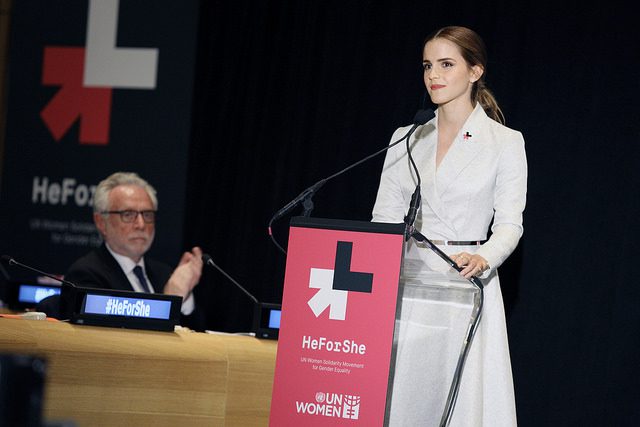
Emma Watson: HeForShe and Gender Equality

Emma Watson
On March 8, 2016, Emma Watson turned the Empire State Building pink in honor of International Women’s Day. As a U.N. Women Global Goodwill Ambassador, Watson helped launch the HeForShe solidarity movement for gender equality in 2014 and continues to keep the issue at the forefront of international politics.

In fact, Watson admitted in a February 2016 interview with feminist author bell hooks that she was taking a year off from acting to focus solely on her work with U.N. Women and the HeForShe movement.

The HeForShe movement affirms that gender equality is not just a women’s issue but an issue that affects all people. HeForShe recognizes men and boys as partners for women’s rights and provides a platform from which they can become agents of change towards the achievement of gender equality.

While some progress towards gender equality has been made over the last decade, major disparities still exist. The World Economic Forum’s 2015 Global Gender Gap Report revealed that the global average annual earnings for women in 2015 just reached the average annual amount men were earning ten years go.

The Forum states that achieving equal pay will take 118 years if economic progress continues at its current pace.

Emma Watson has spoken around the globe on the issue of gender equality in order to involve hundreds-of-thousands of men in the movement.

In the first quarter of 2016 alone, she’s started an online feminist book club, organized HeForShe arts week in New York City, unveiled a new HeForShe website and released a 26-page report in Esquire Magazine on why gender equality is an issue that involves all of us. So far, HeForShe has been the subject of more than 2 billion conversations on social media.

One of the most notable initiatives of the movement Watson helped organize is IMPACT 10x10x10. IMPACT engages governments, corporations, and universities and has them make concrete commitments to gender equality. The three IMPACT groups are made up of ten heads of states, ten corporate executives, and ten university leaders.

The participating IMPACT Champions, all male, include the Prime Minister of Japan, the President of Rwanda, the CEO of Tupperware Brands, the COO of Twitter, and the President of the University of Sao Paulo Brazil.

These individuals are committed to making gender equality an institutional priority and then sharing what they learn with other organizations so that their changes can be replicated.

Watson and the ten IMPACT corporate executives recently met at the 2016 UN World Economic Forum in Davos to unveil their Corporate Gender Parity Report. The report revealed that within the ten corporations, 71% of board members were male, 73% of senior leadership positions were male and 60% of the overall global workforce were male.

The report also revealed the impact commitments the corporations plan on implementing to achieve gender parity. They include:

  • Embedding gender equality in company policies through programs like mandatory bias training and male-focused gender curricula to educate and empower men as gender equality advocates;
  • Increasing the percentage of women in senior leadership positions through mentoring opportunities;
  • Creating thousands of HeForShe male champions within each company;
  • Reaching complete gender parity in undergraduate intake programs to build the pipeline of future female leaders;
  • During the presentation of the report, Watson stated that full female participation in the workforce would bring a $28 trillion boost to the global economy.

In a recent interview at the inaugural HeForShe arts week, Watson was asked what’s next for gender equality and she stated, “we really want to crowdsource as many different strategies from all over the world so that we can try and build a really comprehensive guide to how we can make a tangible difference and make it happen.”

HeForShe is off to an impressive start in 2016 and continues to power towards its goal of gender equality by 2030.

– Brian Zepka

Sources: HeForShe 1, HeForShe 2, HeForShe 3, Paper Mag, World Economic Forum, HeForShe Impact 10x10x10 2015 Corporate Parity Report, HeForShe YouTube Channel
Photo: Flickr


April 3, 2016
https://borgenproject.org/wp-content/uploads/borgen-project-logo.svg 0 0 Borgen Project https://borgenproject.org/wp-content/uploads/borgen-project-logo.svg Borgen Project2016-04-03 01:30:482024-12-13 18:05:57Emma Watson: HeForShe and Gender Equality
Development, Education, Global Poverty

Education in Namibia and Its Role in Development

Education in Namibia
The United Nations recently presented its Human Development Report in Windhoek, Namibia. The Report included the U.N.’s Human Development Index (HDI) which not only measures a nation’s economic well-being but also that of its citizens. Many find the HDI useful because it takes into account the citizenry’s quality of life.

The Report provided sobering news for the host nation when it was revealed its HDI rank was 126 out of 188. Despite its status as an upper middle-income nation, Namibia ranks fairly low on quality of life metric.

The HDI shows that a rising gross domestic product cannot cover up the citizen’s poor standard of living. The HDI points out that there is wealth inequality, poverty, poor healthcare and educational underperformance in Namibia.

Babatunde Omilola, the United Nations Development Programme’s chief of development planning in New York offered his opinion on solutions to these issues. In particular, Omilola noted that Namibia “could do better if it invests more in education.”

For example, Namibia invests billions of dollars in its education, yet only 30 percent of 12th graders in 2013 met the requirements for college admissions. With statistics showing that college graduates earn more throughout their lifetime, Namibia’s lack of collegiate students translates to unrealized potential.

By improving education in Namibia, it is likely that its citizens will benefit from increased opportunities and a higher HDI as the country tries to overcome a staggering poverty rate of 30 percent.

Omilola also noted that education “allows people to enhance their capabilities by providing them with acquired skills and knowledge.”

He then concludes this by saying Namibia’s “Education and skills need to be boosted.”

With a greater focus on education in Namibia, it is hoped that the country will produce more college graduates that have 21st century skills. These graduates will be able to fill the nation’s skills gap, and take advantage of the nation’s abundant resources.

– Andrew Wildes

Sources: Capacity4dev, World Bank, UNDP, Namibian 1, Namibian 2, Namibian Sun, WHO
Photo: UNDP

January 30, 2016
https://borgenproject.org/wp-content/uploads/borgen-project-logo.svg 0 0 Borgen Project https://borgenproject.org/wp-content/uploads/borgen-project-logo.svg Borgen Project2016-01-30 01:30:052024-06-07 05:07:35Education in Namibia and Its Role in Development
Global Poverty, Hunger, Women and Female Empowerment

Female Farmers: The Key to End World Hunger?

Female_FarmersMore women are involved in farming than with any other occupation. In developing countries, female farmers perform almost half of all agricultural labor and account for an estimated two-thirds of the world’s 600 million impoverished livestock keepers. However, women in many of the poorest regions of the world are denied equal rights to access, use, inheritance and control of the land they rely on to survive.

With unequal access to tools, training and land, female-run farms produce between 14 to 30 percent lower yields, according to a 2014 study by the World Bank.

The same report determined that if female farmers were treated equally in agriculture across Africa farm yields would increase by up to 30 percent.

According to the Food and Agriculture Organization of the United Nations, a percentage increase of that magnitude could feed an additional 150 million people every day, thereby reducing the number of undernourished people in the world by 12 to 17 percent.

Landesa is a rural development institute aimed at reforming laws and policy tools to help alleviate poverty, reduce hunger and ease land conflict. Their research illustrates the effects created when women are economically and socially empowered through secure legal rights to land.

According to Landesa, when women are given land rights they:

  • grow more on their land and their children are 33 percent less likely to be malnourished
  • are 8 times less likely to be victims of domestic violence
  • earn up to 4 times as much in income
  • are more likely to direct their wealth towards their children’s needs than men

U.N. Women, a United Nations entity for gender equality and female empowerment, describes gender equality and women’s rights as cross-cutting throughout the 2030 Agenda, with its 17 Sustainable Development Goals (SDGs).

The SDGs are fundamentally linked to the lives of women and girls globally, especially those of rural women. This is particularly true for the goal to universally end poverty in all its forms, the goal to end hunger, achieve food security and improved nutrition, promote sustainable agriculture as well as the goal to achieve gender equality and women’s empowerment.

U.N. Women describe rural women as key agents for achieving the economic, environmental and social changes required for sustainable development. Limited access to credit, health care and education are among the many challenges faced by women.

Land ownership and other means of women’s empowerment are crucial not only to the well-being of individuals, families and rural communities but also economic productivity, given women’s presence in the agricultural field.

– Kara Buckley

Sources: FAO, Landesa, Rockefeller Foundation, Take Part, UN Women
Photo: Google Images

January 5, 2016
https://borgenproject.org/wp-content/uploads/borgen-project-logo.svg 0 0 Borgen Project https://borgenproject.org/wp-content/uploads/borgen-project-logo.svg Borgen Project2016-01-05 06:11:352024-05-27 09:28:39Female Farmers: The Key to End World Hunger?
Children, Developing Countries, Global Poverty, Health

American Academy of Pediatrics: Remember the Children

American Academy of Pediatrics Asks UN to Remember The Children
The American Academy of Pediatrics (AAP) wrote an open letter to the U.N. last month to ensure that all children be counted in the post-2015 global development agenda.

The letter, entitled “All Children Count But Not All Children Are Counted,” was addressed to the U.N. Statistical Commission and Inter-Agency Expert Group on Sustainable Development Goals (SDG) Indicators. It included two recommendations in response to the “leave no one behind” item of the post-2015 agenda:

  1. Ensure that children living outside of households and/or without parental care are represented in disaggregated data.
  2. Improve and expand data collection methodologies to ensure all children are represented.

The AAP argues that there is limited data on the number of children living in developing countries and that they should be represented in all data and estimates.

Today, many children in developing countries are born into conditions that pose many risks to their health and well-being, giving them a small chance for survival. About 29,000 children under the age of five die every day (that’s 21 each minute), mainly from preventable causes, according to UNICEF.

Lack of representation in data and estimates of hard-to-reach areas could further complicate the situations of vulnerable children as it would prevent them from getting the solutions they need.

According to the AAP, the children that are most at risk are those without parental care because of trafficking, conflict, disaster or armed group recruitment. Given the current state of international conflict and disaster, the risk of children not being counted has increased especially with the Syrian refugees.

UNICEF has also taken notice of the elevated risk and has requested $624 million to give water and school supplies for almost 500,000 children (2.6 million people total) that have been affected by the Syrian refugee crisis.

With its letter, the AAP addresses a critical issue that we are being faced with now: protecting children around the world. Children in suffering countries, who are incapable of protecting themselves, deserve our attention.

“Indeed, all children count, but not all children are counted,” AAP said.

– Ashley Tressel

Sources: AAP Publications, Lumos, UNICEF 1, UNICEF 2
Photo: Flickr

December 21, 2015
https://borgenproject.org/wp-content/uploads/borgen-project-logo.svg 0 0 Borgen Project https://borgenproject.org/wp-content/uploads/borgen-project-logo.svg Borgen Project2015-12-21 05:22:082024-12-13 18:05:29American Academy of Pediatrics: Remember the Children
Page 30 of 44«‹2829303132›»

Get Smarter

  • Global Poverty 101
  • Global Poverty… The Good News
  • Global Poverty & U.S. Jobs
  • Global Poverty and National Security
  • Innovative Solutions to Poverty
  • Global Poverty & Aid FAQ’s
Search Search

Take Action

  • Call Congress
  • Email Congress
  • Donate
  • 30 Ways to Help
  • Volunteer Ops
  • Internships
  • Courses & Certificates
  • The Podcast
Borgen Project

“The Borgen Project is an incredible nonprofit organization that is addressing poverty and hunger and working towards ending them.”

-The Huffington Post

Inside The Borgen Project

  • Contact
  • About
  • Financials
  • President
  • Board of Directors
  • Board of Advisors

International Links

  • UK Email Parliament
  • UK Donate
  • Canada Email Parliament

Get Smarter

  • Global Poverty 101
  • Global Poverty… The Good News
  • Global Poverty & U.S. Jobs
  • Global Poverty and National Security
  • Innovative Solutions to Poverty
  • Global Poverty & Aid FAQ’s

Ways to Help

  • Call Congress
  • Email Congress
  • Donate
  • 30 Ways to Help
  • Volunteer Ops
  • Internships
  • Courses & Certificates
  • The Podcast
Scroll to top Scroll to top Scroll to top