• Link to X
  • Link to Facebook
  • Link to Instagram
  • Link to TikTok
  • Link to Youtube
  • About
    • About Us
      • President
      • Board of Directors
      • Board of Advisors
      • Financials
      • Our Methodology
      • Success Tracker
      • Contact
  • Act Now
    • 30 Ways to Help
      • Email Congress
      • Call Congress
      • Volunteer
      • Courses & Certificates
      • Be a Donor
    • Internships
      • In-Office Internships
      • Remote Internships
    • Legislation
      • Politics 101
  • The Blog
  • The Podcast
  • Magazine
  • Donate
  • Click to open the search input field Click to open the search input field Search
  • Menu Menu

Tag Archive for: United Nations

Posts

Global Health, Global Poverty

Sesame Street: Improving Global Health One Muppet at a Time

Sesame Street
Sesame Street uses its influence to improve global health through its unwavering support of Youth Day and Global Goals — both of which are recognized by the United Nations — to encourage young children to act as voices of change.

Youth Day

Youth Day is celebrated on August 12, and this year’s theme is centered around the eradication of poverty and achieving sustainable consumption and production. Sustainable consumption means meeting Earth’s present and future needs by simply being aware of everyday actions that affect the planet and learning to minimize waste and pollution.

The beloved children’s show shared the following important message on Facebook: “With the help of our friends around the world, we hope children continue to be inspired and empowered to be the change they deserve!”

Iconic Sesame Street characters such as Big Bird and Elmo are pictured carrying signs that promote multiple Sustainable Development Goals like quality education, clean water, and sanitation.

Sesame Street and Sustainability

The U.N.’s list of Sustainable Development Goals comprises 17 other objectives including no poverty, zero hunger, good health and well-being. According to the U.N., these plans to transform the world can be met with the collective efforts of government authorities and regular individuals alike.

Sesame Workshop’s shows use media outlets for the greater good in more than 150 countries. Since it first aired in 1969, Sesame Street has aimed to give disadvantaged children equal opportunities through numerous educational outreach programs. Additionally, Muppet characters are created to address specific and relevant concerns.

One such character is Khokha — lead Muppet of Sesame Street coproduction Alam Simsim — is a model for girls’ education in Egypt. Another Muppet, Kami, is an HIV-positive Muppet living in South Africa. She destigmatizes HIV/AIDS by telling children that it is okay to touch someone affected by the disease.

With everyone working together, the reality of a brighter future is more than attainable. Sesame Street is drastically improving global health by getting involved and spreading the word about the need to care for the planet and its people.

– Mikaela Frigillana

Photo: Flickr

September 23, 2016
https://borgenproject.org/wp-content/uploads/borgen-project-logo.svg 0 0 Borgen Project https://borgenproject.org/wp-content/uploads/borgen-project-logo.svg Borgen Project2016-09-23 01:30:582024-05-27 23:53:11Sesame Street: Improving Global Health One Muppet at a Time
Global Poverty, Humanitarian Aid

Humanitarian Aid is Effective in Combatting ISIS

Combatting ISISISIS recruits much of its membership in the states where it operates. With the increased debate on why this is an occurrence, providing aid to refugees is effective in combatting ISIS because it decreases the chances of them joining the faction.

In an interview with the Daily Beast’s Michael Weiss, Abu Khaled, an Islamic State defector, calls his organization “a welfare state” because it pays for housing and childcare for fighters and residents alike.

Khaled is alarmingly correct. A 2015 Quantum study found that 12% of surveyed ISIS and surrounding extremist group members joined their entities because of money. The report explains that the same militants who fight for their fortunes are from Syria and Iraq.

As monetary compensation is used as a tool to convert impoverished locals into extremists, humanitarian aid is effective in combating ISIS and other extremist groups. However, the U.N.’s budget for Syrian refugees is 65% short of what is required to provide adequate assistance.

Failing to give substantial support to those who need it most explains why many turn to ISIS. Out of all the people who stayed in Syria, 10 million of them have an insufficient food supply. Joining ISIS is a choice of survival when it is the only way to accommodate hunger.

When developed countries give aid to these countries’ refugees, it reduces the need to choose jihad over starvation. The financial factor of pursuing terrorism diminishes when food is on the plates of 10 million starving Syrians.

Appealing to the poor is not a new tactic of radicalism. The ETA, a Basque nationalist group, grew its membership among lower socioeconomic backgrounds.

While poverty is not the only source of extremism, policymakers widely accept it as a valid component. Even U.S. Secretary of State John Kerry acknowledges it as “a root cause of terrorism.” Humanitarian efforts by the U.N. are stagnant, but the United States is leading the world in giving to Syrian refugees, providing $419 million in additional aid.

Despite more funding being present, America alone cannot endure success in alleviating Syria’s poverty and combatting ISIS. Foreign policy expert Helen Milner of Princeton University writes that there is “support for the hypothesis that multilateral aid is preferred to bilateral.” Most respondents also classified multilateral aid as the most effective solution.

America has more in its budget than most countries, yet there is still a disparity between the how much the U.S. donates and how much it actually could donate to the Syrian crisis.

Middle Eastern refugees are incentivized to follow the cash flow of prosperity. Western nations can fill the void before ISIS and other extremist groups beat them to it.

– Noah Levy

Photo: Flickr

September 14, 2016
https://borgenproject.org/wp-content/uploads/borgen-project-logo.svg 0 0 Borgen Project https://borgenproject.org/wp-content/uploads/borgen-project-logo.svg Borgen Project2016-09-14 01:30:092024-05-27 23:53:08Humanitarian Aid is Effective in Combatting ISIS
Economy, Global Poverty

UN Report Shows Malnutrition Hurts Ghana’s Economy

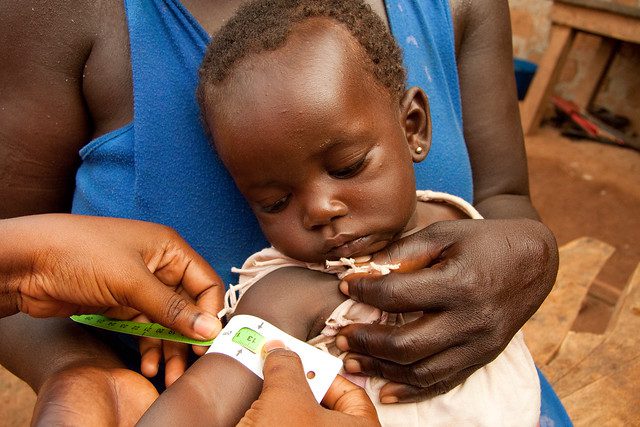
Ghana's EconomyA new report by the United Nations concluded that widespread child under-nutrition has taken a toll on Ghana’s economy. The report, The Cost of Hunger in Africa: Social and Economic Impact of Child Undernutrition in Ghana, found that the effects of hunger and stunting cost Ghana $2.6 billion dollars per year.

The report argues that Ghana’s government must make nutrition more of a priority in national development planning in order to improve food security.

Chronic malnutrition and stunting afflicts 19 percent of Ghana’s population and is responsible for 24 percent of all child mortality cases. Some areas face more hunger than others as 30 percent of children under five in Ghana’s northern region are stunted. Stunting occurs when adolescents are severely deprived of critical nutrients, such as proteins and minerals, while in the womb or during the first two years of life. According to the report, 37 percent of Ghana’s adult population suffered from stunting as children.

Malnutrition and stunting have significant long-term consequences on individual development and Ghana’s economy. Chronic health and food insecurity have resulted in higher health care expenses, additional burdens on the national education system and lower productivity by Ghana’s workforce.

The effects of stunting are also felt in Ghana’s educational system. Children who are underfed are more likely to miss, repeat classes and drop out of school. The report estimates that of the current working population aged 20 to 64, 72 percent of people who were stunted as a child completed primary school compared to 80 percent of those who were not stunted.

The report further says that repeating grades “increases the demand that the education system must meet, with the resulting costs in infrastructure, equipment, human resources and educational input.” In 2012, the 19,720 students who repeated a grade cost Ghana’s education system approximately $12.85 million.

Malnutrition also limits adults’ ability to work and contribute to Ghana’s economy. In manual work, such as agriculture, people affected by stunting lack the strength necessary to match the production and efficiency of individuals who are healthier. Non-manual workers who are stunted also produce less output because they received fewer years of schooling than people who were adequately nourished as children.

The U.N. recommends that the government invest more in nutrition policies and interventions to boost the overall health of Ghanaians. Better coordination among national agencies is necessary to create a more concerted approach to providing citizens with better nourishment.

The report notes that forging partnerships with private organizations and non-state actors will help the government “accelerate the development and implementation of malnutrition prevention strategies.”

Health officials can also raise more awareness about ways that people can improve their nutrition and health.

– Sam Turken

Photo: Flickr

September 5, 2016
https://borgenproject.org/wp-content/uploads/borgen-project-logo.svg 0 0 Borgen Project https://borgenproject.org/wp-content/uploads/borgen-project-logo.svg Borgen Project2016-09-05 01:30:132024-06-11 02:48:23UN Report Shows Malnutrition Hurts Ghana’s Economy
Global Poverty, Poverty Reduction, United Nations

Room for Improvement: Reducing Poverty in Malaysia

Malaysia_Poverty
The Southeast Asian nation of Malaysia is not a desperately poor country. Poverty in Malaysia is fairly low — the percentage of citizens at or below the national poverty line was 0.6 percent in 2014. Life expectancy and the infant mortality rate are about the same as in the U.S. and the GDP is growing.

Reducing poverty in Malaysia has come a long way since 1990 when the United Nations introduced the Millennium Development Goals. The first goal for the U.N. — to halve the number of people living on less than $1.25 a day by 2015 — was reached in Malaysia.

However, Malaysia has significant poverty and income inequality lurking just below the surface. While extreme poverty in Malaysia (income of less than $1.25 per day) is down to less than one percent, more than 25 percent of the population lives on less than $5 per day. Furthermore, about 60 percent of Malaysian families live on less than $1600 a month according to Al Jazeera.

About 20 million of the 30 million people in Malaysia live on the peninsula and approximately 72 percent of the population is urban.

The area in the need of the most support is the rural sector of Sabah on the island of Borneo. Borneo is a large island shared by Malaysia, Brunei and Indonesia so migration around the island is common.

The country is now home to about 2 million immigrants due to migration and recent political turmoil in neighboring Thailand. At this time there is no process for asylum seekers in Malaysia.

Both legal and illegal immigrants are known to be treated harshly and do not receive government support. It is imperative for the Malaysian government to address the needs of migrants as they make up over 10 percent of the population.

Malaysia also has relatively high levels of income inequality. The GINI index measures how much income levels deviate from totally equal distribution. Malaysia places higher than most countries, including all of its neighboring countries and the United States, with a GINI index of 46.2.

Malaysia stands out among its surroundings despite these problems. Nations like Laos, Myanmar and the Philippines all hover around a 25 percent poverty rate and an infant mortality rate that is between three and seven times higher than Malaysia.

Malaysia is also the only country among them with a functional and robust social welfare system. It is clear that further steps must be taken but remarkable progress has been made to reduce poverty in Malaysia in the past few decades.

– John English

Photo: Flickr

September 2, 2016
https://borgenproject.org/wp-content/uploads/borgen-project-logo.svg 0 0 Borgen Project https://borgenproject.org/wp-content/uploads/borgen-project-logo.svg Borgen Project2016-09-02 01:30:402024-05-27 09:21:01Room for Improvement: Reducing Poverty in Malaysia
Activism, Global Poverty, United Nations

A Year in Review: UN Forum on Sustainable Development

Sustainable DevelopmentThe High-level Political Forum on Sustainable Development (HLPF) will meet in July 2017 at the U.N. Headquarters in New York to discuss the U.N. 2030 Agenda, which was adopted on September 25, 2015 at the United Nations Sustainable Development Summit. The theme of the forum is “Leaving No One Behind,” and it will meet from July 11 to 20.

The HLFP replaced the Commission on Sustainable Development in 2013 and meets every four years under the U.N. General Assembly and under the Economic and Social Council (ECOSOC) during other years.

According to the Sustainable Development Knowledge Platform, the goals of the Forum include to guide the execution of the Sustainable Development Goals (SDGs), give suggestions about the 2030 Agenda, incorporate and apply science and international experiences and track the SDG.

The President of the ECOSOC, Oh Joon, stated that the Forum also aims to focus on the national ownership of the SDGS and incorporating the Goals into development plans.

Among its many objectives, the Forum will review the 2030 Agenda and the SDGs with help from reviewers from 22 countries across the world. The President of ECOSOC stated that the reviews are part of the new ways that the Forum works to secure that the world achieves the 2030 Agenda amidst changing global conditions.

The Forum will also take into account the inaugural report entitled “Progress towards the Sustainable Development Goals” presented by Wu Hongbo, U.N. Under-Secretary-General for ECOSOC. The document is the first real report of the progress of the 17 SDGs.

As Wu said in an interview, eliminating poverty is both “the greatest global challenge” and a “requirement for sustainable development” that the Forum aims to address with improved methodology.

Although the HLPF is just one event among the many that it will take to create a sustainable, poverty-free world, the deliberations of the Forum are a crucial first step to continual progress.

– Addie Pazzynski

Photo: Flickr.

September 1, 2016
https://borgenproject.org/wp-content/uploads/borgen-project-logo.svg 0 0 Borgen Project https://borgenproject.org/wp-content/uploads/borgen-project-logo.svg Borgen Project2016-09-01 01:30:512024-06-11 02:48:20A Year in Review: UN Forum on Sustainable Development
Global Poverty, Sustainable Development Goals, United Nations

G20 Summit Aims for Sustainable and Inclusive Development

Sustainable Development

From Sept. 4 to 5, heads of state and government from nineteen countries and the European Union will gather in Hangzhou, China for the 11th G20 summit. The theme of this year’s conference is “Towards an Innovative, Invigorated, Interconnected and Inclusive World Economy”, a motto which many officials and experts find encouraging.

In an interview with the Xinhua News Agency, China’s state-owned media outlet, Atsushi Sunami, the vice president of the National Graduate Institute for Policy Studies (GRIPS) in Tokyo, explained that the G20 summit could forge consensus on implementing the 2030 Agenda for Sustainable Development. Adopted by the U.N. last fall, the 2030 Agenda includes 17 Sustainable Development Goals (SDGs) and aims to end poverty and hunger by the end of the third decade in the 21st century.

Sunami also called on countries to work together and build innovation across borders. The conference in Hangzhou, in his view, could jump-start the dialogue on open innovation and inclusive development.

Also speaking with Xinhua, Peter Thompson, who will be the president of the upcoming 71st Session of the U.N. General Assembly, voiced his support for the summit’s theme as well as the U.N.’s desire to work with the G20 organizers. “We will certainly be doing our part here at the United Nations in terms of the G20 outcome to make sure it’s built into the international implementation plans,” he said.

Likewise, Daniel Funes de Rioja, President of the International Organization of Employers (IOE), expressed his hope that the G20 summit will be a step in the direction of inclusive development. “Prosperity requires growth, investment, technology and innovation, with employment and social coverage for all,” according to de Rioja.

Indeed, while the G20 is primarily a forum for leaders of the developed world, developing countries are also starting to make their voices heard.

Senegal, which will be present at the summit in Hangzhou, sees the G20 as a platform to call attention to African issues as well as an opportunity to explore solutions. Alioune Sarr, the country’s commerce minister, told China Central Television (CCTV) that the conference will highlight the necessity of poverty eradication and inclusive development on the continent.

The G20 has consistently underscored the importance of international cooperation when it comes to solving the world’s problems, and the renewed emphasis on inclusive development and shared prosperity is certainly a welcome change.

– Philip Katz

Photo: Flickr

August 29, 2016
https://borgenproject.org/wp-content/uploads/borgen-project-logo.svg 0 0 Borgen Project https://borgenproject.org/wp-content/uploads/borgen-project-logo.svg Borgen Project2016-08-29 01:30:462024-05-27 23:53:31G20 Summit Aims for Sustainable and Inclusive Development
Education, Refugees and Displaced Persons

Education in Greece: Building a Foundation

Education in GreeceGreece serves as a new home for hundreds of thousands of displaced Syrian refugees. The country has opened its arms to over 57,000 refugees, over half of them women and children, thus creating a dense population of families within small areas.

Although the Greek government accepts new refugees it has no choice but to place these individuals in camps that, in many cases, do not meet humanitarian standards. The country strives to create a stable environment for these refugees, as it is estimated that the children have been out of school for an average of 1.5 years. This lack of schooling affects their potential as well as depriving them of a basic right to education, therefore education in Greece must be a priority.

With the help of volunteers, children are receiving an education through refugee schools located on campgrounds. Education in Greece, as well as many other countries besides, remains difficult for refugees to obtain.

Understanding the necessity for a learning system, the United Nations recently created a fund called “Education Cannot Wait.”

This fund aims to reach approximately 20 million refugee children who are currently denied a proper education. The European Union used money from this fund to create a pilot program on May 16, in order to begin language courses for the refugee children in Greece. These courses are currently in session to prepare children for the school year that commences in September.

Teachers will be assigned based on the language of the refugee children, which will include English, Greek and their native tongue. The Greek government plans to unveil this education program beginning in September. The Ministry of Education, responsible for running the education in Greece, began language courses beforehand to bridge the language gap that held some children back. The courses will assign two to three teachers to each 150-student classroom.

“The average length of time spent living as a refugee is now 17 years, meaning that millions of children and young people will miss out on some, it not all, of their education, severely diminishing their own future life chances and that of their families and communities,” said Tanya Steele, interim CEO of Save the Children.

Less than two percent of global humanitarian aid goes to education. Education, as the United Nations is realizing, is crucial in the long-term. Without education, studies show that children are at higher risk of crime and violence.

Schools carry the promise of opportunity and aspiration for the future. Education creates a solid foundation for the rebuilding of society for those displaced.

Education in Greece portrays how many other regions are striving to help refugees. Students here, as with many other refugee schools, are only given two days of schooling per week. With the help of the European Union and the United Nations, teachers hope to push for more educational opportunities, including a 5-day school week.

– AnnMarie Welser

Photo: Flickr

August 12, 2016
https://borgenproject.org/wp-content/uploads/borgen-project-logo.svg 0 0 Borgen Project https://borgenproject.org/wp-content/uploads/borgen-project-logo.svg Borgen Project2016-08-12 01:30:432024-12-13 17:54:55Education in Greece: Building a Foundation
Global Poverty, United Nations

UN Unveils New Advertising Initiative: Common Ground

Common_Good_Initiative

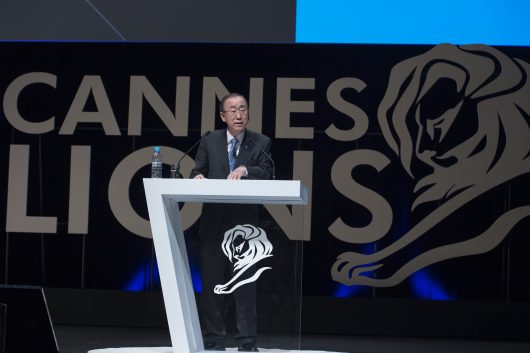
The Common Ground Initiative was unveiled at the Cannes Lions advertising festival on Friday, June 24 to a crowd of some of the industry’s top leaders. U.N. Secretary General Ban Ki-Moon shared the stage with some of advertising’s most powerful CEOs to make the announcement.

The initiative is a plan to produce and distribute advertising about the Sustainable Development Goals (SDGs), the United Nation’s set of 17 goals for improving living conditions around the world. The ads will run in publications such as The Economist, The Wall Street Journal, the Daily Mail and Le Figaro, to name a few.

The collaborative effort between the rival companies is unprecedented, even more so when considering that both the ads and media time were gifted pro-bono for the cause.

However, considering the importance of the SDG’s, the necessity of raising awareness in participating countries cannot be understated. It is especially vital considering that there are no legal mandates pushing countries towards adopting the SDGs.

The Wall Street Journal interviewed Jan Eliasson, the deputy secretary-general of the U.N. In his interview, Eliasson argued that raising awareness of the goals would add pressure on governments to take a stand on some of the issues in question.

A 2013 survey by the European Commission found that only six percent of the European Union was aware of the U.N.’s previous initiative, the Millennium Development Goals, despite their success. The U.N. hopes that Common Ground will inspire more countries to reach the 2030 date for the current goals.

According to the Jamestown Sun, the first set of advertisements will focus on everyday people agreeing that the goals of the SDG’s are more important any rivalries between interested parties, implying that everybody should be a strong supporter of the U.N.’s goals.

In debuting the initiative, the advertising companies issued the following statement: “By working in partnership to support the Sustainable Development Goals, we want to demonstrate that even fierce competitors can set aside their differences in order to serve a wider common interest.”

– Sabrina Santos

Photo: U.N. Multimedia

August 11, 2016
https://borgenproject.org/wp-content/uploads/borgen-project-logo.svg 0 0 Borgen Project https://borgenproject.org/wp-content/uploads/borgen-project-logo.svg Borgen Project2016-08-11 01:30:182024-12-13 17:54:50UN Unveils New Advertising Initiative: Common Ground
Global Poverty

Why Africa Matters to the United States

Africa Matters to the U.S.

The dichotomy between the “global north” and the “global south” continues to persist around the world, especially in the case of Africa. That is why it is essential for citizens of the most powerful country on earth to realize that Africa matters to the U.S.

While many Americans might envision a far-away land home to exotic animals and people plagued by famine, crime or sickness, the continent’s reality is much brighter.

Enrollment rates in secondary education increased by 48 percent from 2000 to 2008, life expectancy has increased roughly 10 percent and real income per person has increased by over 30 percent across the continent, according to the Economist.

The IMF also predicts that three of this year’s 10 fastest growing economies will be the Ivory Coast, Tanzania and Senegal.

The future of Africa could be brighter still with continued U.S. involvement. Not only can U.S. aid efforts help diminish poverty, they can simultaneously promote U.S. interests abroad. Through encouraging peace and security, expanding Africa’s energy sector, competing with China and opening up new markets for U.S. businesses, both the U.S. and Africa can flourish.

It is for these reasons that Africa matters to the U.S. and the U.S. matters to Africa.

Peace and Security are Global Needs

The United Nations cites “violence and fragility” as the biggest barriers to achieving the Millennium Development Goals (MDGs), the first aim of which is to cut the number of people living in extreme poverty in half. African countries face numerous security risks including transnational crime syndicates, corrupt governments and terrorist groups. These obstacles perpetuate the cycle of poverty and must be properly addressed if U.S. companies hope to find success in Africa.

According to Lesley Anne Warner, a top research fellow at the National Defense University, the U.S. can help mitigate these challenges by better resourcing agencies like the State Department and USAID instead of solely relying on the Department of Defense. This would make our country’s engagement with African countries more “proactive” instead of “reactive,” and help deescalate and prevent conflicts.

Congress took notice of why Africa matters to the U.S. in February when it passed the Electrify Africa Act to increase African energy access. However, more work can be done to lift people out of poverty while simultaneously advancing U.S. national security interests.

“Energy poverty undermines economic development, fueling political instability and the creation of failed states that can harbor our enemies and threaten our allies,” John P. Banks, a nonresident fellow at the Brookings Institution, writes in his paper, “Key Sub-Sarahan Energy Trends and their Importance for the U.S.”

A U.S. policy that supports further energy access initiatives in Africa would not only improve the living conditions of thousands, but also weaken the global threat of terrorism.

China Cannot Ethically Deliver Aid

With a record lacking transparency, democratic values and concern for the environment, the U.S. must be wary of China’s increased involvement in Africa.

Just last year, China offered the continent $60 billion in development assistance. Moreover, the Center for Global Development reports that there were almost 2,000 Chinese development projects in the region from the years 2000 to 2011 totaling up to $75 billion.

It is imperative that the U.S. partner with China to effectively and morally deliver aid, explains Yun Sun, a visiting fellow at the Brookings Institution. In addition, she suggests the U.S. work with African countries to explain the damaging impact the unilateral Chinese approach would have on their future success.

U.S. Markets Need Diversification

The U.S. would also benefit from expanding its markets and increasing foreign direct investment (FDI) in African countries. As previously stated, three of the world’s 10 fastest growing economies are located in Africa, and if U.S. companies fail to tap into these growing economies, they will lose out on major business opportunities.

Last year, Congress passed a measure lengthening the African Growth and Opportunity Act (AGOA) into the fiscal year of 2025 as a sign of hope for the future of U.S.-African business relations. Yet only one percent of U.S. FDI is spent in Africa, and the total number of U.S. exports to sub-Saharan Africa in 2013 decreased by 20 percent compared to 2012, according to the Office of the U.S. Trade Representative.

There is no doubt that the U.S. has a multifaceted role to play throughout the world. Africa matters to the U.S. because its development can reduce poverty, create a safer, more secure world, fill Chinese foreign assistance voids and diversify U.S. businesses.

-Kristina Evans

Photo: Pinterest

August 9, 2016
https://borgenproject.org/wp-content/uploads/borgen-project-logo.svg 0 0 Borgen Project https://borgenproject.org/wp-content/uploads/borgen-project-logo.svg Borgen Project2016-08-09 01:30:152024-12-13 17:54:39Why Africa Matters to the United States
Gender Equality, Global Poverty, United Nations, Women & Children, Women and Female Empowerment

Plan International’s Goals for Gender Equality

Plan International

Plan International recently announced a multi-organizational partnership to help track the U.N.’s global goals for gender equality.

The goals for gender equality stem from the United Nation’s Sustainable Development Goals (SDGs). These goals, adopted in 2015, aim to vastly improve the living conditions around the world.

The central focus of this project is gender inequality. Plan International decided to collect relevant data and use it as a benchmark to determine the amount of progress.

Partner Organizations for Gender Equality

To do so, they partnered with several organizations. These include the International Women’s Health Coalition and KPGM. In addition, Plan International chose the ONE Campaign and Women Deliver.

Plan International chose these organizations because their previous work and values align with those of Plan. However, some organizations bring additional value to the table.

For instance, KPMG has a history of partnership building in the private sector. They also have a strong data tracking history with their Change Readiness Index. That index will be especially important in the project’s next few months.

The project’s first step is to sift through the data that already exists. They can then determine what is relevant to their goals for gender equality and what is not.

In an exclusive interview with Mary Bridger, the Engagement Manager for Plan’s SDG tracking initiative, she said, “We don’t feel that you can truly comprehend the realities for girls and women until you look beyond the quantitative data and find out what the lived realities for these individuals are (i.e. you can measure the geographic proximity of a school to girls, but until you ask them whether they feel safe on public transportation, you don’t know the true barriers).”

Prioritizing Gender Equality

For now, the project’s next goal is to work with their partners to push the scope of their research and develop the tools necessary to allow them to best capture those lived realities.

Bridger underscored the importance of this campaign when she said, “Plan International’s purpose is to work towards all children fulfilling their rights, focusing on excluded and vulnerable groups so that no-one is left behind. However, we have recognized the urgent need to prioritize girls as the most marginalized group whose rights are violated most.”

Plan International and their partner organizations all believe that meeting goals for gender equality will have a ripple effect within local communities and even worldwide.

– Sabrina Santos

Photo: Talent Culture

August 4, 2016
https://borgenproject.org/wp-content/uploads/borgen-project-logo.svg 0 0 Borgen Project https://borgenproject.org/wp-content/uploads/borgen-project-logo.svg Borgen Project2016-08-04 01:30:262024-12-13 17:54:41Plan International’s Goals for Gender Equality
Page 29 of 44«‹2728293031›»

Get Smarter

  • Global Poverty 101
  • Global Poverty… The Good News
  • Global Poverty & U.S. Jobs
  • Global Poverty and National Security
  • Innovative Solutions to Poverty
  • Global Poverty & Aid FAQ’s
Search Search

Take Action

  • Call Congress
  • Email Congress
  • Donate
  • 30 Ways to Help
  • Volunteer Ops
  • Internships
  • Courses & Certificates
  • The Podcast
Borgen Project

“The Borgen Project is an incredible nonprofit organization that is addressing poverty and hunger and working towards ending them.”

-The Huffington Post

Inside The Borgen Project

  • Contact
  • About
  • Financials
  • President
  • Board of Directors
  • Board of Advisors

International Links

  • UK Email Parliament
  • UK Donate
  • Canada Email Parliament

Get Smarter

  • Global Poverty 101
  • Global Poverty… The Good News
  • Global Poverty & U.S. Jobs
  • Global Poverty and National Security
  • Innovative Solutions to Poverty
  • Global Poverty & Aid FAQ’s

Ways to Help

  • Call Congress
  • Email Congress
  • Donate
  • 30 Ways to Help
  • Volunteer Ops
  • Internships
  • Courses & Certificates
  • The Podcast
Scroll to top Scroll to top Scroll to top